
美国通胀

Search documents
2025年8月美国CPI数据点评:美国通胀温和上涨,为后续降息打开空间
EBSCN· 2025-09-12 06:54
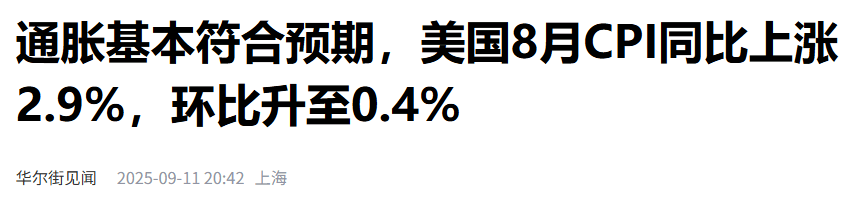
Inflation Data Summary - In August, the U.S. CPI increased by 2.9% year-on-year, up from 2.7% in the previous month, aligning with market expectations[2] - The seasonally adjusted CPI rose by 0.4% month-on-month, compared to 0.2% previously, slightly exceeding the market forecast of 0.3%[2] - Core CPI remained stable at 3.1% year-on-year and 0.3% month-on-month, consistent with the previous month[2] Inflation Drivers - The increase in CPI was primarily driven by rising prices in food, energy, and housing[3] - Food prices rose by 0.5% month-on-month, with beef prices significantly increasing by 2.7%[4] - Energy prices saw a month-on-month increase of 0.7%, recovering from a decline of 1.1% in the previous month[4] Market Expectations and Fed Policy - The current inflation trend suggests a controlled environment for further interest rate cuts, with a 25 basis point cut expected in September[3] - Market expectations for a 25 basis point cut in October have risen to 82.1%, up from 73.9% the previous day[7] - The probability of another 25 basis point cut in December is at 75.4%, increasing from 68.1%[7]
美国8月CPI点评:通胀慢热VS就业快冷
GOLDEN SUN SECURITIES· 2025-09-12 06:54
Inflation and Employment Trends - The U.S. August CPI increased by 2.9% year-on-year, matching expectations and marking the highest level in the past seven months[1] - Core CPI remained stable at 3.1% year-on-year, consistent with previous values[1] - The month-on-month CPI adjusted for seasonal factors rose by 0.4%, exceeding the expected 0.3%[1] Employment Data and Market Reactions - Initial jobless claims unexpectedly surged to 263,000, the highest level since June 2023, indicating significant employment risks[3] - Following the CPI release, the probability of interest rate cuts by the Federal Reserve increased to 90% for September, October, and December[3] - Major U.S. stock indices rose post-CPI announcement, with the S&P 500, Nasdaq, and Dow Jones increasing by 0.9%, 0.7%, and 1.4% respectively[3] Core Inflation Components - Food prices rose by 0.5% month-on-month, while energy prices increased by 0.7%, driven by a notable rise in gasoline prices[2] - Core goods prices increased by 0.3% month-on-month, with clothing, new cars, and used cars showing rebounds[2] - "Super core inflation," excluding food, energy, and housing, was reported at 0.12% month-on-month, consistent with previous months[2] Federal Reserve Outlook - The current economic environment suggests that employment risks outweigh inflation risks, leading to expectations of rate cuts in the near term[4] - Future rate decisions will depend on whether employment data stabilizes and the nomination of the next Federal Reserve chair[4]
美国公布“完美”通胀数据!特朗普和鲍威尔都放心了,降息倒计时
Sou Hu Cai Jing· 2025-09-12 04:48
Core Viewpoint - The recent CPI data for August, showing a year-on-year increase of 2.9%, aligns with Wall Street expectations and serves as a significant indicator for the Federal Reserve's decision on potential interest rate cuts [1][4]. Group 1: Economic Indicators - The CPI data release has heightened expectations for interest rate cuts, leading to a surge in U.S. stock indices, with the Nasdaq reaching a new historical high [1]. - The last data obstacle for interest rate cuts has been removed, with a 93.9% probability for a 25 basis point cut in September and an 86.8% probability for a cumulative 50 basis point cut by October [2]. - The combination of the CPI data and recent non-farm employment figures provides strong support for the Federal Reserve to consider rate cuts [4][6]. Group 2: Political Influence - President Trump has been vocal in pressuring the Federal Reserve to lower interest rates, even publicly criticizing Chairman Powell [4][6]. - The independence of the Federal Reserve is under scrutiny as political pressures mount, particularly from the Trump administration [6]. Group 3: Future Risks - There are concerns about the delayed impact of tariffs on prices, which could lead to inflationary pressures in the fourth quarter, potentially complicating the Federal Reserve's decision-making [8]. - The market is beginning to question the authenticity of short-term data, which may create deeper economic governance issues in the long run [9]. - The decision-making process may hinge on whether to prioritize maintaining data credibility or to adopt unconventional methods to sustain a favorable economic outlook [11].

日度策略参考-20250912
Guo Mao Qi Huo· 2025-09-12 02:50
Report Industry Investment Ratings - **Bullish**: Gold, Copper, Aluminum, Nickel, Stainless Steel, Zinc, Tin, Industrial Silicon, Palm Oil, Soybean Meal, Ethanol, Ethylene Glycol, Short - Fiber, Styrene, Propylene, PP, Alumina [1] - **Bearish**: Iron Ore, Coke, Coking Coal, Soda Ash, Black Metal, Cotton, Sugar, Corn, Logs, Crude Oil, Fuel Oil, BR Rubber, PTA, Pure Benzene, Styrene, PVC, LPG, Container Shipping Routes [1] - **Sideways**: Treasury Bonds, Silver, Alumina, Stainless Steel, Rebar, Hot - Rolled Coil, Paper Pulp, Live Pigs, Natural Rubber, PE, PP, PVC, PG [1] Core Views of the Report - Short - term stock index futures' discount has widened again, and with liquidity drive, short - term index adjustments may bring long - position layout opportunities. Asset shortage and weak economy are favorable for bond futures, but the central bank's short - term interest - rate risk warning suppresses the upside. The Fed is expected to cut interest rates in September, providing support for gold prices. [1] - For base metals, the US CPI inflation data basically meets expectations, increasing the Fed's interest - rate cut expectation. The approaching consumption peak season may drive up copper and aluminum prices. Nickel prices are expected to fluctuate strongly in the short - term, but there is still pressure from long - term primary nickel oversupply. [1] - In the black metal sector, the supply - demand situation is not optimistic in the short - term, with supply recovering and demand at risk of weakening, and high inventory levels. The steel market is under pressure due to supply surplus. [1] - In the agricultural products sector, the market situation varies. For example, palm oil has short - term callback risks but long - term upward logic. Cotton has short - term supply tightness, while sugar is expected to be in a weak - sideway trend. [1] - In the energy and chemical sector, the overall situation is affected by factors such as production increases, cost support, and demand changes. For example, crude oil's fundamental situation is loose, and PTA's production has recovered. [1] Summary by Related Catalogs Macro - Financial - **Stock Index Futures**: Short - term discount widening and liquidity drive may offer long - position opportunities during short - term index adjustments [1] - **Treasury Bonds**: Asset shortage and weak economy are favorable, but central - bank interest - rate risk warning suppresses upside [1] Precious Metals - **Gold**: Fed's expected September interest - rate cut provides support, short - term high - level strong operation with attention to volatility risks [1] - **Silver**: Short - term high - level strong operation [1] Non - Ferrous Metals - **Copper**: US inflation data and approaching consumption peak season may drive up prices [1] - **Aluminum**: Fed's interest - rate cut expectation and consumption peak season may lead to a strong trend [1] - **Alumina**: Production and inventory are increasing, but price is near the cost line with limited downward space [1] - **Zinc**: Social inventory increase pressures the price, but LME inventory decline and macro support limit the downside [1] - **Nickel**: Short - term macro - driven strong oscillation, long - term primary nickel oversupply pressure exists [1] - **Stainless Steel**: Raw - material support exists, short - term sideway operation [1] - **Tin**: Overall support exists, pay attention to low - long opportunities [1] Black Metals - **Rebar**: Valuation returns to neutral, industrial drive is unclear, and macro drive is positive [1] - **Hot - Rolled Coil**: Near - month contracts are restricted by production cuts, far - month contracts have upward adjustment opportunities [1] - **Iron Ore**: Short - term supply - demand is not optimistic, with high inventory [1] - **Coke and Coking Coal**: Supply - demand is weak, price is under pressure [1] - **Soda Ash**: Supply surplus pressure is large, price is under pressure [1] Agricultural Products - **Palm Oil**: Short - term callback risk, long - term upward logic [1] - **Soybean Meal**: Domestic inventory increase may pressure the price, but long - term upward logic remains [1] - **Cotton**: Short - term supply tightness, new - cotton acquisition game is the focus [1] - **Sugar**: Expected to be in a weak - sideway trend, short - term downward space is limited [1] - **Corn**: New - grain harvest may bring selling pressure, C01 is expected to decline [1] - **Soybean Meal**: MO1 has limited downward space, short - term sideway adjustment, consider low - long [1] - **Paper Pulp**: Consider 11 - 1 positive spread [1] - **Logs**: Fundamental situation is stable, price is in a weak - sideway trend [1] Energy and Chemicals - **Crude Oil**: Geopolitical tension, OPEC+ production increase, and Fed's interest - rate cut expectation affect the price [1] - **Fuel Oil**: Similar influencing factors as crude oil [1] - **Natural Rubber**: Raw - material cost support, slow inventory removal, and negative market sentiment [1] - **BR Rubber**: Follow crude oil, pay attention to inventory removal and device maintenance [1] - **PTA**: Production recovery, downstream profit improvement [1] - **Ethylene Glycol**: Basis strengthening, new device production pressure [1] - **Short - Fiber**: Device return, weakening delivery willingness [1] - **Pure Benzene and Styrene**: Inventory accumulation, supply increase, import pressure [1] - **PE**: Macro - positive, more maintenance, weak - sideway price [1] - **PP**: Maintenance support is limited, sideway - weak trend [1] - **PVC**: Return to fundamentals, supply pressure, sideway - weak trend [1] - **Alumina**: Approaching peak season, low inventory, price rebound [1] - **LPG**: Crude oil production increase, fundamental pressure, downstream profit deterioration [1] Shipping - **Container Shipping Routes**: September supply exceeds the same - period level, freight rate decline is faster than expected [1]
铅:价格震荡,沪铅连三进口盈亏
Guo Tai Jun An Qi Huo· 2025-09-12 02:03
1. Report Industry Investment Rating - No relevant content provided 2. Core Views of the Report - The price of lead is fluctuating, with the Shanghai lead futures and London lead futures showing certain price changes and trading volume and position adjustments [1] 3. Summary by Relevant Sections 3.1 Fundamental Tracking - **Price**: The closing price of the Shanghai lead main contract was 16,900 yuan/ton, up 0.63% from the previous day; the closing price of the London lead 3M electronic market was 1,988.5 US dollars/ton, up 0.53% [1] - **Volume and Open Interest**: The trading volume of the Shanghai lead main contract was 41,772 lots, a decrease of 3,543 lots; the trading volume of London lead was 6,327 lots, an increase of 1,905 lots. The open interest of the Shanghai lead main contract was 49,603 lots, a decrease of 864 lots; the open interest of London lead was 158,239 lots, an increase of 784 lots [1] - **Premium and Discount**: The premium of Shanghai 1 lead was -30 yuan/ton, an increase of 5 yuan/ton; the LME CASH - 3M premium was -42.5 US dollars/ton, unchanged [1] - **Inventory**: The inventory of Shanghai lead futures was 59,737 tons, an increase of 6,048 tons; the LME lead inventory was 232,625 tons, a decrease of 4,375 tons [1] - **Recycled Lead**: The price of recycled electric vehicle batteries was 10,000 yuan/ton, a decrease of 25 yuan/ton; the comprehensive profit and loss of recycled lead was -198 yuan/ton, an increase of 105 yuan/ton [1] 3.2 News - The State Council will carry out comprehensive reform pilot projects on the market - based allocation of factors in 10 regions including Beijing Sub - center, key cities in southern Jiangsu, Hangzhou, Ningbo, Wenzhou, and Hefei Metropolitan Area [2] - US inflation was basically in line with expectations. The core CPI in August increased by 3.1% year - on - year and 0.3% month - on - month, the same as Wall Street expectations and July. The number of initial jobless claims in the US last week increased to 263,000, reaching a nearly four - year high [2] - The lead trend strength is 0, indicating a neutral view [2]
汽车推涨商品通胀——8月美国通胀数据解读【陈兴团队•财通宏观】
陈兴宏观研究· 2025-09-12 01:54
Core Insights - Inflation has shown a moderate increase, with the August CPI year-on-year growth rising to 2.9%, and the core CPI remaining stable at 3.1% [4][15] - The increase in energy and food prices has been offset by a decrease in core services and an increase in core goods [4][15] Inflation Trends - The CPI for energy has rebounded, with a year-on-year growth of 0.2% in August, an increase of 1.8 percentage points from the previous month [5] - Gasoline prices have seen a reduced decline of -6.6% year-on-year, while electricity prices have increased by 6.2% [5] Core Goods Analysis - The year-on-year growth rate for core goods has risen to 1.5%, up 0.3 percentage points from the previous month [7] - Significant price increases have been observed in used cars, which saw a year-on-year growth of 6%, and new cars, which increased by 0.7% [7] Core Services Overview - The year-on-year growth rate for core services has remained stable at 3.6%, with a slight decrease in the month-on-month growth rate to 0.3% [9] - The owner’s equivalent rent has decreased to a growth rate of 4%, indicating a cooling trend in housing inflation [9] Long-term Inflation Expectations - Consumer inflation expectations for one year have risen to 4.8%, while five-year expectations have increased to 3.5% [12] Market Reactions - Following the inflation data release, U.S. stock indices rose, bond yields fell, and the dollar index decreased, leading to market expectations of an imminent interest rate cut [15]

美国最新通胀数据出炉!
Zheng Quan Ri Bao Wang· 2025-09-12 01:27
Group 1 - The latest U.S. CPI data shows a year-on-year increase of 2.9% in August, matching expectations and slightly up from July's 2.7% [1] - Core CPI, excluding volatile food and energy prices, rose by 3.1% year-on-year in August, consistent with market estimates and July's level [2] - The housing price index contributed significantly to the price increase in August, with a month-on-month rise of 0.4% [2] Group 2 - Recent employment data indicates a cooling labor market, with initial jobless claims reaching 263,000, exceeding the market forecast of 235,000 [3] - A downward revision of non-farm payrolls shows a decrease of 911,000 jobs from initial estimates, marking the largest downward adjustment since 2000 [3] - Market expectations for a 25 basis point rate cut by the Federal Reserve in September are high, with a probability of 89.1%, while a 50 basis point cut is at 10.9% [3] Group 3 - The chief economist at Minsheng Bank noted a significant decline in job creation capacity in the U.S. labor market, although large-scale layoffs have not yet occurred [4] - A 25 basis point rate cut is viewed as more prudent due to concerns over the independence of the Federal Reserve and the need for further evidence of recession [4]
中信证券:维持美联储年内将连续降息三次各25bps的预测 降息交易应该是近期比较明朗的主线
Di Yi Cai Jing· 2025-09-12 00:40
Core Viewpoint - Citic Securities believes that the U.S. August CPI is generally in line with expectations, indicating that the inflation situation has not worsened [1] Group 1: Inflation and CPI - The prices of import-sensitive goods and core service inflation remain relatively stable [1] - The overall CPI in the U.S. is expected to hover around a year-on-year growth rate of approximately 3% in the coming months [1] Group 2: Monetary Policy Outlook - The ongoing dispute over the legality of White House tariffs may be one reason for companies to delay price increases [1] - Citic Securities maintains its forecast that the Federal Reserve will implement three consecutive rate cuts of 25 basis points each within the year [1] - The rate cut trade is expected to be a clear main theme in the near term [1]

美元指数深夜大跳水,道指突破46000点,中国资产拉升
21世纪经济报道· 2025-09-11 15:14
Market Overview - On September 11, U.S. stock markets opened higher, driven by interest rate cut expectations, with the Nasdaq reaching a new historical high of 22,000 points [1] - The Dow Jones Industrial Average rose over 500 points, surpassing 46,000 points, also marking a historical high, while the S&P 500 increased by 0.58% [1] Individual Stock Movements - Oracle Corporation's stock fell over 4%, despite its founder briefly surpassing Elon Musk to become the world's richest person [3][4] - Notable movements in Chinese stocks included Century Internet rising nearly 15%, Zai Lab increasing over 13%, and GDS Holdings up over 9% [12][13] Economic Data Impact - The U.S. Consumer Price Index (CPI) for August showed a month-on-month increase of 0.4% and a year-on-year increase of 2.9%, aligning with expectations [6] - However, initial jobless claims unexpectedly surged by 27,000 to 263,000, the highest level in nearly four years, raising concerns about the labor market and reinforcing expectations for Federal Reserve interest rate cuts [6][9] Federal Reserve Outlook - The unexpected rise in jobless claims has led traders to fully price in three interest rate cuts by the Federal Reserve before the end of the year [10] - Analysts suggest that the increase in jobless claims could lead to a more aggressive rate cut of 50 basis points rather than the anticipated 25 basis points [9] Investor Sentiment - Morgan Stanley reported that U.S. investors' interest in the Chinese market has reached its highest level since 2021, with over 90% of surveyed investors expressing a willingness to increase exposure [15] - Investment interest is expanding beyond internet and ADR sectors to include Hong Kong and onshore A-shares, focusing on areas like artificial intelligence, semiconductors, and new consumption [15]

深夜,直线跳水!美联储,突发!
券商中国· 2025-09-11 14:51
Core Viewpoint - The article discusses the implications of recent U.S. employment and inflation data, which have heightened expectations for a Federal Reserve interest rate cut in September. The data indicates persistent inflation and a concerning rise in unemployment claims, suggesting potential economic challenges ahead [1][4][11]. Inflation Data Summary - The U.S. Consumer Price Index (CPI) for August showed a year-over-year increase of 2.9%, slightly up from the previous value of 2.7% [2] - The core CPI, excluding food and energy, also rose by 3.1% year-over-year, consistent with expectations [2] - The super core CPI, which excludes housing and energy service prices, saw a slowdown in growth to 3.52% [2] Employment Data Summary - Initial jobless claims for the week ending September 6 reached 263,000, the highest level in nearly four years, significantly exceeding analyst expectations of 235,000 [5][6] - The August non-farm payroll report indicated a mere increase of 22,000 jobs, continuing a trend of significantly slowed employment growth [7] Market Reactions Summary - Following the release of the inflation and employment data, traders increased their bets on a 50 basis point rate cut by the Federal Reserve in September, with the probability rising from 8% to 11.9% [1][8] - The probability of a 25 basis point cut was reported at 88.1% [8] - The U.S. dollar index fell sharply, and the yield on the 10-year U.S. Treasury bond dropped below 4% for the first time since April [9] Economic Outlook Summary - Analysts suggest that the inflation data indicates ongoing inflationary pressures, influenced by tariffs and rising service costs, which may exert lasting pressure on overall inflation [4][11] - The Federal Reserve's preferred inflation measure, the core PCE price index, is expected to show a slight year-over-year increase to 3.0% [5] - Concerns about the health of the U.S. job market are growing, with indications that layoffs may be increasing as hiring slows [6][11]
