
自主创新

Search documents
格力海外经销商大会成功举办,中国技术成为全球标准背后有哪些支撑?
Sou Hu Cai Jing· 2025-10-29 08:36
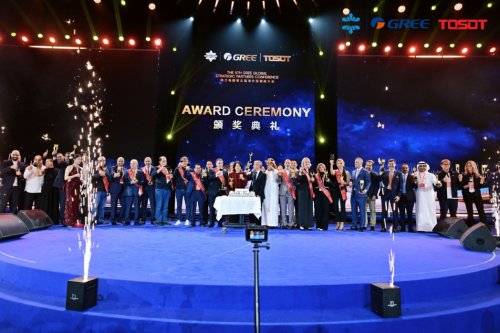
Core Insights - Gree Electric's fifth overseas dealer conference highlighted its ten-year journey in globalization, showcasing significant growth in overseas revenue and brand recognition [1][2][4] - The company has shifted from being perceived as a low-cost manufacturer to a leader in quality and innovation, with a focus on core technology and long-term strategies [2][5][32] Group 1: Globalization Journey - Gree's overseas revenue reached 28.2 billion yuan in 2024, a year-on-year increase of 13.25%, with self-owned brands accounting for 70% of this revenue [1][5] - The company has expanded its product offerings from air conditioners to a full range of smart home appliances and equipment, marking a transition from "going out" to "integrating in" [1][26] - Gree's market share in Southeast Asia for self-owned brands increased from 30% to 80% over the past decade [4][5] Group 2: Technological Innovation - Gree has invested over 100 billion yuan in R&D, establishing more than 1,400 laboratories and holding 50 internationally leading technologies with 140,000 patent applications [5][6] - The company has developed specialized air conditioning solutions for extreme environments, such as high-temperature units for the Middle East and low-temperature heat pumps for Northern Europe [6][10] - Gree's new SilenzX series air conditioner features a noise level as low as 15 decibels, showcasing its commitment to user comfort [9][10] Group 3: Market Strategies - Gree's strategy in the U.S. includes a "step-up upgrade" approach, initially entering the market with cost-effective products before focusing on core technology [14][15] - In Canada, Gree has achieved the top market share by differentiating its brands and collaborating with local energy companies to promote energy-efficient solutions [16][17] - The company has successfully penetrated the Iraqi market by customizing products to meet local needs and establishing a robust local support system [18][19] Group 4: Brand Positioning - Gree's partnership with the Real Betis football club in Spain has significantly enhanced its brand visibility and emotional connection with consumers [21][22] - The company emphasizes local engagement and cultural integration in its marketing strategies, such as community projects in Iraq and emotional storytelling in Spain [32][33] - Gree's narrative focuses on transforming the perception of "Made in China" from low-cost to high-value through technology and cultural resonance [34][35] Group 5: Future Outlook - Gree aims to continue its expansion into new sectors such as renewable energy, smart homes, and industrial technology, aspiring to set a benchmark for Chinese manufacturing globally [35]


俄罗斯怒砸7000亿搞稀土!1600万吨待开发,为啥不愿意跟中方合作
Sou Hu Cai Jing· 2025-10-29 05:50
Core Viewpoint - The article discusses Russia's recent decision to independently establish a complete rare earth industry chain, investing 700 billion rubles, amidst growing global concerns over China's control of the rare earth market and the geopolitical implications of such dependencies [1][10]. Group 1: Russia's Rare Earth Strategy - Russia plans to invest 700 billion rubles to create a full rare earth industry chain, from mining to downstream applications, with Defense Minister Shoigu overseeing the project [1][10]. - Russia possesses significant rare earth resources, with reserves close to 16 million tons, including 15% of global reserves located in Siberia, which could sustain mining for decades [3]. - The shift from potential cooperation with China to independent development is influenced by historical reliance on imports and changing international dynamics [4][8]. Group 2: Geopolitical Factors - The relationship between the U.S. and Russia plays a crucial role, as past negotiations for joint development of Arctic rare earth resources failed due to differing strategic interests [6]. - U.S. sanctions and restrictions on rare earth technology exports have further pushed Russia to abandon collaboration with the U.S. [8]. - Russia's focus on strategic security is paramount, as rare earth elements are essential for advanced military technology, and reliance on foreign sources poses risks to national defense [8][10]. Group 3: Challenges and Future Outlook - Russia has initiated the construction of its first rare earth processing plant in Siberia, expected to be operational by 2026, with a processing capacity of 50,000 tons annually, meeting about 70% of domestic demand [12]. - The complexity of rare earth refining technology and potential environmental issues present significant challenges for Russia in achieving self-sufficiency [12][14]. - The global competition for resources is shifting from mere possession to control over the entire industry chain, highlighting the importance of mastering core technologies [14].
中国家用呼吸机产业链跃迁实录,BMC瑞迈特以“诊·疗·管”模式破局领航
Quan Jing Wang· 2025-10-29 04:54
Core Insights - BMC瑞迈特 has established itself as a leading enterprise in the respiratory health sector, focusing on innovation and self-sufficiency in the production of home ventilators [1][3] - The company has achieved significant milestones in domestic production, particularly in the development of core components like the fan, which is crucial for the performance of home ventilators [1][2] - BMC瑞迈特 has transitioned from being a manufacturer to a service provider in respiratory health, creating a comprehensive ecosystem that connects devices, users, and healthcare professionals [2][3] Company Overview - BMC瑞迈特's home ventilators hold the second-largest market share globally and the largest in China, with products sold in over 100 countries and regions [3][4] - The company has received multiple certifications, including NMPA in China, FDA in the United States, and CE in the European Union, ensuring compliance with international standards [3][4] - As of January 31, 2025, BMC瑞迈特 has sold over 3 million home ventilators globally, showcasing its strong market presence [4] Innovation and Development - The company has focused on self-innovation and collaboration with local partners to break the monopoly on core components, leading to the domestic production of essential parts [1][2] - BMC瑞迈特 has developed a closed-loop system for algorithm optimization based on extensive user data, enhancing the performance and user experience of its devices [2] - The transition to a "cloud platform + medical resources" service model has improved accessibility and inclusivity in respiratory health management [2][3] Market Position - BMC瑞迈特 is recognized as the only Chinese brand of home ventilators that has received FDA certification and is actively sold in the U.S. market [3] - The company has over 20 products that have passed FDA certification, highlighting its commitment to quality and regulatory compliance [3] - BMC瑞迈特's strategic focus on system innovation in diagnosis, treatment, and management has positioned it as a leader in reshaping the industry landscape [3]

格力电器参观预约|【珠海格力总部标杆研学】感受科技创新,学习工匠精神!
Sou Hu Cai Jing· 2025-10-28 02:17
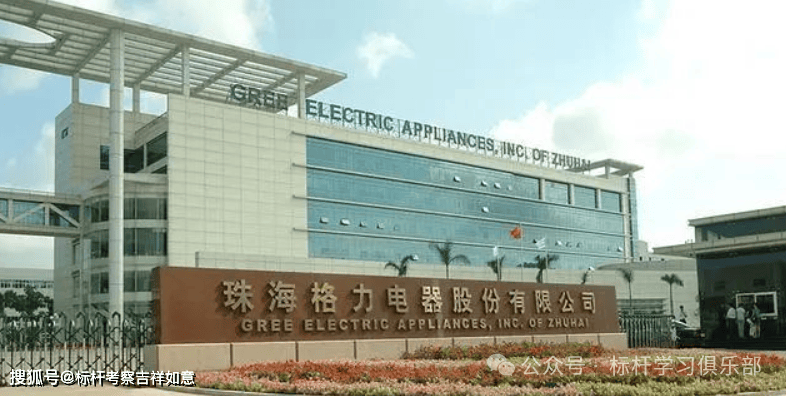
Group 1 - Gree Electric Appliances, founded in 1991, has evolved from assembling household air conditioners to a diversified global industrial manufacturing group, exporting products to over 180 countries and regions [2] - Gree has maintained the top position in China's air conditioning industry for 20 consecutive years and has been the world's leading air conditioner manufacturer for 10 years since 2005 [2] - The company holds 12 core technologies recognized as "internationally leading" and has applied for over 15,600 patents, including nearly 5,000 invention patents [2] Group 2 - Gree's Chairman and President, Dong Mingzhu, was named one of Forbes' "Most Powerful Women in the World" in 2019, ranking 44th and being the top Chinese female entrepreneur on the list [2] Group 3 - The company emphasizes self-innovation and smart manufacturing, focusing on lean management in production and unique corporate culture, marketing models, and quality management [6] - Gree's experience and methods are seen as valuable for other enterprises looking to enhance their management practices [6] Group 4 - Gree's headquarters features advanced technology, including a robot band and precision manufacturing processes, showcasing the company's commitment to innovation and quality [9] - The company has developed technologies such as a 48V safe voltage light-storage system and a three-cylinder dual-stage variable capacity compressor that operates efficiently even at -35°C [9]
破冰之旅:一位工程师与他的工业“火眼金睛”传奇——江苏伊维达智能科技股份有限公司董事长王晓强
Sou Hu Cai Jing· 2025-10-27 07:55
Core Insights - The article highlights the journey of a dedicated engineer who transformed the raw material testing industry in China, overcoming technological monopolies and establishing a strong domestic presence in the field [1][3][4]. Group 1: Historical Context - In the 1990s, China faced a "hollowing out" dilemma in core detection equipment, prompting a shift from academia to industry by a passionate scholar, Wang Xiaoqiang [3][4]. - Wang's pivotal experience in the U.S. revealed the precision and efficiency of Western industrial practices, leading to his decision to leave academia and pursue practical applications of technology [3][4]. Group 2: Technological Breakthroughs - The initial phase of the company involved significant challenges, including a lack of core technical data and equipment, which the team overcame through persistent experimentation and manual measurements [4][5]. - In 2002, the introduction of the "full cross-section spiral drilling sampling technology" marked a significant milestone for China in the raw material testing sector, enhancing detection capabilities and altering industry standards [4][5]. Group 3: Transition to Intelligent Manufacturing - The company transitioned from mechanical to intelligent manufacturing by integrating advanced technologies such as industrial robots and laser detection, leading to competitive advantages in the market [5][6]. - Notable successes included winning bids against international firms for major projects, establishing China's presence in the intelligent detection equipment sector [5][6]. Group 4: Global Expansion - The company began exporting its technology internationally, with significant projects in South America and other regions, showcasing the global recognition of Chinese technology standards [6][7]. - The establishment of a robust intellectual property system and understanding of international standards facilitated the company's adaptability in various markets [6][7]. Group 5: Commitment to Industry Standards - The company emphasizes a commitment to national industrial safety over mere profit, actively participating in the formulation of industry standards and earning respect within the sector [7][11]. - A significant portion of revenue is reinvested into research and development, fostering innovation and nurturing talent within the industry [7][11]. Group 6: Future Vision - The company aims to continue advancing in the intelligent detection field by integrating emerging technologies such as artificial intelligence and big data [12][13]. - Wang Xiaoqiang's ongoing passion and hands-on approach reflect the resilience and ingenuity characteristic of Chinese entrepreneurs, symbolizing a hopeful future for the industry [12][13].
创新中国开启关键五年——“十五五”科技坐标解读①
Ke Ji Ri Bao· 2025-10-27 01:40
Core Points - The 20th Central Committee's Fourth Plenary Session approved the "Suggestions on Formulating the 15th Five-Year Plan for National Economic and Social Development," outlining a strategic framework for the next five years [1] - Emphasis on accelerating high-level technological self-reliance and innovation as a key driver for new quality productivity [1][18] - The 15th Five-Year Plan is seen as a critical period for achieving a high level of technological self-reliance and building a strong technological nation [16] Group 1: Five-Year Plan Significance - The Five-Year Plan serves as a guiding star for long-term economic and social development, playing a crucial role in directing national economic growth and technological innovation [4][10] - Experts highlight the importance of the Five-Year Plan in establishing long-term goals and directions for economic and technological development, showcasing its continuity and innovation [4][10] - The plan has historically facilitated significant advancements in China's technological capabilities, transitioning from a follower to a leader in various fields [6][10] Group 2: Technological Advancements - China's global innovation index ranking has improved from 34th in 2012 to 10th in 2025, with high-level international journal papers and patent applications leading the world for five consecutive years [6] - The "14th Five-Year Plan" has positioned innovation-driven development at the core of national modernization, emphasizing original innovation and strengthening foundational research [10][12] - The plan has led to significant achievements in various sectors, including space exploration, electric vehicles, and deep-sea exploration, marking a period of remarkable technological progress [10][12] Group 3: Future Outlook - The 15th Five-Year Plan is expected to further enhance technological self-reliance and support the modernization of China through strategic innovation [15][16] - Experts stress the need for original innovation and the integration of technological and industrial innovation to meet new demands arising from demographic changes and economic transformation [16][18] - The upcoming five years are viewed as critical for seizing opportunities in the new technological revolution and enhancing national competitiveness in the global arena [16][18]

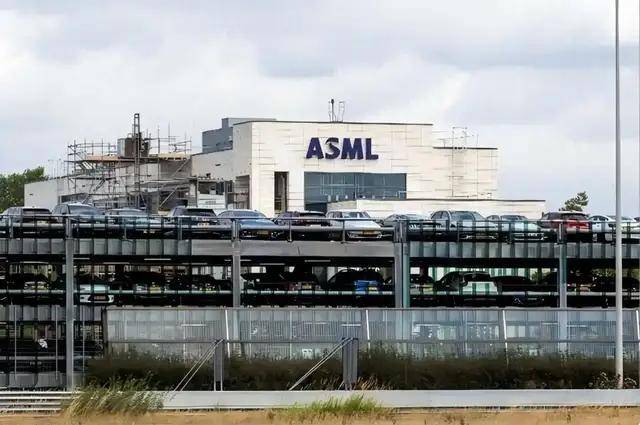
阿斯麦公司前CEO承认把中国逼上了自主道路,最终将反噬自身
Sou Hu Cai Jing· 2025-10-27 01:40
Core Viewpoint - The article discusses the critical role of ASML's extreme ultraviolet (EUV) lithography machines in the global semiconductor industry and highlights China's response to technology restrictions by accelerating its own innovation efforts [1][3][9]. Group 1: Technology Restrictions and Responses - The U.S. government pressured the Dutch government to prevent ASML from selling advanced EUV machines to China, leading to increasing sanctions over the years [3]. - By 2024, ASML's CFO indicated that advanced lithography machines for 7nm processes and above were no longer sold to China, with the first second-generation lithography machine sold to Intel in 2025 [3][5]. - ASML's CEO noted that completely excluding China from the technology landscape is impossible due to its vast talent pool [3][9]. Group 2: China's Innovations in Lithography - Despite technology restrictions, China has made significant advancements in lithography technology, with Shanghai Micro Electronics being the only domestic company capable of producing high-end lithography machines [5]. - The Chinese Academy of Sciences announced a breakthrough in all-solid-state deep ultraviolet light source technology, which is smaller and more energy-efficient, theoretically suitable for 3nm chip manufacturing [5]. - Companies like Jingrui Materials and Nanda Optoelectronics have developed photoresists suitable for 7nm processes, demonstrating progress in critical components [5]. Group 3: Market Growth and Future Trends - The demand for lithography machines in China is expected to grow rapidly, with the market projected to exceed 60 billion yuan by 2025 and an annual compound growth rate of over 30% [7]. - The competition in the lithography sector between China and the U.S. will focus on domestic substitution and achieving breakthroughs in advanced processes [7]. - China's initiatives, including the "Belt and Road" strategy, may help establish a more independent semiconductor ecosystem by promoting mid-to-low-end production capabilities [7].

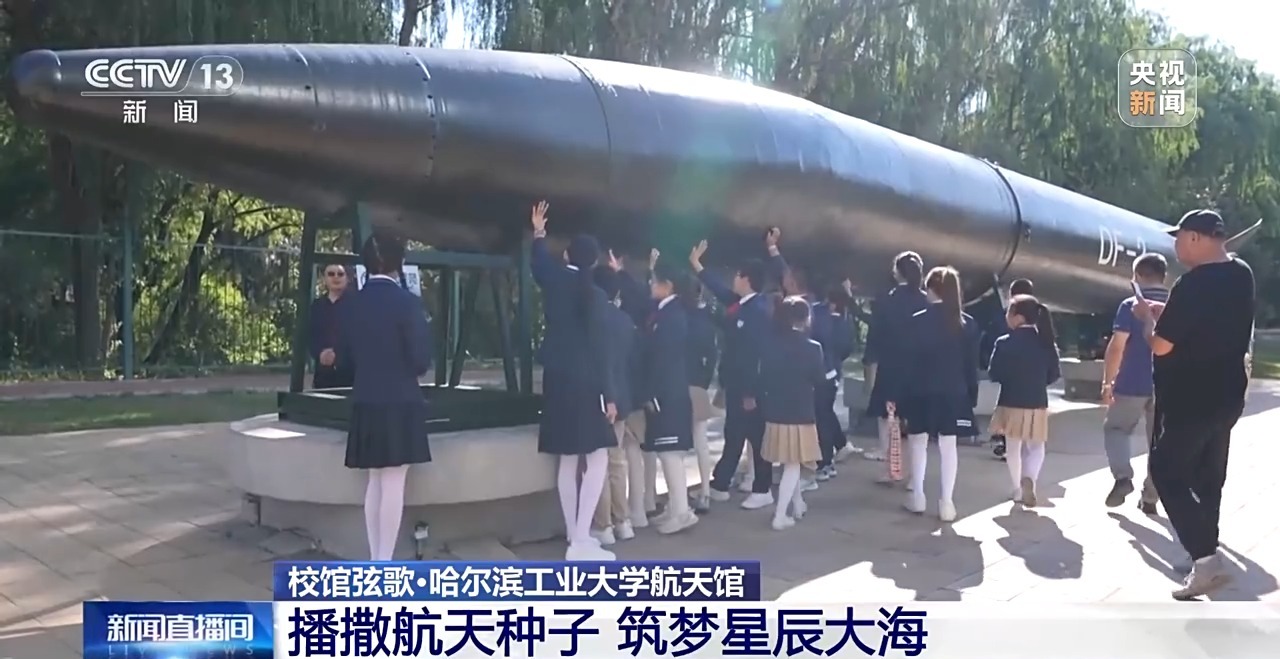
校馆弦歌丨哈工大航天馆成青少年“打卡”热地 在这里播种星辰大海梦想
Yang Shi Xin Wen Ke Hu Duan· 2025-10-27 01:37
Core Viewpoint - The Harbin Institute of Technology (HIT) Aerospace Museum serves as a significant educational and inspirational hub for youth, showcasing the achievements and history of China's space exploration over the past 69 years, while fostering interest in aerospace among young generations [1][8][18]. Group 1: Museum Significance - The HIT Aerospace Museum is the largest and most diverse aerospace-themed exhibition hall in Chinese universities, featuring valuable exhibits that connect the history of China's space endeavors [1]. - The museum transforms into a joyful aerospace classroom on weekends, where children engage with real aerospace artifacts, enhancing their understanding of space [4]. - The museum acts as a bridge between the past and future of China's aerospace achievements, making the history of space exploration relatable and inspiring for the younger generation [18]. Group 2: Educational Impact - Students express admiration for the perseverance of scientists like Academician Sun Jiadong, who overcame technological challenges to develop the Beidou satellite system [3]. - Hands-on activities, such as model assembly, provide students with a tangible understanding of the complexities and rigor of aerospace engineering [6]. - The museum encourages creativity among youth, with students aspiring to contribute to future aerospace projects, such as space debris management satellites [21]. Group 3: Achievements in Aerospace - HIT has successfully launched 36 satellites since pioneering university-led satellite development in 2004, marking significant milestones in China's aerospace history [19]. - The museum features advanced equipment like the "Wen Tian" robotic arm, which has completed over 60 tasks in orbit, showcasing China's technological advancements in space [12]. - Collaborative efforts among various academic teams have led to innovative solutions in lunar sampling and other space missions, integrating academic knowledge into national strategies [14].
“横竖”都是第一,底气何来(创新谈)
Ren Min Ri Bao· 2025-10-26 22:03
Core Viewpoint - The construction of the Huajiang Gorge Bridge exemplifies China's advancements in engineering technology through independent innovation and the strengthening of the "engineer dividend," showcasing the country's exceptional organizational and collaborative capabilities in complex mega-system engineering [1][4]. Group 1: Engineering Technology Breakthroughs - The Huajiang Gorge Bridge, with a total length of 2890 meters and a main span of 1420 meters, is the world's highest bridge at a vertical height of 625 meters above the water surface, marking a significant achievement in engineering technology [1][2]. - The project utilized 2000 MPa high-strength steel wires, capable of lifting 10 small cars, and incorporated advanced technologies such as a Doppler laser radar wind measurement system and a "smart cable" system, demonstrating a shift from following foreign practices to developing proprietary technologies and standards [2][3]. Group 2: Project Management and Innovation - The construction team integrated multiple cutting-edge technologies to create a "cloud construction" system, completing 21,000 tons of steel beam alignment in just 73 days and paving 38,000 square meters of bridge surface in over a month, significantly reducing the construction cycle [3]. - The project adopted a "ranking system" to form specialized teams, gathering technical expertise and promoting the deep integration of innovative results with engineering practice, reflecting China's strong organizational and collaborative capabilities in complex engineering projects [3]. Group 3: Role of Engineers and Future Directions - Engineers are recognized as a vital force in advancing engineering technology and are essential to national strategic talent, with the Huajiang Gorge Bridge project team overcoming numerous world-class challenges and receiving the "National Excellent Engineer Team" honor [4]. - China is positioned at the forefront of engineering technology, particularly in major infrastructure construction, but still has room for improvement in key materials, core components, and supporting software, emphasizing the need for enhanced independent innovation capabilities to meet national strategic demands [4].
5G通信ETF(515050)、创业板人工智能ETF(159381)强势反弹一度涨超3%,科技自立自强是“十五五”规划的战略主轴
Mei Ri Jing Ji Xin Wen· 2025-10-26 10:10
Group 1 - The A-share market saw a collective rise in major indices after two days of adjustment, with the 5G communication ETF (515050) increasing by 3.43% and exceeding a transaction volume of 200 million yuan, with over 80% of its holdings rising, including significant gains from companies like Lianxu Electronics and Shenzhen South Circuit [1] - ByteDance launched a 3D generative model, Seed3D1.0, which accelerates AI model iteration and enhances embodied intelligence, while major players like Kuaishou are rapidly entering the AI programming sector with new products [1] - The AI programming market is expected to see significant commercialization potential as companies like Alibaba and ByteDance follow suit in developing AI programming products [1] Group 2 - Dongfang Jincheng emphasized that independent innovation and technological self-reliance are the strategic focus of the 14th Five-Year Plan, driven by external pressures such as US high-tech restrictions and the need for domestic technological advancement [2] - The plan aims to build a modern industrial system and expand domestic demand as the three pillars for high-quality development during the 14th Five-Year period [2] Group 3 - The 5G communication ETF (515050) tracks the CSI 5G Communication Theme Index, with a total scale exceeding 8 billion yuan, focusing on the supply chains of companies like Nvidia, Apple, and Huawei [3] - The index has a high purity in "hard technology," with nearly 80% of its weight in communication and electronics sectors, directly benefiting from 5G network infrastructure [3] - The AI ETF (159381) tracks the entrepreneurial board AI index, with a significant focus on companies in the AI application space, featuring a low comprehensive fee rate of 0.20% [3]
