逆全球化

Search documents
清华大学阎学通:2026年国际形势的动荡情况将弱于2025年,中美实力差距一定会缩小
Sou Hu Cai Jing· 2025-11-27 08:51
Core Viewpoint - The international situation in 2026 will be less turbulent than in 2025, primarily influenced by the behavior of major power decision-makers rather than structural factors [2][5][6]. Group 1: International Relations Dynamics - The turbulence in international relations in 2026 is expected to be weaker than in 2025 due to the continuity of Trump's leadership, which will provide more predictability [6][7]. - Major power decision-makers have learned how to respond to Trump's policies, leading to a reduction in uncertainty and turbulence [7][8]. - The lack of leadership in global governance will continue, with a regression in global governance and an increase in de-globalization [8][9]. Group 2: U.S.-China Relations - The power gap between China and the U.S. is anticipated to narrow in 2026, as Trump's policies may hinder U.S. economic growth and technological advancement [9][10]. - The strategic relationship between the U.S. and its allies is expected to weaken, prompting these countries to reconsider their balance between the U.S. and China [9][10]. - The U.S. will maintain its policy of containing China's technological progress, regardless of the administration in power, as technological innovation is seen as a core element of national security and global influence [12][13]. Group 3: Regional Relationships - China's relationships with neighboring countries, excluding Japan, are expected to improve in 2026, with a notable shift in India's stance towards China [10][11]. - The political concept of the "West" is becoming less relevant due to increasing divisions among Western countries, particularly between the U.S. and Europe [11].

中加基金配置周报|中日关系持续恶化,全球风险偏好回落
Xin Lang Ji Jin· 2025-11-27 08:10
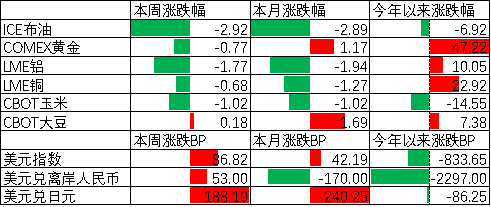
Group 1 - The new LPR in China remains stable for the sixth consecutive month, with the 1-year and 5-year rates at 3.0% and 3.5% respectively [1] - The U.S. non-farm employment increased by 119,000 in September, exceeding expectations, but the unemployment rate unexpectedly rose to 4.4%, the highest since October 2021 [1] - The U.S. manufacturing PMI for November is at 51.9, a four-month low, while the services PMI is at 55, a four-month high, indicating mixed economic signals [1] Group 2 - The Federal Reserve's October meeting minutes reveal significant divisions among officials regarding future rate cuts, with some advocating for a potential cut in December [2] - New York Fed President Williams suggests there is still room for further rate cuts as the labor market cools, while other officials express caution about high asset valuations [2] - Market expectations for a December rate cut have increased, with probabilities rising from 44% to 71% following supportive comments from several Fed officials [13] Group 3 - In the futures market, various commodities experienced price declines, with ICE Brent crude oil down 2.92% and COMEX gold down 0.77% [4] - The U.S. dollar index rose by 86.82 basis points, influenced by deteriorating Sino-Japanese relations and Fed meeting minutes that dampened rate cut expectations [4] - The A-share market saw declines across major indices, with the ChiNext index dropping 6.15%, attributed to falling risk appetite and Fed meeting outcomes [6] Group 4 - The bond market showed mixed movements, with credit bonds slightly rising while interest rate bonds experienced minor fluctuations [10] - U.S. Treasury yields generally declined, particularly the 5-year yield, which fell by 12 basis points, amid mixed economic signals and Fed officials' support for potential rate cuts [12]
西南期货早间评论-20251127
Xi Nan Qi Huo· 2025-11-27 02:41
2025 年 11 月 27 日星期四 重庆市江北区金沙门路 32 号 23 层; 023-63638617 上海市浦东新区世纪大道 210 号 10 楼 1001; 1 市场有风险 投资需谨慎 地址: 电话: | | | | 铅: | | 15 | | --- | --- | --- | | 锡: | | 15 | | 镍: | | 16 | | 豆油、豆粕: | | 16 | | 棕榈油: | | 17 | | 菜粕、菜油: | | 17 | | 棉花: | | 18 | | 白糖: | | 19 | | 苹果: | | 20 | | 生猪: | | 21 | | 鸡蛋: | | 21 | | 玉米&淀粉: | | 22 | | 免责声明 | | 24 | 当前国内经济保持平稳,但国内宏观经济复苏动能不强,企业盈利增速处在低位。 但是,一方面国内资产估值水平处在低位,估值修复仍有空间;另一方面,中国经济 有足够韧性。近期,市场情绪明显升温,增量资金持续入场。近期中美经贸不确定性 有所缓解,预计股指波动中枢将逐步上移,可择机做多。 小结:预计波动中枢将逐步上移,可择机做多。 国债: 上一交易日,国债期货全线 ...
西南期货早间评论-20251126
Xi Nan Qi Huo· 2025-11-26 11:43
2025 年 11 月 26 日星期三 重庆市江北区金沙门路 32 号 23 层; 023-63638617 国债: 上一交易日,国债期货收盘多数下跌,30 年期主力合约跌 0.33%报 115.160 元, 10 年期主力合约跌 0.08%报 108.220 元,5 年期主力合约持平于 105.980 元,2 年期主 力合约涨 0.01%报 102.422 元。 上海市浦东新区世纪大道 210 号 10 楼 1001; 1 市场有风险 投资需谨慎 地址: 电话: | | | | 铅: | | 15 | | --- | --- | --- | | 锡: | | 15 | | 镍: | | 16 | | 豆油、豆粕: | | 16 | | 棕榈油: | | 17 | | 菜粕、菜油: | | 18 | | 棉花: | | 18 | | 白糖: | | 19 | | 苹果: | | 20 | | 生猪: | | 21 | | 鸡蛋: | | 21 | | 玉米&淀粉: | | 22 | | 免责声明 | | 24 | 公开市场方面,央行公告称,11 月 25 日以固定利率、数量招标方式开展了 3021 亿元 7 ...
西南期货早间评论-20251125
Xi Nan Qi Huo· 2025-11-25 07:17
1. Report Industry Investment Ratings No industry investment ratings are provided in the report. 2. Core Views of the Report - **Treasury Bonds**: Expected to face some pressure, maintain a cautious stance [6][7]. - **Stock Index Futures**: The volatility center is expected to gradually move up, and investors can choose the right time to go long [9][10]. - **Precious Metals**: Temporarily wait and observe, and wait for opportunities to go long [11][12]. - **Rebar and Hot - Rolled Coils**: The medium - term weakness of rebar prices is difficult to change, and hot - rolled coils may follow a similar trend. Investors can focus on shorting opportunities at high levels during rebounds [12]. - **Iron Ore**: The supply - demand pattern is weak, and investors can focus on shorting opportunities at high levels [14]. - **Coking Coal and Coke**: May continue to correct in the short term, and investors can focus on buying opportunities during corrections [16]. - **Ferroalloys**: The overall surplus pressure is weakening. After a decline, investors can consider low - level opportunities when the spot falls into the loss range again [19]. - **Crude Oil**: Focus on short - term long - buying opportunities for the main contract [22]. - **Fuel Oil**: Temporarily wait and observe for the main contract [25]. - **Polyolefins**: Focus on long - buying opportunities [27]. - **Synthetic Rubber**: Expected to have a wide - range consolidation with limited downward space, and pay attention to raw material prices and supply changes [28]. - **Natural Rubber**: Focus on long - buying opportunities [32]. - **PVC**: Pay attention to changes on the supply side [36]. - **Urea**: The downward space is limited [38]. - **PX**: May have an oscillatory adjustment in the short term, control positions, and be vigilant about crude oil changes [39]. - **PTA**: May oscillate in the short term, be cautious, control risks, and pay attention to oil price changes [40]. - **Ethylene Glycol**: May be under pressure in the short term, and pay attention to port inventory and supply changes [41]. - **Short - Fiber**: May oscillate following costs in the short term, control risks, and pay attention to cost changes and macro - policy adjustments [43]. - **Bottle Chips**: Expected to oscillate following the cost side, and control risks [44]. - **Lithium Carbonate**: Pay attention to consumption sustainability and mine restart progress [45]. - **Copper**: Expected to have a high - level oscillation [48]. - **Aluminum**: Expected to have a phased correction [50]. - **Zinc**: Expected to oscillate within a range [52]. - **Lead**: Expected to have a wide - range oscillation [54]. - **Tin**: The price is expected to rise [55]. - **Nickel**: Expected to oscillate [56]. - **Soybean Oil and Soybean Meal**: For soybean meal, consider exiting long positions when it continues to rise; for soybean oil, consider long - buying opportunities in the low - cost support range [58]. - **Palm Oil**: Consider buying on corrections [60]. - **Rapeseed Meal and Rapeseed Oil**: Consider a bullish approach for rapeseed oil [63]. - **Cotton**: The price is expected to be weak [67][68]. - **Sugar**: The price is expected to be under pressure and oscillate weakly [72][73]. - **Apples**: The price is expected to be strong [75]. - **Hogs**: Consider short - selling opportunities on rebounds and follow consumption changes [78]. - **Eggs**: Consider closing short positions and then temporarily wait and observe [82]. - **Corn and Starch**: For corn, it is advisable to wait and observe; corn starch may follow the corn market [85][86]. 3. Summary by Related Catalogs Treasury Bonds - **Market Performance**: On the previous trading day, most treasury bond futures closed down. The 30 - year main contract fell 0.31% to 115.570 yuan, the 10 - year main contract fell 0.04% to 108.430 yuan, the 5 - year main contract fell 0.06% to 105.855 yuan, and the 2 - year main contract remained flat at 102.460 yuan [5]. - **Policy and News**: The central bank conducted 375 billion yuan of 7 - day reverse repurchase operations on November 21, with a net investment of 162.2 billion yuan. The National Development and Reform Commission issued a notice on the management measures for central budget - inner investment in rural revitalization [5]. Stock Index Futures - **Market Performance**: On the previous trading day, stock index futures showed mixed results. The CSI 300 index futures (IF) main contract fell 0.13%, the SSE 50 index futures (IH) main contract fell 0.20%, the CSI 500 index futures (IC) main contract rose 0.55%, and the CSI 1000 index futures (IM) main contract rose 0.84% [8]. - **Industry Situation**: As of the end of October, the national cumulative installed power generation capacity was 3.75 billion kilowatts, a year - on - year increase of 17.3%. The domestic economic recovery momentum is not strong, but the valuation of domestic assets is low, and the market sentiment has warmed up recently [9]. Precious Metals - **Market Performance**: On the previous trading day, the gold main contract closed at 930.32, up 0.36%, and the night - session closed at 938.68; the silver main contract closed at 11,808, up 1.10%, and the night - session closed at 11,975 [11]. - **Industry Situation**: The global trade and financial environment is complex. The "anti - globalization" and "de - dollarization" trends are beneficial to the allocation and hedging value of gold. The slowdown of the US labor market and the expected Fed rate cuts are also beneficial to precious metals [11]. Rebar and Hot - Rolled Coils - **Market Performance**: On the previous trading day, rebar and hot - rolled coil futures rebounded slightly. The spot price of Tangshan common carbon billet was 2,980 yuan/ton, the spot price of Shanghai rebar was between 3,090 - 3,250 yuan/ton, and the Shanghai hot - rolled coil was quoted at 3,270 - 3,290 yuan/ton [12]. - **Industry Situation**: In the medium term, the price of finished products is dominated by industrial supply - demand logic. The demand for rebar is declining year - on - year, and the market will enter the off - season. The supply side has over - capacity, and the inventory pressure is obvious [12]. Iron Ore - **Market Performance**: On the previous trading day, iron ore futures oscillated and consolidated. The spot price of PB powder at the port was 795 yuan/ton, and the spot price of Super Special powder was 675 yuan/ton [14]. - **Industry Situation**: Since October, the daily output of hot metal has declined, the import volume of iron ore has increased year - on - year, and the port inventory has continued to rise [14]. Coking Coal and Coke - **Market Performance**: On the previous trading day, coking coal and coke futures continued to be weak [16]. - **Industry Situation**: For coking coal, the impact of safety inspections on production is weakening, and the supply has increased. For coke, the fourth - round increase in the spot purchase price has been implemented, but the demand from steel mills may weaken [16]. Ferroalloys - **Market Performance**: On the previous trading day, the manganese - silicon main contract rose 0.50% to 5,630 yuan/ton, and the silicon - iron main contract rose 0.04% to 5,456 yuan/ton [18]. - **Industry Situation**: The supply of manganese ore from Gabon has decreased, and the port inventory has decreased slightly. The cost of ferroalloys has increased, and the output has decreased. The overall surplus pressure has weakened [18][19]. Crude Oil - **Market Performance**: On the previous trading day, INE crude oil rebounded after hitting a low [20]. - **Industry Situation**: The number of active oil and gas rigs in the US has increased for three consecutive weeks. The "28 - point" new plan has brought new changes to the Russia - Ukraine conflict [20][21]. Fuel Oil - **Market Performance**: On the previous trading day, fuel oil rebounded after hitting a low and closed below the moving average group [23]. - **Industry Situation**: The narrowing of the Asian fuel oil spot discount and the new plan for the Russia - Ukraine conflict are negative for fuel oil prices [24]. Polyolefins - **Market Performance**: On the previous trading day, the Hangzhou PP market oscillated downward, and the Yuyao LLDPE market had partial price drops [26]. - **Industry Situation**: The average start - up rate of the domestic polypropylene downstream industry has increased. The demand for modified PP and PP non - woven fabrics is strong, while the demand for traditional PP products is weak [26]. Synthetic Rubber - **Market Performance**: On the previous trading day, the synthetic rubber main contract fell 0.81%. The price in Shandong was adjusted down to 11,200 yuan/ton, and the basis was stable [28]. - **Industry Situation**: The international oil price is low, the supply of butadiene is loose, and the supply of synthetic rubber is also loose. The demand from tire enterprises is weak, and the inventory has increased [29]. Natural Rubber - **Market Performance**: On the previous trading day, the natural rubber main contract fell 0.10%, and the 20 - rubber main contract fell 0.53%. The Shanghai spot price was stable at around 14,800 yuan/ton, and the basis was stable [31]. - **Industry Situation**: The supply of natural rubber is affected by weather, and the demand from some enterprises has decreased. The inventory has increased slightly [31]. PVC - **Market Performance**: On the previous trading day, the PVC main contract rose 0.47%, and the spot price increased by 10 - 20 yuan/ton. The basis was stable [33]. - **Industry Situation**: The supply of PVC exceeds demand, but the downward space is limited. The supply has increased this week, and the demand is mixed. The cost and profit have changed [33]. Urea - **Market Performance**: On the previous trading day, the urea main contract fell 1.15%. The price in Shandong Linyi was adjusted down by 10 yuan/ton, and the basis slightly widened [37]. - **Industry Situation**: The total production of urea has increased, the start - up rate has slightly decreased, and the demand from downstream products has changed differently. The inventory of urea enterprises is lower than expected [37]. PX - **Market Performance**: On the previous trading day, the PX main contract fell 0.06%. The PXN spread was adjusted to 260 US dollars/ton, and the short - process profit was stable [39]. - **Industry Situation**: The PX load has increased, and the import volume has decreased. The short - term PXN spread is strong, and the supply has decreased slightly. The cost side is oscillating, and there is a lack of driving force [39]. PTA - **Market Performance**: On the previous trading day, the PTA2601 main contract rose 0.04% [40]. - **Industry Situation**: The PTA load has decreased, the polyester load is stable, and the processing fee has declined. The cost side is weak, and the raw material PX price support is limited [40]. Ethylene Glycol - **Market Performance**: On the previous trading day, the ethylene glycol main contract rose 1.68% [41]. - **Industry Situation**: The overall start - up load of ethylene glycol has decreased, the port inventory is stable, and the demand from the downstream polyester industry is weak [41]. Short - Fiber - **Market Performance**: On the previous trading day, the short - fiber 2602 main contract rose 0.91% [42]. - **Industry Situation**: The short - fiber supply is at a relatively high level, the demand has not changed much, and the cost drive has increased [43]. Bottle Chips - **Market Performance**: On the previous trading day, the bottle chips 2601 main contract rose 0.28% [44]. - **Industry Situation**: The raw material price support is limited, the bottle chips load is stable, the export growth rate has slowed down, and the supply - demand contradiction is not obvious. The main logic lies in the cost side [44]. Lithium Carbonate - **Market Performance**: On the previous trading day, the main contract fell 2.88% to 90,480 yuan/ton [45]. - **Industry Situation**: The production of lithium carbonate is at a high level, and the demand from the energy storage and power battery sectors has improved. The social inventory is gradually decreasing [45]. Copper - **Market Performance**: On the previous trading day, the Shanghai copper main contract closed at 86,040 yuan/ton, unchanged [46]. - **Industry Situation**: The supply of copper concentrate is tight, the smelting profit is poor, and the demand from the real economy is weak. The global liquidity is loose, which provides support for copper prices [47]. Aluminum - **Market Performance**: On the previous trading day, the Shanghai aluminum main contract closed at 21,405 yuan/ton, up 0.12%; the alumina main contract closed at 2,733 yuan/ton, up 0.07% [49]. - **Industry Situation**: The supply of bauxite is sufficient, the alumina supply is in surplus, and the electrolytic aluminum production is stable. The demand is seasonally weak, and the aluminum price may be under pressure in the short term [49]. Zinc - **Market Performance**: On the previous trading day, the Shanghai zinc main contract closed at 22,320 yuan/ton, down 0.13% [51]. - **Industry Situation**: The processing fee of zinc concentrate has declined rapidly, and some smelting enterprises are in losses. The demand is in the off - season, and the inventory has increased [51]. Lead - **Market Performance**: On the previous trading day, the Shanghai lead main contract closed at 17,065 yuan/ton, down 0.58% [53]. - **Industry Situation**: The supply of lead concentrate is tight, the production of secondary lead is growing slowly, and the demand from the battery sector is mixed. The inventory has increased [53]. Tin - **Market Performance**: On the previous trading day, the main contract rose 0.05% to 294,380 yuan/ton [55]. - **Industry Situation**: The supply of tin ore is tight, the production of smelters is affected, and the demand has certain resilience. The refined tin inventory is decreasing [55]. Nickel - **Market Performance**: On the previous trading day, the main contract rose 0.69% to 116,100 yuan/ton [56]. - **Industry Situation**: The price of nickel ore is stable, the production of nickel - iron plants is affected, and the demand from the stainless steel sector is weak. The inventory is relatively high, and the market is in surplus [56]. Soybean Oil and Soybean Meal - **Market Performance**: On the previous trading day, the soybean meal main contract fell 0.20% to 3,011 yuan/ton, and the soybean oil main contract fell 0.46% to 8,168 yuan/ton [57]. - **Industry Situation**: The Brazilian soybean planting progress is slightly slower, and the US soybean harvest is basically completed. The soybean supply is relatively loose, and the demand for soybean oil has improved slightly [57][58]. Palm Oil - **Market Performance**: The Malaysian palm oil has fallen for three consecutive days. The export volume from November 1 - 20 decreased compared with the previous month. The domestic palm oil inventory is at a medium level in the past 7 years [59]. - **Industry Situation**: The price of palm oil may be affected by the exchange rate and demand. The production may decline seasonally, and the inventory may decrease [59]. Rapeseed Meal and Rapeseed Oil - **Market Performance**: The Canadian rapeseed rose slightly. The price of rapeseed oil is affected by the crude oil price. The domestic import of rapeseed meal and rapeseed oil has changed [61][62]. - **Industry Situation**: The inventory of rapeseed in China is at a low level in the past 7 years, and the inventory of rapeseed meal and rapeseed oil is at a relatively high level [62]. Cotton - **Market Performance**: On the previous trading day, domestic Zhengzhou cotton oscillated higher, and the overnight external cotton rebounded slightly [64]. - **Industry Situation**: The USDA has raised the global and US cotton production and inventory forecasts. The domestic cotton production is high, and the downstream demand is weak [64][67]. Sugar - **Market Performance**: On the previous trading day, Zhengzhou sugar rebounded slightly, and the overnight external raw sugar
赵福全:抓住“新汽车”机遇进行战略布局
Zhong Guo Qi Che Bao Wang· 2025-11-24 07:10
Core Insights - The automotive industry is at a pivotal moment, transitioning from globalization to de-globalization, which will last for at least 20 years, necessitating a strategic reassessment [2][3] - The rise of AI is expected to fundamentally reshape both the automotive industry and society, making it essential for the industry to embrace AI to maintain competitive advantage [3][10] Industry Outlook - By 2030, China's automotive industry is projected to achieve total sales of approximately 43 million vehicles globally, with domestic sales exceeding 30 million and overseas sales reaching 11 million [4] - The "new automotive" era will bring revolutionary changes in technology, products, and business models, with a focus on data-driven and intelligent vehicles [7][8] Strategic Recommendations - Companies should leverage partnerships to enter overseas markets efficiently, utilizing shared resources to minimize risks and costs [4] - The focus of competition will shift from individual products to ecosystem competition, emphasizing the importance of mastering system capabilities and core technologies [8][9] AI Integration - AI will enhance the development of intelligent vehicles, with advancements in smart cabins and autonomous driving technologies expected to progress rapidly [10][11] - The automotive industry must view AI as a central component of its competitive strategy, integrating it into all aspects of operations and product development [11] Market Dynamics - The automotive sector is entering a phase of consolidation and restructuring, with a need for companies to adapt to the changing landscape and consumer preferences [8][9] - Brand strength will be crucial for achieving product premiumization, as the industry navigates a period of brand transformation [9]

翼虎周观察 | 同频共振筑底时,结构牛途寻真章
Sou Hu Cai Jing· 2025-11-24 05:42
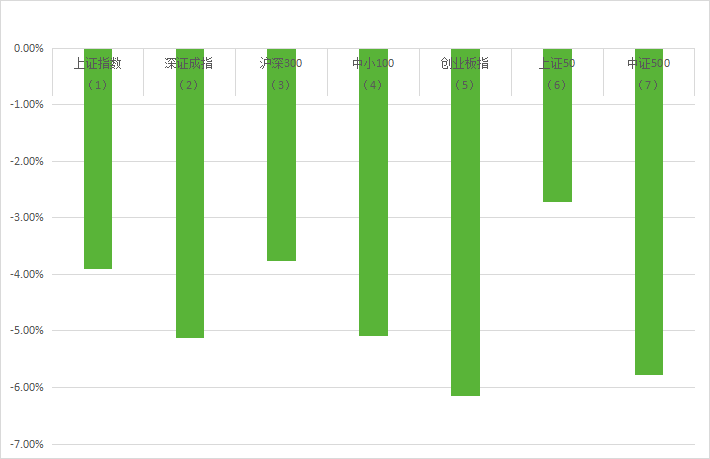
Market Overview - A and H shares continued to be negatively impacted by the Federal Reserve's lower-than-expected interest rate cuts, with significant declines in sectors such as non-ferrous metals and chemicals [1] - The A-share market saw the Shanghai Composite Index down 3.90%, Shenzhen Component Index down 5.13%, and ChiNext Index down 6.15% [3] - Defensive sectors like banking, media, food and beverage, and defense showed relative resilience, while sectors like power equipment, basic chemicals, and steel experienced significant declines [1][3] Industry Dynamics - The pharmaceutical industry index fell 6.88%, with sub-sectors like chemical pharmaceuticals and bioproducts declining by 7.02% and 7.46% respectively [5] - Eli Lilly became the first global healthcare company to reach a market capitalization of $1 trillion, driven by its GLP-1 weight loss drug contributing 55% of its revenue [7] - Moderna announced the termination of three mRNA projects and secured a $15 billion loan, focusing future efforts on oncology and rare diseases [7] - Innovative drug companies like BeiGene and Innovent Biologics reported significant revenue growth, with BeiGene's global revenue reaching $1 billion, up 51% year-on-year [8] Technology Sector - The technology sector faced significant adjustments, with the Hang Seng Technology Index dropping 7.18% [10] - Nvidia reported Q3 revenue of $57 billion, exceeding expectations, with data center revenue of $51.2 billion, up 66% year-on-year [17] - Google launched the Gemini 3 model, achieving breakthroughs in multi-modal understanding and reasoning capabilities, surpassing competitors [12] - Alibaba's AI application "Qianwen" quickly rose to the fourth position in the App Store rankings, aiming to become a personal AI assistant [13] Investment Strategies - Investment strategies are focusing on technological transformation and de-globalization, with an emphasis on AI and innovative pharmaceuticals [3] - The market is expected to enter a bottoming phase after two weeks of significant adjustments, with a long-term view of a structural bull market [1][3] - The focus is on identifying undervalued technology players within the overseas supply chain [2]


西南期货早间评论-20251121
Xi Nan Qi Huo· 2025-11-21 03:01
2025 年 11 月 21 日星期五 重庆市江北区金沙门路 32 号 23 层; 023-63638617 上海市浦东新区世纪大道 210 号 10 楼 1001; 1 市场有风险 投资需谨慎 地址: 电话: | | | | 铅: | | 15 | | --- | --- | --- | | 锡: | | 15 | | 镍: | | 16 | | 豆油、豆粕: | | 16 | | 棕榈油: | | 17 | | 菜粕、菜油: | | 17 | | 棉花: | | 18 | | 白糖: | | 19 | | 苹果: | | 20 | | 生猪: | | 20 | | 鸡蛋: | | 21 | | 玉米&淀粉: | | 22 | | 免责声明 | | 23 | 国债: 上一交易日,国债期货收盘多数上涨,30 年期主力合约跌 0.21%报 115.870 元, 10 年期主力合约涨 0.06%报 108.485 元,5 年期主力合约涨 0.06%报 105.935 元,2 年 期主力合约持平于 102.462 元。 公开市场方面,央行公告称,11 月 20 日以固定利率、数量招标方式开展了 3000 亿元 7 ...
西南期货早间评论-20251120
Xi Nan Qi Huo· 2025-11-20 02:52
Report Industry Investment Ratings No specific industry investment ratings are provided in the report. Core Views - The macro - economic recovery momentum needs to be strengthened, and the monetary policy is expected to remain loose. Different commodities have different market trends and investment suggestions due to their own supply - demand relationships, cost factors, and external market environments [5]. Summary by Commodity Categories Fixed - Income - **Treasury Bonds**: The previous trading day saw a decline in treasury bond futures. With the current macro - economic situation and market conditions, there is still some pressure on treasury bond futures, and caution is advised [5]. - **Stock Index Futures**: The previous trading day showed mixed performance. Given the current domestic economic situation, market sentiment, and external factors, the risk of a significant decline is low, and investors can choose the right time to go long [7][8]. Precious Metals - **Gold and Silver**: The previous trading day witnessed price increases. Considering the global trade and financial environment, central bank actions, and the current price level, it is advisable to wait and see for a long - position opportunity [10]. Base Metals - **Copper**: The previous trading day had a slight increase. Affected by macro - economic factors and supply - demand relationships, copper prices are expected to fluctuate at a high level [47]. - **Aluminum**: The previous trading day had a slight decline. Alumina supply is relatively loose, and aluminum needs to beware of seasonal consumption pressure and profit - taking, with a possible phased correction [49]. - **Zinc**: The previous trading day remained flat. With tight supply of zinc concentrates and weak downstream demand, zinc prices are expected to fluctuate within a range [52]. - **Lead**: The previous trading day had a slight increase. Due to supply and demand factors, lead prices are expected to operate within a range [54]. - **Tin**: The previous trading day had a slight decline. With tight supply and certain demand support, tin prices are expected to fluctuate strongly [56]. - **Nickel**: The previous trading day had an increase. Facing supply - demand contradictions, nickel prices are expected to fluctuate [58]. Ferrous Metals - **Rebar and Hot - Rolled Coil**: The previous trading day had a slight decline. Considering supply - demand relationships and technical aspects, prices are expected to be weak in the medium - term, and investors can focus on short - selling opportunities at high levels during rebounds [12]. - **Iron Ore**: The previous trading day had a slight rebound. With a weak supply - demand pattern and technical resistance, investors can focus on short - selling opportunities at high levels [14]. - **Coking Coal and Coke**: The previous trading day had a significant decline. Based on supply - demand changes and technical analysis, there may be a short - term correction, and investors can focus on buying opportunities during the correction [16]. - **Ferroalloys**: The previous trading day had a decline. With high - level production decline, weak demand recovery, and cost support, investors can consider long - position opportunities at low levels [18]. Energy - **Crude Oil**: The previous trading day had an upward trend. Considering supply - demand factors and market news, there are concerns about supply surplus, and investors can focus on short - selling opportunities in the short - term [20][21]. - **Fuel Oil**: The previous trading day had a weak performance. With mixed supply - demand factors, investors can focus on short - selling opportunities [23][24]. Chemicals - **Polyolefins**: The previous trading day had a weak performance. With improved downstream demand in some areas, investors can focus on long - position opportunities [26]. - **Synthetic Rubber**: The previous trading day had an increase. It is expected to operate in a volatile manner, and attention should be paid to raw material prices and supply changes [28]. - **Natural Rubber**: The previous trading day had an increase. With supply and demand factors, there is still room for short - term price increases, and investors can focus on long - position opportunities [31]. - **PVC**: The previous trading day had a decline. With an oversupply situation, attention should be paid to supply - side changes [33]. - **Urea**: The previous trading day had a slight increase. It is expected that the market will decline slightly in the next period, but the downside space is limited [35]. - **PX**: The previous trading day had an increase. With improved short - term supply - demand structure, it is expected to fluctuate and adjust, and investors can participate in the range [37]. - **PTA**: The previous trading day had an increase. With low processing fees, low inventory, and cost factors, it is expected to operate in a volatile manner, and caution is needed [39]. - **Ethylene Glycol**: The previous trading day had a decline. With increased supply and inventory, it is expected to be under pressure in the short - term, and attention should be paid to inventory and supply changes [40]. - **Short - Fiber**: The previous trading day had an increase. With high - level supply, stable demand, and enhanced cost - driving, it is expected to fluctuate with costs [43]. - **Bottle Chips**: The previous trading day had an increase. With raw material price support and stable supply and demand, it is expected to follow cost fluctuations [44]. - **Lithium Carbonate**: The previous trading day had a significant increase. With strong supply and demand, inventory is being depleted, and attention should be paid to consumption sustainability [45]. Agricultural Products - **Soybean Oil and Soybean Meal**: The previous trading day had different performances. With sufficient soybean supply and improved demand for soybean oil, investors can focus on long - position opportunities for soybean oil and consider exiting long positions for soybean meal [59]. - **Palm Oil**: The previous trading day had an increase. Affected by supply - demand factors, investors can consider long - position opportunities during corrections [61]. - **Rapeseed Meal and Rapeseed Oil**: The previous trading day had a decline. With supply - demand and external factors, investors can consider a long - position strategy for rapeseed oil [63]. - **Cotton**: The previous trading day had a slight rebound. With increased global and US production and inventory, and domestic supply and demand factors, cotton prices are expected to be weak [66]. - **Sugar**: The previous trading day had a decline. With global production expectations and domestic supply pressure, sugar prices are expected to fluctuate weakly [70]. - **Apples**: The previous trading day had a high - level volatile operation. With current inventory and market conditions, apple prices are expected to operate strongly [74]. - **Pigs**: The previous trading day had a price increase. With sufficient supply and uncertain demand, investors can consider short - selling opportunities during rebounds [77]. - **Eggs**: The previous trading day had a price decline. With high - level supply and weak demand, investors can consider closing short positions gradually [79]. - **Corn and Starch**: The previous trading day had an increase. With new - season corn supply pressure and inventory factors, it is advisable to wait and see for corn, and starch may follow the corn market [81].
日本债券遭遇市场抛售,谷歌Gemini3正式发布 | 财经日日评
吴晓波频道· 2025-11-20 00:30
Group 1: Japan's Economic Outlook - Japan's 10-year government bond yield reached a 17-year high of 1.765%, driven by expectations of significant fiscal spending under Prime Minister Kishida [2] - The 40-year bond yield hit a historical peak of 3.695%, while the 20-year yield reached 2.815%, marking the highest levels since 1999 [2] - The anticipated fiscal expansion is expected to lead to increased government borrowing, contributing to the sell-off in Japanese bonds [2] Group 2: French Investment in China - Approximately 2,800 French companies have established operations in China, making France the largest European investor in the Chinese market [3] - China is the fourth-largest trading partner for France, with French investments in China accounting for one-third of the total [3] - The "France 2030" investment plan aims to inject €54 billion over five years to promote re-industrialization, benefiting foreign investors [3] Group 3: Xiaomi's Financial Performance - Xiaomi reported a total revenue of 113.1 billion yuan for Q3 2025, a year-on-year increase of 22.3%, with adjusted net profit rising 80.9% to 11.3 billion yuan [7] - The smart electric vehicle and AI segment achieved a record revenue of 29 billion yuan, growing 199.2% year-on-year, marking its first profitable quarter [7] - The smartphone and AIoT segments showed modest growth, with challenges anticipated in the automotive sector due to reduced subsidies and increased competition [7] Group 4: Pinduoduo's Revenue Growth - Pinduoduo's Q3 revenue reached 108.28 billion yuan, reflecting a 9% year-on-year growth, with net profit increasing 17% to 29.33 billion yuan [8] - The growth was primarily driven by online marketing services and transaction service revenues, although the pace of growth has slowed [8] - Increased R&D expenses, up 41% year-on-year to 4.33 billion yuan, are aimed at enhancing the company's competitive edge in AI and overseas markets [8][9] Group 5: Baidu's AI Business Performance - Baidu's total revenue for Q3 was 31.2 billion yuan, a 7% decline, while net profit fell 36% to 3.77 billion yuan [10] - The AI business saw over 50% growth, with AI cloud revenue up 33% and AI native marketing services skyrocketing 262% to 2.8 billion yuan [10] - Despite the decline in traditional advertising revenue, Baidu's AI initiatives are showing promise, although profitability remains a concern [10][11] Group 6: Nvidia and Microsoft's Investment in Anthropic - Nvidia and Microsoft announced a collaboration with Anthropic, involving investments of up to $100 billion and $50 billion, respectively [12] - Anthropic plans to purchase $30 billion worth of Azure cloud capacity, indicating strong demand for AI services [12] - The investment cycle raises concerns about potential financial losses if AI products do not generate sufficient returns, despite ongoing advancements in AI technology [13]