
供应链布局

Search documents
锅圈(02517):运营效率优化,提高股东回报
GUOTAI HAITONG SECURITIES· 2025-08-07 05:06
Investment Rating - The investment rating for the company is "Cautious Accumulate" [1]. Core Views - The company's operational efficiency continues to improve in H1 2025, with promising growth potential for future store expansions [2]. - The report maintains an "Accumulate" rating and raises the forecast for the company's net profit attributable to shareholders for 2025-2027 to 4.20 billion, 5.05 billion, and 6.17 billion RMB respectively [11]. Financial Summary - Total revenue for 2023 is reported at 6.094 billion RMB, with projections of 6.470 billion for 2024, 7.451 billion for 2025, 8.309 billion for 2026, and 9.471 billion for 2027, reflecting a growth rate of -15%, 6%, 15%, 12%, and 14% respectively [5]. - Gross profit for 2023 is 1.351 billion RMB, with estimates of 1.417 billion for 2024, 1.654 billion for 2025, 1.845 billion for 2026, and 2.103 billion for 2027 [5]. - The net profit attributable to shareholders is projected to be 240 million RMB for 2023, decreasing to 231 million in 2024, then increasing significantly to 420 million in 2025, 505 million in 2026, and 617 million in 2027, with growth rates of 4%, -4%, 82%, 20%, and 22% respectively [5]. - The company plans to distribute an interim dividend of 0.0716 RMB per share, totaling 1.90 billion RMB, with a dividend payout ratio of 100% [11]. Operational Highlights - In H1 2025, the company achieved a revenue of 32.40 billion RMB, a year-on-year increase of 21.6%, with a gross profit of 7.17 billion RMB, up 17.8% [11]. - The number of stores reached 10,400, an 8% increase year-on-year, with a net addition of 250 stores in H1 2025 [11]. - The company introduced 175 new SKUs in the hot pot and barbecue categories, enhancing its product offerings [11]. Market Positioning - The company aims to strengthen its supply chain and expand into lower-tier markets, with plans to explore overseas markets [11]. - The report suggests a target price of 4.24 HKD for 2025, based on a PE ratio of 26x, which is above the industry average [11].
中国纺织品进出口商会:上半年我国家用纺织品累计出口160.3亿美元 同比持平
智通财经网· 2025-08-05 12:57
Core Viewpoint - The analysis from the China National Textile and Apparel Council indicates that the overall export of household textiles from China remained stable in the first half of 2025, with a total export value of $16.03 billion, showing no year-on-year change. The second half of the year is expected to see a more stable global trade environment due to the temporary halt of global tariffs by the Trump administration, while the ongoing China-U.S. tariff conflict will drive Chinese textile companies to restructure their global trade and investment strategies [1]. Export Performance - Major household textile products include bedding, carpets, bath textiles, curtains, towels, and tablecloths. In the first half of the year, exports of most products remained stable, with bedding exports at $6.96 billion (up 0.2%), carpets at $2.15 billion (up 1.2%), bath textiles at $1.58 billion (down 2.2%), curtains at $1.54 billion (up 2.9%), and blankets at $1.58 billion (up 0.3%). However, towel exports fell to $889 million (down 8.8%) and tablecloth exports dropped to $370 million (down 8.9%) [2]. Market Distribution - The top five export markets for Chinese household textiles are the U.S., EU, ASEAN, Japan, and Australia. From January to June, exports to the U.S. totaled $4.79 billion (down 5.9%), accounting for 29.9% of total exports. Exports to the EU increased to $2.21 billion (up 9.9%), while exports to ASEAN decreased to $1.56 billion (down 19.4%). Exports to Japan and Australia also saw declines [3]. Regional Performance - The top five regions for household textile exports from China are Zhejiang, Jiangsu, Shandong, Guangdong, and Shanghai. In the first half of the year, Zhejiang's exports reached $5.54 billion (up 6.4%), while Jiangsu's exports fell to $3.33 billion (down 2.8%). Notably, Xinjiang and Guangxi saw significant increases in exports, with growth rates of 39.6% and 23.1%, respectively [4]. U.S. Market Share Trends - In the first five months, U.S. imports of household textiles totaled $6.76 billion (down 0.9%), with imports from China decreasing by 9.2%, resulting in a market share of 37.6% (down 3.5 percentage points). Conversely, imports from India and Pakistan increased, capturing 27.3% and 10.4% of the market, respectively. In the EU, imports from China grew by 22.8%, increasing its market share to 35.4% [5]. Future Outlook - The U.S. government's unilateral tariff measures have hindered exports to the U.S., with a significant decline observed in April and May, although the drop narrowed in June. The share of the U.S. market in China's household textile exports decreased from 33% in 2024 to 29.9% in the first half of 2025. The industry is expected to remain under pressure in the second half, necessitating proactive measures from companies [6].
三安光电拟联合境外投资人收购知名LED企业100%股权 提升中高端产品占比
Zheng Quan Shi Bao Wang· 2025-08-01 13:43
Core Viewpoint - Sanan Optoelectronics is acquiring 100% equity of Lumileds Subholding B.V. for an enterprise value of $239 million, with a total investment of $280 million to establish a Hong Kong SPV for transaction costs and working capital [1][2]. Group 1: Transaction Details - The acquisition is based on a "zero cash zero debt" valuation of the target company [1]. - Sanan will indirectly hold 74.5% of the target company post-transaction, which will be included in its consolidated financial statements [2]. - The target company specializes in high-end LED products for automotive lighting, camera flashlights, and specialty lighting [1][2]. Group 2: Strategic Benefits - The acquisition will enhance product complementarity and provide access to established overseas production bases in Singapore and Malaysia, improving global supply chain layout [2][4]. - Sanan aims to leverage the target company's mature channels and customer systems to integrate into the international high-end supply chain, expanding its customer base [2][4]. - The deal is expected to enrich Sanan's product line in automotive lighting and special application modules, increasing the proportion of high-end LED products [4]. Group 3: Operational Synergies - Post-acquisition, the companies will optimize resource allocation and improve cost structures, enhancing supply chain bargaining power and management efficiency [5]. - The merger is anticipated to create strong synergies in customer and channel management, providing a competitive edge in international markets [5]. - The target company has established long-term relationships with numerous automotive lighting manufacturers, which can be leveraged for growth [3].

三安光电拟联合Inari收购Lumileds Holding B.V.100%股权 交易对价2.39亿美元
Zhi Tong Cai Jing· 2025-08-01 09:57
Core Viewpoint - Sanan Optoelectronics (600703.SH) plans to acquire 100% equity of Lumileds Holding B.V. for a cash consideration of $239 million, in partnership with foreign investor Inari Amertron Berhad [1] Group 1: Acquisition Details - The acquisition will be financed through a joint investment of $280 million in a Hong Kong joint venture (referred to as "Hong Kong SPV") with Inari, where Sanan will contribute 74.5% and Inari 25.5% [1] - Upon completion of the transaction, Sanan will indirectly hold 74.5% equity in Lumileds and consolidate it into its financial statements [1] Group 2: Strategic Implications - Lumileds specializes in the production and sales of mid-to-high-end LED products for automotive lighting, camera flashlights, and specialty lighting [1] - The acquisition is expected to create product synergies, as Lumileds has established production bases and teams in Singapore and Malaysia, enhancing Sanan's global supply chain [1]
谈判时刻 从美日、美欧看中美
2025-07-28 01:42
Summary of Key Points from Conference Call Industry or Company Involved - The discussion primarily revolves around the U.S.-China trade relations and the broader implications for global trade, particularly involving Europe and Japan. Core Points and Arguments - The U.S. is leveraging early engagement with China to apply pressure on Europe during trade negotiations, as the timeline for U.S.-EU talks precedes those with China [1][3] - The Trump administration has increased tariffs, with current agreements generally exceeding 15%, without significant negative impacts on the U.S. economy or stock market [1][3] - Europe faces multiple challenges, including deteriorating relations with China, a passive diplomatic stance due to U.S.-China thawing, and being outpaced by Japan in trade negotiations [1][6] - The upcoming U.S.-China talks in Stockholm aim to ease tensions and delay new tariffs, but a comprehensive agreement is unlikely in the short term [1][7] - U.S.-China leaders are expected to meet during the UN General Assembly in September and the APEC meeting in December, necessitating a reduction in trade friction beforehand [1][8] - The average tariff level imposed by the U.S. on China may stabilize around 40%, reflecting previous tariff structures on Southeast Asian trade [1][10] - Other topics of discussion in the upcoming meetings include TikTok transactions, rare earth supply chains, and Russian oil imports, with significant focus on the implications of secondary tariffs on Russian oil importers [1][11] Other Important but Possibly Overlooked Content - The U.S. is shifting its focus towards supply chain restructuring and international tax issues, moving away from a broad tariff approach to more targeted measures [2][12][13] - The Trump administration is investigating sectors like copper, pharmaceuticals, and semiconductors to attract foreign investment back to the U.S. [14][18] - The trade negotiations since July have emphasized smaller economies to ensure domestic accountability while attempting to negotiate with larger economies like the EU and Japan [15] - The future direction of U.S.-China trade talks is expected to prioritize easing tensions and addressing specific issues rather than immediate tariff reductions [16]
刚刚!美国对华半导体关键材料征税160%
是说芯语· 2025-07-19 08:55
Core Viewpoint - The U.S. Department of Commerce announced a 93.5% anti-dumping duty on imported graphite from China, resulting in a total tariff rate of 160%, significantly impacting $347.1 million worth of imports in 2023 [1][2]. Group 1: Tariff Impact - The anti-dumping duty is based on claims that Chinese graphite products, essential for electric vehicle batteries, are sold below fair market value in the U.S. [1]. - The trade organization representing U.S. active anode material manufacturers argues that this practice undermines the competitiveness of local suppliers [4]. Group 2: Market Dynamics - Graphite is a critical material in the manufacturing of electric vehicle batteries, specifically as the main component of battery anodes [4]. - The U.S. relies heavily on imports for graphite, with approximately 180,000 tons imported last year, two-thirds of which came from China [4]. Group 3: Future Uncertainty - The preliminary ruling by the U.S. Department of Commerce is not final, with a conclusive decision expected by December 5, creating uncertainty for U.S. automakers [4]. - Anticipation of increased graphite prices due to tariffs poses challenges for automotive manufacturers, whose profit margins are already declining [4].


中国科技企业创新成果“链”接全球
Bei Jing Ri Bao Ke Hu Duan· 2025-07-17 21:57
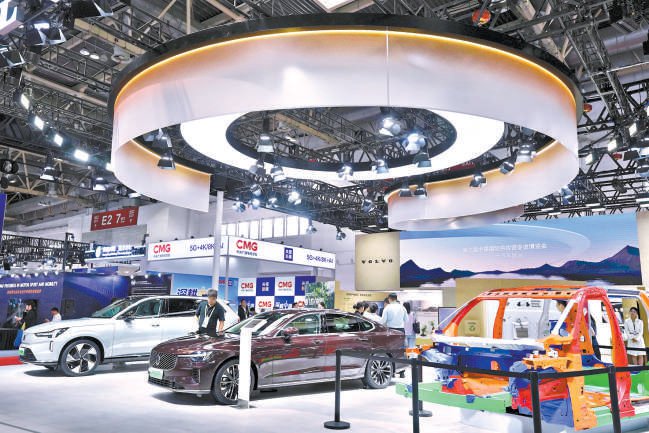
Group 1 - The third China International Supply Chain Promotion Expo showcases advancements in digital technology and supply chain solutions, with 651 participating enterprises and institutions [2][5]. - Lenovo's iChain supply chain intelligent system demonstrates the ability to integrate information across various production and logistics processes, enhancing responsiveness to changes such as tariff policy shifts and production cost increases [2][3]. - Lenovo is expanding its global supply chain with a new manufacturing base in Riyadh, Saudi Arabia, expected to produce millions of devices annually by 2026, alongside a comprehensive supply chain network in China [3]. Group 2 - The expo features innovations in intelligent driving experiences, including a multi-modal model for smart cockpits that enhances vehicle safety and user interaction [4][5]. - The event includes participation from over 75 countries and regions, with more than 65% of exhibitors being Fortune 500 companies and leading enterprises, highlighting the global significance of the supply chain industry [5].


Unipart 与 Scania 签署三年期中国物流服务合同
Globenewswire· 2025-06-12 14:55
Core Insights - Unipart has signed a three-year after-sales logistics service contract with Scania in China, managed from a newly opened parts center in Kunshan [1] - The new operations center is expected to double its warehouse space and capacity within the next year [1] - This center is strategically significant for Scania's supply chain in China, allowing integration of imported and locally sourced products [1] Company and Industry Summary - Unipart will provide comprehensive after-sales logistics services, including transportation, inland transport, warehousing, and pre-production value-added services [1] - The partnership is expected to directly support Scania's growth strategy by enabling delivery of the full range of after-sales products to all dealer locations in China [1] - Unipart's CEO highlighted the successful launch of the project as a result of effective collaboration between Unipart and Scania teams [1] - Unipart's Asia-Pacific Managing Director noted that the contract was awarded due to a successful history of collaboration with Scania, innovative digital solutions, cultural alignment, and shared sustainability goals [1] - The successful operation of the Kunshan parts center demonstrates Unipart's capability to deliver complex and impactful projects for leading global automotive companies [1]

航运跌宕:中美关税窗口期的出口冲刺与链式转型
2 1 Shi Ji Jing Ji Bao Dao· 2025-06-05 10:18
Core Viewpoint - Shenzhen Yantian Port is experiencing a surge in cargo volume due to the 90-day tariff suspension between China and the U.S., leading to increased demand and rising shipping prices [1][2][3] Group 1: Impact on Trade and Shipping - Yantian Port handles over 25% of China's exports to the U.S., with warehouse space filling up as cargo volume has increased by over 60% recently [1] - The 90-day tariff exemption has led to a rush in cross-Pacific trade, with foreign trade companies actively booking shipping space [1][2] - Shipping rates have surged, with container prices from Shanghai to Los Angeles rising from $2,590 to $3,197, a 27% increase since early May [4] Group 2: Industry Response and Adaptation - Foreign trade companies are shifting strategies to enhance brand competitiveness and explore new markets outside the U.S. [2][8] - Many logistics companies are adapting to the high shipping costs and tariffs by focusing on cross-border e-commerce, which is less affected by tariff fluctuations [9][10] - Companies are increasingly diversifying their supply chains to mitigate risks associated with reliance on the U.S. market [8][10] Group 3: Market Dynamics and Future Outlook - The shipping industry is experiencing significant congestion, with major ports like Bremen and Antwerp seeing waiting times increase by 77% and 49% respectively [3] - The demand for shipping is expected to remain strong, with companies needing to ship goods before the tariff suspension ends on August 12 [6][10] - The logistics sector anticipates that while shipping rates may slightly decrease in the short term, overall demand will keep prices elevated due to ongoing production and shipping needs [10]
九毛九(09922.HK):优化门店 梳理提质
Ge Long Hui· 2025-06-01 02:38
Core Viewpoint - The company's same-store sales are under pressure in 2024 due to external factors such as subdued dining trends and consumer spending, as well as internal adjustments [1][2] Group 1: Same-Store Sales Performance - In 2024, same-store revenue for brands such as Jiumaojiu, Taier, and Songhuoguo is expected to decline by -13%, -19%, and -32% respectively [1] - Jiumaojiu is less affected by the economic downturn due to its lower average transaction value of 55 yuan compared to Taier at 71 yuan and Songhuoguo at 103 yuan [1] Group 2: Operational Adjustments - The company is actively making adjustments to improve operations, including optimizing store models and menu structures [1][2] - Store renovations aim to create a warmer and more stylish environment suitable for family gatherings [1] - The menu is being updated to replace non-core dishes and introduce fresh fish, on-site slaughter, and specialty snacks [1] Group 3: Profitability and Financial Outlook - The company has slowed its expansion strategy in 2024, focusing on store upgrades and closures, which may enhance profitability [2] - The net profit attributable to the parent company for 2024 is projected at 56 million yuan, with core operating profit at 252 million yuan [2] - Profit recovery is anticipated in 2025, with net profits expected to reach 135 million yuan, 164 million yuan, and 203 million yuan for 2025-2027, representing year-on-year growth rates of 142.37%, 20.97%, and 24.05% respectively [2] Group 4: Supply Chain Development - The company is implementing supply chain improvements, with a central kitchen in Nansha, Guangzhou expected to be operational in 2025 [2] - Additional supply chain developments are planned for Shanghai and Chongqing in 2026-2027, which will support accelerated expansion outside the province [2] Group 5: Investment Rating - The company is viewed as being at the bottom of its fundamental performance, with positive adjustments and a potential turning point on the horizon [2] - Earnings per share (EPS) forecasts for 2025-2027 are 0.10, 0.12, and 0.15 yuan, with corresponding price-to-earnings ratios of 23.39x, 19.33x, and 15.59x [2]