
全球通胀

Search documents
美国若新增印发2万亿美元用于全球采购 将引发多维度全球经济连锁影响 多国加速去美元化
Sou Hu Cai Jing· 2026-02-15 06:33
Group 1 - The core viewpoint is that if the U.S. prints an additional $2 trillion for global procurement, it will have multifaceted chain effects on the global economy [1] - The increase in dollar supply will lead to a dilution of purchasing power for ordinary workers, resulting in a decrease in real income [1] - Manufacturing countries will experience a surge in raw material prices, leading to increased costs for factories and ultimately higher prices for consumer goods [1] Group 2 - The influx of new dollars is expected to create a false sense of prosperity in emerging markets, which could collapse if the Federal Reserve tightens monetary policy [1] - Many countries are already taking measures against the risks of dollar overproduction, such as increasing gold reserves and accelerating local currency settlements [1] - If the U.S. engages in large-scale dollar issuance again, it may further undermine trust in the dollar and lead to significant reductions in its purchasing power [2]
你准备补仓吗?近期金价银价波动剧烈,深夜跳水现象频发
Sou Hu Cai Jing· 2026-02-13 15:44
Core Viewpoint - The market is divided into two camps regarding gold prices: the bearish camp, which holds a pessimistic view and advises against entering the market, and the bullish camp, which is optimistic about long-term trends and sees current adjustments as buying opportunities [1]. Group 1: Bearish Perspective - Gold prices have surged to historical highs, indicating a severe valuation bubble, and a correction is inevitable [2]. - If the Federal Reserve maintains high interest rates and delays rate cuts, the strength of the dollar and U.S. Treasury yields will increase, significantly reducing gold's attractiveness [2]. - Geopolitical conflicts are likely to ease, leading to a gradual decline in risk aversion, which will remove core support factors for gold prices [2]. - Institutions have already taken profits, while retail investors are chasing prices at high levels, making entry at this point akin to catching a falling knife [2]. Group 2: Bullish Perspective - The trend of de-dollarization globally is irreversible, with central banks continuing to purchase large amounts of gold, providing solid long-term demand support [2]. - The weakening of the dollar's credibility and the restructuring of the monetary system will highlight gold's monetary attributes [2]. - Persistent global inflation and geopolitical risks ensure that the rigid demand for gold as a safe-haven asset will not disappear [2]. - The recent price drop is viewed as a short-term fluctuation rather than a trend reversal, with the long-term price center expected to continue rising [2]. Group 3: Short-term Outlook - The upcoming U.S. CPI data will be crucial in determining short-term trends; if inflation remains high, gold prices may continue to face pressure, seeking the next support level around $4,800 [4]. - For ordinary investors, it is advisable to wait for market sentiment to stabilize and for gold prices to regain the $5,000 level before considering entry [4].


人民币升破6.9关口,关注美国1月CPI数据
Hua Tai Qi Huo· 2026-02-13 08:04
Report Industry Investment Rating No relevant content provided. Core Viewpoints of the Report - The overall inflation narrative remains unchanged. The domestic policy trend of boosting inflation is clear, and only economic recession and interest rate hike expectations can be observed as points for a complete reversal of the trend. In the short term, it is necessary to be vigilant against market fluctuations, and it is recommended to buy precious metals on dips [2][3][5]. Summary by Related Catalogs Market Analysis - On January 30, Trump announced the nomination of Kevin Warsh as the next Fed Chair. Warsh's policy combination of "interest rate cuts + balance sheet reduction" led to significant declines in silver, gold, and put pressure on Bitcoin, precious metals, and US stocks. The core driver overseas is Trump's policies, and the implementation of balance sheet reduction requires more aggressive interest rate cuts [2]. - The US Congressional Budget Office (CBO) warned that the US is on an unsustainable fiscal path, raising the deficit forecast for the next decade by $1.4 trillion, partly due to Trump's 2025 tax law and immigration policies [2]. - The Central Economic Work Conference emphasized boosting consumption and implementing a moderately loose monetary policy. The central bank cut interest rates on various structural monetary policy tools, and the Ministry of Finance issued policies to support multiple loan fields [3]. - China's January CPI同比涨幅 fell to 0.2%, and PPI同比 decline narrowed to 1.4%. The offshore RMB against the US dollar rose above the 6.90 mark [3]. - The US manufacturing activity unexpectedly expanded in January, with strong employment data. The US and India reached a temporary trade agreement framework, and Japan's long - term government bond yields declined [3]. Commodity Analysis - In the short term, be vigilant against market fluctuations. The long - term supply constraints in the non - ferrous sector remain unrelieved, and precious metals have allocation value again after the adjustment. OPEC+ plans to keep oil production stable in March, but there are long - term threats from Venezuela's production increase. Some chemical varieties are relatively resistant to decline, and agricultural products need to focus on weather and pig diseases, while the black sector should focus on domestic policy expectations and low - valuation repair [4]. Strategy - For commodities and stock index futures, it is recommended to buy precious metals on dips [5]. Important News - The CBO warned that Trump's fiscal path is unsustainable, raising the US deficit forecast for 2026 - 35 by $1.4 trillion. The debt - to - GDP ratio may break the record in 2030 [6]. - The People's Bank of China will conduct a 100 billion yuan outright reverse repurchase operation on February 13 [6]. - The offshore RMB against the US dollar rose above 6.90, the first time since May 2023 [6]. - Japan's 30 - year and 40 - year government bond yields declined [6]. - Trump said that reaching an agreement with Iran is the US's "preferred" option, but no substantial results were achieved in the meeting with Netanyahu [6].
华泰期货:人民币升破6.9关口,关注美国1月CPI数据
Xin Lang Cai Jing· 2026-02-13 02:09
Group 1 - Kevin Warsh has been nominated by President Trump to replace Jerome Powell as the next Federal Reserve Chairman, with a focus on a policy combination of "rate cuts + balance sheet reduction" [2][10] - Following the announcement, silver prices dropped over 30% and gold prices fell 11%, marking the largest single-day decline since March 1980, indicating market volatility [2][10] - The U.S. Congressional Budget Office (CBO) has raised its ten-year deficit forecast by $1.4 trillion, partly due to Trump's tax and immigration policies [2][10] Group 2 - The Central Economic Work Conference emphasized the importance of stabilizing economic growth and ensuring reasonable price recovery as key considerations for monetary policy [3][11] - The People's Bank of China (PBOC) announced a 0.25 percentage point reduction in various structural monetary policy tool rates, with the one-year re-lending rate now at 1.25% [3][11] - China's January CPI year-on-year growth rate fell to 0.2%, while the PPI year-on-year decline narrowed to 1.4% [4][11] Group 3 - The U.S. manufacturing sector unexpectedly expanded in January, with the growth rate reaching its fastest level since 2022, driven by increases in new orders and production [4][11] - The U.S. added 130,000 non-farm jobs in January, significantly exceeding the market expectation of 65,000, marking the largest increase since April of the previous year [4][11] - A temporary trade agreement framework has been reached between the U.S. and India, with India committing to purchase $500 billion worth of U.S. products over five years [4][12] Group 4 - The energy sector is facing geopolitical support for oil prices, with OPEC+ confirming plans to maintain stable oil production in March [5][12] - The chemical sector, including PTA and PVC, is showing resilience against market downturns due to anti-competitive measures and stock market interactions [5][12] - Agricultural products are under scrutiny due to weather forecasts and short-term swine disease situations [5][12]

美国1月非农数据意外强劲,关注美国1月PPI数据
Hua Tai Qi Huo· 2026-02-12 05:01
1. Report Industry Investment Rating No relevant content provided. 2. Core Viewpoints of the Report - The overall trend of global inflation remains unchanged, and the core driver overseas is Trump's policies. His nomination of Kevin Warsh aims to cut interest rates, lower credit - card rates, and boost the real - estate market. Although there was a significant short - term decline in assets such as silver, gold, Bitcoin, and US stocks, the long - term inflation narrative persists [1][2]. - Domestic policies clearly aim to boost inflation, including the central bank's interest - rate cuts and the finance ministry's policy releases. The central bank will continue to implement a moderately loose monetary policy [2]. - In the short term, be vigilant against market fluctuations. Different commodity sectors have different investment outlooks, and it is recommended to buy precious metals on dips [2][3]. 3. Summary by Related Catalogs Market Analysis - On January 30, Trump announced the nomination of Kevin Warsh as the next Fed chair. Warsh advocates a "rate - cut + balance - sheet reduction" policy. After the news, silver fell over 30%, and gold dropped 11%, hitting the biggest single - day decline since March 1980. Bitcoin, precious metals, and US stocks were all under pressure in the short term. Trump hopes to stimulate the economy to grow at a 15% rate, indicating a pursuit of significant rate cuts and higher inflation tolerance [1]. - The central economic work conference emphasized consumption - boosting and anti - "involution" measures. The central bank cut interest rates on January 15, and the finance ministry released five important policy documents on January 20. The central bank will continue a moderately loose monetary policy and conduct regular treasury bond transactions. China's January CPI rose 0.2% year - on - year, and PPI declined 1.4% year - on - year [2]. - The US manufacturing activity expanded unexpectedly in January, with the fastest growth rate since 2022. The US added 130,000 non - farm jobs in January, much higher than the expected 65,000, and the unemployment rate dropped to 4.3%. The US and India reached a trade agreement framework, and Trump confirmed that India would stop importing Russian oil. Japan's ruling coalition won the election, and the prime minister will discuss food tax cuts [2]. Commodity Analysis - In the non - ferrous sector, Indonesia cut the annual production quota of the world's largest nickel mine to 1.2 billion tons, a 71% drop from 2025, causing the LME nickel price to rise over 2.6%. Precious metals have allocation value after the adjustment. In the energy sector, OPEC + will keep oil production stable in March, and the US will "sell on behalf of" Venezuelan oil. Trump hopes to lower oil prices to $50 per barrel. In the chemical sector, PTA, PVC and other varieties are relatively resistant to decline. Agricultural products need attention on weather and short - term pig diseases, and the black sector should focus on domestic policy expectations and low - valuation repair [2]. Strategy - For commodities and stock index futures, it is recommended to buy precious metals on dips [3]. News - US employment growth in January exceeded expectations, and the unemployment rate unexpectedly decreased. The actual new employment from March 2025 was about 900,000 less than initially reported. November and December non - farm employment numbers were revised down [4]. - After the base - period rotation of China's CPI and PPI, the average impact on the year - on - year index was about 0.06 and 0.08 percentage points respectively. China's January CPI rose 0.2% year - on - year, and PPI declined 1.4% year - on - year [2][4]. - Indonesia will significantly reduce the production quota of PT Weda Bay Nickel to 1.2 billion tons this year, down from 4.2 billion tons in 2025. Trump is considering sending another aircraft carrier strike group to the Middle East if the negotiation with Iran fails [2][4].
美国终于不装了!委内瑞拉只是幌子,强按伊朗输血,布惊天能源局
Sou Hu Cai Jing· 2026-02-11 13:37
Core Viewpoint - The article discusses the complex geopolitical maneuvers involving the U.S., Venezuela, and Iran, aiming to establish a new "oil empire" through strategic energy cooperation and manipulation of oil resources [1]. Group 1: Venezuela's Oil Industry - Venezuela is the country with the largest oil reserves globally, yet its oil industry is in a dire state, with production levels significantly below historical peaks [6]. - The country’s oil extraction equipment is outdated, with many pipelines over 50 years old, leading to a daily oil production of less than 900,000 barrels, far below the peak of 3.7 million barrels [6]. - The heavy, high-sulfur oil produced in Venezuela is difficult and costly to extract, likened to "asphalt" or "honey" in terms of viscosity, which complicates the extraction process [9]. Group 2: U.S. Strategic Interests - The U.S. has effectively controlled Venezuela's oil resources and is preparing for large-scale oil extraction, using political maneuvers to clear obstacles [5]. - The U.S. aims to mix Iranian light crude oil with Venezuelan heavy crude to improve flow and reduce extraction costs, potentially cutting the recovery investment from $145 billion to $70 billion [12]. - The U.S. possesses advanced oil extraction technology and seeks to establish a low-cost, high-yield oil empire by integrating the oil industries of Venezuela and Iran [14]. Group 3: Iran's Position - Iran's oil is characterized as light and low-sulfur, making it easier to extract compared to Venezuela's heavy oil [8]. - The U.S. is imposing strict conditions on Iran, aiming to limit its military capabilities and ensure that Iran becomes dependent on U.S. channels for oil sales, effectively turning it into a compliant state [16][18]. - Iran faces significant economic pressure, leading to a critical decision point: whether to yield to U.S. demands for short-term relief or to resist and endure ongoing sanctions [22]. Group 4: Global Oil Prices and Economic Implications - The U.S. strategy involves maintaining high oil prices to facilitate future investments in Venezuelan oil extraction, making the initial costs appear profitable [26]. - If Iran compromises and supplies light oil to Venezuela, extraction costs will decrease, allowing the U.S. to lower oil prices, which could help alleviate domestic inflation [28]. - The negotiations between the U.S. and Iran in 2026 are framed as a struggle for oil dominance, with significant implications for global inflation and economic stability [28].
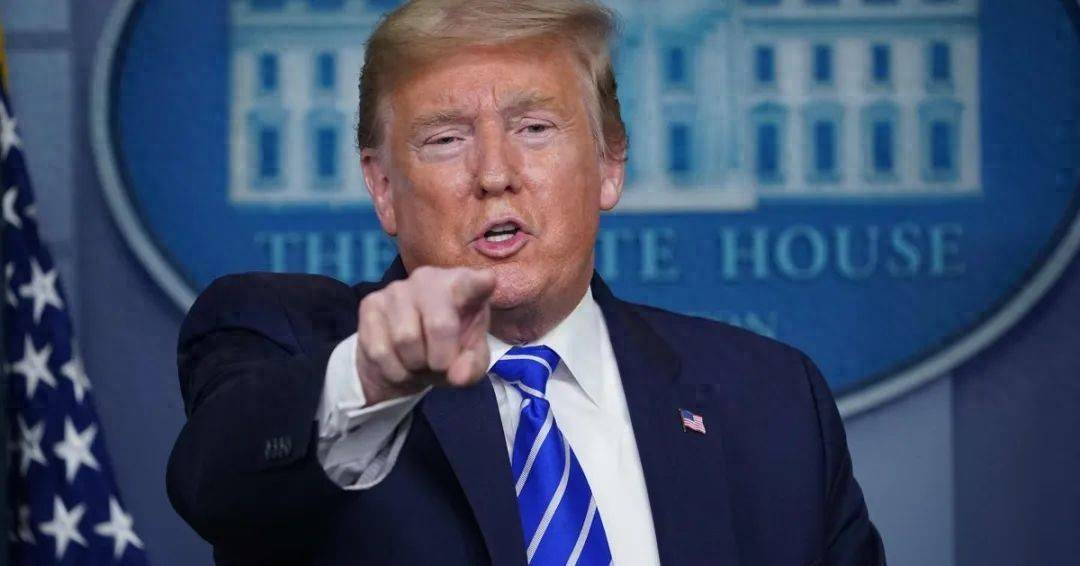
关注美国1月非农数据和中国1月通胀数据
Hua Tai Qi Huo· 2026-02-11 05:18
1. Report Industry Investment Rating No information provided. 2. Core View of the Report - The overall trend of global inflation remains unchanged. The recent sharp decline in the market does not alter this long - term narrative. The core overseas driver is Trump's policies, and the nomination of Kevin Warsh aims to cut interest rates, lower credit card rates, and boost the real estate market. In China, domestic policies are also pushing up inflation [2][3]. - In the short term, it is necessary to be vigilant against market volatility, especially the potential reversal of extreme emotions. However, from a long - term perspective, there are still investment opportunities in different commodity sectors [2][4]. 3. Summary by Relevant Content Areas Market Analysis - On January 30, Trump nominated Kevin Warsh to be the next Federal Reserve Chairman. Warsh's well - known policy combination is "interest rate cuts + balance sheet reduction". After the nomination, the market priced in "a review of the Fed's independence", causing silver to fall by more than 30%, gold to drop by 11% (the largest single - day decline since March 1980), and Bitcoin, precious metals, and US stocks to face pressure in the short term. Trump hopes that his nominee can stimulate the economy to grow at a rate of 15%, indicating a pursuit of significant interest rate cuts and a higher tolerance for inflation [2]. Inflation and Policy - The Central Economic Work Conference on December 11 emphasized boosting consumption, rectifying "involution - style" competition, and promoting economic growth and reasonable price recovery as important considerations for monetary policy. On January 15, the central bank cut the interest rates of various structural monetary policy tools by 0.25 percentage points. On January 20, the Ministry of Finance issued five important policy documents to support multiple loan areas. The central bank will continue to implement a moderately loose monetary policy and carry out regular treasury bond transactions [3]. Global Economic and Geopolitical News - US manufacturing activity unexpectedly expanded in January, with the fastest growth rate since 2022. The US ADP employment increase in January was 22,000, lower than the expected 45,000. The US and India reached a temporary trade agreement framework, with the US imposing an 18% "reciprocal tariff" on Indian goods, and India promising to purchase $500 billion of US products over five years. Trump confirmed that India will stop importing Russian oil. In Japan, the ruling coalition won a majority in the House of Representatives election, and Prime Minister Kishida Fumio plans to discuss food tax cuts [3]. Commodity Market - In the non - ferrous metals sector, long - term supply constraints remain unresolved, with high certainty. Precious metals have regained allocation value after the recent adjustment. In the energy sector, OPEC+ plans to keep oil production stable in March, and the US will "sell on consignment" Venezuelan oil. Trump hopes to lower the oil price to $50 per barrel. In the chemical sector, PTA and PVC are relatively resistant to decline. The agricultural products sector needs to pay attention to weather and short - term pig disease conditions, and the black metals sector should focus on domestic policy expectations and low - valuation repair potential [4]. Strategy - For commodities and stock index futures, it is recommended to buy precious metals on dips [5]. Important News - The central bank's 2025 Q4 China Monetary Policy Implementation Report shows that the central bank suspended buying treasury bonds in the open market in January 2025 and resumed purchases in October, with net purchases of 20 billion yuan, 50 billion yuan, and 50 billion yuan in October, November, and December respectively. In the future, it will carry out regular treasury bond transactions. Trump's nominee for the Fed Chairman is expected to stimulate 15% economic growth. Japan will hold a special parliamentary session on February 18 for the prime minister nomination election. The UK Prime Minister's ruling crisis has temporarily eased. Iran's air force is on the highest - level combat readiness, and the US has advised US merchant ships to stay away from Iranian waters [7].
A股三大指数齐涨,全球风险情绪改善
Hua Tai Qi Huo· 2026-02-10 04:54
Report Industry Investment Rating No relevant content provided. Core Viewpoints of the Report - The recent sharp decline in the market does not change the global inflation narrative, with the core driver of overseas markets being Trump's policies [1] - Domestic policies clearly aim to boost inflation, and globally, geopolitical tensions continue to drive the competition for mineral and energy resources [2] - In the short - term, be vigilant about market volatility, while in the long - term, inflation trends remain unchanged unless there is an economic recession or strong interest - rate hike expectations [2] Summary by Related Catalogs Market Analysis - On January 30, Trump announced the nomination of Kevin Warsh as the next Fed Chair. Warsh's policy of "rate cuts + balance - sheet reduction" led to a significant decline in silver and gold prices, and put pressure on Bitcoin, precious metals, and US stocks. On February 10, Warsh may make his first public speech as a Fed candidate [1] - Hasset believes that employment data may slow down, but it does not hinder strong economic growth [1] - The central economic work conference emphasized consumption promotion and price stability. The central bank cut interest rates on January 15, and the Ministry of Finance issued five important policy documents on January 20 [2] - The US manufacturing activity unexpectedly expanded in January, with the ADP employment increase of 22,000 people, lower than the expected 45,000. The US and India reached a trade agreement framework, and Trump confirmed India's commitment to stop importing Russian oil [2] - The ruling coalition in Japan won a majority in the House of Representatives election. Prime Minister Kaoi Sanae announced plans to discuss food tax cuts and promote private - public investment [2][4] - Due to the political turmoil of UK Prime Minister Starmer, the UK's stock, bond, and foreign - exchange markets all declined [2][4] Commodity Analysis - In the non - ferrous sector, long - term supply constraints remain unresolved, and precious metals have regained allocation value after the adjustment. In the energy sector, OPEC+ will keep oil production stable in March. The US plans to "sell on behalf" of Venezuelan oil, and Trump hopes to lower oil prices to $50 per barrel [2] - In the chemical sector, products like methanol and PTA are relatively resistant to decline under the "anti - involution" and stock - commodity linkage. For agricultural products, weather and short - term pig diseases need attention, and for the black metal sector, domestic policy expectations and low - valuation repair potential are key points [2] Strategy - For commodities and stock index futures, consider buying precious metals on dips [3] Important News - Hasset expects a slight decline in employment data, consistent with high GDP growth [4] - Kaoi Sanae will promote food tax - cut discussions in Japan, not issue deficit bonds, and seek to raise funds through non - tax revenues and subsidy reviews. She hopes to visit the US next month [4] - The ruling coalition in Japan won a majority in the House of Representatives election [4] - Two key officials of UK Prime Minister Starmer resigned [4] - Zelensky said the US hopes to end the Russia - Ukraine conflict by summer, and a new round of tripartite talks may be held this week [2][4]
FICC日报:沪指重返4100点,美国1月“小非农”不及预期
Hua Tai Qi Huo· 2026-02-05 03:24
Market Analysis - Trump announced Kevin Warsh as the nominee for the next Federal Reserve Chairman, aiming for a "rate cut + balance sheet reduction" policy, which led to silver dropping over 30% and gold experiencing an 11% decline, the largest single-day drop since March 1980[1] - The current tight liquidity environment necessitates aggressive rate cuts to achieve Warsh's balance sheet reduction goals, with Fed Governor Milan suggesting a need for more than 100 basis points of rate cuts this year[1] - The December Central Economic Work Conference emphasized stabilizing economic growth and reasonable price recovery as key considerations for monetary policy, with a 0.25 percentage point rate cut announced on January 15[2] Economic Indicators - The U.S. manufacturing sector unexpectedly expanded in January, with growth rates reaching the fastest level since 2022, driven by new orders and production increases[2] - The ADP reported a job increase of 22,000 in January, falling short of the expected 45,000, indicating a cooling labor market despite some stability signs[5] - The geopolitical landscape remains tense, with ongoing negotiations regarding oil supplies and trade agreements, including a deal between the U.S. and India to reduce tariffs from 25% to 18%[2] Commodity Insights - The non-ferrous metals sector continues to face supply constraints, maintaining high certainty for investment, while precious metals regain allocation value post-adjustment[3] - OPEC+ plans to maintain stable oil production in March, with geopolitical factors providing short-term support for oil prices, although long-term expectations for Venezuelan production increases pose risks[3] - The chemical sector shows resilience against downturns, while agricultural products remain sensitive to weather conditions and disease outbreaks in livestock[3] Strategy and Risks - The recommendation is to accumulate positions in precious metals on dips, while being cautious of geopolitical risks and potential economic downturns impacting risk assets[4] - Key risks include geopolitical tensions affecting energy prices, unexpected global economic downturns, and tighter monetary policies from the Federal Reserve[4]
全球流动性重定价,短期警惕市场波动
Hua Tai Qi Huo· 2026-02-03 06:31
Report Industry Investment Rating No relevant information provided. Core View of the Report - The short - term market is volatile due to global liquidity repricing, but the inflation narrative remains unchanged in the long - term [1][2] - Different commodity sectors have different investment opportunities and risk characteristics, and it is recommended to buy precious metals on dips [3][4] Summary by Related Catalogs Market Analysis - Trump announced the nomination of Kevin Warsh as the next Fed Chair on January 30th. After the market priced in the "Review of Fed Independence", silver fell over 30% and gold fell 11% on a single - day, hitting the largest decline since March 1980. On February 2nd, the global commodity market was severely sold off, and major exchanges raised margin requirements [1] - The central government emphasized consumption promotion and price stability at the Central Economic Work Conference on December 11th. The central bank cut the interest rates of various structural monetary policy tools by 0.25 percentage points on January 15th, and the Ministry of Finance issued 5 policy documents on January 20th. Geopolitical tensions globally, and the US Senate passed a $1.2 trillion government spending bill [2] Commodity Analysis - The long - term supply constraint in the non - ferrous sector remains unrelieved. Precious metals have allocation value after the adjustment. OPEC+ plans to keep oil production stable in March, and the US will "sell on behalf" of Venezuelan oil. Trump hopes to cut oil prices to $50 per barrel. The chemical industry's methanol and PTA are relatively resistant to decline. The agricultural sector needs to pay attention to weather and pig diseases. The black sector focuses on domestic policy expectations and low - valuation repair [3] Strategy - For commodities and stock index futures, buy precious metals on dips [4] Important News - The Shanghai Gold Exchange adjusted the margin level and price limit ratio of the silver deferred contract. CME raised the margin rates for gold and silver trading. Trump said negotiations on Greenland were about to reach an agreement. OPEC+ will keep oil production stable in March. The US federal government had a "technical shutdown". Iran and the US are moving towards negotiations [5]