减排

Search documents
冯德莱恩硬刚中国背后:欧盟减排内斗与美式能源绑架
Sou Hu Cai Jing· 2025-10-25 15:56
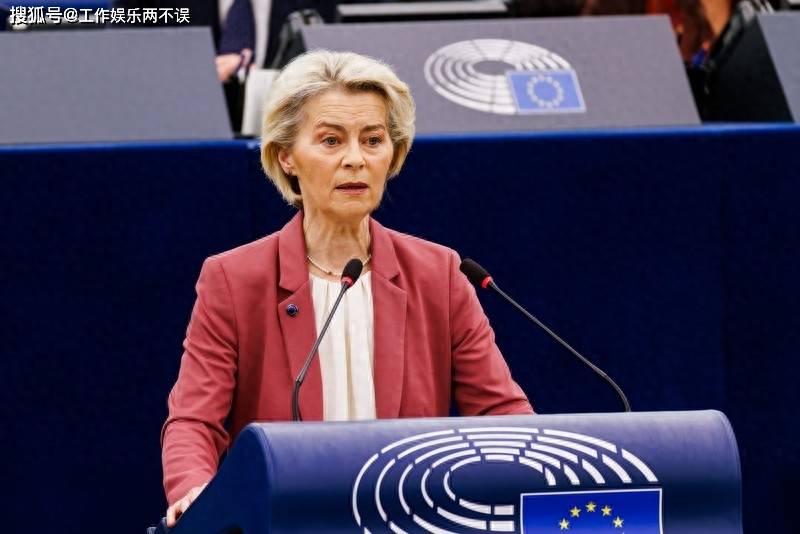
Group 1 - The EU's climate action report indicates that emissions in 2024 will only be 48% lower than in 1990, falling short of the 55% target for 2030 by 7 percentage points, necessitating an annual increase in reduction efforts by 1.4 percentage points [3] - Internal conflicts within the EU regarding carbon credit limits are evident, with Germany and the Netherlands insisting that foreign carbon credits cannot exceed 10%, while Poland is pushing for a 20% limit due to concerns over coal jobs and energy system stability [3] - The EU's reliance on US energy is increasing, with 16% of its natural gas coming from the US and 4% from Qatar, as it aims to eliminate the remaining 19% of Russian gas by 2027, highlighting a growing dependency on these countries [4] Group 2 - European companies are increasingly reliant on Chinese products for their green transition, with a significant rise in exports of lithium-ion batteries and solar panels from China, which are crucial for the establishment of renewable energy projects in Europe [6] - The EU's green technology investment is lagging, with only €420 billion planned for 2024, falling short of the €750 billion annual requirement, leading to potential bankruptcies among local battery manufacturers and delays in electric vehicle production targets [6] - The political rhetoric of confrontation with China may not address the technological gaps and internal divisions within the EU, potentially leading to higher energy costs for consumers and making the 2040 emission reduction targets seem unattainable [8]

联合国警告:气候危机进入“极度危险”阶段
财富FORTUNE· 2025-10-20 13:06
Core Insights - The World Meteorological Organization (WMO) reports that carbon dioxide levels have reached their highest in at least 800,000 years, with growth rates tripling since the 1960s [2][3] - The report highlights a "vicious cycle" of climate change exacerbated by emissions from fossil fuels and increasing wildfires, while the Earth's ability to absorb these gases is diminishing [3] Summary by Sections Carbon Dioxide Levels - The average global carbon dioxide concentration is projected to increase at the highest annual rate since monitoring began in 1957, rising from 2.4 ppm (parts per million) during 2011-2020 to 3.5 ppm for 2023-2024 [3] Climate Change Impacts - The WMO emphasizes that the heat trapped by greenhouse gases is intensifying climate warming, leading to more extreme weather events, which poses risks to economic security and social welfare [3] - Climate Analytics CEO Bill Hare describes the new data as "shocking and concerning," indicating a feedback loop driven by record high temperatures, forest fires, and warming oceans [3] Global Response and Commitments - Despite some governments continuing to promote fossil fuel use, certain companies and local governments are taking proactive measures against global warming [3] - However, few countries have made new climate commitments that adequately address the severity of the climate crisis [3] Future Projections - The WMO warns that the increase in greenhouse gas concentrations in 2024 indicates a long-term warming trajectory, with methane and nitrous oxide levels also reaching historical highs [3] - The report raises doubts about the world's ability to meet the goals of the Paris Climate Agreement, which aims to limit global temperature rise to 1.5 degrees Celsius above pre-industrial levels [3]

萨米尔·阿布达耶吉哈:加大合作力度,赋能绿色转型
中国能源报· 2025-09-28 11:28
Core Viewpoint - The article emphasizes the urgent need for global action in response to the challenges of green transition, highlighting the importance of international cooperation, particularly between Peru and China, to advance renewable energy initiatives [4]. Group 1: Industry Growth and Opportunities - The biodiesel industry in South America is rapidly growing, with Peru expanding its market share alongside major producers like Brazil and Argentina, positioning itself as the second-largest biodiesel center globally after Asia [4]. - Peru has established a mandatory biodiesel blending standard, increasing from B5 (95% petroleum and 5% biodiesel) to B7.5, reflecting its commitment to clean energy and emission reduction [4]. - The glycerin market presents significant growth opportunities, with Peru exporting 525,000 tons of crude glycerin and 155,000 tons of refined glycerin annually, which are widely used in various industries [5]. Group 2: Raw Material and Sustainable Practices - Peru's palm oil production is significant, with plans to expand cultivation, as the region currently utilizes less than 1% of its farmland for palm planting, indicating substantial growth potential [5]. - The goal is to achieve carbon capture of 5 to 11 million tons of CO2 by 2030 through sustainable palm oil cultivation, ensuring no soil degradation occurs [5]. Group 3: Future Cooperation and Technological Innovation - The economic cooperation between China and Peru is expected to expand into digitalization to facilitate trade, with significant potential in intellectual property and unique technologies [6]. - The emerging energy sector, particularly in oil-based chemicals, has a market size of $20 billion, which can support high-end industrial development and contribute to sustainable aviation fuel production [5].

中国重磅减排承诺受多方赞赏,英媒:具有里程碑意义
Huan Qiu Shi Bao· 2025-09-25 23:42
Core Points - China's President Xi Jinping announced a new round of national contributions at the UN Climate Change Summit, aiming for a 7%-10% reduction in greenhouse gas emissions by 2035 compared to peak levels, marking the first time China has set specific reduction targets in its climate change efforts [1][2] - The commitment includes increasing the share of non-fossil energy consumption to over 30% of total energy consumption, achieving a total installed capacity of wind and solar power six times that of 2020, and establishing a nationwide carbon trading market covering major high-emission industries [2][3] Group 1 - The announcement is seen as a significant milestone in China's climate policy, representing a qualitative shift and providing a clear path for carbon emissions post-peak [3] - China's past performance in meeting international climate commitments has been noted, with expectations that the new targets may serve as a baseline rather than an upper limit [4] - The rapid development of clean energy in China, which accounted for 10% of GDP last year, is reshaping the global economy and reducing reliance on coal [5] Group 2 - Approximately 100 countries presented plans or commitments to further reduce carbon emissions at the summit, highlighting a collective international effort despite the absence of the United States [6] - The summit underscored the contrasting approaches to climate change, with China positioning itself as a leader in clean energy investment, having invested $625 billion in clean energy last year, which constituted 31% of global investment in this sector [4][6] - The global economic future is increasingly tied to clean energy, with Chinese companies driving innovation and application of electric vehicle and battery technologies worldwide [5]
国家公园法将施行;五年来高排放车辆淘汰近两千万辆丨碳中和周报
2 1 Shi Ji Jing Ji Bao Dao· 2025-09-22 12:24
Group 1: National Park Law Implementation - The first National Park Law in China will take effect on January 1, 2026, aiming to protect representative natural ecosystems and promote sustainable use of natural resources [2] - The law establishes a legal framework for a national park system, emphasizing strict protection and integrated management of natural resources [2] - It encourages public participation in conservation efforts and aims to foster awareness of ecological protection among the public [2] Group 2: High-Emission Vehicle Elimination - The Ministry of Ecology and Environment announced that nearly 20 million high-emission vehicles will be eliminated during the 14th Five-Year Plan period [3][4] - Significant reductions in PM2.5 concentrations are targeted, with expected decreases of 18%, 10%, and 20% in key regions by 2024 compared to 2020 levels [3] - The campaign includes comprehensive measures such as coal management and pollution source tracking, achieving notable progress in water and soil protection [4] Group 3: Carbon Market Development - As of September 18, 2025, China's carbon market has seen a cumulative transaction volume of 714 million tons and a total transaction value of approximately 49.96 billion yuan [5][6] - The establishment of a regulatory framework for carbon trading is underway, supporting China's climate change initiatives [5] - The carbon market is recognized as a key mechanism for achieving carbon peak and carbon neutrality goals [6] Group 4: Climate Change and Industry Restructuring - The year 2024 is projected to be the first year to exceed the 1.5°C temperature threshold set by the Paris Agreement, indicating a concerning trend in global warming [7][8] - Experts emphasize the need for intensified emission reduction efforts to meet climate targets and ensure sustainable development [7][8] Group 5: Renewable Energy Consumption in Inner Mongolia - Inner Mongolia has issued a notification to optimize the mechanism for renewable energy consumption, focusing on both mandatory and voluntary consumption [9] - The initiative aims to enhance green electricity consumption and promote the integration of renewable energy with industry [9] Group 6: Low-Carbon Initiatives and Events - The "Low-Carbon China Tour" and Climate Action Week series of events were launched to showcase China's efforts in energy transition and public engagement [10][11] - The events highlight the role of enterprises like Southern Power Grid in promoting green development and their participation in international climate discussions [10][11] Group 7: Clean Energy Expo in Shandong - The 2025 Shandong Clean Energy Industry Expo was held to facilitate innovation and collaboration in the clean energy sector [13][14] - The event aims to strengthen partnerships between enterprises and research institutions to support the region's energy transition [13][14] Group 8: Sustainable Strategy by Yinyu Water Zhongtian - Yinyu Water Zhongtian has set a net-zero target for 2040 and aims to achieve various sustainability goals by 2030 [15][16] - The strategy includes low-carbon construction, climate risk adaptation, and waste management initiatives to promote a circular economy [15][16]
南亚-东南亚四国生物燃料市场展望
Hua Tai Qi Huo· 2025-09-22 05:57
Report Industry Investment Rating - Not provided in the content Core Views of the Report - The development of biofuel industries in India, Malaysia, Thailand, and Singapore is driven by the need for energy transition, emission reduction, and enhanced energy security. Each country has distinct development models based on its resource endowment and policy orientation, with biofuels showing significant potential in replacing traditional fossil fuels, but also facing various challenges [3][4][5] Summary by Relevant Catalogs Biofuel Industry Development Background - The energy demand in South and Southeast Asia is rising due to population growth, economic development, and urbanization. To meet emission reduction targets and enhance energy autonomy, countries are turning to biofuels, with different development routes based on their resource endowments [9] Fuel Ethanol Industry Analysis India: E20 Target Achieved Ahead of Schedule, with Controversies and Opportunities - India has become a major global producer and consumer of fuel ethanol, achieving significant economic and environmental benefits. Policy is the core driver, with the E20 target advanced to 2025. However, challenges such as raw material supply and vehicle compatibility remain. The government is promoting raw material diversification and capacity expansion, but corn price increases may cause inflation, and raw material supply is subject to climate and food security risks [11][20][21] Thailand: Accelerated Development of Electric Vehicles, Fuel Ethanol to Gradually Yield - Thailand is a major producer and consumer of fuel ethanol in Southeast Asia, with development driven by policies. However, the rapid rise of electric vehicles is squeezing fuel ethanol demand. In the short term, fuel ethanol still plays a transitional role, but in the long term, the industry may need to explore exports or alternative uses. Raw material supply is affected by weather, and future capacity may need to be digested through new channels [30][31][33] Biodiesel Industry Analysis Malaysia: Blending Policy Implementation Encountered Hurdles, B20 Temporarily Implemented Locally - Malaysia's biodiesel industry, based on palm oil, has been steadily developing under policy promotion but faces challenges such as production fluctuations and shrinking export markets. The B20 and B30 plans have been delayed due to infrastructure and investment issues. The industry relies on domestic palm oil resources, and current production capacity is about 2.7 billion liters, with efforts being made to upgrade facilities and develop HVO [37][38][47] Singapore: Explosive Growth in Demand for Bio - Marine Fuels, Promising Future - Singapore, as the world's largest marine fuel bunkering port, has seen a rapid increase in demand for bio - marine fuels. Policy goals have created growth space for biofuel consumption, and market - driven demand has led to a significant increase in sales. An investment project is under construction to expand production capacity [48][49][52] Sustainable Aviation Fuel Industry Analysis SAF is in the Initial Stage with Great Development Potential - The development of SAF is crucial for the aviation industry to reduce carbon emissions. India, Thailand, Malaysia, and Singapore have all set SAF blending targets and are taking measures in policy, technology, and capacity building. However, challenges such as high investment and high prices need to be addressed [54][55][56] Impact of Biofuel Development on Petroleum Consumption - The development of biofuel industries in the four countries has effectively replaced traditional fossil fuel consumption. In the fuel ethanol sector, India has achieved significant substitution results, while Thailand's substitution effect may peak and then decline. In the biodiesel sector, Malaysia is steadily replacing traditional diesel, and Singapore's bio - marine fuel demand is growing rapidly. In the aviation sector, SAF is expected to replace a considerable amount of traditional aviation kerosene in the future [61] Summary and Outlook - Biofuels are becoming an important alternative to traditional fossil fuels. The four countries have different development models, with India excelling in fuel ethanol, Thailand facing challenges in ethanol development, Malaysia making progress in biodiesel with implementation bottlenecks, and Singapore having a bright future in bio - marine fuels. All four countries have potential in SAF. In the future, India's ethanol industry has prospects but needs to address challenges, Thailand's ethanol may yield to electric vehicles, Malaysia's biodiesel has potential but needs to solve problems, and bio - marine fuels and SAF will be more important, with Singapore leading in the bio - marine fuel market [67][68]
观天下丨美国再次一票否决加沙停火决议草案;全球水循环日趋紊乱
Sou Hu Cai Jing· 2025-09-19 08:24
Core Viewpoint - The Federal Reserve has made a policy adjustment by lowering the federal funds rate target range by 25 basis points to between 4.00% and 4.25% due to economic slowdown and rising inflation risks [6][7]. Group 1: Federal Reserve's Decision - The Federal Open Market Committee decided to lower the federal funds rate target range by 25 basis points, marking the first rate cut of the year [6]. - Economic indicators show a slowdown in economic activity and job growth, with inflation rates rising, prompting the Fed to adjust its policy focus towards employment [6][7]. - The Fed's decision reflects a balance between rising inflation risks and declining employment risks, as stated by Chairman Powell [6][8]. Group 2: Economic Indicators - Recent employment data revealed that non-farm payrolls increased by only 22,000 in August, a significant drop from the revised 79,000 in July, with the unemployment rate rising to 4.3%, the highest in nearly four years [7]. - The Labor Department revised down the projected job growth for the next year by 911,000, raising concerns about the weakness in the U.S. job market [7]. Group 3: Future Projections - The Fed's economic forecast indicates an upward adjustment of the GDP growth rate to a median of 1.6% and an unemployment rate expectation of 4.5% [8]. - The dot plot suggests that the federal funds rate may drop to a median of 3.6% by the end of the year, indicating the possibility of two more rate cuts [8]. Group 4: Internal Dynamics and Pressures - The internal voting showed 11 members supported the 25 basis point cut, while only one member, Stephen Milan, opposed it, advocating for a 50 basis point cut, reflecting some division influenced by external pressures [8]. - Chairman Powell emphasized the Fed's commitment to maintaining its independence amidst pressures from the government and market [8].

西藏工程专家小范围访谈交流
2025-07-22 14:36
Summary of the Conference Call on the Motuo Hydropower Station Project Industry and Company Involved - **Industry**: Hydropower and Explosives Industry - **Company**: Various companies involved in the construction and supply for the Motuo Hydropower Station project, including China Electric Power Construction, China Energy Construction, and local explosive companies like Gaozheng Minbao, Yipuli, and Baoli United. Core Points and Arguments - **Project Overview**: The Motuo Hydropower Station has a total investment of 1.2 trillion yuan, with plans to construct five tiered power stations and a core 50 km water diversion tunnel, aiming for a total installed capacity of 6,000 to 7,000 kilowatts and an expected annual power generation of 300 billion kilowatt-hours, which can supply electricity for 300 million people [1][2]. - **Strategic Significance**: The project will replace 90 million tons of coal, reduce carbon dioxide emissions by 300 million tons, optimize the energy structure in Eastern China, create approximately 200,000 jobs, and enhance military response capabilities at the border. It may also facilitate electricity exports to Bangladesh and Myanmar, increasing China's influence in South Asia [2]. - **Investment Breakdown**: The construction period is approximately ten years, with infrastructure investment accounting for 50% of the total investment. The project will require 250,000 tons of industrial explosives and 360 million electronic detonators, significantly benefiting the explosives industry [1][4]. - **Comparison with the Three Gorges Project**: The Motuo project will use a larger quantity of explosives compared to the Three Gorges Project, with total investment being four to five times greater. The Three Gorges Project used over 50,000 tons of explosives, while Motuo's requirements are expected to be much higher due to its geological and construction challenges [5][10]. - **Current Progress**: As of 2023, preliminary work has focused on geological data collection, traffic tunnel construction, and surface blasting, with approximately 6,000 tons of explosives already used [6][7]. - **Peak Usage of Explosives**: The peak period for explosive usage is anticipated to be from the third to the eighth year of construction (around 2027-2028), after which the demand will decrease as the focus shifts to equipment installation [8]. - **Market Share and Revenue**: Gaozheng Minbao is expected to capture about 50% of the market share for explosives, generating approximately 30 billion yuan in revenue with a profit margin of around 10% [3][17]. - **Explosive Pricing**: Prices for explosives in Tibet vary by region, with costs around 13,000 yuan per ton in Lhasa and up to 20,000 yuan in remote areas. The overall service fees for blasting are relatively fixed, including monthly service fees and operational costs [13][14]. - **Profitability of Explosives**: The profit margin for explosives in the region is higher than in mainland China, positively impacting the overall profitability of the Motuo project. The estimated revenue from explosives could reach around 35 billion yuan based on projected usage [23][24]. Other Important but Possibly Overlooked Content - **Geological Challenges**: The complex geological conditions and transportation difficulties in the region significantly affect construction progress and the reliance on blasting rather than tunneling machines [26]. - **Supplier Involvement**: Various companies are involved in different aspects of the project, including cement supply from Huaxin Cement and road construction by Xizang Tianlu, which are included in the total investment [21][32]. - **Bidding and Contracting**: The bidding process for the project has been ongoing, with several companies already confirmed to participate in construction tasks [35]. - **Impact on Local Economy**: The project is expected to have a substantial impact on the local economy, providing jobs and boosting the demand for local materials and services [2][4].



欧盟设定90%减排目标,“2035年禁燃令”或提前着陆?
Zhong Guo Qi Che Bao Wang· 2025-07-14 01:58
Core Points - The European Union (EU) has proposed a revision to the European Climate Law, aiming to reduce greenhouse gas emissions by 90% by 2040 compared to 1990 levels, which raises questions about the potential acceleration of the 2035 ban on combustion engine vehicles [2][3] - The 2035 ban on the sale of new combustion engine cars and small vans is a key measure for the EU to push the automotive industry towards zero emissions and achieve carbon neutrality [4] - The automotive industry is facing challenges in meeting the ambitious targets due to declining electric vehicle sales and insufficient charging infrastructure [5][6] Group 1: Policy Developments - The EU's new target for 2040 represents a significant increase from the current goal of a 55% reduction by 2030, indicating a stronger commitment to climate action [2] - The 2035 ban allows exemptions for synthetic fuel vehicles and small manufacturers, but the new 2040 target compresses the timeline for compliance [3] Group 2: Industry Challenges - The European electric vehicle market has shown weak sales performance, with forecasts for 2030 electric vehicle sales being revised down from 9.6 million to 8.3 million [5] - The current charging infrastructure is inadequate, with a projected need for 8.8 million charging points by 2030, while existing distribution is heavily concentrated in a few countries [5] - Major European automakers are expressing concerns about the impact of the ban on their survival and growth, highlighting the financial difficulties associated with the transition to electric vehicles [6] Group 3: Future Outlook - Experts suggest that the likelihood of the 2035 ban being implemented earlier is low, with a greater chance of delays due to market performance and infrastructure challenges [7] - There are calls from social groups to reconsider the policy, indicating resistance to the existing ban and potential adjustments in response to market conditions [7] - The ultimate direction of the 2035 ban will significantly impact the automotive and energy sectors, necessitating a balance between environmental goals and economic development [8]

澳媒关注对华能源合作:要实现减排,中国技术不可或缺
Sou Hu Cai Jing· 2025-07-13 14:55
Group 1: Australia-China Cooperation - Australian Prime Minister Albanese's visit to China focuses on potential cooperation in green energy, highlighting climate change as a top priority for the Australian government [1][2][4] - China is recognized as an indispensable partner for Australia in energy transition, with significant advancements in renewable energy capacity [1][5] - The Australian government aims to enhance collaboration with China to meet its emission reduction targets and develop green industrial capabilities [5][10] Group 2: Trade Relations - Australia and China have a bilateral trade volume close to 312 billion AUD, with China being Australia's largest trading partner [6] - Under Albanese's leadership, exports of barley, rock lobster, and beef to China have started to recover [6] - A study indicates that trade with China has increased the average disposable income of Australian households by 2,600 AUD, equivalent to a 4.6% increase per person [9] Group 3: Political Context - Albanese's visit is seen as a significant diplomatic activity amid improving Australia-China relations, despite geopolitical differences [7][9] - Analysts suggest that both countries recognize their differences but agree that these should not dictate the bilateral relationship [7][9] - There is a growing sentiment among Australians that China is a more reliable trade partner than the United States [10]