减油增化

Search documents
中石化炼化工程(02386.HK):中石化旗下高股息能化工程龙头 海外发力加速开拓
Ge Long Hui· 2025-12-26 13:55
Company Overview - Sinopec Engineering is one of the largest energy and chemical engineering companies in China, with leading technical capabilities and strong backing from its controlling shareholder, Sinopec Group [1] - The company has a solid business foundation within the group, with accelerated overseas expansion contributing to performance growth [1] - Financial performance is robust, with a consistently high dividend payout ratio, and a dividend yield exceeding 5%, providing stable returns for investors [1] Industry Insights - The "two oil giants" (China National Petroleum and China Petroleum & Chemical) maintain a leading market position, with the petrochemical industry experiencing a slight revenue decline of 2.6% year-on-year in H1 2025, and total profits down by 10.3% [2] - There is a clear trend of "reducing oil and increasing chemicals," with demand for petrochemical products still showing growth potential; China's ethylene apparent consumption increased by 9.94% year-on-year from January to November 2025 [2] - Policy support for coal chemical development is evident, with planned projects in Xinjiang exceeding 900 billion [2] - Global refining capacity continues to grow, particularly in the Middle East and Asia-Pacific, with major oil and gas companies' capital expenditures projected to reach $153.35 billion in 2024, a year-on-year increase of 4.82% [2] Company Performance - In the refining and petrochemical sectors, the company has leading technology, with new contracts continuing to grow at a rate of 24.35% in Q1-Q3 2025; the value of uncompleted contracts as of Q3 2025 is 215.47 billion, which is 3.36 times the expected revenue for 2024 [2] - The controlling shareholder has substantial strength, with Sinopec Group planning capital expenditures of 164.3 billion in 2025, including 22.3 billion for refining and 44.9 billion for chemicals; new contracts from the group increased by 60.63% in Q1-Q3 2025, accounting for 53.82% of total contracts [2] - The company is accelerating its overseas business, with overseas revenue growing by 92.0% year-on-year in H1 2025 and new overseas contracts increasing by 38.56% in Q1-Q3 2025 [2] - Revenue and profit remain stable, with H1 2025 revenue increasing by 10.14% and net profit attributable to shareholders rising by 4.83%; the dividend payout ratio has consistently exceeded 63% from 2021 to 2024, with a TTM dividend yield of 5.33% as of December 24, 2025, and expected to remain above 5% in 2025 and 2026 [2]
破局共生立潮头 五载跨越向一流—— 中国石油长庆石化公司“十四五”以标杆之力领航行业升级
Zhong Guo Neng Yuan Wang· 2025-12-26 08:27
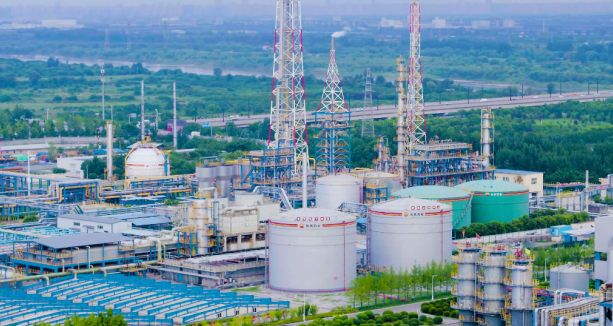
"十四五"时期,是我国全面建设社会主义现代化国家开局起步的关键五年,更是中国石油长庆石化公司 锚定"世界一流示范型城市炼厂"目标,在攻坚中突破、在升级中跨越的五年。五年来,长庆石化公司 以"减油增化、减油增特、减碳增绿"战略为引领,破解"厂居交织"困局,筑牢安全环保根基,激活数智 转型引擎,各项核心业绩屡创历史新高,从"原地升级"的突围者成长为行业"标杆引领"的示范者,交出 了一份沉甸甸的高质量发展答卷。 面对"厂居交织"的突出困局,长庆石化公司凝聚全员共识、汇聚多方力量,打赢了一场事关生存发展的 就地改造攻坚战。五年来,严格按节点高质量完成46个内部改造项目,配合地方政府分阶段推进外部搬 迁,顺利完成任家咀拆迁、水电十五局东侧搬迁、西咸新区秦汉新城3530社区搬迁等关键任务,周边安 全和卫生防护距离范围内所有居民全部完成搬迁安置,就地改造工作任务圆满完成,为公司高质量发展 拓展了广阔空间。作为咸阳市"清洁低碳能化产业链"和"氢能产业链"双链主企业,长庆石化公司带动周 边形成年产值700亿元的产业集群,成功破解了城市炼厂发展空间受限的行业难题,实现了企业发展与 城市的共融共赢。 业绩跃升篇:"十四五"砥砺前行 ...


西部证券晨会纪要-20251226
Western Securities· 2025-12-26 03:47
Group 1: Company Overview - The report covers Damai Entertainment (1060.HK), a leading platform in live entertainment, driven by ticketing and IP derivatives [1][6][8] - The company is positioned in a high-growth sector, benefiting from the recovery and structural upgrade of offline entertainment consumption [1][8] - Expected adjusted net profits for FY26-28 are projected at 1.06 billion, 1.35 billion, and 1.58 billion CNY respectively [1][8] Group 2: Industry Insights - The live performance market is experiencing a significant increase, with ticket sales for large concerts expected to exceed 26 billion CNY in 2024, a year-on-year growth of 78.1% [6] - The demand for live entertainment is driven by both personal enjoyment and social needs, with an increase in repeat attendance [6] - The supply side is expanding with diversification in lower-tier cities and various performance categories [6] Group 3: IP Business - Alibaba's IP licensing platform, Aliyu, is a leading player in the market, with a projected GMV of 4.1 billion USD in 2024 [7] - The company is enhancing its collaboration with top IPs, which is expected to contribute significantly to revenue growth [7] - The film industry is still in a recovery phase, with a total box office of 29.23 billion CNY in the first half of 2025, reflecting a year-on-year increase of 22.91% [7] Group 4: Company Financials - Sinopec Engineering (02386.HK) is highlighted as a leading energy and chemical engineering firm with strong technical capabilities and a solid financial performance [10][12] - The company has a high dividend payout ratio, with a dividend yield exceeding 5%, providing stable returns for investors [10][12] - Expected target price for 2026 is set at 9.50 HKD per share, based on a 13x PE ratio [10] Group 5: Market Trends - The petrochemical industry is facing revenue stability but profit pressures, with a slight revenue decline of 2.6% year-on-year in H1 2025 [11] - The trend of "reducing oil and increasing chemicals" is evident, with a 9.94% year-on-year increase in ethylene consumption [11] - Global refining capacity continues to grow, particularly in the Middle East and Asia-Pacific regions, with a projected capital expenditure of 153.35 billion USD in 2024 [11] Group 6: Aviation Sector - Bank of China Aviation Leasing (02588.HK) is positioned to benefit from the rising aviation industry and the ongoing interest rate cut cycle [14][15] - The company ranks fifth globally with a fleet of 483 aircraft, poised to gain from increased revenues as the aviation market recovers [14][15] - Expected total revenue for 2025-2027 is projected at 2.63 billion, 2.85 billion, and 2.94 billion USD, with net profits of 761 million, 894 million, and 964 million USD respectively [16] Group 7: Medical Sector - Weisi Medical (688580.SH) is experiencing steady growth, with projected net profits of 133 million, 165 million, and 184 million CNY for 2025-2027 [4][18] - The company focuses on rehabilitation as its core business while expanding into aesthetic and urology sectors [18][19] - The company emphasizes product innovation in non-invasive brain-machine interfaces, aiming to create a comprehensive neuro-rehabilitation system [19]


中石化炼化工程(02386):首次覆盖报告:中石化旗下高股息能化工程龙头,海外发力加速开拓
Western Securities· 2025-12-25 11:48
Investment Rating - The report assigns a "Buy" rating to Sinopec Engineering (02386.HK) with a target price of HKD 9.50 per share based on a 2026 PE of 13 times [1][5]. Core Insights - Sinopec Engineering is one of the largest energy and chemical engineering companies in China, with leading technical capabilities and strong backing from its parent company, Sinopec Group. The company is expanding its overseas business, contributing to performance growth. Additionally, it has a solid financial performance with a high dividend payout ratio, offering a stable yield of over 5% for investors [1][18]. Company Overview - Sinopec Engineering provides comprehensive services across the entire industry chain and lifecycle, focusing on refining and petrochemical engineering. It has a strong international competitive edge and a history of over 70 years [23][26]. - The company is backed by Sinopec Group, which holds a 62.52% stake, ensuring a stable business foundation [30][34]. Industry Analysis - The petrochemical industry is experiencing pressure on profits, with a slight revenue decline of 2.6% year-on-year in H1 2025, while total profits fell by 10.3%. However, the demand for petrochemical products remains, driven by the "reduce oil, increase chemicals" trend [2][17]. - Policy support for coal chemical development is evident, with significant investments planned in Xinjiang, exceeding 900 billion [2][17]. Financial Performance - For H1 2025, Sinopec Engineering reported a revenue increase of 10.14% year-on-year and a net profit increase of 4.83%. The company has maintained a dividend payout ratio above 63% over the past four years, with a current dividend yield of 5.33% [3][4]. - The company's revenue is projected to grow steadily, with estimates of 70.66 billion in 2025 and 78.10 billion in 2026, reflecting a growth rate of 10.06% and 10.53% respectively [4][18]. Growth Drivers - The company has seen a 24.35% increase in new contracts signed in Q1-Q3 2025, with a backlog of contracts amounting to 215.47 billion, which is 3.36 times the expected revenue for 2024 [3][39]. - The overseas revenue for H1 2025 increased by 92% year-on-year, indicating strong growth potential in international markets [3][39].
2026年石脑油行情展望:产业重组与升级,石脑油供需拐点临近
Guo Tai Jun An Qi Huo· 2025-12-18 13:13
Report Title - "Industrial Reorganization and Upgrading: The Inflection Point of Naphtha Supply and Demand is Approaching - Outlook for the Naphtha Market in 2026" [1] Report Core View - In 2026, against the backdrop of increased uncertainty on the supply side and negative feedback shocks on the demand side, the Asian naphtha market will gradually shift from a significant shortage to a tight - balance pattern. The structural contradictions will evolve into a stock game. In the second half of the year, with the acceleration of the lightening process of Asian ethylene cracking and the impact of the restructuring of the South Korean petrochemical industry, Asian naphtha is expected to turn into a structural surplus [2] Summary by Directory 1. 2025 Annual Review of Naphtha - Ethylene Trends 1.1 2025 Annual Review of Naphtha Market - The 2025 naphtha market was mainly characterized by a structural shortage, with geopolitical factors and downstream losses as secondary factors. The naphtha cracking spread remained high throughout the year, but there were still opportunities to lock in profits for downstream cracking units under negative feedback. The market was divided into four stages: the first - quarter structural and seasonal strength stage, the Sino - US trade conflict stage, the East - West naphtha stock market game stage, and the stage of deepening sanctions on Russia and deepening cracking losses in Asia [5] 1.2 2025 Annual Review of Ethylene Market - In 2025, the Asian ethylene market was generally lackluster, with an expectation of oversupply. China's large - scale ethylene capacity release had a huge impact on the prices of ethylene and its derivatives in Asia. Although most ethylene was consumed by downstream supporting devices, regional and internal contradictions were emerging [11][13] 2. 2026 Outlook for Naphtha and Ethylene Supply and Demand 2.1 Global Naphtha Supply Changes 2.1.1 Global Refining Capacity Changes - In 2025, global refining capacity investment fell short of expectations, with a net decrease in capacity. In 2026, the global refining capacity may show a trend of low in the first half and high in the second half, with an expected annual growth rate of 1.2% by the end of the year. Naphtha supply is expected to follow a similar trend, with a growth rate lower than 1.2% [17][19][23] 2.1.2 Domestic Naphtha Yield Calculation - Since this year, China's "reducing oil and increasing chemicals" strategy has led to a decrease in the gasoline and diesel yield of major refineries from an average of 53% in 2024 to about 47% in 2025, which has been mostly converted into naphtha yield. China's naphtha yield has increased from less than 24% to over 25% [25][27] 2.1.3 Global Export Supply and Arbitrage of Naphtha - In 2026, the East - West naphtha price spread is at a historically high level, and a large amount of Western logistics has flowed into Asia. Western naphtha is more driven by gasoline blending demand. In the first half of 2026, the East - West arbitrage logistics will remain at a high level [28][30] 2.1.4 Changes in Export Centers of Various Countries and Reasons - In 2025, the increase in OPEC's crude oil production led to an increase in the refinery operation rate in the Middle East, and the monthly average export of naphtha increased by nearly 300,000 tons. In 2026, the Middle East's export center is expected to remain at 4.2 - 4.3 million tons per month [32][34][37] 2.2 Global Naphtha Demand Changes 2.2.1 Global Gasoline Market Changes - In 2025, the global gasoline market first declined and then rose. In 2026, the global refining capacity is expected to be low in the first half and high in the second half, and the gasoline market in the first half of the year is still worth looking forward to, while the supply pressure may return in the second half [38][41][43] 2.2.2 Global Ethylene Cracking Unit Commissioning and Elimination - 2025 was a year of large - scale commissioning of global ethylene cracking units, mainly in China. In 2026, the global ethylene capacity growth rate will gradually slow down, and the demand for external naphtha from Asian ethylene cracking will have limited growth [45][47][52] 2.2.3 Asian Ethylene Cracking Unit Maintenance Process - In 2025, Asian ethylene cracking units had few maintenance operations. In 2026, due to the restructuring of the South Korean petrochemical industry, South Korean ethylene cracking units may undergo maintenance in the first half of the year, and some capacities may be shut down permanently [53] 2.2.4 Changes in Ethylene Cracking Unit Processes - Global ethylene cracking units are undergoing profound changes, and the raw material lightening process continues to advance, which will increase the demand for light raw materials but damage the demand for Asian naphtha. In 2026, the demand for naphtha in the stock market is expected to gradually shrink [54][55][57] 2.2.5 Reorganization of the Northeast Asian Ethylene Cracking Industry - South Korea's ethylene cracking industry is struggling. The South Korean government plans to eliminate 2.7 - 3.8 million tons of ethylene production capacity in 2026. The elimination of production capacity will not only reduce ethylene exports but also affect domestic downstream derivatives [59][61][62] 2.3 Summary of Contradictions in Ethylene Downstream Derivatives 2.3.1 Polyethylene Summary - In 2025, China's plastic production capacity increased significantly. In 2026, the plastic production capacity will continue to increase, and the existing profits may be difficult to maintain. The operating rate of plastic is an important factor in the ethylene supply - demand balance [64][66] 2.3.2 Ethylene Glycol Summary - The ethylene glycol market will weaken in 2026 due to new capacity release and changes in the operating rate of existing units. The price is seeking cost - support margins [67][69] 2.3.3 Styrene Summary - In 2025, the global styrene price fell sharply. In 2026, the styrene industry chain investment is mainly concentrated in the upstream pure benzene segment. The supply - demand contradiction of styrene is more concentrated in maintenance [72][74] 2.3.4 PVC and Other Summary - PVC is the weakest link in the ethylene derivatives industry chain. In 2026, the operating rate of PVC ethylene method may decline [76] 3. Naphtha - Ethylene Balance Sheet 3.1 Domestic and Asian Ethylene Balance Sheet - In 2026, the commissioning of ethylene downstream derivatives in the first half of the year is limited. The supply side of ethylene will be narrowed, and the demand side will have different changes in different products. If there is no additional production reduction from upstream factories, the domestic ethylene stock may tend to be oversupplied [79][81][82] 3.2 Asian Naphtha Balance Sheet - In the first half of 2026, the Asian naphtha supply - demand pattern is seasonally blurred, showing a tight - balance pattern with a small - scale de - stocking trend. The demand side will be the main contradiction, and the balance sheet may change due to downstream negative feedback [85][86][87]
能源开采|2026策略报告
2025-12-16 03:26
Summary of Key Points from Conference Call Records Industry Overview - **OPEC Strategy**: OPEC announced a pause in production increases in Q4 2025 and plans to continue this in Q1 2026, which is better than market expectations and helps support oil prices above $65 per barrel [1][2][9]. - **Refining Industry**: The refining sector has been at a low point since 2022, with some products experiencing long-term losses. A potential upcycle is expected in the next 3-5 years, contingent on the balance sheets of China and global markets [1][3]. - **Coal Market**: The coal market is expected to see a price center higher than in 2025, with a lower limit of 700 RMB/ton and a potential high of around 850 RMB/ton, indicating that the bottom has passed for thermal coal [1][5]. - **Natural Gas Market**: Significant changes in the natural gas market have been noted, with the Henry Hub price rising and the price gap between the US and Europe narrowing, which requires further monitoring [1][6]. Core Insights and Arguments - **Oil Market Outlook for 2026**: A relatively optimistic view is held for the oil market in 2026, with expectations for contract prices to remain at $65 or above. The market is seen as bottoming out despite some supply pressures [2][12]. - **Predictions on Supply and Demand**: Global oil supply is expected to increase in 2026, with OPEC potentially halting production increases. The US shale oil production remains resilient, contributing to a projected supply increase of about 1.6 million barrels per day [12][14]. - **Demand Growth**: Demand growth for oil is forecasted at around 1 million barrels per day, with varying predictions from major institutions [13][14]. Additional Important Insights - **China's Strategic Reserves**: China has engaged in significant strategic reserve replenishment in 2025 and shows a strong intent to continue this, with plans to increase storage capacity by 170 million barrels [10][11]. - **Refining Sector Dynamics**: The refining industry is expected to see a shift towards more profitable products like aromatics, while ethylene and propylene markets are anticipated to improve around 2027 [3][19][25]. - **Impact of Policies**: Anti-involution policies are limiting new capacity in the petrochemical sector, while older facilities are being phased out, which may have a limited impact on actual capacity reduction [18]. - **International Market Influence**: The overseas refined oil market is tightening, which is expected to support the demand for aromatics and other petrochemical products [24][28]. This summary encapsulates the key points from the conference call records, highlighting the current state and future expectations of the energy and petrochemical industries.
华锦股份:加快高附加值新产品开发步伐,提升企业竞争优势
Zheng Quan Shi Bao Wang· 2025-11-10 10:21
Core Viewpoint - Huajin Co., Ltd. is focusing on enhancing its competitive edge and addressing challenges in the petrochemical industry through innovation and strategic planning [1][2][3] Group 1: Business Overview - Huajin Co., Ltd. specializes in the production and sales of petrochemicals and chemical fertilizers, with key products including diesel, polypropylene resin, polyethylene resin, ABS resin, and various oils [1] - The company has strong production capabilities in both naphthenic and paraffinic base oils, supported by a robust technology innovation system that integrates research, production, and sales [1] Group 2: Challenges and Responses - The company's performance is influenced by multiple factors, including raw material prices, product sales prices, and production efficiency, with recent losses attributed to international oil price fluctuations and insufficient downstream demand in the petrochemical sector [2] - To mitigate risks from raw material price volatility, the company is optimizing procurement strategies, exploring new channels, and enhancing marketing operations [2] Group 3: Future Development Strategy - Huajin Co., Ltd. plans to focus on optimizing four key sectors, strengthening the industrial chain, and improving operational capabilities, while emphasizing high-end, green, and intelligent development [3] - The company aims to accelerate the development of high-value-added new products to enhance its competitive advantage and align with national policy directions [3]

华锦股份:公司会密切关注国家政策和行业动态,并根据政策导向调整自身的经营策略
Zheng Quan Ri Bao Wang· 2025-11-10 08:16
Core Viewpoint - The company is addressing challenges in the downstream chemical market due to the expansion of integrated refining capacity and the "reduce oil and increase chemicals" strategy by enhancing its technological innovation system and accelerating the development of high-value-added new products [1] Group 1: Industry Context - The domestic refining and chemical industry is experiencing a degree of homogenization in basic chemical raw materials and general chemical products due to increased integrated refining capacity [1] - The "reduce oil and increase chemicals" strategy is influencing the market dynamics and product offerings within the industry [1] Group 2: Company Strategy - The company is focusing on continuous improvement of its technological innovation system to tackle market challenges [1] - There is an emphasis on deepening research and development and technical breakthroughs to develop new products with higher added value [1] - The company plans to adjust its business strategies in accordance with national policies and industry trends, while enhancing communication and cooperation with the government to align with policy directions and market demands [1]
石化化工市场机会在哪儿?分析人士:长期看这三大赛道|观策论市
Qi Huo Ri Bao· 2025-10-04 23:47
Core Viewpoint - The "Stabilizing Growth Work Plan for the Petrochemical Industry (2025-2026)" emphasizes a transformation direction of "stabilizing total volume and optimizing structure," avoiding a one-size-fits-all approach to capacity reduction [1][2] Policy Impact on Chemical Prices - The plan focuses on controlling new capacity and upgrading existing facilities rather than eliminating current capacity, indicating that supply will not significantly shrink in the short term [1][2] - The core contradiction in the chemical market remains high capacity investment with weak demand, leading to a pessimistic market outlook despite policy changes [2] Specific Chemical Products Analysis - The plan supports refining enterprises to "reduce oil and increase chemicals," which may increase the total supply of chemical products, particularly affecting prices of basic chemicals like synthetic resins and ethylene glycol [2][5] - PX is viewed positively by multiple institutions due to the peak of capacity expansion being over, with no new capacity expected from 2024 to 2025, leading to a favorable supply-demand balance [3][4] - Ethylene is still in a capacity expansion cycle, and while the policy may slow down supply growth, the basic market remains loose, with price fluctuations expected to be limited [4] Long-term Market Opportunities - The policy aims to curb blind capacity expansion and improve the supply-demand mismatch, potentially increasing industry profit margins by 3-5 percentage points by 2026 [3] - Long-term investment opportunities are identified in three areas: high-end fine chemicals, green transition sectors, and companies with integrated layouts and technological advantages [5] Short-term Trading Strategies - Short-term trading strategies should focus on "swing trading" to avoid blind chasing of price increases, with attention to short-term mismatches due to policy windows and facility maintenance [6] - Investors are advised to be cautious of the potential for policy expectations to be overvalued in the market, particularly in high-end products [6]
石化化工市场机会在哪儿?分析人士:长期看这三大赛道
Qi Huo Ri Bao· 2025-10-04 23:27
Core Viewpoint - The "Stabilizing Growth Work Plan for the Petrochemical Industry (2025-2026)" emphasizes a transformation direction of "stabilizing total volume and optimizing structure," avoiding a one-size-fits-all approach to capacity reduction and focusing on controlling new capacity and upgrading existing facilities [1][3]. Policy Impact on Chemical Prices - The policy aims to control new capacity in traditional sectors like refining and ethylene while promoting upgrades of existing facilities, indicating that there will not be a significant contraction in supply in the short term [1][2]. - The core contradiction in the chemical market remains high capacity investment against weak demand, leading to a pessimistic market outlook despite policy changes [2]. Specific Chemical Products Analysis - The plan supports refining enterprises to "reduce oil and increase chemicals," which may increase the total supply of chemical products, particularly affecting prices of basic chemicals like synthetic resins and ethylene glycol negatively [2]. - PX is viewed positively by multiple institutions due to the peak of capacity expansion being over, with no new capacity expected from 2024 to 2025, leading to a more stable supply-demand balance [3][4]. - Ethylene is still in a capacity expansion cycle, and while the policy may slow down supply growth, the basic market conditions are unlikely to improve significantly in the short term [5]. Long-term Market Opportunities - The policy's long-term value lies in curbing blind capacity expansion and alleviating capacity mismatch issues, with potential profit margins in the industry expected to rise by 3-5 percentage points by 2026 if the policy is effectively implemented [3][6]. - Long-term investment opportunities are identified in three main areas: high-end fine chemicals, green transition sectors, and companies with integrated layouts and technological advantages [6]. Short-term Trading Strategies - For short-term trading from Q4 2025 to early 2026, a "swing trading" approach is recommended, focusing on short-term mismatches due to policy windows and maintenance schedules [7]. - Investors are advised to be cautious of the potential for policy expectations to be overvalued in the market, particularly in high-end products, and to wait for corrections before making new investments [7].