
区域经济合作

Search documents
截至7月中国对上合组织其他成员国投资存量超840亿美元
Zhong Guo Zheng Quan Bao· 2025-08-27 20:17
Group 1 - The 2025 Shanghai Cooperation Organization (SCO) Summit will be held in Tianjin from August 31 to September 1, 2025, highlighting the ongoing investment cooperation between China and SCO member countries [1] - As of July 2025, China's investment stock in other SCO member countries exceeds $84 billion, with cooperation expanding from traditional sectors like oil and gas to emerging fields such as digital economy and green development [1] - China has signed investment protection agreements with all member countries, including upgraded agreements with Russia, Kazakhstan, and Tajikistan, enhancing mutual investment protection and improving investment access [1] Group 2 - Trade between China and other SCO member countries reached a record high of approximately $512.4 billion in 2024, representing a year-on-year increase of 2.7%, and is double the trade volume during the 2018 Qingdao Summit [2] - In the previous year, China imported nearly $90 billion worth of oil, natural gas, and coal from other member countries, with energy products accounting for about one-fifth of China's total imports [2] - The connectivity network between China and SCO countries is rapidly forming, with significant infrastructure projects like the China-Russia Tongjiang Railway Bridge and the China-Kyrgyzstan-Uzbekistan Railway underway [2] Group 3 - Following the Tianjin Summit, the Ministry of Commerce will send a delegation to Russia for the 24th SCO Economic Ministers' Meeting on September 6, focusing on implementing the economic outcomes from the Tianjin Summit [3] - Future regional economic cooperation within the SCO will focus on integrated trade and investment development, deepening international supply chain cooperation, and enhancing connectivity [3] - The Ministry of Commerce aims to further improve the regional economic cooperation framework by upgrading trade and investment agreements with more member countries and promoting the coordinated development of goods, services, and digital trade [3]
商务部:研究推进上合组织贸易投资一体化发展
2 1 Shi Ji Jing Ji Bao Dao· 2025-08-27 12:13
Core Viewpoint - The upcoming Shanghai Cooperation Organization (SCO) summit in Tianjin in 2025 is expected to be the largest since the organization's inception, presenting significant opportunities for regional economic cooperation [1] Trade Cooperation - In 2024, trade between China and other SCO member countries is projected to reach approximately $512.4 billion, marking a 2.7% year-on-year increase and doubling the trade volume from the 2018 Qingdao summit [2] - China imported nearly $90 billion worth of oil, natural gas, and coal from other member countries last year, along with $13.66 billion in agricultural products, with energy imports accounting for about one-fifth of China's total imports [2] - Exports of electromechanical products from China to SCO member countries amounted to $210 billion, representing 63% of total exports [2] Investment Cooperation - Investment cooperation among SCO member countries is deepening, with China signing investment protection agreements with all member states and upgrading investment agreements with Russia, Kazakhstan, and Tajikistan [3] - As of July 2025, China's total investment stock in other member countries exceeds $84 billion, with cooperation expanding from traditional sectors like oil and gas to emerging fields such as digital economy and green development [3] Connectivity Projects - Significant progress has been made in connectivity projects, including the successful operation of the China-Central Asia natural gas pipeline and the China-Russia oil and gas pipeline [3] - Infrastructure projects like the China-Russia Tongjiang Railway Bridge and the Heihe Highway Bridge have been completed, and the China-Europe Railway Express has operated over 110,000 trains, ensuring stable regional supply chains [3] Future Cooperation Initiatives - The Ministry of Commerce plans to send a delegation to Russia for the upcoming SCO Economic Ministers' meeting to discuss the implementation of agreements reached at the Tianjin summit [4] - Future initiatives for enhancing regional economic cooperation include integrated trade and investment development, deepening international supply chain cooperation, and improving the regional economic cooperation framework [5] - The SCO member countries share common development goals and cooperation intentions, aiming to implement the economic outcomes achieved at the Tianjin summit [5]
列国鉴丨记者观察:资源丰富 “微缩版非洲”喀麦隆在挑战中寻新机
Xin Hua Wang· 2025-08-27 07:13
Economic Overview - Cameroon, often referred to as "Africa in miniature," faces significant challenges in economic and social development due to international instability and terrorism threats [1] - The country has a diverse geography and rich natural resources, with a land area of over 470,000 square kilometers and a population exceeding 28 million [2] - Cameroon is known as the "granary of Central Africa," with fertile lands and a variety of agricultural products, including rubber, bananas, and palm oil [2] Resource Potential - The forest area in Cameroon covers 22.5 million hectares, accounting for approximately 46.3% of the country's land, with a timber reserve of 4 billion cubic meters [2] - The country has abundant water resources, with hydropower potential representing 3% of the world's total [3] - Major ports, such as Douala and Kribi, facilitate trade for neighboring landlocked countries [3] Historical Context - Cameroon has a complex colonial history that has led to divisions between English-speaking and French-speaking regions, resulting in ongoing social and political tensions [4] - The English-speaking regions, which make up about 20% of the population, have experienced significant unrest and conflict since 2017, leading to thousands of deaths and displacements [4] Economic Challenges - The rise of extremist groups like Boko Haram has severely impacted local communities and hindered development [5] - Fluctuations in international oil and gas prices have adversely affected Cameroon’s economy, with crude oil export revenues decreasing by 25.6% and liquefied natural gas revenues down by 33.3% year-on-year [5] Government Initiatives - The Cameroonian government is actively seeking economic transformation through a national development strategy for 2020-2030, focusing on manufacturing and agricultural modernization [6] - Key industrial projects are planned, including mining, aluminum production, and fertilizer manufacturing, to drive economic growth [6] - Infrastructure projects, such as the Kribi deep-water port expansion, aim to enhance the country's economic structure and facilitate the processing and export of raw materials [6] Political Landscape - The upcoming presidential election in October 2025 is anticipated to influence the political stability and economic trajectory of Cameroon, with the current president, Paul Biya, announcing his candidacy [7]
新航线为中印尼合作再添新通道
Jing Ji Ri Bao· 2025-08-26 21:44
Core Viewpoint - The launch of the direct shipping route between Batam Island, Indonesia, and Yangpu Port, China, signifies an expansion of maritime connectivity between China and Southeast Asia, enhancing regional trade and logistics efficiency [1][2]. Group 1: Shipping Route and Economic Impact - The new direct shipping route will shorten travel time and reduce logistics costs, benefiting trade between China and Indonesia as well as the broader region [1][2]. - Batam Island's strategic location at the intersection of Indonesia, Singapore, and Malaysia positions it as a key area for regional cooperation and industrial development [1]. - The port's container throughput reached approximately 670,000 TEUs last year, indicating its growing capacity and importance in international trade [1]. Group 2: Local Business Opportunities - The new route provides significant cost savings and efficiency improvements for local businesses, such as the ecological green oil company, which sees enhanced competitiveness in the Chinese market [2]. - The shipping route will reduce the transportation time for coconut products from Indonesia to Hainan from about 20 days to 6 days, decreasing loss rates and improving product quality [2]. - The route will facilitate regular connections between Batam, Yangpu, and Kota Kinabalu, Malaysia, and link to mainline vessels heading to North and South America, creating a fast passage for Indonesian goods to the Americas [2]. Group 3: Regional Economic Integration - The launch of the shipping route is expected to foster deeper economic integration and cooperation between China and Indonesia, with China being Indonesia's largest trading partner and a major source of investment [2][3]. - The route is anticipated to create more opportunities for regional economic collaboration and prosperity as it develops [3].
中国与上合成员国货物贸易上半年“成绩单”出炉 区域经济合作取得新进展
Yang Shi Wang· 2025-08-20 07:21
Group 1 - The core viewpoint is that trade between China and other member countries of the Shanghai Cooperation Organization (SCO) has shown steady growth, with a trade volume of $247.7 billion in the first half of 2025, reflecting a year-on-year increase of 0.8% [1][3] - Over the past five years, trade volume between China and SCO member countries has consistently surpassed $300 billion, $400 billion, and $500 billion, reaching a historical high of $512.4 billion in 2024, which represents a growth of 2.7% compared to the previous year [6][8] Group 2 - China primarily exports electromechanical products, automobiles and parts, clothing, and chemicals to other member countries, while importing oil and gas, agricultural products, coal, and minerals [6] - As of June 2025, China's direct investment stock in other member countries exceeds $40 billion, with investments expanding from traditional sectors like energy and infrastructure to emerging fields such as digital economy and green development [10] - Chinese enterprises are implementing clean energy projects in regional countries, including wind, solar, and hydropower, and are accelerating cooperation in areas like 5G, internet, and smart cities to assist local traditional industries in upgrading [10]

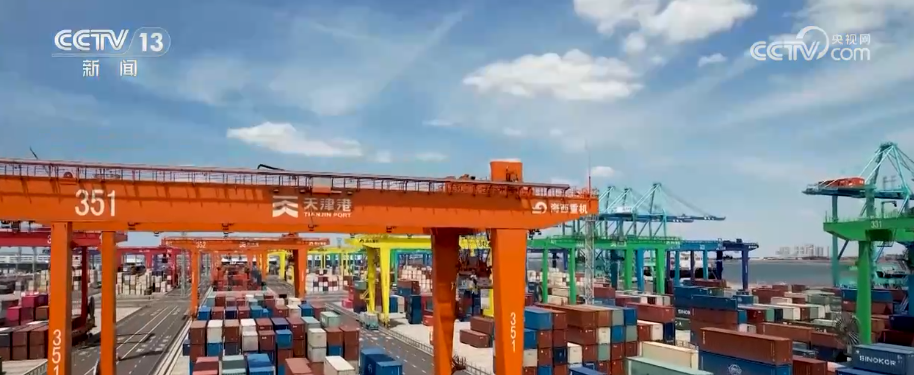
中新自贸协定升级红利持续释放,为两国经贸往来注入不竭动能
Di Yi Cai Jing· 2025-08-12 13:01
Core Viewpoint - The article emphasizes the need for China and New Zealand to accelerate bilateral economic and trade cooperation, particularly in advanced fields such as food science, low-carbon technology, agricultural economy, digital trade, and biopharmaceuticals [1][7]. Bilateral Trade Overview - In 2024, the bilateral trade volume between China and New Zealand reached $20.15 billion, with China exporting $7.74 billion and importing $12.42 billion [2]. - From January to June 2025, the cumulative trade volume was $10.85 billion, showing a year-on-year growth of 6.3%, with exports from China decreasing by 1.6% and imports increasing by 10.8% [2]. Economic Cooperation Landscape - The economic relationship has evolved beyond traditional goods trade to include diversified cooperation in areas such as deep processing of agricultural products, technological innovation, green finance, and the digital economy [3]. - The implementation of the China-New Zealand Free Trade Agreement (FTA) has led to a significant increase in bilateral trade, with nearly NZD 30 billion growth since its inception [3]. Trade Surplus and Policy Environment - New Zealand has maintained a trade surplus with China for eight consecutive years from 2017 to 2024, aided by the favorable policy environment created by the FTA [4]. - New Zealand's unique resources and technological advantages in food science, environmental protection, and agricultural economy have driven trade growth, particularly in dairy, meat, timber, fruits, and organic products [4]. Strategic Initiatives and Future Prospects - New Zealand has established a strategic advantage in bilateral cooperation with China through various pioneering initiatives, including being the first developed country to sign a comprehensive FTA with China [5]. - The upgraded FTA has significant implications for China's new development pattern and high-quality opening-up, facilitating cooperation in key areas like dairy and forestry [6]. Continued Cooperation and Future Directions - The ongoing benefits from the upgraded FTA are expected to inject continuous momentum into bilateral trade, with a focus on expanding market access and reducing institutional transaction costs [7]. - Future cooperation should prioritize advanced fields such as food science, low-carbon technology, agricultural economy, digital trade, and biopharmaceuticals, establishing a new model for South-South cooperation [7].
特朗普下达最后通牒,再对8国加征关税,巴西为何被征高额关税?菲律宾也没能逃过去!
Sou Hu Cai Jing· 2025-07-16 04:17
Group 1 - Trump announced a tariff increase on eight countries, with Brazil facing the highest rate of 50%, raising concerns about the implications for international trade relations [1][3] - The U.S. has maintained a significant trade surplus with Brazil, amounting to approximately $7 billion in 2024 for goods alone, and $28.6 billion when including services [1] - Brazil's government officials criticized the tariff increase as unjustified, highlighting that 80% of U.S. exports to Brazil are already duty-free [3] Group 2 - The Philippines will face a 20% tariff increase, which, while lower than Brazil's, poses risks to its export-dependent industries, particularly in electronics and agriculture [6][7] - The Philippine government is developing strategies to mitigate the impact of the tariffs, including increasing purchases of U.S. products and exploring new international markets [7] - The tariff increases are expected to disrupt global supply chains, particularly in industries like automotive manufacturing, where components are sourced from multiple countries [8] Group 3 - The unilateral tariff actions by the U.S. are likely to escalate tensions in international relations, with countries expressing dissatisfaction and potentially uniting against U.S. trade policies [10] - The situation may lead to a shift in global trade dynamics, encouraging countries to diversify their trade partnerships and strengthen regional economic cooperation [10]

南美崛起,欧洲试探,全球贸易新棋局
Sou Hu Cai Jing· 2025-07-04 07:19
Group 1 - The core viewpoint of the article highlights the significance of the free trade agreement between Mercosur and EFTA as a strategic response to global economic challenges, aiming to reshape future global trade dynamics [1][8] - The agreement represents a proactive strategy for Mercosur, allowing South American countries to diversify trade partnerships and enhance economic modernization amidst internal and external pressures [3][4] - EFTA's decision to sign the agreement reflects its adaptability to global economic fluctuations, seeking to secure investment safety and stabilize export markets through collaboration with developing countries [4][6] Group 2 - The agreement underscores the challenges faced in the long-stalled EU-Mercosur negotiations, with the rapid signing of the EFTA deal potentially pressuring the EU to reassess its negotiation strategies [4][6] - The evolving international trade environment, characterized by protectionism and geopolitical tensions, necessitates diverse regional economic cooperation models, exemplified by the Mercosur-EFTA agreement [6][8] - The collaboration signals a commitment to multilateral cooperation and shared standards, which is crucial for both regions as they navigate the complexities of the global economy [6][8]
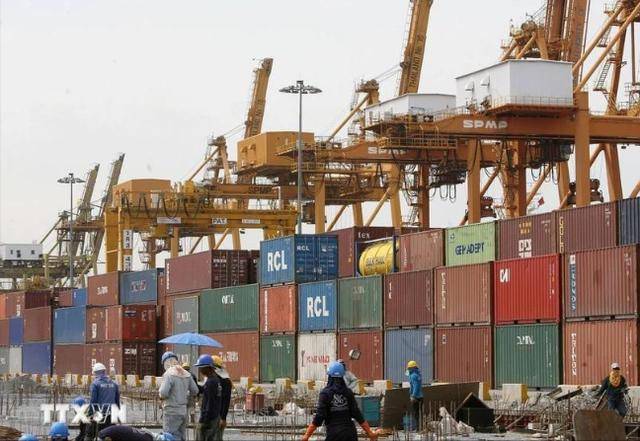
辽宁前5个月出口同比增长12.1%
Sou Hu Cai Jing· 2025-06-19 00:57
Group 1 - The total value of foreign trade in Liaoning Province reached 304.8 billion yuan in the first five months of this year, with exports increasing by 12.1% to 161.55 billion yuan, setting a historical record for the same period [1] - Despite a slight year-on-year decline of 1.8% in total import and export value, the decline has narrowed by 1.4 percentage points compared to the first four months, indicating a clear trend of stabilization and recovery [1] - Private enterprises have emerged as the main force in foreign trade, with an import and export value of 158.68 billion yuan, a year-on-year increase of 9.9%, accounting for 52.1% of the province's total, up 5.5 percentage points from the same period last year [1] Group 2 - The structure of trade methods is optimizing, with general trade totaling 195.74 billion yuan, accounting for 64.2% of the total. Bonded logistics have surged, with imports and exports reaching 48.62 billion yuan, a significant increase of 28.2% [1] - Liaoning's trade with the EU and ASEAN remains strong, with import and export values of 44.78 billion yuan and 43.58 billion yuan respectively. Trade with ASEAN has shown a robust growth rate of 14% [2] - Exports of electromechanical products, a key pillar, reached 80.36 billion yuan, a year-on-year increase of 6%, accounting for 49.7% of total exports [2] Group 3 - The increase in exports to emerging markets and free trade partners, along with the significant rise in the share of private enterprises, reflects the effectiveness of national and local policies aimed at stabilizing foreign trade [3] - The achievements in foreign trade are indicative of the successful transformation and upgrading of Liaoning's industries, enhancing the international competitiveness of its enterprises [3] - The strong performance in foreign trade is expected to provide solid external support and confidence for the comprehensive revitalization of Northeast China [3]
鄂尔多斯市—包钢集团产业链协同发展暨供需对接会召开
Nei Meng Gu Ri Bao· 2025-06-14 00:56
Core Insights - The conference titled "New Integration - Warm City and Baogang" was held in Ordos, focusing on collaborative development of the industrial chain between Ordos and Baogang Group [1] - Over 400 guests from various sectors such as energy, coal, chemicals, infrastructure, equipment manufacturing, industrial parks, and research institutions participated in discussions aimed at providing integrated solutions for downstream customer needs [1] - The collaboration model between Baogang Group and Ordos City is a practical action to implement the high-quality development strategy of the autonomous region's economy, promoting the extension and strengthening of advantageous and characteristic industries [1] Group 1 - The event aimed to explore new paths for industrial chain collaboration and regional economic cooperation [1] - The goal of providing integrated solutions for downstream customer needs reflects the proactive exploration of collaborative development between enterprises and local governments [1] - This initiative is part of the autonomous region's efforts to support various types of enterprises in achieving shared benefits from reform and development [1]

