去风险化

Search documents
德国财长找补:给稀土设置价格下限,不是对抗中国
Sou Hu Cai Jing· 2026-01-13 03:14
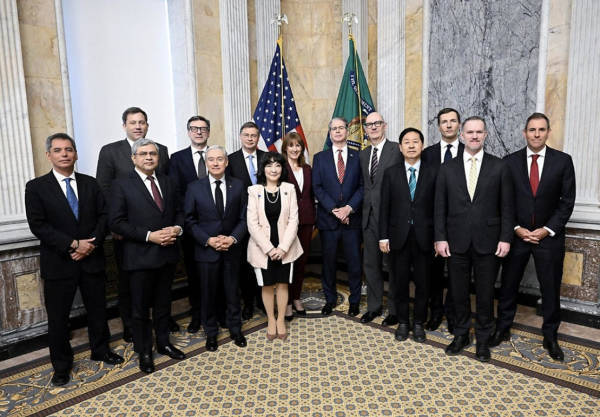
Group 1 - G7 countries are intensifying discussions on establishing a price floor for rare earth elements to reduce dependence on China, especially after recent retaliatory measures from China against the US and Japan [1][2] - The G7 finance ministers, led by US Treasury Secretary Janet Yellen, discussed mechanisms for minimum pricing of critical raw materials and the formation of trade alliances during a high-level meeting [1][5] - The meeting highlighted the urgency for G7 nations to collaborate on securing strategic rare earth supplies, with a focus on reducing reliance on China [1][5] Group 2 - Germany's Finance Minister Lars Klingbeil emphasized that the proposed price floor mechanism would provide clear market price expectations and weaken the influence of countries attempting to manipulate market prices [1][2] - The discussions are still in early stages, with many unresolved issues, and future negotiations will involve foreign and energy ministers [2] - The US is pushing for accelerated solutions to rare earth supply issues, but other G7 countries have shown less urgency, leading to frustration from US officials [5][7] Group 3 - The US has signed a key minerals cooperation agreement with Australia, valued at $8.5 billion, aimed at breaking China's dominance in the sector [6] - Recent Chinese export restrictions on rare earths to Japan could significantly impact Japanese manufacturers, who are heavily reliant on Chinese supplies for electronics and semiconductors [7] - China's stance on maintaining stability and security in the global supply chain for critical minerals remains unchanged, asserting that all parties have a responsibility to contribute constructively [7]

人民币国际化重大突破,外国开始用人民币收税,引起外界高度关注!
Sou Hu Cai Jing· 2026-01-02 06:05
Core Viewpoint - Zambia's central bank has confirmed the acceptance of payments in Renminbi for mining taxes and royalties since October, marking a significant breakthrough in the internationalization of the Renminbi [1][3]. Group 1: Economic Implications - Zambia's decision to accept Renminbi for tax payments signifies a shift in the role of the currency, moving beyond mere transactional use to a recognition of its importance in national fiscal sovereignty [3]. - The move reflects a growing trend among developing countries to diversify their currency options and reduce reliance on a single currency, indicating a collective action towards "de-risking" [4]. Group 2: Market Dynamics - The latest survey from the Bank for International Settlements shows a rapid increase in the Renminbi's share of global foreign exchange transactions, with more central banks incorporating it into their foreign exchange reserves [3]. - The internationalization of the Renminbi is still in its early stages, facing challenges such as the need for a deep, liquid, and transparent financial market to attract long-term holders [3][4]. Group 3: Historical Context - The acceptance of Renminbi for sovereign tax payments is seen as a natural evolution of demand, driven by deep integration of Chinese and global supply chains, rather than coercive measures [4]. - The internationalization of the Renminbi reflects broader themes of national strength, including manufacturing capabilities, technological advancements, and stable political and economic expectations [4]. Group 4: Future Outlook - While the path to Renminbi internationalization is long, Zambia's decision serves as a significant signal for future developments in global currency dynamics [5].
德铁买中国大巴德国财长这么说
Di Yi Cai Jing Zi Xun· 2025-12-25 09:47
Group 1 - The core point of the article is the signing of a framework agreement between Deutsche Bahn and BYD for the production of 200 electric buses, highlighting the push for green public transport in Germany and the importance of cost-effectiveness in procurement decisions [2] - The agreement comes at a time when the EU is easing restrictions on fuel vehicles, with German officials emphasizing the need for electric vehicle adoption while also expressing a desire for patriotic purchasing practices [2][3] - Despite a decline in Germany's economic performance, foreign investment interest, including from Chinese companies, remains strong, with a slight decrease in foreign investment projects in 2024 compared to the previous year [3][4] Group 2 - Germany is implementing the "Growth Opportunities Act" to attract more foreign investment through tax incentives and structural reforms, including a gradual reduction of corporate tax rates from 15% to 10% by 2032 [4] - The bilateral trade volume between Germany and China reached €185.9 billion in the first three quarters of the year, with China remaining Germany's largest trading partner [4] - Chinese companies are increasingly focusing on greenfield investments in Germany, particularly in sectors like electric vehicles and digitalization, moving away from previous trends of mergers and acquisitions [5] Group 3 - Chinese enterprises face challenges in Germany due to increased scrutiny on foreign investments, including foreign investment reviews and data protection regulations, which can lead to longer approval times for transactions [6] - The German business community emphasizes the importance of the Chinese market, with many companies relocating operations to China to better align with local demands [7] - The trend of German companies moving operations to China reflects a strategic focus on local market needs, indicating a deep reliance on the Chinese market for future growth [7]


德铁买中国大巴德国财长这么说
第一财经· 2025-12-25 09:22
Core Viewpoint - The article discusses the recent agreement between Deutsche Bahn and BYD for the purchase of 200 electric buses, highlighting the shift towards electric transportation in Germany and the challenges faced by foreign investments in the country [3][4]. Group 1: Electric Bus Agreement - Deutsche Bahn signed a framework agreement with BYD for 200 electric buses to be produced in Hungary, emphasizing cost-effectiveness and the push for green public transport in Germany [3]. - The agreement coincides with the EU's relaxation of the "fuel vehicle ban," indicating a significant trend towards electrification in transportation [3]. Group 2: Economic Performance and Foreign Investment - Germany's economic growth has stagnated, with a projected growth of only 0.1% for 2025, down from previous forecasts [4]. - Despite the economic downturn, foreign investment interest in Germany remains, driven by the need for supply chain integration and access to the EU market [4]. Group 3: Tax Reforms and Investment Climate - Germany plans to gradually reduce the corporate tax rate from 15% to 10% by 2032, alongside other tax incentives to attract foreign investment [5]. - In the first three quarters of this year, bilateral trade between Germany and China reached €185.9 billion, with China remaining Germany's largest trading partner [5]. Group 4: Changing Investment Strategies - Chinese companies are increasingly favoring greenfield investments over mergers and acquisitions, reflecting a more strategic approach to entering the German market [6]. - Key sectors of interest for Chinese investments in Germany include digitalization, energy, and electric vehicles, with a focus on local sales rather than manufacturing [6]. Group 5: Challenges for Chinese Investments - Chinese companies face significant challenges in Germany, including foreign investment scrutiny, subsidy reviews, and data protection regulations [7]. - The German government has tightened regulations on foreign investments, particularly in sensitive sectors, which may lead to longer approval times for investments [7]. Group 6: Importance of the Chinese Market for German Companies - German companies are increasingly recognizing the importance of the Chinese market, with many relocating R&D centers to China to better align with local demands [8]. - The trend of "Eastward migration" among German firms highlights their commitment to maintaining a strong presence in China, as they believe leaving the market would result in lost opportunities [8].

财联社2025年十大海外新闻
财联社· 2025-12-25 06:47
Group 1: Political and Economic Developments - Trump's return to the presidency has led to increased global uncertainty due to aggressive tariff policies aimed at reshaping the manufacturing landscape in the U.S. [2][3] - The U.S. stock and bond markets experienced significant volatility as a result of these tariff policies, prompting a shift in global capital strategies towards high-friction and high-inflation environments [3] - The U.S. Federal Reserve's three interest rate cuts in 2025 did not lead to a decrease in long-term interest rates, which remained high due to expansive fiscal policies and rising national debt [10][11] Group 2: Commodity and Asset Market Trends - Gold prices surged to over $4500 per ounce, surpassing the euro to become the second-largest reserve asset globally, indicating a shift in the traditional currency reserve system [4][5] - The MSCI global index reached historical highs, reflecting strong performance across various markets, particularly in technology and emerging markets [6][7] - Industrial metals like copper and aluminum saw significant demand due to global energy transitions and infrastructure developments, highlighting a robust physical economy [6][7] Group 3: Technology Sector Dynamics - Nvidia's market capitalization exceeded $5 trillion, marking a pivotal moment in the AI infrastructure race, although concerns about the sustainability of its growth model emerged [8][9] - The tech sector faced volatility as investors shifted focus from speculative investments to evaluating actual profit growth, raising concerns about potential bubbles in AI investments [9] Group 4: Geopolitical Tensions - The ongoing conflict in the Middle East saw a temporary ceasefire in Gaza, but underlying tensions remained, affecting global investment confidence in the region [14][15] - Military confrontations between India and Pakistan escalated, leading to significant disruptions in regional markets and highlighting the risks associated with geopolitical instability [16] Group 5: Market Sentiment and Investment Strategies - The retirement of Warren Buffett from Berkshire Hathaway prompted a reevaluation of value investing principles in a rapidly changing market landscape dominated by technology [17][18] - The cryptocurrency market experienced a dramatic downturn after a period of growth, emphasizing the volatility and risks associated with emerging digital assets [19]

德铁买中国大巴德国财长这么说,中企如何“迎难而上”
Di Yi Cai Jing· 2025-12-25 06:41
Group 1 - The core viewpoint of the article highlights the growing interest of Chinese companies in investing in Germany, particularly in sectors like electric vehicles and digitalization, as evidenced by the recent agreement between Deutsche Bahn and BYD for 200 electric buses [1][2] - Deutsche Bahn's decision to partner with BYD is driven by cost-effectiveness and the aim to support Germany's green transition and carbon reduction goals, coinciding with the EU's relaxation of the "fuel vehicle ban" [1][2] - The German economy has shown signs of stagnation, with zero growth in Q3 compared to Q2, and a forecasted growth of only 0.1% for 2025, prompting discussions on economic restructuring [2][3] Group 2 - Foreign investment in Germany is primarily motivated by the need for supply chain integration and access to the EU market rather than short-term high returns, with 1,724 foreign investment projects recorded in 2024, a slight decrease of 2% year-on-year [2][3] - The German government is actively seeking to attract more foreign investment through tax incentives and structural reforms, as outlined in the "Growth Opportunities Act" [2][3] - Recent changes in investment patterns show a shift from mergers and acquisitions to greenfield investments by Chinese companies, with a notable example being CATL's factory investment in Thuringia [3][4] Group 3 - Chinese companies are increasingly focusing on rational investment strategies, moving away from opportunistic investments, with key areas of interest including digitalization (51%), energy (48%), and electric vehicles (35%) [4][5] - Challenges for Chinese enterprises in Germany include site selection for factories or stores, accessing local government subsidies, and finding suitable labor [5][6] - The tightening of foreign investment regulations in Germany has created uncertainties for Chinese companies, with increased scrutiny on foreign acquisitions and data protection [6][7] Group 4 - German companies emphasize the importance of the Chinese market, with a notable trend of relocating operations to China, as seen with major firms like Volkswagen and BMW [7] - The dependency of the German economy on China remains significant, with a lack of clear structural de-risking trends observed [7]

马斯克预警实力反转,未来,中国实业将碾压美国2-3倍
Sou Hu Cai Jing· 2025-12-22 06:32
Group 1 - The core argument presented is that traditional GDP metrics may not accurately reflect a country's true strength, as highlighted by Elon Musk's assertion that China's comprehensive national power could be two to three times that of the U.S. [1][2] - A country's real strength lies in its agricultural and industrial production capabilities, which Musk emphasizes as the fundamental indicators of national power [3][5]. - China has achieved remarkable agricultural productivity, managing to feed nearly 18% of the world's population with only 7% of the global arable land, showcasing its agricultural prowess [5][7]. Group 2 - In terms of industrial output, China's steel production is ten times that of the U.S., and its electricity generation exceeds that of the U.S. by more than double, indicating a robust industrial foundation [9][11]. - The comparison of production figures reveals that China's vegetable output is 19 times that of the U.S., and its meat production is 1.8 times higher, ensuring food security for its population [7][9]. - The article contrasts the solid industrial base of China with the U.S. economy, which is increasingly reliant on a service sector that constitutes over 80% of its GDP, leading to concerns about economic stability [14][18]. Group 3 - The shift in global power dynamics is highlighted, with a transition from financial dominance to industrial strength as the core of national competitiveness [20][22]. - Chinese companies, such as CATL, are expanding globally, indicating a shift from merely "Made in China" to "Defined by China," as they begin to export not just products but also technology and standards [22][24]. - The article emphasizes the importance of a complete and resilient industrial chain, suggesting that countries must reduce reliance on single sources in critical industries, where China holds a strategic advantage [24][26]. Group 4 - China's strategy in response to global changes focuses on strengthening its own development rather than direct confrontation, leveraging its agricultural and industrial strengths [26][28]. - The article posits that the U.S. faces internal contradictions and a weakening industrial base, while China continues to invest in technological innovation and maintain a strong industrial foundation [28][30]. - The conclusion draws a stark contrast between China's tangible production capabilities and the U.S.'s reliance on debt and virtual economy, underscoring the importance of solid foundations over superficial metrics [30][31].

特朗普还没启程访华,中国突然公布黄金库存,美方霸权地位已不保
Sou Hu Cai Jing· 2025-12-08 06:26
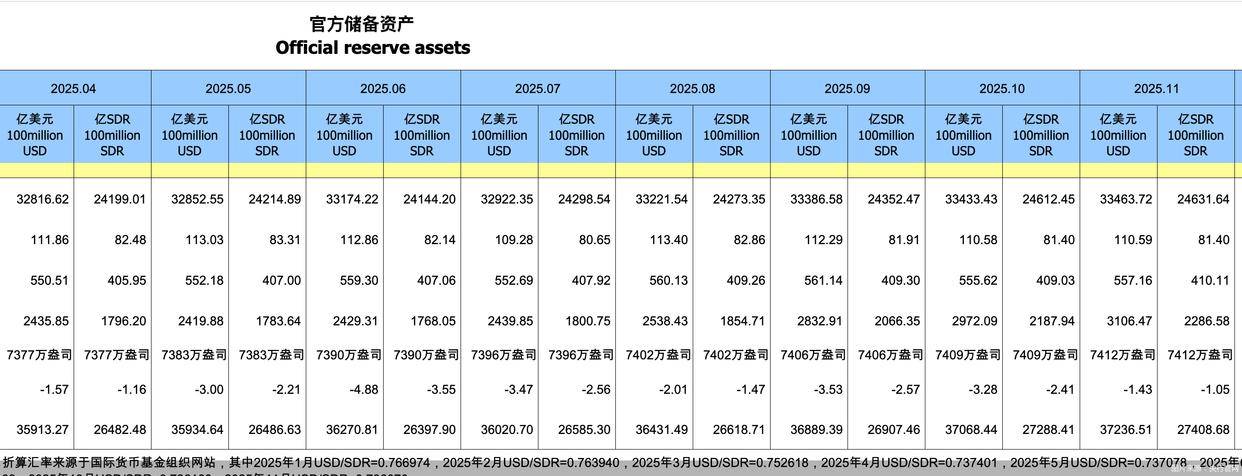
Core Insights - The article discusses the recent increase in China's gold reserves, which reached 74.12 million ounces, marking a continuous growth for the thirteenth month in a row, alongside a slight rise in foreign exchange reserves to $3.3464 trillion [1][4][6]. Group 1: Gold Reserves and Foreign Exchange - China's gold reserves increased by 30,000 ounces compared to the previous month, reflecting a steady accumulation trend since last year [1][4]. - The rise in foreign exchange reserves is attributed to the decline in the US dollar index and fluctuations in asset prices [6][12]. - The consistent increase in gold reserves signals a long-term asset allocation strategy rather than a temporary decision [4][18]. Group 2: Strategic Implications - The gradual accumulation of gold is seen as a strategy to diversify reserves and enhance financial stability, acting as a buffer against extreme situations [8][10]. - China's reduction in US Treasury holdings, which stood at approximately $700.5 billion in September, indicates a shift towards reducing reliance on dollar assets [12][14]. - The timing of the gold reserve announcement coincides with upcoming high-level US-China interactions, suggesting it may serve as a strategic signal in negotiations [14][16]. Group 3: Market Confidence and Psychological Capital - The steady growth in gold reserves is intended to bolster market confidence and provide a psychological assurance to domestic enterprises and residents regarding the country's financial stability [16][18]. - The article emphasizes that the increase in gold reserves is not aimed at undermining the dollar system but rather at enhancing the diversity and security of reserve assets [18].
管涛:今年我国国际收支口径跨境直接投资逆势向好 | 立方大家谈
Sou Hu Cai Jing· 2025-12-07 13:18
Core Viewpoint - China's foreign direct investment (FDI) landscape has experienced significant fluctuations in recent years, particularly since 2022, with a notable shift from net inflows to net outflows, raising concerns about "de-Chinaization" in global supply chains. However, preliminary data from the State Administration of Foreign Exchange indicates a reversal in this trend in 2023, with net outflows decreasing and net inflows returning, despite ongoing external pressures [3][5][15]. Group 1: Trends in Cross-Border Direct Investment - Historically, China has been a major recipient of foreign investment, with a shift towards balancing inbound and outbound investments since the early 2000s. Prior to 2022, China consistently recorded a surplus in cross-border direct investment, contributing to the resilience of its international balance of payments [4][5]. - The COVID-19 pandemic initially boosted China's direct investment surplus in 2020 and 2021, with surpluses reaching $165.3 billion in 2021, the highest since 2014. However, this trend reversed in 2022, leading to significant net outflows in subsequent years [5][6][10]. - From 2021 to 2024, China's cross-border direct investment shifted from a surplus to a deficit, with a total increase in net outflows of $319 billion. This was primarily driven by a sharp decline in net inflows of foreign direct investment [6][10]. Group 2: Factors Influencing Investment Flows - The decline in foreign direct investment inflows from 2021 to 2024 was largely due to a significant drop in equity investment inflows and a reversal in inter-company debt flows. Equity investment inflows decreased from $300.6 billion to $72.8 billion, contributing 70% to the overall decline in foreign direct investment inflows [8][10]. - The net outflow of equity investment remained stable, while inter-company debt flows saw a significant reversal, indicating a complex interplay of factors affecting cross-border investment dynamics [14][25]. - In 2023, net outflows of cross-border direct investment decreased by 50.8% year-on-year, primarily due to increased net inflows of foreign direct investment and reduced net outflows of direct investment [15][19]. Group 3: Government Response and Market Outlook - The Chinese government has recognized the need to mitigate external shocks and has implemented measures to enhance foreign investment, including easing restrictions and optimizing the business environment [15][16]. - Despite external pressures, key economic indicators have shown resilience, with foreign direct investment net inflows increasing in 2023, reflecting a stabilization in foreign capital withdrawal [21][24]. - The overall investment climate remains cautious, with domestic enterprises adopting a rational approach to overseas investments amid geopolitical tensions and economic challenges [26][27].
台企代工巨头从“生产线大爷”变“高级打工者”,和硕让出印度工厂六成股权
Sou Hu Cai Jing· 2025-11-25 10:14
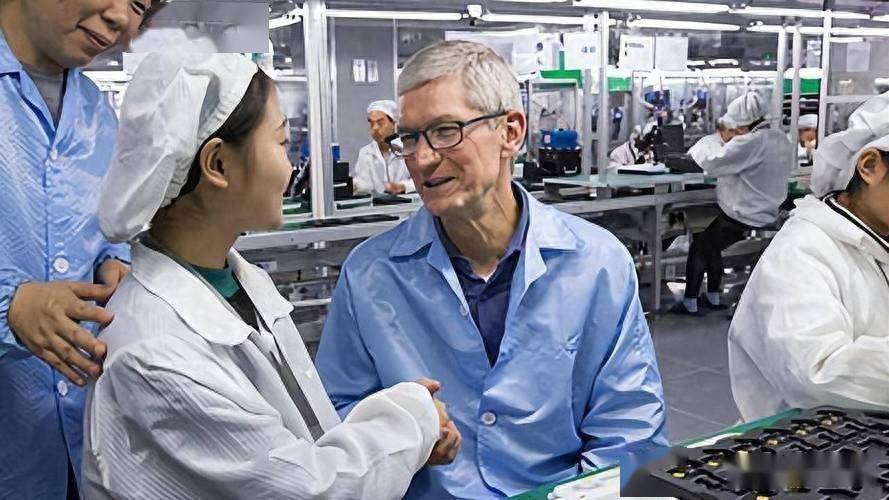
Core Insights - The article discusses the shifting dynamics of Taiwanese manufacturers in response to Apple's strategic pivot towards India, highlighting the varying responses of major players like Pegatron, Wistron, and Foxconn [3][4][6][11]. Group 1: Industry Dynamics - Taiwanese manufacturers, once dominant in the assembly of iPhones, are now facing existential choices due to Apple's "de-risking" strategy, which pushes them to diversify production away from China [3][6]. - Pegatron has sold its factory to Tata, completely exiting the iPhone assembly business, while Wistron has also sold its factory at a loss to maintain its orders from China [3][9]. - Foxconn, the largest of the three, is betting heavily on India with a planned investment of $30 billion, aiming to replicate its successful model from China [11][13]. Group 2: Apple's Strategy - Apple's strategy emphasizes a "China +1" approach, mandating suppliers to establish a presence in India or risk losing orders, effectively making it a survival issue for Taiwanese firms [6][15]. - The company is focused on securing its supply chain by fostering local giants like Tata, which can navigate the complexities of the Indian market better than foreign firms [15][21]. Group 3: Challenges in India - The Indian manufacturing environment presents significant challenges, including unreliable power supply, logistical issues, and a high turnover rate among workers, which complicates operations for Taiwanese firms [17][19]. - Wistron's factory in Karnataka faced a low yield rate of 55% and operational disruptions, leading to its exit from the market [21]. - Tata has managed to stabilize operations by leveraging local relationships, reducing worker turnover, and improving production efficiency [21]. Group 4: Broader Implications - The article suggests that the shift in production dynamics reflects a broader trend of Taiwanese firms losing their previous dominance and becoming more dependent on local partners in India [3][30]. - The changing landscape indicates a structural shift in global manufacturing, where efficiency is being replaced by security, leading to a new era of uncertainty for all players involved [35][37].