
多极世界

Search documents
萨仁山:中印两国很不寻常,可以扮演引领角色
Xin Lang Cai Jing· 2026-01-17 09:28
Core Viewpoint - The speech emphasizes the need for a multipolar world order rather than a binary focus on US-China relations, highlighting the importance of the Global South in shaping this new order [1][2] Group 1: Global Order Perspective - The current view of a US-China dominated world is considered narrow, as power is diffusing globally, leading to a multipolar world [1] - The historical non-alignment movement is seen as a significant peace initiative that has lost relevance, suggesting a need for a new peace movement that addresses contemporary conditions [1] Group 2: Role of China and India - China and India are identified as politically stable countries that can provide leadership in establishing a new international order [1] - The economic growth of both countries is noted as relatively reasonable, making them unusual sources of economic growth and political stability compared to other regions [2]
2035年超级趋势报告:重塑市场与商业的六大颠覆性力量(英文版)
Sou Hu Cai Jing· 2026-01-13 04:44
Core Insights - The report titled "2035 Super Trends" identifies six transformative forces that will reshape global business over the next decade, emphasizing that these trends are structural changes rather than fleeting phenomena [1][14][15]. Group 1: Exponential Intelligence - By 2035, it is projected that over 90% of digital content will be generated by AI, blurring the lines between human and machine thinking [2][23]. - Companies must integrate AI into all core functions, from operations to marketing, and develop proprietary models tailored to their needs [2][25]. - Leading firms are reimagining customer experiences through predictive and hyper-personalized interfaces, enhancing human collaboration [2][32]. Group 2: Generational Remix - By 2035, the global population will be older, more urbanized, and more diverse, necessitating businesses to design products and services that cater to various generations and lifestyles [3][34]. - Companies should create inclusive, intergenerational offerings and incorporate cultural diversity into their research and development processes [3][36]. - Urban planners must design cities and workplaces that accommodate longer life spans and address issues like loneliness and mental health [3][36]. Group 3: Asian Century - Asia is becoming the center of global growth, with the majority of middle-class consumers expected to reside there by 2035 [4]. - Asian companies are evolving from low-cost imitators to leaders in innovation and new business models, requiring businesses to localize products for emerging markets [4][16]. - Companies must collaborate with local partners to create tailored offerings for the rapidly growing middle class in second and third-tier cities [4][16]. Group 4: Regenerative Systems - Climate change presents both risks and opportunities, pushing companies to move beyond carbon neutrality towards regenerative practices that positively impact the environment [5][15]. - Businesses need to transform their supply chains into regenerative ecosystems and adopt circular design principles [5][15]. - Innovation should focus on leveraging tools like AI to address significant challenges such as climate change and public health [5][15]. Group 5: Multipolar World - The traditional model of seamless globalization is breaking down, with economic nationalism and geopolitical tensions reshaping business strategies [6][15]. - By 2035, over 70% of global trade is expected to occur within regional networks, prompting companies to rebuild supply chains for resilience rather than just cost [6][15]. - Businesses must localize or nearshore manufacturing and develop flexible, modular operations to adapt to complex regulatory challenges [6][15]. Group 6: Humanity Rising - Trust, well-being, and social contribution are becoming central to business strategies as automation and AI take over repetitive tasks [7][15]. - Companies need to redesign roles to create higher value, focusing on empathy, trust, and meaning in corporate culture [7][15]. - By 2035, companies that prioritize purpose and well-being are expected to significantly outperform their peers [7][15]. Conclusion - The six megatrends outlined in the report highlight a future characterized by increased complexity and rapid change, urging business leaders to adopt a "super trend mindset" to navigate these transformations effectively [8][14][15].


中美俄黄金储备差距明显:美国8133吨,俄约2333吨,中国有多少?
Sou Hu Cai Jing· 2026-01-10 14:51
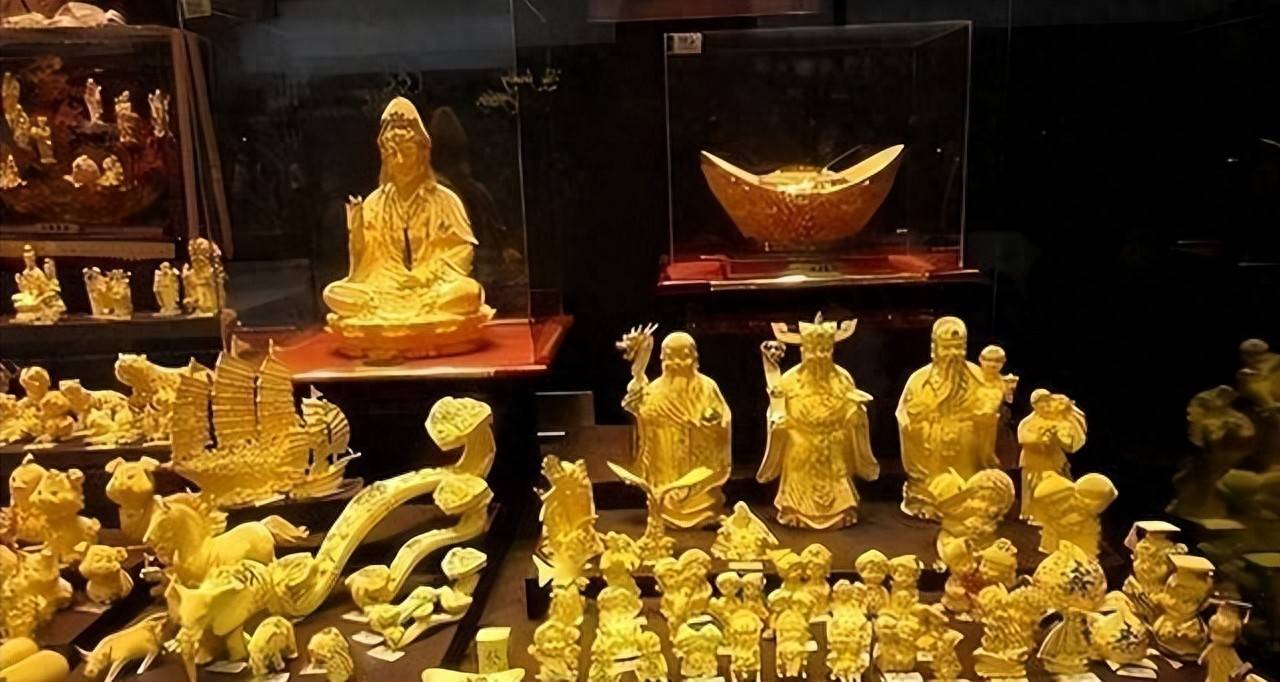
二战后,美国从欧洲接手大量金条,建起美元体系,那时候的储备一度超两万吨。现在虽减了些,但核心部分没动,存放在诺克斯堡的地下库房里。 俄罗斯呢,从苏联时代继承下来的底子,在普京手里慢慢加码,到2025年9月已达2330吨左右,主要靠本土矿产自给。 中国储备在2025年第三季度是2303吨,增速不慢,但跟经济体量比,还只是个小比例。这些数字背后,是各国对金融安全的不同理解,美国靠老本,俄中在 追赶中找平衡。 储备差距不是天生的,而是战略选择的结果。美国黄金占比外汇储备高达69%,这让美元在全球晃荡时总有底气。 记得2022年俄乌冲突爆发,西方冻结俄罗斯资产,那时候俄央行靠黄金稳住卢布,没让经济彻底趴下。俄罗斯从2014年起,每年增持上百吨,到2025年占比 达26%,这不光是钱的问题,更是独立于西方体系的生存之道。 中国策略更稳扎稳打,从2009年公开增持开始,逐步减美债买黄金。2025年上半年,金价虽高,但央行还是低调加了点,目的就是为人民币走出去铺路。 黄金在当今世界,不再是古董级的避险品,而是活生生的金融武器。美国储备多,但2025年债务堆积如山,黄金成了隐形担保,避免信用崩盘。 俄罗斯面对制裁,黄金帮它建 ...
日本教授坦言:这场关说战让日本发现,与中国合作多么重要!
Sou Hu Cai Jing· 2025-12-23 22:10
Group 1 - The Trump administration's tariffs on Japanese automobiles have escalated from an initial 27.5% to 50%, significantly impacting Japan's economy, as automobile exports account for nearly 20% of its GDP and 30% of exports to the U.S. [1] - Japan's Prime Minister Kishi Nobuo's team has proposed to increase purchases of U.S. natural gas and corn, as well as to contribute more to the costs of U.S. military presence in Japan, but the U.S. response has been vague [1] - Internal discussions within the Japanese government suggest using its substantial holdings of U.S. Treasury bonds as leverage, with proposals to sell some to pressure the U.S. [3] Group 2 - The trade conflict has highlighted the fragility of U.S.-Japan relations, with experts suggesting Japan should adopt a more assertive stance similar to China's approach in its trade disputes with the U.S. [3] - Japan is reevaluating its trade policies towards China, with calls for a "zero tariff" approach and renewed discussions on the trilateral free trade agreement with China and South Korea [7] - Japan's commitment to participate in China's Belt and Road Initiative, including infrastructure projects, is seen as a strategy to stabilize resource supply and enhance economic cooperation [7] Group 3 - Tensions have escalated following remarks by Japan's Prime Minister regarding China's actions towards Taiwan, leading to a deterioration in trade relations and the cancellation of cultural meetings [9] - Japan's reliance on the U.S. has been questioned, as the country risks becoming a pawn in U.S.-China tensions, with the U.S. emphasizing its priorities in the region [11] - Japan's economic strategy must adapt to the growing influence of China, with calls for deeper cooperation in high-end manufacturing to ensure mutual benefits [13]
为何中国会扩大在全球制造业出口中的领先优势
2025-12-15 01:55
Summary of Key Points from the Conference Call Industry Overview - **Industry**: Global Manufacturing and Exports - **Focus**: China's leading position in global manufacturing exports and its anticipated growth through 2030 Core Insights and Arguments - **China's Export Market Share Growth**: China's global export market share is projected to increase from 15% to 16.5% by 2030, despite ongoing trade tensions and protectionist measures from other economies [1][2][74] - **Dominance in Manufacturing**: China currently holds 15% of global exports and 28% of global manufacturing GDP, maintaining trade surpluses with 177 out of 225 economies [1][2] - **Advanced Manufacturing Strategy**: China has strategically invested in high-value manufacturing sectors, particularly in electric vehicles, batteries, and robotics, which are expected to drive future growth [7][49] - **Supply Chain Dynamics**: The geopolitical landscape has prompted other economies to diversify their supply chains, yet China's established manufacturing capabilities and resource mobilization are expected to sustain its export share [2][40][61] - **Talent Pool**: The number of university graduates in China is projected to rise significantly, with STEM graduates making up 41% of the total, which supports the growth of high-tech industries [8][13] Additional Important Content - **Trade Surplus Trends**: China's trade surplus with the US has shifted from a deficit in 2017 to a projected surplus of $116 billion by 2025, highlighting its growing export capabilities [47] - **Sector-Specific Growth**: In the fastest-growing export segments, China has captured 19% of the incremental global export value since 2017, particularly in semiconductors, batteries, and industrial robots [17][30] - **Challenges Ahead**: Despite the positive outlook, risks include potential overcapacity, deflationary pressures, and the effectiveness of policy measures in maintaining market share amidst rising global competition [88][90] - **Impact on Other Economies**: Neighboring economies like Japan and South Korea face increased competition from China, while countries like Vietnam and India may benefit from supply chain diversification but also deepen their reliance on Chinese imports [76][78] Conclusion - **Future Projections**: The report anticipates three scenarios for China's export market share by 2030, ranging from maintaining 15% to potentially reaching 18%, depending on external factors such as protectionism and the success of other economies' industrial policies [70][71]
刚回法国,马克龙就喊话中国帮欧洲;警告若贸易失衡持续,将对中国加税
Sou Hu Cai Jing· 2025-12-09 23:53
Group 1 - European industry is at a critical juncture, requiring investment and technology from China, as stated by Macron [2][6] - Macron warns of potential tariffs on Chinese goods if trade imbalances are not addressed, indicating a shift towards a more confrontational stance [3][16] - The narrative of blaming China for Europe's industrial decline is seen as a diversion from internal issues, such as high energy prices and factory relocations [7][12] Group 2 - The call for Chinese investment is not merely a plea for help but a strategic move to regain power and influence in the global market [5][20] - Macron's desire for China to invest in Europe reflects a longing for a past where Western companies dominated the value chain [13][14] - The current situation highlights a shift in power dynamics, with China now holding technological advantages and a complete supply chain [15][41] Group 3 - The interconnected global supply chain means that imposing tariffs on Chinese goods would primarily impact European consumers, leading to inflation [17][18] - The products exported from China are increasingly high-tech and not easily replaceable, complicating the tariff strategy [19][42] - Macron's warnings serve as a negotiation tactic to encourage Chinese investment along specific lines, such as green industries [20][21] Group 4 - Internal divisions within Europe regarding China policy hinder a unified approach, with different countries having varying dependencies on Chinese investment [22][24] - The simplification of complex internal issues into a narrative of "Chinese threat" serves to distract from Europe's structural problems [27][28] - The ongoing power shift in the global economy is causing discomfort in Europe, as it struggles to adapt to a new reality where it is no longer the dominant force [30][32] Group 5 - Future relations between Europe and China are expected to be characterized by competition and cooperation, with potential for both conflict and collaboration [51][52] - The narrative of who will "save" whom is outdated, as both sides are focused on self-improvement rather than reliance on the other [54][60] - Europe's industrial decline will continue if it does not address its internal challenges and instead focuses on external blame [58][61]
2026年亚洲新兴市场股票展望-风云未定,稳中求胜
2025-11-19 01:50
Summary of the 2026 Asia EM Equity Outlook Conference Call Industry or Company Involved - Focus on the Asia Emerging Markets (EM) equity outlook for 2026, with a particular emphasis on Japan and other emerging markets. Core Points and Arguments 1. **Market Strategy for 2026**: The company recommends maintaining a market risk exposure closely aligned with benchmark indices, with a slight preference for Japan over other emerging markets. This strategy aims to achieve excess returns amid ongoing macroeconomic uncertainties [3][4][5]. 2. **Global Economic Outlook**: The outlook for 2026 is cautiously optimistic, driven by generally constructive global growth expectations, particularly the potential for acceleration in 2027. The baseline index target price has been raised, reflecting a wider range between optimistic and pessimistic scenarios due to six key macroeconomic dimensions [3][4][5]. 3. **Key Macro Drivers**: The six dimensions influencing market performance include: - U.S. economic growth - Dollar movements - China's re-inflation - U.S. interest rates - Multipolar world dynamics - Capital expenditures in artificial intelligence and semiconductor demand [3][4][5]. 4. **Japan's Performance**: In the baseline scenario, Japan is expected to slightly outperform emerging markets. Earnings per share (EPS) expectations for Japan are slightly above market consensus, while those for emerging markets and China are below consensus. The trend of re-inflation and improvements in return on equity (ROE) are expected to be supported by the new government through moderate fiscal policies and regulatory reforms [4][5][22]. 5. **Emerging Markets Outlook**: Emerging markets are anticipated to lose momentum in 2026 due to stabilizing dollar conditions, which will limit further easing of financial conditions. A moderate optimism is maintained for the Chinese market, with expectations that the multi-polar world risk will diminish, keeping valuations close to current levels [4][5][22]. 6. **Sector Recommendations**: The company continues to recommend overweight positions in financials, consumer discretionary/e-commerce, and industrials, while underweighting energy and materials. Information technology, telecommunications, and real estate are maintained at equal weight [5][22]. 7. **Investment Themes**: The core investment themes for 2026 include a multipolar world, technology diffusion, longevity trends, and the future of energy, reflecting a rapidly changing global landscape [15][18]. Other Important but Possibly Overlooked Content 1. **Valuation and Earnings Forecasts**: The company has adjusted its earnings forecasts, particularly for Japan, while making smaller adjustments for China and emerging markets. The forecasts reflect a more optimistic view on global growth and inflation, as well as resilience in the financial sector [22][40]. 2. **Historical Performance Context**: The year 2025 is noted as an anomalous year, with market performance resembling that of 2020, driven by U.S. tariffs, fiscal, and monetary policies. The current valuations are significantly above long-term averages, which may limit the outlook for emerging markets [15][18]. 3. **Volatility Expectations**: The company expects continued significant differentiation in market, sector, and stock returns, a key characteristic of 2025, indicating a need for robust portfolio construction to navigate uncertainties [18][20]. This summary encapsulates the key insights and recommendations from the conference call regarding the outlook for Asia's emerging markets in 2026, highlighting the strategic focus on Japan and the broader macroeconomic context influencing investment decisions.
普京若退位,俄欧真能“和好”?梅德韦杰夫:欧洲别做梦,结局超惨!
Sou Hu Cai Jing· 2025-11-01 16:39
Core Viewpoint - The geopolitical dynamics surrounding Russia, Europe, and China are complex and uncertain, particularly in the context of potential leadership changes in Russia and the implications for international relations [1][2]. Group 1: Russia's Stance and Strategy - Russia has consistently emphasized the importance of security and territorial integrity since Putin's rise to power in 2000, indicating that core interests will not easily change regardless of leadership [2]. - Medvedev has stated that Russia is not interested in war with Europe, but warns that misjudgments by European nations could lead to severe consequences [2]. - The ongoing Russia-Ukraine conflict has lasted over three years, with Russia's economy enduring sanctions yet remaining resilient, highlighting its ability to navigate through adversity [2]. Group 2: Energy and Economic Relations - In 2021, Europe relied on Russia for 40% of its natural gas, which is projected to drop to 10% by 2024, yet the existing pipeline infrastructure still connects the two regions [2]. - The trade volume between China and Russia is expected to exceed $240 billion in 2024, showcasing a strong economic partnership that benefits both nations [2]. Group 3: Geopolitical Implications - Medvedev's comments reflect a growing assertiveness in Russian foreign policy, emphasizing that a change in leadership will not resolve deep-rooted conflicts between Russian security needs and European values [4]. - The European Union has spent over a thousand billion euros in aid to Ukraine, leading to rising energy prices and social unrest within Europe, indicating a challenging economic environment [4]. - The rise of nationalism and far-right movements in Europe is causing economic strain, with European companies facing high operational costs and increasing unemployment [5]. Group 4: China-Russia Relations - The relationship between China and Russia is characterized by mutual interests rather than personal ties, with both countries collaborating on strategic stability and anti-hegemonic efforts [5][6]. - Cultural exchanges between China and Russia are thriving, with increased tourism and educational interactions, reinforcing the bilateral relationship [6]. - Medvedev predicts that Europe's optimistic expectations regarding Russia will be shattered, leading to further difficulties for European nations [6].

第三届明斯克欧亚安全国际会议讨论多项国际安全议题
Xin Hua She· 2025-10-28 23:38
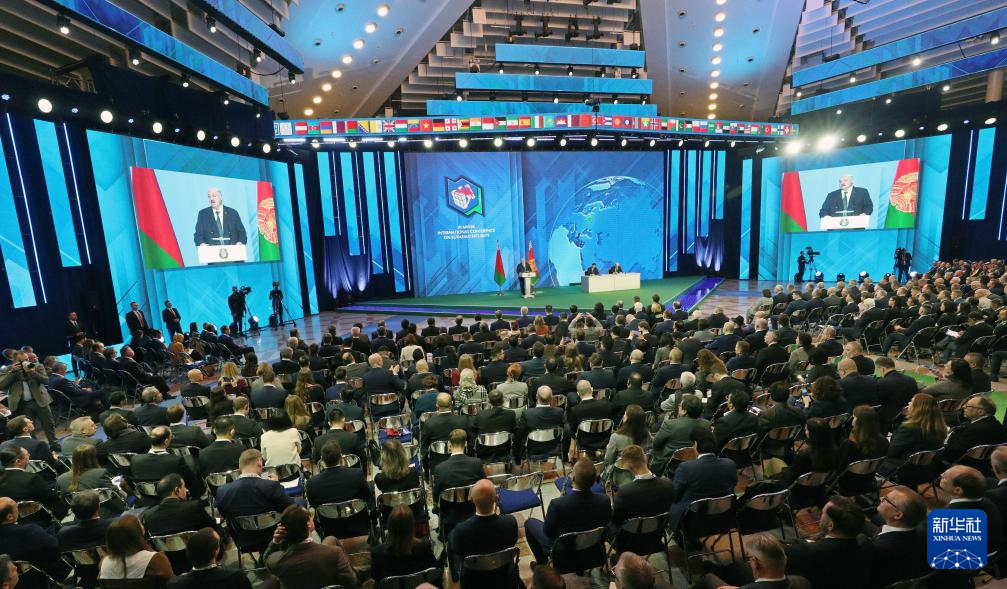
Core Points - The third Minsk Eurasian Security International Conference opened in Minsk, Belarus, with participation from over 40 countries and regions, as well as 7 international organizations, discussing strategic stability, arms control, regional cooperation, information and economic security, and migration issues [1][9] Group 1: Key Statements from Leaders - Belarusian President Lukashenko stated that the Western unipolar world order poses a threat to global stability, advocating for a multipolar world based on mutual respect and cooperation, and emphasizing the need for diplomatic dialogue over sanctions [2][4] - Russian Foreign Minister Lavrov emphasized that Europe must abandon its "arrogant exclusive claims" and hostile stance towards many Eurasian countries, including Russia and Belarus, expressing willingness to engage in substantive discussions on security issues [5][10] - Hungarian Foreign Minister Szijjarto highlighted the importance of regional partnerships in addressing migration and economic security issues, urging all parties to adopt inclusive approaches that benefit all stakeholders [7]
四大全球倡议,迈向多极世界的清晰路线图(国际论坛)
Ren Min Ri Bao· 2025-10-16 22:15
Core Views - China actively participates in global governance with a constructive approach, promoting international order towards a direction that aligns with the common interests of humanity through four global initiatives [1][4] Group 1: Global Initiatives - The four global initiatives proposed by President Xi Jinping—Global Development Initiative, Global Security Initiative, Global Civilization Initiative, and Global Governance Initiative—represent a systematic response to global development and governance needs [2][3] - The Global Development Initiative focuses on narrowing the North-South gap and enhancing development investment to support the UN's 2030 Sustainable Development Goals [2] - The Global Security Initiative addresses global security challenges, advocating for the principle of indivisible security and a common security approach [2] - The Global Civilization Initiative promotes respect for cultural diversity and encourages exchanges among civilizations to foster human progress [2] - The Global Governance Initiative calls for increased representation and voice for developing countries in global governance, aiming to rectify imbalances in the traditional global governance system [2][3] Group 2: China's Role in Multilateral Cooperation - China plays a significant role in various multilateral cooperation mechanisms, providing practical support for the implementation of the four global initiatives [3] - In the BRICS cooperation framework, China collaborates with other countries to expand cooperation beyond economic realms into political security and cultural exchanges [3] - Within the Shanghai Cooperation Organization, China leads efforts to enhance cooperation and maintain stability in the Eurasian region [3] - As the largest trading partner of ASEAN, China deepens cooperation in trade, culture, and security, contributing to regional integration [3] - In Africa and the Middle East, China builds dialogue platforms and promotes infrastructure projects, contributing to local development [3] Group 3: Future Implications - The four global initiatives serve as a clear roadmap towards a multipolar world, reflecting China's growing economic strength and international influence [3] - These initiatives break the monopoly of a few countries in development, security, civilization, and governance, establishing these rights as common entitlements for all humanity [3] - As cooperation under these initiatives deepens, China is expected to play a more significant role in promoting global multipolarity and building a community with a shared future for mankind [4]