波浪理论

Search documents
黄金今日行情走势要点分析(2025.11.18)
Sou Hu Cai Jing· 2025-11-18 00:29
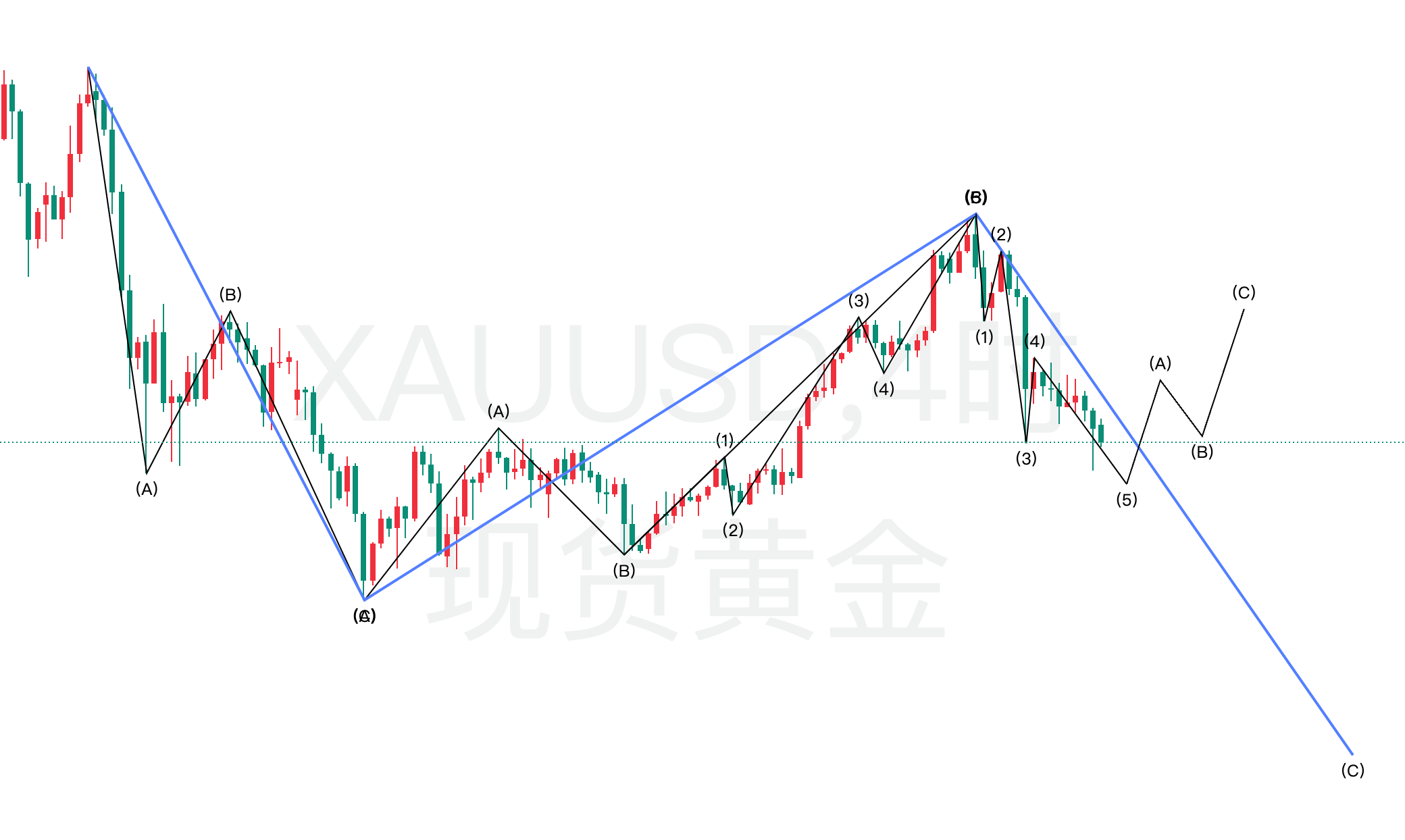
Core Viewpoint - The gold market experienced a downward trend on November 17, with prices fluctuating and ultimately closing lower, indicating a bearish sentiment in the short term [1]. Fundamental Analysis - Economic data releases are limited, with a focus on speeches from Federal Reserve officials and changes in market expectations regarding interest rate cuts [2]. - The probability of a 25 basis point rate cut by the Federal Reserve in December has decreased from over 60% to 39%-41%, contributing to a rebound in the US dollar index by 0.25% to 99.54, which has pressured gold buying [4]. - Delayed economic data releases this week, particularly the September non-farm payroll report, are expected to increase market uncertainty [4]. Technical Analysis - On the daily chart, gold has shown a weak downward trend, forming a "three consecutive bearish candles" pattern, indicating a short-term bearish outlook [3]. - The current daily moving average system is disorganized, with no clear bullish or bearish arrangement, leading to ineffective support and resistance levels [3]. - On the four-hour chart, gold has been in a downward trend, breaking below the key support level of 4032, with the price reaching a low of approximately 4007 [6]. - The decline from the high of 4245 has formed a complete five-wave structure, with the current price action likely in the first wave of a C-wave decline [6]. - Key support levels to monitor include 4007, 3980, and 3963, with 3980 corresponding to the weekly MA10 and 3963 being a significant Fibonacci retracement level [6]. Market Events - Upcoming economic data releases include the Australian Federal Reserve's monetary policy meeting minutes, US import price index, industrial production, and NAHB housing market index [8].

今日金价:大家要做好准备,明后两天,金价将迎来更大的变盘
Sou Hu Cai Jing· 2025-11-14 16:49
金价冲到4240美元后突然跳水,你的投资该怎么办? 2025年11月14日,黄金市场刚刚经历了一场过山车般的行情。 伦敦金价格在冲击到4244.96美元的三周 新高后急转直下,最终收于4165.42美元,全天跌幅0.72%。 更让人意外的是,推动这波上涨的核心动力,市场对美联储12月降息的预期,在几小时内从70% 的高概率骤降至50%左右。 这种急速变盘让不少投资者措手不及,明后两天,黄金市场可能迎来更大的波动。 这场剧烈波动的直接导火索是美联储官员的密集发声。 克利夫兰联储主席哈玛克强调通胀仍然过高,货币政策需保持紧缩;圣路易斯联储的穆萨勒姆也对 降息持谨慎态度。 这些鹰派言论迅速改变了市场氛围,与此同时,持续43天的美国联邦政府"停摆"正式结束,特朗普签署了临时拨款法案。 政府重启使得 投资者风险偏好发生转变,部分资金从黄金等避险资产流向股市,触发了大量的获利了结。 从技术分析角度看,黄金目前处于关键位置。 4小时图上,伦敦金价格仍运行在向上开口的布林带轨道内,MACD指标也高于零轴,显示短期多头趋势的基 础尚未被破坏。 但在小时级别走势上,短周期均线已经开始勾头向下发散,K线连续回落并击破短周期均线,表 ...

科技板块或有机会出现大B浪反弹
Guotou Securities· 2025-11-09 04:34
- The report mentions the "Four-Wheel Drive Model," which provides opportunity signals for industry allocation. It suggests focusing on sectors in the low-start phase, particularly in the technology and innovation directions[2][8] - The "Cycle Analysis Model" is referenced for analyzing the market trends. It indicates that the ChiNext Index is in a consolidation phase, potentially forming a double-top structure if it resumes upward movement after adjustments[7] - The "Mid-Term Trend Factor" is used to observe the trend strength of the Sci-Tech Innovation 50 Index. Recent adjustments have caused fluctuations in its trend strength, and the crowding level of the broader technology sector has started to decline[7]
25年终悟交易之道,来看他的盈利密码 ↓
Qi Huo Ri Bao· 2025-11-02 23:11
Core Insights - The ultimate realm of trading is simplicity, as demonstrated by Zhou Chengji over 25 years of experience in the futures market [1] - Zhou emphasizes that the essence of trading lies in merging with the market rather than relying solely on technical skills [4] Trading Career - Zhou began trading in 2001, experiencing a cycle of earning, losing, and working to rebuild capital for 13 years [3] - A turning point occurred in 2014 when he turned a 10,000 yuan investment in silver into 30,000 yuan within a month, leading to a "stair-step profit" strategy [3] - From 2014 to 2019, he focused on short-term trading, and post-2020, he shifted to swing trading, achieving a state of alignment with market movements [3] Core Philosophy - Zhou believes that understanding one's own personality and the market's rhythm is crucial for successful trading [4] - He identifies human emotions, such as greed and fear, as the biggest enemies in trading [4] Trading System - Zhou's trading system is based on wave theory, which he considers a foundational tool rather than a secret technique [5] - He aims to capture the most profitable segments of market waves, using leverage and sound money management to achieve significant profits [5] - For example, he predicted that gold would rise from $3,350 to $4,300 per ounce in 2025, ultimately reaching $4,390 [5] Entry and Risk Management - Zhou advocates for entering trades during pullbacks at support levels, with strict stop-loss measures in place [6] - He employs a multi-account diversification strategy, allocating 20%-30% of capital to each account to mitigate risk [6] Macro and Technical Analysis - Zhou views macroeconomic factors as tools to enhance trading rather than as primary decision-making criteria [7] - He emphasizes trusting technical signals over macro news when they diverge, using macro data as an accelerator only during significant market movements [7] Insights and Mindset - Zhou's ultimate realization is to discard the complexity of indicators and focus on cognitive understanding and market perspective [8] - He encourages traders to reflect on their goals and capacity to manage wealth responsibly [8] - His journey from losing trades to becoming a champion in a global competition illustrates that successful trading relies on long-term skill development and a strong mindset [8]
本期节奏上不妨先攻后守
Guotou Securities· 2025-10-26 04:01
- The "Four-Wheel Drive" model was constructed to analyze market opportunities, particularly focusing on growth sectors such as technology and advanced manufacturing. The model suggests that these sectors are gradually presenting layout opportunities after stabilizing from previous adjustments[7] - The model's construction process involves tracking transaction congestion levels, sector rotation signals, and cyclical analysis. It integrates multiple indicators to identify potential growth opportunities in specific sectors[7] - Evaluation of the model indicates its effectiveness in identifying short-term structural opportunities, especially in sectors with significant prior adjustments and subsequent stabilization[7] - The model's backtesting results are not explicitly provided in the report[7]
《老李论油》原油如愿跌破60美元会试探50美元?
Sou Hu Cai Jing· 2025-10-21 05:34
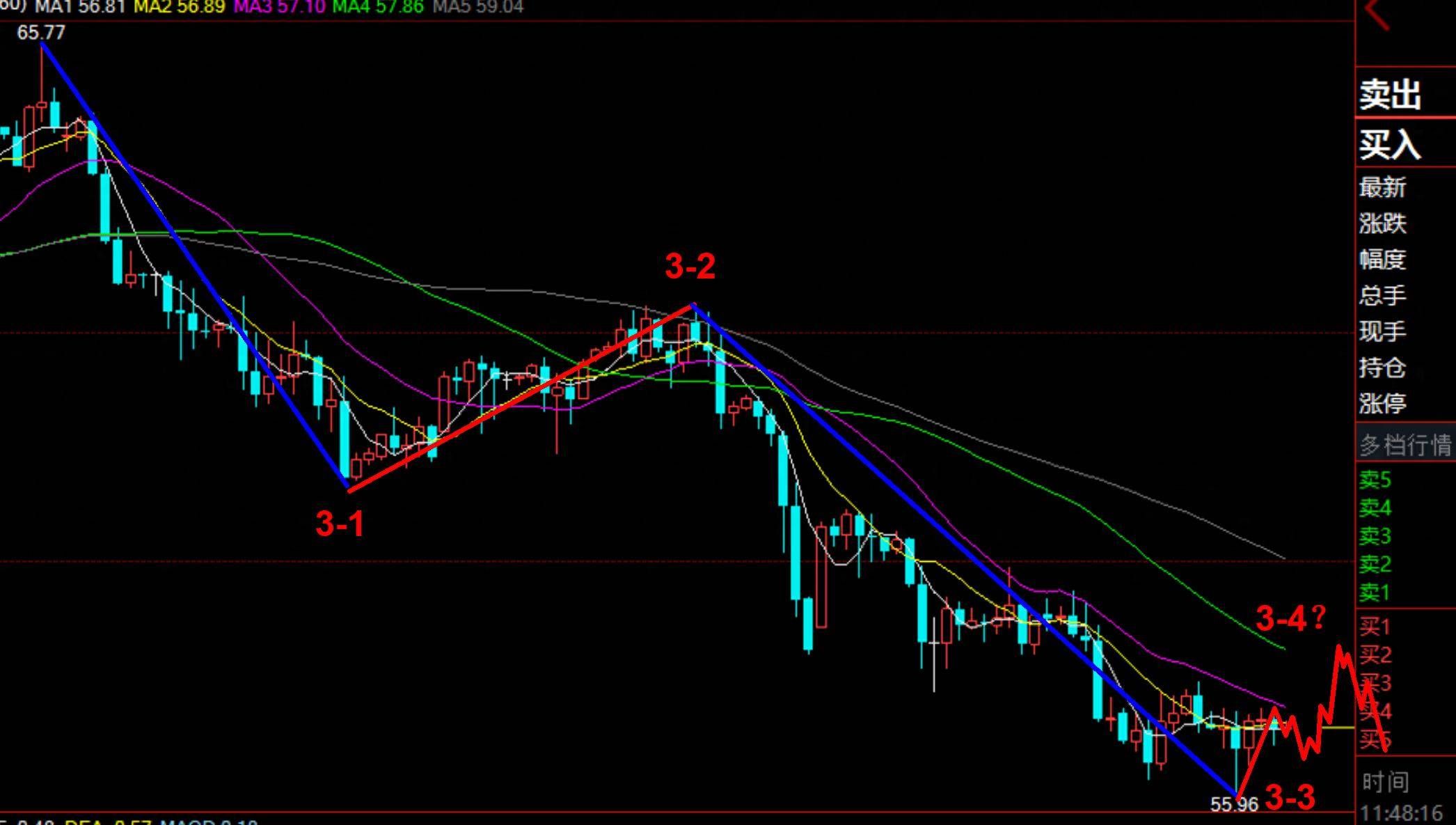
Group 1 - The core viewpoint of the articles indicates that the oil market is currently in a bearish trend, with prices expected to test lower levels around $55, influenced by OPEC's production increases and supply-demand concerns [1][2]. - Recent price movements show that the main bearish wave has extended, with specific price points indicating potential reversal or continuation patterns, particularly around $55.96, which may represent a critical low point [2][4]. - The trading strategies suggested include specific entry and exit points for both long and short positions, emphasizing the importance of stop-loss measures to manage risk in a volatile market [4][5]. Group 2 - The analysis of price movements follows Elliott Wave Theory, indicating that the current wave structure suggests a potential completion of the third wave down, with expectations for a corrective fourth wave to follow [2]. - The articles highlight the necessity for traders to remain vigilant regarding market news and geopolitical developments that could impact oil prices, suggesting that these factors are crucial for short-term trading decisions [1][2]. - The emphasis on education and skill development in trading is noted, with a focus on understanding technical indicators and market dynamics to improve trading performance over time [5].
科技板块处于A浪调整末端?
Guotou Securities· 2025-10-19 03:33
- The quantitative review system signals have consistently pointed to low valuation and dividend sectors since October 1st, indicating a market shift towards these areas [7] - The TMT sector's transaction amount share has continued to decline, while cyclical and financial real estate sectors have seen a gradual increase in transaction amount share, supporting the "high-to-low switch" logic previously proposed [7] - The Sci-Tech 50 Index has experienced a significant adjustment, which can be analyzed as being in the A-wave phase of the fourth wave adjustment according to the Elliott Wave Theory [7] - The high-frequency thermometer indicator for the Sci-Tech 50 Index has dropped below 20, suggesting that the current adjustment may be nearing its end [7]
A50期指大幅拉升!A股下周大盘,会大幅反弹吗
Sou Hu Cai Jing· 2025-10-18 17:12
Core Viewpoint - The recent market decline has shattered retail investors' expectations of a bull market, with significant capital outflows observed while institutions increase long positions in stock index futures, raising questions about market sentiment and panic selling [1][3][5]. Market Trends - A50 index futures showed significant fluctuations, impacting A-share movements, with historical data indicating a correlation between A50 performance and A-share opening trends [3][7]. - A total of 201.7 billion yuan was net withdrawn from A-shares over three days, with a single-day outflow of 132.9 billion yuan, indicating a substantial capital flight [3][11]. Institutional Behavior - Institutions have increased long positions in stock index futures by 2,247 contracts, suggesting a potential divergence in market sentiment amid rumors of upcoming regulatory meetings [5][19]. - The A50 index futures trading volume has decreased significantly, accounting for less than 15% of the total A-share trading volume in 2024, indicating a decline in its influence on A-share pricing [15][17]. Technical Analysis - The market has been oscillating above the 3,800-point level for eight weeks, with significant resistance noted around the 3,900-4,000 point range [5][7]. - Current market indicators suggest a potential downward trend, with expectations of the Shanghai Composite Index possibly breaking below 3,774 points [13][15]. Investor Sentiment - Retail investor sentiment is increasingly polarized, complicating market dynamics, with many reacting emotionally to A50 index fluctuations without understanding the underlying causes [17][19]. - Experienced investors are advised to monitor various indicators, including trading volume and market trends, rather than solely focusing on A50 index futures [19][21].

A股:周末突发3大利空!直线跳水暴跌,如无意外,下周继续调整?
Sou Hu Cai Jing· 2025-10-16 17:13
Group 1 - The global financial market experienced a significant downturn, referred to as "Black Friday," due to three major negative factors [4][6][10] - The first factor was the unexpected tariff threats from the U.S. government, which raised concerns about the stability of international trade [4] - The second factor involved negative news from major tech companies, including Tesla's delay in robot production and Qualcomm's regulatory investigation, leading to a sell-off in the tech sector [6] - The third factor was the ongoing U.S. government shutdown, which has resulted in permanent job cuts, raising fears about rising unemployment and its impact on inflation [6][10] Group 2 - The cryptocurrency market was severely impacted, with Ethereum dropping from $4,363 to $3,468, a decline of over 20%, and Bitcoin falling from $122,000 to $103,900, a 15% drop [8][10] - The total liquidation amount in the cryptocurrency market reached $19.141 billion, affecting 1.62 million investors, with significant losses concentrated among long positions [8] - The volatility in the cryptocurrency market was exacerbated by the negative news from the U.S. government and tariff threats, leading to heightened investor anxiety [10] Group 3 - There are expectations that the A-share market may experience a "buying opportunity" despite the global turmoil, as past international market fluctuations have often had a limited impact on A-shares [12] - The A-share market had already seen a decline, which may have preemptively absorbed some of the negative news, suggesting that any further drops could be followed by a rebound [12][17] - Observations indicate that mysterious funds often emerge to support the market during critical times, suggesting potential resilience in the A-share market [17]

A股突破十年新高,4000点只是起点?机构资金早已布局这些赛道
Sou Hu Cai Jing· 2025-10-15 16:43
Market Overview - The A-share market experienced a strong opening after the holiday, with the Shanghai Composite Index closing at 3933.97 points, successfully breaking the 3900-point mark and reaching a nearly ten-year high [1] - The trading volume in the Shanghai and Shenzhen markets reached 2.67 trillion yuan, an increase of 474.6 billion yuan compared to the last trading day before the holiday, with over 3100 stocks rising [1] Driving Forces Behind Market Surge - The primary driver of the market's rise is the technology sector, which has been boosted by both domestic and international factors [3] - Internationally, U.S. tech stocks surged during the National Day holiday, with AMD and OpenAI forming a deep cooperation agreement, creating a mutually beneficial business loop [3] - The Federal Reserve's anticipated interest rate cuts, with a 94% probability of a cut in October, have provided liquidity support for tech stock valuations [3] - Resource stocks, particularly gold, rare earths, and copper, have also performed well, with the non-ferrous sector seeing 25 stocks hit the daily limit up [3] - Financial stocks have joined the rally, with low-valuation targets like Huatai Securities attracting funds, as institutional investors expect benefits from increased market activity and capital market reforms [3] Historical Context and Market Structure Changes - Historically, the Shanghai Composite Index has only broken the 4000-point mark twice before, in May 2007 and April 2015, both times leading to rapid increases in index levels [3] - Unlike previous surges, the current market shows significant structural characteristics, with leading tech companies driving the rally and increased differentiation among sectors [5] - The market participant structure has changed, with institutional investors now comprising a larger share compared to the past, moving away from retail investors and leveraged funds [5] - The proportion of foreign capital has increased, with long-term funds like pensions and insurance becoming more prominent [5] Technical Analysis - The Shanghai Composite Index is at a critical turning point according to wave theory, with two interpretations regarding its current position [6] - The index has broken through two long-term trend lines, signaling a strong bullish trend not seen since the 2005 stock reform [6] - Key support and resistance levels have been identified, with 3915 points being a critical line for market direction [7] Market Style and Sector Rotation - The market style is shifting, with signals indicating a transition from a tech-dominated landscape to a more balanced approach [8] - The semiconductor sector experienced a pullback, highlighting the volatility within tech stocks, while traditional sectors are gaining attention [8] - Nearly 60% of private equity firms are optimistic about sectors like AI and semiconductors but are also looking at undervalued resource and non-bank financial sectors for potential gains [8] Policy Support and Future Outlook - The government has introduced unprecedented policy support for the capital market, emphasizing stability in both the real estate and stock markets [10] - The "反内卷" (anti-involution) policy is expected to improve corporate profitability, particularly benefiting the tech manufacturing sector [10] - The global macro environment remains supportive, with expectations of continued easing from the Federal Reserve and favorable domestic policies [13] - However, there are concerns about potential valuation bubbles and volatility due to high trading volumes and the influx of new capital [13] Market Dynamics and Investor Behavior - As of mid-October, the market has entered a phase of consolidation after reaching a ten-year high, with total market capitalization surpassing 100 trillion yuan [15] - The structure of market participants has shifted significantly, with institutional investors now accounting for 45% of the market, up from 28% in 2015 [15] - Investors face a choice between chasing popular sectors or seeking value opportunities as the market evolves [15]