
电网升级

Search documents
2026年01月20日:期货市场交易指引-20260120
Chang Jiang Qi Huo· 2026-01-20 02:48
Report Industry Investment Ratings - **Macro Finance**: Long - term bullish on stock indices, suggesting buying on dips; government bonds expected to trade sideways [1][5][6] - **Black Building Materials**: Short - term trading for coking coal; range trading for rebar; selling on rallies for glass [1][8][9] - **Non - ferrous Metals**: Exiting long positions on copper on rallies; strengthening observation on aluminum; observing nickel; range trading or taking profit on previous long positions for tin; range trading for gold; bullish sideways for silver; range - bound for lithium carbonate [1][11][13][17][19] - **Energy and Chemicals**: Buying on dips for PVC; temporary observation for caustic soda and soda ash; range trading for styrene, rubber, urea, and methanol; bearish sideways for polyolefins [1][20][22][23][28][30] - **Cotton and Textile Industry Chain**: Sideways adjustment for cotton and cotton yarn; bearish sideways for apples and jujubes [1][30][31][32] - **Agriculture and Animal Husbandry**: Short - term selling on rallies for near - term hog contracts, cautiously bullish on far - term contracts; hedging post - holiday 02 and 03 egg contracts on rallies; short - term cautious about chasing high for corn, hedging on rallies for grain holders; bullish on near - term soybean meal contracts, bearish on far - term contracts; bearish sideways for fats and oils [1][33][37][39][41] Core Views - Global geopolitical events, such as Trump's tariff policies and military threat to Iran, along with changes in Fed chairmanship expectations, impact market sentiment and asset prices [5][12][13][17][19] - Central bank policies, like interest rate adjustments, influence the performance of stocks, bonds, and other financial products [5][6] - Supply and demand fundamentals, including production, inventory, and consumption, are the main factors determining the price trends of various commodities [8][9][11][12][14][15][17][19][22][23][26][27][35][36][38][39][40][41][43][44][46] Summary by Directory Macro Finance - **Stock Indices**: Affected by geopolitical events and central bank policies, expected to trade sideways in the short - term and be bullish in the long - term, suggesting buying on dips [5] - **Government Bonds**: After the central bank's interest rate adjustment, the bond market shows a deep "V" trend, expected to trade sideways [6] Black Building Materials - **Coking Coal**: Due to weak demand and high inventory, prices are under pressure, suggesting short - term trading [8] - **Rebar**: With neutral valuation and short - term balanced supply and demand, it is expected to trade sideways in the short - term, with range trading as the main strategy [8] - **Glass**: With weak demand and increasing mid - stream inventory, it is expected to trade bearishly sideways, suggesting selling on rallies [9] Non - ferrous Metals - **Copper**: Affected by geopolitical events and supply - demand expectations, it is expected to trade sideways at a high level, suggesting exiting long positions on rallies [11][12][13] - **Aluminum**: With stable supply and weakening demand, it is expected to trade sideways at a high level, suggesting strengthening observation [14] - **Nickel**: Affected by Indonesian policies and supply - demand fundamentals, it is expected to trade sideways, suggesting observation [15] - **Tin**: With tight supply and stable demand, it is expected to trade sideways, suggesting range trading or taking profit on previous long positions [16][17] - **Silver and Gold**: Affected by geopolitical events and Fed policies, they are expected to trade sideways with a bullish bias, suggesting holding long positions for silver and range trading for gold [17][19] - **Lithium Carbonate**: With supply - demand balance and cost factors, it is expected to trade range - bound [19] Energy and Chemicals - **PVC**: With low valuation and potential policy support, the bottom may have been reached, suggesting buying on dips [20][22] - **Caustic Soda**: With weak demand and high supply, it is expected to trade sideways at a low level, suggesting temporary observation [23] - **Soda Ash**: With supply - demand imbalance and cost support, it is suggested to temporarily exit and observe [30] - **Styrene, Rubber, Urea, and Methanol**: All expected to trade sideways, with range trading as the main strategy [22][24][26][27] - **Polyolefins**: With weakening demand and cost support, they are expected to trade bearishly sideways [28] Cotton and Textile Industry Chain - **Cotton and Cotton Yarn**: After a long - term uptrend, they are expected to adjust sideways in the short - term, with a bullish long - term outlook [30] - **Apples and Jujubes**: With slow sales in the market, they are expected to trade bearishly sideways [31][32] Agriculture and Animal Husbandry - **Hogs**: With high supply pressure in the short - term and potential capacity reduction in the long - term, short - term selling on rallies for near - term contracts and cautious bullishness on far - term contracts are suggested [33][36] - **Eggs**: With high valuation in the short - term and potential supply reduction in the long - term, hedging post - holiday contracts on rallies is suggested [37][39] - **Corn**: With balanced short - term supply and demand and a looser long - term supply - demand pattern, short - term caution about chasing high and hedging on rallies for grain holders are suggested [39][40] - **Soybean Meal**: With a bearish long - term outlook and a relatively tight near - term supply - demand situation, different trading strategies for near - term and far - term contracts are suggested [41] - **Fats and Oils**: Expected to open lower and trade bearishly sideways, suggesting observing the narrowing spread strategies for rapeseed - palm and rapeseed - soybean 05 contracts [41][47]
我国年用电量突破10万亿度!规模最大的电网设备ETF(159326)飙涨7%,单日“吸金”15亿,高盛:中国电网产业迎历史性机遇
Ge Long Hui A P P· 2026-01-19 02:13
Group 1 - The electric grid equipment sector has seen a significant surge, with the electric grid equipment ETF (159326) rising by 7%, attracting a net subscription of 603 million shares and an estimated net inflow of 1.088 billion yuan [1][2] - By 2025, China's total electricity consumption is projected to exceed 10 trillion kilowatt-hours, marking a 5% year-on-year growth, which is more than double the annual electricity consumption of the United States [2] - The demand for stable electricity and data center power consumption is driving the need for grid upgrades, with Europe requiring an investment of 3 trillion euros over the next decade and the U.S. planning to invest 700 billion dollars in grid upgrades by 2030 [2] Group 2 - The National Grid has announced an investment scale of 4 trillion yuan during the 14th Five-Year Plan period, a historical high that represents a 40% increase compared to the previous plan [2] - The electric grid equipment ETF (159326) is the only ETF tracking the China Securities Electric Grid Equipment Theme Index, with a weight of over 60% in ultra-high voltage and 55% in smart grid components [3] - Key stocks in the ETF include Guodian NARI (a leader in domestic grid intelligence), TBEA (a core supplier of global ultra-high voltage equipment), and Siyuan Electric (focused on power equipment R&D and manufacturing) [3]
北美“电荒”催生大机遇 公募密集加仓电力赛道
Zheng Quan Shi Bao Wang· 2026-01-18 23:40
Core Viewpoint - The ongoing power crisis in North America, driven by the surge in AI computing power, is creating new opportunities for public funds to explore Chinese power equipment assets abroad [1] Group 1: Industry Trends - The demand for AI computing power is continuously increasing, leading to significant changes in the energy sector [1] - Global grid upgrades are accelerating, indicating a shift in energy infrastructure that aligns with technological advancements [1] Group 2: Investment Strategies - Several leading public funds have recently adjusted their portfolios, prioritizing the power equipment sector as a key investment area [1] - This strategic shift suggests that the intersection of technology and energy will play a crucial role in the market dynamics of 2026 [1]
北美“电荒”催生大机遇,基金抢筹电力赛道
Zheng Quan Shi Bao Wang· 2026-01-18 23:19
Core Insights - The power crisis triggered by the surge in AI computing power is creating new opportunities for public funds to explore Chinese power equipment assets overseas [1] - Public funds are intensively reallocating their portfolios, prioritizing the power equipment sector as a key investment area [2] Group 1: Investment Trends - Major public funds such as Ping An Fund, Debon Fund, and others are increasing their positions in smart distribution and gas turbine sectors, with companies like Yingliu Co., Jereh, and Dongfang Electric becoming core holdings [2] - New ETFs focused on power equipment and energy infrastructure are being launched by institutions like Invesco Great Wall and Huabao Fund, indicating a strong interest in this sector [2] Group 2: Supply and Demand Dynamics - The ongoing power gap in North America has led fund managers to recognize the critical role of traditional power sources, with Morgan Stanley raising the projected power shortfall for U.S. data centers from 44 GW to 47 GW [3] - The International Energy Agency warns that global data center power demand will exceed 900 TWh by 2030, with NVIDIA's GPU clusters alone consuming 150-200 GW of power [3] Group 3: Market Performance - The power equipment sector saw an overall increase of over 40% in 2025, with specific segments like smart distribution and gas turbine components rising over 60% [5] - Companies like Siyuan Electric have seen their stock prices soar, with a cumulative increase of 14 times since 2020, benefiting from the upgrade of power grids and overseas demand [4] Group 4: Strategic Insights - The consensus that "AI's end is electricity" is driving public funds to focus on power equipment, as the demand for stable power sources in data centers is increasing [6] - Fund managers emphasize the importance of energy as a hard asset in the context of the AI revolution, highlighting the need for rapid upgrades in power infrastructure to meet growing energy demands [6][7]


北美“电荒”催生大机遇 基金抢筹电力赛道
Zheng Quan Shi Bao· 2026-01-18 18:08
Group 1 - The core viewpoint of the articles highlights the increasing demand for AI computing power leading to a power crisis in North America, which presents new opportunities for public funds to invest in Chinese power equipment assets [1][3] - Public funds are intensively increasing their positions in the power equipment sector, with several leading funds focusing on smart distribution and gas turbine segments, indicating a strategic shift towards this traditional yet technologically relevant sector [2][4] - The ongoing power gap in North America has prompted fund managers to recognize the critical role of traditional power sources, with projections indicating a significant increase in power demand for data centers [3][6] Group 2 - The strong performance of individual stocks in the power equipment sector is reflected in the overall rise of the sector, with a reported increase of over 40% in 2025, and specific segments like smart distribution and gas turbine components seeing gains exceeding 60% [5][6] - The demand for power equipment is further supported by the capital market's profit effects, with companies like Siyuan Electric experiencing substantial stock price increases and significant overseas revenue contributions [4][5] - The consensus among industry experts is that the intersection of AI and energy is crucial, with the need for stable power sources driving investments in gas turbines and related technologies, highlighting the importance of the power equipment sector in the context of AI expansion [7][8]


多因素共振推动有色金属上涨,有色金属ETF基金(516650)近5日大幅“吸金”近30亿元
2 1 Shi Ji Jing Ji Bao Dao· 2026-01-16 06:39
Group 1 - The A-share market experienced a collective decline on January 16, with active sectors including power grid equipment, semiconductors, and storage chips, while precious metals fell and industrial metals retreated during the session [1] - The gold stock ETF (159562) decreased by 0.55%, with holdings like Hunan Silver rising over 5%, while companies such as Mingpai Jewelry hit the limit down, and West Gold and others saw significant declines [1] - The non-ferrous metal ETF fund (516650) fell by 0.6%, with leading stocks like Xiamen Tungsten and Jiangxi Copper showing gains, while companies like Yahua Group and Tianqi Lithium faced notable losses [1] Group 2 - As of January 15, the non-ferrous metal ETF fund (516650) attracted significant inflows of 2.961 billion yuan over the past five days, while the gold stock ETF (159562) saw a net inflow of 234 million yuan over three consecutive days [1] - Analyst Zhang Jiqiang from Huatai Securities noted that the recent rise in resource prices is driven by multiple factors, including global monetary easing, expectations of improved fundamentals, and increased demand for copper, silver, and rare metals due to AI data center construction [1] - Long-term macroeconomic logic for non-ferrous metals remains intact, with a strategic approach to accumulate during adjustments [1] Group 3 - According to CICC, the non-ferrous metal industry is expected to enter a bull market by 2026, driven by a resonance of monetary, demand, and supply factors, with copper, aluminum, and tin expected to perform well [2] - Copper is referred to as the "oil of the electrification era," benefiting from multiple drivers such as new energy, AI computing power, and grid upgrades [2] - The non-ferrous metal ETF fund (516650) tracks a detailed non-ferrous index covering core products like gold, copper, aluminum, rare earths, and lithium, aligning with the trends of new energy transition and high-end manufacturing [2]
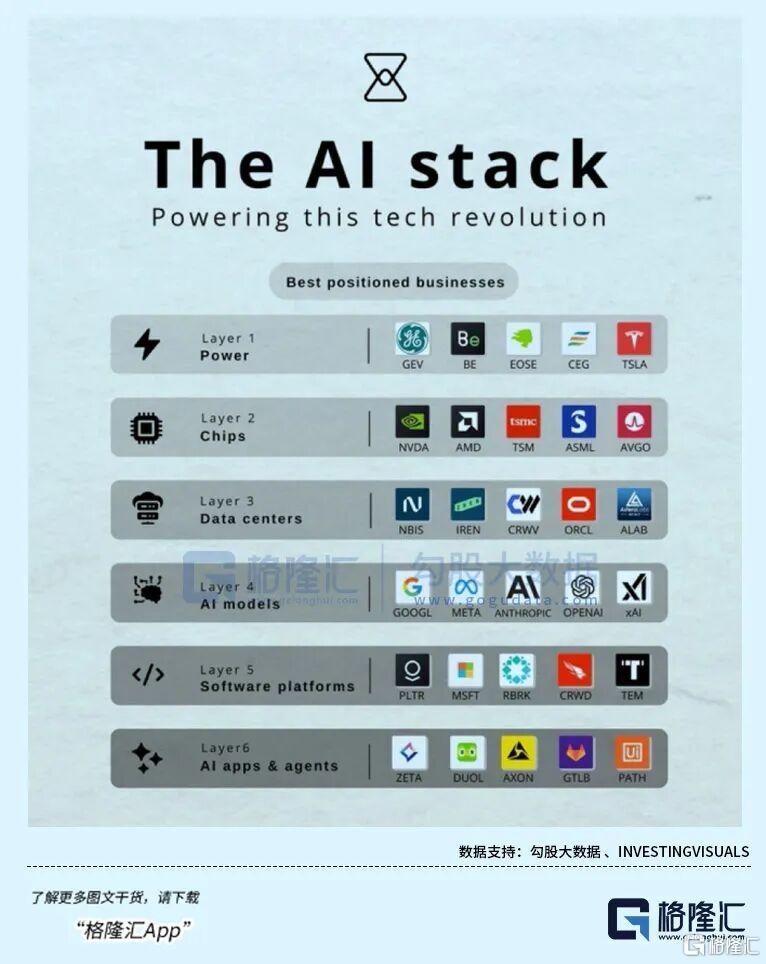
2026格隆汇“全球视野”十大核心资产之GE Vernova(GEV)
Ge Long Hui· 2026-01-10 03:33
Core Viewpoint - GE Vernova has been selected as a benchmark asset in the energy infrastructure sector for the 2026 "Global Vision" top ten core assets, highlighting its transformation from a traditional industrial manufacturer to a key player in AI infrastructure [1] Group 1: Competitive Barriers - GE Vernova holds a dominant position in the gas turbine market, forming a "trilateral" structure with Siemens Energy and Mitsubishi Heavy Industries, controlling over 75% of the global CR3 market [2] - The company is the only giant capable of providing a complete solution from gas power generation to wind energy generation and grid transmission, creating a seamless connection that meets the stable power needs of AI data centers [2] - GE Vernova's service business benefits from a large installed base of gas turbines, generating high-margin service revenue through long-term contracts for parts replacement and maintenance [2][3] Group 2: Industry Trends - The demand for energy is expected to surge due to the explosion of AI computing power, with the International Energy Agency predicting that electricity consumption in data centers will double in the coming years [6] - The aging of electrical grid infrastructure in North America and Europe necessitates urgent upgrades, which GE Vernova's electrification business is well-positioned to address [6] - The transition to renewable energy will require gas turbines as a stable backup power source in the short term, while small modular reactors (SMRs) will support long-term growth [6] Group 3: Business Layout - The gas turbine business serves as the core profit pillar, benefiting from supply-demand imbalances and price increases of 15%-20% compared to 2023 [7] - The electrification business is the fastest-growing segment, with revenue growth exceeding 20% and a backlog of $26 billion in orders [7] - The SMR project is expected to generate significant future orders, particularly from tech giants seeking carbon neutrality [8] Group 4: Financial Outlook - GE Vernova anticipates revenue of $41-42 billion for 2026, with an EBITDA margin of 11%-13%, supported by the growth of both gas turbine and electrification businesses [9] - The company expects to achieve a cumulative free cash flow of $22 billion by 2028, with a generous shareholder return policy including a stock buyback authorization of $10 billion [8][9] Group 5: Investment Perspective - Investing in GE Vernova represents a strategic move into the future of AI infrastructure, as the company is positioned as a core asset in the energy sector amid the ongoing AI computing explosion, grid upgrades, and energy transition [15]

期货市场交易指引2026年01月06日-20260106
Chang Jiang Qi Huo· 2026-01-06 01:43
Report Industry Investment Ratings - **Macro Finance**: Index futures are long - term optimistic, buy on dips; treasury bonds are expected to move sideways [1][5][6] - **Black Building Materials**: Coking coal for short - term trading; rebar for range trading; glass is expected to be slightly bullish [1][8] - **Non - ferrous Metals**: Copper to hold long positions cautiously; aluminum to strengthen observation; nickel to observe or sell short on rallies; tin, gold, and silver for range trading; lithium carbonate for range - bound oscillations [1][11][13][15] - **Energy Chemicals**: PVC, styrene, rubber, urea, and methanol for range trading; caustic soda and soda ash to wait and see; polyolefins to oscillate weakly [1][19][21][24] - **Cotton Textile Industry Chain**: Cotton and cotton yarn, apples are expected to be slightly bullish; red dates to rebound from the bottom [1][27][28] - **Agricultural and Livestock**: For live pigs, short - term contracts to sell short on rallies, long - term contracts to be cautiously bullish; for eggs, breeding enterprises can hedge on rallies; for corn, short - term to be cautious about chasing highs, grain holders to hedge on rallies; for soybean meal, short - term contracts to be treated strongly on dips, long - term contracts to be treated weakly; for oils, the rebound of the three major oils is limited, and previous long positions should be gradually liquidated [1][29][31][32] Core Views - The A - share market has a positive start in 2026, with high trading volume and broad - based gains. Goldman Sachs is optimistic about the Chinese stock market in 2026 and 2027. The bond market is affected by low yields and high supply, and treasury bonds are expected to move sideways [5] - In the black building materials market, the coking coal market is in a game between bearish and bullish factors, and rebar is affected by supply and demand and policies [8] - The non - ferrous metals market is complex. Copper has long - term supply support but short - term over - priced risks; aluminum is affected by fundamentals and policies; nickel is expected to remain in surplus; tin is affected by supply and demand; precious metals are affected by the US economic situation [11][13][15] - The energy chemicals market is generally weak. PVC, caustic soda, and other products are affected by factors such as cost, supply, and demand [19][21] - In the cotton textile and agricultural livestock markets, products such as cotton, apples, and red dates are affected by supply, demand, and policies; live pigs, eggs, and other products are affected by factors such as supply, demand, and seasonality [27][29][31] Summary by Directory Macro Finance - **Index Futures**: On the first trading day, A - shares opened and closed higher, with the Shanghai Composite Index returning to 4000 points and trading volume exceeding 2.5 trillion. Goldman Sachs is optimistic about the Chinese stock market in 2026 and 2027, expecting annual growth of 15% - 20%. The market is expected to develop further, and investors can buy on dips [5] - **Treasury Bonds**: The market has quickly digested the positive news about fund fees and bank EVE indicators. Due to low bond yields and high supply, treasury bonds are expected to move sideways [6] Black Building Materials - **Coking Coal**: The market is in a game between bearish factors (high imported Mongolian coal inventory, weak demand) and bullish factors (domestic coal mine production cuts, cost support). Short - term trading is recommended [8] - **Rebar**: The futures price was weak on Monday. The valuation is neutral, and the supply - demand contradiction is not significant in the short term. Range trading is recommended [8] - **Glass**: Supply - side factors such as production line cold repairs are positive, but demand is weak. The price is expected to be slightly bullish in the short term, and there are opportunities for long glass and short soda ash [10] Non - ferrous Metals - **Copper**: The price has reached a high level, but there are short - term over - priced risks. The supply is expected to be sufficient in January, and the price may fluctuate widely at a high level. Long positions should be held cautiously [11][12] - **Aluminum**: The alumina market is in a weak situation, and the aluminum price is driven by expectations and funds. The upward pressure is large in January, and observation is recommended [13] - **Nickel**: The supply of nickel ore is expected to decrease, but the overall nickel market is in surplus. The price may rebound in the short term, and investors can observe or sell short on rallies [15] - **Tin**: The supply of tin concentrate is tight, and the downstream demand is weak. The price is expected to oscillate strongly, and range trading is recommended [16] - **Silver and Gold**: Affected by the US economic situation, the prices are expected to move sideways. Long positions in silver can be held, and range trading is recommended for gold [17] - **Lithium Carbonate**: The supply is affected by factors such as mine production and imports, and the demand is strong. The price is expected to oscillate [19] Energy Chemicals - **PVC**: The cost is under pressure, the supply is high, and the demand is weak. The price is expected to oscillate at a low level, and range trading is recommended [19] - **Caustic Soda**: There is short - term delivery pressure, and the medium - term support depends on the improvement of the alumina market. Temporary observation is recommended [21] - **Styrene**: The current valuation is high, and the price is expected to oscillate. Range trading is recommended [21] - **Rubber**: The cost is supported, but the inventory is increasing, and the demand is weak. The price is expected to oscillate [22] - **Urea**: The supply is decreasing, and the demand is also weak. The price is expected to oscillate widely, and range trading is recommended [23] - **Methanol**: The supply is increasing, and the demand is weak. The price is expected to oscillate, and range trading is recommended [24] - **Polyolefins**: The supply is expected to decrease in the first quarter of 2026, but the demand improvement is limited. The price is expected to oscillate weakly, and the LP spread is expected to widen [25] - **Soda Ash**: The supply is expected to decrease, and the demand is affected by downstream industries. Temporary observation is recommended [25] Cotton Textile Industry Chain - **Cotton and Cotton Yarn**: Affected by the global cotton supply - demand situation and policies, the price is expected to be slightly bullish [27] - **Apples**: The market is stable, and the price is expected to be slightly bullish [27] - **Red Dates**: The acquisition in Xinjiang is over, and the price is expected to rebound from the bottom [28] Agricultural and Livestock - **Live Pigs**: In the short term, the price is oscillating due to supply - demand games. In the long term, the supply is expected to increase in the first quarter, and the price is under pressure. Short - term contracts can be sold short on rallies, and long - term contracts can be cautiously bullish [29] - **Eggs**: The short - term supply - demand is balanced, and the price is at a low level. In the long term, the supply pressure still exists. Breeding enterprises can hedge on rallies [31][32] - **Corn**: The short - term price increase is limited, and long - term demand is gradually released but the supply - demand pattern is relatively loose. Short - term caution is needed when chasing highs, and long - term there is strong support at the bottom [34] - **Soybean Meal**: The short - term price is affected by factors such as US soybean exports and South American weather. Range trading is recommended, with short - term contracts treated strongly on dips and long - term contracts treated weakly [35][36] - **Oils**: The short - term rebound of the three major oils is limited, and previous long positions should be gradually liquidated. In the long term, there are potential positive factors [41][42]
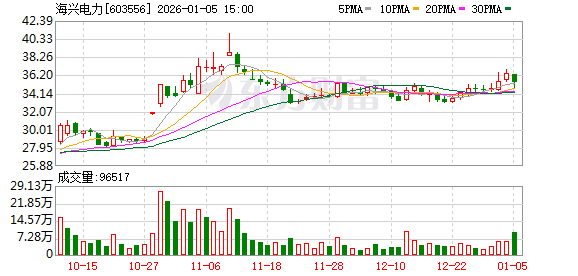
海兴电力:公司已明确以“电”和“水”为两大核心发展方向
Zheng Quan Ri Bao· 2026-01-05 14:27
Core Viewpoint - The company aims to become a global leader in digital energy and smart water solutions, focusing on "electricity" and "water" as its two core development directions [2] Group 1: Electric Power Sector - The company will continue to strengthen its leading position in the smart grid market and expand its business from smart metering and distribution automation to digital energy management [2] - The goal is to not only be a supplier of equipment and solutions but also to assist power customers in their digital and energy transitions as a long-term partner [2] - The company plans to seize significant opportunities arising from global grid upgrades, high integration of distributed green electricity, and energy efficiency improvements to provide more efficient and reliable system solutions [2] Group 2: Water Sector - The strategic vision in the water sector has expanded from smart metering to broader water resource management [2] - In addition to continuing to expand its global smart water meter business, the company is strategically positioning itself in the seawater desalination market, which is a key solution for water resource management [2] - Leveraging its core technologies in energy efficiency management, automatic control, and system integration, the company aims to provide efficient and energy-saving seawater desalination facilities and overall operational solutions for regions facing water shortages [2] Group 3: Strategic Synergy - The electric power and water sectors will form a strong strategic synergy in technology, market, and resource management, jointly constructing a sustainable growth engine for the company's future [2]

有色金属基础周报:地缘冲击加剧全球不确定性,有色金属走势整体偏强运行-20260105
Chang Jiang Qi Huo· 2026-01-05 05:54
1. Report Industry Investment Rating No relevant content provided. 2. Core Viewpoints of the Report - Copper prices have entered a high - volatility and high - uncertainty stage dominated by sentiment in the short term. Although there is medium - to - long - term support from the supply side, current prices may be overvalued, and there is a risk of price correction. However, due to geopolitical impacts, copper prices may maintain a high - level wide - range oscillation pattern, with the Shanghai copper main contract fluctuating between 95,000 - 103,000 yuan/ton [3]. - Aluminum prices are mainly driven by fundamental expectations and capital behavior. In the short term, they may still be strong, but the upward pressure is large, and the upward space should be viewed with caution. Alumina is recommended to be observed, and aluminum alloy may be relatively weaker than aluminum prices [3][4]. - Zinc prices are expected to maintain an oscillatory trend. Supply is slightly stronger, but demand at the end of the year is weak, and the fundamental support is limited [3]. - Lead prices are expected to maintain a wide - range oscillation, and high - selling and low - buying operations within the range of 17,000 - 17,900 yuan/ton are recommended [3]. - Nickel prices have rebounded strongly, but the nickel industry remains in a state of over - supply, which suppresses the upward space of nickel prices. Both nickel and stainless steel are recommended to be observed [4]. - Tin prices are expected to continue a relatively strong oscillation. It is recommended to build positions at low prices and pay attention to the resumption of supply and the recovery of downstream demand [4]. - The price of industrial silicon has rebounded after breaking through the lower limit. Alumina's weak reality of over - supply will continue, and it is recommended to observe. The price of polysilicon has adjusted after breaking through the upper limit. The price of lithium carbonate is expected to continue to oscillate [4]. 3. Summary by Related Catalogs 3.1 Macroeconomic Data - **China**: In December 2025, China's five - year and one - year loan market prime rates (LPR) remained unchanged at 3.5% and 3%, respectively. From January to November, the profits of large - scale industrial enterprises increased by 0.1% year - on - year, and the profits of high - tech manufacturing increased by 10.0% year - on - year [13][15][16]. - **US**: In the third quarter of 2025, the US real GDP annualized quarterly growth rate was 4.3%, and the core personal consumption expenditure (PCE) price index annualized quarterly growth rate was 2.9%. As of December 6, 2025, the average weekly new employment in the US private sector was 11,500 [13][19][20]. 3.2 Geopolitical Events - On January 3, 2026, the US launched an air strike on Venezuela, captured Venezuelan President Maduro and his wife, and stated that it would "manage" Venezuela until a "safe" transition. The situation in Venezuela may have an impact on the global market, especially on gold and crude oil prices [24][25][27]. 3.3 Metal Market Analysis 3.3.1 Copper - **Price Trend**: The Shanghai copper main contract reached a historical high of over 100,000 yuan/ton before the holiday, then fell back. It is expected to maintain a high - level wide - range oscillation pattern [3]. - **Supply and Demand**: The supply of copper concentrates is in a tight situation, and there is an expected increase in demand from AI infrastructure and power grid upgrades in the long term. However, at present, downstream demand is weak, and social inventories have increased significantly [3]. 3.3.2 Aluminum - **Price Trend**: The Shanghai aluminum main contract shows an overall upward trend in oscillation. In the short term, it may still be strong, but the upward space is limited [3][54]. - **Supply and Demand**: Alumina is in a state of over - supply, and the destocking of aluminum ingots and aluminum rods is difficult. New domestic production capacity is still being put into operation, while demand from photovoltaic installations and the automotive industry has decreased [3][4]. 3.3.3 Zinc - **Price Trend**: Zinc prices oscillated in the previous week and are expected to maintain an oscillatory trend. The price range is expected to be between 22,800 - 23,500 yuan/ton [3]. - **Supply and Demand**: The processing fee of zinc concentrates has been declining, squeezing the profits of smelters. Demand has weakened due to environmental protection warnings in the north, and downstream enterprises maintain just - in - time procurement [3]. 3.3.4 Lead - **Price Trend**: The Shanghai lead main contract showed an oscillatory rebound trend, and it is expected to maintain a wide - range oscillation between 17,000 - 17,900 yuan/ton [3]. - **Supply and Demand**: LME and COMEX lead inventories decreased, while SHFE lead inventories increased slightly. The overall lead price is stable, and the replacement consumption is supported by the "trade - in" policy [3]. 3.3.5 Nickel - **Price Trend**: Nickel prices rebounded strongly. The prices of nickel ore, nickel iron, and stainless steel all showed an upward trend [4]. - **Supply and Demand**: The Indonesian nickel mining quota is expected to be reduced, and the rainy season may affect nickel ore shipments. The refined nickel market is in a state of over - supply, while the demand for nickel iron from stainless steel mills has increased [4]. 3.3.6 Tin - **Price Trend**: Tin prices showed an oscillatory decline, but the upward trend in the long term remains unchanged. It is expected to continue a relatively strong oscillation [4]. - **Supply and Demand**: The supply of tin concentrates is tight, and the downstream semiconductor industry is expected to recover. However, the demand from consumer electronics and photovoltaic industries is weak [4]. 3.3.7 Industrial Silicon, Alumina, Stainless Steel, and Lithium Carbonate - **Industrial Silicon**: The price has rebounded after breaking through the lower limit [4]. - **Alumina**: The weak reality of over - supply will continue, and it is recommended to observe [3][4]. - **Stainless Steel**: The price has rebounded strongly, but it is expected to maintain an oscillation after the macro - sentiment fades [4]. - **Lithium Carbonate**: The price is expected to continue to oscillate. Supply and demand are both changing, and attention should be paid to the impact of mining permits in Yichun [4].