行业周期

Search documents
欠款5000多万元被告上法庭!甘肃能化及子公司累计涉诉金额超10亿元
Hua Xia Shi Bao· 2025-12-19 11:12
Core Viewpoint - Gansu Energy Chemical Co., Ltd. is facing a lawsuit involving a construction contract dispute, with a claim for approximately 51.45 million yuan in unpaid project costs and related fees from China Chemical Engineering Fourth Construction Co., Ltd. [2][4] Group 1: Legal Issues - Gansu Energy Chemical's subsidiaries, Jingmei Energy Co., Ltd. and Liu Chemical Co., Ltd., are being sued for unpaid construction costs related to a project contract signed in October 2023, with a total contract value of approximately 80.18 million yuan [3][4] - The lawsuit stems from disagreements over additional project costs due to design changes and discrepancies between bidding and construction drawings, leading to a claim for 51.45 million yuan in unpaid amounts [4] - As of mid-December, Gansu Energy Chemical has reported a total of 154 ongoing or extended litigation cases, with a combined amount involved of approximately 1.063 billion yuan [3][4] Group 2: Financial Performance - Gansu Energy Chemical has experienced significant fluctuations in profitability, with net profits soaring to 3.169 billion yuan in 2022 but declining to 1.738 billion yuan in 2023 and projected to drop further to 1.214 billion yuan in 2024 [7] - The company reported a loss of 182 million yuan in the first half of 2025, attributed to a heavy reliance on coal prices, which have been volatile [7][9] - The coal segment accounted for 76.29% of the company's revenue in the first half of 2023, highlighting the company's vulnerability to coal price fluctuations [7] Group 3: Operational Challenges - Gansu Energy Chemical's coal production and sales figures for the first half of 2025 were 8.6716 million tons and 6.6293 million tons, respectively, with electricity generation at 1.976 billion kWh [8] - The company faced operational disruptions due to two safety incidents in 2025, impacting production capabilities [8] - The performance of the acquired Jiashan Coal Power asset, which was previously a significant profit contributor, has turned into a liability, with a reported loss of 188 million yuan in the first half of 2025 [9][10]



霸王茶姬“高娶”天合光能
虎嗅APP· 2025-12-14 23:54
Core Viewpoint - The marriage between Zhang Junjie, CEO of Bawang Chaji, and Gao Haichun, co-chairman of Trina Solar, symbolizes a convergence of two distinct business models and generational paths in Chinese enterprises, reflecting both opportunity and strategic asset restructuring in their respective industries [6][10]. Group 1: Bawang Chaji - Bawang Chaji's revenue has grown significantly from 1.9 billion RMB to 30 billion RMB in 2024, with over 6,200 stores globally [4][14]. - The company has maintained profitability for 11 consecutive quarters, with a net profit of 1.06 million USD and a net profit margin of 11.22% in the first half of 2025 [13][14]. - Bawang Chaji's asset-liability ratio stands at 25.95%, indicating a strong financial position compared to the manufacturing sector [13]. - The company is facing challenges in growth due to a saturated market and increased competition, leading to a decline in net profit growth by 38.47% in 2025 [32][33]. - Bawang Chaji is exploring international markets for growth, with 208 overseas stores as of mid-2025, but the overall scale remains small [34]. Group 2: Trina Solar - Trina Solar is experiencing significant financial difficulties, with a net profit margin of -8.28% and a revenue decline of 20.87% year-on-year in the first three quarters of 2025 [19][20]. - The company faces high operational pressure, with an asset-liability ratio nearing 78%, indicating substantial financial leverage and short-term repayment challenges [20]. - Despite current losses, Trina Solar has survived in a competitive market where many peers have failed, attributed to its cautious strategic approach and avoidance of high-leverage contracts [21][24]. - The solar industry is expected to stabilize as overcapacity issues are addressed, with new initiatives to consolidate silicon material production, potentially benefiting Trina Solar in the long run [36][39]. Group 3: Strategic Implications - The marriage between Bawang Chaji and Trina Solar may facilitate strategic asset restructuring, allowing for complementary strengths in cash flow management and operational stability [10][41]. - Bawang Chaji's cash flow and profitability can provide a buffer against the cyclical volatility faced by Trina Solar, creating a balanced operational dynamic [41]. - The partnership may lead to innovative synergies, leveraging Bawang Chaji's consumer-facing business model alongside Trina Solar's established industry presence [41].


霸王茶姬“高娶”天合光能
Hu Xiu· 2025-12-14 15:53
Core Insights - The marriage between Zhang Junjie, CEO of Bawang Chaji, and Gao Haichun, co-chairman of Trina Solar, symbolizes a convergence of two distinct business models and generational paths in Chinese enterprises [4][6][7] - Bawang Chaji has seen significant growth, with revenue increasing from 1.9 billion RMB to 30 billion RMB in 2024, and the number of stores exceeding 6,200 globally [3][10] - Trina Solar, despite being a leading player in the photovoltaic industry, is currently facing challenges due to industry downturns, with a reported revenue decline of 20.87% year-on-year [18][40] Group 1: Company Profiles - Bawang Chaji, a rising star in the new tea beverage sector, has a market capitalization of approximately 25.05 billion USD (176 billion RMB) and has maintained profitability for 11 consecutive quarters [10][11] - Trina Solar, a veteran in the photovoltaic industry, has a market capitalization of 39.4 billion RMB and is experiencing significant financial strain, with a net profit loss of 4.2 billion RMB in the first three quarters of 2025 [8][18] - Bawang Chaji's financial metrics for the first half of 2025 include a revenue of 9.52 million USD and a net profit margin of 11.22%, while Trina Solar's metrics show a gross margin of 5.45% and a net margin of -9.16% [10][18] Group 2: Industry Context - The new tea beverage industry, represented by Bawang Chaji, is highly competitive, with many brands struggling to maintain growth amid price wars and market saturation [30][34] - The photovoltaic industry, where Trina Solar operates, is currently facing overcapacity and price wars, leading to a significant drop in component prices, which fell by 62% from 1.95 RMB/W to 0.74 RMB/W [15][18] - Trina Solar's strategic approach has focused on long-term sustainability, avoiding high leverage and aggressive expansion during market peaks, which has allowed it to survive industry downturns better than many competitors [22][24][42] Group 3: Future Outlook - Bawang Chaji is exploring international markets for growth, with 208 overseas stores as of the second quarter of 2025, although its overall scale remains small [35] - The photovoltaic industry is anticipated to reach a turning point, with efforts underway to consolidate and reduce excess capacity, which may lead to improved conditions for companies like Trina Solar [36][40] - The marriage between Bawang Chaji and Trina Solar may represent a strategic asset reorganization, potentially allowing both companies to leverage each other's strengths for future growth [7][44]

日科化学:公司业绩表现受行业周期、原材料价格波动等多重外部因素影响
Zheng Quan Ri Bao Wang· 2025-12-10 11:44
Core Viewpoint - The company's performance is influenced by multiple external factors, including industry cycles, fluctuations in raw material prices, and changes in downstream market demand [1] Group 1: Company Performance - The company acknowledges that its performance is affected by industry cycles and external market conditions [1] - The company plans to proceed with share repurchase initiatives based on market conditions while ensuring compliance with regulations [1] - Adjustments in the pace of project advancement are due to changes in the industry environment and technological iterations, rather than failures [1]

1919李宇欣:未来整个白酒行业可能要做最坏的打算
Xin Lang Cai Jing· 2025-12-10 03:14
Core Viewpoint - The current market situation is difficult to classify as a cycle, and traditional empirical methods are inadequate for understanding key factors affecting industry cycles [1][3] Group 1 - The speaker from 1919 Group suggests that there are no clear indicators or directional signals currently available to assess the market [1][3] - The industry should prepare for the worst-case scenario rather than expecting a V-shaped recovery at any specific point in time [1][3] - A more realistic perspective is to consider the future as an L-shaped new normal, indicating prolonged stagnation rather than a quick recovery [1][3]

东吴证券:工程机械国内外共振向上 重点关注海外行业景气度复苏
智通财经网· 2025-12-09 02:03
Core Viewpoint - The engineering machinery sector is currently at the beginning of an upward cycle, with expected profit growth of over 20% in the next 2-3 years, and core targets showing a profit valuation of only 10-16X by 2026 [1] Group 1: Domestic Market Outlook - The engineering machinery sector is expected to fully recover domestically in 2025, with a gradual acceleration in revenue [1] - From January to October 2025, domestic excavator sales increased by 19.6% year-on-year, indicating a significant improvement compared to 2024 [1] - The overall revenue of the engineering machinery sector is projected to grow by 12% year-on-year in the first three quarters of 2025 [1] Group 2: Profitability and Cost Reduction - The sector's profitability is improving due to scale effects and ongoing cost reduction initiatives [2] - As demand recovers, the capacity utilization rate is expected to rise, positively impacting profits [2] - In the first three quarters of 2025, the net profit margins for major companies like Sany Heavy Industry, XCMG, and Zoomlion increased by 2.4, 0.1, and 0.8 percentage points respectively [2] Group 3: 2026 Outlook - Domestic excavator demand is projected to grow at an average annual rate of over 30% from 2025 to 2028, with peak sales expected to reach 250,000 units by 2028 [3] - The current cycle is characterized by a lower slope but a longer duration, with a moderate recovery trend anticipated [3] - The overseas excavator market is expected to enter a new upward cycle in 2026, coinciding with the Federal Reserve's interest rate cuts, creating a resonance effect with the domestic market [3]

艾森股份:通过不断的技术突破及产品结构优化应对行业周期
Zheng Quan Ri Bao Wang· 2025-12-04 14:11
Core Viewpoint - The company is leveraging continuous technological breakthroughs and product structure optimization to establish strategic partnerships with clients, effectively responding to industry cycles [1] Group 1 - The company is actively engaging with investors through interactive platforms to address inquiries [1] - The company emphasizes the importance of strategic cooperation with clients as a means to navigate industry fluctuations [1]
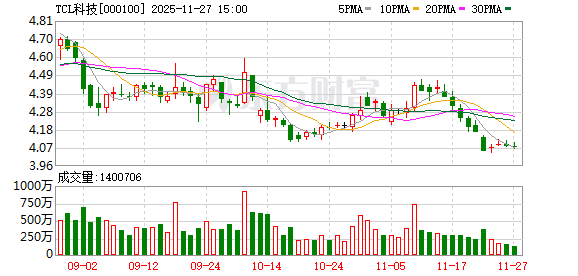
TCL科技:TCL中环经营所处阶段受到宏观环境等影响
Zheng Quan Ri Bao· 2025-11-27 13:41
Group 1 - The core viewpoint of the article highlights that TCL Technology's operations are influenced by various factors including macroeconomic environment, industry cycles, technological iterations, corporate strategy, and operational tactics [2]


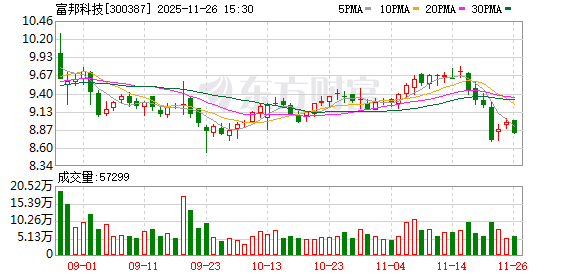
富邦科技:公司二级市场表现受宏观环境及行业周期等多重因素影响
Zheng Quan Ri Bao· 2025-11-26 11:44
Group 1 - The core viewpoint of the article is that Fubon Technology acknowledges the impact of macroeconomic conditions and industry cycles on its secondary market performance, while committing to actively communicate the company's value to the market [2] Group 2 - The company emphasizes the importance of maintaining good operational practices as a foundation for its market performance [2]

集运指数大跌近8%,如何看待未来的运力过剩?
对冲研投· 2025-11-25 07:15
Core Viewpoint - The shipping industry is expected to enter a downward cycle due to a significant delivery of new ships from 2026 to 2028 and a lack of growth in global trade demand, compounded by geopolitical factors that may affect shipping routes [6][7]. Group 1: Market Dynamics - The main driver of the shipping industry's cyclical nature is the balance between demand surges and supply contractions, leading to periods of prosperity followed by downturns as new ship orders flood the market [7]. - The outbreak of the Russia-Ukraine war and the Federal Reserve's aggressive interest rate hikes have contributed to a decline in global demand, marking the beginning of a downward cycle for the shipping industry after the highs of 2020-2021 [7][8]. - The anticipated delivery of new ships from 2023 to 2028 is projected to create a significant oversupply, with delivery volumes peaking at 3.88 million TEU in 2028, exacerbating the supply-demand imbalance [8][9]. Group 2: Supply and Demand Forecast - According to Linerlytica, the projected delivery capacities from 2023 to 2028 are 2.3 million TEU, 2.95 million TEU, 2.25 million TEU, 1.48 million TEU, 3.13 million TEU, and 3.88 million TEU, indicating a growing supply pressure in the latter years [8]. - The average age of ships being scrapped has increased to 29 years since 2021, which is significantly higher than the historical average of 20-25 years, indicating reluctance among shipowners to retire older vessels despite high profits [8][9]. - The expected growth rate of throughput volume is around 2% from 2026 to 2028, while fleet size is projected to grow by up to 10%, leading to a widening gap between supply and demand [8][9]. Group 3: Market Analysis and Projections - Sea Intelligence's analysis suggests that the peak of excess capacity will occur in 2027, with the overcapacity levels being higher than in 2023 but lower than in 2009 [9][14]. - The comparison of two methods for estimating supply-demand dynamics indicates that the excess capacity in 2027-2028 may be less severe than in 2023, but still significant enough to suggest a potential decline in global shipping rates by approximately 300 points [15]. - The concentration ratio (CR10) in the global shipping industry has increased from less than 60% before 2008 to 84% in 2024, indicating that shipping companies have gained more control over freight rates despite the impending downturn [16].