行为经济学

Search documents
诺贝尔经济学奖即将揭晓,实证新贵和理论泰斗谁将折桂?
Xin Jing Bao· 2025-10-13 02:14
Core Viewpoint - The 2025 Nobel Prize in Economic Sciences is highly anticipated, with diverse predictions regarding potential winners, including fields such as behavioral economics, labor economics, and international trade theory [1][2]. Group 1: Nobel Prize Overview - The Nobel Prize in Economic Sciences, officially known as the "Sveriges Riksbank Prize in Economic Sciences in Memory of Alfred Nobel," has been awarded since 1969, with a total of 96 laureates as of October 12, 2025 [2]. - The prize is awarded annually on the anniversary of Nobel's death, and it can be shared among up to three individuals [2]. - The youngest laureate is Esther Duflo, who won in 2019 at the age of 46, while the oldest is Leonid Hurwicz, who was 90 when he won in 2007 [3]. Group 2: Female Laureates - Only three women have received the Nobel Prize in Economic Sciences: Esther Duflo, Elinor Ostrom, and Claudia Goldin [3]. - Elinor Ostrom was the first female laureate, awarded in 2009 for her work on public resource management, while Claudia Goldin received the prize in 2023 for her contributions to understanding women's labor market outcomes [3]. Group 3: Predictions and Trends - As the announcement date approaches, speculation about potential winners intensifies, with notable candidates including recipients of other prestigious awards like the Clark Medal and the Clarivate Citation Laureates [4]. - Recent winners of the Clarivate Citation Laureates in economics include David Autor and Lawrence F. Katz for their analysis of wage structure and income inequality, and Marianne Bertrand and Sendhil Mullainathan for their work on labor economics [4][5]. - The Nobel Prize committee emphasizes that awarded discoveries must have significant scientific merit and societal impact, leading to extensive subsequent research [5].
台风选出的榴莲大福
Jing Ji Ri Bao· 2025-10-11 00:42
Core Insights - The article discusses the impact of Typhoon "Hagupit" on consumer behavior, particularly regarding the unexpected decline in sales of the popular dessert durian daifuku during the storm [1][3] - It highlights the psychological phenomenon of the "herd effect," where individuals tend to follow the majority's behavior, especially in uncertain situations, leading to a preference for essential goods over non-essential items like durian daifuku [1][2] Group 1 - The durian daifuku, typically a best-seller with an average daily sales of 8,000 units in Guangzhou, was left unsold during the typhoon, indicating a shift in consumer priorities towards essential goods [1] - The article attributes the decline in durian daifuku sales to the herd mentality, where consumers prioritize necessities based on social cues rather than personal preference [1][2] - The herd effect is described as a behavioral economic principle that influences decision-making, particularly in situations of uncertainty, leading individuals to conform to the majority's choices [2][3] Group 2 - The article provides an example of how a new restaurant's promotional efforts may be overshadowed by the presence of a queue, illustrating the power of social proof in consumer behavior [2] - In an environment of information overload, consumers often rely on sales rankings and recommendations to make purchasing decisions, reinforcing the influence of the herd effect [2] - The article concludes by suggesting that individuals should prioritize personal preferences over social influences, especially in times of crisis, to avoid missing out on opportunities for personal enjoyment [3]
市场新引擎:排队免单的万亿级生态革命
Sou Hu Cai Jing· 2025-09-27 04:04
Core Insights - The article discusses a new business model called "queue-free payment," which transforms traditional promotional strategies into a "consumption as investment" approach, addressing the dual challenges of user fatigue and merchant losses due to high traffic costs [1][11]. Mechanism Breakthrough - This model disrupts the conventional "buyer pays, seller discounts" logic by creating a dynamic cycle where users enter a queue after making a purchase, contributing to a bonus pool that rewards earlier participants with free payments. This design turns single transactions into predictable "value investments," increasing consumer engagement by 300% and enhancing viral marketing efficiency by five times [2][9]. Psychological Drivers - The success of this model relies on activating four key consumer psychological mechanisms: suspense through countdowns, altruistic incentives for sharing, tiered rewards to maintain engagement, and transparent data to eliminate doubts about fairness. These elements work together to create a closed-loop ecosystem of consumption, sharing, and repurchase [4][5][7]. Universal Validation - The model has proven effective across various sectors, with data showing significant results: a hotpot restaurant experienced queues exceeding 100 meters, community supermarket membership activity doubled, and a fresh produce platform saw a repurchase rate surpassing 25%. By mid-2025, over one million users are expected to experience "zero-cost consumption," with partner merchants seeing average customer traffic growth of over 50% and profit increases of 30% [9]. Win-Win Model - Unlike traditional promotions that often lead to merchant losses, this model creates a win-win situation for consumers, merchants, and platforms. Consumers can convert spending into potential earnings, merchants benefit from reduced customer acquisition costs through self-driven user sharing, and platforms retain traffic through well-designed rules. This "value co-creation" model meets consumer demands for high cost-performance while aligning with merchants' needs for precise customer targeting [11]. Long-term Assurance - The sustainability of this model hinges on transparent execution. Short-sighted attempts to exploit vague rules will ultimately fail. A truly sustainable model must adhere to the principle of genuine benefits, utilizing technologies like blockchain for traceable points and smart contracts for automatic rewards. By 2025, the queue-free payment model is expected to evolve beyond a marketing tool, reshaping business logic and positioning users as "value partners" in brand development, fostering a more open and trustworthy commercial ecosystem [14].


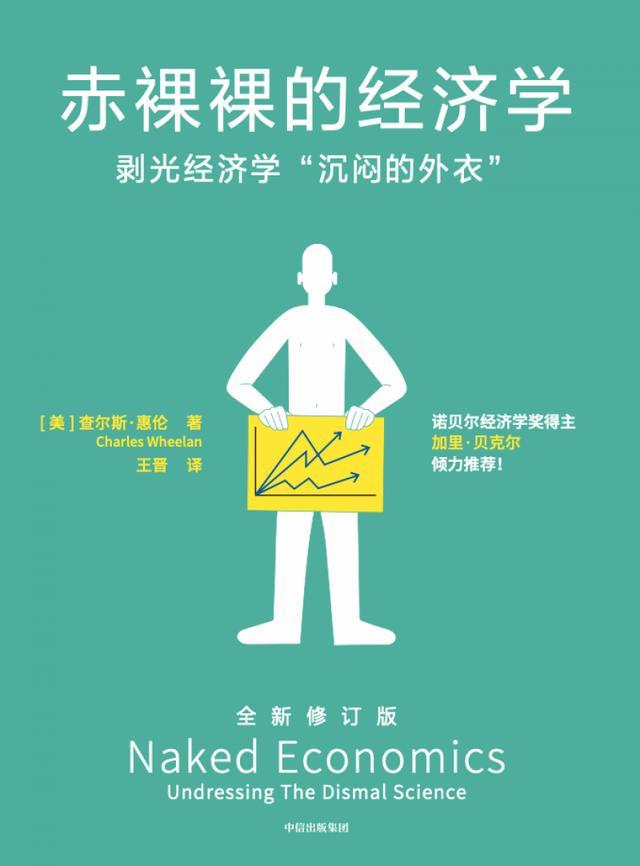
剥光经济学“沉闷的外衣”
Hua Xia Shi Bao· 2025-08-29 01:08
Group 1 - Economics is often perceived as a dull and complex field, with economists criticized for their obscure language and reliance on advanced mathematics [4][5] - The book by Charles Wheelan aims to simplify economic concepts, presenting them in an accessible manner without complex equations or jargon [4][5] - Economic analysis is recognized as a challenging discipline, often more complex than physical sciences, due to the unpredictability of human behavior [5][6] Group 2 - Economists play a crucial role in government decision-making, influencing policies related to economic growth, employment, and inflation [6][7] - Economic considerations are integral to various government functions, including competition promotion, pollution control, and healthcare provision [6][7] - The influence of economists extends to the business sector, where they assist companies in demand forecasting and strategic planning [7]
在认知偏差的尽头
Jing Ji Guan Cha Wang· 2025-08-06 04:36
Core Insights - Daniel Kahneman, the 2002 Nobel Prize winner in Economics, significantly contributed to the field of behavioral economics, challenging the traditional notions of rational decision-making in economics [8][9][10] - His work, particularly in collaboration with Amos Tversky, revealed the cognitive biases that affect human judgment and decision-making, such as loss aversion, anchoring effect, and overconfidence [9][10][14] - Kahneman's insights have been utilized in various fields, but he expressed concern that his findings were often exploited by corporations and political entities rather than empowering individuals [14][15] Group 1 - Kahneman's foundational role in behavioral economics established a new understanding of human decision-making, moving away from the "rational agent" model [8] - His research highlighted that human decision-making is influenced by cognitive biases, which often lead to irrational choices [9][10] - Kahneman's work has been instrumental in understanding how people assess risk and make choices under uncertainty, revealing the complexities of human behavior [9][10] Group 2 - Kahneman's early life experiences, including his childhood during the Nazi occupation and service in the Israeli army, shaped his understanding of human behavior under stress and uncertainty [11][12] - His personal struggles with the moral implications of his homeland's actions influenced his academic pursuits and decisions, reflecting the tension between emotional responses and rational thought [13] - The culmination of his life's work and personal experiences led to a profound understanding of the limitations of human rationality, culminating in his decision to end his life on his own terms [15][16]

星巴克的“自残式”改革
Hu Xiu· 2025-07-30 23:41
Core Insights - Starbucks recently reported a significant profit drop of $558 million, attributed to a costly and proactive overhaul initiated by CEO Howard Schultz [1][10] - The company's core issue lies in its brand identity, which has been compromised due to rising prices and intensified competition from various coffee vendors [2][4] - The transformation strategy involves a substantial investment aimed at restoring the unique customer experience that justifies premium pricing [11][12] Financial Performance - The $558 million profit decrease is seen as a repayment for past neglect of core customer experiences and brand value [10] - The operating profit margin has dropped nearly 7 percentage points (680 basis points) as a direct result of the transformation costs [15] - Current stock valuation reflects market expectations of a successful turnaround, with a price-to-earnings ratio of approximately 35, higher than competitors like McDonald's and Chipotle [45][46] Strategic Initiatives - The company is shifting from a high-price model to one focused on increasing customer traffic and loyalty through enhanced service experiences [14] - Significant investments are being made in employee training and operational improvements, including simplifying the menu and enhancing in-store experiences [18][15] - The strategy emphasizes a "behavior reset" among employees to improve customer interactions and satisfaction [22][21] Market Challenges - Starbucks faces a dual challenge of maintaining efficiency while providing personalized customer experiences across its vast network of stores [30][34] - The reliance on digital tools has led to a decrease in personal interactions, prompting a need to balance efficiency with customer engagement [39][40] - The potential impact of unionization on labor costs poses a significant risk to the company's operational expenses and flexibility [52][55] Future Outlook - Market expectations suggest that by fiscal years 2026 or 2027, Starbucks' profits should recover significantly, contingent on the success of its transformation efforts [48][49] - The success of the transformation hinges on the ability to convert employee training and improved service into tangible sales growth and customer loyalty [68][70] - Investors are advised to monitor key performance indicators closely, including same-store sales and customer traffic, to gauge the effectiveness of the ongoing changes [70]

【就业市场】 人才夜市“出圈”的背后
Zheng Quan Shi Bao· 2025-07-22 19:16
Group 1 - The core idea of the article is the innovative approach of the "Xiangshan Talent Recruitment Night Market" in Zhuhai, which shifts traditional job fairs to nighttime and public commercial areas, enhancing job matching efficiency and creating a more relaxed atmosphere for job seekers [1][2] - The event attracted nearly 4,000 job positions and 6,000 attendees, achieving an intention agreement rate exceeding 16%, significantly higher than traditional job fairs [1] - This new model reflects a shift in public services adapting to the preferences of Generation Z, emphasizing immersive experiences over traditional, didactic methods [2] Group 2 - The article highlights a broader trend of innovative recruitment practices across China, such as Nanjing's "Wutong Language" talent market and Chengdu's "script murder job seeking," which utilize social resources and break departmental silos [2] - To sustain these innovations, three key dimensions need to be addressed: establishing a "demand radar" mechanism for dynamic site optimization, developing career experience products for long-term skill development, and creating an evaluation system to track actual employment rates [3] - The article emphasizes that public services must evolve to be more engaging and relatable, transforming traditional job fairs into appealing community events [3]
【有本好书送给你】生于大萧条,一生经历数次金融危机,巴菲特靠“不作为”赢麻了
重阳投资· 2025-07-09 06:53
Core Viewpoint - The article emphasizes the importance of reading as a pathway to growth and wisdom, highlighting the influence of Warren Buffett and Charlie Munger in promoting this idea [2][3][7]. Summary by Sections Book Recommendation - The featured book is "Warren Buffett: From Investor to Entrepreneur," authored by Todd A. Finkle, which explores Buffett's investment wisdom and entrepreneurial spirit [9][11]. Behavioral Finance - Buffett suggests that successful investors must understand two key aspects: how to evaluate a company and how to comprehend human nature [13]. - Behavioral finance, rooted in the research of Daniel Kahneman and Amos Tversky, examines how psychological biases affect investor decisions, emphasizing the importance of recognizing these biases to avoid mistakes [14][15]. Crisis Management - The article discusses how Buffett navigated various financial crises, including: 1. **COVID-19 Pandemic**: The U.S. stock market fell 34% in a rapid decline, but Buffett advised maintaining confidence and not making drastic changes [17]. 2. **Great Recession (2007-2009)**: The Dow Jones index dropped over 50%, yet Buffett's strategy of patience proved effective as the market eventually recovered [18]. 3. **Dot-com Bubble (2000-2002)**: Despite criticism for underperforming, Buffett's cautious approach during the tech boom and subsequent crash demonstrated the value of independent thinking [19]. 4. **Great Depression**: The Dow Jones index took 25 years to recover to its pre-crash peak, illustrating the long-term impact of economic downturns [21]. Summary of Crisis Responses - The recovery times from crises have decreased over the decades, from 25 years during the Great Depression to just two months during the COVID-19 pandemic, indicating improved resilience in the market [22].

从扑克桌到交易场:433%回报率的硬核投资法则
Sou Hu Cai Jing· 2025-06-21 09:18
Core Insights - The article highlights the impressive investment performance of Christian Flanders, who achieved a 433% return in a U.S. investment competition, showcasing the application of economic principles and financial logic in trading [2] Group 1: Investment Strategies - Flanders employs a simplified investment strategy aligned with trend theory, focusing on stocks near historical highs to follow upward market trends and avoid value traps [3] - His approach includes a gradual risk exposure strategy and a reverse Martingale strategy, which adjusts positions based on profit and loss, effectively managing risk while maximizing returns [3] - The success of his phase transition strategy is attributed to a deep understanding of market dynamics, utilizing significant information to capture price gaps and define risk-reward boundaries [4] Group 2: Market Analysis Techniques - Flanders studies the historical performance of leading stocks, creatively applying the efficient market hypothesis to identify recurring price patterns and market behaviors [4] - His analysis of new stock listings and strong market trends aims to exploit market inertia and momentum effects, allowing for the generation of excess returns [4] Group 3: Risk Management - The implementation of down risk protection and trailing stop-loss strategies exemplifies a rigorous application of risk management principles, quantifying and controlling risk within acceptable limits [5] - Flanders utilizes moving averages to track trends and manage risk, helping to capture trend continuations while providing timely exit points during reversals [5] - The article emphasizes the importance of emotional control and discipline in trading, suggesting that successful investors must integrate rational decision-making with scientific methods to navigate market opportunities effectively [5]

螺丝钉618福利:囤书的好机会来啦~
银行螺丝钉· 2025-06-16 15:06
Core Viewpoint - The article highlights the annual 618 shopping festival, emphasizing the opportunity for consumers to purchase books at discounted prices, particularly in the investment and finance category [1][2]. Summary by Sections Promotional Offers - The company offers limited-time discounts on investment-related books during the 618 event, with discounts starting at 50% and additional coupon stacking available, allowing for a maximum discount of 130 on purchases over 300 [4]. Featured Books - The promotional book list includes six notable titles: 1. "The Active Fund Investment Guide" 2. "The Index Fund Investment Guide" 3. "Ten Years to Financial Freedom through Regular Investment" 4. "The Long-Term Stock Market Secret" 5. "The Trillion Dollar Index" 6. "Patient Capital" [6][16][20][26][31]. Book Summaries - "The Active Fund Investment Guide" provides a comprehensive introduction to active funds, including how to buy and sell them, aimed at helping readers build their investment systems [9]. - "The Index Fund Investment Guide" is suitable for beginners, detailing 256 mainstream index funds and investment strategies for ordinary investors [12][13]. - "Ten Years to Financial Freedom through Regular Investment" outlines a detailed plan for regular investment, particularly beneficial for salaried individuals with consistent cash flow [16]. - "The Long-Term Stock Market Secret" is a globally recognized investment classic, emphasizing that stocks are the best long-term wealth accumulation method, while also addressing the risks involved [20][21]. - "The Trillion Dollar Index" narrates the history of index funds and features insights from renowned investors, making it an engaging read [26][28]. - "Patient Capital" shares stories of long-term investment pioneers, providing lessons on managing family assets effectively [31][32]. Additional Recommendations - The article also mentions various other investment and finance-related books, including titles focused on financial literacy for children, family financial planning, and classic investment strategies, catering to a wide audience from beginners to seasoned investors [35][39][45][49].