贫富差距

Search documents
智利贫富差距改善有限
Shang Wu Bu Wang Zhan· 2025-12-13 15:42
Core Insights - The "World Inequality Report 2026" highlights extreme global inequality, with the wealthiest 0.001% (approximately 60,000 individuals) holding three times the total wealth of the poorest 50% [1] - The global financial system exacerbates this divide, with about 1% of global GDP flowing annually from poorer to wealthier nations [1] - Environmental inequality is pronounced, as the richest 10% contribute 77% of capital-related carbon emissions, while the poorest 50% account for only 3% [1] - Gender disparity persists, with women earning only 61% of what men earn per hour [1] Summary of Chile's Inequality - Since 2014, inequality in Chile has been slowly decreasing, yet it remains one of the most unequal countries globally [1] - The top 10% of income earners in Chile capture approximately 60% of total income, while the bottom 50% receive only 8.2% [1] - The wealthiest 10% control 69% of total wealth, with the top 1% alone holding over one-third of it [1] - From 2014 to 2024, the income gap between the top and bottom tiers has narrowed from 89.8 points to 72.3 points [1] - There has been a slight increase in female labor participation, but overall inequality levels remain significant [1]
二十岁当保安,少走四十年弯路?
虎嗅APP· 2025-12-13 03:08
Core Viewpoint - The article discusses the rising popularity of security guard positions among young people, highlighting a cultural shift where these roles are now seen as desirable due to their perceived financial benefits and work-life balance [6][9][28]. Group 1: Job Market Trends - Security guard positions are among the fastest-growing jobs in the U.S., with a significant number of young individuals entering this field, particularly those aged 25-29 and 20-24 [10]. - In China, the perception of security guards has evolved, becoming a symbol of youth culture, with various online content celebrating this profession [13][15]. - The average salary for a security guard in China can start at around 7,000 yuan, with potential earnings in major cities reaching up to 9,000 yuan per month [30][31]. Group 2: Work Environment and Conditions - The job is often perceived as having low entry barriers, with minimal qualifications required, making it accessible to a wide range of individuals [40]. - There are two types of security guard roles: "soy sauce positions," which are more relaxed and indoor, and "warrior positions," which are more demanding and outdoor [37]. - Many young people are drawn to the perceived stability and leisure associated with security guard jobs, often depicted in social media as easy and stress-free [25][30]. Group 3: Economic Context and Cultural Shifts - The article notes a significant economic disparity, with the wealth of the top 1% increasing dramatically, leading to a growing demand for service jobs like security [55][57]. - The younger generation, particularly Gen Z, is prioritizing work-life balance over traditional career advancement, reflecting a shift in values compared to previous generations [52][53]. - The article suggests that the influx of young people into security roles may be a response to economic challenges and a desire to align closer to affluent lifestyles, despite the reality of the job often being less glamorous [62][68].


9年前一句预言成真,若特朗普能任2届,美国会变成老二
Sou Hu Cai Jing· 2025-11-27 22:05
Group 1 - The article discusses the prediction made by Zhang Zhaozhong in 2016 regarding Trump's presidency leading to the decline of the US economy, suggesting that China has now reached a level of parity with the US [1][4][20] - It attributes the economic decline of the US to Trump's policies, particularly the "reciprocal tariffs" introduced in April 2025, which have increased costs for American consumers and businesses [4][6][8] - The article highlights that the US national debt has surpassed $38 trillion, indicating a long-term trend of increasing debt and fiscal mismanagement since 1985, which has led to a reliance on borrowing [12][14] Group 2 - The article emphasizes that the decline of the US is not solely due to Trump but is a result of long-standing structural issues, including the hollowing out of its industrial base and increasing income inequality [10][18][31] - In contrast, China's manufacturing sector has grown significantly, maintaining the largest global industrial output for 15 consecutive years, supported by substantial investments in technology and research [20][22] - The article concludes that the shift in global power dynamics is a natural outcome of internal contradictions within the US and the robust development of China's economy, which is characterized by a complete industrial chain and a commitment to open cooperation [26][28][31]

美联储政策失灵?K型经济下,2026年降息能否救美国?
Sou Hu Cai Jing· 2025-11-25 10:56
Economic Overview - The U.S. economy is on a "K-shaped" trajectory, where the wealthy are thriving while ordinary families struggle financially [1][4] - The Federal Reserve's aggressive interest rate hikes, reaching 5.5%, have exacerbated this divide, acting as a "double-edged sword" [3][4] Consumer Behavior - Credit card delinquency rates have surged to a 15-year high, with bad debt ratios exceeding 9.5%, indicating financial strain among lower-income households [4] - Ordinary families are forced to make difficult financial choices, such as switching from premium brands to cheaper alternatives [1][4] Corporate Landscape - Large tech companies are investing heavily in AI, with Nvidia's graphics card orders extending three years into the future, showcasing a stark contrast to the struggles of small and medium enterprises [4] - High interest rates are crippling small businesses, hindering their ability to invest in equipment and hire talent [4] Federal Reserve's Dilemma - The Federal Reserve faces a challenging situation, balancing the need to lower interest rates to prevent a wave of defaults while fearing inflation resurgence [5] - Any potential interest rate cuts may provide temporary relief for consumers but could further inflate asset bubbles for the wealthy [5] Policy Implications - A more equitable tax system and improved social safety nets are suggested as necessary reforms to address the underlying issues of wealth inequality [7] - The current economic policies are leading to a scenario where recovery benefits a select few, while the majority continue to struggle [9]

“中国让数亿人脱贫,美国呢?”
Guan Cha Zhe Wang· 2025-11-24 07:16
Core Viewpoint - The article highlights China's significant achievements in poverty alleviation, contrasting it with the persistent poverty issues in the United States, suggesting that the U.S. has systemic flaws in addressing wealth distribution and poverty [1][4][5]. Summary by Sections Poverty Alleviation Achievements - China has successfully lifted over 800 million people out of poverty since the reform and opening up, contributing more than 70% to global poverty reduction [8][9]. - In contrast, over 4 million Americans still live on less than $3 a day, a figure that has tripled over the past 35 years, indicating a failure in the U.S. to address poverty effectively [1][4]. Economic Disparities - The U.S. has a GDP per capita six times that of China, yet it has a higher number of extreme poverty individuals [4]. - Income inequality in the U.S. has worsened, with the share of income held by the bottom 10% of earners dropping to about 1.8%, comparable to levels in developing countries like Bolivia [4][5]. Government Policies and Their Impact - U.S. government policies, particularly under the Trump administration, have exacerbated poverty by cutting healthcare and nutritional assistance, disproportionately affecting lower-income families [5][8]. - Both Democratic and Republican administrations have historically prioritized market efficiency over addressing inequality, leading to a consistent trend where the wealthy benefit more than the poor [5][8]. Global Perspective - The success of China's poverty alleviation efforts has garnered international recognition, with leaders from various countries acknowledging its significance and potential as a model for other nations [9]. - The article raises questions about why a "non-democratic" government like China's can achieve such success in poverty reduction while wealthier democracies struggle [8][9].

一切为了中选!明年上半年的美国政策组合:关税退坡+财货双松?
智通财经网· 2025-11-22 07:59
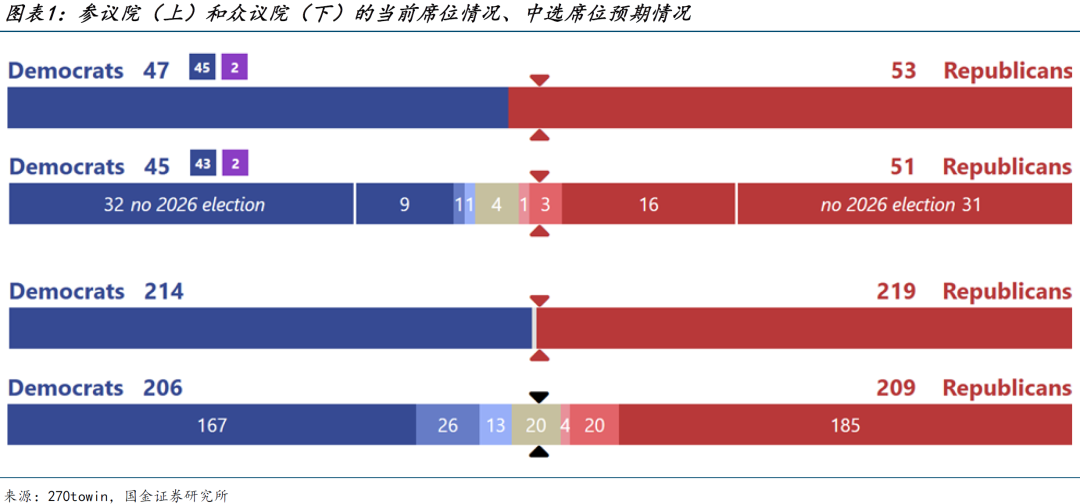
Group 1 - The Republican Party, led by Trump, gained control of both houses of Congress after the last presidential election, providing a strong foundation for the Trump administration's domestic and foreign policy initiatives [1] - The upcoming midterm elections on November 3 will be a significant test for the Trump administration, as both houses will face re-election [1][2] - Historically, it is common for the sitting president's party to lose control of Congress during midterm elections, which can hinder legislative efforts and diminish international influence [1][6] Group 2 - The Republican Party is expected to maintain control of the Senate, with 53 seats compared to 47 for the Democrats, but the House of Representatives presents a more precarious situation [2] - In the House, the Republican Party holds a slim majority of 219 seats to the Democrats' 214, with 19 highly competitive seats that could determine control [2][3] Group 3 - Trump is pressuring Republican-led state governments to redraw congressional district lines to gain electoral advantages, a tactic that has intensified due to increasing partisan divisions [3] - Despite potential advantages from redistricting, historical trends indicate that the president's party often loses seats in midterm elections, with an average loss of 26 seats since World War II [3][6] Group 4 - The Trump administration's focus for the upcoming year should be on addressing pressing social and economic issues, particularly rising living costs and income inequality [4][12] - Economic challenges have worsened under the Trump administration, with rising costs of living and increasing unemployment risks due to structural changes in the job market [7][8] Group 5 - The wealth gap in the U.S. has widened, with the top 1% of households holding 30.9% of the nation's wealth, while the bottom 50% hold only 2.5% [8] - Recent local election losses for the Republican Party highlight the impact of these economic issues on voter sentiment [8] Group 6 - Trump's political strategies are likely to focus on mitigating existing economic problems while avoiding new challenges, particularly as the midterm elections approach [12][13] - The administration may need to implement new fiscal policies to address the growing economic disparities and dissatisfaction among lower-income voters [12][13] Group 7 - The relationship between the U.S. and China is expected to remain stable in the coming year, with potential negotiations on tariffs and trade agreements [17][18] - Trump's planned visit to China in April may yield significant outcomes, particularly regarding tariff reductions on fentanyl [17][18]
“贫富差距”正在掏空美国经济
Sou Hu Cai Jing· 2025-11-09 22:58
Core Viewpoint - The widening wealth gap in the U.S. could lead to a new recession, as structural issues have made the economy appear robust while underlying consumer spending is weakening [3] Group 1: Economic Conditions - The Federal Reserve officials have warned that the expanding wealth gap may trap the U.S. in a recession [3] - Despite GDP growth and a booming stock market, household credit card debt has reached an all-time high, and the purchasing power of the middle class continues to decline [3] - The rich are becoming wealthier through asset appreciation, while ordinary people are increasingly reliant on debt [3] Group 2: Consumer Spending and Corporate Impact - As consumer spending weakens, corporate profits and employment are also expected to decline, regardless of the Federal Reserve's interest rate adjustments [3] - The structural inequality in the economy poses risks to political and social stability, leading to increased polarization and policy imbalances [3] Group 3: Comparative Analysis with China - In contrast, China's policies focused on common prosperity and expanding the middle-income group are making growth more inclusive [3] - Reforms in digital economy, green transition, and inclusive finance are continuously releasing new vitality, benefiting a larger segment of the population [3] - True prosperity is defined not by rising numbers but by the happiness of the majority [3]

当 AI 成了“消费者”:7 巨头狂飙、餐饮股连跌、拖车场最忙
美股研究社· 2025-11-04 12:04
Core Insights - The article highlights a significant divergence in the U.S. economy, with wealth concentration increasing and artificial intelligence (AI) playing a crucial role in this divide [5][41]. - AI stocks have outperformed consumer stocks by over 20% in the past 60 days, indicating a shift in investment focus [4]. - The market is experiencing unprecedented concentration, with the total market capitalization of seven major tech companies surpassing $20 trillion, accounting for approximately 35% of the S&P 500 index [7][11]. Group 1: Market Performance - AI investment has exceeded $1 trillion annually, contributing significantly to economic growth [4][24]. - The S&P 500 index has seen a cumulative market value increase of over $18 trillion since April 2025 [10]. - The performance of consumer-facing stocks has been under pressure, with companies like General Mills and Kraft Heinz entering bear market territory [14][15]. Group 2: Economic Disparities - The wealth gap in the U.S. is widening, with the top 10% of households owning 87% of all U.S. stocks and the bottom 50% holding only 1% [35][36]. - The unemployment rate for recent graduates aged 20-24 has risen to an average of 8.1%, the highest in four years, indicating challenges for younger job seekers [21]. - The concentration of tech jobs in California has decreased, reflecting a broader regional and industrial restructuring [23]. Group 3: Consumer Behavior - Consumer demand is weakening, with companies attributing declines to inflation and macroeconomic pressures [17][20]. - Fast-food chains like Wendy's and Chipotle have seen significant stock declines, with Chipotle's CEO noting a reduction in dining out among younger Americans [19][17]. - The number of vehicles being repossessed is nearing 2009 levels, suggesting increasing financial strain on consumers [32].


美国为什么快要顶不住了?因为美国再也出不了一个罗斯福了,美国现在最大的问题是缺钱,入不敷出,欠了一堆债
Sou Hu Cai Jing· 2025-11-01 15:52
Core Insights - The article highlights the growing financial crisis in the U.S., with record national debt and increasing fiscal deficits, leading to a situation where each American carries approximately $110,000 in debt [1][3] - It discusses the disparity between the financial struggles of the nation and the wealth accumulation of major financial institutions and wealthy families, indicating a tight bond between politics and capital [3][5] - The article critiques the political landscape, where tax reforms aimed at the wealthy are consistently blocked, resulting in a growing budget deficit and wealth inequality [5][7] Financial Situation - The U.S. Treasury reported that interest payments for 2024 will exceed $870 billion, marking a historical high and surpassing military spending [3] - The wealth distribution is stark, with the top 10% of households holding nearly 70% of the wealth, while the bottom half collectively holds less than 3% [7] Political Dynamics - The 2024 presidential election campaign is projected to exceed $16 billion, primarily funded by large corporations and wealthy individuals, influencing political decisions [3][5] - Media narratives often support the wealthy, promoting the idea that protecting the rich is synonymous with protecting jobs, which misleads the public [5][7] Social Implications - The article notes a significant increase in homelessness, with over 75,000 homeless individuals in Los Angeles alone, highlighting the failure to address basic social needs [7] - It draws a parallel to historical figures like Franklin D. Roosevelt, suggesting that current politicians lack the courage to implement necessary reforms to address wealth inequality and social welfare [9][11]


《金融时报》:AI热撑起的美国经济繁荣,还能持续多久?
Sou Hu Cai Jing· 2025-10-24 00:32
Core Insights - The article discusses the current state of the U.S. economy, highlighting the impact of the AI investment boom and the resilience of consumer spending, particularly among wealthier households, despite underlying economic concerns [2][5][11]. Economic Performance - The U.S. economy is experiencing a "dual-speed" state, where affluent households benefit from rising stock market valuations, while low-income groups face challenges from high inflation and stagnant wage growth [2][11]. - The IMF has revised its growth forecast for the U.S., predicting a 2% growth in 2025 and 2.1% in 2026, despite concerns about trade tensions and labor market weaknesses [4][21]. Stock Market and Wealth Effect - AI-related stocks now account for 43% of the S&P 500's total market capitalization, contributing approximately $5 trillion in new wealth to American households over the past year [6][11]. - The stock market's performance has created a wealth effect, where for every $1 increase in stock market value, consumers are estimated to spend an additional $0.05 [12][11]. Consumer Behavior - The strong performance of the economy is largely driven by high-income consumers, who contribute to about half of U.S. consumption [11][12]. - Companies in the luxury sector are benefiting from this trend, with reports of increased sales in high-end products [13]. Labor Market Concerns - The labor market shows signs of weakness, with low-income workers experiencing slower wage growth compared to higher-income groups [14][17]. - Economic indicators suggest that the lowest 25% of earners saw an average wage increase of only 3.6% in August, while the highest earners experienced a 4.6% increase [17]. Political and Trade Risks - There are ongoing concerns about the unpredictability of U.S. trade policies and their potential impact on global economic stability [21][22]. - Recent tensions between the U.S. and China regarding key materials highlight the fragility of the global economy [22]. Market Sentiment - Investor sentiment remains optimistic, but there are warnings that a correction in the stock market could lead to significant consequences for consumer spending and overall economic health [20][21].