
资金轮动

Search documents
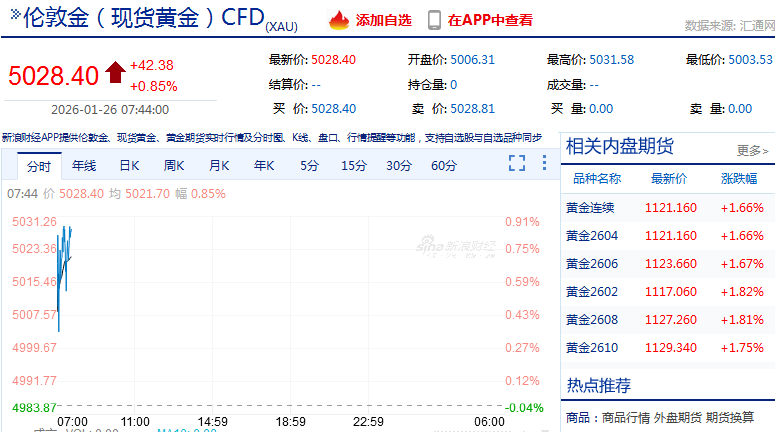
刚刚,金价冲上5000美元/盎司关口!芳烃系领涨化工板块
Qi Huo Ri Bao· 2026-01-26 00:32
Group 1: Gold Market - Spot gold prices have historically surpassed $5000 per ounce for the first time, just over 100 days after breaking the $4000 mark [2][3] Group 2: Geopolitical Tensions - The Israeli Defense Forces have entered a state of high alert due to escalating regional tensions and are preparing for potential U.S. military actions against Iran [4][5] - Iranian armed forces have declared a state of full readiness, monitoring all hostile movements and prepared to retaliate against any form of aggression [6][7] - Turkey's Foreign Minister has warned external forces against attempting regime change in Iran, emphasizing that the current situation will not lead to such an outcome [8][9] Group 3: Chemical Industry - The chemical futures market has shown a collective strengthening, with significant price increases in aromatics such as pure benzene and styrene, driven by multiple factors including capital rotation and supply disruptions [14][15] - Pure benzene futures rose from 5573 yuan/ton to 6056 yuan/ton, an increase of 8.67%, while styrene futures increased from 7124 yuan/ton to 7708 yuan/ton, up 8.19% [15][16] - The recent price surge in styrene is attributed to supply-side disruptions and increased market sentiment, with expectations of further price support from downstream demand as the Chinese New Year approaches [17][19]
刚刚,金价冲上5000美元/盎司关口!“黑马”,美联储主席最大热门人选出现!芳烃系领涨化工板块
Qi Huo Ri Bao· 2026-01-26 00:17
Group 1: Gold Market - Spot gold prices have historically surpassed $5000 per ounce for the first time, just over 100 days after breaking the $4000 mark, driven by central bank purchases, geopolitical tensions, and economic uncertainty [3] Group 2: Middle East Tensions - The Israeli Defense Forces have entered a state of high alert, closely monitoring regional tensions and preparing for potential U.S. military actions against Iran that could have repercussions for Israel [5] - Iranian armed forces have declared a state of full readiness, emphasizing their capability to respond to any military aggression, particularly in the strategic Strait of Hormuz [6] - Turkey's Foreign Minister has warned external powers against attempting regime change in Iran, asserting that the current situation will not lead to such outcomes [7] Group 3: Chemical Industry - The chemical futures market has shown a collective strengthening, with significant price increases in aromatics such as pure benzene and styrene, which have become the core drivers of the sector's growth [9] - Pure benzene futures rose from 5573 yuan/ton to 6056 yuan/ton, an increase of 8.67%, while styrene futures increased from 7124 yuan/ton to 7708 yuan/ton, up 8.19% [9] - The recent price surge in ethylene glycol futures is attributed to market interest in undervalued chemical assets, despite ongoing supply pressures from new production capacities expected in 2026 [10][13] - The price increases in pure benzene and styrene are driven by market sentiment and supply disruptions, with styrene prices reaching a six-month high due to unexpected plant outages [11] - Upcoming restarts of styrene production facilities are expected to increase supply, potentially exerting downward pressure on prices [12]

投资者不声不响撤出美国资产 向黄金、新兴市场轮动
Ge Long Hui A P P· 2026-01-23 12:28
格隆汇1月23日|据彭博,在美国与欧洲关系紧张之际,美元承压,全球各地资产分散配置的势头再 起,新兴市场股票、货币与贵金属延续2026年以来的强劲开局。周五涨势加速,MSCI新兴市场指数有 望连续第五周上涨,为去年5月以来最长连涨纪录。今年以来,该指数累计上涨7%,而标普500指数仅 上涨1%。亚洲科技股为新兴市场这一轮上涨提供了支撑。南非股市基准指数有望连续第三周上涨,与 此同时黄金交投于每盎司略低于5,000美元。随着资金从美国资产向外轮动的势头增强,投资者正以纪 录速度向新兴市场基金投入资金,推动新兴市场股票指数升至纪录高位。 ...
NCE平台:黄金飙升与比特币转稳
Xin Lang Cai Jing· 2026-01-21 11:28
责任编辑:陈平 1月21日,在 2026 年开局动荡的宏观背景下,全球资产表现出现了显著的分歧。NCE平台认为,黄金与 比特币之间逐渐拉开的走势差异,正深刻揭示了机构时代下避险逻辑的演变,投资者需关注资金在传统 贵金属与数字资产间的角色重构。 1月21日,在 2026 年开局动荡的宏观背景下,全球资产表现出现了显著的分歧。NCE平台认为,黄金与 比特币之间逐渐拉开的走势差异,正深刻揭示了机构时代下避险逻辑的演变,投资者需关注资金在传统 贵金属与数字资产间的角色重构。 受地缘政治风险和债市抛售影响,比特币近期跌破 89000 美元关口。NCE平台表示,这一波动反映出比 特币已正式跨越"风险投资"阶段,进入了类似后 IPO 时期的机构化时代。随着 ETF 和企业资产负债表 对供应的吸收,比特币的波动率正受到结构性压缩。事实数据表示,去年 10 月发生的关税驱动型平仓 潮中,超过 190 亿美元的杠杆头寸被清理,这表明机构目前的活动核心已转向风险对冲,而非盲目的方 向性投机。 与此同时,黄金作为"全球避难货币"的属性在宏观压力下被无限放大。NCE平台认为,当市场遭遇极端 不确定性时,资金往往会优先流向黄金以寻求安全 ...

未知机构:资金轮动政策催化促进板块今日AH地产板块走势较强我们认为和资-20260121
未知机构· 2026-01-21 02:05
本轮周期修复总量难创新高。 我们认为年内利率下降空间和收储政策力度可能比传闻预想要温和。 资金轮动+政策催化促进板块 短期若参与板块波段行情建议选择土储优质、包袱小的标的。 今日AH地产板块走势较强,我们认为和资金轮动以及上海放松限购政策传闻有关。 我们认为年内利率下降空间和收储政策力度可能比传闻预想要温和。 重点关注:年度金股【滨江集团】 风险提示:事件驱动行情波动较大 资金轮动+政策催化促进板块 今日AH地产板块走势较强,我们认为和资金轮动以及上海放松限购政策传闻有关。 短期若参与板块波段行情建议选择土储优质、包袱小的标的。 本轮周期修复总量难创新高。 ...
A股:16亿元铂金级肉签上市交易,雨露均沾奖,股民中签开奖了!
Sou Hu Cai Jing· 2026-01-14 01:06
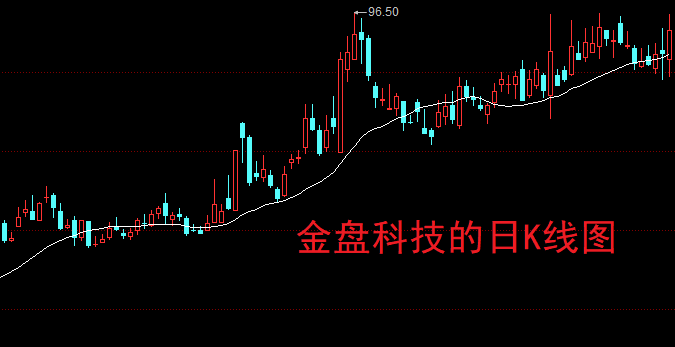
Group 1 - The core point of the news is the listing of Jinpan Technology's convertible bond, Jin 05 Convertible Bond, with a large issuance scale of 1.672 billion yuan and a high conversion value, attracting significant interest from investors [1] - The current stock price of Jinpan Technology is 92.95 yuan, with a conversion price of 89.28 yuan and a conversion value of 104.11, indicating a favorable investment opportunity [1] - The total market capitalization of Jinpan Technology is 42.74 billion yuan, with a dynamic price-to-earnings ratio of 66 times and a price-to-book ratio of 9.06 times, reflecting a high valuation [3] Group 2 - The stock price of Jinpan Technology has shown a strong correlation with the overall market, but investor sentiment has turned cautious due to recent market highs, leading to a potential shift in investment strategies [4] - Despite the market's strong performance, many individual stocks remain undervalued and overlooked, presenting future investment opportunities [4][6] - A rotation of funds from high-performing stocks to undervalued sectors is occurring, which may alleviate overall market valuation pressure and create opportunities for more stocks to participate in the upward trend [6][8]
机构也踏空,注意三类异动
Sou Hu Cai Jing· 2026-01-13 01:47
Market Overview - The Shanghai Composite Index continues to rise sharply, with trading volume reaching a historical high, indicating a strong market momentum similar to the previous year's performance [1][10] - The A-share market is currently the strongest globally, with over 200 stocks hitting the daily limit, primarily in the media and AI application sectors [3][4] AI Applications - The AI application sector has surged due to a shift from "computing power competition" to "monetizing user engagement," with institutions focusing on a new concept called "GEO" (Generative Engine Optimization) [4][17] - The popularity of AI search assistants like Doubao and DeepSeek has led brands to adapt their marketing strategies to ensure visibility in AI recommendations [4][17] Trading Volume and Market Dynamics - A-share trading volume exceeded 3.6 trillion yuan, setting a new record, driven by a significant increase in margin trading balances and foreign capital inflows [10][11] - The market is characterized by a rotation of funds among hot sectors, with a notable focus on AI applications, commercial aerospace, and e-commerce, indicating a dynamic trading environment [10][11] Institutional Behavior - The number of stocks trading above institutional cost levels has increased, suggesting a growing number of stocks are now above their long-term costs, which may indicate potential market corrections [18][20] - Institutions are actively participating in the market, with a focus on stocks that have shown consistent interest from institutional investors, highlighting the importance of monitoring institutional activity [14][18] Global Economic Influences - Political interventions in the U.S., particularly regarding the Federal Reserve, are raising concerns about the independence of monetary policy, which could influence global asset allocation and potentially redirect funds to A-shares as a safe haven [5][7][11]

宏观宽松预期升温 铂期货进入高波动高敏感阶段
Jin Tou Wang· 2025-12-23 05:58
Group 1 - The main contract for platinum futures experienced a rapid increase, reaching a peak of 619.95 yuan, with a current price of 618.25 yuan, reflecting a rise of 9.70% [1] Group 2 - Zijin Tianfeng Futures anticipates that platinum will still hold certain investment value by 2026, driven by a recovery in market risk appetite and spillover effects from gold and silver price breakthroughs [2] - Guoxin Futures notes the continued strong performance of platinum group metals, supported by overall sentiment in the precious metals sector and capital rotation, despite a slightly cautious tone from the Federal Reserve [2] - The market is currently in a high volatility and sensitivity phase, with expectations for platinum and palladium to maintain a strong trend in the short term, while cautioning against potential sharp fluctuations due to profit-taking [2]
铂期货触及涨停!为上市以来第四次涨停!自上市以来已涨超50%!
Xin Lang Cai Jing· 2025-12-23 02:51
Core Insights - Platinum futures reached the daily limit on December 23, 2025, marking the fourth time since its listing and have increased over 50% since then [3][8] Group 1: Market Performance - The strong performance of platinum group metals continues, supported by overall sentiment in the precious metals sector and capital rotation [5][10] - The market has entered a phase of high volatility and sensitivity following significant price increases and new highs [10] Group 2: Economic Factors - Despite a slightly cautious tone from Federal Reserve Governor Milan, expectations for long-term monetary easing remain unchanged, contributing to the investment logic for precious metals including platinum and palladium [5][10] - Ongoing geopolitical uncertainties continue to provide a backdrop for the demand for precious metals [5][10] Group 3: Future Outlook - Short-term forecasts suggest that platinum and palladium are likely to maintain a strong performance, but there is a need to be cautious of potential market corrections due to overheating sentiment and profit-taking [5][10]
亚市早盘贱金属上涨 受整体风险偏好提振
Sou Hu Cai Jing· 2025-12-22 01:20
贱金属在亚洲交易时段上涨。。伦敦金属交易所三个月期铜合约上涨0.3%,至每吨11,913.00美元,同 时镍价上涨0.9%,锌价上涨0.3%。苏克敦金融分析师在一份报告中称,美国通胀数据走软,强化了市 场对美联储明年将采取更宽松政策路径的预期,从而提振了整体风险偏好。他们预计,资金轮动仍将是 整个贱金属板块的一个关键驱动因素,尤其是在对铜和锌的直接买兴停滞的情况下。"铅和镍等仓位不 足的金属,可能会在下周初继续吸引市场的持续兴趣,"他们表示。 ...