
宏观宽松预期

Search documents
长江有色:宏观助力及产业支撑镍价盘面秀红 11日镍价或上涨
Xin Lang Cai Jing· 2026-02-11 03:18
Core Viewpoint - The nickel futures market is experiencing fluctuations, with recent price increases driven by macroeconomic factors and supply-demand dynamics. Group 1: Market Performance - Overnight London nickel prices rose by 0.8%, closing at $17,550 per ton, an increase of $140 per ton, with a trading volume of 7,547 lots [1] - The Shanghai nickel futures market opened lower but rebounded significantly, with the main contract closing at 136,500 yuan per ton, up 2,520 yuan per ton, a rise of 1.88% [1][2] - The LME nickel inventory reported 285,750 tons, an increase of 678 tons from the previous trading day [1] Group 2: Supply and Demand Dynamics - Supply remains tight due to policy disruptions in major producing countries like Indonesia and seasonal factors, leading to a marginal contraction in supply [3][4] - Demand from downstream sectors, particularly in new energy batteries and stainless steel, has stabilized as pre-holiday stockpiling has concluded, entering a traditional off-season [3][5] Group 3: Industry Chain Status - The upstream nickel ore prices remain high, providing rigid support to the industry chain [4] - Midstream nickel iron manufacturers are showing strong price support intentions, although refined nickel output has slightly increased, price elasticity remains limited due to high costs [5] - Downstream production schedules in the new energy and stainless steel sectors are slowing, with companies focusing on inventory digestion and cash flow stability, resulting in a subdued market transaction environment [5] Group 4: Market Outlook and Strategy - The nickel spot market is entering a pre-holiday quiet phase, with traders focused on settlement and only minimal essential transactions occurring [6] - Short-term nickel prices are expected to maintain a strong bias, supported by macroeconomic easing expectations and high costs, but seasonal demand decline and risk aversion may limit price increases [6] - A defensive strategy of "light positions, short-term focus" is recommended, emphasizing strict position control and short-term trading, while closely monitoring key variables such as dollar movements and Indonesian industrial policies [6]


热卷日报:震荡偏弱-20260127
Guan Tong Qi Huo· 2026-01-27 09:51
1. Report Industry Investment Rating - The short - term view maintains a bullish stance [6] 2. Core View of the Report - The current supply of hot - rolled coils is contracting, while the demand side shows resilience, with the overall supply - demand in a tight balance. Pre - holiday winter stockpiling is an important support for current demand. The social inventory of the total inventory is decreasing month - on - month, and the pressure on mill inventory is controllable. The overall inventory risk is marginally improving but still relatively high year - on - year. Attention should be paid to the impact of the post - holiday resumption of work and production on supply and demand. The supply - demand tight balance and inventory reduction support prices, and subsequent attention should be paid to raw material costs and the strength of post - holiday demand recovery. Currently, the macro - economic easing expectations and pre - holiday weak demand are in a tug - of - war, with cautious market sentiment and low volatility [6] 3. Summary by Relevant Catalogs Market行情回顾 - **Futures price**: On Tuesday, the open interest of the main hot - rolled coil futures contract decreased by 6,369 lots, with a trading volume of 288,700 lots, a decrease compared to the previous trading day. The intraday low was 3,283 yuan, and the high was 3,306 yuan. It showed a weak intraday oscillation. In terms of the daily moving average, it briefly fell below the 5 - day moving average in the short term, but found support near the 30 - day moving average, closing at 3,289 yuan/ton, a decrease of 2 yuan or 0.60% [1] - **Spot price**: The price of hot - rolled coils in the mainstream Shanghai area was reported at 3,290 yuan/ton, a decrease of 10 yuan compared to the previous trading day [2] - **Basis**: The spot - futures basis was 1 yuan, basically at par [3] Fundamental Data - **Supply side**: As of January 22, the weekly output of hot - rolled coils decreased by 29,500 tons month - on - month to 3.0541 million tons, and decreased by 172,300 tons year - on - year. The output decline may be affected by factors such as maintenance schedules and profit fluctuations, which supports prices [4] - **Demand side**: As of January 22, the weekly apparent consumption decreased by 42,000 tons month - on - month to 3.0996 million tons, and increased by 73,900 tons year - on - year. Although demand declined slightly month - on - month, it maintained year - on - year growth. Pre - holiday stockpiling supported demand, and overall demand showed strong resilience [4] - **Inventory side**: As of January 22, the total inventory decreased by 45,500 tons week - on - week to 3.5778 million tons (social inventory decreased by 46,600 tons week - on - week, and mill inventory increased by 1,100 tons), and increased by 212,700 tons year - on - year (social inventory increased by 241,800 tons year - on - year, and mill inventory decreased by 29,100 tons year - on - year). The total inventory decreased month - on - month, and the inventory pressure was marginally relieved. The year - on - year increase indicated that the inventory accumulation rate this year was slightly faster than last year, but the overall risk was controllable [4] - **Policy side**: The new regulations on the export license management of steel products will cause short - term fluctuations in exports, increase supply, and put pressure on prices. In the long term, it will promote industrial upgrading, structural optimization, and competitiveness improvement. The Central Economic Work Conference in December proposed a proactive fiscal policy and a moderately loose monetary policy, and listed the in - depth rectification of involution - style competition as a key task for 2026, which is beneficial to prices and industry profitability. Efforts are being made to stabilize the real estate market and expand domestic demand [5] Market Driving Factor Analysis - **Bullish factors**: Decrease in supply - side output, expectation of winter stockpiling demand, export rush market, policy support ("the 14th Five - Year Plan", infrastructure investment), and strong iron ore as furnace feed [6] - **Bearish factors**: Unexpected resumption of production by steel mills in January, seasonal weakening of demand, insufficient manufacturing orders, and inventory accumulation suppressing prices [6]
展望2026年黄金市场:价格中枢上移 高波动成常态
Qi Huo Ri Bao· 2026-01-18 00:20
Core Viewpoint - The target prices for precious metals for 2026-2027 have been raised by multiple investment banks, indicating a positive long-term outlook for precious metals driven by macroeconomic factors and supply-demand fundamentals [2] Group 1: Market Performance - In 2025, the precious metals market experienced significant price increases, with international gold prices reaching new highs and an annual increase of 64.56%, while domestic gold futures rose by 55.77% [2] - The global gold demand for the first three quarters of 2025 was 3,639.7 tons, reflecting an 11.7% year-on-year growth, with notable increases in ETF investment demand and central bank purchases [4] Group 2: Economic Outlook - The U.S. economy is expected to experience a K-shaped recovery, with employment and inflation anticipated to slow down, leading to a potential easing of monetary policy by the Federal Reserve [2] - The reduction in U.S. tariffs may exacerbate fiscal deficit pressures, contributing to a liquidity easing environment and a weakening of the dollar, which could enhance gold's role as a pricing anchor in the monetary system [2] Group 3: Supply-Demand Dynamics - The demand for gold from central banks and ETFs is expected to continue supporting gold prices in 2026, while geopolitical conflicts are limiting the growth of precious metal supplies [4] - The tight circulation inventory may lead to supply-demand mismatches, particularly as countries compete for critical mineral resources amid rising de-globalization trends [4] Group 4: Investment Strategy - Short-term trading strategies should consider market volatility and technical indicators, while long-term investments should align with trends in global central bank gold purchases and ETF allocations [4] - Investors are advised to monitor key variables such as U.S. employment, economic inflation, monetary policy, and global central bank gold buying behavior closely [4]
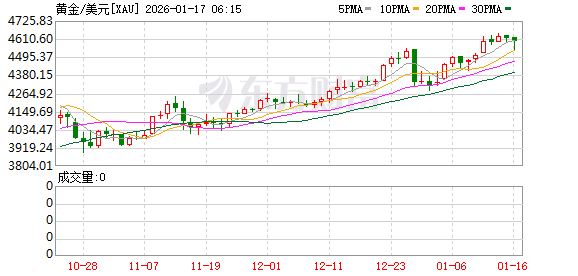
长江有色:美股三大指数集体收涨支撑市场情绪 16日铅价或小涨
Xin Lang Cai Jing· 2026-01-16 02:35
Group 1 - The core viewpoint of the article highlights that the recent rise in lead prices is driven by macroeconomic easing expectations, interconnections within the non-ferrous sector, and geopolitical supply risks, particularly due to ongoing conflicts in the Democratic Republic of the Congo [1][2] - The supply side of the lead market is facing multiple constraints, including tight supplies of lead concentrate and scrap batteries, which are pushing up smelting costs, and limited production increases due to seasonal, environmental, and profit factors [1][2] - The demand side shows a robust and structurally growing landscape, with significant battery replacement needs from electric bicycles and vehicles, as well as expanding applications in the energy storage sector [2] Group 2 - The lead industry is currently in a tight balance, with low inventory levels acting as a key support for prices, as any supply disruptions or demand improvements can significantly impact price fluctuations [2] - Leading companies in the industry are demonstrating stable and positive performance, with new capacity gradually being released and efforts to optimize costs through resource recycling and increasing the proportion of recycled lead [2] - The current spot market for lead is showing strong trading activity, with tight supply and essential purchasing from downstream sectors providing a foundation for transactions, leading to expectations of a short-term upward price trend [2]
招商期货-期货研究报告:商品期货早班车-20260116
Zhao Shang Qi Huo· 2026-01-16 01:55
1. Report Industry Investment Ratings - No industry investment ratings are provided in the report. 2. Core Views of the Report - Different commodities have diverse market performances, fundamentals, and trading strategies. For example, in the gold market, prices are expected to rise, while in the basic metal market, opportunities for stable buying are awaited. In the black industry and energy - chemical sectors, the market is complex and requires different strategies such as holding short positions, waiting and seeing, or taking short - term and medium - term actions according to specific situations. In the agricultural product market, prices generally show a trend of shock, and corresponding trading strategies are formulated based on supply - demand relationships [1][2][5] 3. Summary by Relevant Catalogs Gold Market - **Market Performance**: On Thursday, precious metals continued to fluctuate. The price of London gold remained at $4,600 per ounce, and the price of London silver remained at $93 per ounce [1] - **Fundamentals**: In November, the total scale of US Treasury bonds held by countries and regions outside the US increased by $112.8 billion to $9.36 trillion. China's mainland holdings of US Treasury bonds decreased by $6.1 billion to $682.6 billion. Many Fed officials supported Powell, and the Trump administration decided not to impose comprehensive tariffs on key minerals such as silver and platinum. Domestic gold ETFs continued to have a small inflow of 0.8 tons [1] - **Trading Strategy**: It is recommended to go long on gold, and wait and see on silver [1] Basic Metals Copper - **Market Performance**: The copper price fluctuated weakly yesterday [2] - **Fundamentals**: The Trump administration did not impose tariffs on key minerals, the US dollar index strengthened, and the US Congress proposed a $2.5 - billion key mineral strategic reserve plan. The supply of copper ore remained tight, and the downstream point - price increased after the price decline [2] - **Trading Strategy**: Wait for a clearer opportunity to buy on stabilization [2] Aluminum - **Market Performance**: The closing price of the main electrolytic aluminum contract decreased by 0.89% to 24,375 yuan/ton, and the domestic 0 - 3 month spread was - 295 yuan/ton. The LME price was $3,162 per ton [2] - **Fundamentals**: Electrolytic aluminum plants maintained high - load production, and the operating capacity increased slightly. The weekly aluminum product start - up rate increased slightly [2] - **Trading Strategy**: The electrolytic aluminum price had a small correction. It is expected to maintain a shock pattern in the short term, and focus on the movement of the main funds [2] Alumina - **Market Performance**: The closing price of the main alumina contract decreased by 0.39% to 2,789 yuan/ton, and the domestic 0 - 3 month spread was - 119 yuan/ton [2] - **Fundamentals**: The operating capacity of alumina plants remained stable, and electrolytic aluminum plants maintained high - load production [2] - **Trading Strategy**: The supply of alumina is gradually recovering, the inventory is continuously accumulating, and it is expected to continue the weak shock in the short term [3] Zinc and Lead - **Market Performance**: On January 15, the main contracts of zinc and lead closed at 25,090 yuan/ton and 17,550 yuan/ton, up 615 yuan and 165 yuan respectively from the previous trading day. The domestic 0 - 3 month spreads were - 40 yuan/ton and - 100 yuan/ton, and the overseas 0 - 3 month spreads were - 14.32 dollars/ton and - 43.33 dollars/ton respectively [3] - **Fundamentals**: The zinc market was obviously driven by macro - sentiment and funds, but the fundamental support was insufficient. The lead market showed a weak reality, with weak consumption, increasing inventory, and expanding spot discounts [3] - **Trading Strategy**: Hold a wait - and - see attitude towards zinc, and operate in the range or be bearish on lead [3] Other Metals (Silicon, Lithium Carbonate, Polysilicon, etc.) - **Market Performance and Fundamentals**: Each metal has its own characteristics. For example, the silicon market has supply reduction and demand - side anti - involution; the lithium carbonate market has price fluctuations affected by supply and demand; the polysilicon market has production reduction and inventory changes [3] - **Trading Strategy**: The silicon market can consider short - selling on rallies; the lithium carbonate market is expected to have price support; the polysilicon market is expected to have a weak shock in the low position [3] Tin - **Market Performance**: The tin price rose first and then fell yesterday [4] - **Fundamentals**: The Trump administration did not impose tariffs on key minerals, the US dollar index strengthened, and the US Congress proposed a key mineral strategic reserve plan. The supply of tin ore remained tight, and Indonesia's tin ingot exports needed time [4] - **Trading Strategy**: Wait for an opportunity to buy on stabilization [4] Black Industry Rebar - **Market Performance**: The main 2605 contract of rebar closed at 3,161 yuan/ton, down 9 yuan/ton from the previous night's closing price [5] - **Fundamentals**: The building material apparent demand increased by 150,000 tons to 1.9 million tons, and the output decreased by 10,000 tons to 1.9 million tons. The steel supply and demand were weak, and the structural differentiation was significant [5] - **Trading Strategy**: Hold short positions in the rebar 2605 contract, with a reference range of 3,130 - 3,180 [5] Iron Ore - **Market Performance**: The main 2605 contract of iron ore closed at 815 yuan/ton, up 1 yuan/ton from the previous night's closing price [5] - **Fundamentals**: The iron - making water output decreased by 15,000 tons to 2.28 million tons, and the port inventory increased by 2.8 million tons to 1.66 billion tons. The fourth round of coke price cuts was implemented. The iron ore maintained a forward discount structure, and the valuation was slightly high [5] - **Trading Strategy**: Hold a wait - and - see attitude, with a reference range of 805 - 835 [5] Coking Coal - **Market Performance**: The main 2605 contract of coking coal closed at 1,180 yuan/ton, down 13.5 yuan/ton from the previous night's closing price [5] - **Fundamentals**: The iron - making water output decreased by 15,000 tons to 2.28 million tons, and the steel mill profit deteriorated. The fourth round of coke price cuts was implemented. The supply - side inventory was differentiated, and the overall inventory level was low. The futures valuation was high [5] - **Trading Strategy**: Hold a wait - and - see attitude, and aggressive investors can try to short the coking coal 2605 contract, with a reference range of 1,155 - 1,200 [5] Agricultural Product Market Soybean Meal - **Market Performance**: The CBOT soybean rose overnight, driven by the strengthening of US soybean oil [7] - **Fundamentals**: The supply was loose in the near term, and there was a large - supply expectation in South America in the long term. The US soybean crushing was strong, but the export was weak [7] - **Trading Strategy**: The US soybean was supported by the bullish expectation of US biodiesel, but it was still in the process of finding a bottom in the medium term. The domestic far - month contract was suppressed by the large - supply expectation in South America, and the near - month contract depended on the game between the reserve release volume and customs clearance [7] Corn - **Market Performance**: The corn futures price was strong, and the spot price rose [7] - **Fundamentals**: The grain sales progress was slower than the same period last year, and farmers were reluctant to sell. The downstream inventory increased, and the procurement enthusiasm would decline. The supply - demand contradiction was not large [7] - **Trading Strategy**: The futures price is expected to fluctuate within a range [7] Oils and Fats - **Market Performance**: The Malaysian palm oil futures rose overnight, driven by the strengthening of US soybean oil [7] - **Fundamentals**: The supply was in a weak seasonal decline, and the export improved month - on - month. The overall pattern was loose in the near term and in a weak seasonal decline in the long term [7] - **Trading Strategy**: The oils and fats were strong, trading on the bullish expectation of US biodiesel. Pay attention to the production and biodiesel policy in the medium term [7] Cotton - **Market Performance**: The ICE US cotton futures price fell overnight, and the international crude oil price dropped significantly [7] - **Fundamentals**: The US cotton export sales increased significantly. India's cotton production was expected to increase. The domestic Zhengzhou cotton futures price began to fluctuate narrowly, and the medium - term upward trend was still valid [7] - **Trading Strategy**: Hold a wait - and - see attitude, with a price range reference of 14,600 - 15,000 yuan/ton [7] Eggs - **Market Performance**: The egg futures price continued to rise, and the spot price rose [7] - **Fundamentals**: The laying - hen inventory decreased, but the capacity reduction slowed down. The Spring Festival stocking boosted demand, and the inventory decreased [7] - **Trading Strategy**: The futures price is expected to be strong in shock [7] Pigs - **Market Performance**: The pig futures price fluctuated narrowly, and the spot price rose [7] - **Fundamentals**: The January slaughter volume was expected to be low first and then high, and the demand was stable in the short term. The supply pressure was not large in the short term, and the high - end - of - year demand supported the price [7] - **Trading Strategy**: The futures price is expected to be strong in shock [7] Energy Chemical LLDPE - **Market Performance**: The main LLDPE contract fell slightly yesterday. The spot price in North China was 6,700 yuan/ton, and the 05 - contract basis was stable. The overseas market price was stable, and the import window was closed [9] - **Fundamentals**: The supply pressure slowed down, and the demand in the downstream agricultural film market weakened month - on - month, while the demand in other fields was stable [9] - **Trading Strategy**: In the short term, the market is expected to be in shock, with the upside space limited by the import window. In the medium term, it is recommended to go long on dips [9] PVC - **Market Performance**: The V05 contract closed at 4,870, down 0.3% [9] - **Fundamentals**: The PVC was at the bottom and waiting for macro - guidance. The supply was at a high level, and the demand weakened seasonally. The social inventory was at a high level [9] - **Trading Strategy**: Hold a wait - and - see attitude due to the increasing supply and weakening demand [9] PTA - **Market Performance**: The PX CFR China price was $882 per ton, and the PTA East China spot price was 5,047 yuan/ton. The spot basis was - 65 yuan/ton [9] - **Fundamentals**: The PX supply was at a high level, and the PTA supply was also high. The polyester factory load decreased slightly, and the downstream entered the off - season [9] - **Trading Strategy**: The PX has strong expectations to support the price, and there may be a correction pressure in the short term. The PTA has a seasonal inventory increase in the off - season, and the medium - term supply - demand pattern will improve. Pay attention to the opportunity to go long on the 05 - contract processing margin [9] Methanol - **Market Performance**: Due to the geopolitical situation in Venezuela and Iran, the methanol futures price rose first and then continued to adjust in shock. As of January 15, the methanol 05 contract closed at 2,273 yuan/ton [9] - **Fundamentals**: The export tax - refund cancellation of photovoltaic products had little impact on methanol. The domestic methanol production was at a high level, and the port inventory was expected to remain at a high level. The Iranian methanol loading volume in January was expected to be low [9] - **Trading Strategy**: It is expected to rise in shock in the near future [9] Glass - **Market Performance**: The fg01 contract closed at 1,087, down 0.5% [10] - **Fundamentals**: The glass production reduction increased significantly. The supply decreased, and the inventory decreased from a high level. The downstream demand was in the off - season, and the price was at the bottom [10] - **Trading Strategy**: Hold a wait - and - see attitude due to the decreasing supply and weakening demand [10] PP - **Market Performance**: The main PP contract fell slightly yesterday. The spot price in East China was 6,450 yuan/ton, and the 01 - contract basis was stable. The overseas market price was stable, the import window was closed, and the export window was open [10] - **Fundamentals**: The supply pressure increased, and the downstream start - up rate increased month - on - month [10] - **Trading Strategy**: In the short term, the market is expected to be in shock, with the upside space limited by the import window. In the medium - to - long term, the supply - demand pattern will improve slightly, and it is recommended to go short on rallies [10] Crude Oil - **Market Performance**: The oil price dropped significantly yesterday. Due to the uncertainty of the US - Iran situation, the risk premium was difficult to fully withdraw, and it may remain in shock in the short term [10] - **Fundamentals**: The supply pressure was large, and the demand was in the off - season. The OECD oil product inventory was higher than the five - year average [10] - **Trading Strategy**: It is not recommended to chase the high price. Wait for an opportunity to go short on rallies, or buy out - of - the - money put options on rallies [10] Styrene - **Market Performance**: The main EB contract fluctuated slightly yesterday. The spot price in East China was 7,160 yuan/ton, and the overseas market price was stable. The import window was closed [10] - **Fundamentals**: The pure - benzene inventory was at a normal - to - high level, and the short - term supply - demand of styrene weakened. The downstream start - up rate increased month - on - month [10] - **Trading Strategy**: In the short term, the market is expected to be in shock, with the upside space limited by the import window. In the medium - to - long term, it is recommended to go long on styrene or pure - benzene spreads on dips in the second quarter [10] Soda Ash - **Market Performance**: The sa05 contract closed at 1,194, down 2% [11] - **Fundamentals**: The soda - ash price was at the bottom, the expectation improved, and the inventory was at a high level. The supply was large, and the downstream demand was weak [11] - **Trading Strategy**: It is recommended to go long on glass and short on soda ash [11]
宏观宽松预期持续提振资金情绪驱动贵金属走强
Guang Fa Qi Huo· 2026-01-14 07:48
1. Report Industry Investment Rating - Not provided in the given content 2. Core View of the Report - The continuous expectation of macro - easing boosts capital sentiment, driving the strength of precious metals. In the long - term, precious metals have allocation value due to dual benefits of macro - financial and supply - demand attributes, leading to a rising price center. In the short - term, silver and platinum - palladium metals face tariff risks and high volatility, giving their prices stronger elasticity. It is recommended to buy on dips with a light position, referring to technical indicators like the 20 - day moving average [1][13]. 3. Summary by Related Catalogs Market Performance - This week, due to uncertainties in the US domestic and foreign situations, capital sentiment is high, and precious metal prices break through again after a short - term adjustment last week. Silver leads the increase, with the international silver price breaking through the historical high of $90 per ounce, and the main silver futures contract AG2604 rising by over 8% to nearly 22,900 yuan per kilogram. The main platinum futures contract PT2606 rises by over 6% and then narrows [1]. Driving Factor 1: Weak US Employment Market and Moderate Inflation Boost Fed's Easing Expectation - In December, the US non - farm employment increased by 50,000 people, lower than the expected 65,000 and the previous value of 64,000. From October to November, the total was revised down by 76,000. In 2025, the annual employment increase was only 580,000, the weakest since the pandemic. The unemployment rate dropped to 4.4%, but it was mainly due to the decline in the labor force participation rate in the household sample. The number of registered unemployed people reached 7.5 million, remaining at a high level since mid - 2021 [3]. - In December, US CPI inflation was moderate, with a year - on - year increase of 2.7% and a month - on - month increase of 0.3%, both the same as the previous values. Core CPI increased by 2.6% year - on - year and 0.2% month - on - month, slightly lower than the market expectation of 2.7% [3][4]. - The weak labor market and inflation situation increase the urgency of further policy easing. The US president pressures the Fed, and the Republican Party is looking for a new Fed chairman. Since last September, the Fed has cut interest rates three times, with a cumulative cut of 75 basis points, and launched RMP to buy short - term treasury bonds. Although the market expects the Fed to remain on hold in January, there is a possibility of a more dovish attitude. Under the expectation of policy and loose liquidity, institutional funds have high sentiment for early - year allocation, and precious metals will gain a higher premium [4]. Driving Factor 2: Geopolitical Conflicts and Resource Competition Intensify Supply Tension, and COMEX Physical Delivery Demand is Strong - US intervention in the geopolitical situations in the Middle East, South America, and Greenland is to control and plunder strategic resources. The growth of AI and data centers increases the demand for electricity, and China's tightened silver export policy since January 1, 2026, drive the US to increase resource control in other regions [7]. - Since January, the total number of delivery notices issued for non - main COMEX silver futures contracts has reached 7,212 lots, equivalent to 36 million ounces. The delivery volume in less than half a month is three times that of January last year. Some main - contract positions are "reverse - rolled" to the near - term, indicating strong short - term physical demand. Although the London spot market is relatively loose, the global silver ETF holdings are rising, and the inventory structural tension may not be truly alleviated [8]. Outlook - Precious metals have long - term allocation value, but in the short - term, silver and platinum - palladium metals face tariff risks and high volatility. Investors should set stop - loss and take - profit points according to news and use a strategy of buying on dips with a light position, referring to the 20 - day moving average [13].
长江有色:7日铅价上涨 有色牛市氛围加持铅价反弹但交投平淡
Xin Lang Cai Jing· 2026-01-07 08:58
Core Viewpoint - The lead market is experiencing a slight upward trend, driven by macroeconomic sentiment and supply constraints, despite seasonal demand weakness [2][3]. Group 1: Market Performance - Today's Shanghai lead futures saw a slight increase, with the main contract opening at 17,530 CNY, reaching a high of 17,860 CNY, and closing at 17,830 CNY, up 320 CNY or 1.83% [1]. - The latest price for London lead is reported at 2,082 USD, an increase of 11 USD [1]. - The average price for domestic lead in the ccmn market is reported at 17,590 CNY, up 100 CNY [1]. Group 2: Supply and Demand Dynamics - Supply constraints are evident, with lead concentrate processing fees deeply inverted, indicating tight raw material supply, which supports price stability [2]. - Environmental factors have led to reduced production of recycled lead in Anhui, further tightening supply expectations [2]. - The social inventory of lead ingots is at a historically low level, creating potential risks for stockpiling [2]. Group 3: Seasonal Demand Challenges - The demand from downstream lead-acid battery manufacturers has decreased, reflecting a traditional seasonal slowdown [2]. - Although there is a slight recovery in orders for automotive batteries, demand in sectors like electric bicycles remains weak, leading to a "price increase with low volume" scenario [2]. Group 4: Future Outlook - Lead prices are expected to maintain a strong oscillating trend, with upward movement limited by the elasticity of recycled lead production capacity [3]. - Downstream seasonal realities and potential selling pressure from high factory inventories may restrict sustained price increases [3]. - Support for prices comes from macroeconomic easing expectations, strategic mineral resource policies, and low social inventory levels [3].
商品日报(12月31日):沪镍、沪铝携手涨超2% 贵金属全线回落铂钯继续大跌
Xin Hua Cai Jing· 2025-12-31 12:05
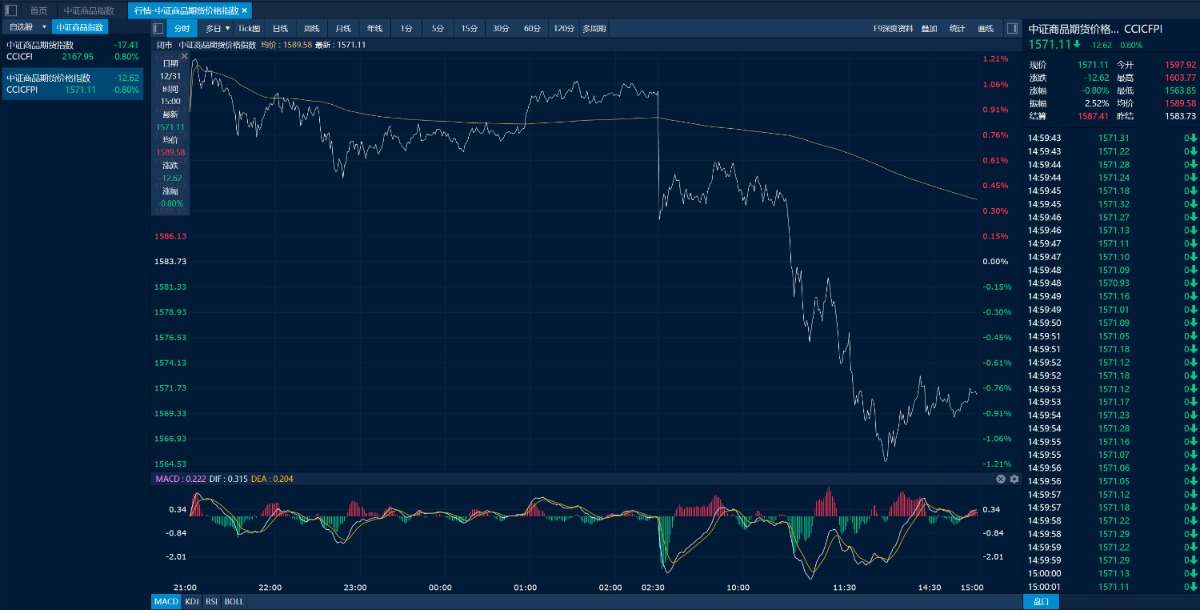
Group 1: Market Overview - The domestic commodity futures market on December 31 saw more declines than gains, with the China Securities Commodity Futures Price Index closing at 1571.11 points, down 12.62 points or 0.80% from the previous trading day [1] - Notable gains were observed in the nickel and aluminum sectors, with the main contracts for nickel and aluminum rising over 2%, while platinum and palladium saw significant declines of over 12% and 5%, respectively [1][2] Group 2: Nickel Market Dynamics - The nickel market experienced heightened concerns due to supply-side disruptions, with overnight London Metal Exchange (LME) nickel prices surging, leading to a peak increase of over 4% in the Shanghai nickel main contract [3] - The Indonesian Nickel Miners Association reported a significant reduction in nickel ore approval volumes for 2026, which is expected to impact supply dynamics, potentially creating a 10-20% shortfall if production quotas remain unchanged [3] Group 3: Aluminum Market Insights - The Shanghai aluminum main contract continued its strong performance, achieving a four-day winning streak and reaching a nearly four-year high, driven by positive macroeconomic expectations [4] - Despite the positive outlook, the aluminum supply is expected to see only modest increases, with demand showing signs of weakening due to seasonal factors [4] Group 4: Precious Metals Performance - Precious metals, particularly platinum and palladium, faced significant declines, attributed to internal divisions within the Federal Reserve regarding interest rate cuts, which may weaken easing expectations [5] - The overall outlook for platinum remains cautiously optimistic due to a tight supply-demand balance projected for 2025, while palladium's demand growth appears limited [5]
长江有色:宏观面宽松预期年末资金共振 31日镍价或上涨
Xin Lang Cai Jing· 2025-12-31 03:25
Group 1: Market Overview - Nickel futures market shows a macroeconomic easing expectation, with overnight London nickel rising by 6.47% to close at $16,780, an increase of $1,020 per ton [1] - Domestic nickel futures also experienced a significant rise, with the Shanghai nickel main contract closing at 134,400 yuan per ton, up 4,720 yuan per ton, a 3.64% increase [1] Group 2: Supply Dynamics - Supply expectations are heavily influenced by policy disruptions, particularly Indonesia's nickel ore production reduction and the taxation plan for associated cobalt, leading to strong supply contraction expectations [3] - The rainy season in the Philippines and domestic smelting reductions further exacerbate the tight supply expectations, despite high global visible inventories [3] Group 3: Demand Factors - Demand remains structurally rigid, with stainless steel production slowing and steel mills being cautious in restocking; the new energy sector shows steady demand but is sensitive to high prices, resulting in a market characterized by "high prices with limited transactions" [4] Group 4: Industry Chain Insights - Profit margins are concentrating upstream due to strong bargaining power and stable profits in the resource sector, while the smelting segment faces pressure from "high costs" and "weak demand" [5] - Downstream stainless steel and battery companies are highly sensitive to raw material prices, leading to a restructuring of profit distribution within the industry chain [5] Group 5: Price Outlook - Short-term nickel prices are expected to oscillate between "tightening policy expectations" and "high inventory with weak demand realities," with a forecast of maintaining a strong oscillating trend [6] - Future attention will be on Indonesian policy details, downstream restocking pace, and the recovery progress of new energy demand [6]
国信期货:铂谨防回调风险
Qi Huo Ri Bao· 2025-12-26 01:07
Core Viewpoint - The precious metals market continues to show strong momentum, with gold, silver, platinum, and palladium prices reaching historical highs, particularly platinum, which has seen significant price increases driven by macroeconomic factors and market sentiment [1][2]. Group 1: Price Movements and Market Dynamics - Platinum and palladium prices have surged due to a structural supply-demand imbalance expected to persist until 2025, with tight physical supply supporting price increases [1]. - The NYMEX platinum futures have initiated a major upward trend, influenced by macroeconomic easing expectations and capital inflows [1]. - The recent price spikes have led to increased market volatility, prompting the Guangxi Futures Exchange to adjust trading limits and margin requirements for platinum and palladium futures to mitigate excessive trading sentiment [1]. Group 2: Economic Indicators and Policy Implications - Despite a 4.3% increase in U.S. GDP growth in Q3, consumer confidence has weakened, raising concerns about future economic conditions [1]. - Political influences on monetary policy have been highlighted, with potential changes in the Federal Reserve leadership and discussions around adjusting inflation targets, contributing to a prolonged accommodative environment [1]. - A weakening U.S. dollar has further supported the prices of precious metals, which are priced in dollars [1]. Group 3: Future Outlook and Risks - The World Platinum Investment Council forecasts a potential supply-demand rebalancing in the platinum market by 2026, which could lead to a slight surplus if certain conditions are met [2]. - Current market sentiment appears overly optimistic, with prices having already priced in future shortages, creating a divergence from fundamental supply-demand dynamics [2]. - Recent volatility in palladium prices indicates a shift in market sentiment from unidirectional optimism to a more sensitive and high-volatility phase, suggesting that any marginal changes in macro expectations or regulatory attitudes could trigger significant price corrections [2][3].