预制菜

Search documents
广货行天下,年菜网上行,网红电商齐聚顺德共建“共享工厂”
Nan Fang Nong Cun Bao· 2026-02-12 02:02
Core Viewpoint - The article discusses the establishment of a "shared factory" in Shunde, aimed at promoting traditional Cantonese New Year dishes through online platforms, enhancing the supply chain and connecting local cuisine with a broader market [2][4][82]. Group 1: Shared Factory Initiative - The "shared factory" initiative is a collaboration between the Shunde District Agricultural and Rural Bureau, media outlets, and various e-commerce platforms to create a comprehensive production and marketing ecosystem for Cantonese New Year dishes [27][34]. - This model integrates research and development, production, quality control, and marketing, allowing for a more efficient and collaborative approach to food production [34][37]. - The initiative aims to provide high-quality products while leveraging the strengths of media and e-commerce to enhance market reach and consumer engagement [79][80]. Group 2: Cultural and Economic Impact - Shunde, known as a significant birthplace of Cantonese cuisine, aims to preserve culinary traditions while adapting to modern consumer demands for convenience and quality [9][25]. - The shared factory model is expected to facilitate the distribution of traditional dishes to a wider audience, including overseas Chinese communities, thereby promoting cultural heritage [82][84]. - The initiative is positioned to contribute to rural revitalization and the high-quality development of the Guangdong food industry, with potential for replication across other Cantonese food categories and local agricultural products [87]. Group 3: Market Trends and Consumer Demand - There is a rising consumer demand for convenient, high-quality, and culturally rich pre-prepared meals, which the shared factory aims to address by standardizing traditional recipes [25][57]. - The collaboration with influencers and e-commerce platforms is anticipated to enhance visibility and sales, particularly among younger consumers who prefer online shopping [70][76]. - The establishment of a transparent supply chain, including quality control measures and consumer participation, is expected to build trust and enhance the overall consumer experience [49][51].


仙坛股份1月鸡肉销售收入大增55%,机构预计2026年净利润增长21%
Jing Ji Guan Cha Wang· 2026-02-12 01:54
Group 1 - The core viewpoint of the news is that Xiantan Co., Ltd. (仙坛股份) has reported significant growth in chicken product sales for January 2026, driven by increased production days due to the Spring Festival and the gradual release of processing capacity [1] - In January 2026, the company achieved chicken product sales revenue of 546 million yuan and sales volume of 55,900 tons, representing year-on-year increases of 54.90% and 44.89% respectively [1] - The company plans to engage in daily related party transactions amounting to 85 million yuan in 2026, with pricing based on market conditions, which is expected to positively impact its financial status [1] Group 2 - Over the past seven trading days (February 6 to 11, 2026), Xiantan's stock price has shown slight fluctuations, with a range increase of 1.26%, peaking at 6.54 yuan on February 10 and dropping to a low of 6.30 yuan on February 6 [2] - As of February 11, the stock closed at 6.44 yuan, with a turnover rate of 1.56% and a trading volume of 71.29 million yuan [2] - Technical indicators suggest that the stock price is approaching the upper Bollinger Band (resistance level at 6.50 yuan), with a bullish MACD indicator, although there has been a net outflow of main funds for three consecutive days, necessitating attention to the support level at 6.18 yuan [2] Group 3 - Institutional interest in Xiantan is moderate, with a latest composite target price of 7.58 yuan, indicating a potential upside of 22.85% from the current stock price [3] - Profit forecasts suggest a net profit growth of 16.54% year-on-year for 2025, with an expected acceleration to 21.08% growth in 2026, primarily due to a recovery in chicken demand and expansion in the prepared food business [3] - The current rating is predominantly neutral, with a low fund holding ratio of 0.02% [3]

粤海饲料董事长发布新春贺辞 公司业绩改善显著
Jing Ji Guan Cha Wang· 2026-02-11 08:44
Group 1 - The chairman of Yuehai Feed, Zheng Shixuan, announced significant improvements in sales and profits over the past year, with plans to enhance standardization, digitization, and AI management in the new year, focusing on the core feed business while expanding into aquaculture and mergers [1] - As of February 11, 2026, Yuehai Feed's stock price was 7.67 yuan, down 0.90% for the day, with a total trading volume of 24.34 million yuan; the stock has seen a cumulative decline of 1.79% over the past five days but has increased by 4.78% year-to-date [2] - For the period from January to September 2025, Yuehai Feed reported a revenue of 4.997 billion yuan, a year-on-year increase of 12.18%, and a net profit attributable to shareholders of 26.198 million yuan, reflecting a significant year-on-year growth of 138.86% [3] Group 2 - The current price-to-earnings ratio (TTM) for Yuehai Feed is 653.58, and the price-to-book ratio is 2.11, indicating a relatively high valuation compared to the recent performance of the feed sector [2] - The company's growth is attributed to its product strategy and cost control measures, which have contributed to the notable improvement in financial performance [3]

锅圈20260210
2026-02-11 05:58
Summary of the Conference Call for Guoquan Industry and Company Overview - The conference call discusses Guoquan, a company specializing in the retail of prepared food products, particularly in rural and township markets in China. The company leverages a low-price strategy and offers unique products like skewers and crayfish to meet consumer demand in these areas [2][4]. Key Points and Arguments Competitive Advantages - Guoquan has a significant competitive edge in the township market due to its efficient supply chain and product offerings. The company provides low-priced products and unique prepared food items that are scarce in these markets, thus attracting consumers [4][6]. - The company’s strategy includes sourcing directly from manufacturers to reduce costs and improve supply efficiency, allowing for lower prices that draw customers into stores [4][6]. Store Expansion Potential - Based on census data, there are over 30,000 townships in China, with approximately 20,000 having populations over 10,000, indicating a theoretical potential for 10,000 to 20,000 new stores. Guoquan aims to open at least 8,000 stores, which is considered a conservative estimate [7][8]. - The company plans to open 5,000 new stores, with 3,000 being remodeled stores that have shown significant revenue increases [2][13]. New Store Formats and Innovations - Guoquan is testing a new store format called "small stir-fry stores," which aims to provide home-cooked meal options at competitive prices. The initial investment is around 210,000 yuan, with a shorter payback period compared to traditional stores [14][15]. - The company is also launching a camping store project, with the first store expected to generate monthly sales of 500,000 to 600,000 yuan during peak seasons, achieving a gross margin of 50% [18]. Financial Performance and Projections - The introduction of new product categories has led to a significant increase in sales, with new items contributing approximately 30% to total revenue and slightly higher gross margins than existing products [10][12]. - Guoquan estimates that with the opening of 10,000 new small stir-fry stores, it could achieve around 1 billion yuan in profit, corresponding to a market valuation of 15 to 20 times earnings, suggesting a potential market cap of 150 to 200 billion yuan [22]. Management and Supply Chain Strengths - The company demonstrates strong execution and management capabilities, with a focus on integrating supply chains through its subsidiaries, which enhances overall operational efficiency [21]. Other Important Insights - The remodeling store strategy has proven effective in urban areas, indicating potential for similar success in rural markets [9][13]. - The company is actively exploring new business lines, including community group buying and agricultural products, which could serve as future growth drivers [22]. - Guoquan's pricing strategy for the small stir-fry stores aims to match home-cooked meal costs while minimizing food waste, appealing to a broad customer base [15][16]. This comprehensive overview highlights Guoquan's strategic positioning, growth potential, and operational strengths within the prepared food retail industry in China.
解码“岭南风味”:餐饮大咖共议粤菜的传统、现代与未来
Nan Fang Du Shi Bao· 2026-02-10 04:49
Core Insights - The event titled "Tradition, Modernity, and Future of Cantonese Cuisine" highlighted the core challenges and opportunities within the Cantonese culinary industry, moving beyond mere nostalgia to address fundamental issues [1][12]. Group 1: Essence of Cantonese Cuisine - The core flavor characteristic of Cantonese cuisine is defined as "harmony," emphasizing a balanced taste profile without any single flavor being overly dominant [4][8]. - This culinary approach reflects the cultural traits of Guangdong people, who value modesty and practicality, leading to a higher tolerance for less-than-perfect dining environments compared to other regions [8]. Group 2: Current Challenges - Recent data from the "Black Pearl Restaurant Guide" indicates a growing concern for Cantonese cuisine, stemming from both external competition and internal limitations, such as a subdued flavor expression that may not resonate in today's market [8][12]. - The traditional segmented kitchen roles have increased labor costs, making it difficult for restaurants to adapt to a more flexible market trend [8]. Group 3: Perspectives from Industry Leaders - Industry experts shared insights on the evolution of the restaurant scene, with a focus on the need for solid foundations in talent, ingredients, and customer experience to stand out in a competitive landscape [12]. - The importance of embracing new media for cultural dissemination was emphasized, with one restaurant owner reporting a 20% increase in performance through social media engagement [12][13]. Group 4: Future Trends - The discussion pointed towards the integration of AI in matching dining experiences to consumer preferences, indicating a shift in how restaurants must define and communicate their unique offerings [18]. - The potential for pre-prepared dishes was acknowledged, though it was noted that current technology struggles to replicate the essence of traditional Cantonese cooking methods [18]. Group 5: Cantonese Cuisine Museum - The Cantonese Cuisine Museum, set to open in 2025, will adopt an innovative "museum + dining" model, featuring various functional areas to enhance the cultural experience of Cantonese cuisine [19].

贾国龙卸任西贝控股公司法定代表人!此前深陷“闭店”风波
Nan Fang Du Shi Bao· 2026-02-09 09:57
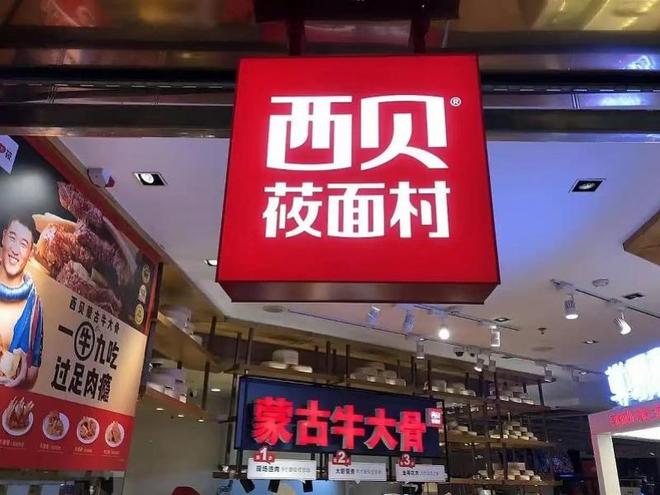
Group 1 - The company Beijing Xibei Niuxiao Catering Management Co., Ltd. has undergone a name change to Beijing Beiniao Catering Management Co., Ltd. and the founder Jia Guolong has resigned from his positions as legal representative, manager, and director [1][3] - The company has 12 subsidiaries that are currently in a state of cancellation, indicating significant operational challenges [1][3] - The new company name's business scope includes catering management, enterprise management, and food sales (only pre-packaged food) [3] Group 2 - A recent report indicated that Xibei plans to close 102 stores, which accounts for 30% of its total outlets, resulting in over 4,000 employees facing unemployment [3] - Jia Guolong confirmed the accuracy of the information regarding the store closures and assured that all departing employees would receive their full wages, and customer prepaid cards would remain valid at other locations [3]
A股开盘:沪指涨0.93%重回4100点上方,创业板指涨近2%,影视院线、有色金属及光伏概念股集体走高
Jin Rong Jie· 2026-02-09 01:36
Market Performance - The A-share market indices opened higher, with the Shanghai Composite Index rising by 0.93% to 4103.54 points, the Shenzhen Component Index increasing by 1.5% to 14115.14 points, and the ChiNext Index up by 1.95% to 3299.6 points [1] - The Sora concept stocks were active, with notable gains including Zhongwen Online reaching the daily limit, and companies like Donghong Technology and Fengyuzhu both hitting the daily limit as well [1] - The photovoltaic equipment sector also saw significant increases, with Juhe Materials rising over 10% and other key stocks like JinkoSolar following suit [1] Company Dynamics - Yongtai Technology plans to acquire a 25% stake in Yongtai High-tech from CATL through a share issuance, leading to a temporary suspension of its stock [2] - Shanshan Holdings' controlling shareholder has signed an agreement with a restructuring investor, potentially changing the controlling shareholder to Anhui Guozhi [2] - Jihua Group's controlling shareholder is transferring 29.89% of its shares to Tonglu Junheng, resulting in a change of actual controller to Suertian [3] - Cuihua Jewelry's stock is temporarily suspended due to a bank account freeze, with plans to resume trading the next day under a new name and with risk warnings [3] - Longyun Co. intends to issue shares to acquire a 58% stake in Yuheng Film and Television, with an estimated valuation between 450 million to 530 million yuan [4] Industry Trends - The Ministry of Industry and Information Technology has initiated the construction of national computing power interconnection nodes, aiming for standardized interconnection of computing resources across different regions [5] - The Shanghai government plans to establish 500 advanced smart factories during the 14th Five-Year Plan, targeting an industrial robot application density of 600 units per 10,000 people [5] - Tesla aims to expand its solar battery manufacturing capacity in the U.S. to reach 100 gigawatts over the next three years [5] - The semiconductor industry is projected to reach a global sales figure of 1 trillion USD by 2026, driven primarily by AI data center construction [5] - The National Health Commission has released a draft standard for pre-prepared dishes, prohibiting the use of preservatives [6] - The price of G.652.D single-mode optical fiber in China reached a seven-year high in January, with some prices exceeding 40 yuan per core kilometer, reflecting an annual increase of over 80% [6] - The Ministry of Culture and Tourism forecasts that domestic tourism will reach 6.522 billion trips by 2025, with consumption exceeding pre-pandemic levels [6] Institutional Insights - CITIC Securities suggests that external shocks have limited impact, and market sentiment has been fully released, recommending holding stocks through the holiday while focusing on AI computing power, chemicals, and power equipment [7] - CITIC Securities maintains a strategy of "resources + traditional manufacturing," advising on low-cost acquisitions in non-bank financials and increasing allocations in consumption and real estate chains [8] - Guojin Securities is optimistic about China's equipment export chain with global comparative advantages and the revaluation logic of physical assets like crude oil and copper, while also focusing on the recovery channels in aviation and duty-free sectors [8]

我国成功发射可重复使用试验航天器;工信部部署国家算力互联互通节点建设……盘前重要消息还有这些
证券时报· 2026-02-09 00:41
Group 1 - The State Council meeting on February 6 emphasized the need to innovate and improve policy measures to promote effective investment, focusing on major projects in infrastructure, urban renewal, public services, and emerging industries [8] - Eight departments, including the People's Bank of China, reiterated the prohibition of virtual currencies, emphasizing that they do not have the same legal status as fiat currencies and outlining clear policy requirements for stablecoins and tokenization of real-world assets [8] - On February 7, China successfully launched a reusable experimental spacecraft using the Long March 2F rocket, aimed at validating reusable spacecraft technology for peaceful space utilization [8] Group 2 - The People's Bank of China reported that as of January 2026, the country's gold reserves stood at 74.19 million ounces, marking a continuous increase for the 15th month [9] - The China Securities Regulatory Commission released a notice on February 6 regarding the selection direction for provincial-level research topics, focusing on enhancing the inclusiveness and adaptability of the capital market during the 14th Five-Year Plan period [9] - The Shanghai and Shenzhen Stock Exchanges revised and published regulatory guidelines for underwriting violations, aiming to enhance regulatory practices and ensure effective supervision [10] Group 3 - Longyun Co. will resume trading on February 9, planning to acquire 58% of Yuheng Film Industry [12] - Jihua Group will also resume trading on February 9, with plans for changes in its controlling shareholder and actual controller [12] - Xinwangda reached a settlement in a lawsuit involving over 2.3 billion yuan, while other companies like ST Pava and Aihua Long are facing legal challenges and investigations [12][12]



华尔街见闻早餐FM-Radio | 2026年2月9日
Hua Er Jie Jian Wen· 2026-02-08 22:54
Market Overview - US consumer confidence reached a six-month high, leading to a rebound in US stocks, with the S&P 500 rising nearly 2%, marking its best single-day gain since May last year [2] - The Dow Jones Industrial Average surpassed 50,000 points for the first time, while the Russell 2000 index surged by 3.6% [2] - Nvidia's CEO highlighted a surge in AI demand, resulting in Nvidia's stock increasing by 7% and chip stocks rising by 5.7% [2] - Following a significant drop on Thursday, cryptocurrencies rebounded sharply, with Bitcoin soaring by 11% to reclaim the $70,000 mark [2] Key News - The People's Bank of China reported a continuous increase in gold reserves for the fifteenth consecutive month, adding 40,000 ounces in January [3][10] - China successfully launched a reusable experimental spacecraft, indicating a potential shift towards frequent commercial space launches [10] - The price of DDR4 memory in Huaqiangbei has reversed, with 8GB memory sticks dropping from a peak of 260-270 yuan to a range of 180-200 yuan [10] International Developments - The Dow Jones Industrial Average broke the 50,000 mark, with former President Trump claiming credit for achieving this target three years early [11] - The Japanese ruling coalition, consisting of the Liberal Democratic Party and the Japan Innovation Party, secured a majority in the recent elections [11] - Ukraine's President Zelensky indicated that the US hopes for a peace agreement with Russia and Ukraine by June [11] Company News - Goldman Sachs partnered with Anthropic to fully automate accounting and compliance operations, affecting 12,000 developers and thousands of operations staff [12] - Anthropic is reportedly raising over $20 billion in a new funding round, doubling its previous target due to strong investor demand, with a valuation expected to reach $350 billion [12] - Samsung is set to begin mass production of HBM4 memory, aiming to capture a significant share of the AI storage market [19] Industry Insights - The global semiconductor sales are projected to reach $1 trillion this year, with a 25.6% growth expected by 2025 [25] - The Chinese government is advancing the construction of a national computing power interconnection node system to enhance the efficiency of computing resources [21][22] - The pre-prepared food industry is moving towards standardized safety regulations, addressing public concerns about food safety [23]

商业航天,利好!
证券时报· 2026-02-08 09:33
Key Points - China's commercial aerospace sector is set to enter a phase of high-frequency launches following the successful test of a reusable spacecraft on February 7, 2026, using the Long March 2F rocket [2][11] - The Shanghai Municipal Economic and Information Commission aims to create a trillion-level industry by focusing on new sectors such as smart terminals, commercial aerospace, and low-altitude economy during the 14th Five-Year Plan period [3][10] - The People's Bank of China has increased its gold reserves for the 15th consecutive month, with reserves reaching 74.19 million ounces by the end of January 2026 [3] - A new national standard for prepared dishes has been proposed, prohibiting the use of preservatives and limiting shelf life to one year [4] - The China Securities Regulatory Commission has issued guidelines for the issuance of asset-backed securities tokens overseas, emphasizing compliance with cross-border investment and data security regulations [7] - The Shanghai Gold Exchange has adjusted margin levels and price limits for several gold and silver contracts, reflecting changes in market conditions [8] - The recent penalties imposed on Kuaishou Technology for failing to manage content effectively highlight the increasing regulatory scrutiny on internet platforms [12] - Ruihua Jewelry has faced significant financial difficulties, leading to the freezing of its bank accounts and a change in its stock designation to "ST Ruihua" due to liquidity issues [13] - Guotou Ruijin Fund has established a working group to address investor concerns following valuation adjustments in its silver LOF fund [14] - Rongbai Technology is facing a potential fine of 4.5 million yuan for misleading statements regarding a major contract with CATL [15] - Tian Sheng New Materials and Yahui Long have both been investigated by the CSRC for suspected violations of information disclosure regulations [16][17] - This week, there is one new stock subscription and a total of 31 companies will have their restricted shares released, amounting to a total market value of 36.29 billion yuan [18]