
人民币国际化

Search documents
温铁军直言:若不想一直被美国欺负下去,中国应用人民币主动出战
Sou Hu Cai Jing· 2026-01-24 09:56
Core Viewpoint - The essence of the argument is that the international monetary system is structurally imbalanced, and China must promote the internationalization of the Renminbi (RMB) to reduce dependence on the US dollar and enhance its economic sovereignty [3][9]. Group 1: RMB Internationalization - The RMB's "active engagement" aims to break the single currency hegemony and create a more equitable and diversified monetary balance, rather than seeking to replace the dollar as a dominant currency [7][28]. - Since 2009, China has been steadily promoting the cross-border use of the RMB, leveraging its trade advantages while considering the interests of other countries [17][19]. - More than thirty countries, including Argentina, Brazil, Russia, Saudi Arabia, and France, have adopted the RMB for trade settlements with China, which helps mitigate exchange rate risks and reduce reliance on the dollar [19][21]. Group 2: Risks of Dollar Dependence - The dollar has historically dominated international trade settlements, accounting for over 50% of transactions, leading to significant foreign exchange losses for Chinese foreign trade enterprises due to dollar fluctuations [5][24]. - The US dollar's dominance in foreign exchange reserves remains strong, with approximately 60% of global reserves held in dollars, despite a decline from its peak [13][24]. - The US can transfer domestic economic crises to other countries through monetary policies like quantitative easing, which has historically caused liquidity tightening and capital outflows in other nations [15][28]. Group 3: Strategic Measures for RMB - China is enhancing the infrastructure for RMB internationalization through cross-border payment systems, currency swap agreements, and the promotion of digital RMB for cross-border transactions [21][26]. - The promotion of digital RMB is expected to provide a competitive edge in future cross-border digital trade, contributing to the establishment of a multi-currency system [21][26]. - The RMB internationalization process adheres to principles of non-confrontation and mutual benefit, contrasting sharply with the coercive logic of dollar hegemony [28][30]. Group 4: Long-term Outlook - The RMB's internationalization is a long-term endeavor, and it is unlikely to significantly challenge the dollar's core position in the short term due to the dollar's entrenched market depth and trust [24][26]. - Continuous efforts are needed to address the RMB's liquidity and regulatory challenges in offshore markets to achieve comprehensive internationalization [26][30]. - The ongoing global trend of "de-dollarization" presents a unique opportunity for RMB internationalization, which could enhance China's ability to withstand external risks and contribute to a fairer global economic order [30].


“十五五”开局之年,适度宽松的货币政策如何发力?165秒快速了解↓
Yang Shi Wang· 2026-01-24 06:09
Core Viewpoint - The People's Bank of China (PBOC) is committed to implementing a moderately accommodative monetary policy to support economic stability and reasonable price recovery during the 14th Five-Year Plan period [5][14]. Group 1: Monetary Policy and Financial Growth - By 2025, China's financial total is expected to grow reasonably, with a social financing scale increase of 8.3% year-on-year and a broad money supply growth of 8.5%, both significantly higher than the nominal GDP growth rate [2]. - The PBOC will continue to implement a moderately accommodative monetary policy in 2026, focusing on promoting stable economic growth and reasonable price recovery as key considerations [5][7]. Group 2: Financial Market Stability - The financial market is operating stably, with the RMB maintaining basic stability against a basket of currencies, and the 10-year government bond yield stabilizing around 1.8% to 1.9% [4]. - The PBOC aims to keep liquidity ample, ensuring that the growth of social financing and money supply aligns with economic growth and price level expectations [7][14]. Group 3: Support for Key Sectors - In 2026, the PBOC plans to increase the quota for re-lending for technological innovation and technological transformation from 800 billion yuan to 1.2 trillion yuan, enhancing support for key areas such as domestic demand expansion and small and medium-sized enterprises [8]. - The PBOC will also increase the re-lending and rediscounting quota for agricultural and small enterprises by 500 billion yuan to 4.35 trillion yuan, with a dedicated 1 trillion yuan for private enterprises [10]. Group 4: Internationalization and Open Financial Services - The PBOC will continue to promote high-level openness in the financial services industry and financial markets while advancing the internationalization of the RMB in 2026 [11]. - Efforts will be made to build a multi-channel, comprehensive, safe, and efficient cross-border payment system for the RMB, enhancing international cooperation in cross-border payments [13]. Group 5: Interest Rate and Exchange Rate Mechanisms - The PBOC will improve the market-oriented interest rate formation, regulation, and transmission mechanisms, ensuring smooth transmission from central bank policy rates to market benchmark rates [16]. - The PBOC will also enhance the RMB exchange rate formation mechanism, maintaining the decisive role of the market while preventing excessive fluctuations in the exchange rate [16].
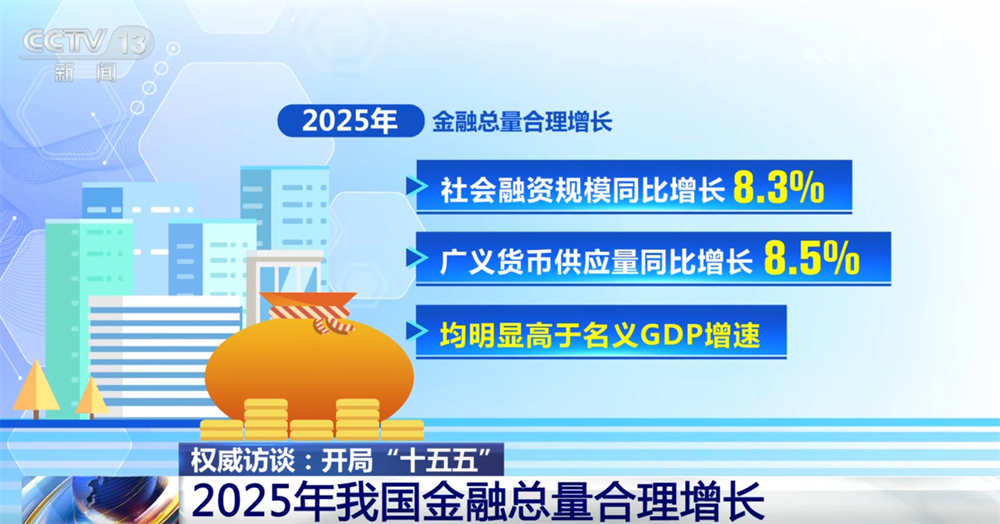
权威访谈 开局“十五五”丨央行行长:有序推进人民币国际化
Sou Hu Cai Jing· 2026-01-24 03:00
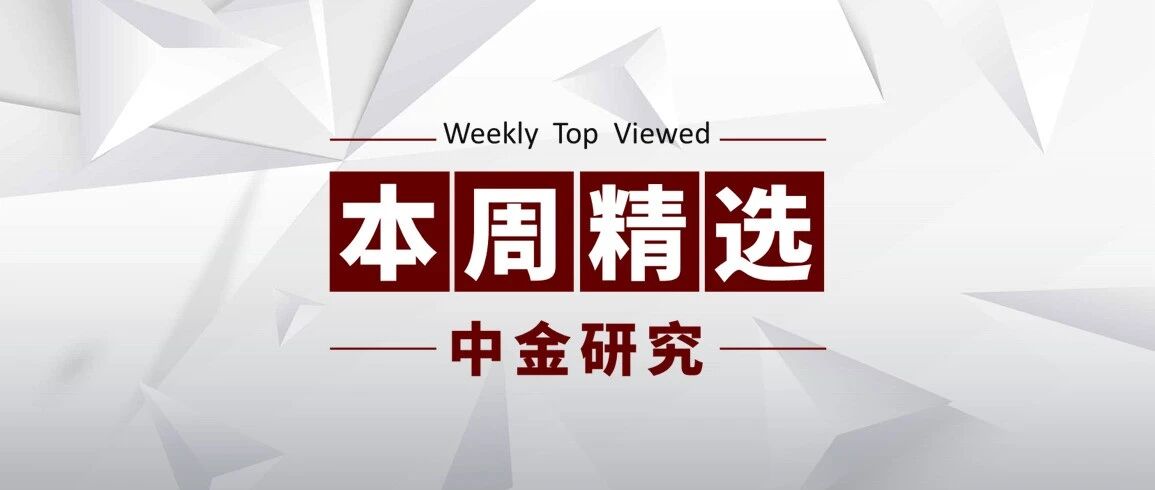
Core Viewpoint - The People's Bank of China (PBOC) aims to maintain currency stability and financial stability as dual objectives while promoting a robust monetary policy framework and macro-prudential management system during the 14th Five-Year Plan period [1][3]. Group 1: Monetary Policy Framework - The PBOC will optimize the monetary policy target system, focusing less on quantitative targets and more on interest rate adjustments to enhance financial stability [5]. - A scientific and robust monetary policy system will be constructed, balancing short-term and long-term goals, economic growth, and risk prevention [3]. Group 2: Financial Stability and Risk Management - The PBOC emphasizes the importance of a comprehensive macro-prudential management system to monitor and assess financial risks systematically [9]. - There will be an expansion of macro-prudential coverage to include financial markets, non-bank financial institutions, financial infrastructure, and internet finance [9]. Group 3: International Cooperation and Currency Internationalization - The PBOC will enhance international cooperation in cross-border payments and actively participate in global financial governance reforms [1]. - Efforts will be made to promote the internationalization of the Renminbi and improve the cross-border payment system [1]. Group 4: Interest Rate and Exchange Rate Mechanisms - The PBOC will improve the market-oriented interest rate formation and transmission mechanism to ensure effective monetary policy implementation [7]. - A flexible exchange rate formation mechanism will be maintained, with a focus on preventing excessive fluctuations [7].
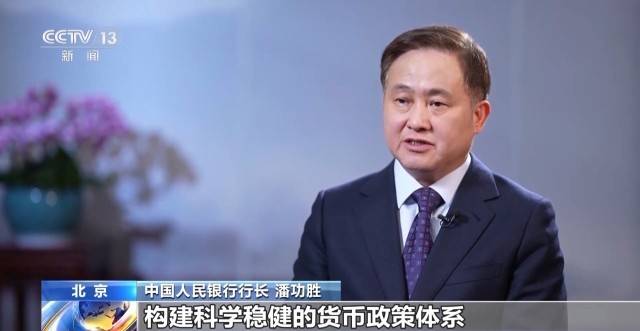
21社论丨货币政策灵活高效,支撑“十五五”良好开局
21世纪经济报道· 2026-01-24 02:23
Core Viewpoint - The People's Bank of China (PBOC) will continue to implement a moderately accommodative monetary policy in 2026, focusing on promoting stable economic growth and reasonable price recovery, while emphasizing flexibility and precision in policy execution [1][5]. Group 1: Monetary Policy Adjustments - The PBOC will shift its policy focus from merely pursuing scale expansion to supporting high-quality development and price stability, indicating that tools like interest rate cuts will be used based on actual financing costs rather than a one-sided approach [1][2]. - The central bank plans to manage liquidity through a combination of long and short-term measures, with room for further rate cuts and reserve requirement ratio reductions in the first half of the year [2][5]. - Structural monetary policy tools will be optimized to focus on key areas, with expected expansions in technology innovation re-loan quotas and special loans for private enterprises potentially exceeding 1 trillion yuan [2][3]. Group 2: Structural Tools and Support Mechanisms - The PBOC has increased the technology innovation re-loan quota from 800 billion yuan to 1.2 trillion yuan, now including private enterprises with high R&D investments, marking a shift from identity-based support to capability-based selection [3]. - The integration of two tools (private enterprise bond financing support and technology innovation bond risk-sharing tools) aims to reduce financing costs for enterprises and enhance the success rate of bond issuance, particularly benefiting tech-oriented private enterprises [3]. - Risk prevention mechanisms will focus on proactive measures, with reforms in small financial institutions and the use of REITs and other tools to revitalize assets in the real estate sector [3]. Group 3: External Environment and Policy Independence - The easing of external constraints on China's monetary policy due to the Federal Reserve's interest rate cuts provides a window for interest rate adjustments, although the PBOC will maintain policy independence [4][5]. - The ongoing internationalization of the renminbi and the development of cross-border payment systems are expected to enhance the willingness of international markets to allocate assets in renminbi [5].

央行行长潘功胜:有序推进人民币国际化
Yang Shi Xin Wen· 2026-01-24 02:13
Core Viewpoint - The People's Bank of China (PBOC) aims to balance domestic growth while promoting global financial governance reform and international financial cooperation by 2026, alongside advancing the internationalization of the Renminbi [1] Group 1 - The PBOC will continue to enhance the high-level opening of the financial services industry and financial markets [1] - The focus will be on orderly progress in the internationalization of the Renminbi [1]
央行行长:有序推进人民币国际化
Yang Shi Xin Wen· 2026-01-24 01:31
Group 1 - The core viewpoint emphasizes the need for a moderately loose monetary policy to support domestic growth while promoting international financial cooperation and the internationalization of the Renminbi by 2026 [1] - The People's Bank of China (PBOC) aims to build a multi-channel, comprehensive, secure, and efficient cross-border payment system for the Renminbi, enhancing international cooperation in cross-border payments [1] - The PBOC will focus on maintaining currency stability and financial stability as dual objectives, which are foundational tools for macroeconomic management [2] Group 2 - The PBOC plans to optimize its monetary policy target system during the 14th Five-Year Plan, shifting focus from quantitative targets to more observational and reference indicators, thereby enhancing the role of interest rate adjustments [4] - There will be improvements in the market-oriented interest rate formation, adjustment, and transmission mechanisms to ensure effective transmission from central bank policy rates to market benchmark rates [6] - A comprehensive macro-prudential management system will be established, expanding coverage to include financial markets, non-bank financial institutions, financial infrastructure, and internet finance [8]
中金研究 | 本周精选:宏观、策略、大宗商品
中金点睛· 2026-01-24 01:08
Group 1: Strategy - The formation of a "slow bull market" in A-shares is influenced by multiple factors, including fundamental, institutional, and capital market changes, with a shift in the macro paradigm and ongoing capital market reforms creating a conducive environment for this slow bull market [4] - The article emphasizes that the current conditions are more favorable for a "slow bull market" than in the past, which could significantly support the construction of a financial strong nation, boost consumption, and upgrade industries [4] - The realization of this slow bull market relies on China's commitment to economic transformation and deepening capital market reforms to enhance the market's medium to long-term attractiveness [4] Group 2: Strategy - The article discusses the three main drivers for a currency to achieve international reserve status: market forces, policy support, and historical inertia, with market forces being the most fundamental [7] - It identifies two main obstacles to the internationalization and reserve status of the RMB: the low proportion of trade settlement compared to trade volume and insufficient development and openness of the financial market [7] - The article proposes a "three-pronged" approach to enhance the RMB's internationalization and reserve status, focusing on cross-border trade settlement, financial market development, and regional initiatives [7] Group 3: Strategy - There are notable differences in AI investment between China and the US, despite similar overall investment scales, with variations in infrastructure, chip development, and model application [9] - The funding sources for AI investments differ significantly, with the US being predominantly driven by the private sector, while China sees a dual drive from both government and private sectors [9] - These funding sources influence investment characteristics, such as return expectations and investment timelines, leading to different focuses in investment areas [9] Group 4: Macroeconomy - The article highlights the recent volatility in US and Japanese bonds due to geopolitical risks and fiscal discipline issues, suggesting that this could lead to systemic risks in overseas markets [12] - It anticipates that debt monetization and Yield Curve Control (YCC) may become necessary to suppress long-term interest rates, potentially resulting in a trend of increased dollar liquidity and a continued weak dollar [12] - This environment is expected to favor commodities like gold, silver, and copper, as well as emerging markets, particularly the Chinese stock market, which remains underweighted by global funds [12] Group 5: Commodities - Extreme weather is identified as a key variable affecting commodity markets, leading to synchronized supply and demand adjustments across energy, metals, and agricultural sectors [16] - The article notes that different commodities respond to weather changes in distinct ways, with energy prices driven by temperature and metal prices influenced by precipitation [16] - Specific forecasts include a tightening of the US natural gas market and a downward trend in European gas prices due to low inventory levels, while aluminum costs may rise due to reduced hydropower generation from decreased rainfall [16] Group 6: Macroeconomy - The 2026 US midterm elections are highlighted as a critical juncture, with potential implications for government policy and market dynamics, particularly concerning high inflation and living costs [18] - The article suggests that the focus of the elections may shift from stimulating economic growth to alleviating cost-of-living pressures, impacting investment strategies [18] - Key insights for investors include limited expansion potential for index valuations, increased volatility, and heightened policy risks for monopolistic sectors, while cost-benefit industries may become more favorable for capital allocation [18]
21社论丨货币政策灵活高效,支撑“十五五”良好开局
Xin Lang Cai Jing· 2026-01-23 22:58
Core Viewpoint - The People's Bank of China (PBOC) will continue to implement a moderately accommodative monetary policy in 2026, focusing on promoting stable economic growth and reasonable price recovery as key considerations for monetary policy [1][4] Group 1: Monetary Policy Direction - The monetary policy will emphasize flexibility and precision while maintaining a moderately accommodative stance, shifting focus from mere scale expansion to supporting high-quality development and price stability [1][4] - The PBOC plans to adjust policy rates based on actual changes in corporate financing costs rather than solely aiming for unilateral reductions, stabilizing social financing costs within a reasonable range [1][3] Group 2: Liquidity Management - The PBOC intends to supplement market funds through a "combination of long and short" strategies, with room for further rate cuts and reserve requirement ratio (RRR) reductions in 2026 [2] - Innovative tools like buyout reverse repos will be utilized to smooth out short-term shocks from government bond issuance and maintain stable liquidity [2] Group 3: Structural Tools - Structural monetary policy tools will focus on key areas, aiming for a "precise drip irrigation" effect to support major strategies and weak links [2][3] - The PBOC has increased the quota for technology innovation re-loans from 800 billion yuan to 1.2 trillion yuan, now including "high R&D investment private enterprises" to ensure resources are allocated to genuine innovators [3] Group 4: Risk Management - The PBOC will enhance monitoring and assessment of systemic financial risks, accelerating reforms in small financial institutions to mitigate regional risks [3] - The management of cross-border capital flows will focus on dynamic balance, using macro-prudential tools to prevent short-term capital volatility [3] Group 5: External Environment - The easing of external constraints on China's monetary policy due to the Federal Reserve's rate cuts provides a window for interest rate adjustments, although policy changes will remain independent [4] - The ongoing process of renminbi internationalization and the development of cross-border payment systems are expected to enhance international market interest in renminbi assets [4]
全球货币支付占比排名:美元攀升至50.49%,欧元下滑至21.9%,人民币呢
Sou Hu Cai Jing· 2026-01-23 18:38
Core Viewpoint - The dominance of the US dollar in global payments is being challenged by the increasing use of the Chinese yuan, as evidenced by recent agreements and the development of alternative payment systems [1][14]. Group 1: Global Payment Dynamics - As of December 2025, the US dollar is projected to account for 50.49% of global payments, while the yuan only holds 2.73%, ranking sixth [1]. - The SWIFT system, which tracks global payments, shows a 21% increase in total payments, with the dollar's share rising significantly, while yuan payments only increased by 12.65% [3]. - The euro's share has dropped to 21.9%, a decline of nearly 2 percentage points from the previous month, indicating a weakening position against the dollar [5]. Group 2: Yuan's Growing Influence - The Chinese yuan is increasingly used in significant transactions that do not go through SWIFT, such as natural gas trades with Russia and iron ore settlements with Brazil, with CIPS processing over 90 trillion yuan in cross-border transactions by December 2025 [6]. - China has signed currency swap agreements with 32 countries totaling 4.5 trillion yuan, allowing for substantial liquidity in yuan without relying on the US dollar [7]. - In regions like Africa and Southeast Asia, there is a growing trend of using yuan for transactions, with businesses preferring yuan over dollars for quicker settlements [12]. Group 3: Strategic Moves and Future Outlook - China is actively pursuing agreements to facilitate yuan transactions in energy and commodities, such as signing a yuan settlement agreement with Saudi Arabia for oil [15]. - The digital yuan is expanding its reach, with trials in 20 cities and support from 1,600 merchants in Hong Kong, further enhancing its global presence [10]. - The shift towards yuan in international trade is seen as a strategic move to undermine the dollar's dominance, with businesses adapting to offer yuan pricing to clients in Africa [14].
广东2025年跨境人民币结算量创历史新高
Shang Hai Zheng Quan Bao· 2026-01-23 18:12
Core Insights - Guangdong's cross-border RMB settlement volume reached a historic high in 2025, ranking among the top three provinces in China, with a year-on-year growth of 21.5%, accounting for over 50% of total cross-border receipts and payments [1][2] Group 1: Cross-Border RMB Settlement - In 2025, the cross-border RMB settlement scale in Guangdong exceeded 800 billion yuan, with "new foreign trade entities" accounting for over 90% of the total cross-border settlement volume [3][2] - The People's Bank of China (PBOC) in Guangdong implemented a "post-random inspection" model for cross-border RMB settlements for high-credit enterprises, significantly reducing processing time by 2 to 3 hours per transaction [3][2] Group 2: Financial Innovation and Trade Facilitation - The PBOC in Guangdong has enhanced the Free Trade Account system, with a total of 12,800 accounts opened by the end of 2025, representing a 2.2-fold increase in multi-functional accounts since the beginning of the year [5][6] - Guangdong's cross-border financial services have been optimized through institutional innovation, allowing enterprises to flexibly utilize both domestic and international markets [5][6] Group 3: Cross-Border Investment and Economic Growth - Guangdong's total cross-border receipts and payments reached 2.5 trillion USD in 2025, with a year-on-year growth of 7.2%, and a net inflow of 289.3 billion USD, up 23.4% [6][4] - The province saw the addition of 2,773 new pilot enterprises in cross-border trade and investment, a 1.7-fold increase year-on-year, with private and "specialized, refined, unique, and innovative" enterprises making up 71% and 21.5% respectively [6][4] Group 4: Regional Highlights - Shenzhen ranked third nationally in cross-border receipts and payments, with a total of 5.83 trillion yuan in RMB cross-border transactions, maintaining its position as the primary currency for cross-border settlements between Shenzhen and Hong Kong [7][6]