风险偏好

Search documents
东海期货研究所晨会观点精萃-20250424
Dong Hai Qi Huo· 2025-04-24 05:51
1. Report Industry Investment Ratings - No specific industry - wide investment ratings are provided in the report. 2. Core Viewpoints - The US continues to release signals of trade relaxation, leading to a significant increase in global risk appetite. The Chinese foreign exchange regulator aims to correct pro - cyclical market behaviors, alleviating the pressure on the RMB exchange rate. Domestic policy support and US - China trade relaxation signals strongly support the short - term risk appetite of the domestic market [2]. - Different asset classes have different trends: stocks are expected to rebound in the short - term with cautious long positions; bonds are expected to fluctuate at high levels with cautious long positions; commodities show different trends in sub - sectors, with black metals being weak in the short - term, non - ferrous metals and energy - chemicals expected to rebound, and precious metals fluctuating at high levels [2]. 3. Summary by Related Catalogs Macro - finance - Overseas: US tariff policies lead to rising prices, slowing economic activities, and a 16 - month low in business activities. The US President's statements on tariff reduction and exemption boost the US dollar and global risk appetite. Domestic: The Chinese foreign exchange regulator's actions ease RMB exchange rate pressure, and domestic policies and US - China trade signals support the domestic market [2]. Stock Index - The domestic stock market declines slightly due to the drag of sectors such as precious metals, agriculture, and hotel tourism. However, short - term risk appetite is supported, and short - term cautious long positions are recommended [3]. Precious Metals - The precious metals market experiences a significant correction. Factors such as the US government's attitude towards tariffs, the strengthening of the US dollar, and economic data affect the market. In the long - term, the decline of the US government's credit and trade policy uncertainties support the fundamentals of gold, and a correction may present a long - term allocation opportunity. Silver follows gold but faces greater correction pressure [3][4]. Black Metals Steel - The spot and futures prices of steel rebound, and market trading volume recovers. Demand is recovering, and inventory is decreasing, but supply also has room to increase. The short - term market is dominated by macro - sentiment, and an interval - oscillation approach is recommended [5]. Iron Ore - The spot and futures prices of iron ore rebound due to macro - sentiment. Its fundamentals are relatively strong. Iron - water production has room for further increase, and supply is expected to rise in the second quarter. An interval - oscillation approach is recommended, and attention should be paid to the peak of iron - water production [5]. Silicon Manganese/Silicon Iron - The spot prices of silicon manganese and silicon iron are stable. The demand for ferroalloys is acceptable, but the production willingness of silicon - manganese enterprises is decreasing. The short - term prices are expected to oscillate within an interval [6][7]. Energy - chemicals Crude Oil - The concern about OPEC's production increase outweighs the impact of potential trade - tariff relaxation, causing the oil price to decline [8]. Asphalt - Asphalt prices follow the decline of oil prices. The market shows a north - south differentiation, and its fundamentals lack driving forces and mainly follow the movement of crude - oil prices [8]. PX - The external price of PX rebounds with crude oil, but the supply - demand situation is weak. It will maintain a weak - oscillation pattern similar to PTA [8]. PTA - The basis of PTA declines slightly. Although tariff - relaxation news boosts the price, terminal orders are poor, and downstream inventory pressure increases. It will maintain a weak - oscillation pattern [9]. Ethylene Glycol - The de - stocking of port inventory is limited, and the supply - demand situation is weak. The price will continue to oscillate weakly [9]. Short - fiber - The price of short - fiber rebounds slightly with polyester. However, domestic demand is low, and inventory is accumulating. It will follow the movement of crude oil but with a smaller increase [10][11]. Methanol - The market price of methanol in Taicang rises slightly. Inventory shows a slight change, and the 05 contract price will oscillate, while the 09 contract may face supply pressure [12]. PP - The domestic PP market shows a narrow - range adjustment. Although downstream开工 declines, upstream maintenance increases, and supply - side reduction is expected to ease the pressure, and the price is expected to repair through oscillation [13]. LLDPE - The PE market price adjusts. Import volume is expected to decline, and the price will oscillate with limited downward space in the short - term, but face pressure from new production capacity in the long - term [14][15]. Non - ferrous Metals Copper - Global manufacturing PMI is better than expected. A copper mine accident and the decline in processing fees affect the market. With strong demand, the inventory of refined copper is decreasing, and the short - term price will continue to rebound [16]. Aluminum - Trump's statement on tariff reduction boosts market sentiment. The domestic fundamentals of aluminum are good, but the long - term trend still depends on tariff negotiations and domestic policies. The short - term price may rebound, but it is bearish in the medium - term [16]. Tin - Attention should be paid to the resumption of production in the mining area. Supply is gradually recovering, and demand is differentiated. The inventory has decreased significantly, and the short - term price may rebound with limited space [17]. Agricultural Products US Soybeans - The price of CBOT soybeans rises due to the relaxation of trade tensions and a weak US dollar. The sowing progress is normal [18][19]. Soybean Meal - The slow recovery of oil - mill operations has led to a significant increase in the spot basis. With the arrival of imported soybeans and the resumption of operations, the high basis is expected to decline. Near - month contracts may face limited upside [19]. Vegetable Oils and Meals - Different vegetable oils and meals have different market conditions. For example, soybean oil inventory is decreasing, palm oil demand is expected to be stable, and rapeseed meal is in the demand season but may face inventory risks [20]. Livestock Pigs - The market is mainly trading on seasonal trends. Although there is seasonal demand for piglets, short - term supply pressure may increase, and the price may face pressure around May [21][22]. Corn - The corn market faces upper - limit pressure from weak demand and high inventory and lower - limit support from factors such as low inventory in production areas and policy expectations. The C05 contract may decline to narrow the basis [22].
研究所晨会观点精萃-20250424
Dong Hai Qi Huo· 2025-04-24 03:49
行 业 研 究 研 究 所 晨 会 投资咨询业务资格: 证监许可[2011]1771号 观 点 精 萃 从业资格证号:F0256916 投资咨询证号:Z0000671 电话:021-80128600-8632 邮箱:jialj@qh168.com.cn 明道雨 从业资格证号:F03092124 投资咨询证号:Z0018827 电话:021-80128600-8631 邮箱:mingdy@qh168.com.cn 刘慧峰 从业资格证号:F3033924 投资咨询证号:Z0013026 电话:021-80128600-8621 邮箱:Liuhf@qh168.com.cn 刘兵 从业资格证号:F03091165 投资咨询证号:Z0019876 联系电话:021-80128600-8630 邮箱:liub@qh168.com.cn 王亦路 从业资格证号:F03089928 投资咨询证号:Z0019740 电话:021-80128600-8622 邮箱:wangyil@qh168.com.cn 冯冰 从业资格证号:F3077183 投资咨询证号:Z0016121 电话:021-80128600-8616 邮箱:feng ...
研究所晨会观点精萃-20250423
Dong Hai Qi Huo· 2025-04-23 03:08
1. Report Industry Investment Ratings No specific industry investment ratings are provided in the report. 2. Core Views of the Report - The global risk appetite has significantly increased due to the US releasing signals of trade relaxation. The short - term risk preference of the domestic market is strongly supported by factors such as the Chinese foreign exchange regulator's measures to prevent RMB exchange - rate overshooting, strengthened domestic policy support, and the US - China trade relaxation signals. Different asset classes have different trends: the stock index will rebound with short - term fluctuations, treasury bonds will fluctuate at a high level, and different commodity sectors also show different trends [1]. 3. Summary by Related Catalogs 3.1 Macro - finance - Overseas: The IMF has significantly downgraded the global economic outlook due to the impact of Trump's high tariffs. The US Treasury Secretary said that the trade tension between the US and China will ease, and Trump has no intention of firing Fed Chairman Powell but hopes for a rate cut, leading to a sharp rebound in the US dollar and a significant decline in global risk appetite. Domestic: The Chinese foreign exchange regulator's measures have relieved the RMB exchange - rate pressure, and the short - term risk preference of the domestic market is strongly supported [1]. 3.2 Stock Index - Driven by sectors such as logistics trade, cross - border payment, and port shipping, the domestic stock market has risen slightly. With the relief of RMB exchange - rate pressure and strengthened policy support, short - term cautious long positions are recommended [2]. 3.3 Precious Metals - The precious metals market continued to rise on Tuesday. The US government's credit damage, trade policy uncertainty, geopolitical risks, and other factors will support the short - term strength of gold. If there is a correction, it may present a long - term allocation opportunity. Silver follows gold but has greater correction pressure [2][3]. 3.4 Black Metals 3.4.1 Steel - The steel futures and spot markets rose and then fell on Tuesday, with a significant decline in trading volume. The real demand recovery lacks sustainability, and the supply remains high. The short - term steel market is recommended to be treated with an interval - oscillation mindset [4]. 3.4.2 Iron Ore - The iron ore futures and spot prices fell slightly on Tuesday. The ore fundamentals are still good, but if the steel prices remain low, iron ore may experience a supplementary decline [5]. 3.4.3 Silicon Manganese/Silicon Iron - The spot prices of silicon iron and silicon manganese remained flat on Tuesday. The demand for ferroalloys is okay, but the operating rates of silicon manganese and silicon iron enterprises have decreased. The short - term ferroalloy prices are recommended to be treated with an interval - oscillation mindset [6]. 3.5 Energy and Chemicals 3.5.1 Methanol - The methanol price in Taicang fluctuated slightly. The supply and demand pressure is expected to be small. The 05 contract price will mainly oscillate, and the 09 contract has a large supply - expectation pressure, waiting for a short - selling opportunity on a rebound [7]. 3.5.2 PP - The domestic PP market quotation was slightly adjusted. Although there is new production capacity, the supply reduction on the supply side will relieve the overall pressure, and the price is expected to oscillate and recover [8]. 3.5.3 LLDPE - The PE market price was adjusted. The near - month price has limited downward space due to low - inventory support. The 09 contract's supply and demand situation needs to be tracked, and the long - term price is still under pressure due to new production capacity release [9]. 3.6 Non - ferrous Metals 3.6.1 Copper - The copper price rose due to the weakening of the US dollar. The fundamentals are okay, and with the improvement of market risk preference and the expectation of domestic policy strengthening, the copper price will continue to rebound with short - term fluctuations [10]. 3.6.2 Aluminum - The domestic fundamentals of aluminum are good, with significant inventory reduction. There is short - term rebound space, but it is still bearish in the medium term [10]. 3.6.3 Tin - The supply of tin is gradually recovering, and the demand is differentiated. The short - term tin price will rebound, but the rebound space is limited [11]. 3.7 Agricultural Products 3.7.1 US Soybeans - The CBOT soybean closed higher. The US soybean planting progress is slightly faster, and the weather conditions vary in different regions [12]. 3.7.2 Soybean Meal - Since mid - April, the soybean meal spot basis has been strongly pulled up, but it may quickly decline later. The risk of a decline after May Day is relatively high [13]. 3.7.3 Rapeseed Meal - Rapeseed meal has entered the peak demand season, but the supply risk premium has declined. The short - term price difference between soybean meal and rapeseed meal is expected to continue to widen [13]. 3.7.4 Oils - The inventory of soybean oil is accelerating to decline, the rapeseed oil is in the off - season, the Malaysian palm oil inventory has reached an inflection point, and the domestic palm oil is less driven by cost [14]. 3.7.5 Pigs - The current market is mainly trading on seasonal trends. After the second - fattening stimulates the spot price to rise, the demand matching is low, and the spot price may be under pressure around May [14]. 3.7.6 Corn - The upper - limit pressure of the current corn price range is due to weak demand and high inventory, while the lower - limit support comes from low inventory in the producing areas, risk premium, and policy expectations. The C05 contract may decline to narrow the basis [15].
宝城期货原油早报:风险偏好回暖,原油震荡偏强-20250423
Bao Cheng Qi Huo· 2025-04-23 01:36
Report Summary 1. Report Industry Investment Rating - Not provided in the report. 2. Core View of the Report - The report predicts that the prices of domestic and international crude oil futures on Wednesday, April 23, 2025, may maintain a pattern of fluctuating slightly upward. The short - term view of crude oil 2506 is oscillating, the medium - term view is oscillating weakly, and the intraday view is oscillating strongly, with an overall reference view of strong operation [1][5]. 3. Summary by Related Catalog Crude Oil Market Analysis - **Supply - side Changes**: After OPEC+ decided on compensatory production cuts for over - producing Kazakhstan and Iraq, the supply - side expectations of crude oil were revised. The US Treasury's sanctions on Iran to limit its oil exports to zero also adjusted the expected increase in crude oil supply [5]. - **Geopolitical Factors**: The sanctions on Iran intensified the conflict between the US and Iran, strengthening the premium boost of geopolitical factors on crude oil [5]. - **Market Sentiment**: After US President Trump stated that he had no intention of dismissing the Fed Chairman, the risk appetite of the global financial market was restored, leading to a slight rebound in international crude oil futures prices [5]. - **Price Performance**: On Tuesday night, the domestic crude oil futures 2506 contract closed up 2.15% at 498 yuan per barrel [5].
【风险偏好回升,原油期货反弹】4月23日讯,原油期货收复了前一日的大部分失地。Price Futures Group分析师菲尔•弗林表示:“看起来我们正在冒一些风险。有时候,当你结束周末假期后,你会做出一些疯狂的举动和过度反应。所以我认为我们正在进行一些现实检查,市场正在回升。”
news flash· 2025-04-22 19:11
金十数据4月23日讯,原油期货收复了前一日的大部分失地。Price Futures Group分析师菲尔•弗林表 示:"看起来我们正在冒一些风险。有时候,当你结束周末假期后,你会做出一些疯狂的举动和过度反 应。所以我认为我们正在进行一些现实检查,市场正在回升。" 风险偏好回升,原油期货反弹 ...
研究所晨会观点精萃-20250415
Dong Hai Qi Huo· 2025-04-15 06:07
2025年4月15日 研究所晨会观点精萃 行 业 研 究 研 究 所 晨 会 观 投资咨询业务资格: 证监许可[2011]1771号 点 精 萃 从业资格证号:F0256916 投资咨询证号:Z0000671 电话:021-80128600-8632 邮箱:jialj@qh168.com.cn 明道雨 从业资格证号:F03092124 投资咨询证号:Z0018827 电话:021-80128600-8631 邮箱:mingdy@qh168.com.cn 刘慧峰 从业资格证号:F3033924 投资咨询证号:Z0013026 电话:021-80128600-8621 邮箱:Liuhf@qh168.com.cn 刘兵 从业资格证号:F03091165 投资咨询证号:Z0019876 联系电话:021-80128600-8630 邮箱:liub@qh168.com.cn 王亦路 从业资格证号:F03089928 投资咨询证号:Z0019740 电话:021-80128600-8622 邮箱:wangyil@qh168.com.cn 冯冰 从业资格证号:F3077183 投资咨询证号:Z0016121 电话:021- ...
【宏观策略】关税进入拉锯阶段,关注政策后手应对——2025年4月资产配置报告
华宝财富魔方· 2025-04-03 14:24
Macro Overview - The uncertainty surrounding tariff policies is expected to remain high in the future, with the U.S. imposing tariffs on China exceeding market expectations, leading to suppressed market risk appetite [3] - The U.S. tariff policy is seen as a temporary tool, with ongoing risks of fluctuating tax rates and expanded implementation scope [3] - Long-term risks include potential overestimation of tariff threats by the Trump administration and possible policy oscillations between "increases and exemptions," which could disrupt operational decisions for certain countries and industries [3] Domestic Macro - The economy showed a strong start in Q1, but growth may slow in Q2 due to external tariff disturbances [3] - Policy measures in Q1 have led to better-than-expected economic growth, but structural issues such as strong supply and weak demand persist, indicating a potential slowdown in recovery [3] - Increased external tariffs may negatively impact global economic growth expectations and put pressure on exports [3] - There is a need for continued policy support focused on domestic demand, particularly in employment, income, and social security, to address the weak demand situation [3] - As external tariff pressures rise, domestic policies are expected to respond actively to bolster domestic consumption and support steady economic recovery [3] A-share Strategy and Outlook - The global risk appetite is being suppressed by tariff pressures, leading to a phase of adjustment in A-shares after a revaluation [4] - The domestic economic fundamentals show a strong start, but internal momentum faces downward pressure, and market sentiment towards technology stocks has cooled [4] - The policy phase has shifted from negotiation to implementation, with a focus on observing the recovery of economic fundamentals [4] - The upcoming earnings season will shift market focus from valuation to performance fundamentals, with a potential shift towards high-quality and high-dividend stocks in the short term [4] - A defensive approach is recommended, with a focus on large-cap value/dividend stocks due to increased market volatility and uncertainty [4] - Patience is advised while waiting for the end of external uncertainties and potential domestic policy responses to boost market confidence [4] - The technology sector remains a key focus for the year despite current adjustments, with expectations of policy support to strengthen the sector [4] - Continuous attention to globalization and multi-asset opportunities is encouraged, particularly in overseas bonds and gold [4]


2025年4月资产配置报告:关税进入拉锯阶段,关注政策后手应对
HWABAO SECURITIES· 2025-04-03 13:43
Group 1 - The report highlights the uncertainty surrounding tariff policies, particularly the recent announcements from the US that exceeded market expectations, which may lead to increased market risk aversion [5][20][23] - The economic performance in Q1 was strong, but there are concerns about a potential slowdown in Q2 due to external tariff disturbances and weak domestic demand [6][7][33] - The report emphasizes the need for policy measures to support domestic consumption and counteract external pressures, suggesting that the government may implement strategies to boost consumer demand [7][8][41] Group 2 - The A-share market is currently in a phase of adjustment following a revaluation, with external tariff pressures impacting global risk appetite and leading to a cautious outlook [8][10] - The report indicates that the market is transitioning from a focus on valuation to an emphasis on earnings performance as the earnings season approaches [8][10] - Defensive strategies are recommended, with a focus on large-cap value and dividend stocks, as market volatility increases due to external uncertainties [8][10] Group 3 - The report notes a mixed performance in major asset classes, with A-shares experiencing slight declines while gold prices surged significantly due to heightened uncertainty in international trade [13][14] - The performance of various sectors in March showed a divergence, with defensive sectors like coal, non-ferrous metals, and banking performing well, while growth sectors faced declines [15][16] - The report suggests that the technology sector remains a key focus for the year, despite facing short-term adjustments due to reduced market sentiment [8][10][16]
量化择时周报:市场重回箱体震荡,耐心等待缩量信号-2025-03-30
Tianfeng Securities· 2025-03-30 08:42
- The report mentions the "TWO BETA" model, which continues to recommend the technology sector, focusing on communication equipment and military industry[3][4][9] - The industry allocation model suggests a mid-term focus on sectors experiencing a turnaround, recommending industries such as new energy[3][4][9] - The timing system signal shows that the distance between the 20-day and 120-day moving averages of the Wind All A Index has narrowed to 3.28%, indicating a market in a volatile state[2][4][11] - The report suggests that if the trading volume falls below 1.1 trillion yuan, the market is expected to rebound[2][4][11] - The current PE ratio of the Wind All A Index is around the 60th percentile, indicating a medium level, while the PB ratio is around the 20th percentile, indicating a relatively low level[3][12] - The position management model recommends maintaining a 50% position for absolute return products based on the Wind All A Index[3][12] Model and Factor Construction - **TWO BETA Model**: This model recommends the technology sector, focusing on communication equipment and military industry. The model's construction details are not provided in the report[3][4][9] - **Industry Allocation Model**: This model suggests a mid-term focus on sectors experiencing a turnaround, recommending industries such as new energy. The model's construction details are not provided in the report[3][4][9] - **Timing System**: The timing system uses the distance between the 20-day and 120-day moving averages of the Wind All A Index to determine market trends. The latest data shows the 20-day moving average at 5253 points and the 120-day moving average at 5086 points, with a distance of 3.28%[2][4][11] Model and Factor Evaluation - **TWO BETA Model**: Continues to recommend the technology sector, focusing on communication equipment and military industry[3][4][9] - **Industry Allocation Model**: Recommends a mid-term focus on sectors experiencing a turnaround, such as new energy[3][4][9] - **Timing System**: Indicates a market in a volatile state, with the distance between the 20-day and 120-day moving averages narrowing to 3.28%[2][4][11] Backtest Results - **Timing System**: The distance between the 20-day and 120-day moving averages of the Wind All A Index is 3.28%, indicating a market in a volatile state[2][4][11] - **Wind All A Index**: The current PE ratio is around the 60th percentile, and the PB ratio is around the 20th percentile[3][12] - **Position Management Model**: Recommends maintaining a 50% position for absolute return products based on the Wind All A Index[3][12]
风险偏好持续降温! 美国通胀卷土重来叠加关税风暴 信贷恐慌升至七个月新高
智通财经网· 2025-03-29 03:18
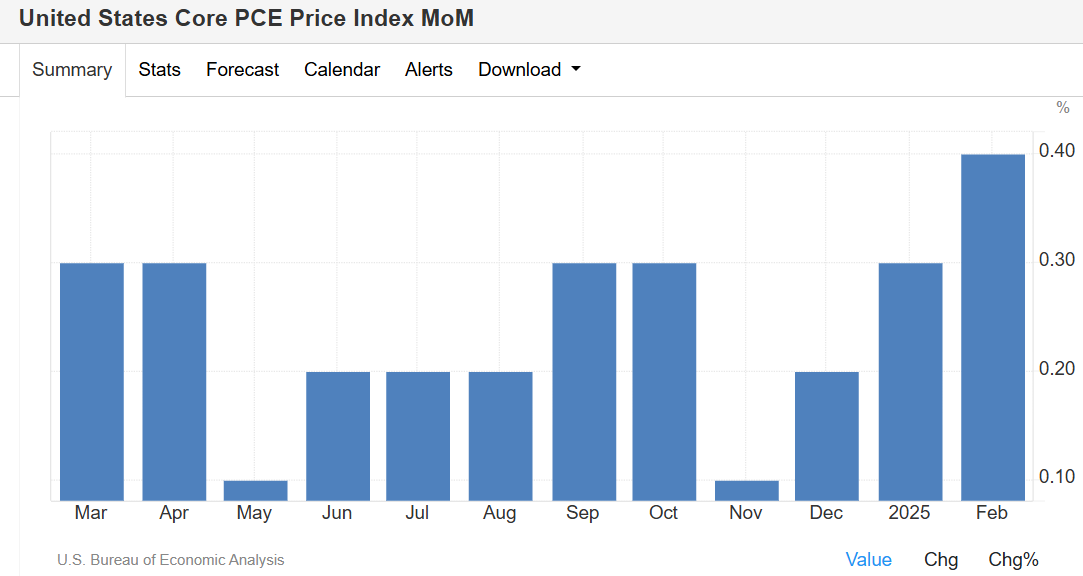
Group 1 - Recent economic data indicates a resurgence of inflation in the U.S., coupled with concerns over the potential impact of the upcoming "reciprocal tariffs" policy from the Trump administration and signs of weak consumer spending [1] - The US Credit Fear Gauge has risen to its most alarming level since August of last year, reflecting a sharp decline in risk appetite within the financial markets [1] - The Markit CDX North America High Yield Index has continued its downward trend, falling 0.6 points to 105.14, indicating an increase in credit default risk and the worst performance in seven months [1] Group 2 - As risk appetite declines, risk assets such as stocks and cryptocurrencies have seen significant weakness, driven by heightened concerns over the impending "reciprocal tariffs" [2] - Major U.S. stock indices experienced substantial declines, with the Nasdaq Composite Index dropping nearly 3% in a single day, marking a "Black Friday" for the markets [2] - The "Magnificent 7" tech giants collectively fell 2.95% this week, with Nvidia experiencing a weekly decline of 6.82% [2] Group 3 - The core PCE, a key inflation measure favored by the Federal Reserve, showed a month-over-month increase of 0.4%, the largest rise in a year, with a year-over-year increase of 2.8%, both exceeding previous values and economist expectations [3] - Consumer confidence in the U.S. has dropped to a two-year low, exacerbating concerns over sustained pressure on consumer spending amid escalating trade tensions [6] - The expectation of "stagflation" has significantly increased, with the long-term inflation expectations reaching a 32-year high, driven by tariff impacts [6]