量子计算

Search documents
美国频繁失态的原因或许是:中国一脚踏入了舒适区,特朗普还没辙
Sou Hu Cai Jing· 2026-01-10 04:46
Group 1 - The U.S. is facing unprecedented challenges as China enters strategic areas previously dominated by the U.S. [1] - The U.S. announced its withdrawal from 66 international organizations, including 31 UN entities, highlighting its unilateralism [3] - U.S. tariffs on Chinese electric vehicles have backfired, with China's exports to the U.S. increasing to 9% and a trade surplus growing by 34.6% year-on-year [4] Group 2 - The U.S. has historically maintained a clear division in global supply chains, controlling high-end manufacturing and key technologies while allowing other countries to develop low-end manufacturing [8] - The balance of power has shifted as China's industrial and technological capabilities have risen, breaking the previous equilibrium [10] - China's "Made in China 2025" initiative has achieved 86% of its goals, directly competing with the U.S. in core industries, particularly in renewable energy [11] Group 3 - Chinese companies like CATL and BYD are leading in battery technology and electric vehicle sales, with China accounting for 68% of global new energy vehicle sales in 2025 [13][14] - China's self-sufficiency in semiconductors has increased from 14% in 2014 to 23% in 2023, with projections of reaching 27% by 2027 [16] - Despite U.S. export controls, major chip companies like Intel and NVIDIA are still reliant on the Chinese market for revenue [17] Group 4 - Germany's automotive industry is resisting U.S. sanctions against China, with BMW investing $15 billion to expand its operations in China [19] - The anticipated anti-China coalition led by the U.S. is faltering due to the economic interdependence of other countries with China [20] - The U.S. strategy of tariffs and sanctions has led to significant losses for American companies reliant on the Chinese market [20] Group 5 - The U.S. is experiencing a decline in global trust, with its reputation and governance indicators dropping in the Global Soft Power Index [24] - Public sentiment in countries like Germany, France, and Spain is increasingly supportive of countermeasures against U.S. imports [26] - The U.S. is caught in a cycle of sanctions and shortages, struggling to adapt to the new global industrial landscape shaped by China's advancements [28] Group 6 - The U.S. fears losing its exceptional status as a dominant global power, which would limit its ability to impose sanctions and manage risks [29] - Global investment trends show that 60% of sovereign funds are planning to increase investments in China, indicating a shift in capital flows [30] - The competition of the future will focus on who can provide more public goods for global development rather than monopolizing core technologies [31][32]



2025量子计算行业深度:行业概况、发展趋势、产业链及相关公司深度梳理
Sou Hu Cai Jing· 2026-01-10 02:15
Industry Overview - Quantum computing is emerging as a revolutionary technology that could reshape various fields such as drug development, materials science, and financial modeling, driven by its potential for exponential computational power [1] - The industry is transitioning from experimental phases to early commercialization, becoming a strategic focal point in global technological competition [1] Development Trends - The core of quantum computing lies in utilizing quantum bits (qubits) for parallel processing capabilities that far exceed classical computers. Current global technological routes include superconducting, ion trap, photonic, neutral atom, and semiconductor pathways, with superconducting technology currently leading in engineering and industrialization [2] - The future of quantum computing is expected to feature a hybrid computing model, integrating quantum and classical computing to address practical challenges during the maturation of quantum hardware [5] Global Competition - The United States and China are leading the global race in quantum computing, with the U.S. establishing a comprehensive ecosystem supported by significant policy investments and innovation, while China is rapidly catching up through strategic national initiatives and domestic technological advancements [3][20] - Over 30 countries are now engaged in quantum computing initiatives, highlighting its importance in maintaining national technological sovereignty [20] Industry Chain Structure - The quantum computing industry chain is forming, with upstream focusing on providing essential infrastructure like dilution refrigerators and precision measurement systems, midstream involving quantum computer manufacturers and software suppliers, and downstream centered on quantum computing cloud platforms aimed at democratizing access to computational power [4] - The application exploration is primarily research-focused, but commercial prospects in finance, chemical engineering, and pharmaceuticals are gaining attention as key drivers for market expansion [4] Key Players and Innovations - Major companies like Google, IBM, and Microsoft are making significant strides in quantum computing. Google’s Willow chip, with 105 qubits, has achieved a breakthrough in error rate reduction, while IBM has introduced a modular quantum computer with enhanced performance and error rates [34][38] - In China, significant advancements include the development of the 105-qubit "Zuchongzhi 3" superconducting quantum computer and the establishment of a quantum artificial intelligence consortium to promote integration with AI technologies [39] Future Outlook - The quantum computing market is projected to experience rapid growth in the next five to ten years, with expectations for valuable commercial applications in specific fields [5] - The industry is witnessing a surge in domestic companies and patent applications, indicating a vibrant innovation landscape in China, with 153 quantum computing companies and over 10,000 patent applications filed in recent years [28][29]
德美化工:公司参与投资的产业基金佛山德盛天林股权投资合伙企业投资了本源量子
Mei Ri Jing Ji Xin Wen· 2026-01-09 09:07
Group 1 - The company expressed gratitude for investor interest and confirmed its participation in an industrial fund that has invested in Benyuan Quantum, holding 0.97% of its shares [1] - An investor inquired about the company's role in the Quantum Computing Biochemical Industry Application Ecological Alliance initiated in collaboration with Benyuan Quantum [2]

研报掘金丨东北证券:首予国盾量子“买入”评级,看好其长期发展趋势
Ge Long Hui A P P· 2026-01-09 09:03
Group 1 - The core viewpoint of the article highlights that GuoDun Quantum is positioned as a leader in the quantum computing industry, marking a new chapter in quantum computing [1] - The company has a comprehensive layout in quantum communication, quantum computing, and quantum measurement, demonstrating scalable industrialization capabilities [1] - The Ministry of Industry and Information Technology plans to focus on quantum technology applications in key sectors such as healthcare, finance, energy, and transportation by 2025, which is expected to open market opportunities for the industry [1] Group 2 - The quantum computing industry is recognized as a crucial sector for future national and global development, transitioning from laboratory research to industrial application [1] - As a core leader in domestic quantum computing, GuoDun Quantum is viewed positively for its long-term growth prospects, with an initial coverage rating of "Buy" [1]

戴彧虹:用运筹学寻找最优战略决策
Ke Ji Ri Bao· 2026-01-09 02:32
Core Viewpoint - The article discusses the significance of operations research in optimizing resource allocation and decision-making processes across various sectors, including the deployment of 5G base stations in China, highlighting its role as a scientific basis for effective management and modern decision-making [1][9][10]. Group 1: Definition and Origin of Operations Research - Operations research originated during World War II, evolving from a tool for specific scenarios to a universal decision-making method applicable across diverse fields [3]. - The essence of operations research is optimization, focusing on achieving the best outcomes while adhering to real-world constraints [4]. Group 2: Application Process of Operations Research - The research process in operations research follows a closed loop: identifying real-world problems, abstract modeling, computational solving, validation, and practical application [7]. - The first step involves accurately defining the problem, which is crucial for guiding subsequent research efforts [5]. Group 3: Role in National Resource Allocation - Operations research serves as a "precision navigation instrument" for national strategic decision-making, transforming complex strategic issues into computable and comparable scientific solutions [9]. - It emphasizes "quantitative optimization" and "system thinking," allowing for a comprehensive view of interrelated factors in resource allocation [10]. Group 4: Contribution to New Productive Forces - Although operations research does not directly produce technology, it fosters new academic directions and enhances efficiency in complex technical development processes [11]. - It plays a critical role in optimizing resource allocation and enhancing collaboration, which is essential for improving overall productivity [11]. Group 5: Future Trends and Challenges - The rise of new technologies like artificial intelligence and quantum computing presents both opportunities and challenges for the evolution of operations research [12][14]. - Future development will likely focus on deeper integration with AI and new computing technologies, expanding its application to complex global issues such as supply chain restructuring and carbon neutrality [15]. Group 6: Recommendations for Development - There is a need for closer integration between operations research and real-world industrial problems, emphasizing the importance of interdisciplinary collaboration and practical application [16]. - The focus should be on embedding operations research methods into national projects and public decision-making processes to create a virtuous cycle of problem-driven research and application [16].

2025年直播卫星用户累计达15524万户
Xin Lang Cai Jing· 2026-01-08 11:43
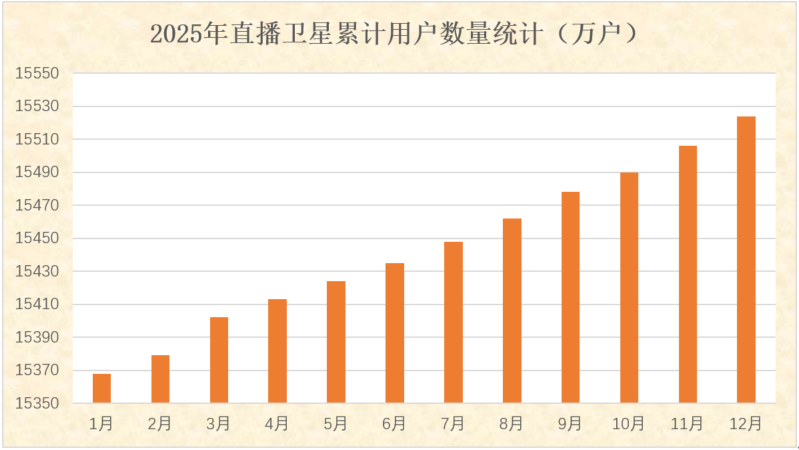
Group 1 - The satellite broadcasting center has developed a total of 10.16 million HD users by December 31, 2025, with an addition of 1.76 million HD users in 2025 [2][7] - The satellite broadcasting center has accumulated a total of 155.24 million live satellite users by December 31, 2025 [3][8] - The competition among operators in the trillion-yuan satellite market is intensifying [9] Group 2 - The development of 6G technology is expanding smart new terminal applications [9] - Domestic institutions are actively laying out overseas FAST markets [9] - The video platform's financial report for Q3 2025 indicates significant developments in the broadcasting industry [10]
启明星辰:公司积极跟进量子计算技术的飞速发展
Zheng Quan Ri Bao Wang· 2026-01-07 13:10
Core Viewpoint - The company is actively following the rapid development of quantum computing technology and is continuously iterating its product capabilities to address the threats posed by quantum computing [1] Group 1: Quantum Computing Response - The company has upgraded its anti-quantum password system to achieve the productization and smooth evolution of post-quantum password algorithms [1] - The integration of quantum key distribution technology into VPN products enhances key supply and business collaboration capabilities [1] Group 2: Implementation and Impact - The company has successfully implemented quantum security measures in critical information infrastructure sectors such as finance and telecommunications [1] - These efforts provide a secure password foundation for quantum safety [1]

超500个重大项目提速!花城大道、员村二横路年内迎新变化
Nan Fang Du Shi Bao· 2026-01-07 05:35
Group 1 - The Tianhe District of Guangzhou is initiating over 500 major projects with a total investment exceeding 800 billion yuan, aiming for fixed asset investment to surpass 90 billion yuan annually by 2026 [1] - The construction of the China Artificial Intelligence (Guangzhou) Industrial Park is underway, with a total investment of over 8 billion yuan and a building area of approximately 490,000 square meters [2] - The park aims to integrate technology and culture, focusing on artificial intelligence and technology finance, with plans to complete construction by the end of 2027 [3] Group 2 - Tianhe District is focusing on a modern industrial system, planning to invest 67 billion yuan in 203 major industrial projects this year, creating a gradient of 16 projects worth over 10 billion yuan each [4] - The district aims to achieve significant progress in transportation infrastructure, with 16 road projects completed and 30.64 kilometers of new roads added in the past year [5] - A new cross-river traffic project is expected to be completed by 2026, enhancing connectivity between Haizhu and Tianhe [6] Group 3 - The district is implementing a three-step land storage strategy to overcome land use bottlenecks, ensuring key infrastructure projects make substantial progress this year [7] - Three major hospitals are under construction, with the Guangdong Orthopedic Research Institute's project entering the installation phase, significantly improving healthcare services in the region [8] - Multiple housing projects are underway, including high-quality residential developments aimed at improving living conditions for local residents [9]
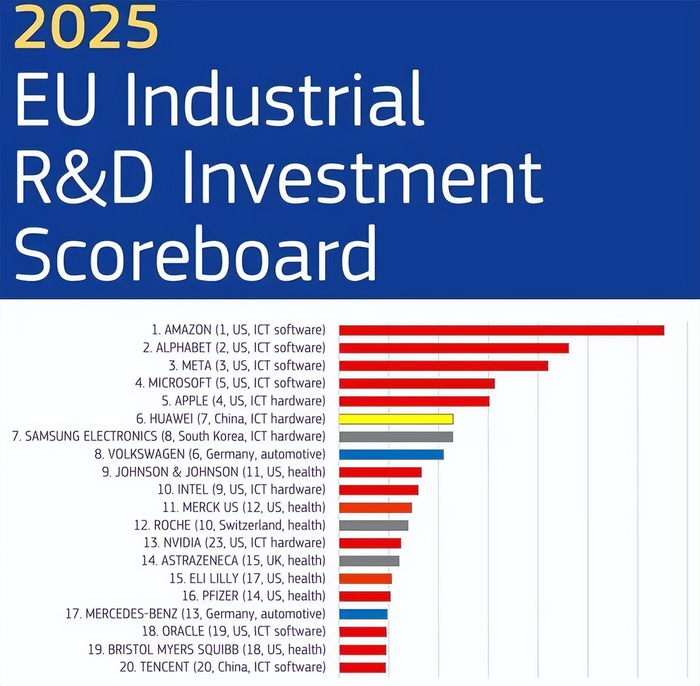
欧盟发布研发榜单:华为以229.4亿欧元成唯一进入前十的中国企业
Xin Lang Cai Jing· 2026-01-07 05:24
Core Insights - The article highlights the significant position of Huawei in global R&D investment, ranking sixth with an investment of €22.94 billion, showcasing China's shift from "catching up" to "keeping pace" in technology competition [4][12] R&D Investment Overview - The EU's 2025 Global R&D Investment Top 100 list shows that the US has 674 companies, accounting for 47.1% of total R&D investment, while China has 525 companies at 16.1%, and the EU has 318 companies at 16.2% [1] - Huawei's R&D expenses for the first half of 2025 reached ¥96.95 billion, representing 22.7% of its revenue, equating to approximately ¥5.36 billion spent daily, which is significantly higher than competitors like Apple and Xiaomi [5][6] Strategic Focus Areas - Huawei's R&D strategy is not merely about cost but targets critical areas, such as semiconductor technology, with over 7,000 engineers dedicated to developing the Kirin and Ascend chips, aiming to overcome technological barriers [6][9] - The company has established a comprehensive capability loop in three key areas: computing power, quantum technology, and operating systems, moving beyond isolated breakthroughs [7][8][10] Technological Innovations - In computing power, Huawei has innovated through architecture rather than relying on EUV lithography, creating a "supercomputer" with the Atlas960 Super PoD, which supports 15,488 computing cards and achieves a total computing power of 30 EFLOPS [8] - In quantum technology, Huawei focuses on core technology breakthroughs and industry applications, having secured a patent for superconducting quantum chips that significantly reduce qubit interference [9] - The HarmonyOS has evolved from being Android-compatible to redefining standards, with significant R&D investment leading to the release of HarmonyOS 5.0, which enhances task efficiency across devices [10] Implications and Challenges - Huawei's entry into the top ten of global R&D investment is a milestone for Chinese technology, reflecting a deeper transformation in global innovation dynamics [12] - Despite the achievements, the article notes that outside of Huawei, few Chinese companies rank highly in R&D, indicating a need for broader industry growth and support for long-term investment strategies [12]
城堡证券:早期资本流入+反弹范围扩大 “一月效应”有望为美股全面上涨筑牢基础
Zhi Tong Cai Jing· 2026-01-07 02:51
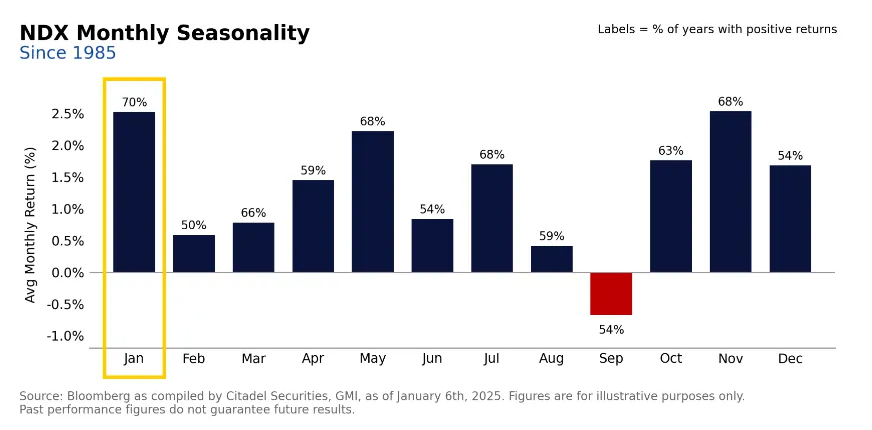
Core Viewpoint - The "January Effect" appears particularly strong this year, with early capital inflows and an expanding market rebound laying the foundation for a broad rise in U.S. stocks [1] Group 1: Market Dynamics - The balance in money markets has reached a record high of $7.6 trillion, supporting the theory that U.S. stocks tend to rise more easily in January compared to other months [1] - Since 1985, the Nasdaq 100 index has risen in about 70% of years in January, with an average increase of 2.5%, and nearly 6% in years when it ultimately closes higher [3] - Market volatility remains suppressed despite a series of catalyst events this month, with capital flows shifting from crowded trades to a broader market [3] Group 2: Retail and Institutional Participation - Retail activity remains robust, with retail traders accounting for approximately 60% of total client volume at options clearinghouses, indicating their significant influence on market outcomes [3] - Retail investors have generated over $20 billion in profits through options trading in 2025 and are entering January with new disposable funds, particularly in themes like quantum computing, robotics, and space [3] - Institutional clients are also increasing their exposure to risk assets, with recent options flows favoring sectors such as energy, utilities, real estate, and materials [4] Group 3: Market Structure and Future Outlook - The current positioning reflects a shift towards lagging sectors to diversify away from over-concentration in index leaders, indicating a healthier market structure [4] - Cross-asset correlations are converging to a one-year low, providing greater space for specific returns [4] - While a normalization of asset allocation and volatility repricing may lead to some "healthy digestion adjustments" in February, any pullback could be viewed as an opportunity to reallocate to risk assets at more attractive levels [4]