Workflow
地缘政治风险
icon
Search documents
营收147亿的半导体资产突遭冻结,A股龙头:坚决反对
21世纪经济报道· 2025-10-12 13:37
Core Viewpoint - The announcement from Wentech Technology regarding the Dutch government's directive to freeze operations of its subsidiary, Nexperia, has raised significant market attention, indicating potential operational challenges and geopolitical tensions affecting the semiconductor industry [1][4][6]. Group 1: Company Announcement - On October 12, Wentech Technology announced that the Dutch government issued a directive on September 30, requiring its subsidiary Nexperia and all related entities globally to refrain from any adjustments to assets, intellectual property, business, and personnel for one year [1]. - Wentech Technology's stock and convertible bonds will resume trading starting October 13, following the announcement [1]. - Since the beginning of the current market rally on April 9, Wentech Technology's stock price has increased by 62%, with a current market capitalization of 57.8 billion yuan [1]. Group 2: Financial Impact - Nexperia is a key platform for Wentech Technology's semiconductor business, projected to generate approximately 14.7 billion yuan in revenue in 2024, accounting for about one-sixth of Wentech Technology's total revenue for that year [4]. - Nexperia ranks third globally in revenue for power discrete devices and is the leading domestic company in the power semiconductor sector, maintaining a strong position across various sub-segments [4]. Group 3: Response to Geopolitical Issues - Wentech Technology firmly opposes the politicization of commercial issues, criticizing the Dutch government's actions as excessive intervention based on unfounded "national security" concerns, reflecting geopolitical bias rather than factual risk assessment [6]. - The company condemned attempts by certain foreign management to alter Nexperia's ownership structure through legal means, viewing these actions as politically motivated efforts to undermine shareholder rights and disrupt legitimate corporate governance [9]. - Wentech Technology expressed confidence that temporary challenges will not hinder the industry's upward momentum and that fairness will ultimately prevail over prejudice [12].
安世半导体外籍高管们发难,要求闻泰科技让出控股权,闻泰科技最新声明→
Di Yi Cai Jing Zi Xun· 2025-10-12 12:56
Core Viewpoint - Wentech Technology's semiconductor business faces significant challenges due to a Dutch government order freezing operations and internal disputes among executives [1][10][12]. Group 1: Government Intervention - The Dutch government has issued a ministerial order preventing Wentech's subsidiary, Anshi Semiconductor, from making any adjustments to its assets, intellectual property, or operations for one year [10][12]. - Wentech claims that the government's actions are based on unfounded "national security" concerns and represent excessive geopolitical interference [1][10]. - The order is seen as a violation of EU principles of market economy and fair competition [1]. Group 2: Internal Disputes - Anshi's foreign executives have initiated legal proceedings to investigate the company, which has led to the suspension of the CEO appointed by Wentech [12][13]. - The Dutch court has appointed a foreign individual as a non-executive director with decisive voting rights, further complicating Wentech's control over Anshi [12][13]. Group 3: Financial Performance and Business Impact - In 2024, Wentech's semiconductor business generated revenue of 14.715 billion yuan, with a gross margin of 37.47% and a net profit of 2.297 billion yuan [17]. - Anshi Semiconductor reached a revenue peak of 2.36 billion euros in 2022 and has contributed 130 million euros in corporate income tax to the Netherlands over the past five years [17]. - Following Wentech's acquisition, Anshi has improved its global ranking in power discrete devices from 11th in 2019 to 3rd [17]. Group 4: Broader Industry Context - The current geopolitical climate poses challenges and opportunities for Chinese manufacturing, particularly in high-tech sectors [17]. - Wentech's global revenue reached 73.6 billion yuan in 2024, with overseas income accounting for 52.9 billion yuan, indicating its status as a global enterprise [18].
荷兰冻结闻泰半导体资产,安世外籍高管们要求转让控股权
第一财经· 2025-10-12 12:11
2025.10. 12 本文字数:2135,阅读时长大约4分钟 作者 | 第一财经 彭海斌 闻泰科技(600745.SH)的半导体业务遭遇重创。 10月22日,闻泰科技公告,荷兰政府要求闻泰科技的控股子公司安世不得对资产、知识产权等进行调整,为期一年。 与此同时,安世的首席法务官、首席财务官等外籍高管向法院提交请求,要求启动调查。荷兰企业法庭已经暂停了闻 泰科技委派的安世半导体CEO履行相关职务。 第一财经从相关渠道获悉,安世的部分高管们提出的一系列要求中,包括闻泰科技转让安世的股权,甚至是控股权。 控股权之争 安世正在遭遇内忧外患。 据闻泰科技披露,荷兰时间2025年9月30日,荷兰经济事务与气候政策部对安世下达部长令,要求安世及其下属所有 子公司、分公司、办事处等全球30个主体对其资产、知识产权、业务及人员等不得进行任何调整,有效期为一年。 与此同时,安世的内乱发生了。 荷 兰 时 间 2025 年 10 月 1 日 , 安 世 半 导 体 控 股 以 及 安 世 半 导 体 ( 荷 兰 注 册 主 体 ) 法 定 董 事 兼 首 席 法 务 官 Ruben Lichtenberg在获得其他两位高管,即首 ...
原油周报:中东地缘风险降温,油价周内下跌-20251012
Xinda Securities· 2025-10-12 12:04
Investment Rating - The report maintains a "Positive" investment rating for the oil processing industry [1]. Core Insights - International oil prices have decreased as of October 10, 2025, with Brent and WTI prices at $62.73 and $58.90 per barrel, respectively, reflecting a decline of 2.79% and 3.25% from the previous week [2][20]. - The report highlights concerns over supply surplus due to OPEC's planned production increase and the resumption of oil exports from the Kurdish region, alongside geopolitical tensions in the Middle East [2][9]. - The oil and petrochemical sector has shown resilience, with a 2.99% increase in the sector's performance compared to a 0.51% decline in the broader market (CSI 300) [10][13]. Oil Price Review - As of October 10, 2025, Brent crude futures settled at $62.73 per barrel, down $1.80 (-2.79%) from the previous week, while WTI crude futures settled at $58.90 per barrel, down $1.98 (-3.25%) [2][20]. - The report notes that the Urals crude price remained stable at $65.49 per barrel, while ESPO crude increased by $0.53 (+0.88%) to $60.43 per barrel [2][20]. Offshore Drilling Services - The number of global offshore self-elevating drilling rigs was 371, a decrease of 1 from the previous week, while floating drilling rigs increased by 3 to a total of 132 [24][33]. U.S. Oil Supply - U.S. crude oil production reached 13.629 million barrels per day, an increase of 124,000 barrels from the previous week [46]. - The number of active drilling rigs in the U.S. decreased by 4 to 418, and the number of fracturing fleets also decreased by 4 to 175 [46]. U.S. Oil Demand - U.S. refinery crude processing increased to 16.297 million barrels per day, up 129,000 barrels from the previous week, with a refinery utilization rate of 92.40%, up 1.0 percentage points [56]. - The report indicates that U.S. gasoline and distillate inventories have decreased, suggesting a rise in oil demand [2][9]. U.S. Oil Inventory - As of October 3, 2025, total U.S. crude oil inventories stood at 827 million barrels, an increase of 4 million barrels (+0.49%) from the previous week [65]. - Strategic oil reserves were at 407 million barrels, up 285,000 barrels (+0.07%), while commercial crude oil inventories rose by 3.715 million barrels (+0.89%) to 420 million barrels [65].
荷兰冻结闻泰科技半导体资产,控股子公司安世外籍高管们要求转让控股权
Di Yi Cai Jing· 2025-10-12 11:59
Core Viewpoint - The semiconductor business of Wentech Technology (600745.SH) is facing significant challenges due to a directive from the Dutch government, which restricts its subsidiary, Nexperia, from making adjustments to its assets and intellectual property for one year [1][4][6]. Group 1: Company Situation - Wentech Technology announced that the Dutch government has mandated Nexperia to refrain from any adjustments to its assets, intellectual property, and operations for a year, effective from September 30, 2025 [4]. - Nexperia's internal turmoil has escalated, with key executives filing for an investigation and requesting temporary measures against the company's management [5][6]. - The Dutch court has suspended the CEO of Nexperia from his duties, appointing an external individual with decisive voting rights to oversee the company [5][6]. Group 2: Financial Impact - Wentech Technology's semiconductor business generated a revenue of 14.715 billion yuan in 2024, with a gross profit margin of 37.47% and a net profit of 2.297 billion yuan [15]. - Nexperia reached a peak revenue of 2.36 billion euros in 2022 and has contributed 130 million euros in corporate income tax to the Netherlands over the past five years [15]. - Following the acquisition by Wentech, Nexperia has improved its global ranking in power discrete devices from 11th in 2019 to 3rd [16]. Group 3: Regulatory Environment - The Dutch Ministry of Economic Affairs issued the directive to Nexperia primarily to "ensure supply chain security," which Wentech views as an unreasonable external takeover of a normally operating business [6][11]. - The U.S. Department of Commerce has placed Wentech on an entity list, tightening export controls on subsidiaries with over 50% ownership [7][8]. - The Chinese government has condemned the U.S. actions as detrimental to legitimate business rights and has vowed to take necessary measures to protect Chinese enterprises [9]. Group 4: Strategic Outlook - Wentech Technology is actively seeking legal remedies and engaging with government departments to gain support amid the ongoing challenges [12]. - The current crisis not only tests Wentech's resilience but also reflects the broader implications of changing international business rules and geopolitical risks [16].
独家 | 荷兰冻结闻泰半导体资产,安世外籍高管们要求转让控股权
Di Yi Cai Jing· 2025-10-12 11:48
Core Viewpoint - The semiconductor business of Wentech Technology (闻泰科技) is facing significant challenges due to a Dutch government directive and internal disputes within its subsidiary, Anshi Semiconductor (安世半导体) [1][3][4]. Group 1: Government Intervention - The Dutch government has issued a directive preventing Anshi Semiconductor and its global subsidiaries from making any adjustments to assets, intellectual property, or personnel for one year, effective from September 30, 2025 [3][4]. - This directive is aimed at "ensuring supply chain security," but Wentech Technology argues that the scope and severity of the restrictions exceed normal risk management practices, constituting an unreasonable external takeover of a normally operating business [4][6]. Group 2: Internal Disputes - Anshi Semiconductor is experiencing internal turmoil, with key executives, including the Chief Legal Officer and Chief Financial Officer, filing a request for an investigation into the company and seeking temporary measures from the court [3][4]. - The Dutch enterprise court has suspended the CEO of Anshi Semiconductor from his duties, appointing a foreign individual as a non-executive director with decisive voting rights [3][4]. Group 3: Financial Impact - Wentech Technology's semiconductor business generated a revenue of 14.715 billion yuan in 2024, with a gross profit margin of 37.47% and a net profit of 2.297 billion yuan [10]. - Anshi Semiconductor reached a revenue peak of 2.36 billion euros in 2022 and has contributed 130 million euros in corporate income tax to the Netherlands over the past five years [10][11]. Group 4: Strategic Importance - Anshi Semiconductor, acquired by Wentech Technology for over 20 billion yuan, is a crucial part of the company's business portfolio, focusing on discrete devices and logic devices [8][10]. - Following the acquisition, Anshi Semiconductor has risen in global rankings from 11th to 3rd among power discrete device companies, serving major clients like Bosch, Siemens, Samsung, and Apple [11]. Group 5: Broader Context - The current crisis faced by Wentech Technology is not only a test of the company's resilience but also a reflection of the challenges and opportunities arising from the restructuring of global trade rules amid geopolitical tensions [11].
独家 | 荷兰冻结闻泰半导体资产,安世高管们要求转让控股权
Di Yi Cai Jing· 2025-10-12 11:47
Core Viewpoint - Wentech Technology's semiconductor business faces significant challenges due to a Dutch government order restricting its subsidiary, Nexperia, from making adjustments to assets and intellectual property for one year [1][3][5]. Group 1: Government Intervention - The Dutch Ministry of Economic Affairs issued a ministerial order on September 30, 2025, prohibiting Nexperia and its global subsidiaries from making any adjustments to assets, intellectual property, and personnel for one year [3]. - The order is justified by the Dutch government as a measure to "ensure supply chain security," but Wentech believes the restrictions are excessively broad and constitute an unreasonable external takeover of a normally operating business [5]. Group 2: Internal Conflict - Nexperia's internal turmoil escalated with its legal board members, including the Chief Legal Officer and Chief Financial Officer, filing a request for an investigation into the company [3]. - The Dutch enterprise court ruled on October 7, 2025, to suspend the CEO of Nexperia, Zhang Xuezheng, from his executive roles, indicating a significant shift in control [4][3]. Group 3: Financial Impact - Wentech's semiconductor business generated revenue of 14.715 billion yuan in 2024, with a gross profit margin of 37.47% and a net profit of 2.297 billion yuan [12]. - Nexperia reached a peak revenue of 2.36 billion euros in 2022 and has contributed 130 million euros in corporate income tax to the Netherlands over the past five years [12]. Group 4: Strategic Importance - Nexperia is a leading supplier of semiconductor standard devices, crucial to Wentech's business portfolio, which includes product integration and semiconductor divisions [11][12]. - Since its acquisition, Nexperia has climbed from the 11th to the 3rd position among global power discrete device companies, serving major clients like Bosch, Siemens, Samsung, and Apple [13]. Group 5: Global Context - The current geopolitical climate poses challenges and opportunities for Chinese manufacturing, particularly in high-tech sectors, as global trade rules undergo reconstruction [13]. - Wentech's global revenue reached 73.6 billion yuan in 2024, with overseas income accounting for 52.9 billion yuan, highlighting its status as a global enterprise [13].
中国加速与海合会能源合作,锁定长期供应应对全球动荡
Sou Hu Cai Jing· 2025-10-12 10:53
Core Insights - China's energy cooperation with Gulf Cooperation Council (GCC) countries has deepened significantly in recent years, driven by global energy market volatility and US-China trade tensions, with long-term procurement agreements solidifying energy ties and ensuring energy security [1][6][12] Energy Supply Agreements - In April 2025, China National Offshore Oil Corporation (CNOOC) signed a five-year LNG supply agreement with Abu Dhabi National Oil Company (ADNOC) to supply 500,000 tons annually starting in 2026 [3] - ADNOC also reached agreements with two other Chinese companies for long-term LNG contracts, effectively reducing market volatility risks for Chinese buyers amid increasing US sanctions on Iranian oil [3][6] - China's imports from GCC countries in 2023 included approximately 201 million tons of crude oil and 18 million tons of LNG, accounting for one-third and one-quarter of its total imports, respectively [5] Strategic Diversification - Iraq, as China's third-largest crude oil supplier, is expected to double its production to 500,000 barrels per day by 2030, enhancing China's crude oil imports from Iraq beyond the current 1.2 million barrels per day [4] - The long-term contracts with GCC countries serve as a strategic hedge against external pressures, reducing reliance on sanctioned nations [6][12] Broader Energy Network - China is expanding its energy strategy beyond GCC countries by collaborating with ASEAN nations to build a more extensive Asian energy network, enhancing traditional and clean energy cooperation [7] - The first trilateral summit in May 2025 among China, GCC, and ASEAN focused on strengthening energy supply chains and investing in new energy sources [7] Clean Energy Collaboration - Cooperation in clean energy is accelerating, with GCC countries aiming to diversify their economies and reduce oil dependency, as seen in Saudi Arabia's Vision 2030 and UAE's Net Zero 2050 strategy [8] - China has become a key partner in the energy transition for GCC countries, with significant investments in renewable energy projects [8] Bilateral Trade Growth - In 2024, bilateral trade between China and the UAE surpassed $100 billion, reflecting extensive economic ties beyond energy [10] Geopolitical Considerations - The geopolitical landscape poses challenges, with regional instability and external pressures impacting China's energy strategy, necessitating a balance between economic interests and geopolitical considerations [13]
公募把脉黄金行情:多重因素驱动金价走强 后市预期仍偏乐观
Zhong Guo Ji Jin Bao· 2025-10-12 10:44
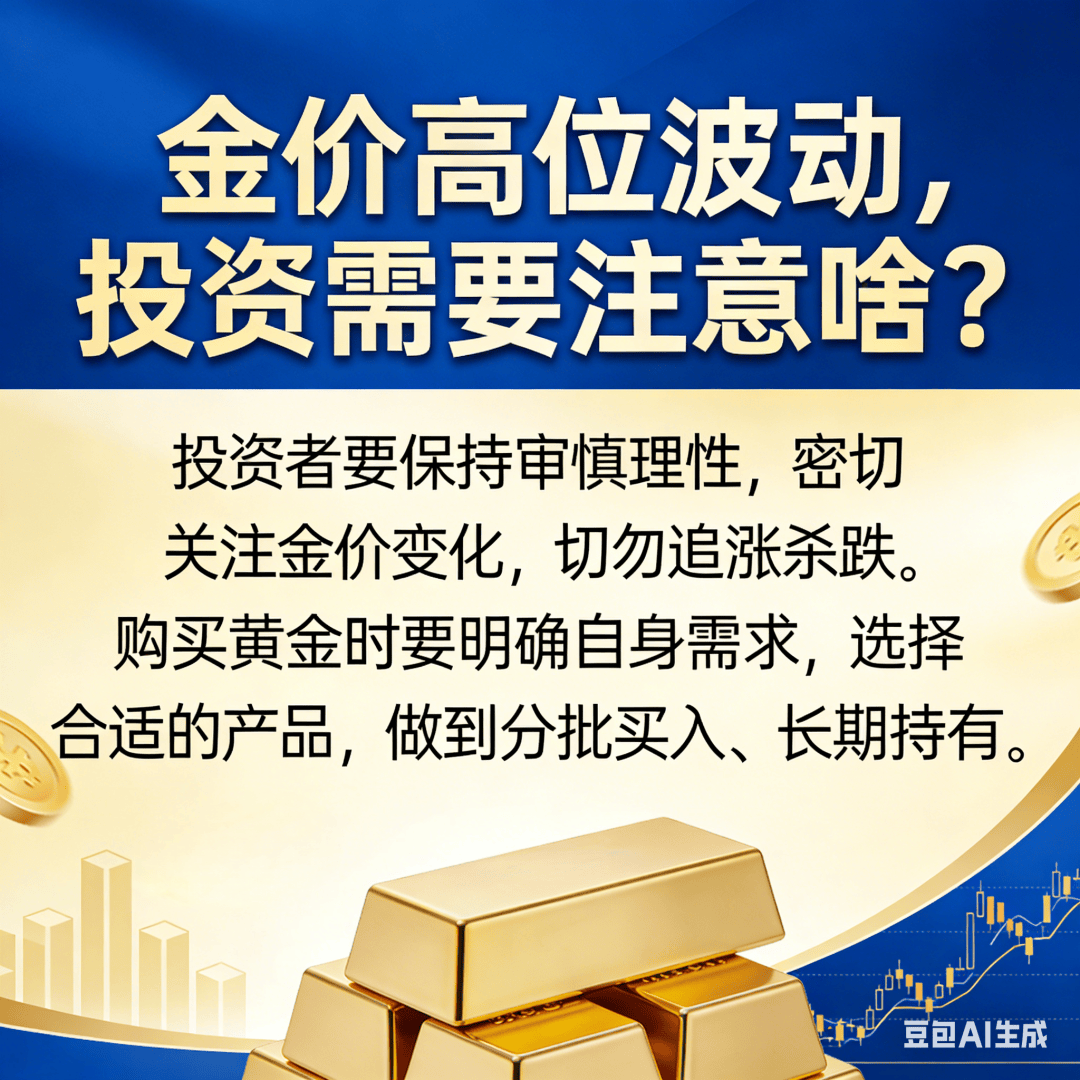
Core Viewpoint - The recent surge in gold prices, surpassing $4000 per ounce for the first time, is driven by multiple macroeconomic factors, leading to a generally optimistic outlook for the future of gold investments [1][2]. Group 1: Catalysts for Gold Price Increase - The rise in gold prices is attributed to increased political and economic uncertainty in the U.S., alongside heightened expectations for interest rate cuts [2]. - The recent ADP employment data showed a significant drop in job creation, further fueling expectations for a rate cut, which in turn supports gold prices [2]. - Geopolitical uncertainties and inflation expectations are also critical factors driving the demand for gold as a hedge against inflation [2][3]. Group 2: Global Liquidity and Market Outlook - The current global liquidity environment is favorable for precious metals, with expectations of continued liquidity easing [4]. - The anticipated continuation of ultra-loose monetary policies in major economies, including the U.S. and Japan, supports the bullish outlook for gold [4]. - The price differential between domestic and international gold prices presents potential opportunities for Chinese investors, given China's status as the largest gold consumer [4]. Group 3: Investment Strategies and Risks - Despite the long-term bullish trend for gold, short-term volatility may increase following a significant price rise of over 50% this year [6][7]. - Investors are advised to adopt a strategy of buying on dips, as the long-term outlook remains positive [6][7]. - Potential risks to the current upward trend include stronger-than-expected U.S. economic data, geopolitical stability, and changes in the international monetary system [7][8]. Group 4: Asset Allocation Recommendations - It is suggested that investors maintain a core allocation of around 10% to gold ETFs, adjusting based on market conditions [8]. - Historical data indicates that increasing gold exposure in equity-focused portfolios can enhance the risk-return profile [8].
桥水创始人达利欧警告美债超37万亿,危机或两三年内爆发
Sou Hu Cai Jing· 2025-10-12 08:20
Core Viewpoint - Ray Dalio, founder of Bridgewater Associates, warns that the rapid growth of U.S. government debt, combined with escalating internal and external conflicts, is creating an environment reminiscent of the pre-World War II era, posing a serious challenge to the existing order [1][2]. Debt Situation - As of October 2025, the U.S. national debt exceeds $37.86 trillion, with the Congressional Budget Office estimating that public debt will reach 99% of GDP in 2024 and rise to 116% by 2034, the highest in U.S. history [2]. - Dalio emphasizes that the debt crisis is intertwined with increasing social division and geopolitical risks, creating a "worrisome environment" due to ongoing global conflicts and wealth inequality [2]. Internal Conflicts - Dalio warns of an emerging "form of civil war" in the U.S. due to "irreconcilable differences," suggesting that these conflicts could escalate into confrontations among various factions if left unaddressed [2]. Bridgewater Associates Performance - Bridgewater Associates is expected to achieve its largest gain since 2010 this year, following strategic adjustments led by current CEO Nir Bar Dea, including team restructuring and asset reduction to enhance overall performance [3]. - As of December 31, the assets under management at Bridgewater were $92 billion, down from nearly $140 billion at the beginning of 2023 [3]. Investment Recommendations - Dalio advises investors to allocate up to 15% of their assets to gold, despite gold prices recently surpassing $4,000 per ounce, indicating a belief in gold's continued value amid inflationary pressures and a weakening dollar [3].