高端化

Search documents
迪卡侬背叛了工人阶级
虎嗅APP· 2025-12-03 10:22
Core Viewpoint - Decathlon, once known for its cost-effective sports products, is shifting its strategy towards premiumization and brand positioning, leading to significant price increases in its products [4][14][15]. Group 1: Price Increase and Market Positioning - From 2022 to 2024, Decathlon's average product price in China increased from 128 to 196 yuan, a rise of 52%, with some items seeing price hikes of up to 100% [4][14]. - The company launched a high-end road bike priced at 69,999 yuan, indicating a shift towards premium offerings [4]. - Decathlon's strategy includes transitioning from a low-cost retailer to a recognized sports brand, which typically correlates with price increases [14][15]. Group 2: Brand Strategy and Market Dynamics - Decathlon's initial success was based on a low-cost model, but this led to conflicts with brand partners due to price undercutting [8][10]. - The company has moved towards a self-branding strategy, with over 90% of its sales coming from its own brands, allowing for better control over pricing and supply chains [10][12]. - The introduction of the "North Star" strategy aims to upgrade the brand from mass-market to professional, focusing on high-end products and consumer experience [15][17]. Group 3: Competitive Landscape - Decathlon faces competition from low-cost alternatives and niche brands that have successfully captured specific market segments [20][24]. - The rise of private label brands and e-commerce platforms has eroded Decathlon's price advantage, making it difficult to compete on cost alone [20][21]. - The brand's broad product range has become a liability, as it struggles to compete with specialized brands that cater to specific consumer needs [25][35]. Group 4: Challenges in Transitioning - Transitioning from a mass-market brand to a premium one is fraught with challenges, as there are few successful precedents in the sports apparel market [28][29]. - Decathlon's lack of specialized expertise in high-end products may hinder its ability to establish a strong brand identity in the premium segment [36][37]. - The company must enhance its marketing strategies to effectively communicate its value proposition to a broader audience, beyond just its existing customer base [36].

Omdia:三季度全球可穿戴腕带设备市场小幅增长3% 出货量达到5460万台
Zhi Tong Cai Jing· 2025-12-03 01:43
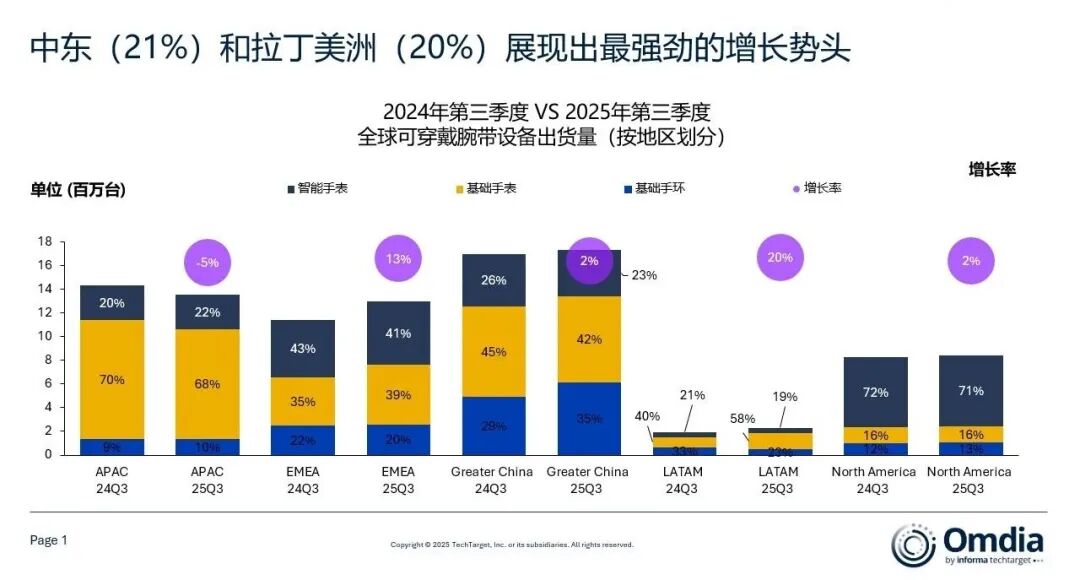
Core Insights - The global wearable wristband device market is projected to see a slight growth of 3% in Q3 2025, with shipments reaching 54.6 million units. Despite limited shipment growth, market value is expected to surge by 12% year-on-year, reaching $12.3 billion, indicating a consumer shift towards higher-end wearable devices [1][4]. Market Overview - The average selling price (ASP) has increased by 9% year-on-year to $225, driven by leading market players. The top five manufacturers—Xiaomi, Apple, Huawei, Samsung, and Garmin—account for 84% of the market value and 63% of the shipment volume, putting pressure on smaller companies in terms of price competition and user acquisition [4][6]. Dual-Track Strategy - Leading manufacturers are successfully implementing a dual-track strategy targeting specific price segments. In the entry-level market, basic bands have rebounded by 12%, primarily driven by Xiaomi, Huawei, and Samsung. The segment priced between $50 and $99 has seen a significant growth of 56%, while the segment below $50 has declined by 2%. In the smartwatch category, the mid-range segment priced between $200 and $300 has grown by 21%, while the $300 to $500 segment has decreased by 8% [6][7]. High-End Market Growth - The high-end market is experiencing revenue growth driven by advancements in AI and 5G technologies. Manufacturers are focusing on advanced differentiation capabilities rather than competing solely on price, incorporating enhanced computing power, application support, and connectivity features [7][8]. New Models and Innovations - New models are significantly boosting the high-end market, with price segments of $500-$700 and above $700 growing by 29% and 34% year-on-year, respectively. Companies are exploring new areas to drive premiumization, integrating AI coaching into devices. The latest Apple Watch Series 11 has entered the 5G era, and both Apple and Garmin have added emergency satellite communication features to their flagship outdoor watches. Although smartwatch shipments are expected to grow only 1% in Q3 2025, the shipment value is projected to increase by 8%, indicating a shift towards premiumization [8].

Omdia:全球可穿戴设备出货量增长3%,为假日销售旺季奠定基础,小米领跑全球市场,佳明冲进前五
Canalys· 2025-12-03 01:26
Core Insights - The wearable wristband device market experienced a slight growth of 3% in Q3 2025, with shipments reaching 54.6 million units. Despite limited shipment growth, market value surged by 12% year-on-year to $12.3 billion, indicating a consumer shift towards higher-end wearable devices [2]. Market Dynamics - The average selling price (ASP) increased by 9% year-on-year to $225, driven by leading market players. The top five manufacturers—Xiaomi, Apple, Huawei, Samsung, and Garmin—accounted for 84% of the total market value and 63% of shipments. This dominance, combined with substantial financial and R&D resources, puts increasing pressure on smaller manufacturers in terms of price competition and user acquisition [5]. Dual-Track Strategy - Leading manufacturers are successfully implementing a dual-track strategy targeting specific price segments. In the entry-level market, basic wristbands saw a 12% rebound, primarily driven by Xiaomi, Huawei, and Samsung, which leveraged existing product portfolios to increase shipment share. The segment priced between $50 and $99 grew by 56%, while the segment below $50 declined by 2%. In the smartwatch category, the mid-range segment ($200-$300) grew by 21%, while the $300-$500 segment fell by 8%. Manufacturers are enhancing competitiveness by incorporating flagship features into mid-range products, such as the new Apple Watch SE 3, which includes flagship health features and cellular support [9]. High-End Market Growth - Many manufacturers are integrating wearable wristbands into broader high-end strategies, focusing on advanced differentiation capabilities rather than competing on price. New models have significantly boosted the high-end market, with segments priced between $500-$700 and above $700 growing by 29% and 34% year-on-year, respectively. Companies are exploring new areas to drive premiumization, with generative AI transitioning from novelty to practicality, as manufacturers gradually integrate AI coaching into devices. The potential for autonomous intelligence is becoming evident, exemplified by the new Galaxy Watch supporting Gemini voice commands and enhanced health integration. The latest Apple Watch Series 11 marks the entry of smartwatches into the 5G era, with Apple and Garmin incorporating emergency satellite communication features into their flagship outdoor watches. Although smartwatch shipments grew by only 1% in Q3 2025, the shipment value increased robustly by 8%, indicating a shift towards premiumization in this category [10]. Future Outlook - Analysts suggest that smartwatch manufacturers need to strengthen native software and services while closely collaborating with third-party application and service providers to embed new features into devices, enhancing user experience and connectivity. Looking ahead, the core of smartwatches lies in immersive cloud-based generative AI health and fitness coaching, fully leveraging device computing capabilities. Additionally, integrating smart rings and health sensor-equipped TWS devices is crucial for building a comprehensive health and fitness ecosystem and unlocking new cross-selling opportunities. These fundamental elements are vital for ensuring that smartwatches offer superior value compared to basic devices in the future [11].
古越龙山:一坛黄酒酿造产业复兴之道
Shang Hai Zheng Quan Bao· 2025-12-02 09:27
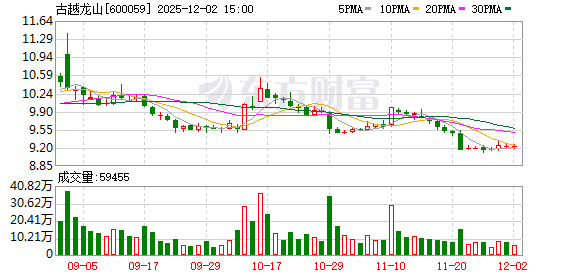
Core Viewpoint - The company Gu Yue Long Shan is committed to the revival of Huangjiu (yellow wine) as both a cultural heritage and a business, focusing on high-end, youthful, global, and digital strategies to expand the market and promote Huangjiu culture [2][6]. Group 1: Business Strategy - Gu Yue Long Shan views its competition not as other Huangjiu brands but as a challenge to promote the category and culture of Huangjiu to a broader audience [2]. - The company has seen significant growth in new business formats, with a 22.64% year-on-year increase in new business sales and a 15.31% increase in online sales [2]. - The introduction of innovative products, such as the "Wu Gao Di" targeting younger consumers, has resulted in over 330,000 bottles sold in its first year, with more than 70% of orders coming from the younger demographic [6]. Group 2: Technological Innovation - Gu Yue Long Shan is investing in smart manufacturing, with a 22 billion yuan project set to be completed by the end of 2024, which will enhance automation and efficiency in production [3]. - The company has maintained the largest capacity for hand-crafted Huangjiu production while addressing challenges such as high costs and low efficiency through technological upgrades [3][4]. - Research and development expenditures reached 17.46 million yuan in the first half of the year, marking a 33.61% increase year-on-year, reflecting the company's commitment to innovation [4]. Group 3: Market Expansion - The company has opened 66 tasting and slow wine bars across the country, with revenue from markets outside Jiangsu, Zhejiang, and Shanghai reaching 40.74% in 2024 [7]. - Gu Yue Long Shan is actively expanding its market presence through initiatives like "Bai Cheng Gong Pin," aiming to enhance brand visibility and consumer engagement nationwide [8]. - The company is also exploring cross-industry collaborations, such as a partnership with China Resources Beer to create a new product that combines Huangjiu and beer [6]. Group 4: Cultural Significance - Gu Yue Long Shan emphasizes the cultural heritage of Huangjiu, viewing it as a living cultural legacy and a historical narrative rather than just a commodity [8]. - The company has a significant inventory of over 11 million jars, approximately 260,000 tons of original wine, which it considers a valuable asset [8]. - The company aims to contribute to the broader Huangjiu industry, with a goal of achieving 10 billion yuan in annual sales by 2027 and capturing over 50% of the national market share [8].

吉林石化转产高端“三峰”管材料
Zhong Guo Hua Gong Bao· 2025-12-02 02:47
为确保转产任务顺利完成,在转产前期准备阶段,吉林石化组织工艺、设备、安全等多专业技术人员, 联合制定科学的转产方案,并开展全流程推演,提前完成了催化剂切换、复配添加剂调整等工作;生产 过程中,技术人员实时确认工艺流程切换状态,对各项核心参数进行严密监控与精准调控,最终实现了 反应器工况的平稳过渡,确保了新产品各项性能指标精准达标。 此次转产的PE-HD 5023P新牌号产品具有高强度、高应力开裂能力、卓越的长期静液压强度以及良好的 加工性能,适用于市政给排水、燃气输送等对管材承压能力、耐久性要求极高的领域。 中化新网讯 近日,吉林石化炼油化工转型升级项目中新建的40万吨/年高密度聚乙烯装置,转产"三 峰"管材料产品累计产量突破4万吨。这标志着吉林石化在高端化、差异化产品研发与规模化生产领域实 现突破。 ...
钢铁业倚重高端化与低碳化破局
Zhong Guo Zheng Quan Bao· 2025-12-01 20:25
Core Viewpoint - The steel industry in China is experiencing a decline in consumption and an increase in inventory, despite stable production levels and improved profitability for some companies [1][2][4]. Production and Consumption - From January to October, China produced 818 million tons of crude steel, a year-on-year decrease of 3.9%, with an average daily output of 2.69 million tons [1][3]. - The apparent consumption of steel in China for the first three quarters of 2025 was 649 million tons, down 5.7% year-on-year, continuing a trend of decline since the 14th Five-Year Plan [1][2]. Inventory Levels - As of November 28, the social inventory of five major steel products reached 10.073 million tons, an increase of 27.82% year-on-year [1][3]. - The inventory of key steel enterprises was reported at 15.61 million tons in mid-November 2025, reflecting a 26.3% increase since the beginning of the year [3]. Profitability and Financial Performance - The steel industry has shown overall stable operations this year, with significant improvements in profitability compared to last year, although demand has decreased [2][4]. - Among 46 listed steel companies that disclosed their third-quarter reports, 31 reported a year-on-year increase in net profit, accounting for approximately 67.39% [2]. Industry Development Strategies - The China Iron and Steel Association (CISA) emphasizes the need for steel companies to adhere to production control policies and focus on sustainable development through structural reforms [4]. - Recommendations for high-quality development include enhancing innovation capabilities, optimizing resource supply, and promoting the integration of steel structure construction [4][6]. Environmental Initiatives - By the end of October, 219 steel enterprises had completed or partially completed ultra-low emission modifications, with total investments exceeding 310 billion yuan [5]. - The industry is encouraged to accelerate technological innovation and expand applications in new energy sectors [5][6].

伊之密迎来机构密集调研 前三季度外销收入超12亿元
Zheng Quan Ri Bao· 2025-12-01 12:41
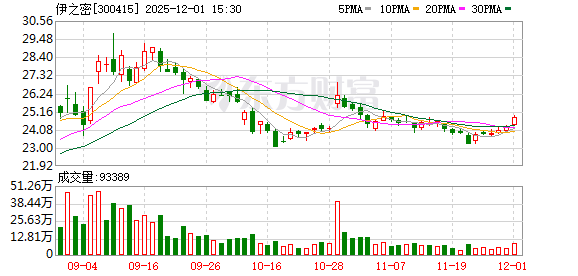
Core Viewpoint - The company, Yizhiming, reported a year-on-year increase in sales revenue for injection molding machines in the first three quarters of the year, outperforming the overall industry level, and is optimistic about the continued growth of the injection molding machine market [2] Group 1: Injection Molding Machine Market - The sales revenue for injection molding machines has increased year-on-year, indicating a positive trend in the market [2] - The company sees a broad application scenario for injection molding machines and is optimistic about the market's sustained growth [2] - Rapid development in overseas export business is contributing positively to the injection molding machine segment [2] Group 2: Die Casting Machine Industry Trends - The die casting machine industry is expected to trend towards "larger, smarter, and greener" machines in the next two years [2] - There is a growing demand for large-tonnage, high-stability die casting machines driven by the rapid growth in sectors like new energy vehicles and battery structural components [2] - The company plans to focus on high-end, intelligent, and green manufacturing in its future product direction, enhancing competitiveness in large structural components and new energy fields [2] Group 3: Global Expansion Strategy - The company's foreign sales revenue reached 1.214 billion yuan, a year-on-year increase of 15.58%, indicating significant growth potential in overseas markets [3] - Yizhiming has established a factory in India and set up research and service centers in Germany, Brazil, and Vietnam, expanding its global footprint [3] - The company currently has over 40 overseas distributors, covering more than 90 countries and regions, highlighting its extensive international reach [3]

星途坚定高端化决心 ET5搭载多款首发黑科技
Zhong Guo Jing Ji Wang· 2025-12-01 06:47
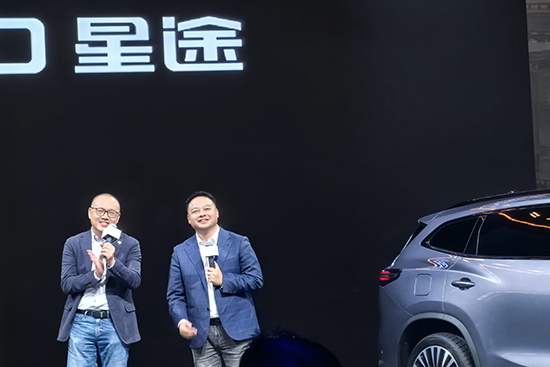
Core Viewpoint - The launch of the Xpeng ET5 marks a significant step for Chery Automobile in its high-end positioning strategy, aiming to enhance sales and brand reputation amidst challenges in the premium segment [3][8]. Group 1: Product Launch and Features - The Xpeng ET5, a new mid-size SUV, was officially launched on November 28, with a limited-time price range of 134,900 to 149,900 yuan [3]. - The vehicle features advanced technology, including the Horizon HSD and Journey 6P chips, and the Falcon 700 urban NOA, emphasizing Chery's commitment to high-end technology [3][8]. - The ET5 is equipped with a 1.5T range extender engine, achieving a thermal efficiency of 45.79% and a fuel-to-electricity conversion efficiency of 3.71 kWh/L, providing a comprehensive range of over 2000 km [12]. Group 2: Sales Performance and Market Position - Chery's overall sales reached 2.2889 million units in the first ten months of the year, reflecting a 13% year-on-year increase, while the Xpeng brand's sales were only 97,500 units, falling short of the annual target of 300,000 units [5][6]. - The underperformance of the Xpeng brand has led to organizational restructuring, including the integration of Xpeng into Chery's domestic business group and a change in leadership within the marketing center [6]. Group 3: Strategic Vision and Brand Positioning - Chery aims to position the Xpeng brand as a leader in "tech luxury," with a focus on integrating advanced technology into everyday use, as highlighted by the collaboration with Horizon Robotics [8][10]. - The ET5 is designed to set a new benchmark for intelligent configurations in the 150,000 yuan market segment, with a strong emphasis on user experience and product performance [13].
“三维”赋能破解困局 | 大家谈 如何破除“内卷式”竞争
Zhong Guo Hua Gong Bao· 2025-12-01 03:54
Core Viewpoint - The chemical industry is facing multiple pressures and challenges due to international macroeconomic factors, product price fluctuations, and intensified homogenization competition. Companies must empower themselves through product, service, and industry differentiation to achieve sustainable and healthy development [1] Group 1: Product Differentiation - Companies should precisely target high-end and differentiated products to escape low-end homogenization competition. This involves conducting specialized market research to understand customer core demands and market gaps, increasing investment in new product R&D, and forming specialized R&D teams [1] - Emphasis should be placed on unique production processes and core technological innovations, prioritizing improvements in product stability, environmental friendliness, and functionality to surpass competitors in performance, quality, functionality, and price [1] - Establishing a scientific and comprehensive product grading system is essential to gradually reduce the proportion of mid-to-low-end generic products and build a product matrix with high added value and strong competitiveness [1] Group 2: Customer Service Enhancement - Continuous improvement of customer service value is crucial for building differentiated competitive advantages. Companies should integrate business data resources across the entire chain and develop customer-specific intelligent service platforms for integrated functions like order tracking and product traceability [2] - Utilizing big data to analyze customer product consumption patterns and production needs can lead to proactive services such as restocking reminders and performance upgrade proposals, shifting the service model from passive response to proactive empowerment [2] - Strengthening brand value and service enhancement effects will deepen customer cooperation and create a dual-driven competitive advantage of "product + service" [2] Group 3: Industry Integration and Innovation - Promoting industry integration and mechanism innovation is necessary to transition from "low-price competition" to "innovation competition." Leading companies should integrate upstream and downstream resources in the industry chain, establishing shared R&D platforms and supply chain collaboration systems [2] - Small chemical enterprises should collaborate on raw material procurement and share environmental and production facilities to avoid redundant construction and resource waste [2] - Establishing an innovation incentive system will stimulate corporate innovation and creativity, ensuring a solid institutional guarantee for differentiated transformation and development [2]
高端化突围 长安启源急需出路
Xi Niu Cai Jing· 2025-12-01 01:28
Core Insights - Changan Automobile's new energy brand, Changan Qiyuan, reported impressive sales figures, achieving 36,737 units in October 2025, maintaining a monthly sales volume of over 30,000 since August, indicating its strong position in the mainstream new energy vehicle market [2] - Despite the strong sales, there are underlying concerns regarding the sales structure, with the Changan Lumin micro electric vehicle contributing significantly to overall sales, while the flagship model, the Qiyuan Q07, has lower sales figures [2][3] - The brand aims for ambitious sales targets, planning to reach 500,000 units domestically by 2026 and 2 million globally by 2027, but current sales figures for key models fall short of these goals [3][4] Sales Performance - In October 2025, Changan Qiyuan's monthly sales reached 36,737 units, with the Lumin model consistently selling over 20,000 units monthly, while the Q07 model sold 11,637 units in the same month [2] - The cumulative sales for the Q07 since its launch stand at 79,935 units, indicating a gap compared to the Lumin's performance [2] Strategic Direction - Changan Qiyuan is pursuing a high-end market strategy, with the new marketing head expressing intentions to compete with brands like Li Auto and AITO [3] - The brand has set a target of selling 20,000 units annually for its core models, but the Q07's current sales are significantly below this benchmark [3] Product Development - The brand plans to launch 4-5 new models in the fourth quarter of this year and the first half of next year to optimize its product structure [4] - However, the lack of core technological breakthroughs and brand value enhancement may hinder the brand's ability to achieve significant transformation [4] Quality Control Issues - There has been a notable increase in complaints regarding Changan Qiyuan's vehicles, particularly the Q07, which has faced issues related to misalignment between marketing claims and actual product performance [3][4]