太空算力

Search documents
太空光伏与"轨道数据中心": 为什么下一代能源与算力的战场,会在800km的高空?
Hua Er Jie Jian Wen· 2026-01-12 04:12
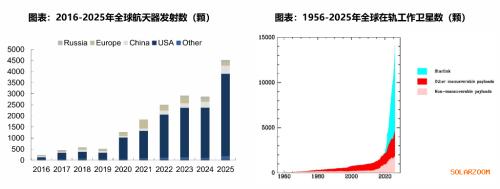
Core Viewpoint - Space photovoltaic technology is evolving from being merely "solar panels on satellites" to becoming a crucial component for the next generation of computing power (space computing/orbital data centers) [1][2] Group 1: Industry Trends - The application for orbital resources and satellite deployment plans is reshaping the supply-demand dynamics of the space industry, with a significant increase in satellite launches expected [2][3] - The number of global spacecraft launches has surged from 237 in 2016 to over 4,300 expected by 2025, reflecting a compound annual growth rate of approximately 34% [3] - The market for solar wings is transitioning from a niche to a mass production model due to the increasing number of satellites [5][6] Group 2: Cost Comparisons - A comparison of costs shows that deploying a data center in space can be significantly cheaper than on the ground, with a projected total cost of approximately $8.2 million in space versus $167 million on the ground over ten years [16] - The primary cost difference arises from energy expenses, where ground energy costs are estimated at $140 million over ten years, while space energy costs are nearly zero after initial deployment [16] Group 3: Technological Developments - The demand for solar wings is driven by the increasing power requirements of satellites, with examples showing significant growth in solar wing area from 22.68 m² to 256.94 m² for different satellite versions [9][12] - The report indicates a shift in technology from gallium arsenide (GaAs) to silicon-based technologies, particularly HJT (Heterojunction Technology), which offers advantages in weight, cost, and flexibility [25][27] Group 4: Market Potential - The solar wing market could reach approximately 200 billion yuan if annual satellite launches reach 10,000, with prices expected to decrease from 1,200 yuan/W to 622 yuan/W [10][11] - The space computing market is defined as deploying modular server nodes on low/mid-orbit satellites, transforming them into orbital data centers with significant computational capabilities [12][14] Group 5: Competitive Landscape - The competition for orbital resources is intensifying, with a total of over 100,000 low-orbit satellites planned globally, including approximately 45,000 from the U.S. and 53,000 from China [6][18] - The choice of technology and materials for solar wings will be influenced by launch costs, with SpaceX's lower costs allowing for different material choices compared to higher-cost Chinese rockets [22][23]

这一板块持续强势!千亿龙头涨停!
Zheng Quan Ri Bao Zhi Sheng· 2026-01-12 04:01
中信建投(601066)研报指出,当前商业航天产业在国家政策支持和产业技术突破共同助力下,有望进 入新纪元。商业航天产业涉及信息化的主要环节包括遥感及其应用、卫星测运控系统、CAE仿真/卫星 测试、星际传输处理模块等,新场景扩展层面关注太空算力。 开源证券表示,2026年,国内商业航天有望迎来"政策+技术+资本"三重共振,值得高度期待。在政策 支持,以及卫星规模化制造、可重复使用火箭等核心技术突破的双重赋能下,行业进入快速发展期,产 业链上下游龙头企业营收稳步增长、订单储备充足,长期成长空间广阔。 添翼数字经济智库高级研究员吴婉莹对《证券日报》记者表示,近期商业航天概念股的批量涨停,是产 业长期发展逻辑与短期密集利好事件共振的结果,其中不仅有多层次的政策支持作为战略牵引,更 有"千帆星座"等国家级卫星互联网工程进入密集组网阶段所催生的确定性市场需求。资本市场的热烈反 应,体现了市场对商业航天从"样品"走向"产品"、从投入期迈向量产元年的积极预期。然而,当前部分 个股涨幅巨大、估值高企,也反映出市场情绪高涨,投资者需注意短期炒作过热与长期业绩兑现之间的 潜在风险。 本报记者 张晓玉 2026年1月12日,商业航 ...

【电新环保】重点关注国产算力、氢能、储能上游——电新环保行业周报20260111(殷中枢/郝骞/陈无忌/和霖/邓怡亮)
光大证券研究· 2026-01-11 23:03
Overall Viewpoint - This week, there were multiple supply-side events in the new energy sector: (1) Four ministries held a symposium on power and energy storage battery industries to regulate industry competition; (2) The "anti-involution" trend in the photovoltaic sector was influenced by market information, leading to a continuous decline in polysilicon futures; (3) Export tax rebates for photovoltaic products will be canceled starting April 1, 2026, while battery product export tax rates will gradually decrease to a cancellation by 2027. The new energy industry's "anti-involution" is inherently complex and challenging, with the state aiming to maintain international competitiveness. Balancing market and policy adjustments will evolve accordingly. Therefore, the direction of the photovoltaic industry's "anti-involution" will not change, focusing more on execution coordination and method restructuring; the battery industry is more about preventive reminders against energy storage battery oversupply; the adjustment of export tax rebate policies is expected to optimize the supply side, potentially leading to a short-term export rush [4]. Investment Perspective - (1) Market enthusiasm is currently focused on commercial aerospace and space computing, with wind power stocks such as Goldwind Technology, Taisheng Wind Energy, and Mingyang Smart Energy, as well as photovoltaic stocks like Junda Co., Oriental Sunrise, and Maiwei Co., having accumulated significant price increases, detaching from their core business fundamentals, making it inadvisable to chase high prices at this time [4]. - (2) AI power: There is optimism regarding domestic computing power demand rebounding after the NVIDIA H200 release; the HVDC solution is expected to ramp up, and SST technology and collaboration progress are likely to materialize; this can also align with AI applications to form sector rotation; the capital expenditure situation for North American data centers in 2027 needs to be assessed during the US stock annual report period for risk evaluation [4]. - (3) During the "14th Five-Year Plan" period, based on the dual benefits of China's future industries and the EU carbon tariff in 2026, there is optimism for the coordinated, large-scale, and advanced construction of hydrogen, ammonia, and methanol [5]. - (4) For energy storage/lithium battery upstream: The overall game on the lithium battery demand side is focused on domestic energy storage bidding in 2026; data on energy storage and vehicle terminals still need to be tracked, making it difficult to confirm or refute; the investment ranking for lithium battery materials is: lithium carbonate > lithium hexafluorophosphate > aluminum foil > separator > copper foil > anode; lithium carbonate prices still have upward momentum in the short term [5].
中国商业航天迎“质变元年” 卫星ETF规模开年接近翻倍
Zheng Quan Shi Bao· 2026-01-11 16:54
Core Viewpoint - The satellite industry chain has shown remarkable performance since the beginning of 2026, with significant growth in commercial aerospace, space stations, and Beidou navigation sectors, leading to substantial increases in satellite ETFs and related products [1][3]. Group 1: Market Performance - As of January 9, 2026, the China Satellite Industry Index has increased by 64.99% over the past month, while the National Commercial Satellite Communication Industry Index has risen by over 50% [1]. - Multiple satellite ETFs have seen performance increases exceeding 60% in the same timeframe, with total assets under management for satellite-related ETFs and linked products reaching 23.76 billion yuan, nearly doubling from 12.11 billion yuan at the end of 2025 [1]. - The Yongying National Commercial Satellite Communication Industry ETF has become the first satellite ETF to exceed 10 billion yuan in scale, currently standing at 11.769 billion yuan [1]. Group 2: Product Overview - There are currently four satellite industry indices in the market, with two having tracking products. The total scale of ETFs and linked products related to satellite investments exceeds 23.7 billion yuan [2]. - The Yongying National Commercial Satellite Communication Industry ETF is the only product tracking the National Commercial Satellite Communication Industry Index, with a total scale of 11.998 billion yuan across three products [2]. - The China Satellite Industry Index has ten tracking products, with five ETFs, two of which exceed 3 billion yuan in scale: the China Securities Satellite Industry ETF (3.42 billion yuan) and the Fortune China Securities Satellite Industry ETF (3.367 billion yuan) [2]. Group 3: Industry Outlook - Fund managers anticipate that 2026 will be a pivotal year for the acceleration of China's commercial aerospace industry, driven by high entry barriers, strong policy support, and clear order visibility in midstream sectors like rocket launches and satellite manufacturing [3][4]. - The recent successful launch of the Zhuque-3 rocket marks a significant resolution to the long-standing issue of insufficient launch capacity, with various rocket models set to conduct frequent launches and recovery tests in the coming months [4]. - Satellite communication is expected to serve as the foundational technology for 6G communication and support applications in autonomous driving, low-altitude economy, IoT, and space computing [4]. Group 4: Investment Considerations - The commercial aerospace sector is currently experiencing a convergence of industry, policy, and capital, indicating rapid development ahead [5]. - The focus for selecting relevant listed companies should be on "technical barriers + competitive advantages + order fulfillment," prioritizing firms with core technologies, strong competitive capabilities, and stable order visibility [6]. - Key indicators for observation include the proportion of R&D expenses, progress on research and matching projects, order visibility, and product gross margin levels [6].
计算机行业点评:空天时代最大预期差在哪
SINOLINK SECURITIES· 2026-01-11 13:39
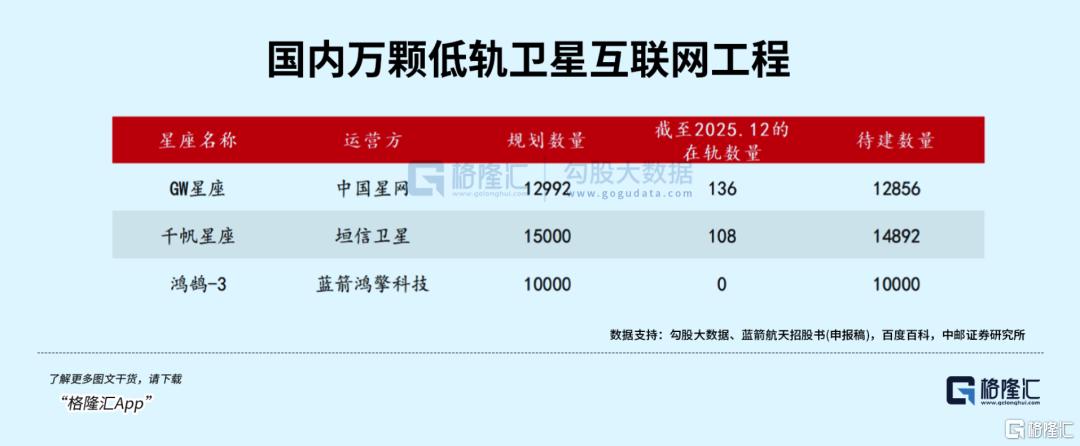
Investment Rating - The industry is rated as "Buy" with an expectation of an increase exceeding 15% over the next 3-6 months [26] Core Insights - The current space market is rapidly developing, with a focus on large low-orbit satellite constellations and space computing constellations. However, due to limited rocket resources, the actual number of satellites in orbit by December 2025 is expected to be lower than anticipated, with only 136 GW satellites and 108 Qianfan satellites [2][11] - Elon Musk announced plans to expand the Starlink V3 satellite scale and establish a space data center, aiming for an annual deployment of 100 GW of data centers within 4-5 years. This could require an astonishing scale of 500,000 to 800,000 satellites [2][12] - The report suggests that the actual capacity for low-orbit satellites may exceed expectations, with potential for up to 175,000 satellites if safety distances are reduced [3][14] - Two main investment strategies are proposed: focusing on leading companies in the space sector and selecting suppliers within the SpaceX supply chain, which is expected to benefit from significant orders as SpaceX prepares for an IPO with a target valuation of $1.5 trillion [4][21] Summary by Sections Section 1: Expected Differences in Space Era - The market space is typically estimated based on launch plans, but actual satellite deployment may fall short due to resource constraints [11] - The anticipated number of satellites in orbit is significantly lower than planned, with only 136 GW satellites and 108 Qianfan satellites expected by December 2025 [11][12] Section 2: Low-Orbit Satellite Capacity - The market generally believes that low Earth orbit can accommodate 60,000 to 100,000 satellites, but actual capacity may be much higher, potentially reaching 175,000 satellites under certain conditions [3][14] Section 3: Investment Strategies in the Space Era - Investment Strategy 1: Focus on leading companies in the space sector, which have shown a significant increase in market capitalization from 1.3% to 6.0% since November 2025 [4][18] - Investment Strategy 2: Prioritize the SpaceX supply chain, which is expected to see substantial growth as SpaceX aims for a historic IPO and ambitious production goals [4][21] Section 4: Related Companies - Companies related to the SpaceX supply chain include Xinwei Communication, Yujing Co., Maiwei Co., and Lens Technology. Other sectors include space computing, rockets, satellites, and 3D printing [5][24]
太空光伏与“轨道数据中心”:为什么下一代能源与算力的战场,会在800km的高空?
华尔街见闻· 2026-01-11 12:21
Core Viewpoint - Space photovoltaic technology is evolving from merely being "solar panels on satellites" to becoming a crucial pathway for the next generation of computing forms, specifically space computing and orbital data centers [1][4]. Group 1: Market Dynamics - The approval of SpaceX to deploy an additional 7,500 second-generation Starlink satellites, bringing the total to 15,000, is reshaping the supply-demand landscape of the space industry [2]. - The cost of deploying a data center in space is significantly lower than on the ground, with a projected total cost of approximately $8.2 million for a 40MW data center in space compared to about $167 million on the ground over ten years [3][16]. - The demand for solar wings is becoming rigid and preemptive due to the increasing number of satellites, which are expected to grow from 237 launches in 2016 to over 4,300 by 2025, reflecting a compound annual growth rate of about 34% [5][7]. Group 2: Technological Advancements - The energy and cooling requirements for satellites are being redefined, with solar wings becoming essential for long-term power supply, accounting for 20%-30% of the total manufacturing cost of satellites [5][8]. - The area of solar wings for Starlink satellites has increased dramatically, from 22.68 square meters in version 1.5 to 256.94 square meters in version 3, indicating a significant upgrade in power consumption [9]. - The market for solar wings is projected to grow significantly, with estimates suggesting a market space of approximately 200 billion yuan if annual launches reach 10,000 satellites [10][11]. Group 3: Cost Structure and Competitive Landscape - The core business logic for space computing is to convert the largest long-term cost items (energy and cooling) from ongoing expenses to one-time investments, leveraging the favorable conditions in space [17][18]. - The cost of energy systems in satellites can account for up to 22% of the overall economic viability, emphasizing the importance of developing lighter, cheaper, and scalable solar wings [14][15]. - The competition in the space computing sector will increasingly focus on the energy system's power-to-weight ratio, which will become a key competitive advantage [21]. Group 4: Future Outlook and Strategic Considerations - The optimal orbit for deploying satellites, particularly the Sun-Synchronous Orbit (SSO), is limited, which will drive competition towards larger platform motherships or multi-satellite clusters [20]. - The transition from gallium arsenide to silicon-based technologies, particularly HJT (Heterojunction Technology), is anticipated due to its advantages in energy, weight, and cost efficiency [22][29]. - The growth of space photovoltaic technology is not just an industry story but a resonance of a comprehensive system involving energy, transport, orbit, and computing [33].

军工本周观点:重视商业航天强辐射效应:国防军工-20260111
Huafu Securities· 2026-01-11 11:47
Investment Rating - The report maintains a "stronger than the market" rating for the defense and military industry [5] Core Viewpoints - The report emphasizes the strong radiation effect of commercial aerospace, highlighting significant developments in the sector, including the approval of satellite frequency resources and the construction of additional satellites by SpaceX [37][38] - The report notes that the military industry index has outperformed the broader market, with a 13.63% increase compared to a 2.79% rise in the Shanghai Composite Index during the same period [10][37] - The report suggests that the commercial aerospace sector will continue to drive asset value reassessment across various industries, particularly in the rocket supply chain and satellite networks [39] Summary by Sections 1. Weekly Market Review - The military industry index rose by 13.63% from January 5 to January 9, outperforming the Shanghai Composite Index by 10.84 percentage points [10][16] - The aerospace sector showed a significant increase of 34.57%, while the low-altitude economy sector performed relatively flat [21][24] 2. Key Developments in the Industry - The report highlights the approval of plans to accelerate the construction of advanced manufacturing in Guangzhou, which includes support for satellite constellation projects [37] - The report mentions the successful launch of SpaceX's Falcon 9 rocket, which deployed an Earth observation satellite [41] 3. Investment Recommendations - The report recommends focusing on specific companies within the rocket sector, overseas commercial aerospace, satellite technology, nuclear fusion, stealth materials, deep-sea technology, engines, unmanned systems, AI, aircraft, and land equipment [40]
商业航天高景气上行,国产大飞机迎双提升机遇
ZHONGTAI SECURITIES· 2026-01-11 11:40
Investment Rating - The report maintains an "Accumulate" rating for the industry [6] Core Insights - The commercial aerospace sector is entering a high prosperity cycle, with significant growth expected in the next two years due to technological advancements and increased demand for launch services and satellite networks [9][24] - The domestic large aircraft sector is poised for dual improvements in airline deliveries and localization rates, particularly with the C919 and C909 aircraft [13][28] Summary by Sections Commercial Aerospace - The global commercial aerospace industry is expected to experience an explosive growth phase, driven by rapid technological iterations and engineering advancements [9] - Policy initiatives, such as the establishment of the Commercial Aerospace Administration, aim to enhance the industry's development and regulatory framework [25] - Technological breakthroughs, including successful launches of new rocket models, are providing a solid foundation for commercial space missions [26] - The integration of artificial intelligence with commercial aerospace is creating new business opportunities, particularly in "space computing" [33] Domestic Large Aircraft - The C919 aircraft is projected to deliver 25 units in 2026, with efforts to expand its international market presence [13][28] - The CJ-1000A engine is undergoing certification processes to enhance the domestic aviation industry's self-sufficiency [14][28] - The C919 highland version has successfully completed its first assembly, marking a significant milestone in the development of domestic large aircraft [35] Key Sector Dynamics - In the aerospace equipment sector, Blue Arrow Aerospace has signed contracts to provide batch launch services for satellite internet projects [38] - The low-altitude economy is advancing with the AS700 manned airship receiving production licenses and completing its first delivery [41] - The nuclear equipment sector has achieved breakthroughs in fusion technology, indicating progress in high-density operations [42] Market Overview - The defense and military industry index has seen a significant increase of 13.63%, outperforming other major indices [46] - The current price-to-earnings ratio (PE) for the defense and military sector stands at 89.4, with various sub-sectors showing high valuation metrics [53]


20万颗!下周A股核心主线来了!
Xin Lang Cai Jing· 2026-01-11 11:01
Group 1 - The core message of the news highlights a significant development in the commercial space sector, with China submitting an application for 203,000 new satellites, marking a record in domestic frequency orbit applications [2][3] - The application involves 14 satellite constellations, with the CTC-1 and CTC-2 constellations leading the submission, accounting for 95.3% of the total application [2][3] - The competition for satellite frequency and orbit resources is intensifying globally, as evidenced by simultaneous approvals from both China and the U.S. for large-scale satellite deployments [2][3] Group 2 - The application includes a diverse range of operators, such as China Star Network, Shanghai Yuanxin, China Mobile, and China Telecom, indicating a collaborative effort across the industry [3][4] - The establishment of the Radio Innovation Institute, which aims to support satellite internet development and spectrum resource utilization, underscores the urgency of securing frequency and orbit resources [3][4] - The strategic intent behind China's large-scale application is to "lock in" resources and secure positions for future network expansions over the next decade [4] Group 3 - China's commercial space sector is entering a golden development period, with a record 92 space launches in 2025, including 69 by state-owned enterprises and 23 by private companies [6][7] - The anticipated advancements in rocket technology and infrastructure improvements are expected to significantly reduce launch costs, enhancing the economic feasibility of satellite internet [6][7] - The increasing focus on "space computing" and the development of satellite computing clusters indicate a shift in the industry towards more advanced applications [7][8] Group 4 - The commercial space sector is expected to see substantial growth in 2026, with a projected increase in low Earth orbit satellite launches by over 150% [10][9] - The breakthroughs in reusable rocket technology are anticipated to drive down costs and improve efficiency across the industry [10][9] - The overall outlook for 2026 suggests a critical transition for China's commercial space sector from accumulation of scale to enhancement of systemic capabilities [11]
申请超20万颗!下周商业航天还是A股核心主线?
Ge Long Hui· 2026-01-11 10:30
周末,一则关于卫星申报的重磅消息,在投资圈炸开了锅! 01、全球卫星竞赛升级,频轨资源争夺白热化 资料显示,此次申报的运营主体阵容堪称史上罕见,全面扩容至中国星网、上海垣信、中国移动、中国电信、无线电创新院、国电高科、航天驭星、银河 航天等多家知名企业与机构,涵盖国家队、地方国企、民营龙头及科研转化平台,形成全产业链协同申报格局。 1月10日,商业航天赛道传来标志性利好:国际电信联盟(ITU)官网公示显示,中国正式提交新增20.3万颗卫星的频谱轨位申请,覆盖14个卫星星座,申 报规模创下国内单次申报纪录。 其中,无线电创新院牵头的CTC-1和CTC-2两大星座表现尤为突出,各自申报96714颗卫星,合计达193428颗,占本次总申报量的95.3%,成为绝对主力。 无独有偶,周五,美国联邦通信委员会(FCC)同步批准SpaceX新增部署7500颗第二代星链卫星,使其获准运营的第二代卫星总数达到15000颗。此次授 权还包括卫星技术升级与多频段运营许可,并豁免了此前部分覆盖区域与容量方面的限制,为其全球互联网服务扩容扫清障碍。 分析指出,中美两国在短短48小时内密集出台卫星部署重磅政策,标志着全球太空战略资源竞争 ...