
物理AI

Search documents
直击CES:AI,加速影响物理世界
Zhong Guo Zheng Quan Bao· 2026-01-07 04:44
Group 1: AI Technology and Developments - AI has become the central theme at CES 2026, with discussions focusing on extending AI into the physical world [2][3] - NVIDIA's CEO Jensen Huang announced that the company's open-source physical AI model "Cosmos" has reached one million downloads, indicating a significant shift in AI capabilities [2] - AMD introduced several new AI products, including the MI455X GPU AI chip and Ryzen AI processors, with plans to launch the MI500 series chip in 2027, aiming for a 1000-fold increase in AI performance over the next four years [2] - Qualcomm's new high-performance robot processor, the Snapdragon IQ10 series, is designed for industrial autonomous mobile robots and advanced humanoid robots [2][3] Group 2: Robotics and Smart Products - The humanoid robot TORA-ONE showcased at CES 2026 demonstrates strong adaptability in new retail scenarios, featuring advanced tactile sensors with high precision and sampling rates [4] - Companies like 松延动力 are targeting key global markets for their products, aiming for significant overseas expansion in 2026 [5] - The exhibition highlighted various smart home products, including robotic lawn mowers and pool cleaning robots, indicating a growing market for AI-integrated home appliances [6] Group 3: Autonomous Driving - The maturity of technology is pushing L4-level autonomous driving into everyday life, with significant advancements in AI driving this trend [7] - Huang announced the Alpamayo R1, an open-source VLA inference model for assisted driving, suggesting that autonomous driving may become a mainstream application of physical AI [7]


观察 | CES 2026开幕:黄仁勋点名中国AI,物理AI时代来了!
未可知人工智能研究院· 2026-01-07 04:03
Core Insights - The article emphasizes that the AI competition has begun, with significant advancements being made in AI technology, particularly in the context of the CES event [1][2][3] Group 1: AI Advancements and Market Implications - Huang Renxun praised Chinese AI models at CES, highlighting the open-source model DeepSeek as a significant achievement, indicating a shift in the competitive landscape [6][7] - The cost efficiency of Chinese teams in AI inference is noted, with DeepSeek achieving results comparable to GPT-4 at a fraction of the cost, suggesting a potential market expansion [10][13] - The reduction of AI inference costs is crucial for market growth, allowing more companies to adopt AI technologies, which could lead to explosive demand for chips from companies like NVIDIA [17][18] Group 2: Physical AI and Industry Impact - Huang Renxun stated that the era of "Physical AI" has arrived, indicating that AI must move beyond conversational capabilities to practical applications in industries like manufacturing and logistics, which together represent a market worth over $50 trillion [22][23] - The introduction of the new Rubin chip, which increases inference power fivefold, could significantly lower operational costs for businesses deploying AI solutions [24][25] Group 3: Competitive Landscape and Strategic Moves - Major players like Intel and AMD are also making strides in the AI space, with Intel releasing a 1.8nm AI PC chip and AMD focusing on overcoming computational bottlenecks, indicating a competitive race for edge AI market share [31][32][34] - Chinese companies are leveraging cost advantages and a robust supply chain to compete globally, with examples of robots being produced at significantly lower costs than their foreign counterparts [36][37] Group 4: Opportunities for Individuals - The article outlines three key areas for individuals to explore: using AI tools to enhance work efficiency, understanding the integration of AI in traditional industries, and pursuing careers related to robotics and edge computing [40][41][42] - The transition of AI from a purely digital tool to one that operates in the physical world presents real opportunities for proactive individuals [43][44]


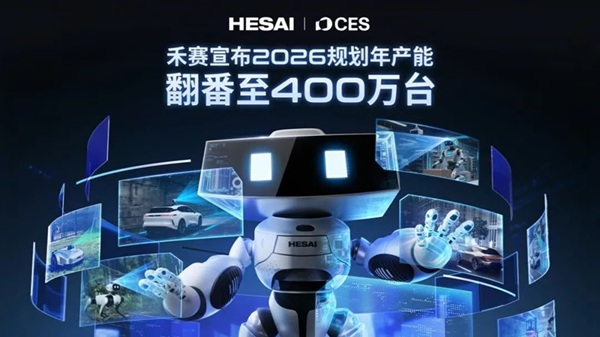
禾赛科技:CES 2026重磅官宣:年产能翻倍至400万台泰国新工厂加码全球布局
Zhong Guo Qi Che Bao Wang· 2026-01-07 03:46
Core Insights - Hesai Technology announced a significant capacity expansion plan at CES 2026, aiming to double its annual production capacity from 2 million units in 2025 to 4 million units in 2026 to meet the surging demand in the ADAS and robotics sectors [1][3] - The new "Galileo" factory in Bangkok, Thailand, is progressing steadily and is expected to commence production in early 2027, enhancing the company's global capacity layout [1] Production and Delivery Milestones - Hesai has achieved several industry milestones, including the production of its 1 millionth lidar unit in September 2025 and cumulative deliveries exceeding 2.4 million units to date [3] - The company has maintained a consistent annual delivery growth rate, with over 1.6 million units delivered in 2025 and a peak monthly delivery exceeding 200,000 units [3] - The ADAS product line accounted for approximately 1.4 million units, while the robotics segment contributed over 200,000 units, with the ATX product achieving over 1 million units in its first year [3] Manufacturing Capabilities - The core support for Hesai's capacity doubling is its strong in-house manufacturing capabilities, featuring a fully automated production line that can produce a lidar unit every 10 seconds [3] - The company has developed proprietary ASIC chips, enabling rapid product iteration and high reliability, which are essential for large-scale production [3] New Product Launches - At CES, Hesai launched a new L3-level automotive lidar solution, including the ETX long-range lidar and the FTX solid-state near-range lidar, designed to enhance vehicle safety and simplify integration [4] - The ETX lidar can be flexibly installed behind the windshield or inside the vehicle, while the FTX lidar is specifically designed for short-range blind spot monitoring, together creating a comprehensive 360° safety perception network [4] Market Penetration and Client Base - The safety value of lidar technology is recognized in the market, with vehicles equipped with lidar reducing the risk of fatal accidents by 90% and conventional traffic accidents by 30% [5] - Hesai has secured over 120 model production contracts with 24 major OEMs, including top European manufacturers and leading domestic brands such as Li Auto, Xiaomi, Changan, and Geely [5] - The company has locked in partnerships with its top two ADAS clients for 2026, ensuring 100% standardization across their entire model range [5] Expansion into Robotics and AI - Beyond the ADAS market, Hesai's lidar technology is empowering the AI-driven robotics industry, providing stable and precise environmental perception for robots transitioning from controlled to diverse real-world scenarios [6] - In the Robotaxi and autonomous trucking sectors, Hesai has become a key player, with several innovative companies selecting its lidar products for their fleets, some models planning to use up to 8 units [6] - The JT series mini 360° lidar has seen widespread adoption in various applications, with cumulative shipments exceeding 200,000 units, showcasing its utility in lawn mowing robots, companion robots, and 3D spatial digitization devices [6]

2026年CES英伟达演讲:人工智能进入“物理AI”时代
Bank of China Securities· 2026-01-07 03:38
Investment Rating - The industry investment rating is "Outperform" [11] Core Insights - The report highlights that artificial intelligence has entered the "Physical AI" era, emphasizing the integration of AI with real-world physical dynamics for executing complex tasks [6] - The Rubin platform has entered full-scale production, with significant performance improvements in GPU capabilities, including a 5X increase in inference performance and a 3.5X increase in training performance compared to the previous Blackwell architecture [6] - Robotics and autonomous driving are identified as ideal carriers for "Physical AI," with Nvidia deepening its collaboration with Tesla for the Optimus humanoid robot, which is expected to achieve mass production of 50,000 units by Q1 2026 [6] - The core materials for AI infrastructure are anticipated to reach a critical transition point, with supply chain stocking expected to accelerate in the first half of 2026 [6] Summary by Sections Investment Recommendations - The report suggests focusing on Nvidia's supply chain, including companies such as Shenghong Technology, Huitian Technology, and Shennan Circuits for PCB; Shunyi Technology for CCL; and Feilihua, Zhongcai Technology for Q fabric; and Dongcai Technology for resin [3] Key Developments - Nvidia's Rubin platform is projected to revolutionize inference costs and has already secured orders worth $300 billion, with products expected to hit the market in the second half of 2026 [6] - The report indicates that the AI market is transitioning from digital to real-world applications, necessitating enhanced computational infrastructure to support the demands of "Physical AI" [6]
黄仁勋新年首秀:除了Rubin芯片,还重新定义了数字员工和物理AI
Tai Mei Ti A P P· 2026-01-07 03:35
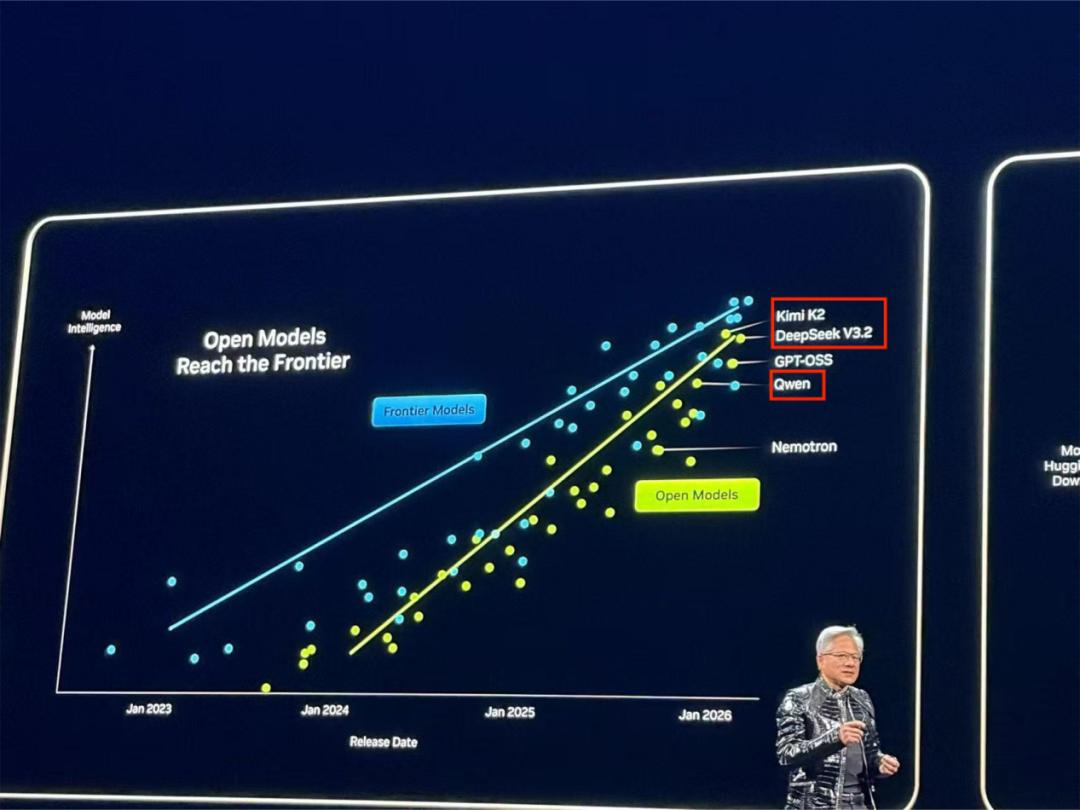
Core Insights - NVIDIA's CEO Jensen Huang emphasized the accelerating demand for advanced processors in AI model training and operation, highlighting the semiconductor industry's need to adapt quickly to increasing computational complexity [1] - The introduction of the DeepSeek R1 and the mention of Chinese open-source models Kimi K2 and Qwen were noted as significant developments in the AI landscape [1] Group 1: New Chip Architecture - NVIDIA unveiled the Rubin platform, consisting of six components including Rubin and Rubin Ultra GPUs and CPUs, designed for handling massive computational loads required for AI model training [2] - The Rubin GPU's NVFP4 inference performance is 50 PFLOPS, five times that of the Blackwell platform, while its training performance is 35 PFLOPS, 3.5 times higher than Blackwell [2] - The Rubin platform also features a memory bandwidth of 22 TB/s and 336 billion transistors, representing significant improvements over the previous generation [2][3] Group 2: Focus on Agentic AI - NVIDIA is working to lower the development costs for Agentic AI, introducing Nemotron-CC, a multilingual pre-training corpus covering over 140 languages with a total of 1.4 trillion tokens [4] - The company also launched the "Granary" instruction dataset aimed at making models ready for enterprise-level tasks [4][5] - The ease of building functional personal assistants using NVIDIA's hardware and frameworks marks a significant shift in AI development accessibility [5] Group 3: Emergence of Physical AI - Huang highlighted Physical AI as the next major focus, with applications in autonomous driving, robotics, and industrial manufacturing [6][7] - NVIDIA has been developing Physical AI for eight years, with simulation at the core of its efforts, utilizing the Omniverse platform to create a digital twin environment for safe and efficient AI training [7] - The introduction of the open-source inference VLA model Alpamayo aims to accelerate the development of safe autonomous vehicles [8] Group 4: Industrial Applications - NVIDIA announced a deepened collaboration with Siemens to integrate its Physical AI models and Omniverse simulation platform into Siemens' industrial software, covering the entire lifecycle from chip design to production operations [9] - Huang described this collaboration as the beginning of a new industrial revolution, with Physical AI enabling automated production lines and digital twin systems [9] Group 5: Strategic Vision - The event served as Huang's declaration on the future of AI and computing over the next decade, with NVIDIA aiming to define the technological standards and infrastructure for the next AI era [10] - The company's strategy continues to focus on an open-source and integrated hardware-software approach, ensuring a strong presence across all computing nodes from data centers to smart devices [10]
老黄All in物理AI!最新GPU性能5倍提升,还砸掉了智驾门槛
具身智能之心· 2026-01-07 03:33
Core Insights - NVIDIA is fully committed to AI, marking its first appearance at CES in five years without showcasing gaming graphics cards [2] - The next-generation Rubin architecture GPU demonstrates significant performance improvements, with inference and training capabilities being 5 times and 3.5 times that of the Blackwell GB200, respectively [4][17] Group 1: New Product Launches - NVIDIA introduced five new product lines, emphasizing the importance of open-source training frameworks and multimodal datasets, including 100 trillion language training tokens and 100TB of vehicle sensor data [5][6] - The Vera Rubin NVL72 architecture was officially launched, featuring six core components designed to enhance AI data center capabilities [14][15] - The Rubin GPU achieves 50 PFLOPS in inference performance and 35 PFLOPS in training performance under NVFP4 data types, significantly surpassing previous models [17] Group 2: Technological Advancements - The NVLink 6 technology enhances inter-GPU bandwidth to 3.6 TB/s, with a total bandwidth of 260 TB/s across the entire architecture [21][20] - The Vera CPU integrates 88 custom Arm cores, allowing for high thread concurrency and improved memory bandwidth [22] - NVIDIA's new BlueField-4 DPU introduces a memory layer aimed at optimizing key-value cache operations, addressing performance bottlenecks in AI infrastructure [32][34] Group 3: AI Model Developments - The Alpamayo model series was launched for autonomous driving, featuring a 10 billion parameter open-source model capable of interpreting environmental data for decision-making [39][41] - The Nemotron model family expands into voice, retrieval-augmented generation (RAG), and safety applications, enhancing AI capabilities in various domains [49][51] - The Cosmos platform for robotics has been upgraded, providing new models for generating synthetic data that adheres to physical laws [54][58] Group 4: Healthcare and Life Sciences - NVIDIA Clara targets the healthcare sector, aiming to reduce costs and accelerate the implementation of treatment solutions [62] - The company offers a dataset of 455,000 synthetic protein structures to support research in drug discovery and personalized medicine [66][69]
黄仁勋2026第一场演讲,点赞中国3个大模型
3 6 Ke· 2026-01-07 03:24
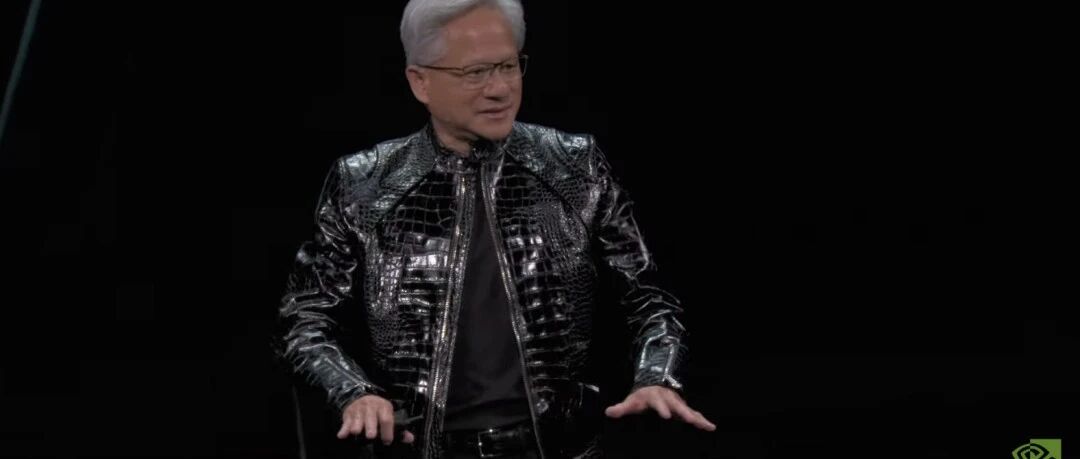
Core Insights - NVIDIA's CEO Jensen Huang emphasized the shift towards physical AI during his keynote at CES, moving away from consumer graphics cards to focus on advancements in AI technology [1][2] Group 1: AI Industry Developments - Huang highlighted the significant impact of open-source models on the AI industry, stating that they have become a catalyst for global innovation [2] - The emergence of the DeepSeek R1 model has notably accelerated industry transformation, surprising many in the field [2] - Open-source models are rapidly approaching top-tier performance, with a current gap of about six months compared to proprietary models, which is gradually narrowing [4] Group 2: NVIDIA's Innovations - NVIDIA introduced a comprehensive open-source model matrix covering six key areas, including agent AI, physical AI, autonomous driving, and robotics [5] - Huang defined physical AI as the fourth stage of AI development, capable of understanding physical causality in the real world, marking a transition from digital to physical applications [8] - The company launched the Alpamayo model, the world's first open-source autonomous driving inference model, which competes directly with Tesla's Full Self-Driving (FSD) technology [8] Group 3: Technical Advancements - The new Vera Rubin architecture was unveiled, named after astronomer Vera Rubin, and is designed to overcome limitations posed by the slowing of Moore's Law [11][13] - Rubin architecture features six chips working collaboratively, achieving a performance of 50 PFLOPS for inference tasks, which is five times that of the previous Blackwell architecture [13] - The cost of inference using Rubin has decreased by ten times, allowing for faster training and lower latency in decision-making processes [15] Group 4: Future Outlook - Huang expressed confidence that a significant portion of vehicles will be highly autonomous within the next decade [9] - The convergence of open-source model advancements, breakthroughs in physical AI, and the introduction of the Rubin architecture is expected to reshape industries and daily life [17]
A股异动丨机器人概念股继续集体飙升,锋龙股份、岩山科技等多股涨停
Ge Long Hui A P P· 2026-01-07 03:18
中信建投指出,特斯拉正引领全球"物理AI"产业变革,人形机器人作为其核心支柱之一,与智能驾驶共 享FSD端到端大模型等技术底座,开启"数据-算法-硬件"闭环迭代。本周板块情绪持续回暖,催化一方 面来自特斯拉Optimus V3 Q1发布在即、Gen3量产规划明确,另一方面,产业节奏进入实质兑现期。中 信建投认为板块处于底部反弹阶段,市场持续博弈特斯拉2026年底百万台产线落地前景,预期上修有待 新催化或量产进展验证。 | 代码 | 名称 | | 涨幅% ↓ | 总市值 | 年初至今涨幅%。 | | --- | --- | --- | --- | --- | --- | | 300200 | 高豐新材 | | 20.03 | 62.75亿 | 24.34 | | 301213 | 观想科技 | + | 20.00 | 66.29亿 | 20.00 | | 301046 | 能輝科技 | | 12.87 | 46.63 乙 | 16.81 | | 300919 | 中伟股份 | + | 12.66 | 599亿 | 24.11 | | 920198 | 微创光电 | | 10.92 | 18.36 Z | 13. ...





英伟达全面入局,自动驾驶将迎来“蝶变时刻”?
3 6 Ke· 2026-01-07 02:55
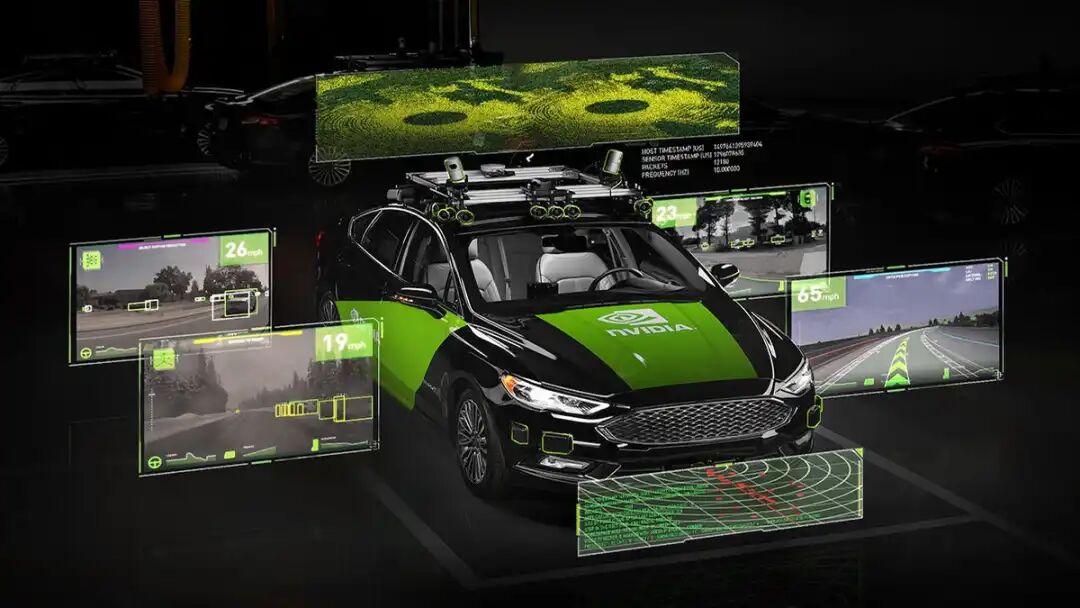
Core Insights - Nvidia's CEO Jensen Huang announced the launch of a comprehensive autonomous driving ecosystem named Alpamayo at CES 2026, marking a significant shift in the industry towards commercializing Level 4 autonomous driving [1][6] - Alpamayo is not just a single product but a "toolbox" for autonomous driving development, consisting of a large model, a global driving dataset, and a high-fidelity simulation framework [3][4] - The introduction of Alpamayo is seen as a pivotal moment for the industry, potentially transforming the landscape of autonomous driving from testing to commercial deployment by 2026 [1][7] Summary by Sections Alpamayo Overview - Alpamayo consists of three main components: the Alpamayo-R1 model, a global driving dataset, and the AlpaSim simulation framework, creating a closed-loop system for model training, data support, and simulation validation [3][4] - The Alpamayo-R1 model features 10 billion parameters and represents a paradigm shift from "perception prediction" to "reasoning planning," enabling vehicles to make decisions based on complex scenarios [3][4] Open Source Strategy - Nvidia has chosen to open-source the underlying code of Alpamayo-R1 on the Hugging Face platform, allowing developers from various sectors to access and customize the model, thus lowering the barriers for high-level autonomous driving development [4][11] - The global driving dataset includes 1,727 hours of driving data from over 2,500 cities across 25 countries, capturing diverse traffic conditions and scenarios, which can be used in conjunction with synthetic data generated by Nvidia's Cosmos model [4][6] Simulation Framework - The AlpaSim simulation framework, now available on GitHub, provides a virtual testing environment for developers to conduct large-scale safety tests, significantly reducing the costs and risks associated with real-world testing [6][10] - Alpamayo's core value lies in its ability to enable autonomous systems to not only drive but also reason and explain their actions, enhancing decision-making capabilities in complex situations [6][10] Industry Impact - The open-sourcing of Alpamayo is expected to redefine the competitive landscape of the autonomous driving industry, shifting from a focus on in-house development to ecosystem collaboration [11][12] - Traditional automakers are likely to benefit from the open-source model, allowing them to focus on optimizing user experience and specific scenarios rather than building foundational models from scratch [11][12] Market Dynamics - The launch of Alpamayo is anticipated to shift demand in the chip and computing industry from "brute force computing" to "efficient reasoning," prompting chip manufacturers to innovate in architecture and design [12][13] - The introduction of Alpamayo may also lead to the emergence of new job roles within the industry, such as autonomous driving AI trainers and scenario definition engineers, reflecting a shift in talent requirements [12][13] Challenges and Opportunities - While Alpamayo offers powerful tools, challenges remain in addressing the "long tail" problem of rare driving scenarios, which require extensive localized data and scenario engineering [14][15] - The open-source nature of Alpamayo could lead to increased competition based on data acquisition and processing capabilities, making data the new core competitive advantage [15][19] Regulatory and Consumer Considerations - The regulatory landscape poses challenges for the commercial deployment of autonomous driving technologies, with issues related to liability, data privacy, and insurance needing to be addressed [15][16] - Consumer understanding and acceptance of autonomous driving systems are critical, as misconceptions about the technology could lead to safety risks [16][19] Future Outlook - The year 2026 is seen as a critical juncture for the autonomous driving industry, with the potential for significant advancements in technology and commercial viability [19][20] - The successful integration of Alpamayo into real-world applications will depend on collaborative efforts across technology, regulation, and consumer education [19][20]
机器人概念股继续集体飙升,锋龙股份、岩山科技等多股涨停
Ge Long Hui· 2026-01-07 02:55
股票频道更多独家策划、专家专栏,免费查阅>> 责任编辑:栎树 1月7日,A股市场机器人概念股继续集体飙升,其中,高盟新材、观想科技20CM涨停,能辉科技、中 伟股份涨超12%,微创光电涨近11%,弘讯科技、普利特、岩山科技、南京熊猫、锋龙股份、远东股 份、银河电子、友阿股份10CM涨停。 中信建投指出,特斯拉正引领全球"物理AI"产业变革,人形机器人作为其核心支柱之一,与智能驾驶共 享FSD端到端大模型等技术底座,开启"数据-算法-硬件"闭环迭代。本周板块情绪持续回暖,催化一方 面来自特斯拉Optimus V3 Q1发布在即、Gen3量产规划明确,另一方面,产业节奏进入实质兑现期。中 信建投认为板块处于底部反弹阶段,市场持续博弈特斯拉2026年底百万台产线落地前景,预期上修有待 新催化或量产进展验证。 | 代码 | 名称 | | 涨幅% ↓ | 总市值 | 年初至今涨幅%。 | | --- | --- | --- | --- | --- | --- | | 300200 | 高豐新材 | | 20.03 | 62.75亿 | 24.34 | | 301213 | 观想科技 | 4 | 20.00 | 66.2 ...
