
货币政策

Search documents
LPR连续9月“按兵不动”,年内仍有望稳中有降
Sou Hu Cai Jing· 2026-02-24 06:01
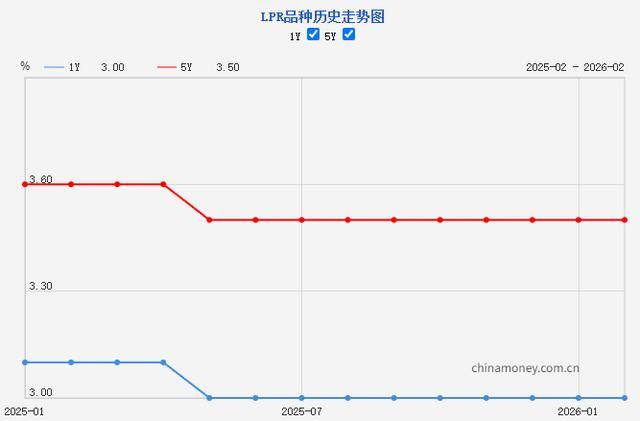
Core Viewpoint - The Loan Prime Rate (LPR) remains unchanged for the ninth consecutive month, with the 1-year and 5-year rates at 3.0% and 3.5% respectively, indicating stability in the current monetary policy environment [1][3]. Group 1: LPR Stability - The stability of the LPR aligns with expectations, as the policy rate (7-day reverse repurchase rate) has also remained stable, suggesting no changes in the pricing basis for the LPR [3]. - Major medium to long-term market interest rates, including the 1-year AAA-rated interbank certificates of deposit yield, have slightly decreased, but banks lack the incentive to lower the LPR due to historically low net interest margins [3][4]. Group 2: Monetary Policy Outlook - The People's Bank of China (PBOC) has introduced a package of structural monetary policies to support key sectors like technology and small enterprises, indicating a period of observation for monetary policy with expectations of LPR stability [4]. - There is a possibility of comprehensive counter-cyclical adjustment policies being implemented in the second quarter, which may lead to a reduction in the LPR to stimulate loans for enterprises and households [4]. Group 3: Economic Projections - Forecasts suggest a moderate recovery in price levels in 2026, with ample room for monetary policy to remain accommodative, including potential interest rate cuts [5]. - The anticipated further rate cuts by the Federal Reserve may reduce constraints on domestic monetary policy adjustments, allowing for more flexibility in response to economic conditions [5].

马年首期LPR“按兵不动”
Xin Lang Cai Jing· 2026-02-24 04:55
Group 1 - The core viewpoint of the news is that the Loan Prime Rate (LPR) in China has remained unchanged for nine consecutive months, with the one-year rate at 3.0% and the five-year rate at 3.5%, aligning with market expectations [3] - The stability in LPR is attributed to the unchanged policy interest rates and the lack of motivation for banks to lower LPR due to the historical low net interest margin of 1.42% [3] - The macroeconomic environment is expected to support the current monetary policy, with strong exports and growth in high-tech manufacturing contributing to the stability of the economy [3] Group 2 - In January 2026, the central bank plans to implement a structural monetary policy to support key sectors like technology and small enterprises, indicating a period of observation for monetary policy [4] - High-frequency data suggests that exports will remain strong in the first quarter of 2026, which supports the current monetary policy stance [4] - There is a potential for a comprehensive policy rate cut in the second quarter of 2026, which could lead to a decrease in LPR and lower loan rates for businesses and residents, aimed at boosting consumption and investment [4]

LPR连续9个月不变,专家:短期内货币政策处于观察期
Xin Lang Cai Jing· 2026-02-24 04:47
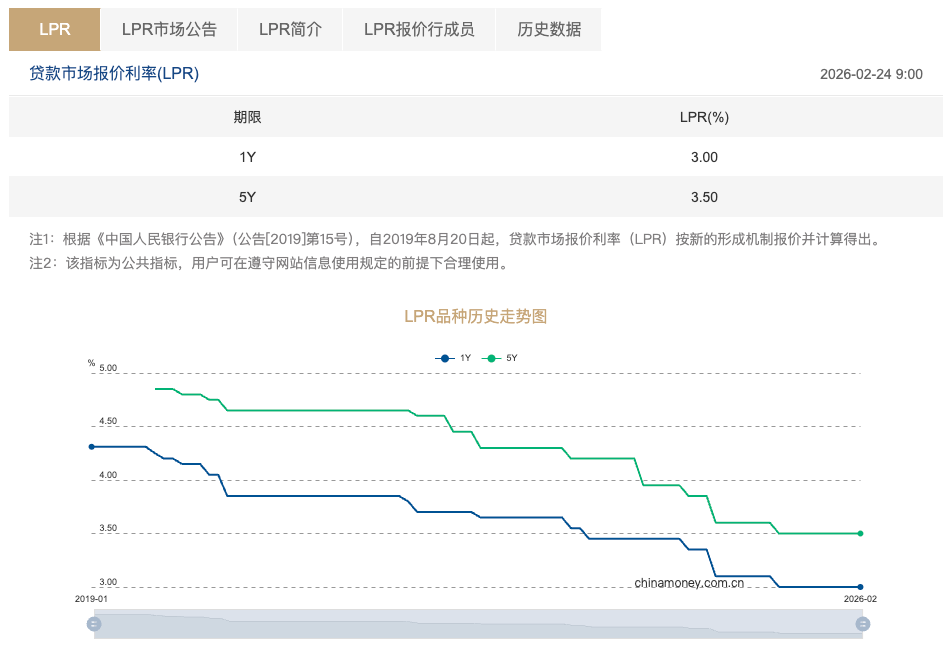
Core Viewpoint - The latest Loan Prime Rate (LPR) remains unchanged at 3.00% for the 1-year term and 3.50% for the 5-year term, marking nine consecutive months of stability since the last reduction in May 2025 [1][7]. Group 1: LPR Stability - The LPR's stability aligns with market expectations, as the policy interest rates have remained stable since February, indicating no changes in the pricing basis for LPR [1][7]. - The net interest margin of commercial banks has been at a historical low of 1.42%, reducing the incentive for banks to lower LPR quotes [1][7]. Group 2: Economic Context - The LPR has remained unchanged since June 2025, driven by strong export performance and rapid development in high-tech manufacturing sectors, allowing the economy to meet growth targets despite external pressures [4][9]. - In January 2026, the central bank introduced a package of structural monetary policies to support key sectors like technology and small enterprises, suggesting a period of observation for monetary policy [4][9]. Group 3: Monetary Policy Impact - Since the second half of 2018, there have been 18 reductions in the reserve requirement ratio, leading to a cumulative decrease in policy rates by 1.15 percentage points, which has lowered corporate and personal loan rates significantly [5][10]. - Current estimates suggest that the reduction in loan rates has saved borrowers over 6 trillion yuan annually, given the total loan balance of approximately 270 trillion yuan [5][10]. Group 4: Comparative Monetary Policy - While major economies have tightened monetary policies through rate hikes, China's approach has been to maintain a relatively loose monetary environment, resulting in lower financing costs for the economy [6][11]. - China's personal mortgage rates are now comparable to the average rates during the zero-interest periods in the US, UK, and Japan, with consumer loan rates even lower than those during similar periods in the US [6][11].
A股开门红提振市场情绪,LPR连续9个月持稳
Di Yi Cai Jing Zi Xun· 2026-02-24 04:04
Group 1 - The core viewpoint of the news is that the LPR (Loan Prime Rate) remains unchanged, aligning with market expectations, indicating stability in monetary policy [1][3][5] - The 1-year LPR is reported at 3.0% and the 5-year LPR at 3.5%, marking the ninth consecutive month of no change [1] - A-shares experienced a positive market reaction with major indices opening higher, reflecting improved market sentiment and risk appetite [1] Group 2 - The stability of the LPR is influenced by factors such as unchanged pricing basis and pressure on bank interest margins, with the 7-day reverse repurchase rate serving as a key anchor [1][3] - The weighted average interest rates for new corporate loans and personal housing loans are around 3.1%, indicating historically low levels [2] - Analysts suggest that the current lack of motivation for banks to lower LPR reflects the broader policy approach, focusing on enhancing the efficiency of existing policies rather than simply increasing stimulus [3][4] Group 3 - The monetary policy is currently in an observation phase, with expectations that both policy rates and LPR will remain stable in the short term [5] - Future possibilities for rate cuts and adjustments to LPR are anticipated, with external factors such as the U.S. Federal Reserve's rate cuts easing constraints on domestic market rates [6] - A potential decrease in LPR is seen as both expected and feasible, although the extent of any reduction is likely to be limited [6]
节后首日开门红,A500增强ETF华夏(512370)涨超1.6%,华工科技等多股涨停
Mei Ri Jing Ji Xin Wen· 2026-02-24 03:59
Group 1 - The A-share market opened high on February 24, with significant gains in sectors such as precious metals, oil and gas energy, optical module CPO, PCB concepts, and port shipping [1] - The A500 Enhanced ETF and A500 ETF Fund saw increases of 1.63% and 1.38% respectively, indicating strong market performance [1] - Notable stocks included China Merchants Energy, which reached a new high, and several others like Runze Technology, Sanhuan Group, and Beijing Junzheng, which rose over 10% [1] Group 2 - The central bank has indicated a "flexible and efficient" approach to monetary policy, suggesting that tools like reserve requirement ratio cuts and interest rate reductions will be used based on economic conditions [1] - The focus on "efficiency" implies a need for effective and targeted policy measures to support economic growth while mitigating risks such as capital turnover and local government debt [1] - According to Industrial Securities, the A-share market has released some risk following adjustments in overseas assets, and a new upward trend is anticipated post-holiday [1] Group 3 - Dongfang Caifu Securities noted that the current micro liquidity environment and domestic policy expectations are favorable, suggesting a positive outlook for the spring market [2] - Historical seasonal effects indicate that the period between the Spring Festival and the National People's Congress is typically supportive of risk appetite, creating a favorable market environment [2] - The market's recent fluctuations are seen as creating space for the second phase of the spring rally, with growth/cyclical, small-cap, and high P/E ratio stocks expected to outperform [2]


2月LPR出炉:1年期3.0%,5年期以上3.5%
Sou Hu Cai Jing· 2026-02-24 03:40
记者了解到,LPR上一次变化是在2025年5月,1年期和5年期以上LPR均下调10个基点。王青对此认 为,受出口持续偏强、以高技术制造业为代表的新质生产力领域较快发展等推动,2025年宏观经济顶住 外部经贸波动压力及国内房地产市场调整等影响,顺利完成全年经济增长目标。2026年1月,央行根据 经济金融形势需要,先行推出一揽子结构性货币政策,强化对科技创新、小微企业等国民经济重点领域 和薄弱环节的支持力度。这也意味着短期内货币政策处于观察期,政策利率和LPR报价保持稳定。 另外,此前发布的《2025年第四季度中国货币政策执行报告》提到,继续实施好适度宽松的货币政策。 把促进经济稳定增长、物价合理回升作为货币政策的重要考量,根据国内外经济金融形势和金融市场运 行情况,把握好政策实施的力度、节奏和时机。灵活高效运用降准降息等多种政策工具,保持流动性充 裕和社会融资条件相对宽松,引导金融总量合理增长、信贷均衡投放,使社会融资规模、货币供应量增 长同经济增长、价格总水平预期目标相匹配。 人民网北京2月24日电 (记者黄盛)中国人民银行(以下简称"央行")授权全国银行间同业拆借中心公布, 2026年2月24日,贷款市场报 ...
LPR连续9月“按兵不动” 年内仍有望稳中有降
Xin Hua Cai Jing· 2026-02-24 03:34
Core Viewpoint - The Loan Prime Rate (LPR) remains unchanged for the ninth consecutive month, with the 1-year and 5-year rates at 3.0% and 3.5% respectively, indicating stability in the current monetary policy environment [1][3]. Group 1: LPR Stability - The LPR's stability aligns with expectations due to the unchanged policy rate (7-day reverse repurchase rate), which serves as the pricing basis for LPR [3]. - Major medium to long-term market interest rates, including the 1-year AAA-rated interbank certificates of deposit yield, have slightly decreased, but banks lack the incentive to lower LPR quotes due to historically low net interest margins [3][4]. Group 2: Monetary Policy Outlook - The People's Bank of China (PBOC) has implemented a structural monetary policy to support key sectors like technology and small enterprises, suggesting a period of observation for monetary policy with expectations of LPR stability [4]. - There is a potential for comprehensive counter-cyclical adjustment policies to be enacted in the second quarter, which may lead to a decrease in LPR to stimulate loans for businesses and households [4]. Group 3: Economic Projections - Forecasts indicate a moderate recovery in price levels in 2026, with ample room for monetary policy to remain accommodative, including potential interest rate cuts [5]. - The possibility of further interest rate cuts by the Federal Reserve may reduce constraints on domestic monetary policy adjustments [5].
最新LPR报价公布,连续9个月按兵不动
Zhong Guo Ji Jin Bao· 2026-02-24 03:31
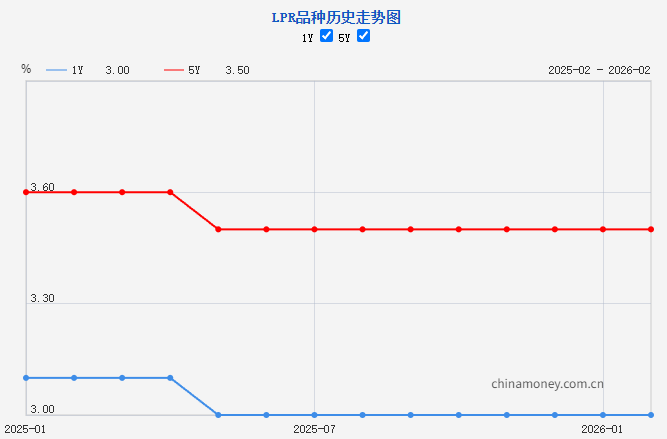
(原标题:最新LPR报价公布,连续9个月按兵不动) 2月24日,中国人民银行授权全国银行间同业拆借中心公布,2026年2月24日贷款市场报价利率(LPR) 为:1年期LPR为3.0%,5年期以上LPR为3.5%。以上LPR在下一次发布LPR之前有效。 这是两个期限品种的LPR报价自去年6月份以来连续9个月保持不变。 东方金诚首席宏观分析师王青分析,LPR报价一直按兵不动,背后的根本原因是受出口持续偏强、以高 技术制造业为代表的新质生产力领域较快发展等推动,同时2025年宏观经济顶住外部经贸波动压力和国 内房地产市场调整等影响,顺利完成全年经济增长目标;2026年1月,央行根据经济金融形势需要,先 行推出一揽子结构性货币政策,强化对科技创新、小微企业等国民经济重点领域和薄弱环节的支持力 度。这也意味着短期内货币政策处于观察期,政策利率和LPR报价有望保持稳定。 "值得注意的是,高频数据显示,2026年一季度我国出口还会处于偏强状态,物价水平有望延续温和回 升势头。这些都为当前货币政策保持定力提供了支撑。"王青称。 展望后续,中国人民银行副行长邹澜于1月15日在国新办新闻发布会上明确指出,今年降准降息还有一 定空 ...
【债市观察】节前资金面平稳十债稳定运行在1.80%下方 海外市场动荡美债收益率下行逾10BP
Xin Hua Cai Jing· 2026-02-24 02:30
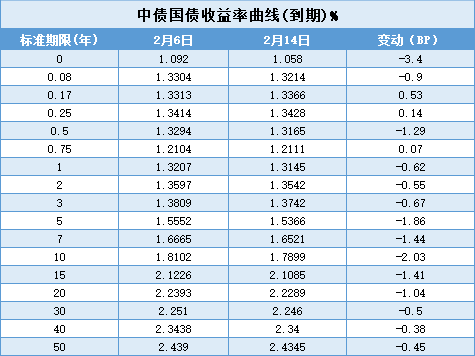
Core Viewpoint - The central bank has increased liquidity support ahead of the Spring Festival, leading to a stable funding environment and a downward trend in bond yields, with the 10-year government bond yield dropping below 1.80% [1][4]. Market Overview - During the last trading week before the Spring Festival (February 9 to February 14, 2026), the central bank's actions resulted in a stable funding environment, with a strong willingness among institutions to hold bonds over the holiday [1]. - The 10-year government bond yield fell to a low of 1.7675% before rebounding slightly due to profit-taking [1][4]. - The bond yield curve showed declines across various maturities, with the 10-year yield decreasing by 2.03 basis points to 1.7899% as of February 14 [2][3]. Bond Market Activity - The bond market exhibited strong performance, with the 10-year government bond yield reaching a three-month low of 1.793% before stabilizing [4]. - The central bank conducted significant liquidity injections, including a 4000 billion yuan reverse repurchase operation, contributing to a positive sentiment in the bond market [4][12]. Issuance in the Primary Market - In the week leading up to the Spring Festival, a total of 69 bonds were issued, amounting to 649.14 billion yuan, including 3 government bonds worth 200 billion yuan [6]. - For the upcoming week (February 24 to February 28, 2026), a planned issuance of 34 bonds totaling 660.42 billion yuan is expected, with 3 government bonds worth 385 billion yuan [6]. International Market Context - The U.S. bond market saw a decline in yields, with the 10-year U.S. Treasury yield dropping by 19 basis points to 4.03% as of February 23, influenced by lower inflation data and increased risk aversion [7]. - The U.S. consumer price index (CPI) for January showed a lower-than-expected increase, which may pave the way for lower interest rates in the future [9][10]. Institutional Perspectives - Analysts suggest that the bond market may experience seasonal opportunities in the first half of the year, driven by stable funding conditions and increased allocation from insurance and wealth management products [18][19]. - The bond market's performance post-Spring Festival will depend on macroeconomic fundamentals, policy signals, supply-demand dynamics, and stock market performance [19].
2026年2月LPR维持不变,二季度降息可期、楼市定向支持成重点
Jin Rong Jie· 2026-02-24 02:17
Core Viewpoint - The latest Loan Prime Rate (LPR) remains stable, with the 1-year rate at 3.0% and the 5-year rate at 3.5%, aligning with market expectations and indicating a cautious monetary policy stance [1][2]. Group 1: Current LPR Situation - The LPR has maintained stability since June 2025, supported by macroeconomic resilience and consistent monetary policy [2]. - The People's Bank of China (PBOC) has kept the 7-day reverse repurchase rate stable, which has influenced the LPR's pricing [1][2]. - Commercial banks are reluctant to lower LPR due to historically low net interest margins, which stood at 1.42% at the end of Q4 2025 [1]. Group 2: Economic Context - China's economy has shown strong resilience against external trade fluctuations and domestic real estate adjustments, achieving its annual growth target [2]. - The PBOC has implemented structural monetary policy tools to support key sectors like technology and small enterprises, allowing for a stable LPR [2]. Group 3: Future Outlook - There is a potential for LPR reduction in Q2 2026, influenced by external tariff policy changes and internal economic dynamics [3]. - The U.S. Supreme Court's ruling on tariffs has increased uncertainty in U.S. trade policy, which may negatively impact China's exports and lead to downward pressure on the economy [3]. - The PBOC is expected to adopt a more accommodative monetary policy in response to potential economic slowdowns, aligning with the goal of promoting consumption and investment [3][4]. Group 4: Policy Space - The conditions for a moderately accommodative monetary policy in 2026 are favorable, with inflation expected to rise moderately but remain low enough not to hinder policy easing [4]. - The anticipated interest rate cuts by the Federal Reserve may improve the interest rate differential between China and the U.S., providing a conducive environment for the PBOC to implement counter-cyclical adjustments [4].