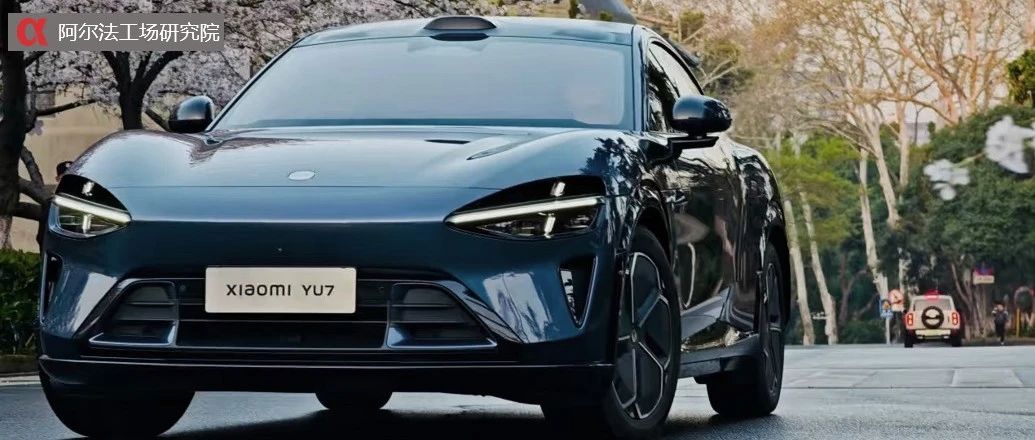
人车家生态

Search documents
小米集团-W(01810):Yu7正式发布,初代AI眼镜面向未来
Changjiang Securities· 2025-06-30 13:43
Investment Rating - The investment rating for the company is "Buy" and is maintained [7]. Core Viewpoints - On June 26, the company held an ecosystem conference where it launched the AI glasses and officially released its long-awaited SUV, Yu7, marking a significant milestone in its strategy for the home-vehicle ecosystem [2][4]. - The AI glasses feature a dual-core architecture with Qualcomm AR1 and a low-power Bluetooth audio processor, significantly enhancing battery life. They support various functions including smart device control and video calls on popular apps, with a starting price of 1999 yuan [8]. - The company is advancing its high-end home appliance strategy, achieving notable market share increases in air conditioners, refrigerators, and washing machines, with online market shares of 14.4%, 9.3%, and 7.8% respectively, showing year-on-year increases [8]. - The Yu7 SUV, launched at prices ranging from 253,500 to 329,900 yuan, boasts impressive specifications including a 0-100 km/h acceleration in 2.98 seconds and a maximum range of 835 km, positioning it competitively in the electric SUV market [8]. Summary by Sections AI Glasses - The AI glasses are designed for the next generation of personal smart devices, weighing only 40g and available in various color options. They are expected to create a significant impact in the market, similar to the "iPhone moment" for smartphones [8]. Home Appliances - The company is pushing its high-end strategy forward, with significant upgrades in performance and pricing for new home appliance products. The average prices for air conditioners, refrigerators, and washing machines have increased by 16.3%, 20.0%, and 24.1% respectively compared to the previous year [8]. Yu7 SUV - The Yu7 SUV is positioned as a high-performance electric vehicle with advanced technology features, including a comprehensive suite of sensors and a high-quality interior designed to meet consumer demands. The vehicle is set to begin deliveries in July, entering a strong product cycle for the company [8].

小米汽车火成这样,雷军都没有躺平,努力寻找下一个爆款
Sou Hu Cai Jing· 2025-06-30 03:27
Group 1 - The core achievement of Xiaomi in the automotive industry is highlighted by the success of the SU7 and YU7 models, with the latter achieving over 240,000 orders in just 18 hours, effectively selling out its annual production capacity [1][3] - Xiaomi's influence, cash reserves, product capabilities, and fan base position it as nearly invincible in the automotive sector, making its success almost inevitable despite competition [3][5] - The company has established a robust ecosystem with smartphones, cars, and various home appliances, ensuring a strong future outlook [5] Group 2 - Xiaomi is actively pursuing new innovative products, with the recent introduction of AI glasses being a potential next big hit, described as a new AI entry point [7][9] - The AI glasses are positioned to enhance user interaction and experience, potentially replacing traditional devices like cameras and headphones [7] - Although the AI glasses are still in the early stages, there is significant potential for growth and development as technology advances [9]

小米集团-W(01810):YU7一小时大定28.9万台,开启新周期
HTSC· 2025-06-27 02:42
Investment Rating - The report maintains a "Buy" rating for the company with a target price of HKD 71.20 [7][30]. Core Views - The launch of the YU7 SUV has exceeded market expectations with 289,000 units pre-ordered within the first hour, representing 82.5% of the company's previously announced annual shipment target for 2025 [2][4]. - The pricing of the YU7 is in line with market expectations, while its hardware specifications, including a 700 TOPS NVIDIA THOR chip and advanced driver assistance features, are above expectations [2][4]. - The AI glasses launched by the company are lightweight at 40g and feature color-changing technology, which has garnered positive market reception [3][4]. Summary by Sections Product Launch and Market Response - The YU7 SUV was launched with a pre-order of 200,000 units in three minutes and 289,000 units in one hour, significantly surpassing market expectations [2]. - The YU7 is available in nine colors, with a standard version offering a range of 835 km and equipped with advanced technology such as laser radar and a panoramic display [2]. AI Glasses - The AI glasses are priced at RMB 1,999 and weigh only 40g, featuring a Qualcomm AR1 chip and various functionalities including video calls and smart home control [3]. - The glasses have sold out on their launch night, indicating strong consumer interest [3]. Financial Projections - The report maintains net profit forecasts for 2025-2027 at RMB 41 billion, RMB 51.3 billion, and RMB 63.2 billion respectively, reflecting a robust growth trajectory [4][6]. - The target price of HKD 71.20 is based on a sum-of-the-parts (SOTP) valuation method, which includes a valuation of HKD 26.3 per share for the automotive business [4][30]. Valuation Metrics - The report projects a revenue increase from RMB 270.97 billion in 2023 to RMB 727.78 billion in 2027, with a compound annual growth rate (CAGR) of approximately 20.13% [6][38]. - The expected earnings per share (EPS) are projected to grow from RMB 0.76 in 2023 to RMB 2.52 in 2027, indicating strong profitability growth [6][38].
小米汽车业务核心竞争力剖析
2025-06-26 14:09
Summary of Xiaomi's Automotive Business Conference Call Industry and Company Overview - The conference call focuses on Xiaomi Group and its automotive business, particularly the Xiaomi SU7 model and its market strategies [1][2][4]. Core Insights and Arguments - **Profitability Model**: Xiaomi leverages a hardware-driven approach combined with service monetization, achieving high profitability despite low hardware margins. Internet services, although only 9% of revenue, contribute approximately 34% to total gross profit [5][9]. - **Market Positioning**: Xiaomi's smartphone business has evolved through phases of rapid growth, adjustment, and high-end breakthroughs, with a clear brand positioning strategy: Redmi focuses on cost-effectiveness, while Xiaomi targets high-end technology and experience [1][6][7]. - **Automotive Strategy**: Xiaomi aims to penetrate the full-category market, especially the high-end segment above 200,000 yuan, to enhance brand positioning and profitability. The strategy emphasizes brand elevation and global expansion, differentiating itself from competitors like Xpeng and Li Auto [1][4][10]. - **Sales Channel Integration**: Xiaomi integrates its new retail experience into the automotive sector, enhancing synergy with its smartphone business. As of May 2025, nearly 300 stores have been established nationwide, achieving high single-store efficiency [10]. Key Performance Metrics - **Xiaomi SU7 Sales**: The SU7 model has surpassed Tesla Model 3 in average monthly sales, becoming the best-selling electric sedan in the 200,000 to 300,000 yuan range. Notably, 57.3% of users are Apple smartphone owners, with over 90% of sales occurring in first- and second-tier cities [11]. - **Technical Specifications**: The SU7 features a streamlined design, with the Max version achieving 0-100 km/h in 2.78 seconds and the Ultra version in 1.98 seconds. It utilizes CATL's Kirin battery, supporting an 800V platform and fast charging capabilities [3][12]. Additional Important Insights - **User-Centric Approach**: Xiaomi's automotive success is attributed to a user-driven methodology, contrasting with the traditional product-driven approach of the automotive industry. This allows for rapid product iteration and quality enhancement [2]. - **Financial Performance**: In Q1 2025, Xiaomi's automotive and innovation business achieved a gross margin of approximately 23%, with single-vehicle losses narrowing to 7,000 yuan. Profitability is expected in the latter half of 2025 [9]. - **Technological Advancements**: The SU7 incorporates advanced features such as a laser radar and vision-based autonomous driving system, with high computing power supporting urban navigation [3][19]. - **OTA and Software Development**: Xiaomi has made significant progress in over-the-air (OTA) updates, launching features like high-speed navigation and parking assistance, with plans for comprehensive nationwide coverage by late 2025 [21][22]. Conclusion Xiaomi's automotive business is strategically positioned for growth through innovative technology, user-centric approaches, and effective integration of sales channels. The SU7 model's strong market performance and the company's focus on high-end segments indicate a promising trajectory in the competitive automotive landscape.
【重磅深度】AI+汽车智能化系列之十三——小米汽车核心竞争力剖析
东吴汽车黄细里团队· 2025-06-25 10:49
Core Viewpoint - The success of Xiaomi's automotive business is fundamentally rooted in the "Xiaomi Methodology," which has allowed it to "disrupt" the traditional automotive industry over the past 2-3 years. Unlike the product-driven logic of traditional automakers, Xiaomi employs a user-driven approach, leveraging big data to optimize product quality and expand its market presence [2][6]. Group 1: Product Strategy - Xiaomi aims for a comprehensive product layout, focusing on strengthening its presence in the market above 200,000 yuan with models like SU7 and YU7, while also targeting the market below 200,000 yuan, similar to its Redmi phone strategy [2][6]. - The company is committed to executing its "user-car-home ecosystem" strategy, emphasizing brand elevation and globalization, ensuring that its automotive business aligns with its overall strategic goals [2][3]. Group 2: Technology Strategy - Xiaomi positions itself as a "fast follower" in technology, with a focus on enhancing electric and intelligent driving capabilities. The company plans to allocate approximately 30% of its annual R&D budget, which is no less than 30 billion yuan, to automotive research and development [3][6]. Group 3: Market Performance - Since the official delivery of the SU7, Xiaomi's automotive revenue and gross margin have been on the rise, achieving a gross margin of 23.2% in Q1 2025. The average selling price (ASP) per vehicle remains around 240,000 yuan, with single-vehicle operating losses gradually narrowing [38][40]. - The SU7 has surpassed the Tesla Model 3 to become the best-selling electric sedan in its price range, with an average monthly sales of 26,500 units in the first five months of 2025 [49][52]. Group 4: User Demographics - The user demographic for the SU7 shows a higher proportion of female users compared to Xiaomi's smartphone users, with a significant focus on young consumers aged 25-35. The vehicle's design and performance appeal to this demographic, particularly in first- and second-tier cities [53][54]. Group 5: Sales and Distribution - Xiaomi's automotive sales strategy employs a "t+N" model, where "t" represents self-operated delivery centers and "N" includes partnerships with top automotive dealers. As of May 31, 2025, Xiaomi has established 298 brand stores across 82 cities, with plans to expand further into emerging markets [43][44].

小米集团-W(01810):YU7前瞻:延续运动风格,深耕豪华品牌调性
Tianfeng Securities· 2025-06-22 15:19
Investment Rating - The investment rating for Xiaomi Group is "Buy" with a target price not specified in the report [3][4]. Core Viewpoints - The report emphasizes that the YU7 model is expected to be a significant product for Xiaomi, showcasing a shift towards practicality while maintaining a luxurious brand image. The YU7 is positioned as a mid-to-large pure electric SUV, featuring advanced technology such as laser radar, 800V fast charging, and Nvidia Thor chips [1][2]. - The YU7 is anticipated to leverage Xiaomi's ecosystem, potentially enhancing overall revenue growth through better integration with AIOT products. The initial user interest has exceeded expectations, with a significant portion of new users showing interest in the brand [2][3]. - The report forecasts a strong sales performance for the YU7, predicting that it may outperform market expectations due to its competitive pricing strategy and high-value features [3]. Summary by Sections Product Overview - The YU7 is Xiaomi's second vehicle, designed to complement the SU7, with a focus on a more practical approach while retaining a sporty design. It offers options for single and dual motor configurations, with a 0-100 km/h acceleration time of 3.23 seconds [1]. Market Positioning - The YU7's pricing strategy is centered around providing value for money, with luxury features included in the offering. The report notes that the initial user engagement for the YU7 has been significantly higher than that of the SU7, indicating a broader appeal [2][3]. Financial Projections - The report projects that Xiaomi's total revenue could reach 471.8 billion CNY in 2025 and 679.7 billion CNY in 2026, with electric vehicles and innovative business segments contributing 96.4 billion CNY and 250.6 billion CNY respectively. The adjusted net profit is expected to be 42.9 billion CNY and 85.5 billion CNY for the same years [3].
浪人早报 | 哪吒汽车员工被通知居家办公、乘联会秘书长回应绝不买新能源车、蔡崇信称阿里工程师春节无休赶AI…
Xin Lang Ke Ji· 2025-06-13 06:44
Group 1 - Neta Auto has announced that employees will work from home starting June 12, with office access disabled and personal belongings requiring administrative reporting for removal [2] - The Secretary-General of the China Automobile Dealers Association expressed a personal decision not to purchase electric vehicles, citing high carbon emissions during battery manufacturing, while supporting the development of new energy vehicles as a national strategy [2] - Alibaba's Chairman, Daniel Zhang, stated that the intense competition in the tech industry is driving AI innovation, leading to the cancellation of the Spring Festival holiday for engineers to accelerate progress, with plans to invest 380 billion RMB in AI infrastructure over the next three years [2] Group 2 - NVIDIA's CEO announced plans to build the first industrial AI cloud platform in Germany and to establish 20 AI factories in Europe, aiming to increase AI computing power in the region tenfold within two years [4] - Ant Group is planning to apply for stablecoin licenses in Singapore and Hong Kong to enhance its blockchain business and support cross-border payment services [4] - GAC Toyota has partnered with Xiaomi to integrate into its "Smart Home" ecosystem, allowing for the connection of various smart devices in its vehicles [5] Group 3 - Changan Automobile announced plans to invest over 200 billion RMB in emerging fields over the next decade, with a goal to complete test flights of flying cars by the end of 2025 [6] - The Chinese Ministry of Industry and Information Technology praised 17 major automotive companies for their commitment to a payment period of no more than 60 days, highlighting the importance of this initiative for sustainable industry development [9]

波音就印度客机失事发声;阿里高德地图在日本上线打车功能|数智早参
Mei Ri Jing Ji Xin Wen· 2025-06-12 23:19
Group 1: Aviation Industry - A Boeing 787-8 aircraft crashed in Ahmedabad, India, on June 12, carrying 242 people, marking it as the first total loss of this aircraft model due to an accident [1] - The crash occurred shortly after takeoff, raising safety concerns about the Boeing 787, which is known for its advanced technology [1] - The investigation results will be crucial for clarifying responsibilities and diagnosing weak links in global aviation safety, especially given the international casualties involved [1] Group 2: Technology and Transportation - Alibaba's Gaode Map launched a ride-hailing feature in Japan on June 12, covering major cities like Tokyo and Osaka, in collaboration with the local taxi platform "GO" [2] - This cross-border partnership signifies the expansion of Chinese tech companies into international markets and showcases their ability to export innovative service models [2] - Future collaboration in smart transportation between China and Japan is anticipated, highlighting potential for innovation in this sector [2] Group 3: Automotive Industry - GAC Toyota announced a partnership with Xiaomi on June 12, integrating Xiaomi's "smart home" ecosystem into its vehicles, starting with the model "Zhi 7" [3] - This collaboration addresses key challenges for traditional automakers by leveraging Xiaomi's user base and ecosystem to enhance smart cabin features [3] - The partnership may redefine automotive industry standards, shifting the focus from traditional performance metrics to the breadth and depth of ecosystem compatibility [3]
腾讯拟收购跑跑卡丁车开发商,QQ回应大规模弹窗广告,广汽丰田接入小米生态,蚂蚁回应在香港申请稳定币牌照,这就是今天的其他大新闻!
Sou Hu Cai Jing· 2025-06-12 16:39
Group 1 - Tencent is reportedly considering acquiring South Korean game developer Nexon for $15 billion (approximately 107.9 billion RMB) and has initiated discussions with the family of the late founder Kim Jung-woo [1] - Tencent has been in contact with Kim Jung-woo's family to explore the potential acquisition, with the family evaluating their options through consultations with advisors [1] Group 2 - GAC Toyota announced a partnership with Xiaomi, Huawei, and Momenta, integrating into Xiaomi's "Smart Car Home" ecosystem, with the first model, the Platinum Smart 7, set to open hardware ecosystem interfaces [6] - Future GAC Toyota models will support various Xiaomi ecosystem devices, including intercoms, car-mounted phone holders, smart fragrance systems, and physical buttons for the central control screen [6] Group 3 - Ant Group's Vice President revealed that Ant Group has initiated the application for a stablecoin license in Hong Kong and has engaged in multiple rounds of discussions with regulators [8] - Ant Group is accelerating investments and expanding collaborations in global financial asset management, focusing on the real-world application of AI, blockchain, and stablecoin innovations [8]

科技资产大重估,小米的野心与筹码
阿尔法工场研究院· 2025-05-29 13:40
Core Viewpoint - The article discusses the revaluation narrative of Chinese technology assets, led by companies like Xiaomi, as they gain momentum in the global market, similar to the "Magnificent 7" in the U.S. stock market [1][30]. Group 1: Xiaomi's Financial Performance - Xiaomi's Q1 2025 financial report showed a revenue increase of 47.4% year-on-year, reaching 111.3 billion yuan, and an adjusted net profit exceeding 10.7 billion yuan, up 64.5% [3][30]. - The report highlighted that Xiaomi's revenue growth outpaced major competitors, with Apple achieving only 11% growth in Q4 2021 and Tesla experiencing a 9% decline in Q1 2025 [3][30]. Group 2: Market Position and Strategy - Xiaomi's market share in China surged from 13% to 19%, while Apple's share dropped from 21% to 15% in Q1 2025, indicating a significant shift in the smartphone market landscape [15][20]. - The company has successfully positioned itself in high-end markets across smartphones, automobiles, and home appliances, with the average selling price (ASP) of smartphones reaching a historical high of 1211 yuan, up 5.8% year-on-year [7][12]. Group 3: Ecosystem Development - Xiaomi has established a comprehensive ecosystem that spans smart devices, home appliances, and electric vehicles, capturing a significant share of the 3 trillion yuan market [21][24]. - The company’s strategy focuses on integrating various product lines to create a seamless user experience, which is crucial for building a sustainable ecosystem [17][24]. Group 4: Research and Development Investment - Xiaomi plans to invest 200 billion yuan in R&D over the next five years, with Q1 2025 R&D spending reaching 6.7 billion yuan, a 30.1% increase [27][30]. - The introduction of the self-developed 3nm flagship SoC chip "Xuanjie O1" marks a significant technological advancement for Xiaomi, enhancing its competitive edge in the market [28][30]. Group 5: Future Outlook - The article suggests that the revaluation of Chinese technology assets is gaining traction, with Xiaomi's Q1 performance serving as a pivotal moment in this narrative [33][34]. - The focus on technological innovation and ecosystem development positions Xiaomi favorably for future growth, with expectations of continued investment and market expansion [30][34].