制造强国

Search documents
我省唐山保定两市入选
Xin Lang Cai Jing· 2025-12-22 23:27
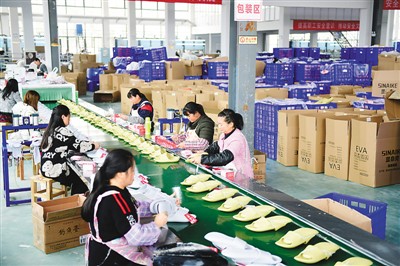
Group 1 - The core viewpoint of the article highlights the integration of human resources services with the manufacturing industry in Hebei Province, with Tangshan and Baoding selected as pilot cities for this initiative [1][2] - The Ministry of Human Resources and Social Security has designated 39 cities, including Beijing and Tianjin, as pilot cities for the integration of human resources services and manufacturing [1] - The manufacturing sector is emphasized as a foundation for national strength, with a focus on accelerating the development of a strong manufacturing country as essential for high-quality growth [1] Group 2 - The 2025 talent demand directory for the manufacturing sector in Hebei is the first of its kind, reflecting the needs of over 3,206 manufacturing companies and covering more than 30,000 job positions across key industries such as advanced steel, green chemicals, high-end equipment, and new materials [2] - The 2025 talent demand directory for private enterprises in Hebei aims to guide talent flow towards private companies and improve the efficiency of human resource utilization, collecting over 300,000 recruitment information entries from 3,286 representative private enterprises [2] - A cooperation agreement has been signed among the human resources departments of Beijing, Tianjin, and Hebei to jointly build human resources service industrial parks, enhancing collaboration in talent services and promoting the integration of human resources services with manufacturing [2][3] Group 3 - The establishment of the regional human resources service industrial park in Langfang has led to significant outcomes, including hosting over 260 recruitment and competition events, serving 3,657 enterprises, generating cumulative revenue of 3.762 billion, and delivering over 50,000 talents to the region [3]
从“建桥”到“造船” 中铁四局承建7000TEU集装箱船首段成功发运
Ke Ji Ri Bao· 2025-12-22 07:46
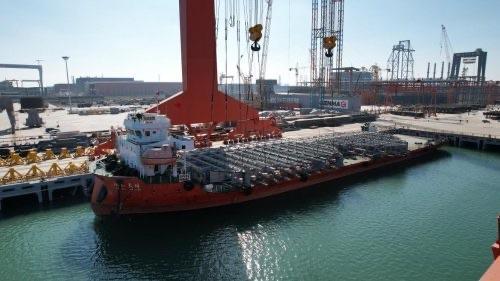
Core Insights - The construction project of a 7000TEU container ship, undertaken by China Railway Fourth Group, has reached a significant milestone with the successful dispatch of the first non-water-tight bulkhead segment, marking the ship's entry into the rapid segment construction phase [1][4] Group 1: Project Details - The dispatched non-water-tight bulkhead segment measures 36 meters in length, 22 meters in width, 1.9 meters in height, and weighs 240 tons, serving as a core component of the container ship's structure [3] - Container ships are designed for efficient loading and unloading, featuring large hatches, gridded cargo holds, and multi-layered deck stacking, making them the mainstay of modern maritime transport [3] Group 2: Technical Innovations - The project team has integrated large-scale steel structure precision control experience from bridge manufacturing into shipbuilding processes, optimizing positioning tools and support settings to achieve precise and rapid positioning of bulkhead components [3] - Various specialized techniques, including flame adjustment, segment flipping, external structural pressure, and ship-specific welding, have been implemented to address technical challenges related to deck flatness and assembly complexity [3] Group 3: Equipment Development - To support large-scale segment hoisting and modular shipbuilding, China Railway Fourth Group has developed a 1000-ton gantry crane at the base, which features a dual main beam design and multiple functionalities for lifting, longitudinal, and lateral movement [4] Group 4: Strategic Implications - The successful dispatch of the first segment reflects advancements in high-value ship manufacturing processes and project management capabilities in China, contributing positively to local industrial upgrades and the aggregation of high-end shipbuilding clusters [4] - This project aligns with national strategies for becoming a "maritime power" and a "manufacturing power," injecting new momentum into the autonomous and modern development of China's shipping logistics equipment [4]

中国农业银行与国机集团签署战略合作协议
Xin Lang Cai Jing· 2025-12-16 06:40
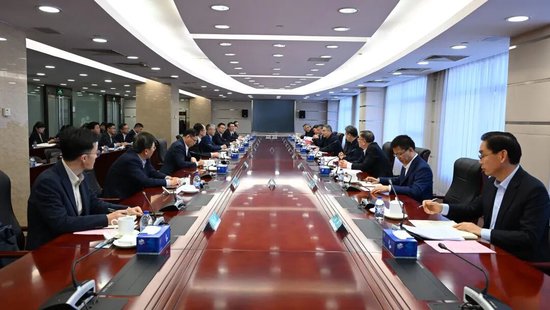
Core Points - On December 15, Agricultural Bank of China signed a strategic cooperation agreement with China National Machinery Group, focusing on rural revitalization and manufacturing strength [1][6] - The agreement was signed by key executives from both organizations, including the chairman and president of Agricultural Bank of China and the chairman and general manager of China National Machinery Group [1][6] Group 1 - Agricultural Bank of China views China National Machinery Group as an important strategic partner and aims to deepen cooperation across various fields to contribute to high-quality economic and social development [3][8] - China National Machinery Group expressed gratitude for the support from Agricultural Bank of China and highlighted the potential for collaboration in national strategies such as rural revitalization and technological advancement [3][8] - Both parties aim to expand their cooperation during the "14th Five-Year Plan" period, enhancing the partnership to new levels [3][8]

金融工程2026年度策略:蓝图绘就千般景,砺新自强万里程
Caixin Securities· 2025-12-15 10:20
Market Structure - The A-share market has formed a dual-core industrial structure centered on technology growth and midstream manufacturing, driven by macroeconomic cycles, industrial policy guidance, and market funding preferences [6][9][12] - The technology sector has developed into a high-prosperity cluster with significant internal linkage, while the manufacturing sector serves as a market stabilizer, maintaining connections with various fields [10][12] - The TMT sector has shown a clear rotation characteristic with midstream manufacturing since 2021, constituting the core direction for market capital allocation [12][16] Market Sentiment - The three-dimensional sentiment model provides an objective and sensitive monitoring of market sentiment, which is crucial for observing phase changes in the market [23][51] - In 2025, the market sentiment exhibited a dual-cycle pattern, with a small cycle from January 6 to April 14 and a larger cycle from April 15 to October 29, reflecting the complex interplay of policy and external factors [51][52] - The sentiment phases are closely linked to industrial rotation, with TMT industries gaining prominence during positive sentiment periods, while upstream resource industries serve as defensive plays during cautious sentiment [52][53] Policy Frequency Analysis - The "14th Five-Year Plan" and "15th Five-Year Plan" highlight a strategic emphasis on technological innovation and manufacturing, indicating a shift towards self-reliance and security in the industrial framework [56][57] - The frequency of terms related to safety, technology, and energy in the "15th Five-Year Plan" suggests a deepening focus on these areas, reflecting their importance in the context of modernizing China's economy [57]
刘世锦:实现强大的货币,需大幅增加离岸人民币数量
Sou Hu Cai Jing· 2025-12-15 09:30
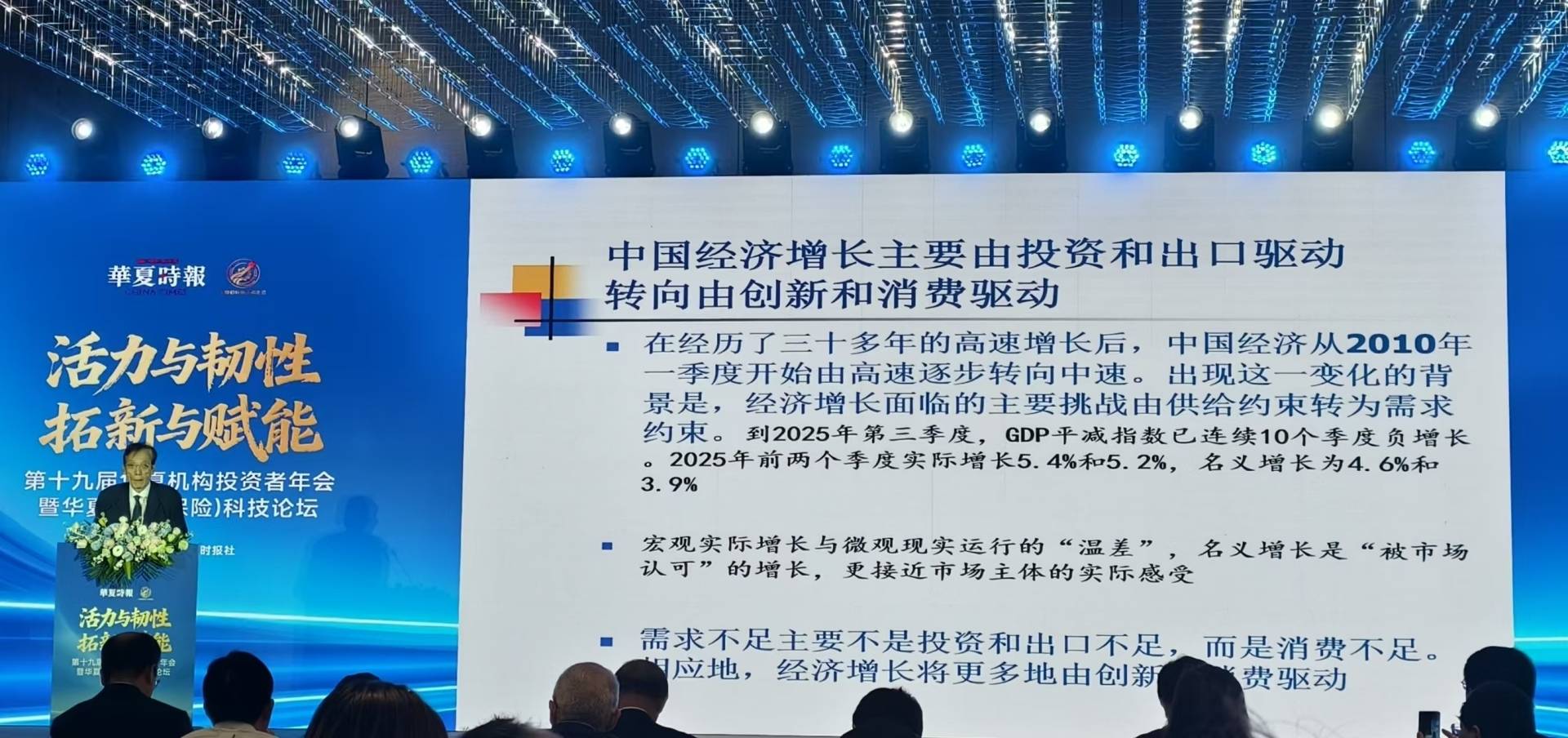
Group 1 - The core viewpoint is that China's economic growth is transitioning from high-speed to medium-speed, driven by a shift from supply-side constraints to demand-side issues, with a focus on innovation and consumption rather than investment and exports [1] - The next steps involve promoting the construction of a manufacturing powerhouse, a consumption powerhouse, and a financial powerhouse [3] - For the manufacturing powerhouse, the emphasis is on the transformation and upgrading of the manufacturing sector, particularly towards productive service industries [4] Group 2 - In terms of becoming a consumption powerhouse, there is a need to address the structural deviation of China's consumption as a percentage of GDP compared to the international average, aiming to become the largest consumer market globally [6] - The financial sector is seen as a bridge, requiring a modern financial system to support the manufacturing and consumption powerhouses, with a focus on selecting projects that have market potential and manageable risks [7] - During the 14th Five-Year Plan period, if China's GDP maintains a growth rate of 4% to 5%, it is expected to generate a net asset increase of no less than 30 trillion yuan annually, with new funds likely flowing into capital markets due to declining risk-free rates [7] Group 3 - A strong currency is essential for a financial powerhouse, with historical evidence suggesting that as a country's real economy grows in global share, its currency's global usage also increases [7] - To enhance the international use of the renminbi, increasing the offshore renminbi supply is crucial, which can be achieved by boosting imports and settling payments in renminbi [8] - Developing offshore renminbi financial products and improving liquidity and convenience will significantly accelerate the internationalization of the renminbi [8]
天溯计量创业板IPO网上路演在全景网成功举行
Quan Jing Wang· 2025-12-15 05:16
Core Viewpoint - Tian Su Measurement aims to leverage capital to enhance its core competitiveness and contribute to society through its IPO on the ChiNext board [3] Company Overview - Tian Su Measurement is a national, comprehensive independent third-party measurement and testing service provider, focusing on calibration, testing, and certification services [1] - The company serves a wide range of industries, including biomedicine, automotive, new energy, rail transportation, energy and power, light industry, and equipment manufacturing [1] Strategic Development - The company has developed 90 self-compiled standards recognized by CNAS and participated in 78 standards and 9 technical specifications, covering strategic emerging industries such as high-end manufacturing, new energy, and biomedicine [2] - The new energy battery testing business has shown significant development, with 84 major battery testing capabilities and over 2,000 testing channels serving more than 2,000 new energy enterprises [2] - Future focus will be on calibration and new energy battery testing services, with ongoing investment in technology R&D and talent acquisition to maintain competitive advantages [2] Market Position - The measurement and testing industry is becoming more concentrated, with leading institutions enhancing their competitive capabilities [2] - Tian Su Measurement has established a differentiated competitive landscape through its core technologies, achieving a leading advantage in certain niche areas [2] IPO Details - The company plans to issue 16,304,348 shares, accounting for 25% of the total share capital post-issue, with an offering price of 36.8 yuan per share [3] - The subscription date is set for December 12, 2025, and the payment date for December 16, 2025, with the stock code 301449 and the name "Tian Su Measurement" [3] Investor Engagement - The online roadshow featured active interaction between the management team and investors, addressing key questions regarding business, technology prospects, market competition, and strategic planning [3] - The successful online roadshow laid a solid foundation for Tian Su Measurement's debut on the ChiNext board and generated investor enthusiasm for its future development [3]

400余家上市公司齐聚!关于海南封关、制造强国、“十五五”资本市场、AI等领域投资机会,答案都有了
Mei Ri Jing Ji Xin Wen· 2025-12-12 10:29
Group 1: Conference Overview - The "2025 14th Annual Conference on the Development of Listed Companies and the Exchange of Opportunities in Hainan Free Trade Port" was held in Haikou from December 11 to 13, with over 400 listed companies and 20 institutions participating [1] - The conference coincided with the countdown to the full closure of Hainan Free Trade Port, emphasizing Hainan's role as a new experimental field for reform and opening up [1] Group 2: Institutional Opening in Hainan - Hu Xiaolan emphasized that the future focus for Hainan is to advance post-border institutional opening, aligning domestic systems with international high-standard economic and trade rules [3][4] - The core of high-level opening is not just about tariff reductions and market access but also about improving domestic regulations and standards to match international practices [4] Group 3: Market Competition and Fairness - Hu Xiaolan highlighted the importance of ensuring fair competition among market participants, addressing both anti-monopoly and anti-unfair competition measures [6] - The need for equal treatment of state-owned, private, and foreign-invested enterprises in market access and subsidies was stressed to prevent market distortion [6] Group 4: Manufacturing Industry Insights - Su Bo discussed the achievements of China's manufacturing sector, noting that its share of global manufacturing value added increased from 19.8% in 2010 to 31.1% in 2023 [7] - He identified the need for breakthroughs in key technologies such as high-end chips and industrial software to close the gap with leading manufacturing countries [7] Group 5: Capital Market Trends - Lian Ping indicated that equity assets have become the preferred choice for capital allocation as funds shift from the real estate market to other sectors [10][11] - The A-share market is seeing a rise in technology content, with the electronic sector surpassing the banking sector in market capitalization [10] Group 6: Emerging Industry Opportunities - Various industry leaders discussed opportunities in AI, digital economy, and health-conscious consumer trends, indicating a shift towards personalized and experience-driven consumption [12][14] - The importance of data governance in AI applications was highlighted, emphasizing the need for deep understanding and precise management of industry data [12] Group 7: Robotics and AI Development - Nanshan Aluminum's chairman mentioned that the robotics sector is seen as a new growth area, with expectations for the market size to reach trillions [18] - The integration of AI in traditional industries poses challenges, particularly in maintaining production while implementing new technologies [19]

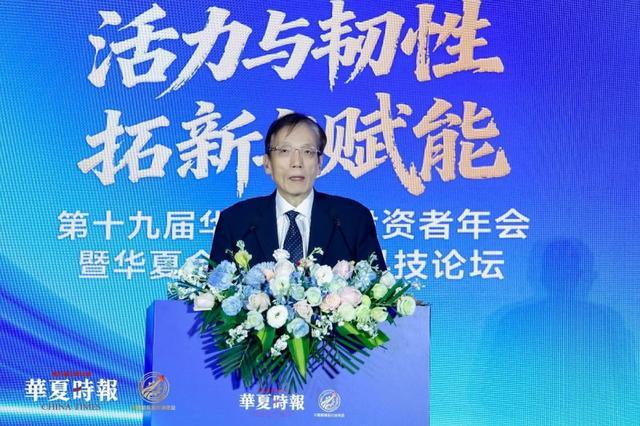
国务院发展研究中心原副主任刘世锦:建设离岸人民币金融产品生态,中国需要形成强大货币|2025华夏机构投资者年会
Hua Xia Shi Bao· 2025-12-12 06:35
Core Insights - The conference emphasized the theme of "vitality and resilience, innovation and empowerment" to address contemporary challenges and explore future pathways [2] Economic Transition - China's economy is transitioning from high-speed to medium-speed growth, with a shift in growth drivers from investment and exports to innovation and consumption [3] - The GDP deflator index has shown negative growth for ten consecutive quarters leading up to Q3 2025, with actual growth rates of 5.4% and 5.2% in the first two quarters of 2025 [3] Long-term Growth Advantages - China possesses three long-term growth advantages: 1. Catch-up potential, with per capita income at approximately $14,000, indicating significant room for growth towards the levels of developed countries [3] 2. Advantages in new technology revolutions, particularly in digital and green technologies, where China is at the forefront of industrial engineering and commercial applications [4] 3. The scale of the market economy, highlighted by a large middle-income group and the potential for 900 million low-income individuals to transition to middle-income status, significantly expanding the consumer market [4] Financial Strength - The construction of a "manufacturing powerhouse, consumer powerhouse, and financial powerhouse" is essential for modernizing China's economy [5] - Financial systems must enhance their project selection capabilities to support the real economy, especially as the economy shifts towards innovation-driven growth [5] Currency and Internationalization - A strong currency is a key indicator of a financial powerhouse, with the need for the RMB to play a more significant role internationally [6] - Recommendations include balancing imports and exports while increasing the use of RMB for international transactions, thereby enhancing its liquidity and facilitating its internationalization [6]
10万亿!超越京沪,中国“第一城”易主了
Qian Zhan Wang· 2025-12-12 04:33
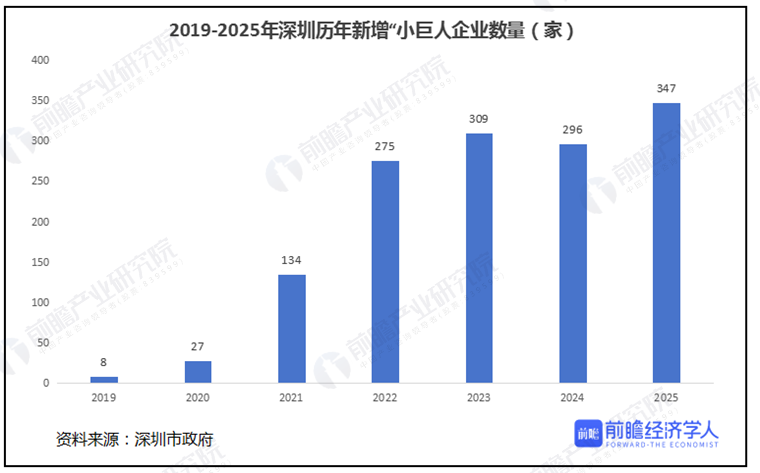
Core Viewpoint - Shenzhen has officially become China's "first city" for specialized and innovative "little giant" enterprises, surpassing Beijing and Shanghai in quantity and economic value [2][3][19]. Group 1: Overview of "Little Giants" - By the end of 2025, Shenzhen will have 1,333 "little giant" enterprises, leading the nation with 347 new additions, compared to Beijing's 1,210 and Shanghai's 1,032 [2][3]. - The total market value of these enterprises is estimated to be close to 10 trillion yuan, based on an average market value of 71 million yuan per listed "little giant" [3][8]. - These enterprises are concentrated in key areas of national focus, such as "manufacturing power" and "strengthening supply chains," with high entry barriers requiring domestic leadership in niche sectors and significant R&D investment [3][8]. Group 2: Growth and Innovation - Shenzhen's "little giants" exhibit remarkable growth, with an average time of 13 years from establishment to becoming a national-level "little giant," which is 1.71 years faster than the national average [8]. - The average R&D intensity of these enterprises is 7.63%, with annual R&D expenditure averaging 33.39 million yuan, significantly higher than the national average [8][19]. - These companies are also active in patent applications, averaging 152 patents per enterprise, with nearly 30% involved in setting international or national standards [8][19]. Group 3: Ecosystem and Support - Shenzhen's "20+8" industrial cluster strategy serves as a core engine for nurturing "little giant" enterprises, providing a structured ecosystem for growth and collaboration [9][10]. - The government facilitates connections between large and small enterprises through mechanisms like "chain leader" and "chain master" systems, resulting in over 500 technical cooperation agreements in 2024 alone [12][14]. - The city combines effective market strategies with government support, creating a comprehensive market support system that includes local validation and global expansion initiatives [14][15]. Group 4: Financial Support - Shenzhen has developed a "bold capital" approach to support innovative enterprises, allowing for long-term investments in high-tech sectors despite initial project risks [16][19]. - The city has established four major equity investment platforms to back innovative enterprises, with significant investments in numerous "little giants" [16][19]. Group 5: Future Implications - Achieving the title of "first city" for specialized and innovative enterprises marks a new starting point for Shenzhen, strengthening its industrial foundation and enhancing its resilience against global market fluctuations [19][20]. - The pathway from "little giants" to potential global leaders indicates a clear trajectory for future economic growth, with these enterprises expected to contribute significantly to Shenzhen's high-quality development [19][20].


中国制造业全球位势明显提升(锐财经)
Ren Min Ri Bao Hai Wai Ban· 2025-12-10 23:20
Core Insights - The Chinese industrial and information technology sector has made significant progress in 2020 despite challenges posed by the COVID-19 pandemic and external environmental changes [1][2][4]. Group 1: Industrial Economic Performance - In 2020, the industrial added value of large-scale industries increased by 2.8% compared to the previous year, with a quarterly recovery in growth rates [2][4]. - The Ministry of Industry and Information Technology (MIIT) coordinated financial institutions to provide over 350 billion yuan in new funding to support enterprises [2]. - The manufacturing Purchasing Managers' Index (PMI) was 51.9% in December 2020, remaining above the threshold for ten consecutive months, indicating improving business conditions [5]. Group 2: Support for Pandemic Response - The industrial and information technology system established a comprehensive emergency production system for medical supplies, significantly enhancing supply capabilities [2][4]. - The "Communication Big Data Travel Card" service was launched, with over 5.1 billion queries throughout the year, aiding in precise pandemic prevention efforts [2]. Group 3: Manufacturing Transformation and Upgrading - The integration of industrialization and informatization has accelerated, with new industries and business models experiencing growth. The added value of equipment manufacturing increased by 6.6%, and high-tech manufacturing grew by 7.1% in 2020 [4][5]. - High-tech manufacturing investment rose by 11.5%, driven by the rapid development of new infrastructure such as 5G and industrial internet [5][6]. Group 4: Development of Small and Medium Enterprises - Since the pandemic, various supportive policies have been implemented, leading to a steady recovery in the economic performance of small and medium enterprises (SMEs). From January to November 2020, profits of large-scale SMEs increased by 6.9% year-on-year [7]. - The MIIT aims to enhance the innovation capabilities of SMEs, with plans to cultivate 100,000 "specialized, refined, distinctive, and innovative" enterprises over the next three to five years [7][8]. Group 5: 5G and Digital Transformation - Over 600,000 new 5G base stations were built in 2020, achieving full coverage in all cities above the prefecture level, with over 200 million 5G terminal connections [6]. - The implementation of over 1,100 5G and industrial internet projects has accelerated the digital transformation across various industries [6]. Group 6: Overall Industrial Positioning - The achievements in 2020 mark the successful conclusion of the 13th Five-Year Plan, with significant advancements in key technologies and equipment manufacturing, enhancing China's position in the global industrial value chain [4][10].