
地方政府债务风险

Search documents
四中全会定调与市场锚点解析
2025-10-27 15:22
Summary of Key Points from Conference Call Records Industry or Company Involved - The discussion primarily revolves around the Chinese economy, focusing on key policies set forth during the 20th Central Committee's Fourth Plenary Session, as well as implications for the bond market and various sectors within the economy. Core Points and Arguments 1. **Emphasis on Core Industries** China aims to strengthen its core industries, including manufacturing, quality, internet, aerospace, and transportation, to counter global de-globalization risks [3][4] 2. **Technological Development as a Priority** Technological advancement is identified as a crucial driver of new productive forces, with the new economy contributing approximately 17-18% to GDP. Future efforts will focus on original innovation and tackling key core technologies [3][4] 3. **Expansion of Domestic Demand** The strategy to expand domestic demand is highlighted, with an emphasis on integrating material and human investments to stimulate consumption and investment. Special government bonds may be used to support consumption subsidies [3][4] 4. **Real Estate Sector Focus** For the first time, the real estate sector is addressed in the context of people's livelihoods, with a push for high-quality development that returns to its residential nature. This indicates a policy shift to mitigate the economic drag from the real estate sector [3][4] 5. **Local Government Debt Management** The need to manage local government debt risks is reiterated, with expectations for new debt limits to be issued early next year. The government may increase bond issuance and align monetary policy with potential rate cuts [4][5] 6. **Market Liquidity and Interest Rates** The People's Bank of China may restart net purchases of government bonds to enhance market liquidity, with expectations for the effective repurchase rate to decrease from the current range of 1.8-1.85% to 1.75-1.8% [4][5] 7. **Impact of U.S.-China Trade Relations** Ongoing U.S.-China trade negotiations and their outcomes are expected to influence market sentiment and the bond market's direction [4][8] 8. **Performance of Key Sectors** The third-quarter earnings reports indicate strong performance in sectors such as communication equipment, electronic semiconductors, chemicals, and industrial metals, particularly in AI computing and consumer electronics [11] 9. **Foreign Capital Inflows** Recent weeks have seen strong foreign capital inflows into the A-share market, with October's inflow reaching a multi-year high. In contrast, foreign interest in Hong Kong stocks remains weaker [12] 10. **New vs. Old Economic Drivers** The transition from old to new economic drivers is accelerating, with significant growth in new productive forces, particularly in computing power and cloud computing, which have seen increases of around 1.5 times [13] 11. **Investment Value of Anti-Overwork Policies** Anti-overwork policies are expected to impact various sectors, including photovoltaics and steel, presenting investment opportunities aligned with new productive forces [14] 12. **Consumer Sector Investment Logic** Investment in the consumer sector should focus on fundamental performance, with specific attention to sectors like light manufacturing, textiles, and agriculture, which have shown strong performance [15] Other Important but Possibly Overlooked Content - The potential for further monetary policy adjustments, including rate cuts, is anticipated in response to economic data releases [5] - The upcoming "15th Five-Year Plan" is expected to provide detailed policy guidance, particularly regarding modern industrial systems and domestic market strength [9]
地方政府与城投企业债务风险研究报告:甘肃篇
Lian He Zi Xin· 2025-09-23 11:24
Report Industry Investment Rating No relevant content provided. Report's Core View - Gansu Province has significant regional advantages and rich resources, with stable economic growth in 2024, but its economic aggregate and per capita GDP are still at the lower level in the country. The provincial government's debt scale is growing, but the debt ratio is at the middle level in the country due to the support of superior subsidy income. As one of the 12 key provinces for debt resolution, it continues to receive central debt - resolution policy support. The number of financing platforms has decreased significantly, and future work on platform clearance and transformation and upgrading will continue. - The economic and fiscal strengths of prefecture - level cities (prefectures) in Gansu are significantly differentiated. Lanzhou, the provincial capital, leads in economic development and fiscal strength. By the end of 2024, the government debt balances of all prefecture - level cities (prefectures) increased, and most of their debt ratios and debt - to - GDP ratios rose. - The number of bond - issuing urban investment enterprises in Gansu is small, mainly at the prefecture - level. In 2024, the net financing of bond - issuing urban investment enterprises was positive, and the regional financing environment improved. Since 2025, the short - term debt repayment pressure has increased. As of the end of 2024, the short - term debt repayment indicators of bond - issuing urban investment enterprises continued to weaken, and most of them still face great short - term debt repayment pressure. [4] Summary by Relevant Catalogs I. Gansu Province's Economic and Fiscal Strength (1) Regional Characteristics and Economic Development of Gansu Province - Gansu has significant regional advantages, rich in land, mineral, medicinal, and cultural and tourism resources, with relatively developed land and air transportation. During the "14th Five - Year Plan" period, the planned transportation fixed - asset investment scale (excluding railways) is about 500 billion yuan. As of the end of 2024, the total highway mileage reached 159,300 kilometers, and the railway operating mileage was 5,960 kilometers. [5][6] - The province's population is multi - ethnic, and the urbanization rate is lower than the national average. As of the end of 2024, the permanent population was 24.5834 million, and the urbanization rate was 56.83%. [7] - In 2024, Gansu's GDP was 1,300.29 billion yuan, ranking 27th in the country, with a growth rate of 5.8%. The per capita GDP was 58,300 yuan, ranking 31st. From January to June 2025, the GDP was 646.88 billion yuan, with a year - on - year growth of 6.3%, 1.0 percentage point higher than the national average. [8] - The industrial structure is relatively stable, with the tertiary industry as the main driving force for economic growth. The cultural and tourism industry has achieved "dual improvement in quantity and quality". In 2024, the tertiary industry added value was 694.48 billion yuan, a year - on - year increase of 4.6%. The province received 451 million domestic tourists, with domestic tourism revenue of 345.2 billion yuan, a year - on - year increase of 16.2% and 25.8% respectively. [11] - National strategies and policies, such as the Western Development Strategy, the Belt and Road Initiative, and the Yellow River Basin Ecological Protection and High - quality Development Strategy, have promoted the economic development of Gansu. The province also actively undertakes industrial transfer from the east - central regions, and Lanzhou New Area has strong economic growth momentum. [12][13][14] - The central government provides transfer payments and special funds to support Gansu's development. In 2024, the superior subsidy income in the general public budget revenue was 345.36 billion yuan, a year - on - year increase of 1.02%. [15] (2) Fiscal Strength and Debt Situation of Gansu - In 2024, Gansu's general public budget revenue ranked at the lower level in the country, with relatively weak overall fiscal strength and low fiscal self - sufficiency rate, but the general public budget revenue was relatively stable. The government - funded income decreased year - on - year, and the superior subsidy income contributed significantly to the local comprehensive financial resources. The government's debt - to - GDP ratio ranked behind in the country, and the debt ratio was at the middle level in the country. [17] - As one of the 12 key provinces for debt resolution, Gansu continues to receive central debt - resolution policy support. In 2024 and from January to August 2025, it issued special refinancing bonds of 50.6 billion yuan and 44.3 billion yuan respectively. In 2024, it obtained a new government debt quota of 211.5 billion yuan, including a special debt quota of 194.4 billion yuan. [20] II. Economic and Fiscal Conditions of Prefecture - level Cities (Prefectures) in Gansu (1) Economic Strength of Prefecture - level Cities (Prefectures) in Gansu - The economic strength of prefecture - level cities (prefectures) in Gansu is significantly differentiated. Lanzhou, as the provincial capital, has a good industrial foundation and is significantly stronger than other cities. Jinchang and Jiayuguan have high per capita GDP due to rich resources. [21] - Gansu promotes the formation of an urban development pattern of "one belt, one corridor, one core, and two regional centers". Each city develops relevant industries based on its own resource advantages. Lanzhou provides core support for the provincial industrial development. [24] - In 2024, cities with GDP over 100 billion yuan were Lanzhou, Qingyang, and Jiuquan. Lanzhou had the highest GDP, accounting for 28.78% of the province's GDP. Jinchang, Jiuquan, and Jiayuguan had GDP growth rates over 7%. Gannan Tibetan Autonomous Prefecture had the lowest growth rate of 3.8%. [29] - Jinchang and Jiayuguan led in per capita GDP, while Linxia Hui Autonomous Prefecture ranked last. As of the end of 2024, Lanzhou had a concentrated population and a relatively high urbanization rate. Jinchang and Jiayuguan also had urbanization rates over 80%. [30] (2) Fiscal Strength and Debt Situation of Prefecture - level Cities (Prefectures) in Gansu - **Fiscal Revenue**: In 2024, the fiscal strength of prefecture - level cities (prefectures) in Gansu continued to be differentiated. Lanzhou's comprehensive fiscal strength was much higher than others, with high tax revenue contribution. Most cities' government - funded income decreased significantly due to the land transfer market. The superior subsidy income was large and contributed highly to the comprehensive financial resources. [31] - **Debt Situation**: By the end of 2024, the government debt balances of all prefecture - level cities (prefectures) increased. Most cities' debt - to - GDP ratios and debt ratios rose. Lanzhou had the highest debt ratio of 234.50%. In 2024, Gansu reduced 94 financing platforms, a year - on - year decrease of 35.9%. The province will continue to resolve debt risks and promote the transformation and upgrading of financing platforms. [38][39][41] III. Debt Repayment Ability of Urban Investment Enterprises in Gansu (1) Overview of Urban Investment Enterprises - As of September 8, 2025, there were 7 urban investment enterprises with outstanding bonds in Gansu, mainly at the prefecture - level, and the credit ratings were mainly AA. Since 2024, the credit ratings of these enterprises have not changed, but one enterprise's rating outlook remained negative. [45][46] (2) Bond Issuance of Urban Investment Enterprises - In 2024, the number and scale of bonds issued by urban investment enterprises in Gansu increased significantly, mainly concentrated in Lanzhou and Pingliang. The net financing was positive, and the regional financing environment improved. Since 2025, the short - term debt repayment pressure has increased. [47] (3) Debt Repayment Ability Analysis of Urban Investment Enterprises - As of the end of 2024, the total debt balance of bond - issuing urban investment enterprises in Gansu was 129.023 billion yuan, with high regional concentration. Most enterprises still faced great short - term debt repayment pressure, and the short - term debt repayment indicators continued to weaken. The provincial and Lanzhou - level enterprises had a significant increase in net cash inflow from financing activities. [50] (4) Support and Guarantee Ability of Fiscal Revenue for the Debt of Bond - issuing Urban Investment Enterprises - As of the end of 2024, the ratio of "total debt of bond - issuing urban investment enterprises + local government debt" to "comprehensive financial resources" in bond - issuing prefecture - level cities in Gansu was between 100% and 350%, with Lanzhou having the highest ratio of 316.26%, indicating weak support and guarantee ability. [58]
一些地方专项债存偿还压力,国务院已出招
第一财经· 2025-09-23 03:39
Core Viewpoint - The article discusses the increasing risks associated with local government special bonds in China, highlighting the challenges in debt management and the pressure on local governments to repay these debts due to declining revenues from land sales and project returns [3][5][12]. Summary by Sections Special Bonds and Debt Management - The issuance of special bonds has significantly increased, from approximately 0.1 trillion yuan in 2015 to 4.4 trillion yuan in 2025, with the balance of local government special debt reaching about 35.5 trillion yuan, accounting for approximately 67% of total local government debt [5][12]. - Special bonds are intended for public welfare projects, but many projects have underperformed, leading to insufficient returns and increased repayment pressure on local governments [5][6]. Revenue Decline and Financial Pressure - Local government revenue from land sales peaked at about 9.4 trillion yuan in 2021 but has declined for three consecutive years, dropping to approximately 5.7 trillion yuan in 2024 [5][6]. - In the first eight months of 2024, local government revenue from land sales was 23.5 billion yuan, a year-on-year decrease of 1.6% [5]. Audit Findings and Repayment Challenges - Audit reports from various provinces indicate that some local governments are struggling to repay interest on special bonds, with instances of misusing funds to cover these payments [6][7]. - In 2024, local government bond interest payments are projected to be 1.3542 trillion yuan, representing about 7.7% of total local government revenue [7][8]. Government Response and Policy Adjustments - The State Council has introduced measures to optimize the management of local government special bonds, including adjusting the allocation of bond quotas to ensure they align with local financial capabilities and project returns [12][14]. - The new policies aim to expand the sources of repayment funds and encourage local governments to establish reserve funds for bond repayment, thereby mitigating repayment risks [14]. Current Debt Status - As of July 2025, the total local government debt is approximately 52.8 trillion yuan, remaining within the approved debt limit of about 57.9 trillion yuan [14].


审计署:加大地方政府债务、金融、能源等领域重大风险隐患揭示力度
Zheng Quan Shi Bao Wang· 2025-09-22 11:23
Core Viewpoint - The report from the Central Audit Office emphasizes the importance of implementing the Party Central Committee's major decisions on audit work, aiming to enhance the audit system and its effectiveness in economic supervision [1] Group 1: Audit Work Mechanism - The audit work mechanism will be continuously improved to align with the centralized and unified leadership of the Party Central Committee [1] - The role of the Party's audit office will be fully utilized to promote a unified approach to audit work across the country [1] Group 2: Supervision Responsibilities - The audit office will comprehensively fulfill its supervisory responsibilities, focusing on economic supervision [1] - There will be an emphasis on research-oriented audits, particularly in key areas such as technology and public welfare funding [1] Group 3: Risk Identification - Increased efforts will be made to audit local government debt, financial, and energy sectors to identify major risks and hidden dangers [1] - The scope and depth of supervision will be expanded to ensure thorough oversight [1] Group 4: Integration with Other Supervisions - Strengthening the integration of audits with other supervisory mechanisms is a priority [1] - The report highlights the need to deepen the application of audit results, ensuring that significant issues are promptly reported and addressed [1]
我国政府负债率为68.7%,低于G20、G7国家
Sou Hu Cai Jing· 2025-09-12 11:33
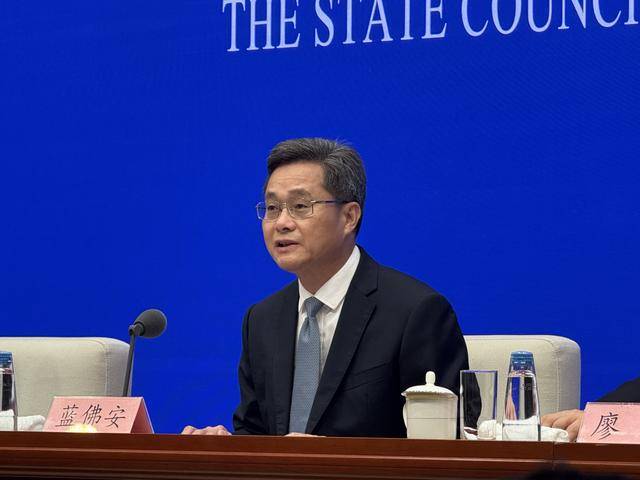
Core Insights - The press conference held by the State Council Information Office focused on the achievements of fiscal reform during the "14th Five-Year Plan" period [1] Group 1: Fiscal Measures and Debt Management - In the fourth quarter of last year, a comprehensive debt reduction initiative was launched, which has been effectively implemented [3] - As of the end of August this year, a one-time increase of 6 trillion yuan in special debt limits has resulted in the issuance of 4 trillion yuan [3] - The average interest cost of debt has decreased by over 2.5 percentage points, leading to savings of over 450 billion yuan in interest payments [3] - This year, a total of 2.78 trillion yuan in new local government special bonds have been issued, with 800 billion yuan allocated to support local debt reduction [3] Group 2: Government Debt Overview - By the end of 2024, the total government debt in China is projected to reach 92.6 trillion yuan, comprising 34.6 trillion yuan in national debt, 47.5 trillion yuan in local government legal debt, and 10.5 trillion yuan in local government hidden debt [3] - The government debt-to-GDP ratio stands at 68.7%, which is considered reasonable compared to the G20 average of 118.2% and the G7 average of 123.2% [3] - The government debt is backed by a significant amount of high-quality assets, indicating that the overall risk is manageable [3]
“持续发力”用好存量政策,保留“适时加力”空间丨温彬专栏
2 1 Shi Ji Jing Ji Bao Dao· 2025-08-15 22:35
Economic Performance Overview - In July, China's economic growth rate slowed due to extreme weather conditions, but it remained above the 5% target level, with a focus on utilizing existing policies while maintaining proactive measures [1][3] - The service sector outperformed the industrial sector in July, with the service production index decreasing by 0.2 percentage points to 5.8%, while industrial added value fell by 1.1 percentage points to 5.7% [1][3] Demand and Consumption - Exports in July increased by 7.2% year-on-year in USD terms, accelerating by 1.3 percentage points compared to June, driven by a "rush to re-export" effect before the expiration of "reciprocal tariffs" [1][2] - Retail sales of consumer goods grew by 3.7% year-on-year in July, a decline of 1.1 percentage points from the previous month, with dining revenue rebounding slightly while commodity retail growth slowed [2] Investment Trends - Fixed asset investment from January to July grew by 1.6% year-on-year, a slowdown of 1.2 percentage points compared to the first half of the year, with infrastructure investment growing by 3.2% [2] - Real estate development investment decreased by 12.0% year-on-year from January to July, with the decline expanding by 0.8 percentage points compared to the first half of the year [2] Policy and Future Outlook - The Central Political Bureau meeting emphasized the need for sustained macroeconomic policy efforts, focusing on expanding domestic demand and improving living standards [3][4] - Key initiatives include promoting service consumption, enhancing personal consumption loan policies, and stimulating private investment through infrastructure projects [3][5] - The meeting also highlighted the importance of deepening reforms and managing risks in key areas, particularly in local government debt and real estate markets [4][5]
献策“十五五” | 张成刚:“十五五”要加快完善制度支持和规范发展新就业形态
Sou Hu Cai Jing· 2025-08-11 01:16
Core Insights - The new employment forms based on digital economy and artificial intelligence are becoming a significant part of China's employment landscape, with a focus on promoting flexible employment while ensuring labor rights protection during the "14th Five-Year Plan" period [3][4]. Group 1: Characteristics of Flexible Employment and New Employment Forms - During the "14th Five-Year Plan" period, flexible employment and new employment forms are expected to expand significantly, becoming a major growth point for employment [4]. - The development of the digital economy will create more new business models and opportunities for flexible employment, with "one-person armies" emerging as a new entrepreneurial model [4][5]. - The rise of digital gig platforms is enhancing labor matching efficiency, with new employment forms primarily seen in sectors like ride-hailing, food delivery, e-commerce, and short video creation [4][5]. Group 2: Improvement in Employment Quality - The quality of flexible employment is continuously improving, moving away from being associated solely with low-end jobs [5]. - Digital platforms are enhancing standardization, management, and transparency in flexible employment, leading to increased income levels for some flexible workers, surpassing traditional employment [5][6]. - The proliferation of flexible employment is encouraging continuous learning and skill enhancement among workers, contributing to human capital accumulation and improved employment quality [5][6]. Group 3: Challenges in Labor Rights Protection - There are significant shortcomings in the protection of rights for flexible employment and new employment form workers, primarily due to ambiguous legal relationships and unclear definitions of "incomplete labor relationships" [6][7]. - The high costs associated with social insurance for flexible workers deter participation, and tax issues related to income and labor remuneration remain problematic for platform companies [6][7]. - The mechanisms for handling labor disputes are inadequate, leading to high costs and long durations for workers seeking to protect their rights [6][7]. Group 4: Recommendations for Rights Protection - The "14th Five-Year Plan" period should focus on establishing a comprehensive labor rights protection system tailored to new employment forms, ensuring legal coverage for all workers [7][8]. - There is a need for policies that better align with the characteristics of new employment methods and income patterns, as well as mechanisms for stable income growth [7][8]. - Enhancing skills training support and optimizing platform governance mechanisms are essential to improve the working environment for flexible employment [8][9].

财政部:督促地方加快专项债发行使用进度
Zhong Guo Zheng Quan Bao· 2025-08-08 07:28
Core Insights - The Ministry of Finance reported that from January to July 2024, the national general public budget revenue reached 135,663 billion yuan, with a comparable growth of approximately 1.2% after excluding special factors [1][2] - National general public budget expenditure for the same period was 155,463 billion yuan, reflecting a year-on-year increase of 2.5% [1][3] Revenue Analysis - The overall national general public budget revenue decreased by 2.6% year-on-year, but when adjusted for special factors, it showed a growth of 1.2% [2] - Tax revenue was impacted by various factors, with a 5.4% decline in total tax revenue. Notably, domestic value-added tax fell by 5.2%, while domestic consumption tax increased by 5.5% due to growth in sales of refined oil, cigarettes, and alcohol [2] - Export tax rebates amounted to 12,824 billion yuan, an increase of 1,632 billion yuan year-on-year, supporting foreign trade growth [2] Expenditure Analysis - National general public budget expenditure increased by 2.5% year-on-year, with significant growth in social security and employment (4.3%), agriculture, forestry, and water (8.2%), and urban and rural community spending (7.2%) [3] - The Ministry of Finance anticipates stable growth in public budget expenditure in the coming months, supported by macroeconomic policies and the gradual fading of special factors [3] Local Government Debt Management - From January to July, local governments issued 17,749 billion yuan in new special bonds, primarily for infrastructure projects in key areas identified by the central government [4] - The Ministry of Finance is working with relevant departments to accelerate the issuance and utilization of special bonds to enhance investment efficiency and support economic development [4] - Overall, local government debt risks are considered manageable, with a gradual reduction in hidden debt levels [5]
保民生促投资防风险 财政政策积极有为
Zhong Guo Zheng Quan Bao· 2025-08-06 21:09
Group 1 - The current economic growth faces challenges, and fiscal policy will focus on more proactive measures to support key areas, including optimizing expenditure structure and enhancing social welfare [1] - In the first half of the year, social security and employment, education, and health expenditures grew by 9.2%, 5.9%, and 4.3% respectively, all exceeding the general public budget expenditure growth of 3.4% [2] - The issuance of local government bonds reached 2.6 trillion yuan in the first half of the year, supporting major project construction [3] Group 2 - The Ministry of Finance plans to accelerate the issuance and utilization of government bonds, with a focus on special bonds and ultra-long-term special treasury bonds to stabilize investment and promote growth [3] - By the end of July, 2.78 trillion yuan of new special bonds had been issued, accounting for 63% of the annual quota, indicating a faster-than-usual issuance pace [3] - The Ministry of Finance aims to complete the issuance of 1.3 trillion yuan in ultra-long-term special treasury bonds to ensure the implementation of key projects [3] Group 3 - The government is actively working on replacing local government hidden debts, with 1.8 trillion yuan of the 2 trillion yuan replacement bonds for 2025 already issued by June [4] - There is a strong regulatory stance against new hidden debts, with a focus on the orderly exit of local financing platforms to mitigate systemic risks [4][5] - The government emphasizes a market-oriented transformation of financing platforms, gradually pushing for their exit from local government financing roles [5]
中原期货晨会纪要-20250731
Zhong Yuan Qi Huo· 2025-07-31 02:04
1. Market Index Performance - **Global Stock Indexes**: On July 31, 2025, the Dow Jones Industrial Index closed at 44,461.28, down 0.385% from the previous day; the Nasdaq Index closed at 21,129.67, up 0.149%; the S&P 500 closed at 6,362.90, down 0.125%; the Hang Seng Index closed at 25,176.93, down 1.362% [2]. - **SHIBOR and Dollar Index**: The SHIBOR overnight rate was 1.32, down 3.587% from the previous day; the dollar index was 99.79, down 0.179%. The dollar - to - RMB (CFETS) exchange rate remained unchanged [2]. - **Commodity Futures**: COMEX gold rose 0.078% to 3,327.90; COMEX silver fell 3.152% to 37.18; LME copper fell 0.745% to 9,730.00; NYMEX crude oil rose 1.516% to 70.30. Domestic metals, chemicals, and agricultural products also showed various price changes [2][3][5]. 2. Macro - economic News - **Policy Decisions**: The Political Bureau of the CPC Central Committee will hold the Fourth Plenary Session of the 20th CPC Central Committee in October to discuss the 15th Five - Year Plan. The government will implement more active fiscal policies and moderately loose monetary policies, support key areas, and resolve local government debt risks [8]. - **Subsidy Policy**: The state plans to allocate about 90 billion yuan for childcare subsidies in 2025, and localities will open application channels by August 31 [8]. - **Industry Policies**: The China Non - Ferrous Metals Industry Association will control new capacity in copper smelting and alumina, and promote the exit of backward capacity in some sectors [10]. 3. Morning Views on Major Commodities 3.1 Agricultural Products - **Peanuts**: The peanut market is expected to have a bullish and volatile short - term trend but will maintain a downward long - term trend, with a current pattern of weak supply and demand [12]. - **Oils and Fats**: The oils and fats market has light trading volume and stable basis. Brazil's soybean exports are expected to increase, and Malaysia's palm oil exports are also rising [12]. - **Sugar**: The sugar market is in an internal - strong and external - weak situation. With the arrival of processed sugar in August, the spot market may face pressure. It is recommended to wait and see [12]. - **Corn**: The corn market is in a situation of weak supply and demand. It is recommended to operate within the range of 2,300 - 2,320 yuan/ton [12]. - **Cotton**: ICE cotton and Zhengzhou cotton are both weak. It is recommended to short on rallies, with attention to the 13,350 - yuan support level [13]. - **Hogs**: The hog market is in a state of oversupply. It is expected to fluctuate within a range [13]. - **Eggs**: After this round of price adjustment, the egg spot price is expected to be supported by Mid - Autumn Festival stocking. The futures market is adjusting the basis by following the spot price decline [14]. 3.2 Energy and Chemicals - **Caustic Soda**: The price of caustic soda in Shandong is expected to fluctuate slightly. It is recommended to pay attention to the 9 - 11 reverse spread [16]. - **Urea**: The domestic urea market price is stable. The supply is decreasing, and the inventory is increasing. The price is expected to operate within the range of 1,720 - 1,800 yuan/ton [16][18]. 3.3 Industrial Metals - **Copper and Aluminum**: Copper prices may face pressure if the 50% tariff is imposed. Aluminum prices are expected to fluctuate at a high level in the short term [18]. - **Alumina**: The fundamentals of alumina are in a surplus situation. The futures price may be strong, but it is necessary to be vigilant about macro - sentiment [18]. - **Steel Products**: The spot market for steel products has weak trading volume. The prices of rebar and hot - rolled coils are expected to be supported at certain levels [18]. - **Ferroalloys**: Ferroalloys are currently driven by macro - expectations. It is recommended to operate cautiously [18][19]. - **Coking Coal and Coke**: The coking coal and coke markets are fluctuating and under pressure. The fifth round of coke price increase has started, but steel mills have not responded [19]. - **Lithium Carbonate**: The lithium carbonate market is in a situation of strong supply and weak demand. It is recommended to wait and see and short on rallies [19]. 3.4 Options and Financial Products - **Stock Index Futures and Options**: On July 30, A - share indexes showed mixed performance. The trading volume and open interest of stock index futures and options changed, and the implied volatility of some options decreased. Trend investors can focus on cross - variety arbitrage opportunities, and volatility investors can buy straddles [19][21].