存算一体

Search documents
2025年度国产AI芯片产业白皮书-与非网
Sou Hu Cai Jing· 2025-10-21 08:05
Core Insights - The report titled "2025 National AI Chip Industry White Paper" outlines the current status, innovation paths, industrial landscape, and core applications of domestic AI chips, emphasizing their strategic significance as the computational foundation of the AI industry while highlighting multiple challenges and breakthrough directions faced by the industry [1]. Group 1: Current Development and Challenges - Domestic AI chip development is crucial for ensuring supply chain autonomy and competing for the next generation of computing dominance, transitioning from "technological breakthroughs" to "ecological rise" [1]. - The industry faces three core challenges: insufficient architectural leadership, shortcomings in the ecosystem (software stack, development tools, and model compatibility), and obstacles in scaling from laboratory performance to industrial-grade reliability [1][2]. Group 2: Innovation Directions - Domestic AI chips are making strides in multiple architectural fields, focusing on x86, Arm, RISC-V, GPU, and DSA dedicated accelerators, while also targeting breakthroughs in sparse computing, FP8 precision optimization, memory-compute integration, and Chiplet heterogeneous integration [1]. - Companies like MoXing AI, Huawei, and Cambricon have accumulated technology in sparse computing, while companies like Moore Threads have achieved mass production of FP8 computing power [1][2]. Group 3: Industrial Landscape and Key Applications - The industry exhibits a collaborative development trend across various fields, with CPU, AI SoC, cloud/edge/vehicle AI chips, and GPU companies each having unique characteristics, primarily concentrated in key regions such as Shanghai, Beijing, and Guangdong [2]. - Core application scenarios are accelerating, with intelligent computing expected to reach 725.3 EFLOPS by 2024, and companies like Huawei and Moore Threads deploying large-scale clusters [2]. Group 4: Future Focus Areas - Future domestic AI chips should concentrate on full-stack closure and open collaboration, enhancing autonomous solutions in intelligent computing, breaking through dedicated computing architectures in automotive electronics, and prioritizing real-time collaborative architectures in robotics [2]. - The goal is to achieve a transition from "usable" to "user-friendly" through technological innovation, ecosystem improvement, and deepening application scenarios, thereby promoting high-quality industrial development [2].


MRAM,台积电(TSM.US)重大突破
智通财经网· 2025-10-18 01:09
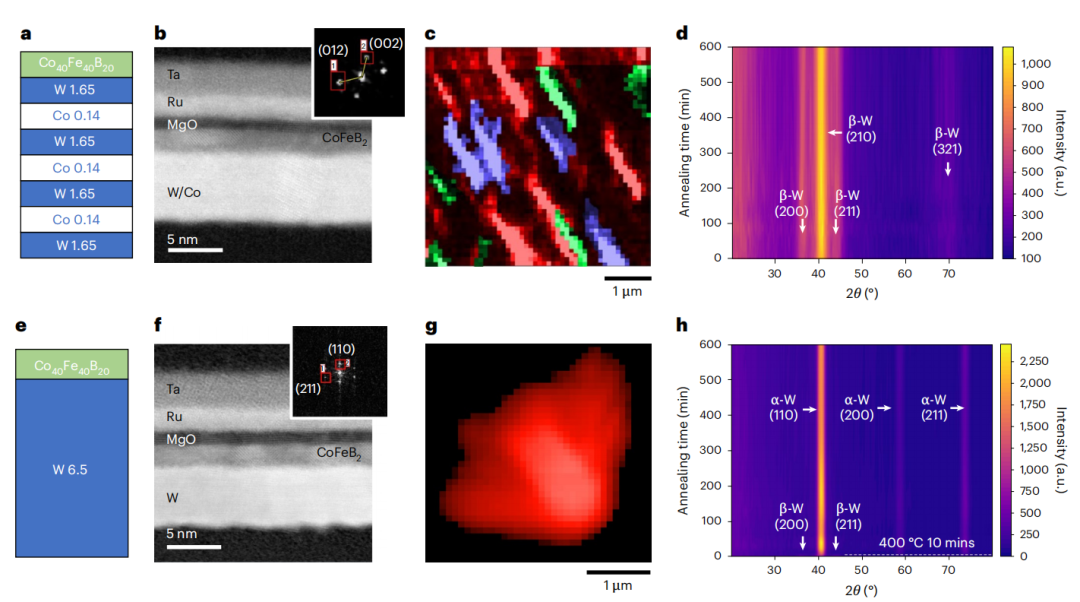
Core Insights - The rapid development of Non-Volatile Memory (NVM) technology is driven by emerging applications such as artificial intelligence, autonomous driving, and the Internet of Things, which challenge traditional storage systems in terms of speed, energy consumption, and stability [1][2] - Spin-Orbit Torque Magnetic Random Access Memory (SOT-MRAM) has emerged as a promising universal storage solution due to its high speed, low power consumption, and non-volatility [1][2] Storage Technology Transformation Needs - Traditional storage systems, reliant on SRAM, DRAM, and flash memory, face significant challenges as technology nodes approach 10nm, including scalability limitations, performance enhancement difficulties, and increased read/write interference [2] - New non-volatile storage technologies, including SOT-MRAM, STT-MRAM, PCM, RRAM, and FeRAM, are being developed to meet the high demands for speed, non-volatility, and reduced power consumption [2] Unique Advantages of SOT-MRAM - SOT-MRAM operates using a unique principle that leverages strong spin-orbit coupling materials to achieve fast data writing and erasing through magnetization flipping [3][4][5] - It features three core advantages: high-speed writing, high energy efficiency, and high reliability, making it a potential replacement for SRAM in next-generation computing systems [3][4][5][6] Overcoming Key Technical Challenges - A critical technical bottleneck for SOT-MRAM is the thermal stability of spin-orbit coupling materials, particularly tungsten, which can transition from a metastable β phase to a stable α phase under typical semiconductor manufacturing conditions [7][9] - The research team developed a composite structure by inserting ultra-thin cobalt layers within the tungsten layers, significantly improving thermal stability and maintaining high spin conversion efficiency [9][12] Comprehensive Performance Validation - The team successfully fabricated a 64kb SOT-MRAM prototype array and conducted extensive performance testing, achieving a switching speed of 1 nanosecond and demonstrating excellent stability and repeatability [12][14] - The device's data retention capability exceeds 10 years, and it achieved a tunneling magnetoresistance (TMR) of 146%, indicating a high-quality interface for stable read margins [14] Opening a New Era in Storage Technology - The research indicates a shift in the storage industry, with SOT-MRAM poised to fill the performance gap between SRAM and DRAM, potentially transforming the traditional storage hierarchy [15][16] - SOT-MRAM's characteristics make it particularly suitable for AI and edge computing applications, where it can significantly reduce system energy consumption [15][16] Future Directions - The proposed strategy for stabilizing metastable phases in materials could extend beyond tungsten, offering new insights for other functional materials [16] - The advancements in SOT-MRAM may facilitate innovations in computing architectures, such as in-memory computing, addressing the limitations of traditional von Neumann structures [16][17]

MRAM,台积电重大突破
半导体行业观察· 2025-10-18 00:48
Core Viewpoint - The rapid development of non-volatile memory (NVM) technology is driven by emerging applications such as artificial intelligence, autonomous driving, and the Internet of Things, which pose challenges to traditional storage systems in terms of speed, energy consumption, and stability [1][2]. Summary by Sections Storage Technology Transformation Needs - Current computing systems rely on a storage hierarchy of SRAM, DRAM, and flash memory, which face significant challenges as technology nodes surpass 10nm, including limited scalability, performance enhancement difficulties, and increased read/write interference [3]. - New non-volatile storage technologies, including SOT-MRAM, STT-MRAM, PCM, RRAM, and FeRAM, are emerging to meet the higher demands for speed, non-volatility, and reduced power consumption [3]. Advantages of SOT-MRAM - SOT-MRAM is gaining attention due to its unique working principle and technical advantages, including high speed, low power consumption, and non-volatility, making it a potential replacement for SRAM in next-generation computing systems [4]. Overcoming Key Technical Challenges - A critical technical bottleneck for SOT-MRAM is the thermal stability of spin-orbit coupling materials. Tungsten, particularly in its β-phase, is an ideal candidate due to its strong spin-orbit coupling characteristics, but it is metastable and can transition to a less efficient α-phase under typical semiconductor processing conditions [5][7]. Breakthrough Solutions - The research team developed a composite structure by inserting ultra-thin cobalt layers within the tungsten layers, enhancing thermal stability and maintaining high spin-orbit torque efficiency. This design allows for rapid data switching and significantly reduces energy consumption [7][8]. Performance Validation - The team successfully fabricated a 64kb SOT-MRAM prototype array and conducted comprehensive performance testing, achieving a switching speed of 1 nanosecond, comparable to SRAM, and demonstrating excellent stability and repeatability [10][12]. Implications for the Storage Industry - The development of SOT-MRAM indicates a shift in the storage industry, with potential to replace or simplify the traditional SRAM-DRAM-flash memory hierarchy, enhancing system efficiency and reducing energy consumption in applications like AI and edge computing [14][15]. Future Directions - The research team's approach to stabilizing metastable phases may provide insights for other functional materials, and the advancements in SOT-MRAM could facilitate innovations in computing architectures, such as in-memory computing, addressing the limitations of traditional von Neumann structures [15][17].

研判2025!中国神经形态芯片行业产业链、市场规模及重点企业分析:3D堆叠+忆阻器技术使能效比飙升50倍,技术突破与市场需求双重推动行业发展[图]
Chan Ye Xin Xi Wang· 2025-10-16 01:20
Core Insights - The Chinese neuromorphic chip industry is entering a rapid development phase driven by technological breakthroughs and market demand, becoming a significant competitive field in the global semiconductor industry [1][5] - The market size of the Chinese neuromorphic chip industry is projected to reach approximately 2.548 billion yuan in 2024, representing a year-on-year growth of 12.89% [1][6] - Key technological advancements include Tsinghua University's "Tianji Chip" and Zhejiang University's billion-level neuron brain-like computer, showcasing China's technological strength [1][5] Industry Overview - Neuromorphic chips mimic the structure and function of human brain neural networks, integrating cognitive science and information science to create intelligent computing platforms capable of perception, processing, and learning [2][3] - The main implementation technologies for neuromorphic chips include digital CMOS, mixed-signal CMOS, and hybrid systems based on new devices [2] Industry Development History - The Chinese neuromorphic chip industry has evolved through three stages: academic research (2010-2018), engineering breakthroughs (2019-2023), and accelerated commercialization (2024-present) [3][4] - The industry is expected to experience a surge in commercialization by 2025, with advancements in 7nm process chips and a significant increase in production capacity [3][4] Industry Value Chain - The upstream of the neuromorphic chip industry includes semiconductor materials like single crystal silicon and germanium, as well as production equipment [5] - The midstream focuses on the research and production of neuromorphic chips, while the downstream applications span artificial intelligence, sensor systems, and smart devices [5] Market Size - The neuromorphic chip industry is becoming a crucial area in the global semiconductor sector, with a projected market size of approximately 2.548 billion yuan in 2024, growing by 12.89% year-on-year [1][6] Key Companies' Performance - The competitive landscape of the neuromorphic chip industry is characterized by "design leadership and manufacturing breakthroughs," with companies like Huawei HiSilicon, Cambricon, and Horizon Robotics leading in design [6][7] - Cambricon has achieved significant breakthroughs in the neuromorphic chip field, with its products already in mass production and applied in various sectors [6][7] Industry Development Trends 1. Continuous innovation in technical architecture will lead to energy efficiency breakthroughs, with the adoption of 7nm and below advanced processes [8] 2. Application scenarios for neuromorphic chips are expanding from specialized fields to consumer markets, including autonomous driving and healthcare [8] 3. The industry is accelerating domestic substitution, with significant advancements in design, manufacturing, and key materials, reducing reliance on imports [9][10]



九天睿芯宣布已完成B轮融资,规模超亿元人民币!
Sou Hu Cai Jing· 2025-10-13 09:03
Core Insights - Shenzhen Jiutian Ruixin Technology Co., Ltd. has completed a Series B financing round exceeding 100 million RMB, with participation from notable investment firms [1][2] - The funds will be allocated to three strategic areas: technological innovation, market expansion, and talent development [2] Technological Advancements - Jiutian Ruixin plans to advance the development of two subsequent generations of high-capacity, high-performance integrated AI chips over the next three years [4] - The second-generation chip will support lightweight large models with parameters ranging from 1 to 3 billion, while the third generation aims to support inference deployment for models with 100 billion parameters at a cost one-tenth of current solutions [4] Market Strategy - The company aims to strengthen its presence in key global markets and enhance its customer support service system [4] - Strategic collaborations with leading terminal brand clients, core upstream suppliers, and model algorithm companies will be pursued to build a robust "soft-hard integration" industrial ecosystem [4] Talent Acquisition - Jiutian Ruixin plans to significantly expand its talent pool, focusing on areas such as NPU architecture, ESL modeling, and technical market personnel to enhance its overall capabilities [4] Industry Context - The traditional von Neumann architecture has been dominant in AI chip development, but it faces limitations due to the increasing data volume and computational demands of AI applications [5][6] - Jiutian Ruixin is addressing these challenges by adopting a multi-level storage-computation integration technology, which brings storage closer to computation units, thus overcoming traditional architectural constraints [6] Product Offerings - The company has developed a complete edge AI chip product matrix to meet various computational needs, including the ADA100 ultra-low power voice computing chip [6][8] - The ADA100 chip features a unique analog preprocessor and NPU, achieving standby power consumption of 70μA and full power consumption of 170μA, significantly extending battery life for devices [8] Future Developments - Jiutian Ruixin's second-generation ADA200 Always On visual processor has also successfully completed its tape-out, supporting IoT visual and posture control applications [10] - The company's chips are already in mass production with several international leading brands in smart glasses, smart headphones, and hearing aids [10]
清华大学集成电路学院副院长唐建石:高算力芯片,如何突破瓶颈?
Xin Lang Cai Jing· 2025-10-03 07:16
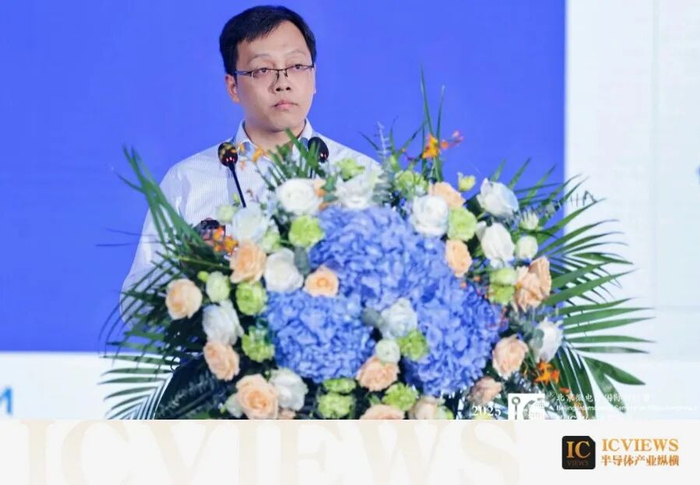
Core Insights - The demand for computing power in the AI sector is experiencing explosive growth, with China's intelligent computing power exceeding tens of quadrillions of operations per second by 2025, and AI computing power doubling approximately every six months, significantly outpacing the hardware advancements driven by Moore's Law [2][4]. Industry Overview - The current landscape of computing chips shows a stark contrast between storage and computing chips, where storage chips have standardized interfaces while computing chips rely on a complete ecosystem of instruction sets, toolchains, and operating systems [2]. - The U.S. has long dominated the computing chip system, while China faces dual hardware constraints: the slowing of Moore's Law and the challenges posed by the ban on EUV lithography machines [2][4]. Technological Breakthroughs - The team led by Tang Jianshi has broken down chip computing power into three core elements: transistor integration density, chip area, and individual transistor computing power, and is exploring technologies to enhance each element [4][6]. - To achieve the goal of integrating over one trillion transistors, the team is focusing on chiplet technology, which allows for vertical stacking of multiple chips, expanding integration dimensions from "area density" to "volume density" [6][9]. Innovations in Memristor Technology - The team has made significant advancements in memristor technology, which features a simple structure that allows for multi-bit non-volatile storage and can perform matrix-vector multiplication, enhancing energy efficiency compared to traditional digital circuits [9][10]. - The integration of memristors with CMOS technology has reached a scale of over 100 million, with yield rates between 99.44% to 99.9999%, and products at 40nm and 28nm nodes have achieved mass production [10][12]. Industry Collaboration and Development - The team has established the "Beijing Chip Power Technology Innovation Center" to create a one-stop service platform for chiplet technology, which has already completed initial wiring and is capable of small-scale production [6][10]. - The team has incubated a startup, "Beijing Billion Technology," which has launched a hardware platform for computing and storage integration and is collaborating with various universities and companies like Migu and ByteDance to develop computing acceleration cards for content recommendation applications [15]. Future Directions - The team emphasizes the need for multi-level collaborative innovation to overcome the constraints of advanced manufacturing processes and achieve breakthroughs in high-performance chips [15]. - Future explorations will include integrating silicon photonics and optoelectronics to enhance data transmission and expand the technological pathways for efficient chip development [15].
这一次,天玑9500的端侧AI能力,友商赶不上了
机器之心· 2025-09-22 10:27
Core Viewpoint - MediaTek has launched its flagship 5G AI chip, Dimensity 9500, which significantly enhances on-device AI capabilities, moving from experimentation to practical applications [2][12]. Group 1: AI Capabilities and Performance - The Dimensity 9500 can process long texts up to 128K characters in just two seconds, summarizing meeting notes and correcting typos automatically [3]. - Image generation on mobile devices has improved, with the Dimensity 9500 producing detailed images in 10 seconds, compared to 30 seconds with previous models [7]. - The chip supports 4K quality image generation, allowing users to create images from simple prompts in under 10 seconds [9]. - The AI applications running on the Dimensity 9500 are designed for real-world scenarios, operating locally without cloud data uploads, and consuming 50% less power than its predecessor, the Dimensity 9400 [11]. Group 2: Technological Advancements - The Dimensity 9500 features a new architecture built on a 3nm process, integrating over 30 billion transistors, resulting in a 111% increase in NPU peak performance while reducing power consumption by 56% [18][22]. - It achieved a score of 15015 on the AI Benchmark platform, nearly doubling the performance of the previous generation [19]. - The chip employs a dual NPU architecture, enhancing both performance and efficiency, and introduces a new BitNet 1.58-bit quantization framework, reducing power consumption by 50% compared to the previous model [25][28]. Group 3: Developer Support and Ecosystem - MediaTek has introduced the Dimensity AI development kit, which supports key technologies for AI model development, enabling the execution of 7 billion parameter AI models on-device [30][33]. - The company is focused on providing a standardized AI development paradigm, which is expanding the ecosystem for native AI applications [33]. Group 4: Industry Trends and Future Outlook - Major smartphone manufacturers like vivo and OPPO are set to launch devices powered by the Dimensity 9500, showcasing a shift towards advanced AI capabilities in mobile technology [36]. - The upcoming devices will feature personalized AI functionalities and enhanced performance for complex tasks, indicating a trend towards more intelligent and responsive mobile devices [39][40].

知存科技 2026 届校招启动:这类半导体人才将成香饽饽
半导体行业观察· 2025-09-17 01:30
Core Viewpoint - The article discusses the challenges faced by traditional chip architectures due to the rise of generative AI models and the emergence of in-memory computing technology, which significantly enhances AI computing efficiency and is seen as a disruptive technology in the post-Moore era [1][3]. Group 1: In-Memory Computing Technology - In-memory computing technology has gained traction as it addresses the "storage wall" and "power wall" issues inherent in the von Neumann architecture, leading to a potential efficiency improvement of several times in AI computing [1][3]. - The in-memory computing chips developed by Zhichun Technology have already served over 30 clients in commercial applications, showcasing the technology's practical viability [5]. Group 2: Talent Acquisition and Development - Zhichun Technology has launched the "Genius Doctor Program" for 2026, aiming to attract top talent in semiconductor devices, circuit design, and AI algorithms, reflecting the industry's talent competition amid rapid technological advancements [1][7]. - The program offers a unique growth system that includes mentorship and rotation across core R&D positions, allowing participants to gain comprehensive experience in the technology development process [7][10]. Group 3: Industry Trends and Future Outlook - The semiconductor industry is expected to face a talent shortage of over 300,000 professionals by 2025, highlighting the urgency for companies to develop and attract skilled individuals [1]. - The current phase of in-memory computing technology is critical as it transitions from "production validation" to "scale application," indicating a pivotal moment for the industry [12].
【金牌纪要库】AI芯片驱动先进逻辑半导体设备订单增长强劲,上半年两大龙头订单同比增长40%,这个技术被视为下一代封装技术核心
财联社· 2025-09-12 15:11
Core Insights - The article highlights the strong growth in orders for advanced logic semiconductor equipment driven by AI chips, with two major industry leaders experiencing a 40% year-on-year increase in orders in the first half of the year [1] - NVIDIA's launch of the Rubin CPX is expected to significantly lower token generation costs, potentially stimulating overall demand for AI applications as this product is anticipated to grow alongside the overall increase in AI workloads [1] - The rise of AI terminals may disrupt the traditional separation of "computation" and "storage" architectures, with "compute-storage integration" or "near-storage computing" likely to come to the forefront, driving demand for corresponding equipment and materials [1]


半壁江山都来了!最燃AI芯片盛会最终议程公布,同期超节点研讨会深入解读华为384
傅里叶的猫· 2025-09-12 10:42
Core Viewpoint - The 2025 Global AI Chip Summit will be held on September 17 in Shanghai, focusing on the theme "AI Infrastructure, Smart Chip New World," addressing the new infrastructure wave in the AI era and the breakthroughs in China's chip industry under large models [2][3]. Group 1: Event Overview - The summit will feature over 180 industry experts sharing insights on cutting-edge research, innovations, and industry trends, making it a significant platform for understanding AI chip developments [2]. - The event will consist of a main forum, specialized forums, technical seminars, and an exhibition area, providing a comprehensive agenda for attendees [2][3][5]. Group 2: Main Forum Highlights - The opening report will be delivered by Professor Wang Zhongfeng, focusing on "Shaping the Intelligent Future: Architectural Innovation and Paradigm Shift of AI Chips," discussing solutions to overcome bottlenecks in AI chip development [7]. - Key speakers include leaders from major companies such as Huawei and Yuntian Lifei, discussing trends in AI development and the strategic positioning of AI chips [7][8][9]. Group 3: Specialized Forums - The Large Model AI Chip Specialized Forum will address the competitive landscape of large models and the infrastructure needed for AI, emphasizing cost-effectiveness as a critical factor [18][19]. - The AI Chip Architecture Innovation Forum will explore new chip architectures, including wafer-level chips and RISC-V based solutions, highlighting the need for innovative approaches in the face of technological constraints [22][24]. Group 4: Technical Workshops - The workshops will focus on topics such as memory wall issues in traditional architectures and the importance of storage-computing integration in AI chip design [32][33]. - Experts will discuss advancements in DRAM near-memory computing architectures and the challenges of integrating heterogeneous systems for AI applications [34][35]. Group 5: Exhibition Area - The exhibition will feature over 10 exhibitors, including leading companies like Achronix and Sunrise, showcasing their latest technologies and solutions in the AI chip sector [3].