
数字化升级

Search documents
(走进中国乡村)陇南珍品“链”全球:深山货郎变“全球卖手”
Zhong Guo Xin Wen Wang· 2025-12-16 12:53
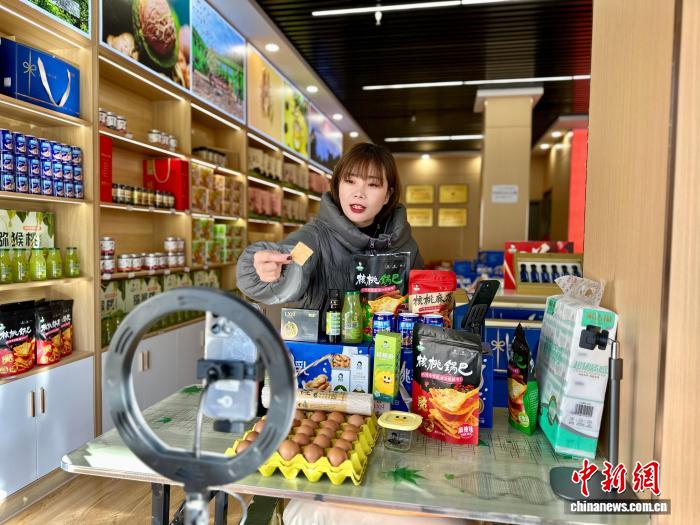
Core Insights - The article highlights the transformation of rural commerce in Longnan, Gansu, where local products, particularly walnuts, are being marketed globally through e-commerce platforms, significantly boosting local economies and employment [1][3]. Group 1: E-commerce Development - Longnan's e-commerce sector has evolved from individual attempts to a comprehensive system covering production, processing, packaging, logistics, and marketing, becoming a model for e-commerce poverty alleviation in China [3][4]. - As of October 2023, Longnan's e-commerce has generated a total sales revenue of 564 billion RMB, creating over 340,000 jobs in the industry [1][3]. Group 2: Product Diversification and Innovation - Local entrepreneurs are innovating traditional walnut products, introducing items like walnut milk, walnut snacks, and skincare products, with projected sales of over 40 million RMB in 2024 for one brand [5]. - The e-commerce sector is expanding its product range to include various local specialties such as apples, garlic, and wild vegetables, with annual sales reaching 120 million RMB [4]. Group 3: Global Market Reach - Longnan's products are exported to over 30 countries and regions, including Russia, Kyrgyzstan, and the United States, facilitated by 76 registered cross-border e-commerce companies [4]. - The local government is supporting businesses in establishing overseas warehouses and stores, enhancing their international presence [4].

Netflix计划收购华纳兄弟;迪士尼投资OpenAI;星巴克联名哈利波特...| 刀法周报
Sou Hu Cai Jing· 2025-12-14 04:37
Group 1 - Netflix plans to acquire Warner Bros. for $72 billion, including HBO and HBO Max [3] - Paramount quickly proposed a $108.4 billion cash offer to join the bidding war [3] - Concerns about market concentration and antitrust issues have been raised, with concentration estimates between 28% and 45% [4] Group 2 - Disney announced a $1 billion investment in OpenAI, allowing users to create videos using Disney characters on the Sora platform [6] - This partnership signifies a shift towards AI-driven content creation in the entertainment industry [6] - Disney's CEO emphasized the importance of responsible AI use while collaborating with top IPs [6] Group 3 - Starbucks launched a Harry Potter-themed winter celebration series in China, featuring three limited-edition drinks [9] - The collaboration aims to create an immersive cultural experience and enhance consumer engagement [10] - This partnership reflects Starbucks' strategy of leveraging popular IPs for brand marketing [10] Group 4 - The Dream Ice Cream Company announced its listing in Amsterdam, London, and New York, with a market value of 64 billion yuan on its first day [12] - This marks the company's independence from Unilever, allowing for more agile market responses [13] - The listing is expected to lead to adjustments in product strategy and supply chain in China [14] Group 5 - ChatGPT released version 5.2, focusing on creating more economic value for users [16] - The update reflects OpenAI's ambition in the vertical application field for businesses [16] - The new version is seen as a strong model but is now more aligned with competitors like Google and Microsoft [17] Group 6 - The Chinese snack retailer "Mingming Hen Mang" received approval for its overseas listing, achieving retail sales of 41.1 billion yuan in the first half of the year [20] - The company operates in 28 provinces and 1,327 counties across China [20] - Its business model emphasizes low margins and high sales volume [22] Group 7 - "Kids King" submitted its listing application to the Hong Kong Stock Exchange, aiming for a dual capital platform [24] - The company has shown steady revenue growth, with projected revenues of 85.2 billion yuan in 2022 and 93.37 billion yuan in 2024 [25] - The expansion strategy includes entering the hair care market through acquisitions [25] Group 8 - Nova Coffee announced its global store count surpassed 10,000, with rapid expansion in China and overseas [28] - The coffee market is growing as more consumers adopt coffee-drinking habits [29] - Nova's early focus on low-sugar products aligns with rising health-conscious consumer trends [30] Group 9 - Coca-Cola announced a management change, with Henrique Braun set to become CEO in March 2026 [32] - The transition is seen as a strategic continuation rather than a crisis response [33] - The new CEO's experience in the Chinese market is expected to enhance Coca-Cola's growth in that region [33] Group 10 - Wu Yue from LVMH joined the board of Pop Mart, aiming to enhance the brand's international expansion and marketing strategies [36] - His experience in luxury brand management is expected to benefit Pop Mart's brand positioning [37] - The appointment reflects Pop Mart's ambition to diversify its IP and elevate its brand [37]



强力赋能:美宜佳携手生态伙伴,构建品牌便利店加盟长期竞争力护城河
Sou Hu Cai Jing· 2025-12-13 12:57
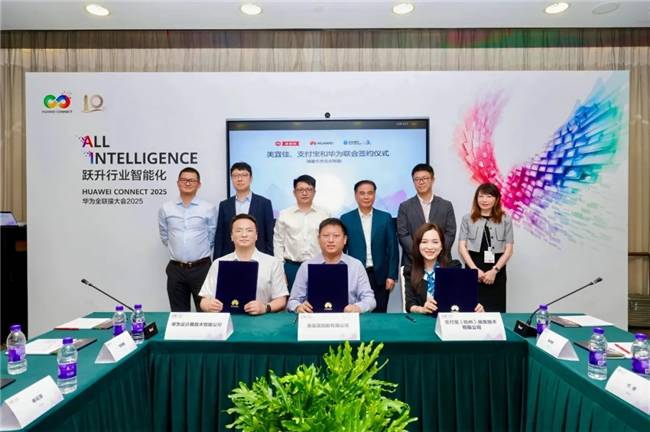
2025年9月19日,在华为全联接大会2025上,美宜佳与华为、支付宝正式签署三方联创合作协议。此次 合作标志着三方将整合各自在零售网络、操作系统生态及数字支付领域的优势,共同推进基于鸿蒙生态 的全店智能运营体系建设。此举旨在通过技术与场景的深度融合创新,系统性提升全国门店的智能化水 平与消费者体验,为零售行业的数字化升级树立新标杆。 本次合作的核心是依托华为鸿蒙系统强大的生态连接与分布式能力,以及支付宝在数字经营与支付领域 的成熟技术,共同打造可规模化推广的智慧零售解决方案。合作的首个重要成果,是推出了行业首台搭 载支付宝"碰一下"交互技术的鸿蒙智慧收银机。该设备极大简化了支付流程,顾客手机解锁后轻碰即可 完成支付、优惠核销与积分累积,显著提升了交易效率与消费体验。 此次智能化升级,与美宜佳长期坚持并不断优化的品牌便利店加盟模式形成了深度协同与强力赋能。对 于庞大的加盟网络而言,统一的智能化改造意味着运营效率的普适性提升与成本的集约化管控。 通过引入鸿蒙智慧收银机等智能硬件,加盟门店能够有效降低对人工操作的依赖,尤其是在夜间等时 段,有助于缓解人力成本压力并挖掘增量消费。同时,基于鸿蒙生态构建的数字化系统, ...
存量博弈 消费破局新十年——十个关键词,看懂中国消费存量竞争
Mei Ri Jing Ji Xin Wen· 2025-12-13 00:33
Core Insights - The consumption market in China is entering a golden period characterized by innovation resilience and value insight, despite ongoing economic challenges [1] - The "14th Annual Development Conference of Listed Companies" highlighted the shift from resource expansion to quality improvement and the importance of optimizing existing resources in the context of stock competition [5][4] Group 1: Economic Trends - The "14th Five-Year Plan" emphasizes high-quality development, focusing on optimizing increments and revitalizing existing resources [4] - In 2025, Hainan's retail sales of consumer goods reached 222.67 billion yuan, a year-on-year increase of 7.8%, significantly outperforming the national growth rate of 4.3% [5] Group 2: Industry Dynamics - The coffee and tea beverage sector is becoming a focal point for capital, with increased IPO and merger activities in 2025, indicating a trend towards resource integration and industry upgrading [7] - The domestic tea beverage market is projected to reach 374.9 billion yuan by 2025, with a compound annual growth rate exceeding 16% from 2023 to 2028 [14] Group 3: Capital and Market Strategies - Starbucks is shifting its strategy in China by forming a joint venture with Boyu Capital, allowing for localized operations and a projected retail business value exceeding 13 billion dollars [10] - The trend of "capital localization" is becoming crucial for foreign brands to adapt to the competitive landscape in China, as evidenced by Starbucks' partnership [12] Group 4: Consumer Behavior and Preferences - The demand for travel and tourism is robust, with nearly 5 billion domestic trips taken in the first three quarters of 2025, reflecting an 18% year-on-year increase [7] - The rise of "reverse tourism" indicates a shift in consumer preferences towards less crowded, value-oriented destinations, with significant growth in county-level tourism [29] Group 5: Digital and Supply Chain Innovations - New tea beverage brands are focusing on digital capabilities and supply chain enhancements post-IPO, aiming to optimize product development and operational efficiency [15] - The integration of digital and intelligent operations is becoming essential for brands to improve efficiency and user experience in the competitive landscape [19] Group 6: Cultural and Emotional Engagement - The emergence of "accompanying services" in tourism reflects a shift towards emotional and experiential value, indicating a growing market potential in the "accompanying economy" [38] - The integration of sports events with tourism is creating new consumption scenarios, as seen with the "Su Super" football league, which significantly boosted local tourism and spending [32][40] Group 7: Future Outlook - The competition in the consumption market will increasingly focus on supply chain depth, digital precision, emotional value, and IP collaboration, as brands seek to navigate the new economic landscape [42] - The resilience and vitality of China's consumption market will continue to be released through innovative strategies and a deep understanding of user demand changes [42]
腾讯云、超拼网、销售易达成战略合作——联合发布超拼联盟私域用户运营解决方案
Sou Hu Cai Jing· 2025-12-12 05:01
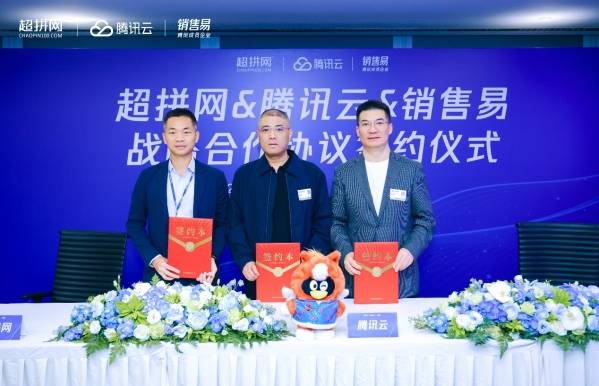
三方合作将坚持以用户体验为核心、以客户业务需求为导向,持续推动解决方案的功能迭代与优化升 级,保障服务稳定性与用户体验,全面提升客户运营效率。未来,三方还将在广告投流、私域用户运 营、内容生态构建等关键业务环节积极拓展合作场景,共同构建长期稳定、规范有序、可持续发展的行 业合作生态。 超拼网董事长杨建成 腾讯云广东湖南区域总经理王健 作为一家专注电商与家庭服务的平台型企业,超拼网秉持"去中间商、甄选源头好货"的核心理念,整合 产业链、供应链、物流、仓储及AI与大数据技术,构建从产地直达家庭用户的数字化服务体系,业务 涵盖农产品、食品、医疗健康等板块,年度GMV突破38亿元,已成为行业内具有代表性与影响力的平 台;销售易作为腾讯旗下CRM品牌,是中国CRM领导者,大中型企业市占率第一,创新与安全能力第 一,是500强企业信任的首选 CRM;腾讯云作为全球领先的云计算服务商,长期提供云计算、大数据、 人工智能等技术产品与服务,致力于推动产业互联网建设,助力各行业实现数字化升级。 此次合作中,超拼网整合了销售易企微SCRM产品的核心能力,并以腾讯云的云计算及人工智能技术为 底座,共同研发并推出《超拼联盟私域用户运营 ...
中国供应链产业有意收购华贸国际易货交易所股份
Zhi Tong Cai Jing· 2025-12-09 09:03
Core Viewpoint - The company has signed a framework agreement for a potential acquisition of shares in Huamao International Barter Exchange Co., Ltd. from Beijing Duhuang Information Technology Research Institute, which holds 56.7% of Huamao's shares [1] Group 1: Acquisition Details - The agreement allows the company to negotiate the specific share acquisition ratio and price after completing legal, financial, and business due diligence within three months, extendable by mutual consent [1] - Beijing Duhuang grants the company an exclusive negotiation period of twelve months from the signing of the framework agreement [1] Group 2: Huamao's Position and Services - Huamao is recognized as the only international barter exchange approved by the State Administration for Industry and Commerce in China, aiming to create a global unified market and the World Barter Trade Organization (WBTO) [1] - The platform offers nine core services, including trading, incubation, and branding, and collaborates with authoritative organizations for digital upgrades and international expansion [1] Group 3: Strategic Implications - The board believes that signing the framework agreement may bring more business opportunities and allow both the company and Beijing Duhuang to leverage their respective advantages and resources for mutual development in China's international barter trade [1] - This agreement is expected to promote the company's development and align with the best interests of the company and its shareholders [1]
各地持续升级离境退税服务 拓展入境消费新空间
Sou Hu Cai Jing· 2025-11-24 22:29
数字化升级消费体验 在离境退税服务升级的进程中,数字化技术的深度应用成为打破传统流程壁垒、提升服务效率的核心驱 动力。各地纷纷联合支付平台与技术企业,推出多元化数字退税工具,让"指尖退税""实时到账"成为现 实。 在北京国贸商城的集中退付点,一名香港旅客在购买价值3万多元的服装后,使用支付宝"碰一下"功能 调出收款二维码,工作人员扫描核实信息后,将退税款2700余元人民币实时转入旅客支付宝电子钱包, 令收到退税款的旅客赞叹不已。 这一快捷场景,是北京离境退税数字化升级的缩影。北京市税务局联合中国银行北京市分行与支付宝平 台,在市内5个集中退付点全面上线"碰一下"退税功能,同时支持扫码、搜索"入境人士退税"等多种调 码方式,满足不同旅客的操作习惯。 据北京市税务局数据,自今年6月推出系列创新举措以来,截至9月底,全市办理离境退税的境外旅客数 量同比增长340%,退税商品销售额同比增长93%,数字化服务的吸引力已初步显现。 近年来,随着我国对外开放水平不断提升和国际消费中心城市建设深入推进,各地税务部门积极响应政 策号召,以数字化赋能、模式创新、区域协同为抓手,持续优化境外旅客购物离境退税服务。一系列举 措不仅大 ...
2025北京零售商品博览会开幕
Zhong Guo Xin Wen Wang· 2025-11-22 10:45
Core Insights - The 2025 Beijing Retail Goods Expo opened on November 21, with the theme "Quality Retail · Integration and Coexistence" [1] - The expo covers over 6,000 square meters and features over 100 quality exhibitors and 200 innovative products across key consumer sectors [1] - The event highlights the retail industry's essential role in the national economy, including guiding production, expanding consumption, and ensuring employment [1] Industry Challenges - Retail enterprises face challenges such as insufficient digital transformation, severe product homogenization, and low supply chain efficiency [1] - Experts emphasize the need for precise alignment with consumer demands and deeper integration of products and services into daily life for sustainable development [1] Supporting Activities - The expo is co-hosted by the China General Chamber of Commerce and the Beijing Chamber of Commerce, featuring several supporting events like the New Consumption Summit Forum and retail procurement meetings [1]
天亿马拟收购星云开物股权
Zheng Quan Shi Bao· 2025-11-19 18:06
Core Viewpoint - Tianyi Ma plans to acquire 98.5632% of Guangdong Xingyun Kaiwu Technology Co., Ltd. for a total transaction price of 1.189 billion yuan, which will involve issuing shares and cash payments [1][2] Group 1: Transaction Details - The acquisition will be financed through 582 million yuan in shares and 606 million yuan in cash [1] - The company aims to raise up to 155 million yuan from its actual controller, Ma Xuepei, for supporting funds [1] Group 2: Company Overview - Xingyun Kaiwu is a provider of digital services for smart self-service devices, focusing on integrated solutions of IoT smart hardware and SaaS cloud platforms [1] - The acquisition is expected to create complementary and synergistic effects in areas such as industry chain layout, technology research and development, market expansion, and product iteration [1][2] Group 3: Financial Performance - Xingyun Kaiwu's projected revenues for 2023 to the first half of 2025 are 385 million yuan, 447 million yuan, and 248 million yuan, with net profits of 38.69 million yuan, 86.66 million yuan, and 54.57 million yuan respectively [2] - The performance commitment includes net profits of no less than 90 million yuan, 95 million yuan, and 105 million yuan for the years 2025, 2026, and 2027 [2] Group 4: Strategic Implications - The transaction will enable Tianyi Ma to deepen its presence in the digital services sector for smart self-service devices, enhancing its growth potential [2] - The company aims to strengthen its research and development capabilities in this area, optimize its industry chain layout, and expand its sales scale to better meet diverse customer needs [2]

天亿马拟收购星云开物股权, 加码智能自助设备数字化服务新增长
Zheng Quan Shi Bao Wang· 2025-11-19 11:45
Core Viewpoint - Tianyima plans to acquire 98.5632% of Xingyun Kaiwu Technology Co., Ltd. for a total consideration of 1.189 billion yuan, which includes 582 million yuan in shares and 606 million yuan in cash, aiming to enhance its capabilities in the smart self-service equipment digital service sector [1][2][3] Group 1: Transaction Details - The acquisition involves purchasing shares from multiple stakeholders, with the total transaction value set at 1.189 billion yuan [1] - Tianyima intends to raise up to 155 million yuan from its actual controller, Ma Xuepei, to support the transaction [1] - The deal is expected to constitute a major asset restructuring and related party transaction [1] Group 2: Company Performance and Projections - Xingyun Kaiwu reported revenues of 385 million yuan, 447 million yuan, and 248 million yuan for 2023, 2024, and the first half of 2025, respectively, with net profits of 38.69 million yuan, 86.66 million yuan, and 54.57 million yuan [2] - The performance commitment includes a minimum net profit of 90 million yuan for 2025, 95 million yuan for 2026, and 105 million yuan for 2027 [2] Group 3: Strategic Implications - The acquisition is expected to enhance Tianyima's business in the smart self-service equipment digital service field, creating a dual-driven development model to improve growth potential [3] - The company aims to strengthen its R&D capabilities in smart self-service equipment, optimize its industry chain layout, and expand its sales scale to better meet diverse customer needs [3] - In the first three quarters of the year, Tianyima achieved revenues of 228 million yuan, a year-on-year increase of 46.6%, and a net profit of 4.19 million yuan, up 119.8% year-on-year [3]