有效投资

Search documents
金融界财经早餐:国常会重磅!促进有效投资政策,深入谋划推动重大项目;证监会开年重拳出击,A股零容忍持续升级!央行连续15个月增持黄金;预制菜国标出炉(2月9日)
Jin Rong Jie· 2026-02-09 01:03
2月9日,金融界财经早餐,宏观政策、资本市场、行业板块、公司个股资讯一览: 一、今日财经资讯 1、李强主持召开国务院常务会议,研究促进有效投资政策措施。会议指出,促进有效投资对于稳定经 济增长、增强发展后劲具有重要作用。要创新完善政策措施,加力提效用好中央预算内投资、超长期特 别国债、地方政府专项债券等资金和新型政策性金融工具。要结合制定实施"十五五"规划,着眼于长远 发展需要和构筑未来竞争优势,在基础设施、城市更新、公共服务、新兴产业和未来产业等重点领域, 深入谋划推动一批重大项目、重大工程。要更好发挥央国企扩投资作用,加大力度支持民间投资发展, 形成促进有效投资的合力。 2、中国人民银行等八部门发布关于进一步防范和处置虚拟货币等相关风险的通知。通知指出,虚拟货 币不具有与法定货币等同的法律地位。比特币、以太币、泰达币等虚拟货币具有非货币当局发行等主要 特点,不具有法偿性,不应且不能作为货币在市场上流通使用。 3、国家外汇管理局2月7日发布的最新统计数据显示,2026年1月末,中国官方黄金储备为7419万盎司, 较2025年12月末增加4万盎司。目前,中国央行已连续15个月增持黄金。截至2026年1月末,我 ...
财闻早知道|马斯克表态“是时候大规模重返月球” 高市早苗赢得日本众议院选举
Sou Hu Cai Jing· 2026-02-09 00:44
今日关注 新股上市:澜起科技(06809.HK) 新股申购:通宝光电(920168.BJ) 2026春节档片单发布活动暨中国电影新春嘉年华将于2月9日举行。 首届全球人形机器人自由格斗联赛(URKL)将于2月9日召开启动发布会。 超快化学与人工智能学术研讨会将于2月9日举办。 标普道琼斯指数公司:Ciena将取代Dayforce纳入标普500指数,调整将于2月9日开盘前生效。 芝商所计划于2月9日推出100盎司白银期货合约。 今日有750亿元7天期逆回购到期。 隔夜市场 上周五美国三大股指全线收涨,道指涨2.47%报50115.67点,创历史新高,标普500指数涨1.97%报 6932.3点,纳指涨2.18%报23031.21点。英伟达涨近8%,市值增加3250亿美元,卡特彼勒涨超7%,领涨 道指。纳斯达克中国金龙指数涨3.71%。上周道指累计上涨2.5%,标普500指数跌0.1%,纳指跌1.84%。 上周五国际贵金属期货普遍收涨,COMEX黄金期货涨2.03%报4988.60美元/盎司,周涨5.13%, COMEX白银期货涨1.06%报77.53美元/盎司,周跌1.28%。 美油主力合约收涨0.33%,报6 ...

盘前必读丨央行已连续15个月增持黄金;23.14亿天价索赔案和解
Di Yi Cai Jing· 2026-02-09 00:01
机构认为,当前A股市场趋势下,"轻仓持股过节"是一种审慎且符合历史规律的合理策略。 【财经日历】 澜起科技在港交所挂牌上市 新股申购:通宝光电 ►►2月6日,国务院总理李强主持召开国务院常务会议。会议指出,促进有效投资对于稳定经济增长、增强发展后劲具有重要作用。要创新完善政策措施, 加力提效用好中央预算内投资、超长期特别国债、地方政府专项债券等资金和新型政策性金融工具。要结合制定实施"十五五"规划,着眼于长远发展需要和 构筑未来竞争优势,在基础设施、城市更新、公共服务、新兴产业和未来产业等重点领域,深入谋划推动一批重大项目、重大工程。要更好发挥央国企扩投 资作用,加大力度支持民间投资发展,形成促进有效投资的合力。 ►►央行公告,中国2026年1月末黄金储备报7419万盎司,2025年12月末为7415万盎司,为连续第15个月增持黄金。 ►►中国人民银行等八部门发布关于进一步防范和处置虚拟货币等相关风险的通知。《通知》重申境内对虚拟货币坚持禁止性政策,明确虚拟货币不具有法 定货币地位,相关业务活动属于非法金融活动。同时,重申境内对于虚拟货币"挖矿"的禁止性政策等。《通知》还强调,未经相关部门依法依规同意,境内 ...

四大证券报头版头条内容精华摘要_2026年2月9日_财经新闻
Xin Lang Cai Jing· 2026-02-08 23:19
Group 1 - The Chinese government is focusing on promoting effective investment through a combination of measures, including utilizing central budget investments, long-term special bonds, and local government bonds [1] - The Shanghai government has released a three-year action plan aimed at transforming and upgrading advanced manufacturing, targeting the addition of 100 manufacturing enterprises with an annual output value exceeding 1 billion yuan by 2028 [5][22] - The Chinese foreign exchange reserves have increased for six consecutive months, reaching $339.91 billion by the end of January, with a rise of $41.2 billion, marking a 1.23% increase [6][11][23] Group 2 - A new stock, Tongbao Optoelectronics, is available for subscription, identified as a "small giant" in the automotive electronics sector [3][19] - The gold market in Shenzhen's Shui Bei area is experiencing a surge in activity ahead of the Spring Festival, driven by strong consumer demand and a vibrant market environment [4][20] - 135 actively managed equity funds have reached historical net asset value highs in February, demonstrating resilience despite market adjustments [9][26] Group 3 - The financial regulatory authority is accelerating the reform and transformation of local small and medium-sized financial institutions to enhance financial support for key local projects [8][26] - The recent regulatory framework for Real World Asset (RWA) tokenization aims to curb illegal financial activities in the cryptocurrency sector, establishing strict guidelines for domestic and international operations [7][24][31]
把钱花在刀刃上!重磅会议部署!
Jin Rong Shi Bao· 2026-02-08 23:00
促进有效投资,必须凝聚各方合力。会议明确要求,要更好发挥央国企扩投资作用,加大力度支持民间 投资发展,形成促进有效投资的合力。央国企作为国民经济的"压舱石",在重大项目建设、关键领域突 破中具有不可替代的引领作用,在基础设施、国家战略项目等领域,央国企应主动担当、积极作为,带 动产业链上下游协同发展,为有效投资筑牢根基。民间投资则是稳增长、调结构、促就业的重要支撑力 量。当前,已有一系列政策助力民企破解投融资难题,下一步更需在扩大准入、打通堵点、强化保障等 方面着力优化民企投资环境。例如,加强对民间投资项目的要素和融资支持、加大中央预算内投资等对 符合条件的民间投资项目支持力度、破除民间资本进入的隐性壁垒,保障民间资本在招投标中一视同仁 等,让民营企业敢投资、有回报、能发展,形成"政府引导、市场主导、社会参与"的投资格局,让各类 资本在有效投资中实现价值。 有效投资从来不是简单的资金投入,而是要"把钱花在刀刃上",让投资成为撬动经济增长的"杠杆",补 齐发展短板的"钥匙"。 当前,我国经济发展面临着复杂的内外环境,有效投资作为稳定增长、培育新动能的重要抓手,其重要 性愈发凸显。接下来,各地各部门要深入贯彻落实 ...
重点领域将谋划推动一批重大项目
Xin Lang Cai Jing· 2026-02-08 20:36
Group 1 - The State Council's recent meeting emphasized the need to enhance effective investment policies, focusing on utilizing central budget investments, ultra-long-term special bonds, and local government special bonds to support key areas such as infrastructure, urban renewal, public services, and emerging industries [1][2] - The fixed asset investment in China is projected to decline by 3.8% in 2025, amounting to 48,518.6 billion yuan, prompting the government to prioritize stabilizing investment in 2026 [1][3] - Specific measures were outlined to improve the efficiency of government investments, aiming to avoid inefficient and redundant construction while maximizing the impact of government funding [1][2] Group 2 - The National Development and Reform Commission has allocated approximately 295 billion yuan for early-stage "two heavy" construction projects and central budget investments for 2026, with a focus on accelerating the disbursement and utilization of funds [2] - The meeting highlighted the importance of enhancing investment efficiency and ensuring that various funding sources, including new policy financial tools, are effectively utilized to support private investment projects [2][3] - Future investment directions will focus on traditional infrastructure such as transportation and energy, as well as new infrastructure in areas like low-altitude and computing power, with significant potential for investment in high-tech sectors like electric vehicles and quantum technology [3][4]
施策重点明晰 促进有效投资将打出组合拳
Zhong Guo Zheng Quan Bao· 2026-02-08 20:22
Group 1 - The State Council meeting emphasized the need to enhance effective investment through various financial tools, including central budget investments, long-term special bonds, and local government bonds [1][2] - The introduction of new policy financial tools has significantly supported over 2,300 projects with a total investment of approximately 7 trillion yuan, indicating a strong investment drive [1][2] - The National Development and Reform Commission (NDRC) has outlined plans for 2026, including a list of major construction projects and a central budget investment plan totaling around 295 billion yuan [2] Group 2 - The meeting highlighted the importance of planning major projects in key sectors such as infrastructure, urban renewal, public services, and emerging industries to stimulate effective investment [2][3] - Local governments are actively responding to the call for stabilizing investment, with specific measures to enhance industrial and livelihood investments, as well as new infrastructure projects [3] - The focus for 2026 includes a rebound in infrastructure investment driven by government initiatives, which is expected to support the overall investment growth [4] Group 3 - Experts predict that the investment growth rate will recover in 2026, driven by comprehensive policy measures aimed at promoting effective investment [4] - The emphasis will be on government-led infrastructure investments, manufacturing upgrades, and stabilizing the real estate market to foster economic growth [4] - The coverage of new policy financial tools is expected to shift towards emerging industries, further stimulating technology innovation investments [4]
中央一号文件出台——政策周观察第67期
一瑜中的· 2026-02-08 15:02
Core Viewpoint - The article emphasizes the Chinese government's focus on effective investment and economic stability as it enters the "14th Five-Year Plan" period, highlighting the importance of practical planning and execution in various sectors [2][9]. Group 1: Government Initiatives - On February 2, the Premier emphasized the need for local governments to create the "14th Five-Year Plan" with a focus on practicality and system integration, advocating for concise and effective planning at the grassroots level [2]. - On February 6, the State Council held a meeting to discuss policies for promoting effective investment, stressing the importance of planning in infrastructure, urban renewal, and emerging industries [9]. - The Premier highlighted the need for macroeconomic policies to be proactive, ensuring timely allocation of fiscal funds and coordination in project construction to achieve annual targets [10]. Group 2: Agricultural Policies - On February 3, the Central Committee issued a document focusing on agricultural modernization and rural revitalization, including a new round of grain production enhancement actions and the integration of AI in agriculture [3][12]. - The implementation opinions from the Ministry of Agriculture emphasized the need for comprehensive management of pig production and the promotion of high-standard farmland construction [14]. Group 3: Financial Regulations - On February 6, the central bank and eight departments issued a notice to further prevent and manage risks related to virtual currencies, reinforcing a strict prohibition on domestic virtual currency activities [4][13]. - The notice also outlined regulations for domestic entities engaging in overseas virtual currency activities, emphasizing the need for strict compliance with regulatory requirements [13].

国务院研究促进有效投资政策措施:谋划推动一批重大项目、重大工程
Xin Lang Cai Jing· 2026-02-08 11:21
Core Viewpoint - The State Council meeting emphasized the importance of promoting effective investment for stabilizing economic growth and enhancing development momentum, with a focus on innovative policy measures and major projects in key sectors [1][4]. Group 1: Effective Investment Promotion - The meeting highlighted the need to innovate and improve policy measures to effectively utilize central budget investments, long-term special bonds, and local government special bonds [1]. - Central budget investment is crucial for alleviating local government financial pressure and enhancing infrastructure and public services [3]. - The meeting called for increased support for private investment and collaboration among state-owned enterprises to create a synergistic effect in promoting effective investment [4]. Group 2: Economic Context and Projections - The Central Economic Work Conference indicated that fixed asset investment in the country experienced a decline of 3.8% in 2025, with private fixed asset investment dropping by 6.4% [5]. - The focus on effective investment is seen as a key driver for stimulating consumption and addressing the challenges posed by weak real estate and infrastructure investments [4][5]. Group 3: Legislative and Regulatory Developments - The meeting discussed the draft revision of the "Bidding Law," aiming to reform the bidding system, improve transparency, and combat illegal activities [6]. - The government emphasized the importance of handling representatives' suggestions and proposals as part of its commitment to democratic governance and public accountability [6].
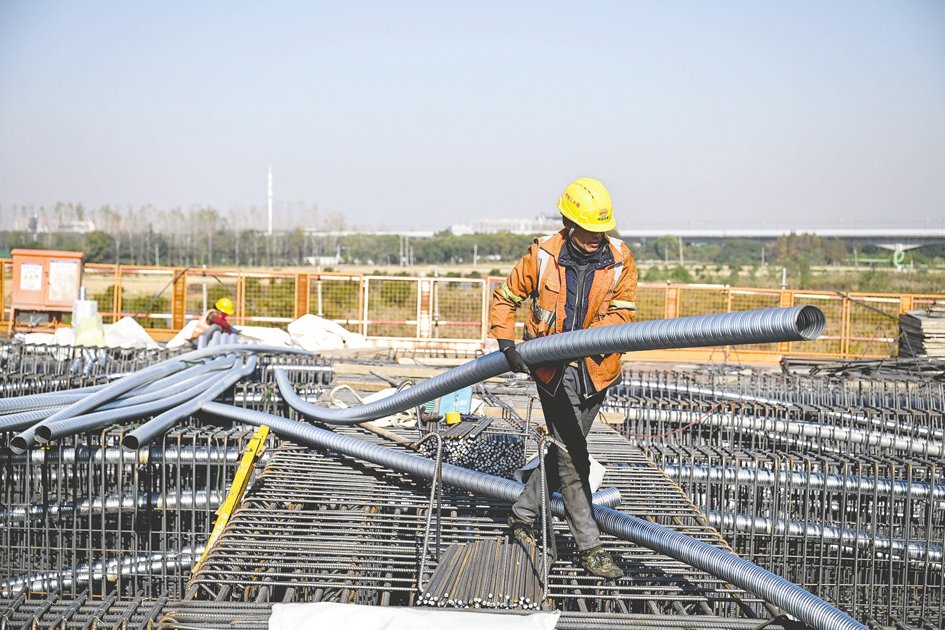
【广发宏观团队】2026年投资的相对弹性最大
郭磊宏观茶座· 2026-02-08 10:04
Investment Outlook - The relative elasticity of investment is expected to be highest in 2026, with a projected rebound from a low base of -3.8% in 2025 to around 3% growth in 2026, potentially yielding an elasticity of 6-7 percentage points [3][4] - The Chinese government is focusing on effective investment to stabilize economic growth, emphasizing the importance of infrastructure, urban renewal, public services, and emerging industries [28][29] - Guangdong province plans to increase its annual investment in key projects to 1.05 trillion yuan in 2026, up from 1 trillion yuan in 2025 and 2024 [2][3] Global Market Trends - Global stock markets are shifting towards "non-growth" assets, with a risk-off sentiment dominating pricing, leading to a focus on traditional economic sectors [5][6] - The U.S. stock market has shown significant differentiation, with defensive sectors like consumer staples and industrials leading, while technology stocks face pressure [5][6] - Commodity markets are experiencing high volatility, with gold and silver prices fluctuating significantly, while oil prices have also shown wide swings due to geopolitical factors [7][8] Economic Indicators - The U.S. labor market is showing signs of cooling, with job openings dropping significantly, indicating a potential slowdown in economic momentum [14][15] - Consumer confidence in the U.S. is mixed, with current conditions improving slightly but future expectations declining due to concerns over inflation and job security [15][16] - The European Central Bank (ECB) is maintaining its policy stance, indicating a period of observation without immediate changes to interest rates [12][13] Domestic Economic Policies - The Chinese government is implementing measures to promote effective investment, including the use of central budget investments, special bonds, and policy financial tools [28][29] - Local governments are also adjusting their economic growth targets, with Guangdong aiming for a growth range of 4.5%-5% for 2026 [21][22] - Various provinces are introducing policies to stabilize the housing market, including purchasing second-hand homes for rental purposes and providing subsidies for homebuyers [23][24]