羊群效应

Search documents
大佬高喊逢高减磅,其实是诱敌深入!
Sou Hu Cai Jing· 2025-08-18 07:21
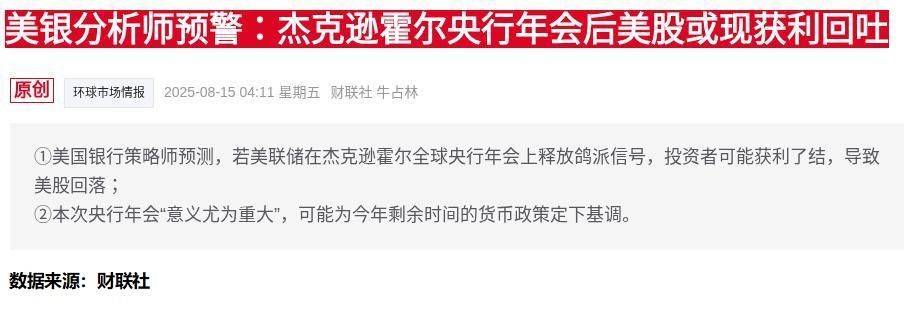
Group 1 - The core viewpoint is that the market is reacting to potential dovish signals from the Federal Reserve, which may lead to profit-taking in the stock market despite recent inflows into equity funds [2][4] - The phenomenon of "herding behavior" is highlighted, where investors tend to follow the crowd, often leading to market turning points [2][4] - The disparity between expert opinions and actual market movements is noted, emphasizing that institutional investors hold the real pricing power in the market [4][10] Group 2 - Data indicates that institutional funds were actively participating in the market even during periods of low sentiment, suggesting a strategic accumulation of positions [5][9] - The analysis of quantitative indicators reveals that institutions often make moves quietly, without public announcements, which can lead to missed opportunities for retail investors [7][9] - The importance of focusing on actual fund flows rather than speculative predictions from experts is stressed, as real market behavior often provides clearer insights [10][11] Group 3 - Ordinary investors are encouraged to develop their own quantitative analysis systems to better navigate the market and understand institutional behaviors [11][12] - The article emphasizes that in an era of information overload, the ability to interpret data behind news is more valuable than merely knowing the news itself [12]

3600点之上,怎么投?
中国基金报· 2025-08-10 15:24
Core Viewpoint - The article discusses the behavior of mutual fund investors as the Shanghai Composite Index surpasses 3600 points, emphasizing the need for investors to reassess their strategies and avoid impulsive decisions based on short-term market fluctuations [3][4]. Investor Behavior and Challenges - Many investors exhibit a "redemption upon breakeven" mentality, which reflects a fundamental misalignment in their investment understanding and behavior [5][6]. - Behavioral finance concepts such as "loss aversion" and "anchoring effect" contribute to this mindset, leading investors to make irrational decisions based on short-term price movements rather than long-term potential [6][7]. - The lack of a clear long-term investment plan often results in investors being swayed by market volatility, creating a cycle of holding during losses and redeeming upon minor gains [6][7]. Proposed Solutions - Investment advisory firms suggest focusing on "investor account profitability" and aligning investment strategies with reasonable time horizons to mitigate losses from mismatched funding [7]. - Fund companies and sales channels are encouraged to enhance investor education, improve communication, and create mechanisms that align the interests of fund managers and investors [7]. Differentiated Strategies for Various Investor Scenarios - For investors who have returned to profitability, it is recommended to "lock in profits" partially before making further decisions, especially if the fund's long-term performance is stable [9][10]. - Investors who are still at breakeven but with minimal gains should evaluate valuation levels and industry trends to make informed decisions about adjusting their positions [10]. - Investors who are still "underwater" may consider averaging down if the fund's fundamentals remain strong, while those with deteriorating fundamentals should consider cutting losses [10]. - For investors with no positions or light positions, a gradual entry strategy is advised, focusing on low-volatility products initially [11]. Portfolio Review and Adjustment - Investors are encouraged to reassess their fund holdings, ensuring alignment with their initial investment strategies and risk tolerance [12][13]. - Key factors to consider include industry diversification, equity-to-bond ratios, and the stability of fund managers' investment styles [13][14]. - Continuous evaluation of fund performance against peers is crucial, particularly in volatile market conditions [14]. Market Outlook and Investment Discipline - The current market environment is characterized as an "investment new cycle," with a recommendation for investors to maintain patience and adhere to investment discipline [25][26]. - Investors are advised to manage their funds across different time horizons and to engage in systematic investment approaches like dollar-cost averaging [30][31]. - Emphasis is placed on the importance of constructing a well-diversified portfolio to mitigate risks associated with market fluctuations [31].

白酒罕见四连涨,散户热情追涨,主力或已撤资?警惕表象!
Sou Hu Cai Jing· 2025-07-12 11:26
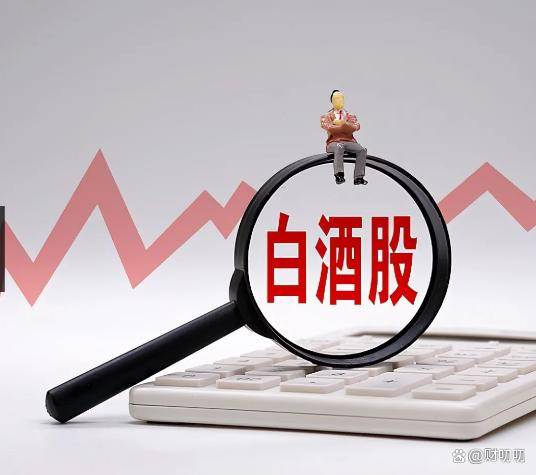
Core Viewpoint - The recent performance of the liquor sector, particularly the white wine segment, is misleading, with a superficial appearance of recovery masking underlying weaknesses and risks [2][3]. Group 1: Market Performance - The white wine sector experienced a "four consecutive days of gains" with a total increase of only 4.2%, significantly lagging behind the Shanghai Composite Index's over 18% rebound [2]. - Over the past ten days, the sector has seen a net outflow of over 9 billion yuan from major funds, indicating a large-scale exit by institutional investors [3]. - The public fund's holding ratio in white wine has dropped from 8.5% in 2023 to 6.2% currently, reflecting a significant reduction in institutional interest [3]. Group 2: Institutional Behavior - Major stocks like Moutai and Wuliangye have faced substantial sell-offs, with Moutai being reduced by 5.84 million shares and Wuliangye by 34.88 million shares in the second quarter [3]. - The current high price-to-earnings ratio of 18.1 is seen as inflated compared to the 12.8 ratio at the end of 2018, suggesting a potential overvaluation in the market [3]. Group 3: Industry Challenges - The white wine industry is grappling with severe inventory issues, with distributors holding stock levels of 6-8 months, far exceeding the normal 3-4 months [3]. - Cash flow issues are prevalent, with over 30% of companies experiencing tight liquidity [3]. - Production of white wine has plummeted by 7.8% year-on-year from January to April, indicating a lack of demand despite stable high-end prices [3]. Group 4: Retail Investor Behavior - Retail investors are influenced by cognitive biases such as the "anchoring effect" and "herding effect," leading them to overlook current valuations and fundamentals [5]. - Technical indicators suggest a high probability of a downturn, with over 70% likelihood of a price drop [5]. - The market is characterized by a predominance of small transactions, with institutional large trades disappearing, leaving retail investors vulnerable to losses [5].
深渊掘金者:伯里的逆向价值投资启示录
Sou Hu Cai Jing· 2025-07-11 14:11
Core Insights - Michael Burry's investment philosophy emphasizes identifying mispriced assets during market failures, rooted in the "margin of safety" theory, leading to significant investment opportunities [2][3] - Burry's ability to analyze risk data and predict market downturns allowed him to make calculated bets, such as shorting subprime mortgages, which ultimately resulted in substantial profits [3][4] - His contrarian approach to investment, leveraging behavioral finance concepts, highlights the importance of recognizing and capitalizing on collective cognitive biases in the market [4][5] - Burry's long-term investment strategy, characterized by patience and a focus on intrinsic value, contrasts sharply with the short-term focus prevalent in the hedge fund industry [5][6] Group 1 - Burry's investment philosophy is based on finding pricing discrepancies in undervalued assets during market misjudgments, as evidenced by his analysis of subprime mortgage contracts [2] - He identified that 80% of subprime borrowers had falsified income documents, leading to a 47% deviation from intrinsic value, which he termed the "value abyss" [2] - Burry's approach to risk assessment involved creating extensive historical data models to predict market behavior, allowing him to make informed investment decisions [3][4] Group 2 - The ability to break away from consensus thinking is crucial for investors, as demonstrated by Burry's focus on overlooked data, such as the rise of "ninja loans" in the subprime market [4] - Burry's investment in silver futures during the cryptocurrency market crash exemplifies his contrarian strategy, based on the belief that precious metals would regain historical value amid fiat currency crises [4][5] - His average holding period of 4.7 years reflects a commitment to long-term value creation, contrasting with the industry average of 1.3 years [5] Group 3 - Burry's insights extend beyond investment strategies, emphasizing the importance of data analysis and logical reasoning in an era of information overload [6] - His philosophy encourages investors to seek opportunities in overlooked data and to maintain conviction in their analysis during market volatility [6] - The quote "In the depths of fear, find the data; in the heights of euphoria, wait for value" encapsulates Burry's approach to navigating market cycles [6]

大宗商品反弹,仅仅是因为反内卷吗?
对冲研投· 2025-07-10 10:09
Core Viewpoint - The recent rebound in bulk commodities, particularly polysilicon, is not solely due to the "anti-involution" discussions but is supported by macroeconomic and industrial fundamentals [1][4]. Group 1: Commodity Market Dynamics - The weakest bulk commodities this year are closely related to "coal + real estate," particularly black building materials and new energy products, which have entered a bottoming phase since June due to cost stabilization and unexpected demand [2]. - The oversupply of coal in the past two years has led to a collapse in costs for coal-related products, but recent stabilization in coal prices, driven by seasonal demand, has provided a foundation for the rebound of downstream commodities [2][3]. - Demand has exceeded expectations, with China's exports continuing to perform well despite global concerns, supported by a stable U.S. economy and the passage of the "Big and Beautiful" act, which will boost the U.S. economy in the short term [2][3]. Group 2: Supply-Side Reform and Its Implications - The recent "anti-involution" policies have acted as a catalyst for further commodity rebounds, but the current supply-side reforms differ significantly from those initiated in late 2015, which focused on substantial capacity reduction in coal and steel industries [3]. - The current supply-side reform primarily targets the new energy sector, which has a smaller impact compared to previous reforms, as it mainly involves midstream manufacturing and does not significantly control raw material demand [3][4]. - The iron ore supply is global, and an increase in production is expected next year, indicating that coal, coke, and steel industries are not the main focus of the current supply-side reforms [3]. Group 3: Future Outlook - The impact of the current "anti-involution" is expected to be milder, serving as a trigger rather than the main driver of the commodity rebound, which is fundamentally supported [4]. - In the short term, due to healthy fundamentals, related commodities may still have room for rebound, but the potential for "coal + real estate" related commodities is limited due to ongoing oversupply [4]. - The future performance of leading polysilicon companies will largely depend on the implementation of policies, with prices previously driven down to industry minimum costs, and any recovery will hinge on policy execution and effectiveness [4].

从罗斯柴尔德滑铁卢神话,解码投资的底层财富密码
Sou Hu Cai Jing· 2025-07-07 11:11
Group 1 - The Rothschild family has maintained a significant presence in global finance, historically controlling a substantial portion of wealth and utilizing information advantages to shape investment strategies [2] - The family established a network of information dissemination, allowing them to gain critical insights ahead of competitors, exemplifying the importance of information monopoly in investment [2][3] - The concept of information asymmetry is highlighted as a key factor in market failures and excess profits, with the Rothschilds effectively leveraging this to enhance their investment decision-making [3] Group 2 - The Rothschilds employed a contrarian investment strategy, selling government bonds during market panic, which led to a significant drop in bond prices, demonstrating the effectiveness of understanding market psychology [3][4] - This contrarian approach is rooted in a deep understanding of market cycles, emphasizing the need for investors to act against prevailing market sentiments during extreme conditions [4] - The family’s ability to mobilize capital quickly during market downturns showcases the importance of financial leverage and risk management in investment operations [5] Group 3 - The Rothschild family's success is attributed to a robust governance and succession system, ensuring the continuity of investment wisdom and wealth across generations [6] - The internal practices of the family, including education and unified decision-making, serve as a model for modern enterprises aiming for long-term sustainability [6] - The overarching lesson from the Rothschilds' history is the integration of information, human behavior, capital management, and risk control in achieving investment success [6]

九卦 | 证监会更换新logo! 网友高兴坏了:“解套”了!
Sou Hu Cai Jing· 2025-06-30 10:48
Core Viewpoint - The China Securities Regulatory Commission (CSRC) has changed its long-standing logo from a design that was humorously referred to as "the trap" to a new logo featuring three V shapes, symbolizing a positive shift in the market sentiment among investors [1][3][8]. Group 1: Logo Change and Market Reaction - The old logo, composed of three interlocking red triangles, represented the "three public principles" of openness, fairness, and justice in the securities market [3]. - The new logo, designed to symbolize victory, has been interpreted by the market as a sign that the current market downturn may be coming to an end, leading to a surge in investor optimism [8]. - Following the announcement of the new logo, the A-share market experienced a significant rally, with the Shanghai Composite Index, Shenzhen Component Index, and ChiNext Index all rising, and over 3,500 stocks gaining in value [8]. Group 2: Controversies and Public Sentiment - The new logo faced accusations of plagiarism, as it bore a striking resemblance to a logo from a Polish design firm, leading to a heated discussion on social media [3][4]. - In response to the backlash, the design team asserted that the concept for the new logo was developed in 2011, prior to the Polish firm's trademark registration, claiming legal compliance [4]. - The change in logo has sparked a collective celebration among investors, with many expressing hope for market recovery and relief from previous losses, indicating a strong emotional response to the rebranding [6][8].

抖音老刷到美女?算法、心理与商业的 “美丽陷阱”
Sou Hu Cai Jing· 2025-06-15 09:02
Core Insights - The phenomenon of "beauty domination" on Douyin is driven by a combination of algorithmic recommendations, psychological responses, commercial interests, and social influences [1][2][7][8] Algorithmic Insights - Douyin's recommendation algorithm acts as a "mind reader," analyzing user behavior such as browsing history, likes, comments, and watch time to identify preferences for beauty-related content [2][3] - Once a user engages with a beauty video, the algorithm begins to deliver more similar content, creating a dominant presence of beauty videos in the user's feed [2] Psychological Insights - The human attraction to beauty triggers dopamine release in the brain, leading to feelings of pleasure and reward, which encourages users to seek out more beauty-related videos [5] - The immediate satisfaction derived from watching beauty videos fosters a cycle of continuous engagement with such content [5] Commercial Insights - Beauty videos have become a lucrative "traffic cake" within Douyin's commercial ecosystem, attracting high levels of attention and engagement from users [7] - Creators of beauty content can achieve significant visibility and monetization through likes and followers, while brands leverage the influence of beauty creators for advertising and product promotion [7] Social Influence Insights - The "herd effect" in Douyin's social environment encourages users to engage with beauty videos, especially when they observe peers participating in the trend [8] - Viral beauty challenges and popular videos prompt users to explore and engage with beauty content, expanding the reach of such videos beyond initial interest [8]


茅台失守2000元大关!消费赛道正在巨变!
Sou Hu Cai Jing· 2025-06-13 21:33
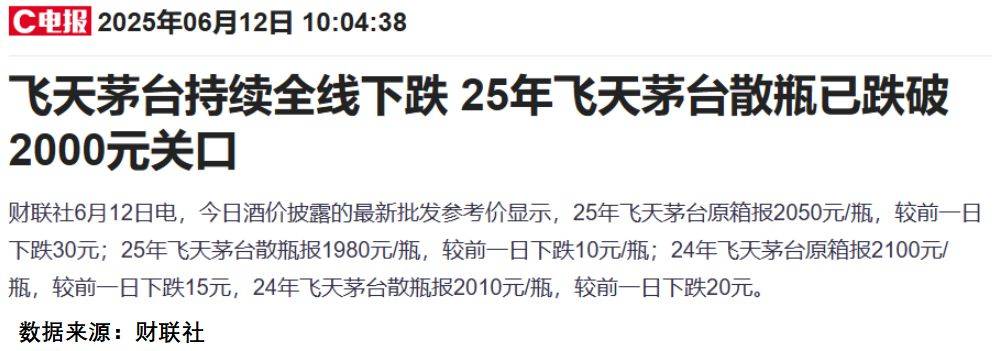
Group 1 - The core viewpoint is that the recent decline in the Moutai price below 2000 yuan signifies a psychological breakdown among investors, leading to panic selling [1][2] - The white liquor sector is facing challenges such as inventory reduction, shrinking demand, and external policy pressures, which contribute to investor anxiety [2][5] - The stark contrast between the struggling white liquor market and the thriving new consumption sector indicates a significant shift in market dynamics and capital flow [2][4] Group 2 - Understanding the true movements of institutional funds is crucial for investors to avoid becoming "bag holders" and to identify real opportunities [4][5] - Data analysis can reveal the underlying market truths, helping to eliminate subjective biases and confirm the essence of trading behaviors [6][9] - The use of quantitative data tools can track institutional participation, highlighting the performance of stocks based on their trading activity [11][12]

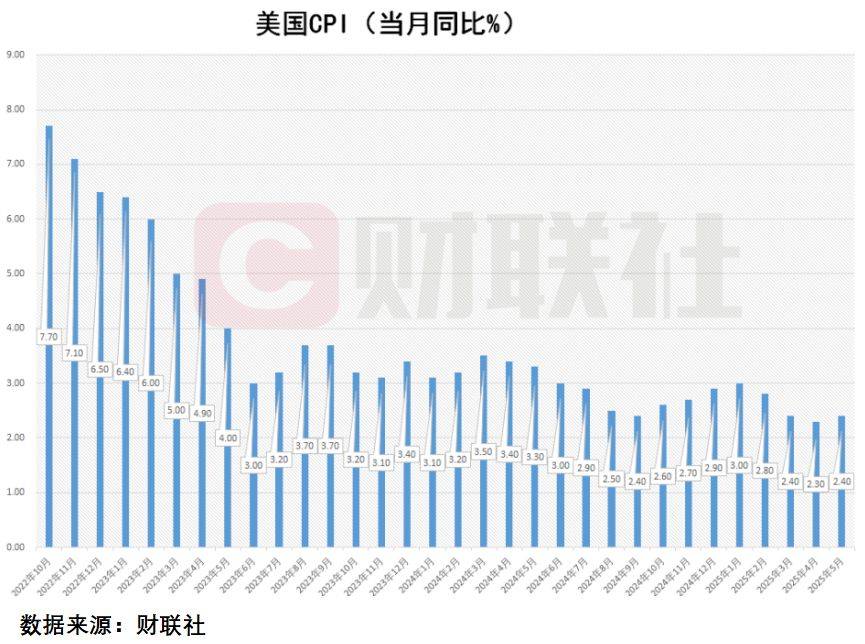
老美5月CPI低于预期,降息风暴要来了?
Sou Hu Cai Jing· 2025-06-13 14:09
Group 1 - The core point of the article is the unexpected lower-than-expected CPI data for May in the U.S., which has led to significant market reactions and speculation about potential interest rate cuts by the Federal Reserve [1][2][4] - The U.S. CPI year-on-year rate for May is reported at 2.4%, below the expected 2.5%, while the month-on-month CPI is at 0.1%, also lower than the anticipated 0.2% [2] - The core CPI, excluding food and energy, shows a year-on-year increase of 2.8%, which is less than the expected 2.9%, and the month-on-month core CPI is at 0.1%, significantly below the forecast of 0.3% [2] Group 2 - Following the CPI announcement, market speculation surged, with a notable increase in bets on a potential interest rate cut in September, with probabilities nearing 70% for two cuts this year [4] - However, the probability for a rate cut in June remains very low at 2.4%, with a 97.6% chance of maintaining the current rate [5] Group 3 - The anticipation of interest rate cuts is expected to influence global financial markets, including the A-share market, as capital may flow into A-shares seeking opportunities [6] - The article highlights the volatility in the market, suggesting that retail investors may be misled by market fluctuations, akin to a magic show where the real mechanisms are hidden [6][8] Group 4 - The article discusses the behavioral finance concept of herd behavior, where retail investors tend to follow the crowd, leading to poor investment decisions [9] - It emphasizes the importance of understanding institutional movements and data analysis to navigate market volatility effectively [10][17]