美元信用走弱

Search documents
一克千金!黄金还能涨吗?|2025招商证券“招财杯”ETF实盘大赛
Sou Hu Cai Jing· 2025-11-04 03:08
Core Viewpoint - The article discusses the ongoing trends in gold prices, emphasizing a long-term bullish outlook despite short-term fluctuations, driven by factors such as weakening dollar credit and global de-dollarization trends [2][3][10]. Group 1: Gold Price Trends - Gold prices have surged approximately 55.8% this year, with a notable 30% increase from late August to mid-October [2][3]. - The recent price corrections are attributed to the calming of risk events, including news of a potential ceasefire in Ukraine and improved U.S.-China relations [5][6]. - The long-term bullish trend in gold prices is supported by continuous purchases from global central banks and the weakening of dollar credit [3][4][10]. Group 2: Investment Strategies - Investors are advised to consider gold as part of their asset allocation, with suggestions to allocate around 15% of their portfolio to gold, as noted by Bridgewater's Dalio [5][16]. - For ordinary investors, gold-related ETFs and linked funds are recommended as practical investment vehicles due to their ease of access and liquidity [16][17]. - The article highlights that gold and equity assets typically have low correlation, making gold a favorable option during periods of declining risk appetite [16]. Group 3: Market Dynamics - The article notes that the current market environment differs significantly from the 2011-2015 period when gold prices fell due to U.S. economic recovery and tightening monetary policy [6][7]. - The ongoing de-dollarization trend and the current liquidity environment, characterized by a new round of interest rate cuts by the Federal Reserve, provide a supportive backdrop for gold prices [4][8][10]. - The article also mentions that the rise in gold ETF holdings in North America and other Western countries has contributed to the upward momentum in gold prices this year [11][12].

有色金属周报:宏观情绪转好,工业金属基本面驱动加强-20251103
Ping An Securities· 2025-11-03 01:46
Investment Rating - The industry investment rating is "Outperform the Market" (maintained) [1][66]. Core Views - Precious Metals - Gold: The marginal weakening of risk aversion has led to a decline in gold prices. As of October 31, the COMEX gold futures contract reached $4,077.2 per ounce, a month-on-month decrease of 1.2%. The SPDR Gold ETF saw a 0.7% decrease to 1,039.2 tons. The Federal Reserve's recent interest rate cut and the decision to halt balance sheet reduction are expected to keep gold prices fluctuating in the short term, while the long-term outlook remains positive due to ongoing U.S. debt issues and weakening dollar credit [4]. - Industrial Metals: Improved macro sentiment has strengthened the fundamentals for copper. As of October 31, the SHFE copper futures contract fell by 0.81% to 87,010 yuan/ton. Domestic copper social inventory reached 182,600 tons, with a slight increase of 0.1 tons. The LME copper inventory stood at 134,600 tons. The tightening supply of copper resources and improving macro sentiment are expected to support copper prices [5][6]. Summary by Sections Precious Metals - Gold prices are expected to remain volatile in the short term due to reduced risk aversion, but the long-term outlook is positive as the monetary attributes of gold are expected to strengthen [4][7]. Industrial Metals - **Copper**: The fundamentals are improving with a slight increase in domestic inventory and tightening supply from overseas. The macro sentiment is also improving, which is expected to support copper prices [6][5]. - **Aluminum**: The LME aluminum price increased by 1.1% to $2,888 per ton. Domestic aluminum social inventory reached 619,000 tons, with a slight increase. The supply-demand balance is expected to tighten, supporting aluminum prices [6]. - **Tin**: The SHFE tin futures contract fell by 0.1% to 283,900 yuan/ton. Domestic social inventory decreased by 144 tons. The supply of tin remains tight, and prices are expected to trend upwards [6]. Investment Recommendations - The report suggests focusing on the gold, copper, and aluminum sectors. For gold, the recommendation is to pay attention to Chifeng Jilong Gold Mining. For copper, the focus is on Luoyang Molybdenum. For aluminum, Tianshan Shares is recommended [7][63].
金价持续调整,能否上车?
Guo Ji Jin Rong Bao· 2025-10-24 14:39
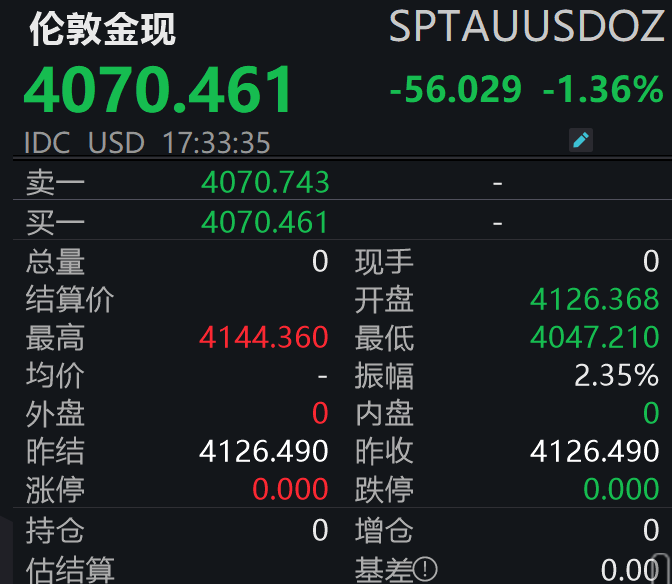
Core Viewpoint - The international gold price continues to decline, with significant intraday fluctuations observed in both London and COMEX markets, indicating a potential short-term adjustment phase in the gold market [1][2][4]. Market Performance - As of October 22, the London gold price fell by 1.36%, reaching $4,070.461 per ounce, with a low of $4,047.21 during the day [1][2]. - COMEX gold futures also experienced a drop of 1.47%, trading at $4,084.8 per ounce, with a minimum of $4,060.9 [2][4]. Market Dynamics - The recent price adjustments are attributed to crowded trading conditions and geopolitical news disturbances, according to industry experts [4]. - Long-term perspectives on gold remain optimistic due to factors such as global order restructuring, scarcity of safe-haven assets, and uncertainties in U.S.-China relations, which are expected to support gold as a value storage asset [4]. Economic Influences - The Federal Reserve's monetary policy is highlighted as a key determinant of global asset prices, with upcoming FOMC meetings in November and December being crucial for assessing inflation and employment trends [5][6]. - A potential shift towards a more accommodative monetary policy could provide upward momentum for gold prices, while continued high interest rates may limit rebound potential [6]. Investment Sentiment - Analysts suggest that the recent rapid increase in gold and silver prices has led to a normal market correction phase, but the underlying factors supporting gold's rise remain intact [6]. - Investors are encouraged to view the current adjustment as a potential buying opportunity, maintaining a bullish outlook on gold's long-term trajectory [6].

金价创2013年以来最大单日跌幅,后市怎么看?
Mei Ri Jing Ji Xin Wen· 2025-10-22 01:40
Core Viewpoint - Gold prices have experienced a significant decline, with London gold dropping over 5%, attributed to easing geopolitical tensions and a softening of Trump's trade stance, leading to a decrease in safe-haven demand [1][2] Market Analysis - The recent rise in gold prices reflects the weakening of the US dollar's credibility, indicating a shift towards gold as an independent asset rather than being tied to the dollar [2][3] - The current high valuation of gold, driven by rapid price increases, has led to profit-taking among investors, contributing to the recent price correction [2] - A joint statement from European leaders supporting negotiations for a ceasefire in the Russia-Ukraine conflict has further diminished safe-haven demand for gold [2] Long-term Outlook - The fundamental value of gold as a core investment remains unchanged, as the US dollar credit system faces significant structural challenges, exacerbated by rising government debt and concerns over debt sustainability [3] - Central banks are expected to continue increasing their gold reserves, with projections indicating a rise to 74.06 million ounces by September 2025, reflecting a monthly increase of 40,000 ounces [3] Investment Opportunities - Current price corrections in gold may present a favorable entry point for long-term investors looking to capitalize on future price increases [4] - Investment options include: 1. **Gold ETFs**: These funds hold physical gold and closely track the price of gold contracts, providing direct exposure to gold [5] 2. **Gold Mining ETFs**: These track the gold industry stocks across the entire supply chain, offering exposure to both gold price movements and related mining sectors [6] 3. **Mining ETFs**: These focus on a broader range of metals, including copper and lithium, alongside gold, allowing investors to capture rebounds in multiple sectors [7]
万家基金贺方舟:有色金属行情离结束尚早 金价上涨核心逻辑是美元信用的走弱
智通财经网· 2025-10-21 23:21
Core Viewpoint - The long-term outlook for non-ferrous metals, particularly gold, is still in its early stages, with significant potential for growth driven by macroeconomic factors and liquidity support [1] Group 1: Non-Ferrous Metals Market - The non-ferrous metals theme index has outperformed the second-best communication industry index by over 20% this year, indicating strong performance [1] - Key drivers for the strength in non-ferrous metals include macro liquidity issues, particularly the Federal Reserve entering a rate-cutting phase, supply-demand mismatches, and a recovery in manufacturing [1] - Global economic recovery is expected to increase demand for metals like copper, aluminum, and zinc due to infrastructure projects and domestic consumption upgrades [1] Group 2: Gold Market - The upward trend in gold prices began last year and is expected to continue for the next two to three years, primarily due to the weakening of the US dollar's credit rather than just interest rate cuts [1] - The current rise in gold prices reflects heightened risk aversion and confidence issues, with central bank gold purchases and de-dollarization remaining significant long-term themes [1] Group 3: Copper's Role - Copper is described as the "king of commodities" and is essential for industrial applications, with its resource not being significantly overvalued [2] - The narrative surrounding non-ferrous metals is largely driven by copper, which is expected to attract market attention and investment due to increased consumption [2]
金油比逼近历史高位
Zhong Guo Zheng Quan Bao· 2025-10-21 20:18
Core Insights - The recent divergence in international gold and oil markets is notable, with gold prices surging above $4,300 per ounce, while WTI crude oil prices fell below $56 per barrel, marking a new low since May [1][2] - The increase in gold prices is attributed to heightened expectations of interest rate cuts by the Federal Reserve, rising market risk aversion, and weakening dollar credibility, while oil prices are pressured by oversupply and weakening demand [1][3] Gold Market Analysis - As of October 20, COMEX gold futures reached a new high of $4,398 per ounce, while WTI crude oil futures hit a low of $55.96 per barrel, resulting in a gold-to-oil ratio of 76.15 [2] - The rising gold-to-oil ratio serves as a risk warning indicator, reflecting the market's risk aversion and the financial attributes of gold compared to the industrial attributes of oil [2][3] - Analysts indicate that the current high gold-to-oil ratio is approaching historical highs seen during the pandemic, but the underlying reasons differ from 2020, as current oil inventories are at moderate levels despite a relatively loose supply [2][3] Oil Market Analysis - The oil market is facing pressures from increased supply due to OPEC+ decisions to raise production, while demand is declining, leading to a significant oversupply situation [3][5] - The current low oil prices reflect market pessimism, with expectations of continued downward pressure due to slowing global economic growth and increased supply [5][6] Future Outlook - Analysts predict that gold prices may continue to rise, supported by anticipated interest rate cuts from the Federal Reserve, with probabilities of cuts in October and December at 99.4% and 98.6%, respectively [5][6] - However, short-term corrections in gold prices may occur due to rapid price increases and potential easing of geopolitical tensions [5][6] - The long-term trend suggests that the strong gold prices and weak oil prices may not fundamentally reverse, indicating potential for further increases in the gold-to-oil ratio [6]
贵金属周报(AU、AG):中美贸易摩擦缓和,贵金属冲高回落-20251020
Guo Mao Qi Huo· 2025-10-20 05:34
1. Report Industry Investment Rating - Not mentioned in the provided content 2. Core View of the Report - Last week, gold and silver prices first soared and then declined, but still had significant weekly gains. Factors such as the ongoing U.S. government shutdown, political turmoil in Europe and Japan, and loan fraud issues in U.S. regional banks increased market concerns about potential risks in the U.S. credit market, boosting the demand for safe - havens and driving up precious metal prices. The expectation of the Fed's interest rate cut also contributed to the price increase. However, the easing of Sino - U.S. trade tensions led to a rapid decline in market risk aversion and a sharp drop in precious metal prices [3]. - In the short term, due to the easing of Sino - U.S. trade tensions, precious metal prices may need adjustment. But considering the ongoing U.S. government shutdown and the expected Fed rate cut in October, prices are expected to move in a volatile range. For silver, the tight physical supply in London needs attention. If the shortage is alleviated, silver prices may face further adjustment risks. In the long - term, the underlying logic of the precious metal bull market remains solid, supported by factors such as the continuous rise of the U.S. federal government debt, expected Fed rate cuts, complex global geopolitical situations, and continued gold purchases by central banks [3]. - The recommended strategy is to wait and see in the short term and consider buying on dips after the adjustment in the long term [3]. 3. Summary by Relevant Catalogs 3.1 PART ONE:行情及基本面指标跟踪 - **Gold and Silver Prices and Gold - Silver Ratio**: The report presents the price trends of gold and silver through charts, including London spot gold, Shanghai gold futures, London spot silver, and Shanghai silver futures. The SHFE and COMEX gold - silver ratios are also shown [5][6][7][8]. - **ETFs and CFTC Positions**: Charts display the non - commercial net long positions of COMEX gold and silver, as well as the holdings of gold SPDR - ETF and silver SLV - ETF. The data shows changes in market sentiment and investment trends [26][27][28][30][31]. - **Inventory Data**: Information on the inventories of gold and silver in SHFE, COMEX, SGE, and LBMA is presented, which can reflect the supply and demand situation in the market [32][33][35][37]. 3.2 PART TWO:主要宏观指标跟踪 - **Major Macroeconomic Indicators**: The report tracks indicators such as the U.S. GDP growth rate, manufacturing and service PMI, consumer confidence index, employment data, inflation data, and central bank gold - buying. These indicators can help analyze the macro - economic environment and its impact on precious metal prices [55][56][57][62][68][82]. - **U.S. Economic Indicators**: The U.S. GDP has strong growth, but the manufacturing and service PMIs have declined. Employment has cooled significantly, inflation shows signs of rising, and consumer confidence has dropped [55][56][57][62][68]. - **Eurozone Economic Indicators**: The Eurozone GDP has bottomed out and rebounded. The manufacturing PMI has increased, while the service PMI has declined. Inflation data in the Eurozone and the UK are also presented [77][78][81]. - **Central Bank Gold - Buying**: The People's Bank of China has increased its gold reserves for 11 consecutive months. Global central banks continue to be net buyers of gold, which provides support for the upward movement of the gold price [83][87].
金价突破4350美元!黄金基金ETF(518800)10日吸金超36亿元
Mei Ri Jing Ji Xin Wen· 2025-10-17 09:45
Core Viewpoint - The price of gold has surged to historical highs due to multiple factors including tariff impacts, U.S. government shutdowns, and Federal Reserve interest rate cuts [1] Group 1: Gold Price Movement - As of October 17, the London spot gold price surpassed $4,350 per ounce, marking an increase of over 65% year-to-date [2] - Gold ETFs have seen significant inflows, with over 2.8 billion yuan net inflow for five consecutive days and over 3.6 billion yuan in the last ten days, bringing the current scale to over 25 billion yuan [2] Group 2: Economic Context - The rise in gold prices reflects a weakening of the dollar's credibility, indicating a shift where gold is becoming more independent from the dollar system [3] - The structural weakening of the U.S. dollar credit system is the most severe since the collapse of the Bretton Woods system, with increasing concerns over the sustainability of U.S. debt [4] Group 3: Future Outlook - Major financial institutions like Goldman Sachs and Bank of America project gold prices could reach $4,900 and $5,000 per ounce, respectively [5] - The ongoing accumulation of gold reserves by central banks is expected to reinforce the trend of gold as a hedge against currency depreciation [4]
金价升破4000美元! 黄金股票ETF(517400)大涨7%,后市还有空间吗?
Sou Hu Cai Jing· 2025-10-09 02:16
Group 1 - The core viewpoint of the articles highlights the significant rise in gold prices, surpassing $4000 per ounce for the first time, driven by factors such as expectations of interest rate cuts by the Federal Reserve and geopolitical risks [1][3][4] - The recent U.S. government shutdown due to budget disagreements has raised concerns about the sustainability of U.S. debt, further fueling the demand for gold as a safe-haven asset [1][4] - Analysts from various institutions, including Galaxy Securities and UBS, suggest that the A-share market, particularly the non-ferrous metals sector, is likely to continue its upward trend due to the strong performance of gold and other precious metals [2][4] Group 2 - Long-term perspectives indicate that the core value of gold as an investment remains unchanged, with increasing concerns over the U.S. dollar's creditworthiness due to rising government debt and fiscal deficits [4] - Central banks are expected to continue increasing their gold reserves, with projections indicating that reserves could reach 74.06 million ounces by September 2025, reflecting a consistent trend of accumulation [4] - Goldman Sachs has raised its gold price forecast for December 2026 to $4900 per ounce, citing significant inflows into gold ETFs and potential central bank purchases as key drivers [4] Group 3 - Investment opportunities in gold include various ETFs such as the Gold Fund ETF (518800), which directly corresponds to physical gold contracts, and the Gold Stock ETF (517400), which tracks the entire gold industry chain [5][7] - The Mining ETF (561330) focuses on a broader range of metals, including copper and lithium, allowing investors to capitalize on the rising gold prices while also capturing rebounds in other commodities [8]
美元信用走弱提供长期支撑,关注黄金基金ETF(518800)、黄金股票ETF(517400)
Sou Hu Cai Jing· 2025-09-05 01:02
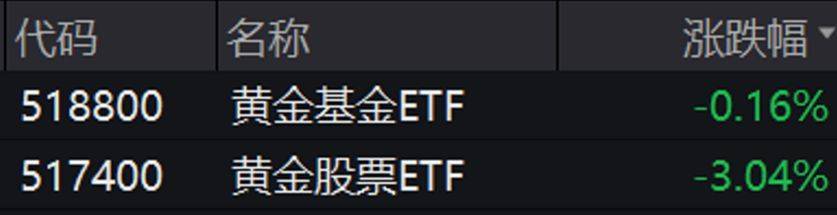
Group 1 - The gold sector experienced fluctuations on September 4, with gold ETFs down by 0.16% and gold stock ETFs down by 3.04% [1] - A weakening dollar provides long-term support for gold, with a significant possibility of interest rate cuts by the Federal Reserve in September [3] - Historically, gold has risen in 7 out of 10 interest rate cut cycles since 1980, reinforcing its status as a safe-haven asset and a hedge against inflation [3] Group 2 - President Trump’s unprecedented dismissal of Federal Reserve Governor Lisa Cook over alleged mortgage fraud has raised concerns about the independence of the Fed's monetary policy [3][4] - This event is seen as a challenge to the constitutional order and could lead to market volatility and fears of uncontrolled inflation [3][4] - Trump's team is reportedly drafting a plan to increase White House intervention in the Fed, potentially undermining its policy independence [4] Group 3 - The potential appointment of three Fed governors aligned with Trump's views could create a majority on the board, fundamentally impacting future monetary policy [4] - Global geopolitical tensions and economic uncertainties have enhanced the investment value of gold, with London gold reaching a new high for the year [4] - Continuous monitoring of gold ETFs (518800) and gold stock ETFs (517400) is recommended [4]