脱钩

Search documents
抢完中国资产,欧洲自信爆棚:中国更依赖欧洲,接下来要更强硬
Sou Hu Cai Jing· 2025-10-20 15:00
Core Viewpoint - Europe is attempting to adopt a more aggressive strategy towards China, signaling a desire to regain initiative in the global landscape, but underlying economic weaknesses reveal a contradictory stance [1][3]. Economic Analysis - Europe's economy is facing multiple pressures, including a shrinking manufacturing sector in Germany, declining consumer confidence in France, and renewed debt issues in Italy, leading to lowered growth expectations across the Eurozone [3][7]. - Despite having a large market of 450 million people, Europe's consumer power is structurally challenged, while China's market potential remains strong due to its vast domestic demand and robust supply chains [3][5]. Trade Relations - The EU's reliance on China for critical raw materials like rare earths and lithium remains significant, making the idea of "decoupling" unrealistic and economically burdensome for Europe [5][7]. - The EU's protective measures, such as the anti-subsidy investigation into Chinese electric vehicles, may inadvertently raise costs for European consumers and hinder the region's green transition [5][7]. Geopolitical Context - The shift in European political dynamics post-Russia-Ukraine conflict has led to a more ideologically driven approach to China, diminishing the previously cooperative atmosphere [8][10]. - China's response to European actions, such as the forced acquisition of Chinese semiconductor firms, indicates a shift from a hopeful to a more pragmatic stance in bilateral relations [10][12]. Strategic Considerations - Europe's ability to achieve "strategic autonomy" hinges on its capacity for independent foreign policy judgment and addressing its own industrial challenges rather than erecting trade barriers [16][17]. - The future of Sino-European relations will depend on Europe's choices, particularly whether it opts for genuine independence or continues to be influenced by the dynamics of great power competition [17].


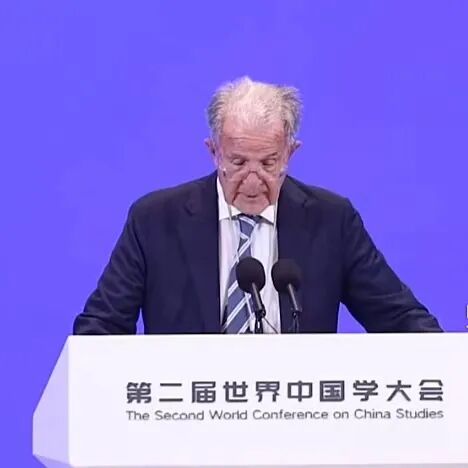
意大利前总理普罗迪:任何形式的“脱钩”都违背中欧利益 | 聚焦世界中国学大会
Guo Ji Jin Rong Bao· 2025-10-14 13:12
Core Viewpoint - The second World Chinese Studies Conference emphasizes the importance of cooperation between China and Europe, particularly in shaping a stable and prosperous future amidst current global challenges [1][3]. Group 1: Conference Overview - The conference took place on October 14 at the Shanghai International Conference Center, featuring over 500 experts and scholars discussing "Historical China and Contemporary China from a Global Perspective" through various sessions and activities [1]. - Romano Prodi, former Italian Prime Minister and European Commission President, delivered a keynote address highlighting the need for China-Europe collaboration [1][3]. Group 2: Key Themes from Prodi's Address - Prodi identified the current China-Europe relationship as being at a critical turning point, defined by the keywords "cooperation," "competition," and "management" [3]. - He emphasized that strategic cooperation is essential, particularly in areas like climate change, green economy, and global supply chain stability, asserting that any form of decoupling contradicts mutual interests [3]. - Prodi stated that the core challenge for the future lies not in eliminating competition but in managing it effectively through open dialogue and establishing protective mechanisms to prevent healthy competition from escalating into conflict [3][4]. Group 3: Future Cooperation Pathways - The ultimate goal of China-Europe cooperation is to seek a "dynamic balance" between pragmatic approaches and strategic trust, enabling both sides to transcend differences and collaboratively shape a stable and prosperous future [4]. - Prodi reiterated the necessity of wisdom and cooperation, underscoring that such collaboration is crucial for shaping a better future [5].
意大利前总理普罗迪:任何形式的“脱钩”都违背中欧利益
Guo Ji Jin Rong Bao· 2025-10-14 12:26
Core Insights - The second World Chinese Studies Conference opened in Shanghai, focusing on the theme "Historical China and Contemporary China from a Global Perspective" with over 500 experts and scholars participating in discussions and activities [1] Group 1: Key Themes - Romano Prodi, former Italian Prime Minister, emphasized the importance of cooperation between China and Europe at this critical juncture, stating that their future will be defined by "cooperation," "competition," and "management" [1][2] - Prodi highlighted that strategic cooperation is essential for both parties, particularly in areas like climate change, green economy, and global supply chain stability, asserting that any form of "decoupling" contradicts mutual interests [1][2] Group 2: Future Cooperation Path - Prodi articulated that the core challenge for China-Europe relations lies not in eliminating competition but in managing it through honest dialogue and establishing effective "guardrail" mechanisms to prevent healthy competition from escalating into conflict [2] - The ultimate goal of China-Europe cooperation is to seek a "dynamic balance" between pragmatism and strategic trust, enabling both sides to transcend differences and collaboratively shape a stable and prosperous future [2][3]
陈光炎长文剖析稀土与贸易平衡:美国超过8成精炼稀土来自中国,短期内难以改变
聪明投资者· 2025-10-13 03:33
Core Viewpoint - The article emphasizes China's strategic position in the rare earth elements (REEs) sector and its implications for U.S.-China trade relations, particularly in light of recent export controls and tariffs [8][54][86]. Group 1: China's Export Control Measures - In October 2025, China announced stricter export controls on rare earth elements and processing technologies, particularly for military and semiconductor applications [4][11]. - The export license system implemented by China has a validity period of six months, impacting global supply chains and prompting industries to adapt [8][11]. - China's management of rare earth exports reflects the vulnerabilities in the U.S. industrial and defense supply chains, leading to adjustments in trade negotiations [12][54]. Group 2: U.S. Dependency on Chinese Rare Earths - The U.S. relies on China for over 80% of its refined rare earths, which are critical for defense, electronics, and clean energy sectors [8][53]. - Experts estimate that establishing an independent U.S. supply chain for rare earths could take 5 to 15 years, highlighting the challenges in reducing dependency on China [10][54]. - The U.S. has initiated measures such as the Defense Production Act to boost domestic rare earth production, but these efforts face significant obstacles [55][61]. Group 3: Impact on Trade Relations - The role of rare earths has become a key factor in U.S.-China trade negotiations, with both sides recognizing the importance of these resources [9][12]. - China's export management of rare earths has led to a shift in trade dynamics, with the U.S. showing a willingness to make concessions in negotiations [12][90]. - The recent trade tensions have prompted the U.S. to reconsider its approach to tariffs and trade policies, particularly concerning critical materials [93][95]. Group 4: Strategic Importance of Rare Earths - Rare earth elements are essential for modern military systems, including advanced weaponry and communication technologies [42][45]. - The geopolitical significance of rare earths has increased, with China leveraging its dominance in this sector to influence international trade and security discussions [86][88]. - The ongoing tensions and management of rare earth resources underscore their role as strategic assets in global economic interactions [17][85].

真正的决定因素是预期
Hu Xiu· 2025-10-12 04:38
Group 1 - The article discusses the historical context of China's competition with the United States, positioning China as the third major competitor after the Soviet Union and Japan since World War II [1][4]. - It highlights that the competition with the Soviet Union was primarily military and ideological, while the competition with Japan was mainly economic [2][3]. - The article asserts that China represents a comprehensive competitor to the U.S., encompassing military, economic, and technological challenges, combining elements of both previous competitors [4][5]. Group 2 - The article notes that since 2014, the power dynamics between the U.S. and China have been shifting, with China's economy surpassing the U.S. in purchasing power parity (PPP) terms [6]. - It references former President Obama's approach to countering China's rise through initiatives like the Trans-Pacific Partnership (TPP), aimed at excluding China from shaping global economic rules [7][8]. - The article contrasts the differing approaches of Obama and Trump towards China, indicating a significant shift in U.S. strategy under Trump, who viewed China as a strategic competitor [9][16]. Group 3 - The article details the timeline of U.S.-China relations, noting Trump's state visit to China in 2017 and the subsequent shift in U.S. policy towards viewing China as a strategic competitor [10][14]. - It discusses the escalation of trade conflicts starting in 2018, with the U.S. invoking Section 301 of its Trade Act to investigate China, leading to a series of tariffs and negotiations [20][21]. - The article emphasizes that the context of U.S.-China relations has evolved, with increasing pessimism from China regarding future economic ties due to rising tensions and geopolitical competition [33][34]. Group 4 - The article argues that the fundamental issue in U.S.-China relations is not merely economic factors like tariffs or trade agreements, but rather the long-term perception of the relationship's trajectory [35][36]. - It suggests that any future agreements must address both economic and geopolitical issues simultaneously, as avoiding these discussions is no longer feasible [40].
如何看待有消息称美国不准备降低对华关税税率
Sou Hu Cai Jing· 2025-10-10 15:01
Core Viewpoint - The U.S. government, under President Trump, is maintaining a hardline stance on tariffs against China, indicating a desire for a long-term compromise without significant concessions [2][3][4] Group 1: Tariff Strategy - The U.S. plans to keep the 55% tariff on China as part of the trade agreement, with no intention to remove the tariffs imposed earlier this year [2][3] - The U.S. aims to persuade China to increase purchases of American goods, such as agricultural products and LNG, while maintaining restrictions on high-tech exports to China [3][4] Group 2: Negotiation Principles - Trump's negotiation strategy is characterized by "extreme pressure" and "high demands," with the recent statements reflecting these principles [4][5] - The focus of future negotiations will shift from whether to engage in a trade war to the conditions under which a trade war can be avoided [5] Group 3: Long-term Trade Relations - The U.S. seeks to normalize the "Fentanyl tariff" to maintain a lower tariff rate on Chinese goods compared to U.S. goods, while China aims to counter this by challenging the U.S. on its tariff practices [5][6] - The broader context of U.S.-China trade relations includes non-tariff barriers and technology restrictions, which are seen as significant obstacles beyond just tariff levels [6]

关税战摊牌时刻,中美各走一条道路,美国在等待中国的决定!
Sou Hu Cai Jing· 2025-10-07 18:55
Group 1 - The core viewpoint of the articles revolves around the strategic competition and economic implications of the US-China trade war, highlighting the significant impact on global supply chains and economic structures [1][4][10] - The US is attempting to reshape its economic landscape by reducing dependence on China through various agreements and frameworks, such as the USMCA and IPEF, which aim to create alternative supply chains [4][8] - China's response to the trade war has been characterized by a focus on domestic innovation and development in key sectors like renewable energy and AI, rather than aggressive retaliation [4][6][8] Group 2 - The trade war has led to a sharp decline in trade volumes, with China's exports to the US dropping by 33.1% in August, marking the steepest decline in a decade [1] - The International Monetary Fund (IMF) reported that if the current tariffs remain, global trade volume could decrease by 1.5%, indicating a broader impact on the global economy [7] - The US manufacturing sector is struggling, with the PMI remaining below the growth line, while China is experiencing growth in sectors like electric vehicles and energy storage [7][8] Group 3 - The APEC summit is viewed as a critical moment, but it is expected to yield only symbolic outcomes rather than substantial changes in trade relations [6][10] - The ongoing trade tensions are reshaping the global economic order, with both countries vying for strategic advantages and attempting to outlast each other in this prolonged conflict [6][10][12] - The narrative surrounding the trade war is evolving, with the US facing challenges in maintaining its influence in the Asia-Pacific region as countries seek to balance their relations with both the US and China [10]
青山遮不住
Ren Min Ri Bao· 2025-09-27 02:42
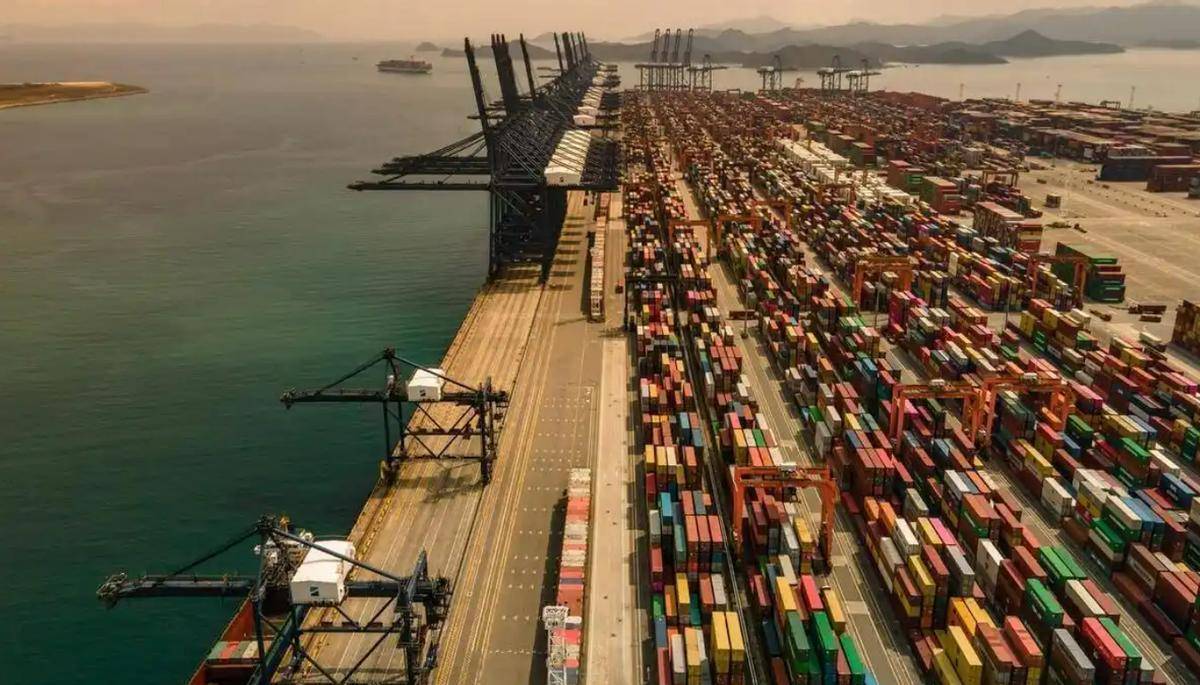
Core Viewpoint - The ongoing trade tensions between the US and China, characterized by tariffs and export controls, have not hindered the growth of trade between the two nations, with China's exports to the US increasing by 22.7% in the first eight months of the year [1][2]. Group 1: Trade Dynamics - Despite tariffs, China's exports to the US have shown resilience, with a reported growth of 30.3% in the first eight months of the year for certain sectors [2]. - Since the imposition of tariffs in July 2018, the overall trade volume between the US and China has generally been on an upward trend, with a notable increase of 8.8% in 2020 [2][11]. - The demand for "Made in China" products remains strong in the US, as evidenced by consumer experiences during the pandemic [4][5]. Group 2: Economic Interdependence - The economic structures of the US and China are highly complementary, with significant mutual benefits derived from trade [6][8]. - In 2020, Chinese goods accounted for 19% of total US imports, with a substantial portion of essential medical supplies sourced from China [6][8]. - The cost advantages of Chinese manufacturing, including lower labor costs and efficient supply chains, continue to attract US companies [7][10]. Group 3: Investment Trends - Despite a decline in US investment in China in certain sectors, there is a growing interest among US companies to expand their operations in China, with 85% of surveyed companies indicating no plans to relocate manufacturing outside of China [13][20]. - The influx of foreign investment into China has been robust, with significant increases from European and ASEAN countries, highlighting China's appeal as a market [13][14]. - The Chinese market's size and growth potential are key factors driving multinational companies to establish or expand their presence in the country [15][16]. Group 4: Innovation and Technology - China's commitment to technological self-reliance and innovation is evident, with increasing investments in research and development [21][23]. - The country is transitioning from a technology follower to a leader in several high-tech fields, demonstrating resilience against external pressures [24][29]. - Collaboration in technology and innovation remains crucial, as both nations benefit from shared advancements and market opportunities [26][30].

六年过去,“中国冷落美国商界” 竟是场闹剧?真相让马凯硕打脸!
Sou Hu Cai Jing· 2025-09-04 17:28
Group 1 - The core argument is that the notion of China "neglecting" American businesses is fundamentally flawed, as American companies have become increasingly intertwined with the Chinese market and supply chain [1][5][6] - The U.S. government's attempts to "decouple" from China, such as the implementation of the CHIPS Act and other restrictions, have not effectively reduced American companies' reliance on Chinese goods and services [2][3] - Reports indicate that a significant portion of products labeled as "manufactured in Vietnam" or "manufactured in Mexico" still rely heavily on Chinese components, demonstrating the deep-rooted connections in the supply chain [2][3] Group 2 - Major American companies, including Tesla and Boeing, have established significant operations in China, highlighting the importance of the Chinese market for their growth and production capabilities [4] - A survey by the American Chamber of Commerce revealed that 83% of U.S. companies in China do not plan to leave, citing the high costs and loss of market access as primary reasons [4] - The ongoing collaboration between U.S. and Chinese businesses is framed as a mutually beneficial relationship, with both sides needing each other for continued success and competitiveness [5][6]

美媒:特朗普总统露怯,中美关税战休战再休战,特朗普这一通忙,直接把巴西卢拉和印度莫迪惹恼了
Sou Hu Cai Jing· 2025-08-27 22:31
Group 1 - The article discusses the diminishing effectiveness of Trump's trade policies, particularly regarding tariffs on China, suggesting that his recent actions indicate a lack of confidence [1][3] - The U.S.-China trade war has resulted in significant financial burdens on American importers and consumers, with an estimated additional cost of $156 billion due to tariffs by 2023 [3] - Trump's initial strategy to use tariffs as leverage in the upcoming elections appears to be faltering, as he faces potential backlash from American businesses affected by high import costs [3][8] Group 2 - Brazil and India are shifting their trade strategies, with Brazil's president criticizing U.S. trade dominance and India increasing imports from China to $101 billion in 2023, indicating a move towards closer economic ties with China [4] - The European Union is experiencing economic stagnation, with the IMF predicting a growth rate of only 0.9% for the Eurozone in 2024, complicating the U.S.'s ability to rely on European support [6] - Japan and South Korea are also looking to strengthen economic ties with China, despite their political alliances with the U.S., highlighting a trend of regional countries balancing their economic interests [6] Group 3 - The ongoing U.S.-China tensions are characterized as a prolonged struggle rather than a decisive conflict, with both sides unlikely to make significant concessions [9] - The article suggests that the U.S. may be pushing its allies further away as it attempts to rally support against China, potentially leading to a new geopolitical landscape where countries like the EU, Japan, and India seek greater autonomy [11] - There is speculation that future tariff threats from Trump may be disregarded by the market, as the reality of economic interdependence becomes more apparent [11]