
设备更新

Search documents
利好来了!上海重大发布!事关消费 最高补贴不超2万元
Xin Lang Cai Jing· 2026-01-30 23:52
Core Viewpoint - Shanghai has announced a comprehensive policy to promote large-scale equipment updates and a trade-in program for consumer goods, aiming to stimulate consumption and enhance the recycling economy [1][3]. Group 1: Large-Scale Equipment Updates - The policy supports applications for national equipment update projects across various sectors, including industrial, electronic information, energy, transportation, logistics, education, cultural tourism, healthcare, and more [7]. - Specific support is provided for the scrapping and updating of old operational trucks and the renewal of new energy city buses, with subsidies following existing guidelines [8]. Group 2: Consumer Goods Trade-In Program - The policy outlines subsidies for scrapping and updating vehicles, with a maximum subsidy of 20,000 yuan for purchasing new energy passenger vehicles and 15,000 yuan for 2.0-liter or below fuel vehicles [10]. - For vehicle trade-ins, consumers can receive up to 15,000 yuan for new energy vehicles and 13,000 yuan for fuel vehicles, depending on the vehicle's price [10]. Group 3: Household Appliances and Digital Products - Consumers purchasing energy-efficient household appliances such as refrigerators, washing machines, and air conditioners can receive a subsidy of 15% of the product price, capped at 1,500 yuan per item [10]. - For digital and smart products, a subsidy of 15% is available for items priced under 6,000 yuan, with a maximum of 500 yuan per item [11]. Group 4: Recycling and Resource Utilization - The policy emphasizes the establishment of a comprehensive recycling network for old equipment and consumer goods, promoting a "two-network integration" recycling system [8]. - It aims to enhance the recycling and remanufacturing industry, focusing on high-end remanufacturing projects and improving the quality and safety of remanufactured products [9].


利好来了!上海,重大发布!事关消费
券商中国· 2026-01-30 23:42
Core Viewpoint - Shanghai has issued a significant policy document aimed at promoting large-scale equipment updates and a trade-in program for consumer goods, focusing on various sectors including industrial, electronic information, and transportation [2][3]. Group 1: Large-Scale Equipment Updates - The policy supports applications for national equipment update projects, specifically targeting sectors such as industrial, electronic information, energy, transportation, and healthcare [5]. - It encourages the scrapping and updating of old operational trucks and the renewal of new energy city buses, with subsidies based on existing guidelines [5]. Group 2: Consumer Goods Trade-In Program - The policy outlines subsidies for scrapping and updating vehicles, with a maximum subsidy of 20,000 yuan for purchasing new energy vehicles and 15,000 yuan for 2.0L or below fuel vehicles [10]. - For household appliances, consumers can receive a subsidy of 15% of the purchase price (up to 1,500 yuan) for energy-efficient products like refrigerators and washing machines [10]. Group 3: Recycling and Resource Utilization - The initiative aims to enhance the recycling network for old equipment and consumer goods, promoting a "two-network integration" recycling system [7]. - It emphasizes the development of the resource recycling and remanufacturing industry, with a focus on high-end remanufacturing projects and improving the technology level of recycled resources [8].

千亿资金启动“两新”引擎,钢铁业迎结构性变革良机
Jin Rong Jie· 2026-01-30 02:21
Core Viewpoint - The implementation of the "Two New" policy, which includes a total funding of 1,561 billion yuan for equipment updates and consumer goods replacement, aims to stimulate economic growth and support various sectors, including steel, energy, and healthcare [1][2]. Group 1: Policy Implementation - The issuance of 936 billion yuan in ultra-long-term special government bonds is a key macroeconomic tool for China, aimed at injecting strong momentum into the economy [2]. - The funding will support approximately 4,500 projects across nine major sectors, including industrial, energy, education, and environmental protection, with an expected total investment exceeding 4,600 billion yuan [2]. Group 2: Steel Industry Transformation - The "Two New" policy is shifting the demand structure in the steel industry from traditional construction steel to high-end plates and special steels required by manufacturing [3]. - The steel industry faces challenges such as peak steel consumption and declining demand, particularly from the real estate sector, which is unlikely to recover in the short term [3]. Group 3: Upgrade Pathways - The steel industry aims for an average annual value-added growth target of around 4% for 2025-2026, focusing on enhancing the supply capacity of high-end products like bearing steel and gear steel [4]. - These high-end steels are crucial for applications in automotive, machinery, shipbuilding, and home appliances, aligning with the focus of the "Two New" policy [4]. Group 4: Industry Chain Opportunities - The digital transformation in the steel industry is driving demand for equipment updates, with policies supporting technological upgrades and resource utilization [5]. - The government emphasizes the need for steel companies to adopt low-emission technologies and digital transformation to meet environmental standards [5]. Group 5: Long-term Effects - The "Two New" policy not only stimulates short-term investment but also promotes deep economic structural adjustments, expanding support to areas like old residential elevator installations and fire rescue facilities [6]. - The policy aims to lower investment thresholds for equipment updates, enhancing support for small and medium-sized enterprises [6]. Group 6: Financial Collaboration - The collaboration between fiscal and monetary policies strengthens the "Two New" policy, with innovative financial services emerging to support equipment updates [7]. - Financing options such as leasing and the securitization of related debts are encouraged to improve the efficiency of financial resource utilization, particularly for traditional industries like steel [8].
政策红利加速释放 多地启动2026年财政补贴申报
Zhong Guo Jing Ying Bao· 2026-01-30 00:57
Group 1 - The core viewpoint of the article highlights the implementation of a new subsidy policy in Beijing for replacing old household appliances, which offers a 15% subsidy on the purchase price for six categories of energy-efficient appliances, with a maximum subsidy of 1500 yuan for televisions [1] - The subsidy program aims to enhance consumer experience by providing both online and offline purchasing options, allowing consumers to redeem subsidies directly during payment on various e-commerce platforms and at over 1500 registered stores in Beijing [1] - The policy is part of a broader initiative by the National Development and Reform Commission and the Ministry of Finance to stimulate consumption and support economic growth through financial subsidies for equipment updates and green industry initiatives [2] Group 2 - The new fiscal subsidy policy covers multiple core areas, including equipment updates, green industry, and support for small and micro enterprises, with lowered application thresholds and increased subsidy amounts to effectively boost domestic demand and stabilize growth [2] - In the equipment update sector, subsidies range from 15% to 20% of fixed asset investments, with specific projects in technology innovation and green transformation eligible for up to 20% support, and loan interest subsidies available for up to 5 million yuan per enterprise [2] - The green industry is a key focus of the policy, with 35% of special long-term bonds allocated for green transformation, and the program has already shown significant impact in various regions, driving substantial consumer spending [3] Group 3 - The subsidy application process is designed to be accessible through both online and offline channels, with various government service platforms and partner merchants facilitating submissions, and deadlines for most applications set until December 31, 2026 [4] - The policy emphasizes strict management of subsidy funds, prohibiting misuse for investment or financial purposes, and establishing mechanisms to ensure efficient fund allocation directly to applicants [3]
观察 | 首批设备更新资金下达 稳投资力度加码可期
工程机械杂志· 2026-01-28 09:19
2026年首批936亿元超长期特别国债支持设备更新资金已于近期下达,额度较2025年同期有所提升,为新的一年经济良好开局注入确定性的同时,也再度彰显出今 年稳投资政策力度加码。 2025年,设备工器具购置投资同比增长11.8%,占全部固定资产投资比重近两成,是稳住投资基本盘的关键一环。 当前,我国仍处于第四轮设备投资周期,制造业、医疗、教育等领域普遍存在系统性设备代际差,产业转型升级催生旺盛的更新需求。 据相关机构测算,仅工农业等重点领域,年设备更新需求就超过5万亿元。 (来源:互联网) 【行业热点】 1 业绩改观,工程机械行业复苏或已在路上? 2. 如期切换, 工程机械12月1日起开启"国四"时代 3. 内销连续下滑13个月,今年出口大涨超7成 周期中的挖掘机行业何日再逢春? 4. 2月开工率改善 工程机械行业预期"暖洋洋" 5. 卡特彼勒正接近周期性转折点 下调评级至"中性" 【市场数据】 1.挖掘机销量数据 2025年 【1月】 、 【2月】 、 【3月】 、 【4月】 、 【5月】 、 【6月】 、 【7月】 、 【8月】 、 【9月】 、 【10 月】 、 【11月】 、 【12月】 2024年 【 ...
EXEL Industries: Q1 2025–2026 revenue -17.5%
Globenewswire· 2026-01-28 07:07
Core Viewpoint - EXEL Industries Group reported a significant decline in revenue for Q1 2025-2026, with a decrease of 17.5% on a reported basis and 15.5% on a like-for-like basis, reflecting challenging market conditions across various sectors [2][10]. Revenue Breakdown - Agricultural Spraying revenue fell to €49.0 million, down 21.1% from the previous year, with a notable decline in Western Europe, while Eastern Europe showed some growth [3][10]. - Sugar Beet Harvesting revenue decreased to €13.5 million, down 29.4%, impacted by falling sugar prices and reduced beet crop acreage [4]. - Leisure revenue was reported at €11.8 million, down 8.8%, although the garden business showed strong sales in the UK [5]. - Industrial revenue decreased to €59.3 million, down 12.5%, affected by a declining automotive market and the implementation of a new ERP system [6][10]. Market Conditions - The agricultural market remains cautious, with farms and dealers delaying equipment renewals and investments [3]. - In Sugar Beet Harvesting, investment is slow due to declining cultivated areas and sugar prices, although some regions like Russia and Eastern Europe are performing better [9]. - The garden business is experiencing a positive order level, but dealers are cautious due to the economic climate [12]. Future Outlook - The order book for Agricultural Spraying is slightly better than the previous year, with expectations for a favorable market cycle to return later than anticipated [8]. - A federal support package of $12 billion in the US is expected to boost demand for agricultural machinery [8]. - The Technical Hoses business shows an improving outlook with positive momentum in retail and B2B segments [12].

省份固投“成绩单”,谁跑赢了
Mei Ri Jing Ji Xin Wen· 2026-01-26 23:07
Core Insights - The significant decline in real estate development investment is a major reason for the overall drop in investment, with a projected decrease of 17.2% in 2025 [3] - High-tech industries, particularly information services and aerospace manufacturing, are experiencing rapid growth, with investments increasing by 28.4% and 16.9% respectively in 2025 [7] - The investment landscape is undergoing a transformation, with a notable shift in regional investment performance, as 18 provinces outperformed the national average in fixed asset investment growth [7] Investment Trends - National fixed asset investment growth is slowing, with a contraction of 0.5% when excluding real estate development investment [3] - Infrastructure investment also saw a decline of 2.2% last year, indicating broader challenges in traditional investment sectors [3] - Equipment and tool purchases are crucial for enhancing production efficiency, with 24 provinces reporting positive growth in this area, and 15 provinces achieving double-digit growth rates [11] Regional Performance - The Northeast region experienced the largest decline in investment, with a drop of 15.5%, while other regions also faced negative growth, including the East and Central regions [11] - Notably, Tibet led the national investment growth at 17.2%, showcasing regional disparities in investment performance [7] Policy and Future Outlook - The Central Economic Work Conference has prioritized stabilizing investment and plans to increase central budget investments and optimize local government bond management for 2026 [14] - Major projects are set to commence in the first quarter, aiming to boost investment growth and support annual targets [14] - There is a focus on optimizing investment structures towards innovation, equipment upgrades, and new infrastructure, which are expected to enhance economic growth quality in the long term [14]
今年首批超长期特别国债 支持设备更新资金已下达
Xin Lang Cai Jing· 2026-01-25 20:19
本报讯 记者荆文娜报道 国家发展改革委有关部门近日表示,2026年第一批936亿元超长期特别国债支持 设备更新资金已经下达,支持工业、能源电力、教育、医疗、住宅老旧电梯等领域约4500个项目,带动 总投资超过4600亿元;同时,采取直接向地方下达资金的方式,继续支持老旧营运货车报废更新、新能 源城市公交车更新、老旧农机报废更新。 今年以来,国家发展改革委会同各有关方面优化实施"两新"政策,在前期扎实开展设备更新项目谋划储 备的基础上,抓紧组织项目申报,严格做好审核把关,加快推动设备更新政策落地见效。 下一步,国家发展改革委将会同各有关方面,持续做好统筹协调和跟踪调度,加强设备更新项目和资金 全链条管理,扎实推进项目建设,加快提升资金使用效率,进一步发挥"两新"政策效能。 (来源:中国改革报) 转自:中国改革报 ...
城数Lab. | 省份固投“成绩单”,谁跑赢了
Sou Hu Cai Jing· 2026-01-25 08:36
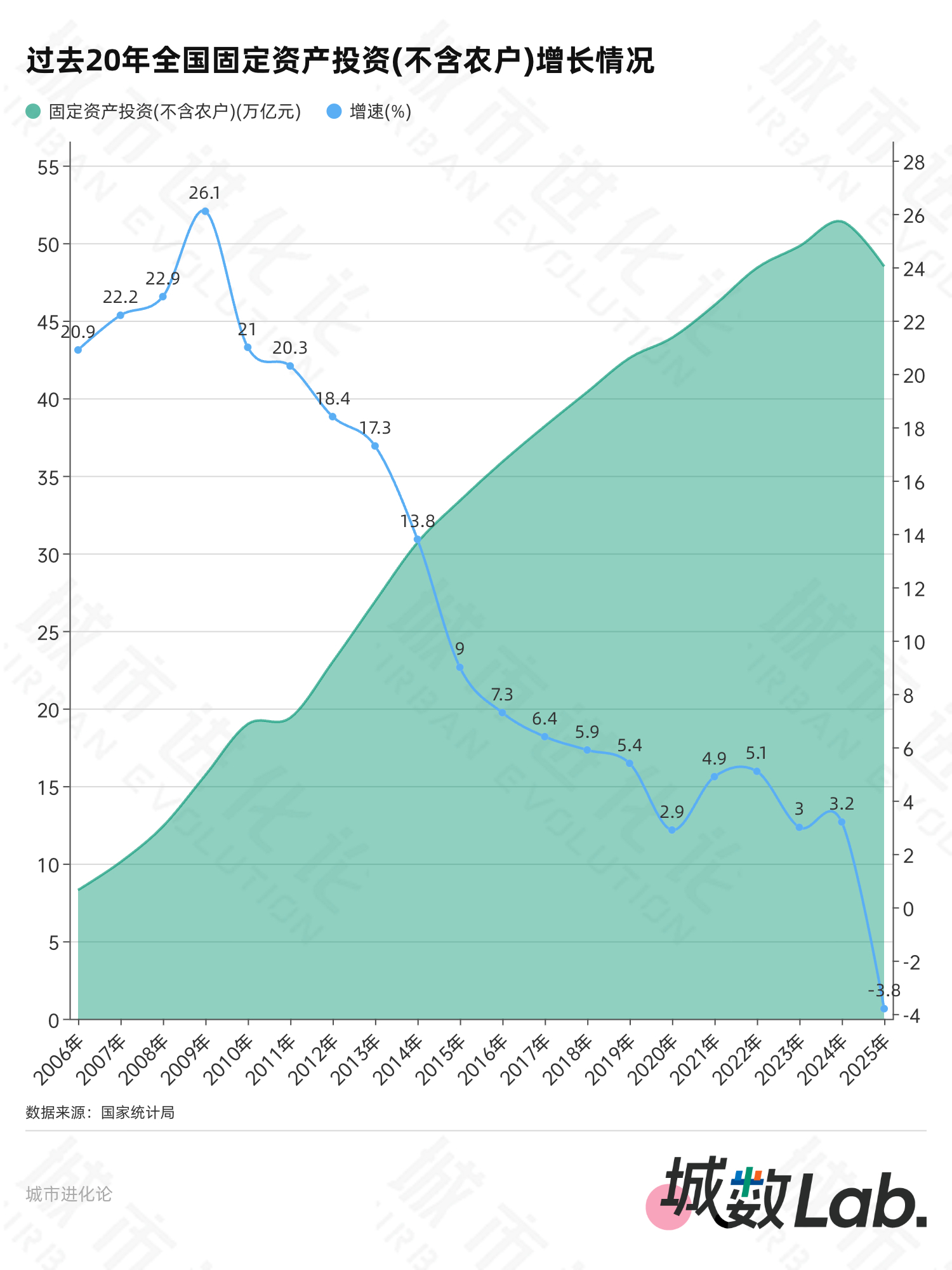
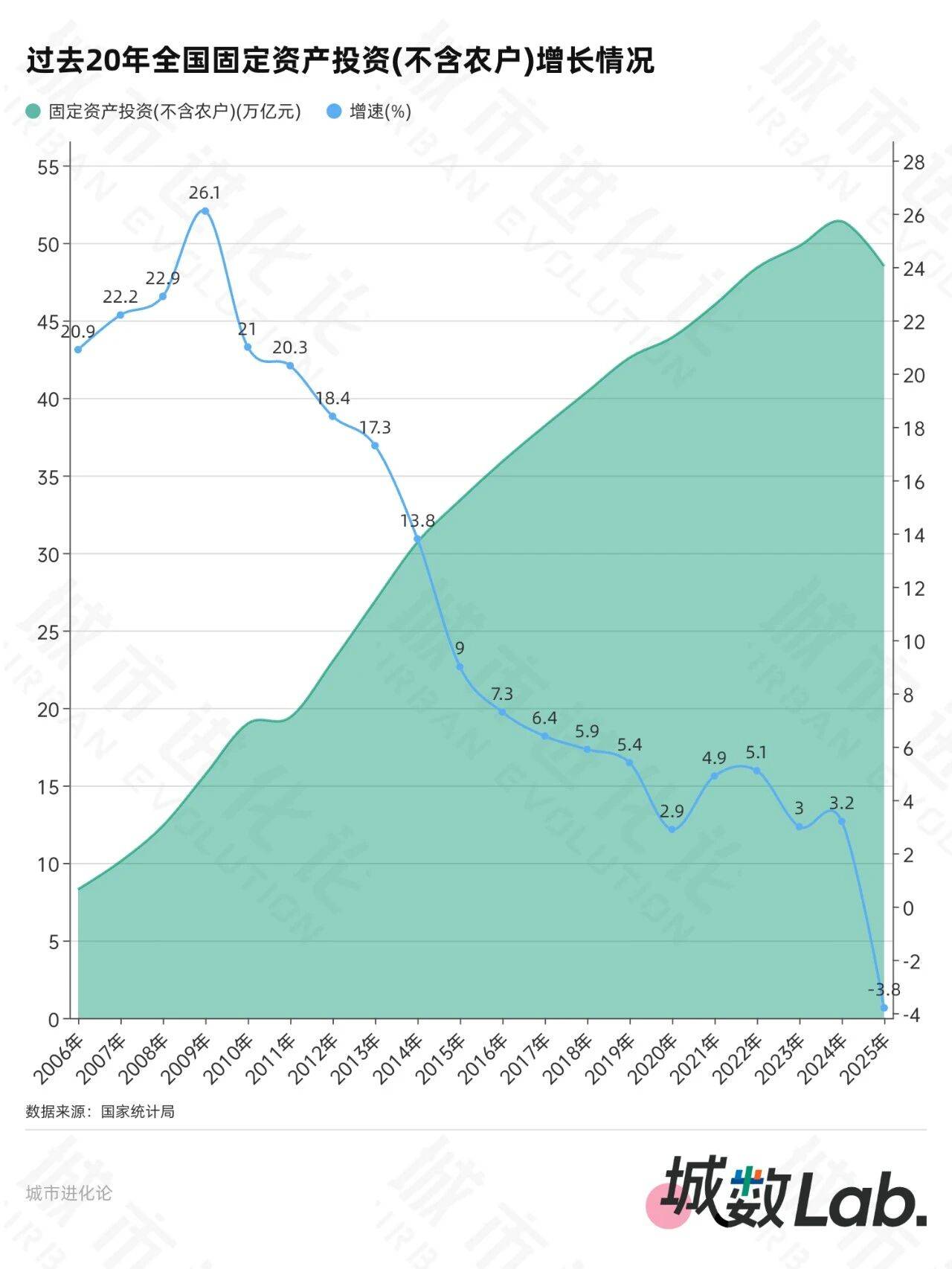
过去20年全国固定资产投资(不含农户)增长情况 ● 固定资产投资(不含农户)(万亿元) ● 增速(%) 55 26.1 50 22,9 22.2 45 >0.9 20.3 40 8.4 17.3 35 1 3.8 30 25 0 7.3 20 6.4 5.9 5.4 5.1 4.9 15 w 2.9 10 5 0 数据来源:国家统计局 城市进化论 2025年31省份房地产投资、设备工器具购置投资增速 城市进化论 过去20年全国房地产开发投资增速变化 单位:% 35 31.2 30.2 30 26.5 25 23.4 22.1 20 18.8 |16.1 15.1 15 9.8 9.6 10 6.8 6.6 | 6.7 4.3 5 0.7 0 -5 -10 -10 -15 数据来源:国家统计局 31省份年度固投(不含农户) 增速变化 ● 2024年(%) ● 2025年(%) -25 15 -20 -15 -10 -5 0 x 5 10 西藏 新疆 河北 8 宁夏 16 7.9 北京 上海 0 河南 7 4 内蒙古 13.6 2.6 湖北 6.5 1.6_4.8 江西 1.63.1 天津 -0.4 < 山西 > ...
AH股市场周度观察(1月第3周)
ZHONGTAI SECURITIES· 2026-01-25 07:55
A-Share Market Insights - The A-share market saw an overall increase, with the CSI 500 and CSI 2000 leading gains at 4.34% and 4.04% respectively, while the Shanghai Composite Index rose by 0.84% and the Shenzhen Component Index by 1.11%[6] - Small-cap value and mid-cap value indices performed well, increasing by 4.43% and 4.36% respectively, while the average daily trading volume was 2.8 trillion yuan, down 19.22% week-on-week[6] - The People's Bank of China announced a 0.25 percentage point cut in relending and rediscount rates effective January 19, 2026, injecting liquidity and lowering financing costs, boosting investor confidence[6] - The first batch of 936 billion yuan in special long-term bonds for equipment upgrades has been allocated, supporting total investments exceeding 460 billion yuan, which is expected to enhance the manufacturing and emerging industries[6] Market Outlook - Despite high market activity, indications of "cooling" suggest a potential for short-term fluctuations, with sectors that have seen significant gains likely facing correction pressures[7] - Industries with improved performance and policy support, such as electricity and equipment upgrades, are expected to continue to outperform[7] Hong Kong Market Insights - The Hong Kong market experienced a downward trend, with the Hang Seng Index falling by 0.36%, the Hang Seng Tech Index by 0.42%, and the Hang Seng China Enterprises Index by 0.65%[8] - The materials, energy, and conglomerates sectors recorded gains of 4.1%, 2.85%, and 2.32% respectively, while the information technology and healthcare sectors faced declines of 2.84% and 2.56%[8] - The market's weakness was influenced by cautious reactions to U.S. tech stocks and profit-taking pressures, alongside geopolitical risks impacting sentiment[8] Future Expectations - The Hong Kong market is expected to experience structural growth supported by expectations of U.S. interest rate cuts and a recovery in A-share sentiment, with AI demand driving tech sector performance[9] - A barbell strategy is recommended for investors, focusing on high-dividend assets to hedge against market volatility while also targeting growth-oriented tech and new consumption sectors[9] Risk Considerations - Risks include potential tightening of global liquidity beyond expectations, increased complexity in market dynamics, and unpredictable policy changes[10]