
贸易关系

Search documents
《能源化工》日报-20250812
Guang Fa Qi Huo· 2025-08-12 06:19
1. Urea Core View The domestic urea futures market has shown a weak and volatile trend recently, mainly driven by the contradiction between supply and demand. The supply is sufficient, while the demand is weak, leading to a poor trading atmosphere in the spot market and pushing down the futures price [7]. Summary by Category - **Futures Prices**: On August 11, the 01 contract closed at 1751, unchanged from August 8; the 05 contract closed at 1790, up 6 or 0.34%; the 09 contract closed at 1722, down 6 or -0.35% [2]. - **Futures Contract Spreads**: The spread between the 01 and 05 contracts was -39 on August 11, down 6 or -18.18% from August 8; the spread between the 05 and 09 contracts was 68, up 12 or 21.43%; the spread between the 09 and 01 contracts was -29, down 6 or -26.09%; the spread between the UR and MA main contracts was -667, down 12 or -1.83% [3]. - **Main Positions**: The long positions of the top 20 increased by 1403 to 63621 on August 11, a rise of 2.25%; the short positions of the top 20 decreased by 966 to 69896, a decline of -1.36%; the long - short ratio was 0.91, up 0.03 or 3.67%; the unilateral trading volume was 102540, up 22267 or 27.74%; the number of Zhengshang Institute warehouse receipts remained unchanged at 3623 [4]. - **Upstream Raw Materials**: The price of small - sized anthracite in Jincheng remained at 900 yuan/ton; the price of thermal coal at the pithead in Ejin Horo Banner increased by 10 to 525 yuan/ton, a rise of 1.94%; the price of thermal coal at the Qinhuangdao port remained at 680 yuan/ton; the price of synthetic ammonia in Shandong remained at 2300 yuan/ton; the estimated fixed - bed production cost remained at 1430 yuan/ton; the estimated water - coal slurry production cost increased by 14 to 1155 yuan/ton, a rise of 1.23% [5]. - **Spot Market Prices**: The prices of small - sized urea in Shandong, Shanxi, and Henan decreased by 30, 20, and 40 yuan/ton respectively, with declines of -1.70%, -1.21%, and -2.25%; the prices in Northeast China and Guangdong remained unchanged; the FOB price of small - sized urea in China and the FOB price of large - sized urea in the US Gulf remained unchanged [6]. - **Regional Spreads and Basis**: The spreads between Shandong and Henan, Guangdong and Henan, and Guangdong and Shanxi changed, and the basis in Shandong, Shanxi, and Henan decreased, while the basis in Guangdong increased [7]. - **Downstream Products**: The price of melamine in Shandong increased by 70 to 5177 yuan/ton, a rise of 1.37%; the prices of 45% S and 45% CL compound fertilizers in Henan remained unchanged; the compound fertilizer - urea ratio increased by 0.04 to 1.57, a rise of 2.30% [7]. - **Supply and Demand**: The daily domestic urea production increased by 0.20 to 19.21 million tons, a rise of 1.05%; the weekly domestic urea production decreased by 2.63 to 132.85 million tons, a decline of -1.94%; the weekly domestic urea plant - side inventory decreased by 2.97 to 88.76 million tons, a decline of -3.24%; the weekly domestic urea port inventory decreased by 1.00 to 48.30 million tons, a decline of -2.03% [7]. 2. Crude Oil Core View Recent oil prices have shown a weak and volatile trend. The main trading logic is the influence of geopolitical risks and marginal supply increments. The upcoming meeting between Trump and Putin is the focus. The market is in a cautious wait - and - see attitude. In the medium - to - long term, the direction of oil prices depends on the negotiation results and inventory changes. There is no strong unilateral trend currently [9]. Summary by Category - **Oil Prices and Spreads**: On August 12, Brent crude oil was at 66.84 dollars/barrel, up 0.21 or 0.32%; WTI was at 64.13 dollars/barrel, up 0.17 or 0.27%; SC was at 494.00 yuan/barrel, up 1.50 or 0.30%. Spreads such as Brent M1 - M3, WTI M1 - M3, and SC M1 - M3 also changed [9]. - **Refined Oil Prices and Spreads**: The prices and spreads of NYM RBOB, NYM ULSD, ICE Gasoil and their month - to - month spreads changed on August 12 compared with August 11 [9]. - **Refined Oil Crack Spreads**: The crack spreads of various refined oil products in the US, Europe, and Singapore changed on August 12 compared with August 11 [9]. 3. PVC and Caustic Soda Core View The caustic soda market is expected to be neutral to weak in the later stage, and the PVC market faces great supply - demand pressure, but attention should be paid to the boost of coking coal prices on PVC [19]. Summary by Category - **Spot and Futures Prices**: On August 11, the prices of Shandong 32% liquid caustic soda, Shandong 50% liquid caustic soda, and various PVC futures contracts changed compared with August 8 [14]. - **Overseas Quotes and Export Profits**: The FOB price of caustic soda in East China decreased by 10 to 390 dollars/ton, a decline of -2.5%; the export profit increased by 22.7 to 142.5 yuan/ton, a rise of 19.0%. The overseas quotes of PVC remained unchanged, and the export profit increased by 87.9 to 30.3 yuan/ton, a rise of 152.5% [15][16]. - **Supply**: The caustic soda industry's operating rate and the PVC total operating rate increased, while the profits of externally - purchased calcium carbide - based PVC and northwest integrated PVC decreased [17]. - **Demand**: The operating rates of caustic soda downstream industries such as alumina, viscose staple fiber, and printing and dyeing changed slightly; the operating rates of PVC downstream products such as pipes, profiles, and the pre - sales volume of PVC decreased [18][19]. - **Inventory**: The inventories of liquid caustic soda in East China and Shandong increased, the upstream plant - side inventory of PVC decreased, and the total social inventory of PVC increased [19]. 4. Polyolefins Core View The supply of PP and PE has different trends, and the demand is expected to improve in the peak season. The overall valuation is moderately high, and the inventories in the middle and upstream are being depleted. There is no major supply - demand contradiction [23]. Summary by Category - **Futures and Spot Prices**: On August 11, the closing prices of L2601, L2509, PP2601, PP2509 and their spreads, as well as the spot prices of East China PP drawstrings, North China LLDPE film materials, and their basis changed compared with August 8 [23]. - **PE and PP Standard Prices**: The prices of various PE and PP products in East China changed on August 11 compared with the previous period [23]. - **Upstream and Downstream Operating Rates and Inventories**: The operating rates of PE and PP plants and their downstream industries changed, and the inventories of PE and PP enterprises and traders increased [23]. 5. Pure Benzene - Styrene Core View In the short term, pure benzene prices are relatively well - supported, but the rebound space is limited. Styrene's fundamentals are weak, but the downward space is also restricted. Specific trading strategies are provided for both [26]. Summary by Category - **Upstream Prices and Spreads**: On August 11, the prices of Brent crude oil, WTI crude oil, CFR Japan naphtha, CFR Northeast Asia ethylene, CFR China pure benzene, and their spreads changed compared with August 8 [26]. - **Styrene - Related Prices and Spreads**: The prices of styrene in East China, EB futures contracts, and their spreads, as well as the cash flows and import profits changed [26]. - **Downstream Cash Flows**: The cash flows of phenol, caprolactam, aniline, EPS, PS, ABS and other downstream products changed [26]. - **Inventory and Operating Rates**: The inventories of pure benzene and styrene in Jiangsu ports decreased, and the operating rates of various industries in the pure benzene and styrene产业链 changed [26]. 6. Methanol Core View The methanol market is affected by factors such as production, inventory, and demand. The 09 contract has a strong expectation of inventory accumulation, while the 01 contract has seasonal and supply - reduction expectations. Specific trading strategies are provided [30]. Summary by Category - **Prices and Spreads**: On August 8, the closing prices of MA2601 and MA2509 decreased, and the MA91 spread, Taicang basis, and regional spreads changed compared with August 7 [30]. - **Inventory**: The methanol enterprise inventory decreased by 3 to 29.3688%, a decline of -9.50%; the methanol port inventory increased by 12 to 92.5 million tons, a rise of 14.48%; the methanol social inventory increased by 8.6 to 121.9%, a rise of 7.61% [30]. - **Upstream and Downstream Operating Rates**: The operating rates of upstream domestic enterprises and some downstream industries changed on August 8 compared with the previous period [30]. 7. Polyester Industry Chain Core View The supply - demand situations of PX, PTA, ethylene glycol, short - fiber, and bottle - chip are different, and corresponding trading strategies are provided for each [59]. Summary by Category - **Downstream Polyester Product Prices and Cash Flows**: On August 11, the prices of POY, FDY, DTY, polyester chips, polyester bottle - chips, and their cash flows changed compared with August 8 [59]. - **PX - Related Prices and Spreads**: The prices of CFR China PX, PX futures contracts, and their spreads, as well as the PX basis and processing spreads changed [59]. - **PTA - Related Prices and Spreads**: The prices of PTA, PTA futures contracts, and their basis, processing spreads, and operating rates changed [59]. - **MEG - Related Prices and Spreads**: The prices of MEG, MEG futures contracts, and their basis, spreads, and cash flows changed [59]. - **Industry Operating Rates**: The operating rates of various industries in the polyester industry chain such as PX, PTA, MEG, and polyester products changed [59].
MPOB报告利多,棕油领涨油脂
Zhong Xin Qi Huo· 2025-08-12 02:38
1. Report Industry Investment Ratings - **Oils and Fats**: Oscillating with a bullish bias [7] - **Protein Meal**: Oscillating [8] - **Corn and Starch**: Oscillating with a bearish bias [9] - **Hogs**: Oscillating [11] - **Natural Rubber**: Oscillating with a bullish bias [13] - **Synthetic Rubber**: Oscillating with a bullish bias [14] - **Cotton**: Oscillating with a bullish bias before new cotton is on the market [14] - **Sugar**: Oscillating with a bearish bias in the long - term; short - term view is to sell on rebounds [15] - **Pulp**: Oscillating widely [16] - **Logs**: Oscillating, with an operating range of 800 - 850 [18] 2. Core Views of the Report The report analyzes multiple agricultural products. For oils and fats, the MPOB report is bullish, and palm oil led the rise. Protein meal shows an internal - strong, external - weak, near - weak, far - strong pattern. Corn and starch markets continue to oscillate weakly. Hog supply and demand remain loose, with prices oscillating narrowly. Natural rubber prices rise due to strong raw material support, and synthetic rubber prices go up due to tight raw materials. Cotton prices are supported by low inventory, while sugar prices are under pressure. Pulp presents opportunities for low - buying in the far - month contracts, and log prices oscillate with potential low - buying opportunities [7][8][9][11][12][14][15][16][18]. 3. Summaries According to Relevant Catalogs 3.1 Oils and Fats - **View**: The MPOB report is bullish, and palm oil led the rise in oils and fats yesterday [7] - **Industry Information**: In July, Malaysian palm oil production was 1.8124 million tons, a month - on - month increase of 7.1%; exports were 1.3091 million tons, a month - on - month increase of 3.95%; and the ending inventory was 2.1133 million tons, a month - on - month increase of 4.07% [7] - **Logic**: The market awaited MPOB and USDA monthly reports. Under the influence of the bullish MPOB report, domestic palm oil led the rise. Macro - environment factors include the focus on US monetary and tariff policies, the decline of the US dollar and crude oil prices. From the industrial side, US soybeans are expected to have a good harvest, and domestic soybean imports may decline seasonally. Malaysian palm oil production in July was slightly lower than expected, exports were higher, and inventory was lower. Rapeseed oil inventory is slowly decreasing but still high [7][2] - **Outlook**: The oils and fats market is facing multiple factors. Recently, palm oil and soybean oil are expected to be strong, and attention should be paid to the effectiveness of the upper technical resistance of rapeseed oil [7][3] 3.2 Protein Meal - **View**: Market sentiment disturbs, and the price fluctuation intensifies [8] - **Industry Information**: On August 11, 2025, the international soybean trade premium quotes for US Gulf soybeans, US West soybeans, and South American soybeans changed week - on - week and year - on - year. The average profit of Chinese imported soybean crushing also changed week - on - week and year - on - year [8] - **Logic**: Internationally, the expectation of a good US soybean harvest is strong. Domestically, in the short term, inventory pressure and expected Argentine soybean meal arrivals restrict the rise of spot prices. In the long term, there may be a supply gap in the fourth quarter, and the cost supports the far - month contracts [8] - **Outlook**: The pattern of internal strength, external weakness, near - term weakness, and long - term strength continues. Spot and basis may adjust, but prices will stabilize and rise. It is recommended that oil mills sell on rallies, and downstream enterprises buy basis contracts or price at low levels. Hold long positions at 2900 and add positions on dips. Buy options to bet on volatility [8] 3.3 Corn and Starch - **View**: The market continues to oscillate weakly [9] - **Industry Information**: According to Mysteel, the FOB price at Jinzhou Port is 2300 yuan/ton, the domestic average corn price is 2384 yuan/ton, and the closing price of the main contract is 2255 yuan/ton, a month - on - month decrease of 0.53% [9] - **Logic**: Domestic corn prices are stable with a slight decline. On the supply side, inventory has been digested, and the arrival of grain at deep - processing enterprises has decreased. On the demand side, downstream acceptance of high - priced grain is low. Policy - wise, the import corn transaction rate has declined. The new - season corn production is normal [9][10] - **Outlook**: In the short term, there is uncertainty in old - crop de - stocking. After the new - crop is on the market, supply pressure will be released, and prices will decline [10] 3.4 Hogs - **View**: Supply and demand remain loose, and prices oscillate narrowly [11] - **Industry Information**: On August 11, the price of Henan live hogs (external ternary) was 13.66 yuan/kg, with no change; the closing price of the hog futures active contract was 14,140 yuan/ton, a month - on - month decrease of 0.28% [11] - **Logic**: In the short term, the planned slaughter volume in August will increase. In the medium term, the number of live hogs for slaughter is expected to increase in the second half of the year. In the long term, anti - involution policies may lead to capacity reduction. Demand shows narrow fluctuations, and the average slaughter weight is decreasing [11] - **Outlook**: The hog market presents a pattern of "weak reality + strong expectation". Spot prices face pressure, and if capacity reduction policies are implemented, hog prices may turn strong in 2026 [11] 3.5 Natural Rubber - **View**: Strong raw material support drives rubber prices to oscillate upwards [12] - **Industry Information**: Prices of various rubber products in Qingdao Free Trade Zone and the Thai raw material market changed. From January to July 2025, Cote d'Ivoire's rubber exports increased by 14.3% year - on - year, and in July, exports increased by 28.3% year - on - year and 28.5% month - on - month [12][13] - **Logic**: Yesterday's warm macro - sentiment supported rubber prices. Rubber is entering the seasonal rising period, with many speculative themes. Fundamentally, short - term ship arrivals may decrease, and demand is rigid. Supply may be delayed due to heavy rainfall expectations [13] - **Outlook**: With good macro - sentiment and short - term fundamental support, rubber prices are expected to oscillate with a bullish bias in the short term [13] 3.6 Synthetic Rubber - **View**: Tight raw materials support the upward movement of the market [14] - **Industry Information**: The spot prices of butadiene rubber and domestic butadiene changed [14] - **Logic**: The BR market rose rapidly on Friday night. It was driven by sentiment - based funds from natural rubber and supported by the short - term tightness of butadiene, its raw material. Butadiene supply did not increase as expected, and downstream demand was good [14] - **Outlook**: In the short term, butadiene prices are expected to rise slightly, and the market may oscillate with a bullish bias [14] 3.7 Cotton - **View**: Low inventory supports cotton prices, and attention should be paid to marginal changes in demand [14] - **Industry Information**: As of August 11, the number of registered warehouse receipts in the 2024/2025 season was 8172. The closing prices of Zhengzhou cotton contracts 09 and 01 changed [14] - **Logic**: In the 2025/2026 season, global cotton supply is expected to be loose. Demand is weak, and inventory is low. Cotton prices are supported by low inventory, and if downstream orders increase in August, it may be beneficial [14] - **Outlook**: Cotton prices are expected to oscillate with a bullish bias before new cotton is on the market [14] 3.8 Sugar - **View**: Sugar prices are under pressure and weakening [15] - **Industry Information**: As of August 11, the closing price of the Zhengzhou sugar 09 contract was 5573 yuan/ton, with no change [15] - **Logic**: In the 2025/2026 season, the global sugar market is expected to have a surplus. In the short term, supply pressure will increase seasonally. Attention should be paid to the external market, as some institutions have lowered their forecasts for Brazilian sugar production [15] - **Outlook**: In the long term, sugar prices are expected to decline due to the expected supply surplus. In the short term, it is recommended to sell on rebounds, with the contract expected to operate in the range of 5600 - 5900 [15] 3.9 Pulp - **View**: Negative factors have been priced in for a long time. Pay attention to low - buying opportunities in far - month contracts [16] - **Industry Information**: The prices of various pulp products in Shandong changed [16] - **Logic**: Futures prices rose yesterday, but the spot market was still weak. Supply of broad - leaf pulp is abundant, and demand is weak. Overseas markets are also weak. However, the price is at a low level, and negative factors have been fully priced in [16] - **Outlook**: The pulp futures market is expected to oscillate widely, with the main 11 - contract expected to fluctuate in the range of 5000 - 5500. For a single - side strategy, pay attention to low - buying opportunities when the 01 contract drops to around 5200 - 5250 [16] 3.10 Logs - **View**: The market oscillates. Pay attention to low - buying opportunities within the range [18] - **Industry Information**: No new incremental information was provided, and the market returned to fundamental trading [18] - **Logic**: The market oscillated yesterday. The fundamental situation has marginally improved, with an increase in valuation, a reduction in hedging pressure, and a decline in port arrivals. However, there are also negative factors such as low acceptance of price increases by downstream and potential pressure from undigested warehouse receipts [18] - **Outlook**: The market has multiple factors at play. The cost has increased, and supply pressure has eased. It is recommended to operate in the range of 800 - 850 [18][20]
危机升级!美国再度威胁对华加税?印度已投降?却拿中国没办法?
Sou Hu Cai Jing· 2025-08-10 07:28
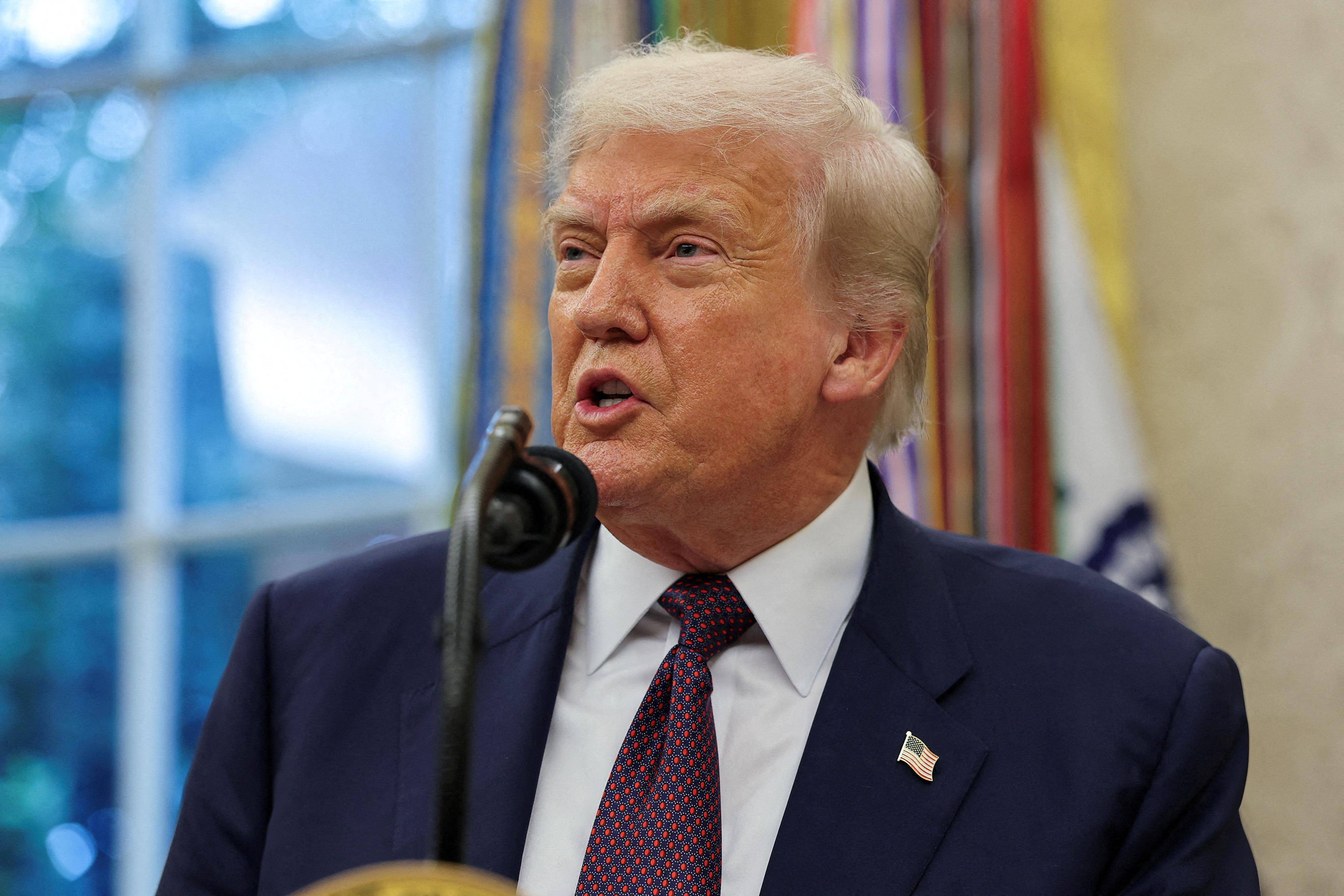
Group 1 - The core issue revolves around Trump's recent threats to impose tariffs on China, following his decision to increase tariffs on India to 50%, which could severely impact US-India trade relations [1][4] - India's response to US sanctions has been relatively passive, with Modi's government seeking negotiations rather than confrontation, indicating India's economic vulnerability [4][5] - The US's stance is that India's support for Russia through oil purchases undermines the US-European alliance, leading to economic repercussions for India [7][8] Group 2 - Despite facing sanctions, India has benefited economically from discounted Russian oil, which it refines and exports, helping to control domestic inflation [7] - In contrast, China has not faced similar sanctions despite its significant oil purchases from Russia, highlighting a disparity in US policy towards these two nations [8][10] - China's economic strength and strategic position make it less susceptible to US pressure, as it has developed robust countermeasures against sanctions [10][11] Group 3 - The complex relationships among China, the US, India, and Russia are characterized by intertwined interests, with China advocating for mutual development and trade [13] - India's realization of the potential benefits of repairing relations with China amidst US pressures reflects a shift in its strategic considerations [11][13]

马来西亚业界发愁:跟美国谈的这2400亿美元,扛不住啊
Sou Hu Cai Jing· 2025-08-06 03:36
Core Points - Malaysia has committed to a significant procurement and investment agreement with the U.S., amounting to $240 billion over the next decade, which raises concerns about its financial implications [1][3] - The agreement includes purchasing Boeing aircraft, coal, and telecommunications equipment, with a focus on sectors like semiconductors and aerospace [3] - Analysts suggest that Malaysia may need to reallocate investments from other countries to meet this commitment, potentially impacting its fiscal health [1][4] Group 1: Agreement Details - Malaysia will spend up to $150 billion on equipment from U.S. multinational companies over the next five years [3] - The country plans to invest $70 billion in the U.S. over ten years, with specific purchases including $19 billion for Boeing aircraft and $3.4 billion annually for liquefied natural gas [3] - The total commitment of $240 billion exceeds Malaysia's current trade surplus with the U.S. of $25 billion [1][3] Group 2: Economic Implications - Concerns have been raised about the potential need for Malaysia to utilize national funds to finance these commitments, which could strain public finances [3][6] - Experts recommend leveraging government-linked investment entities, such as the Employees Provident Fund and Khazanah Nasional, to support financing [4] - The agreement may provide opportunities for Malaysian companies to secure favorable contracts in the U.S. market, contingent on strong private sector motivation and sound financing structures [6]

不顾特朗普关税威胁,莫迪高级助手将访俄
Zhong Guo Xin Wen Wang· 2025-08-05 13:38
Core Viewpoint - Despite threats from US President Trump to impose significant tariffs on India due to its purchase of Russian oil, senior aides to Indian Prime Minister Modi are proceeding with planned visits to Russia [1][2]. Group 1: Diplomatic Engagements - Indian National Security Advisor Doval is scheduled to visit Russia this week, and Indian Foreign Minister Jaishankar will also visit later this month as part of annual routine consultations that were pre-arranged [2]. - The Indian Ministry of External Affairs did not respond to requests for comments regarding these visits [5]. Group 2: US-India Relations - Trump expressed concerns on social media about India's substantial purchases of Russian oil, claiming that India is profiting by selling much of this oil on the open market, and threatened to significantly increase tariffs on India [5]. - In response, the Indian Ministry of External Affairs stated that importing Russian oil is essential for ensuring stable and affordable energy supplies for Indian consumers, emphasizing that India will take necessary measures to protect its national interests and economic security [5]. Group 3: Russian Perspective - The Kremlin criticized Trump's remarks, asserting that sovereign nations have the right to choose their trade partners and that pressuring countries to sever trade ties with Russia is inappropriate [5].

特朗普:我不在乎印度与俄罗斯做什么,与印度贸易很少,他们是世界上最高的关税之一!俄罗斯和美国几乎没有什么贸易往来
Ge Long Hui· 2025-07-31 04:27
Group 1 - The core viewpoint expressed is that Trump is indifferent to the trade relations between India and Russia, emphasizing that trade with India is minimal due to high tariffs, which are among the highest in the world [1] - Trump also notes that there is almost no trade between the United States and Russia, suggesting a preference to maintain the current state of limited trade interactions [1]

澳洲联储降息预期悬而未决
Jin Tou Wang· 2025-07-28 03:38
Group 1 - The Australian dollar (AUD) is currently trading at 0.6573 against the US dollar, with a slight increase of 0.13%, as investors await key economic data including the second quarter CPI and the Federal Reserve's interest rate decision [1] - The preliminary PMI for July in Australia has risen, indicating accelerated economic activity across various sectors, which has improved the macroeconomic outlook [1] - The current annual CPI for June stands at 2.1%, nearing the lower limit of the Reserve Bank of Australia's (RBA) inflation target range of 2%-3%. A further slowdown in inflation could increase pressure on the RBA to ease monetary policy [1] Group 2 - The market anticipates that the RBA will cut interest rates in mid-August and again in November, although RBA Governor Michelle Bullock has downplayed the significance of the June unemployment rate rising to 4.3%, suggesting a more hawkish stance than the market expects [1] - The Australian dollar is sensitive to trade relations, particularly with China, and upcoming manufacturing PMI data from China could impact demand for Australian raw materials, thereby influencing the AUD [2] - Technical analysis indicates that the AUD/USD trading range is between 0.6545 and 0.6585, with support levels at 0.6505-0.6455 and resistance around 0.66875. A potential technical correction may occur if the AUD touches the upper Bollinger Band [2]
爱出口商克服全球障碍实现创纪录增长
Shang Wu Bu Wang Zhan· 2025-07-24 18:18
Core Insights - Enterprise Ireland reported record export performance for Irish companies in 2024, with exports reaching €36.75 billion, a 7% increase from the previous year [1][2] Group 1: Export Performance - Exports to Europe grew by 4% to €10.63 billion, surpassing the UK for the first time as the largest export region [1] - Exports to the UK reached €10.52 billion, a 4% year-on-year increase, marking the first time exceeding €10 billion [1] - Exports to the US amounted to €6.66 billion, with non-food exports contributing €5.61 billion [1] Group 2: Sector Performance - Food and sustainable products exports increased by 5% to €16.25 billion [2] - Non-food exports rose by 8% to €20.5 billion, with industrial and life sciences exports growing by 9% to €11.46 billion [2] - High-tech construction exports surged by 20% to €4.66 billion [2] - Technology and services sector grew by 7% to €9.05 billion, with digital technology exports increasing by 9% to €3.16 billion [2] Group 3: Employment and Economic Impact - Companies supported by Enterprise Ireland employed a record 234,454 individuals in 2024 [2] - These companies contributed significantly to the Irish economy, with total spending of €42.65 billion, including €13 billion in wage expenditures [2]
墨西哥农业部官员:美征收番茄税 受损的不止墨农户
news flash· 2025-07-20 08:06
Core Viewpoint - The recent imposition of a 17.09% tariff on Mexican tomatoes by the United States is expected to adversely affect not only Mexican farmers but also the broader agricultural trade relationship between the two countries, leading to increased prices for American consumers and potential economic contraction [1] Group 1: Impact on Mexican Farmers - The tariff will significantly harm the interests of Mexican tomato growers, leading to a notable decrease in export volumes to the United States [1] - The agricultural trade relationship between Mexico and the U.S. is being undermined, which could have long-term implications for bilateral trade stability [1] Group 2: Effects on U.S. Consumers - American consumers will face two main challenges: rising tomato prices and economic contraction, which may force them to cut back on spending [1] - The increase in prices for essential food items like tomatoes could contribute to further inflation in the U.S. economy [1] Group 3: Market Demand and Supply - Preliminary assessments indicate that U.S. demand for tomatoes is expected to decline by approximately 25% due to the tariff [1] - The overall supply and demand dynamics in the tomato market are projected to decrease simultaneously, affecting both countries [1]
19%!与美国达成关税协议,印尼国内舆论对此反应不一
Huan Qiu Shi Bao· 2025-07-17 00:26
Group 1 - Indonesia has reached an agreement with the United States to reduce tariffs on Indonesian goods from 32% to 19% [1] - The agreement includes commitments from Indonesia to purchase $15 billion worth of energy products, $4.5 billion in agricultural products, and 50 Boeing aircraft from the U.S. [1] - The Indonesian President Prabowo expressed that the country has reached its bottom line in negotiations and cannot make further concessions [1] Group 2 - The new tariff rate for Indonesia is lower than that of Vietnam and other Southeast Asian countries, which has surprised the Vietnamese government [2] - Domestic reactions in Indonesia are mixed, with fishing industry workers expressing concerns over the increase from zero to 19%, while the textile industry welcomes the new rate as it is more favorable compared to higher tariffs faced by competitors like Vietnam and Bangladesh [2]