
具身智能

Search documents
2026年-两会-未来能源-具身智能产业政策专题
2026-03-20 02:27
Summary of Conference Call Records Industry Overview - The conference call discusses the future energy and embodied intelligence sectors, highlighting their inclusion in the "14th Five-Year Plan" as key future industries, with a focus on controllable nuclear fusion, new batteries, and green hydrogen [1][2][3]. Key Points and Arguments Future Energy Sector - The government report for 2026 emphasizes the completion of major wind and solar projects, with new energy storage capacity exceeding 130 million kilowatts and non-fossil energy consumption reaching 21.7% [2]. - The report introduces a national low-carbon transition fund aimed at fostering hydrogen energy and green fuels, indicating a growing emphasis on these areas [2][3]. - The "14th Five-Year Plan" outlines 109 major projects, with 17 related to future energy and embodied intelligence, representing over 15% of the total [1][3]. Embodied Intelligence Sector - The global shipment of humanoid robots is projected to reach approximately 18,000 units by 2025, focusing on high-risk rescue and repair applications in B2B scenarios, and elderly care and medical assistance in B2C scenarios [1][4][5]. - Industry representatives suggest enhancing policies for autonomous driving, including a shift from L2 to L4 levels, and establishing standards for humanoid robots [4][5]. Investment Insights Nuclear Fusion - The investment logic for nuclear fusion indicates that while core market targets are clear, the commercialization cycle for primary market players is lengthy, making revenue and profit predictions challenging [6][7]. - Opportunities exist in core components, particularly in areas like divertors, which remain underexplored by the market [6][7]. Hydrogen Energy - The hydrogen sector is experiencing a mismatch between its industrial heat and capital market interest, characterized by a "hot industry, cold capital" phenomenon [6][7]. - The anticipated wave of IPOs for leading hydrogen companies is expected around 2030, supported by a national fund focused on low-carbon transitions [7]. Additional Important Insights - Industry representatives propose various recommendations, including the establishment of a national-level fusion manufacturing innovation center and enhanced financing support for private enterprises in the hydrogen sector [3][4]. - The humanoid robot industry is expected to transition from small-scale applications to broader market penetration during the "14th Five-Year Plan" period, with a focus on high-value tasks [5]. This summary encapsulates the critical insights from the conference call, providing a comprehensive overview of the future energy and embodied intelligence sectors, along with investment opportunities and challenges.
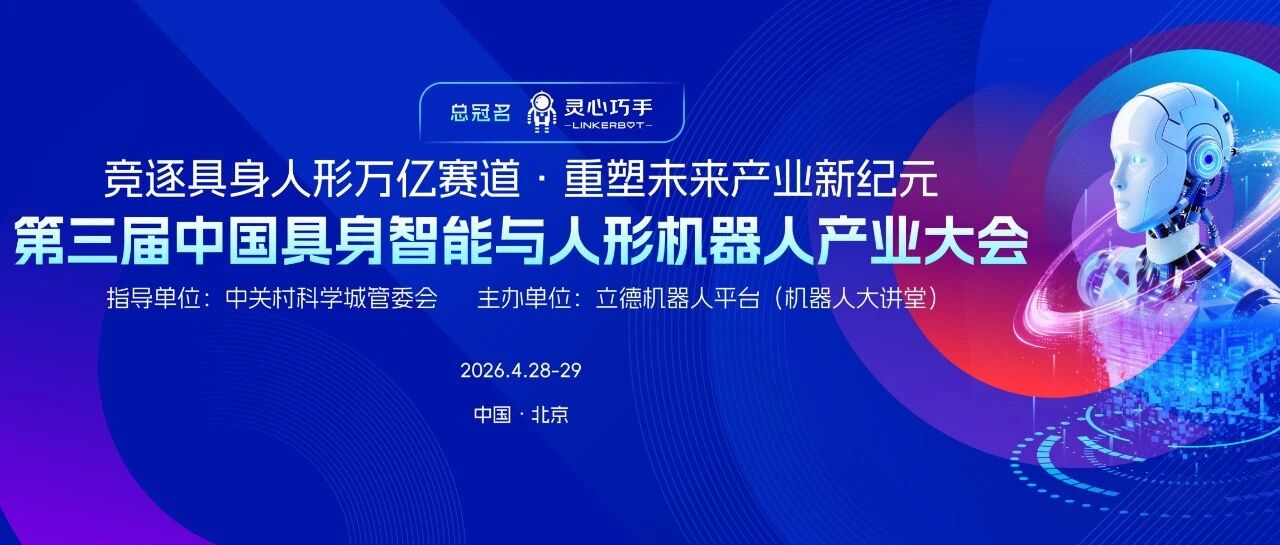
大会开幕式产业联合发布环节征集 | 抢占具身智能“话语权”,见证核心成果首发
机器人大讲堂· 2026-03-20 01:11
Core Insights - The industry is at a critical turning point for commercialization, with significant capital investment and accelerated order releases in the field of embodied intelligence and humanoid robots [4][5]. - Major financing rounds have been completed by key players, such as Galaxy General Robotics and Songyan Power, amounting to 2.5 billion yuan and nearly 1 billion yuan respectively [3]. - The upcoming third China Embodied Intelligence and Humanoid Robot Industry Conference aims to provide a premier platform for companies to showcase their breakthroughs and connect with decision-makers [6][7]. Group 1: Industry Developments - Capital is aggressively entering the market, leading to rapid growth opportunities in the embodied intelligence industry [4][5]. - The conference will feature a "2026 Embodied Intelligence and Humanoid Robot Industry Joint Release" segment, focusing on new product breakthroughs, landmark applications, and core component localization [6]. - The event is expected to attract over 2,000 industry experts, decision-makers, and investors, facilitating direct engagement with key stakeholders [11]. Group 2: Conference Highlights - The conference will include three main release segments: new robot products, breakthrough application results, and core component localization achievements [9][14]. - Companies with significant technological advancements or successful application cases are encouraged to participate, enhancing their visibility and market positioning [10][12]. - The event will also provide opportunities for brand exposure through media coverage and networking with industry leaders [11][12]. Group 3: Participation and Opportunities - Limited slots are available for companies wishing to present their innovations, emphasizing the competitive nature of the event [16]. - The conference will feature various activities, including forums, exhibitions, award ceremonies, and talent recruitment, aimed at fostering collaboration and resource sharing within the industry [16]. - Early bird tickets are available, offering access to all conference activities and exclusive industry reports [24][25].

员工曝宇树对外标榜弹性双休,内部却是另一套规则,非常卷;永辉喊话山姆不要让供应商二选一,业内人士称他们在躲永辉;傅盛开撕周鸿祎
雷峰网· 2026-03-20 00:38
Group 1 - Yushun Technology, a leading player in the robotics sector, is facing internal criticism for promoting a flexible work schedule while enforcing long working hours, with employees reporting an average of 12 hours a day and frequent all-nighters during project periods [4][5] - Yonghui Supermarket has publicly urged Sam's Club not to force suppliers into exclusive agreements, claiming that suppliers are avoiding Yonghui due to its declining performance and ongoing losses, with a projected net loss of 2.14 billion yuan for 2025, a 45.6% increase year-on-year [7] - A woman lost 300,000 yuan after pre-ordering a Ferrari from a dealer that went bankrupt, with the new dealer refusing to honor the previous agreement and selling the car to someone else [9][10] Group 2 - Lei Jun announced the launch of the new Xiaomi SU7, which has seen a cost increase of approximately 20,000 yuan compared to the first generation, but the price for consumers has only risen by 4,000 yuan, with the new model featuring over 100 upgrades [14][15] - The Coconut Group is seeking to procure 50 humanoid robots capable of processing over 360 coconuts per hour for its automated production line, emphasizing efficiency and quality in the coconut processing industry [17] - Xia Zhongpu, the former head of end-to-end driving at Li Auto, is set to join a prominent startup in the embodied intelligence sector, marking a significant shift in the autonomous driving landscape [19][20] Group 3 - Alibaba reported a revenue of 284.84 billion yuan for Q3 of the 2026 fiscal year, with a 9% year-on-year growth, driven by strong performance in its cloud services and AI-related products [22] - Meituan clarified that a rider claiming to be a Peking University graduate had only completed five deliveries, highlighting the ease of registration for riders without mandatory educational verification [23][24] - NIO's self-developed chips have surpassed 550,000 units in production, with the company addressing challenges in the automotive semiconductor industry through self-research and standardization efforts [32] Group 4 - Tesla's CEO Elon Musk stated that the AI6 chip is expected to complete its tape-out by December, aiming to match the performance of dual AI5 chips, with significant advancements anticipated in AI applications [45][46] - Nikon is facing a projected loss of 85 billion yen for the 2025 fiscal year, primarily due to its failing lithography business, which has seen a drastic decline in market share and competitiveness [51][52] - Lantu Automotive has officially listed on the Hong Kong Stock Exchange, becoming the first high-end new energy vehicle stock from a central state-owned enterprise, with its stock price experiencing a significant drop on debut [54][55]






三星前技术专家创业,为机器人做端侧「通信小脑」,获千万级融资|早起看早期
36氪· 2026-03-20 00:10
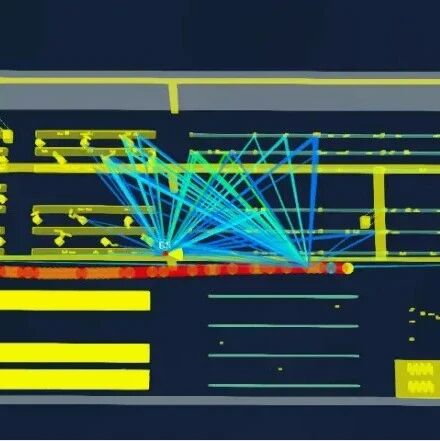
Core Viewpoint - Qianjing Technology has completed a Pre-A round financing of tens of millions of RMB, focusing on developing a "Connectivity Brain" model to enhance communication capabilities in complex physical environments for robots and unmanned systems [5][9]. Group 1: Company Overview - Qianjing Technology aims to address the "disconnection and stagnation" issues faced by embodied intelligence in real-world scenarios, shifting the focus from "action capability" to "connection capability" [4][5]. - The company’s technology includes wireless environment twin perception and edge communication decision models, utilizing ray tracing to simulate electromagnetic signal propagation in real spaces [6]. Group 2: Technology and Innovation - The company has developed a "Connectivity Brain" AI model that dynamically adjusts communication strategies based on real-time network conditions, ensuring stable data transmission even in weak signal areas [6][8]. - The data generation efficiency of Qianjing Technology's models matches that of 5G/6G systems, with a data generation cycle of approximately 500 microseconds per frame [6]. Group 3: Commercialization and Future Plans - Prior to this financing, the company focused on commercializing its wireless environment twin capabilities, which have been applied in communication testing scenarios for mobile chip manufacturers and automotive companies [8]. - The company plans to advance the 1.0 version of the Connectivity Brain model and complete the engineering development of edge hardware modules post-financing [9].
2026LOG中国供应链物流创新科技报告
Sou Hu Cai Jing· 2026-03-19 15:36
Core Insights - The report focuses on the transformation of the supply chain logistics industry driven by AI, emphasizing smart, digital, and automated solutions [1][4] - Key global trends include generative AI, supply chain cybersecurity, ESG, and sustainable development, with a focus on eight technological trends for 2024 [1][7] - The report outlines a development framework for China that integrates AI technology, digitalization, and automation, highlighting the deployment of large models and intelligent decision-making products by companies like JD.com and SF Express [1][4] Global Supply Chain Trends - The supply chain logistics industry is undergoing unprecedented changes due to the dual forces of global supply chain restructuring and digital technology revolution [4] - AI is reshaping value creation in supply chains through intelligent decision-making, digital connectivity, and automated execution [4][11] - The 2024 supply chain technology trends emphasize the importance of AI-driven technologies, cybersecurity, and sustainability [7][11] AI Technology Integration - The report aims to provide a comprehensive view of AI technology implementation in the supply chain logistics sector, offering strategic insights for decision-makers and innovators [5] - AI technologies are expected to enhance efficiency and create value through applications in demand forecasting, inventory optimization, and risk management [4][5] - The integration of AI agents and multi-agent collaboration is anticipated to improve task execution and resource allocation in complex environments [31][33] Industry Developments - Major companies are actively exploring AI applications, with significant advancements in autonomous vehicles, drones, and warehouse automation [1][36] - The establishment of industry alliances focused on large model applications indicates a collaborative approach to innovation in logistics [36][38] - The report highlights the emergence of multi-modal large language models (MLLMs) and embodied intelligence as key trends in AI development for logistics [26][33]

【太平洋科技-每日观点&资讯】(2026-03-20)
远峰电子· 2026-03-19 15:05
Market Overview - Major indices showed declines with ChiNext Index down by 1.11%, Shanghai Composite Index down by 1.39%, Shenzhen Component Index down by 2.02%, STAR Market 50 down by 2.44%, and North Exchange 50 down by 3.33% [1] - TMT sector led the gainers with SW discrete devices up by 0.77% and SW communication application value-added services up by 0.46% [1] - TMT sector faced losses with SW integrated circuit packaging and testing down by 3.40%, SW other electronics III down by 3.36%, and SW digital chip design down by 3.23% [1] Domestic News - In semiconductor materials and equipment, Rongda Photoelectric announced that its first high-end photoresist dry film production line is expected to be completed and enter trial production in the second half of 2026, with no specific orders yet [1] - NAND flash memory giant Kioxia officially announced the cessation of all TSOP packaging products, indicating a complete exit from the low-capacity MLC NAND market [1] - Chipsea Technology stated that due to significant increases in global upstream core materials and key precious metals, costs for wafers and packaging have risen sharply, leading to a price increase of 10%-20% for related product models [1] - Alibaba's CEO Wu Yongming indicated that Alibaba has formed a complete full-stack AI capability from AI infrastructure to applications, accelerating the development of its MaaS platform, with token consumption on the platform increasing sixfold over the past three months [1] Overseas News - According to TrendForce, the semiconductor industry is expected to grow by 24.8% year-on-year in 2026, reaching approximately $218.8 billion, driven by investments from North American cloud service providers and AI startups [2] - Samsung Electronics plans to invest over 110 trillion KRW in facilities and R&D this year, a more than 20% increase from the previous year, and is also pursuing large-scale acquisitions in future growth areas [2] - Global OLED manufacturers are transitioning from existing 6th generation panels to investing in 8.6 generation panels, with significant investments planned by Korean and Chinese companies starting from 2024 [2] - MPS, an analog chip manufacturer, announced a price increase for certain power management and analog chips due to rising costs across the supply chain, effective from May 1, 2026 [2] AI News - Xiaomi launched three self-developed large models, with MiMo-V2-Pro having over 1 trillion parameters and ranking 8th globally and 2nd domestically in the Artificial Analysis leaderboard [3] - MiniMax released the M2.7 large model, which has self-evolution capabilities and can participate in its own training optimization [3] - NVIDIA is transitioning from a chip manufacturer to a full-stack AI lab, planning to invest $26 billion in R&D for open-source large models over the next five years [3] - MuleRun launched a product that allows users to operate without installation, featuring 24/7 cloud operation capabilities and core features like self-evolution and proactive engagement [3] Industry Tracking - Beijing Mirror Shield Technology, a commercial space domain awareness service provider, announced the completion of nearly 10 million yuan in angel financing to expand its global optical observation network [4] - A Chinese research team revealed a new theoretical framework for high-performance brain-computer interfaces (BCI) based on the encoding rules of the brain's motor cortex for handwriting actions [4] - EmboX launched China's first bookable home cleaning robot service, marking a significant step for embodied intelligence into household applications [4] - Wanyuantong's annual report indicated that its factory in Thailand is expected to start production in Q3 2026, gradually expanding its capacity to support overseas customers [4] High-Frequency Data Updates - Semiconductor material prices have shown fluctuations, with 4N zinc oxide powder priced at 1.725 yuan/kg, and 5N zinc oxide powder at 1,905 yuan/kg, reflecting daily changes [5]

第二届具身智能机器人发展大会在天津成功举行——聚焦场景驱动与量产突围,共探产业发展新动能
机器人圈· 2026-03-19 14:56
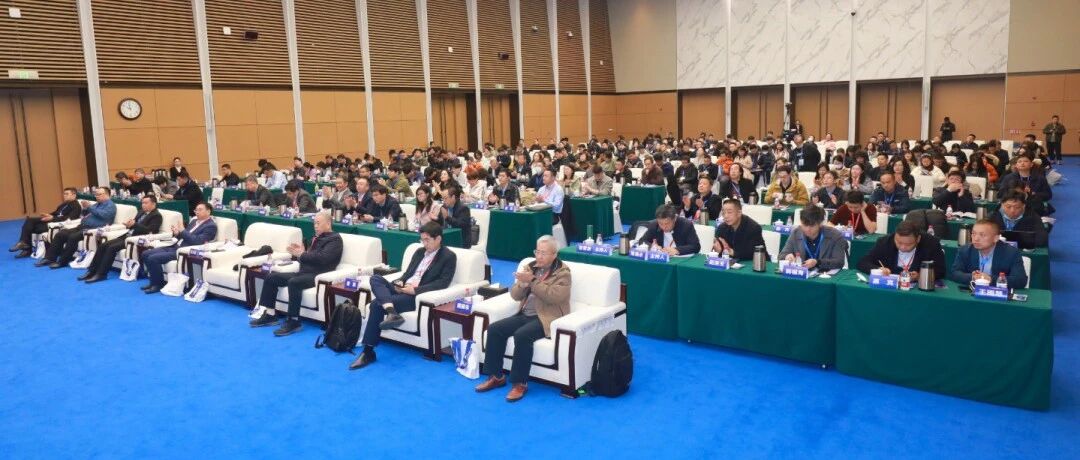
Core Viewpoint - The second Embodied Intelligence Robot Development Conference held in Tianjin focuses on "scene-driven, mass production breakthrough: unlocking new momentum for the development of embodied intelligence" and aims to explore cutting-edge technologies, industrial paths, and future trends in embodied intelligent robots [2]. Group 1: Conference Overview - The conference gathered over 400 experts, scholars, industry leaders, and representatives from various sectors to discuss the advancements in embodied intelligent robots [2]. - The event was co-hosted by multiple institutions including the China Electromechanical Integration Technology Application Association and several universities, receiving strong support from various organizations and government bodies [2]. Group 2: Opening Remarks - Key figures such as Wang Tianyou, Vice President of Tianjin University, emphasized the critical leap from technological breakthroughs to industrial implementation in embodied intelligence, highlighting the need for collaborative innovation among government, industry, academia, and research [4]. Group 3: Keynote Presentations - Experts discussed the evolution of intelligent technology, indicating a shift from automation to cognitive intelligence in robotics, which will reshape the industry landscape [7]. - Insights were shared on the integration of robotics with biotechnology, showcasing breakthroughs in life sciences through high-precision operations [7]. Group 4: Industry Applications and Challenges - Discussions included the importance of system-level safety architecture for the scalability of the industry and the need for collaborative talent cultivation between academia and enterprises [9]. - The practical value of robotic technology in complex environments was highlighted, along with the demand for embodied intelligence in high-end manufacturing scenarios [12]. Group 5: Future Outlook - The conference concluded with a consensus on the ongoing challenges faced by embodied intelligent robots, such as adapting to complex environments and overcoming technical bottlenecks, which drive continuous innovation in the industry [13]. - The event served as a high-level platform for collaboration in the field of embodied intelligent robots, with expectations for significant contributions to industrial transformation and social development in the future [13].
【2025年四季报点评/理想汽车】业绩符合预期,构建具身智能完整AI系统
东吴汽车黄细里团队· 2026-03-19 14:15
Core Viewpoint - The article discusses the financial performance and strategic adjustments of Li Auto, highlighting short-term revenue pressures and ongoing organizational and technological innovations aimed at enhancing its core competitiveness in embodied intelligence [3][4][5]. Financial Performance - In Q4 2025, Li Auto achieved revenue of 28.78 billion yuan, with a year-over-year decline of 35.0% and a quarter-over-quarter increase of 5.2%. The automotive sales revenue was 27.25 billion yuan, down 36.1% year-over-year but up 5.4% quarter-over-quarter [3]. - The total vehicle deliveries in Q4 2025 reached 109,000 units, reflecting a year-over-year decrease of 31.2% but a quarter-over-quarter increase of 17.1%. The average selling price (ASP) per vehicle was 250,000 yuan, down 7.1% year-over-year and 10.1% quarter-over-quarter, primarily due to an increased sales proportion of lower-priced models [3]. - The net profit attributable to the parent company was 20 million yuan, returning to profitability quarter-over-quarter, while the Non-GAAP net profit was 270 million yuan, with a per-vehicle profit of 300 yuan, down 90% year-over-year due to changes in product structure [3]. Profitability and Cost Management - The company's gross margin in Q4 2025 was 17.8%, down 2.5 percentage points year-over-year but up 1.5 percentage points quarter-over-quarter. The gross margin for vehicle sales was 16.8%, down 2.9 percentage points year-over-year but up 1.3 percentage points quarter-over-quarter, mainly due to declining sales and an increased proportion of lower-priced models [4]. - In terms of cost control, the R&D expense ratio and SG&A expense ratio for Q4 2025 were 10.5% and 9.2%, respectively, with year-over-year increases of 5.0 and 2.2 percentage points, while remaining stable quarter-over-quarter [4]. Strategic Initiatives - The company is committed to deepening organizational innovation and technological self-research to solidify its core competitiveness in embodied intelligence. Key initiatives include a major restructuring of the R&D system by January 2026, integrating various functions into four major systems [5][6]. - The talent strategy involves promoting younger employees to key positions and implementing profit-sharing mechanisms, with a goal of seeing significant improvements by Q3 2026 [6]. - Technological advancements include breakthroughs in the M100 chip, which has improved operational parameters and computational capacity significantly, leading to cost reductions of over 1,000 yuan per vehicle [6]. Revenue and Profit Forecast - The company maintains a revenue forecast of 138.1 billion yuan for 2026, representing a year-over-year increase of 23%. However, the revenue forecast for 2027 has been revised down to 173.7 billion yuan from the previous 191.2 billion yuan, reflecting a year-over-year increase of 26% [7]. - The net profit forecasts for 2026 and 2027 have been adjusted down to 30 million yuan and 2.8 billion yuan, respectively, with the 2028 net profit forecast set at 5.3 billion yuan, indicating a year-over-year increase of 86% [7].


国泰海通|机械:GTC 2026发布了一个完整的“机器人训练流水线”
国泰海通证券研究· 2026-03-19 14:05
Core Insights - NVIDIA is transitioning from technology exploration to engineering implementation and ecosystem development in the field of embodied intelligence by 2026, focusing on software models, simulation infrastructure, hardware deployment, and collaborative ecosystems [1][2]. Group 1: Investment Recommendations - GTC serves as a barometer for the development of embodied intelligence, marking the humanoid robot industry entering the "engineering implementation" phase [2]. - NVIDIA is building a robot version of the "CUDA ecosystem" to attract developers through Cosmos (data generation), Isaac (simulation training), and GROOT (robot base model), facilitating the commercialization of embodied intelligence and converting robot model training demands into DGX computing sales [2]. Group 2: Robotics Data and Training Strategies - Cosmos 3 integrates synthetic world generation, visual reasoning, and action simulation, automating the entire process from raw data to final training datasets [3]. - The release of Isaac Lab 3.0 beta features a new Newton physics engine 1.0 and NVIDIA PhysX® SDK, enhancing multi-physics simulation capabilities and support for complex dexterous operation scenarios [3]. Group 3: Computing Infrastructure and Ecosystem - The DGX™-AI training server platform is characterized by the integration of multiple high-end GPUs, NVLink high-speed interconnect, and optimization for AI training, allowing for the formation of GPU clusters [4]. - Collaborations with industry leaders such as 1X, Agility, Boston Dynamics, and others are focused on developing the next generation of humanoid robots using Cosmos world models, Isaac Sim, and Isaac Lab, accelerating robot development and validation processes [4]. - NVIDIA aims to promote the commercialization of humanoid robots by enhancing development efficiency, reducing costs, addressing data bottlenecks, and enabling thousands of simulated robots to run concurrently on NVIDIA DGX, thereby increasing training scale [4].


天准科技(688003):在手订单大幅增长,半导体明场检测加速推进:天准科技(688003):
Shenwan Hongyuan Securities· 2026-03-19 12:30
Investment Rating - The report maintains a "Buy" rating for the company [2] Core Insights - The company has seen a significant increase in orders, with new signed orders reaching 2.445 billion yuan in 2025, a year-on-year growth of 33.96%. The total backlog of orders as of December 31, 2025, is 1.435 billion yuan, with the largest growth coming from the embodied intelligence solutions segment, which includes humanoid robots and autonomous logistics [8] - The company's revenue for 2025 is projected to be 1.79 billion yuan, reflecting an 11% year-on-year increase, while the net profit attributable to the parent company is expected to be 79 million yuan, a decrease of 37% year-on-year. This performance aligns with market expectations [5][8] - The semiconductor front-end defect detection equipment is accelerating its introduction to customers, with significant progress made in the TB1500 detection equipment for 40nm process nodes, and a focus on 28nm process node equipment expected to yield orders from multiple clients [8] Financial Data and Profit Forecast - The company forecasts total revenue of 2.283 billion yuan for 2026, with a year-on-year growth rate of 27.5%, and 2.78 billion yuan for 2027, with a growth rate of 21.8% [7] - The projected net profit for 2026 is 153 million yuan, with a significant recovery expected in 2027 at 203 million yuan, reflecting a growth rate of 32% [7] - The company's gross margin is expected to stabilize around 39.5% to 40.3% from 2025 to 2027, with a return on equity (ROE) projected to improve from 3.9% in 2025 to 8.4% in 2027 [7] Market Position and Competitive Landscape - The company is a partner of NVIDIA's Jetson Thor platform, which positions it well in the growing field of embodied intelligence, particularly as demand for humanoid robot controllers increases [8] - The company's valuation is compared to peers, with a projected price-to-earnings (PE) ratio of 145 for 2025, 75 for 2026, and 56 for 2027, indicating a potential for growth as the semiconductor business is expected to achieve breakthroughs [8]
