
红利策略

Search documents
六连阳,历史新高!A股调整结束了吗?
天天基金网· 2025-06-23 11:05
Core Viewpoint - The A-share market has shown signs of recovery with all three major indices rising, and over 4,400 stocks experiencing gains, particularly in the new energy and banking sectors [1][2][4]. Market Performance - The banking sector has outperformed other industries this year, with a 12.73% increase, making it the best-performing sector [6][12]. - The Industrial and Commercial Bank of China (ICBC) has achieved six consecutive days of gains, reaching a historical high with a market capitalization of 2.68 trillion yuan [9][12]. Investment Trends - Analysts predict a potential upward trend in the A-share market for the second half of the year, driven by a new round of supply-side reforms [5]. - The banking sector's rise is attributed to high dividend yields and low valuations, attracting continuous capital inflow amid increasing risk aversion [13][22]. Institutional Insights - The Chinese government has announced the issuance of 500 billion yuan in special bonds to support major banks, which is expected to mitigate the impact of interest rate cuts on net interest margins [14]. - Public funds have increased their holdings in bank stocks, with the market value reaching 184.15 billion yuan, up nearly 100% from the end of 2023 [16]. Foreign Investment - Southbound capital has also been actively investing in Hong Kong bank stocks, with net inflows exceeding 700 billion yuan this year, including 136.5 billion yuan specifically in bank stocks [19]. Valuation Analysis - The banking sector's valuation has dropped below 5 times earnings, indicating a potential for upward adjustment similar to past trends observed in 2014 [21]. - The current average valuation of the banking sector stands at 7 times earnings, suggesting room for growth [21]. Strategic Recommendations - In a narrow trading range, a "dividend + technology" strategy is recommended, focusing on low-valuation, stable-earning stocks for safety, while also investing in technology sectors that are experiencing rapid innovation [28].



广发中证智选高股息策略ETF(159207):聚焦高息资产,把握低风险下高确定性
Changjiang Securities· 2025-06-23 09:14
Group 1 - The core viewpoint of the report emphasizes the investment value of high-dividend strategies, particularly through the Guangfa CSI Select High Dividend Strategy ETF (159207), which focuses on high-yield assets while maintaining low risk and high certainty [4][10][11] - The CSI Select High Dividend Strategy Index selects 50 companies with a history of continuous dividends and high cash dividend proposals, achieving an annualized return of 13.37% from December 31, 2005, to June 11, 2025, outperforming major indices like CSI 500 and CSI 300 [4][10][51] - The report highlights the ongoing policy support for increasing cash dividends among listed companies, which is expected to benefit high-dividend strategies [8][33][34] Group 2 - The report discusses the effectiveness of high-dividend strategies, noting that they provide strong liquidity and stable returns for investors, while also reflecting the operational health of companies [19] - In a low-interest-rate environment, high-dividend products become more attractive, with the 10-year government bond yield declining significantly, enhancing the appeal of high-dividend assets [20][23] - The CSI Select High Dividend Strategy Index has shown lower volatility compared to broad market indices, indicating its defensive characteristics during market fluctuations [54]
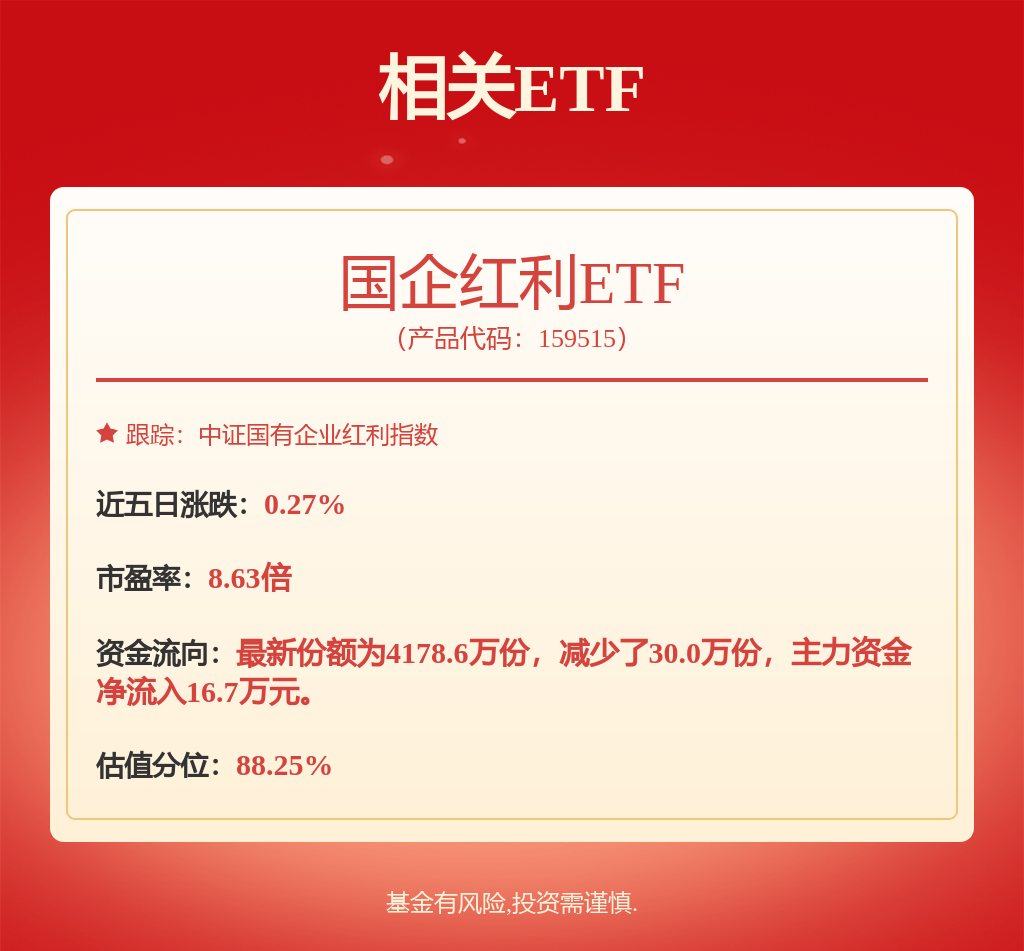
以伊紧张局势牵动原油市场,国企红利ETF(159515)涨0.27%
Sou Hu Cai Jing· 2025-06-23 05:46
Group 1 - The core viewpoint of the news highlights the impact of geopolitical tensions in Iran on global oil prices, particularly the potential closure of the Strait of Hormuz, which could lead to significant increases in oil prices [1][2] - As of June 23, Brent crude oil has risen by 20.6% this month, reaching $76.9 per barrel, the highest since February [1] - JPMorgan and Goldman Sachs have provided forecasts indicating that if the Strait of Hormuz is blocked, oil prices could spike, with Goldman Sachs predicting a potential peak of $110 per barrel if oil flow is significantly reduced [1] Group 2 - The National Enterprise Dividend Index (code 000824) combines themes of state-owned enterprises and dividend strategies, enhancing the effectiveness of investment strategies [2] - The National Enterprise Dividend ETF (159515) tracks the National Enterprise Dividend Index, which is expected to benefit from ongoing reforms in state-owned enterprises, improving profitability and operational efficiency [2] - The ETF is recommended for active consideration as it selects high-quality state-owned enterprises with strong profitability and low valuations [2]
连续3个交易日净流入,红利低波ETF(512890)周度规模增长9.6亿,创年内新高
Xin Lang Ji Jin· 2025-06-23 05:13
Group 1 - The market experienced a downward trend from June 16 to June 20, driven by geopolitical tensions affecting short-term risk appetite, leading to increased interest in defensive dividend strategies [1] - During this period, dividend-themed ETFs attracted a total of 1.369 billion yuan, with the Dividend Low Volatility ETF (512890) seeing net inflows for four out of five trading days, accumulating 755 million yuan [1] - The Dividend Low Volatility ETF (512890) reached a record high in fund size, achieving 6.42 million units and 963 million yuan in weekly growth, with a total fund size of 18.423 billion yuan as of June 20 [1] Group 2 - The Dividend Low Volatility ETF (512890) has demonstrated strong market adaptability since its inception, with an annualized return of 13.82% as of June 20, making it increasingly attractive to investors [2] - This ETF tracks an index comprising 50 stocks known for consistent dividends, high dividend yields, and low volatility, providing investors with opportunities in high-dividend, low-valuation assets [2] - The ETF's linked funds have also gained popularity, with 829,800 holders as of the end of 2024, making it one of the few dividend-themed index funds with over 800,000 holders [2] Group 3 - In addition to the Dividend Low Volatility ETF (512890), Huatai-PineBridge has developed a range of five dividend-themed ETFs, including the first dividend ETF (510880) and a QDII mode ETF for Hong Kong stocks (513530) [3] - As of June 20, the total management scale of Huatai-PineBridge's dividend-themed ETFs exceeded 41 billion yuan [3]
指数基金投资+:首批10只科创债ETF上报,推荐关注半导体ETF
Huaxin Securities· 2025-06-22 14:05
Quantitative Models and Construction Methods 1. Model Name: XinXuan ETF Absolute Return Strategy - **Model Construction Idea**: The strategy aims to achieve absolute returns and long-term relative returns against A-share equities by selecting and trading ETFs from the XinXuan ETF pool [11] - **Model Construction Process**: - The strategy uses the "drawer method" to test equity ETFs in the pool - Past three-year performance: annualized return of 14.23%, maximum drawdown of 8.6%, Sharpe ratio of 1.44 (in-sample) - 2024 YTD performance: total return of 34.07%, excess return of 19.64% over equal-weighted ETFs, Sharpe ratio of 1.18, maximum drawdown of 6.3%, volatility of 17.11%, Calmar ratio of 3.67 [11] - **Evaluation**: Demonstrates strong performance with low drawdowns and high Sharpe ratio [11] 2. Model Name: All-Weather Multi-Asset Multi-Strategy ETF Risk Parity Strategy - **Model Construction Idea**: Combines sector rotation, style rotation, and risk parity to enhance returns while reducing portfolio volatility [14][16] - **Model Construction Process**: - Asset allocation includes: - Commodities: Gold ETFs - US equities: S&P 500 ETFs - Domestic equities: sector/style/size rotation - Domestic bonds: 10-year and 30-year government bond ETFs [16] - Risk parity is applied to distribute assets effectively across different strategies and asset classes [16] - **Evaluation**: Improves precision in ETF usage and achieves effective diversification [16] 3. Model Name: China-US Core Asset Portfolio - **Model Construction Idea**: Combines trend-following RSRS strategy and technical reversal strategies for four strong-trend assets: Baijiu, dividends, gold, and Nasdaq [20] - **Model Construction Process**: - Annualized return since 2015: 33.77%, excess return of 13.16% over equal-weighted indices, Sharpe ratio of 1.64, maximum drawdown of 18.23%, volatility of 17.8% [20] - **Evaluation**: Outperforms equal-weighted indices with strong returns and moderate risk [20] 4. Model Name: High Growth/Dividend Rotation Strategy - **Model Construction Idea**: Rotates between high-growth and dividend strategies based on signals [23] - **Model Construction Process**: - High-growth signal: Allocates 50% to ChiNext ETF and 50% to STAR 50 ETF - Dividend signal: Allocates to Dividend Low Volatility ETF (pre-Feb 2024) and 50% to Dividend Low Volatility ETF + 50% to Central SOE Dividend 50 ETF (post-Feb 2024) - Annualized return since 2021: 19.44%, excess return of 21.51% over equal-weighted indices, Sharpe ratio of 0.88, maximum drawdown of 22.91%, volatility of 24.08% [23] - **Evaluation**: Strong returns but higher volatility and drawdowns [23] 5. Model Name: Dual Bond LOF Enhanced Strategy - **Model Construction Idea**: Enhances bond-heavy portfolios by adjusting weights based on volatility normalization [26] - **Model Construction Process**: - Divides assets into Dual Bond LOF and other products (aligned with China-US Core Asset Portfolio) - Calculates weekly returns and volatility for each group - Normalizes the inverse of volatility to determine weights, ensuring higher allocation to bonds due to lower volatility [26] - Annualized return since 2019: 6.73%, Sharpe ratio of 2.55, maximum drawdown of 2.42%, volatility of 2.55% [26] - **Evaluation**: Effectively reduces risk while maintaining competitive returns [26] 6. Model Name: Structured Risk Parity Strategy (QDII) - **Model Construction Idea**: Incorporates QDII products into a risk parity framework, focusing on domestic long-term bonds, QDII equities, gold, and domestic dividend ETFs [29] - **Model Construction Process**: - Asset allocation includes: - Commodities: Gold ETFs - QDII: Nasdaq, Nikkei, German, S&P, and other international ETFs - Domestic dividends: Bank ETFs, Dividend Low Volatility ETFs - Domestic bonds: 5-year, 10-year, and 30-year government bond ETFs - 2024 YTD performance: total return of 24.84%, maximum drawdown of 2.38%, volatility of 4.83%, Sharpe ratio of 2.87 [29] - **Evaluation**: Strong performance with low drawdowns and high Sharpe ratio [29] --- Model Backtest Results 1. XinXuan ETF Absolute Return Strategy - Total return: 34.07% - Annualized return: 23.08% - Maximum drawdown: -6.30% - Volatility: 17.11% - Sharpe ratio: 1.18 [32] 2. High Growth/Dividend Rotation Strategy - Total return: 53.14% - Annualized return: 35.23% - Maximum drawdown: -22.04% - Volatility: 33.88% - Sharpe ratio: 0.99 [32] 3. China-US Core Asset Portfolio - Total return: 61.21% - Annualized return: 40.24% - Maximum drawdown: -10.86% - Volatility: 16.79% - Sharpe ratio: 1.98 [32] 4. Dual Bond LOF Enhanced Strategy - Total return: 9.26% - Annualized return: 6.47% - Maximum drawdown: -2.26% - Volatility: 3.32% - Sharpe ratio: 1.30 [32] 5. Structured Risk Parity Strategy (QDII) - Total return: 24.84% - Annualized return: 17.01% - Maximum drawdown: -2.38% - Volatility: 4.83% - Sharpe ratio: 2.87 [32] 6. All-Weather Multi-Asset Multi-Strategy ETF Risk Parity Strategy - Total return: 19.84% - Annualized return: 13.67% - Maximum drawdown: -3.62% - Volatility: 4.39% - Sharpe ratio: 2.49 [32]
下半年A股怎么走?最新研判来了
Zhong Guo Ji Jin Bao· 2025-06-22 12:37
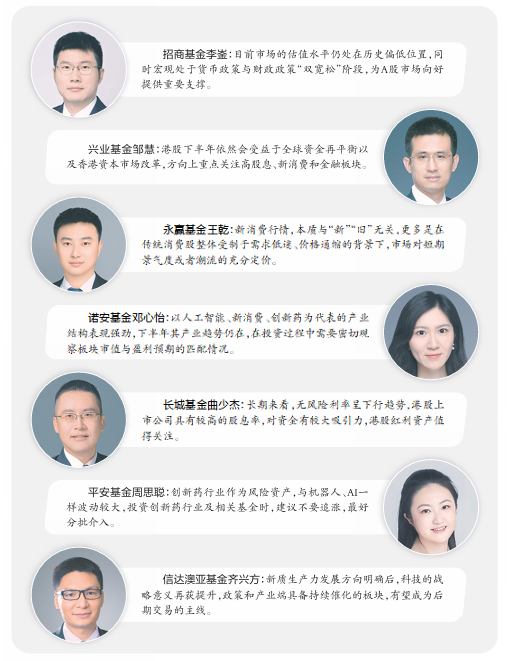
Core Viewpoint - Fund managers are optimistic about the A-share market in the second half of 2025, expecting a gradual upward trend supported by low historical valuation levels and a "double easing" monetary and fiscal policy [1][4][5]. Market Outlook - The overall market is anticipated to remain in a range-bound fluctuation, with key factors such as trade policies and counter-cyclical adjustments influencing the market [4][5]. - The A-share market is expected to experience a gradual upward shift, with the third and fourth quarters being critical periods to watch [4][5][6]. - The current valuation levels of the A500 index are at historical averages, indicating significant potential for upward movement [4][5]. Investment Strategies - A "barbell strategy" is favored, focusing on stable high ROE and high dividend assets on one end, and growth assets with valuation elasticity, particularly in the new productivity sectors represented by the Sci-Tech Innovation Board, on the other end [7][12]. - Specific sectors of interest include AI, new consumption, and innovative pharmaceuticals, which are expected to perform well due to favorable policies and market conditions [11][12][19]. Sector Focus - The technology sector, particularly AI and robotics, is expected to see significant growth, with structural bull markets anticipated in these areas [11][12]. - New consumption trends and the aging population are driving demand in service consumption and healthcare sectors, presenting new investment opportunities [11][12][19]. - The pharmaceutical sector, especially innovative drugs, is projected to benefit from increasing market demand and favorable policy support [11][12][19]. Investment Opportunities - There are structural investment opportunities in sectors that have not been fully priced in, such as certain small-cap pharmaceutical companies and high-dividend yielding assets [16][19]. - The potential for recovery in the Hong Kong market is noted, with opportunities in technology, new consumption, and financial sectors due to low valuations and high dividend yields [19][20]. Key Influencing Factors - The core factors influencing the stock market include macroeconomic conditions, policy environment, and industry development trends [25][26]. - External risks such as trade tensions, geopolitical conflicts, and global economic conditions are critical to monitor as they may impact market sentiment and performance [25][26].
资产配置,是对世界认知的一种表达
雪球· 2025-06-21 05:36
Core Viewpoint - The article emphasizes that asset allocation is a personal expression of one's understanding of the world, risk perception, and life goals, rather than merely a numerical game [2][4][5]. Group 1: Investment Tools and Strategies - Investors can utilize three main investment tools: asset allocation, stock selection, and market timing, with asset allocation accounting for over 90% of the volatility in institutional portfolio returns [2]. - Different investment strategies reflect individual preferences and risk tolerance, leading to diverse asset allocation choices among investors [3][4]. Group 2: Personalization of Investment Portfolios - Investment portfolios serve as a reflection of an individual's values and future aspirations, with choices influenced by personal experiences and environmental factors [3][5]. - The article highlights that there is no absolute right or wrong in investment choices, as they are based on different cognitive frameworks and risk perceptions [4]. Group 3: The Role of External Opinions - Investors often face pressure from external opinions, which can lead to unnecessary adjustments in their portfolios; successful investing relies on deep insights and steadfast beliefs rather than frequent trading [3]. - The article suggests that maintaining a clear understanding of one's investment philosophy can reduce the impact of external criticism [5]. Group 4: The Snowball Three-Factor Method - The Snowball Three-Factor Method promotes long-term investment through diversification across assets, markets, and timing, aiming for diversified sources of returns and risk mitigation [6].

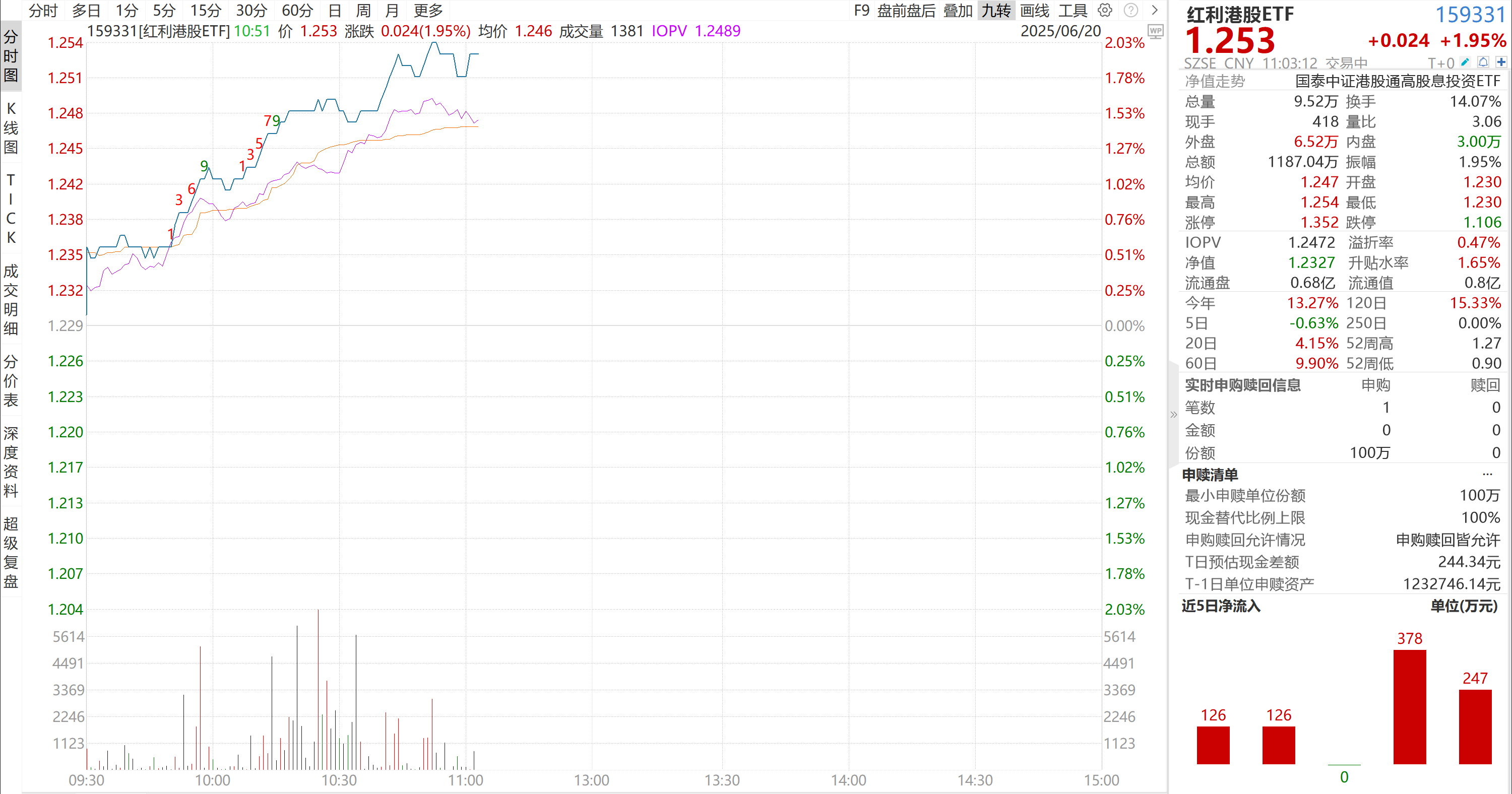
低利率时代高股息资产备受追捧,红利港股ETF(159331)盘中涨超1.9%,资金持续净流入
Mei Ri Jing Ji Xin Wen· 2025-06-20 03:42
Core Viewpoint - The strong performance of dividend assets in the Hong Kong market is driven by sustained net inflows from southbound funds, with a particular focus on high-dividend sectors like banking, as investors seek stability amid economic uncertainties [1][3][7]. Group 1: Market Performance - The Hong Kong dividend ETF (159331) saw an intraday increase of over 1.9%, reflecting ongoing investor interest and net inflows [1]. - Southbound funds have net purchased Hong Kong stocks for 17 consecutive days, with total purchases exceeding 696 billion HKD this year [1]. Group 2: Investment Trends - Institutional investors, particularly long-term funds like insurance capital, are showing a rigid demand for dividend assets, which supports price stability [3]. - The shift in asset allocation from growth to return-focused investments is evident as domestic interest rates decline [3]. Group 3: Index Performance - The CSI Hong Kong Stock Connect High Dividend Yield Total Return Index has the highest Sharpe ratio of 0.4754 among related dividend indices, indicating superior risk-adjusted returns [5]. - The index has demonstrated strong long-term compound returns and dividend reinvestment effects since 2017, outperforming other similar indices [3][5]. Group 4: Policy and Market Environment - Recent policies from the Hong Kong government, including stamp duty reductions and trading mechanism optimizations, aim to enhance market liquidity and attractiveness [7]. - The anticipated dividend tax reforms and improvements in international liquidity further enhance the appeal of dividend strategies in the current market environment [7].
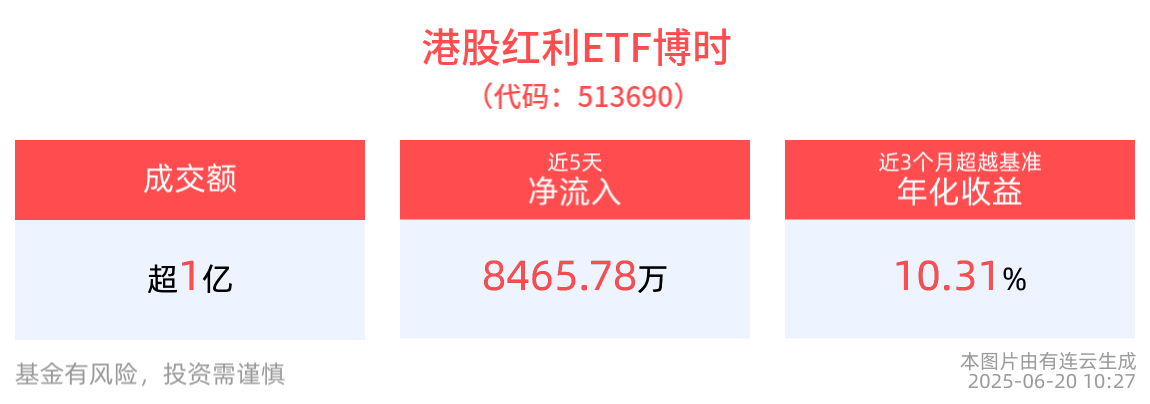
港股红利ETF博时(513690)成交额超1亿元,机构继续看好稳定股息的红利策略持续性
Xin Lang Cai Jing· 2025-06-20 02:41
Core Viewpoint - The Hang Seng High Dividend Yield Index (HSSCHKY) has shown positive performance, with key constituent stocks experiencing notable gains, indicating a favorable investment environment driven by policy adjustments and credit environment recovery [3][4]. Group 1: Market Performance - As of June 20, 2025, the HSSCHKY index increased by 0.54%, with significant gains from stocks such as China Coal Energy (3.23%) and Industrial and Commercial Bank of China (2.16%) [3]. - The BoShi Hang Seng High Dividend ETF (513690) reported a 0.30% increase, with a latest price of 1 yuan and a turnover rate of 2.41%, totaling 101 million yuan in transactions [3]. - Over the past week, the average daily transaction volume for the BoShi ETF was 201 million yuan [3]. Group 2: Fund Flows and Leverage - The BoShi ETF has seen a net inflow of 84.66 million yuan over the last five trading days, with an average daily net inflow of 16.93 million yuan [3][4]. - Leveraged funds have been actively buying into the BoShi ETF, with a maximum single-day net purchase of 336.62 thousand yuan, bringing the latest financing balance to 866.50 thousand yuan [4]. Group 3: Performance Metrics - The BoShi ETF has achieved a net value increase of 33.06% over the past two years, ranking 86 out of 2207 index equity funds [4]. - The ETF's highest monthly return since inception was 24.18%, with an average monthly return of 4.99% during rising months [4]. - As of June 19, 2025, the ETF's Sharpe ratio for the past month was 1.40, indicating strong risk-adjusted returns [4]. Group 4: Fee Structure and Tracking Accuracy - The management fee for the BoShi ETF is 0.50%, and the custody fee is 0.10% [4]. - The tracking error for the ETF over the past six months was 0.067%, demonstrating its effectiveness in tracking the HSSCHKY index [4]. Group 5: Top Holdings - The top ten weighted stocks in the HSSCHKY index account for 27.89% of the index, with notable companies including Yanzhou Coal Mining (0.64%) and Hang Lung Properties (0.30%) [5][7].
这些板块,抄底!
Zhong Guo Ji Jin Bao· 2025-06-19 05:11
Group 1 - On June 18, the total net inflow of industry-themed ETFs reached 1.042 billion yuan, with the total market size of 3.52 trillion yuan across 1,119 stock ETFs [1] - Notably, 14 stock ETFs had net inflows exceeding 100 million yuan, with the top performers being the Hang Seng Technology ETF and the Dividend Low Volatility ETF, each attracting over 300 million yuan [1] - The net inflow for ETFs tracking the Hong Kong Technology Index was 520 million yuan, while those tracking the Dividend and Non-Bank Financial Indexes saw inflows of 440 million yuan and 410 million yuan, respectively [1] Group 2 - Over the past five days, net inflows into the Sci-Tech 50 Index products exceeded 3.8 billion yuan, and the Hang Seng Technology Index products saw inflows over 2.7 billion yuan [2] - On June 18, the Huaxia Fund's Credit Bond ETF and Sci-Tech 50 ETF had net inflows of 2.923 billion yuan and 274 million yuan, respectively, with their latest sizes being 17.165 billion yuan and 81.987 billion yuan [2] Group 3 - On June 18, broad-based ETFs experienced slight outflows, indicating a potential shift in investor sentiment [3] - The low interest rate environment and weak economic recovery are seen as favorable for dividend strategies, with strong dividend capabilities from state-owned enterprises [3] - The performance of sectors such as precious metals and innovative pharmaceuticals is expected to remain relatively strong, despite potential inflationary pressures from increased tariffs [3]