新旧动能转换

Search documents
前三季度31省GDP预测:山东远超浙江,江西14,甘肃接近万亿
Sou Hu Cai Jing· 2025-10-05 06:51
Core Insights - The economic competition among Chinese provinces is intensifying, with a national GDP forecast to exceed 101.6 trillion yuan, reflecting a growth of 4.47% compared to the same period last year [1] Group 1: Economic Performance - Guangdong and Jiangsu remain the leaders in the economic rankings, both surpassing 8 trillion yuan in GDP, with Jiangsu showing a nominal growth rate of 3.23% [1] - Tibet leads the nation with a remarkable growth rate of 10.27%, while smaller economies like Hainan and Ningxia are achieving stable growth through specialized industries [1] - Shandong's GDP is projected to reach 7.71 trillion yuan, significantly outpacing Zhejiang's 6.86 trillion yuan, with a growth rate of 4.48% [1] Group 2: Regional Highlights - Jiangxi has shown resilience, ranking 14th with a forecasted GDP of 25,788 billion yuan, a 4.88% increase from last year, driven by its electronic information industry [3] - Gansu is nearing the 1 trillion yuan mark with a forecast of 999.9 billion yuan, achieving a growth rate of 6.2% through its renewable energy initiatives [4] Group 3: Growth Dynamics - The data indicates that 19 out of 31 provinces achieved growth rates above 5%, showcasing a positive interaction between major economic provinces and resource-rich regions [5] - The Beijing and Shanghai metropolitan areas maintain a growth rate of 6%, while the Chengdu-Chongqing economic circle continues to grow steadily at 5% [5]


人民日报刊发钟才文署名文章:科学客观看待我国当前经济发展态势
Ren Min Ri Bao· 2025-10-02 11:23
Economic Overview - The overall sentiment regarding China's economic situation is positive, with a belief in its resilience and potential for future growth [1] - Economic indicators such as growth, employment, prices, and international balance of payments are performing well, with GDP growth in the first half of the year significantly higher than most economies [1][3] - Exports have shown strong resilience, with an export growth rate of 6.9% in the first eight months, particularly in sectors like integrated circuits and new energy vehicles, which saw growth rates exceeding 20% [1] Innovation and Transformation - Innovation is highlighted as the primary driver of development, with significant advancements in key technologies and the emergence of notable tech products [2] - The transition from old to new economic drivers is accelerating, with high-tech manufacturing growth outpacing overall industrial growth [2] - The green and low-carbon transition is making progress, with a continued decrease in energy consumption per unit of GDP [2] Risk Management and Social Welfare - There are recognized risks in the current economic environment, including external uncertainties and domestic challenges such as weak consumer demand [3] - Despite these challenges, measures have been taken to safeguard livelihoods, with real disposable income growth for residents outpacing economic growth [3] - Social safety nets have been strengthened, with increases in pensions and healthcare subsidies, alongside efforts to ensure food and energy security [3] Sectoral Disparities - The process of industrial transformation is uneven, with some sectors and regions advancing more rapidly than others, leading to disparities in economic experiences [4] - Industries that effectively utilize technology, such as artificial intelligence, are seeing significant improvements in employee compensation compared to traditional sectors like real estate [4] - There is a call for policies to address these disparities and ensure broader access to economic benefits [4] Future Potential - China's economy still holds substantial potential in areas such as technology, labor, and capital, with a strong emphasis on research and development [5] - The complete and robust industrial system, along with significant consumer and investment potential, supports domestic circulation [5] - The leadership and institutional advantages of the socialist system are seen as critical for maintaining stable economic growth [5]
刘晓曙:美国银行业高净息差之谜
Xin Lang Cai Jing· 2025-10-01 01:43
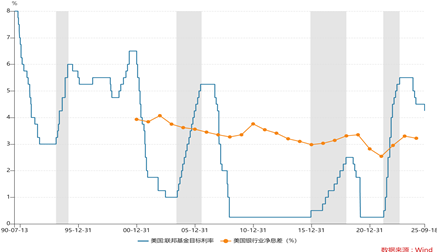
Core Viewpoint - The notion that "net interest margin in developed countries will inevitably narrow" is a fallacy, as evidenced by the sustained high net interest margins in the U.S. banking sector despite its advanced economic status [1][10]. Group 1: U.S. Banking Sector Performance - The U.S. banking sector has maintained a net interest margin above 3% for most of the time, even during interest rate hikes and cuts, with the lowest margin recorded at over 2.5% [1]. - The U.S. banking industry has experienced significant market discipline, with 584 banks failing since the 2008 financial crisis, indicating a robust market mechanism that promotes efficiency [3]. Group 2: Comparison with Japan - Japan's banking system lacks vitality due to government interventions that prevent natural market clearing, leading to a buildup of bad debts and low profitability [5][6]. - The Japanese government's protective measures resulted in a lack of competition and innovation within the banking sector, causing prolonged periods of negative net profits prior to 2004 [6]. Group 3: Strategies for Maintaining High Net Interest Margins - U.S. banks actively seek to create opportunities for interest margin growth by diversifying their loan portfolios and focusing on emerging sectors such as technology and healthcare [8][9]. - For instance, First Citizens Bank increased its healthcare loan ratio from 12.4% in 2006 to 25.28% in 2013, and subsequently diversified into technology loans, achieving a net interest margin of 3.54% by 2024 [8]. - Similarly, West Alliance Bank optimized its loan structure by reducing reliance on commercial real estate loans and increasing its focus on industrial loans, maintaining a net interest margin of 3.58% in 2024 [9]. Group 4: Implications for China's Banking Sector - The experience of the U.S. banking sector suggests that Chinese banks should actively seek change and explore new growth opportunities rather than relying on government support [10][11]. - Chinese banks need to accelerate the transformation of their asset-liability structures to adapt to the ongoing economic transition, moving away from traditional sectors like real estate and infrastructure towards emerging industries [12].
山东、浙江冲线10万亿:下一个“富可敌国”是谁?
Hu Xiu· 2025-09-30 04:40
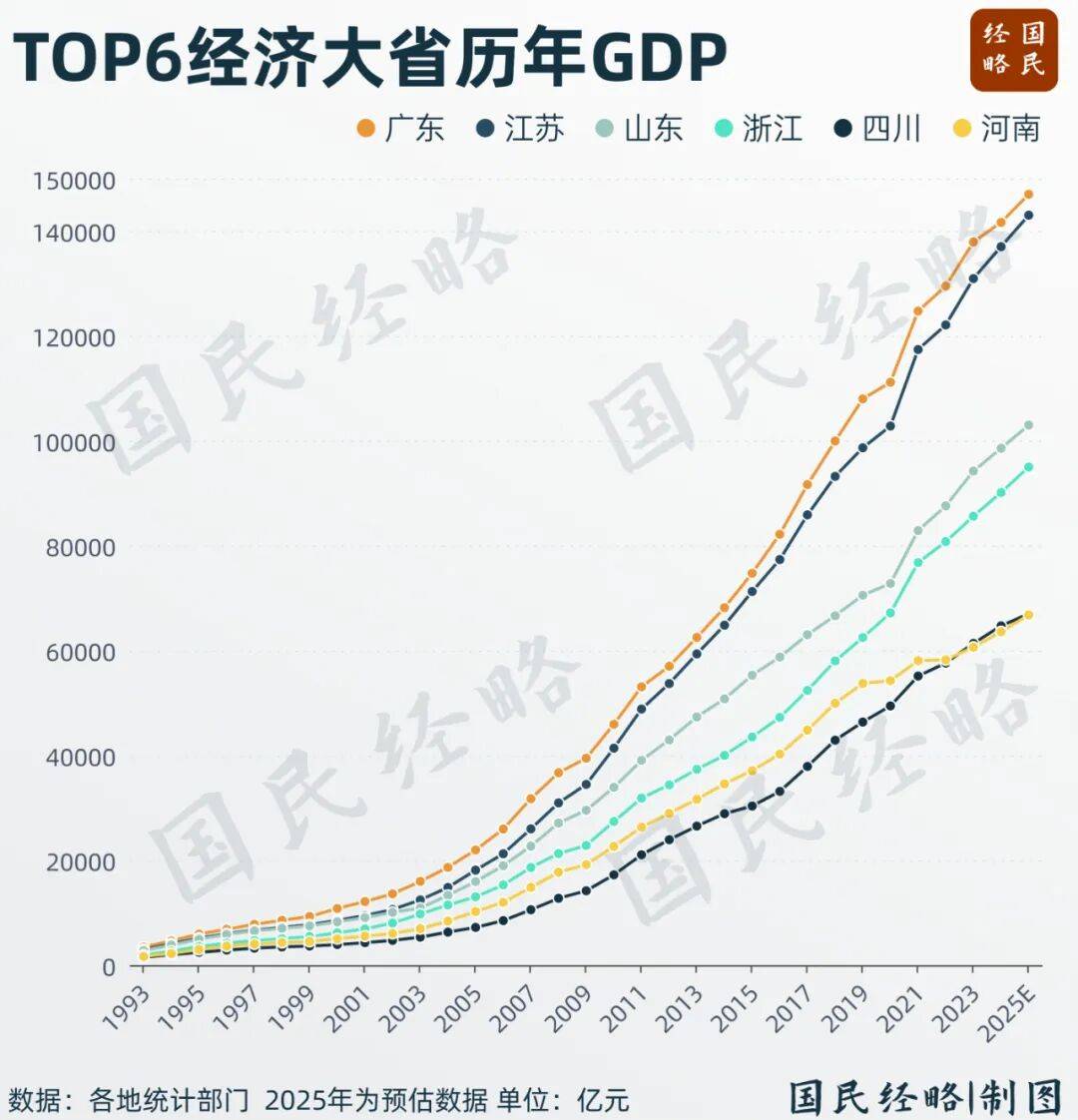
Group 1 - Zhejiang's GDP has crossed three trillion levels in the past five years and is expected to reach 9.5 trillion by 2025 [2] - Shandong is projected to surpass the 10 trillion GDP mark by the end of the 14th Five-Year Plan (2025) [3] - Both Shandong and Zhejiang are set to join the "10 trillion club," becoming the third and fourth provinces in China to achieve this milestone [4] Group 2 - In 2022, Shandong and Zhejiang's GDP reached 9.86 trillion and 9.01 trillion respectively, indicating they are close to the 10 trillion mark [6] - Only 17 countries globally have a GDP exceeding 10 trillion (approximately 1.4 trillion USD), with 16 having populations over 100 million [8] - Achieving a GDP over 10 trillion places Shandong and Zhejiang's economic scale on par with Indonesia and Turkey, surpassing the Netherlands and Saudi Arabia [9] Group 3 - Shandong is recognized as the only province in China with all 41 industrial categories, showcasing its industrial diversity [16] - The province has six national advanced manufacturing clusters and 23 national characteristic industrial clusters, ranking alongside Guangdong and Jiangsu [19] - Shandong has 235 champion enterprises, the highest in the country, and 1,138 "little giant" enterprises, second only to Jiangsu and Guangdong [20] Group 4 - Zhejiang is known for its strong private economy and is the only province with a common prosperity pilot zone [31] - The province has five trillion-level industrial clusters, with traditional industries still holding significant weight [34] - Zhejiang is focusing on becoming an "industrial strong province" and aims to build a global advanced manufacturing production base [40]
货币与财政政策双翼协奏 为经济企稳回升注入强劲动能
Jin Rong Shi Bao· 2025-09-29 01:07
Core Viewpoint - The meeting between the Ministry of Finance and the People's Bank of China emphasized the importance of coordinated fiscal and monetary policies to support economic stability and transformation, highlighting their role as "dual engines" driving the economy forward [1] Group 1: Coordination of Policies - The collaboration between fiscal and monetary policies has created a positive interaction, ensuring smooth government bond issuance and reducing government debt costs [2] - The central bank's liquidity support has stabilized market expectations, allowing for more effective government bond issuance [3] - The synergy between fiscal and monetary policies is crucial for structural adjustments and economic transformation, particularly in supporting equipment upgrades and boosting consumption [4] Group 2: Long-term Economic Transformation - Over the past decade, credit allocation has shifted from real estate to key areas aligned with national strategies, driven by deep coordination between monetary and fiscal policies [5] - The focus on directing credit towards technology innovation, green transformation, and inclusive finance has improved the efficiency of financial flows and supported economic upgrades [6] Group 3: Future Expectations and Innovations - There is a market expectation for innovative mechanisms and tools to enhance the effectiveness of policy coordination [7] - Suggestions include using government bonds as a link to strengthen coordination, improving the marketization of government bonds, and increasing the internationalization of the bond market [7] - Recommendations for enhancing coordination include optimizing fiscal subsidies and risk compensation tools to attract more financial resources to the real economy, especially for SMEs and technology innovation [8]
深刻理解运用“五个必须统筹”
Jing Ji Ri Bao· 2025-09-25 22:14
Group 1: Economic Stability and Challenges - The overall operation of the economy is stable and shows strong vitality and resilience, but it faces several risks and challenges [1] - Emphasis on the importance of balancing various economic relationships, including effective market and proactive government, total supply and total demand, and new and old driving forces [1] Group 2: Market and Government Relationship - The relationship between government and market is a core issue in economic reform, with a focus on achieving a balance that allows for both market efficiency and government oversight [2] - The market's role in resource allocation is crucial, and the government must address market failures while ensuring a well-functioning market system [2][3] Group 3: Supply and Demand Dynamics - Total supply and total demand are interrelated aspects of market economy, and their dynamic balance is essential for healthy economic operation [4] - Effective economic management requires coordinated efforts from both supply and demand sides to ensure strong interaction and balance [4][5] Group 4: New and Old Driving Forces - The cultivation of new driving forces and the updating of old driving forces are interconnected, with new forces emerging from technological innovation and old forces needing transformation [7][8] - Emphasis on the importance of integrating technological advancements into traditional industries to facilitate a smooth transition between new and old driving forces [8] Group 5: Resource Optimization - The relationship between optimizing new resources and revitalizing existing resources is crucial for improving resource allocation efficiency [9][10] - Revitalizing existing resources can create opportunities for new resource optimization, leading to enhanced economic development [10] Group 6: Quality and Quantity in Economic Development - The relationship between enhancing quality and expanding total quantity is a dynamic process essential for modernizing the economy [11][12] - Quality improvements provide the necessary drive for quantity growth, while quantity accumulation lays the foundation for quality enhancement [12][13]
得利斯集团再次入选“2025中国制造业企业500强”榜单
Quan Jing Wang· 2025-09-23 03:29
Core Viewpoint - The 2025 World Manufacturing Conference in Hefei highlighted the release of the "2025 China Manufacturing Enterprises Top 500" list, with Delisi Group once again making the list, showcasing its strong position in the industry [1][2]. Group 1: Industry Overview - The "2025 China Manufacturing Enterprises Top 500" list uses the 2024 revenue as the entry standard, reflecting the upward trend and enhanced capabilities of Chinese manufacturing enterprises [2]. - In 2024, despite global economic challenges, China's economy remains stable, with large manufacturing enterprises like the Top 500 demonstrating resilience through innovation and structural optimization [2]. - The food industry is a pillar of the national economy and plays a crucial role in ensuring public welfare, with Shandong Province prioritizing the food industry in its economic transformation initiatives [2]. Group 2: Company Performance - Delisi Group has established five production bases across China, including Shandong, Beijing, Shaanxi, Jilin, and Jiangxi, enhancing its regional layout advantage [3]. - The company has significant slaughtering capacity, with Shandong's base at 1 million heads/year and Jilin's at 2 million heads/year, while the under-construction Shaanxi base is planned for an additional 2 million heads/year [3]. - Delisi Group's pre-prepared food production capacity totals 180,000 tons, with specific capacities of 100,000 tons for pork and chicken, and 30,000 tons for beef in Shandong, and 50,000 tons in Shaanxi [3]. Group 3: Strategic Initiatives - The company is advancing smart transformation and digitalization, establishing smart production bases and implementing automated and information-driven production processes [4]. - Delisi Group is developing a digital supply chain system for comprehensive management from raw material procurement to product sales, alongside a quality traceability system for full-chain quality control [4]. - The recent inclusion in the Top 500 list is a recognition of Delisi Group's comprehensive strength and a commitment to high-quality development in the food manufacturing sector in Shandong [4].


山东无棣海丰以“三破破题·四立立信”建成现代电气“渤海新城”
Zhong Guo Jin Rong Xin Xi Wang· 2025-09-22 07:59
Core Viewpoint - The electric equipment industry in Haifeng Street, Binzhou City, Shandong Province, has transformed from a low-end market to a high-end sector, with over 1,200 companies and a market share of 40% in some products nationally, driven by innovation and strategic upgrades [1][3][8]. Group 1: Industry Development - The electric equipment industry in Haifeng Street began in the 1980s and has evolved into a cluster with over 1,200 production and sales enterprises, offering more than 1,000 products [1]. - The industry faced challenges such as low-end production and severe homogenization, prompting a need for transformation [3][5]. - A significant turning point was the initiative to learn from advanced industrial clusters in southern China, leading to technological upgrades and the establishment of new production facilities [3][5]. Group 2: Strategic Initiatives - The street initiated a systematic "three breaks" approach to address issues of low-end production and inefficient resource utilization, which included eliminating outdated capacities, breaking traditional mindsets, and removing institutional barriers [5][7]. - The "four establishments" strategy was implemented to build a modern industrial system, focusing on establishing standards, fostering innovation, enhancing brand recognition, and creating a supportive ecological environment [7][8]. Group 3: Achievements and Future Prospects - The transformation has led to the emergence of nine national high-tech enterprises and numerous other innovative companies, contributing significantly to local tax revenues [8]. - The projected annual revenue for the electric industry is expected to reach 12 billion yuan in 2024, positioning it as a key contributor to local fiscal income [8]. - Future opportunities include the integration of electric equipment with renewable energy sectors such as wind and solar power, further enhancing the region's industrial capabilities [8].
策略定期报告:不能回避的探讨:四季度胜负手
Guotou Securities· 2025-09-21 11:04
Group 1 - The report indicates a strong probability of maintaining a bullish trend in the fourth quarter, based on historical data showing that in 19 years since 2005, the Shanghai Composite Index has only seen 10 years of fourth-quarter gains, with only 2 years experiencing a transition from gains in the third quarter to losses in the fourth quarter [2][66] - The report emphasizes the need to monitor three key signals: 1) U.S.-China relations, 2) the potential for a "rate cut cycle" following the U.S. Federal Reserve's recent rate cut, and 3) China's ability to establish an "A-share earnings bottom" in the context of its economic policies [2][66] - The report suggests that the transition from a "liquidity bull market" to a "fundamental bull market" is expected to occur gradually, with the market needing to validate this transition through economic indicators and policy implementations [2][66] Group 2 - The report highlights a structural shift in market styles, indicating that the performance of growth stocks has outpaced value stocks, particularly in the context of the recent strong performance of the ChiNext Index and the Hang Seng Technology Index [11][22] - It notes that the Hang Seng Technology Index has shown a significant recovery, with a 5.09% increase, suggesting a potential for further gains as it aligns with the broader market trends [10][11] - The report also points out that the inflow of southbound funds into Hong Kong stocks has surpassed 1 trillion yuan, indicating a growing interest in technology and automotive sectors, which are expected to drive future performance [15][19] Group 3 - The report discusses the potential for a "high-cut low" market strategy, where sectors that have underperformed in the third quarter, such as low-position growth stocks and global pricing resource sectors, may outperform in the fourth quarter [66][47] - It emphasizes the importance of monitoring the performance of technology stocks, particularly those with strong fundamentals and growth potential, as they are likely to benefit from the anticipated economic recovery [39][41] - The report also highlights the ongoing trend of foreign capital returning to Chinese equity markets, driven by improved performance and favorable geopolitical conditions, which is expected to further support the technology sector [38][25]
“外媒看中国”采访活动走进宁夏山东
Yang Shi Wang· 2025-09-20 14:00
Core Viewpoint - The Chinese government is actively promoting ecological protection and high-quality development in the Yellow River basin, showcasing successful initiatives in Ningxia and Shandong to foreign media [1][3]. Group 1: Ecological Protection in Ningxia - Foreign media journalists explored the historical significance of irrigation in Ningxia, particularly the use of Yellow River water for agriculture [3]. - The journalists experienced innovative agricultural practices at a solar-integrated farming base, highlighting the dual use of land for energy generation and crop cultivation [3]. - Impressive results in ecological restoration and the development of green industries in the relatively arid Ningxia region left a strong impression on the foreign reporters [3]. Group 2: Emerging Industries in Shandong - Shandong's efforts in cultivating emerging industries and transitioning to new growth drivers attracted significant interest from foreign media [5]. - Journalists engaged with advanced robotics at a company in Jinan, participating in weight-bearing experiments with quadruped robots [5]. - The innovative carbon capture, utilization, and storage project at Shengli Oilfield, capable of sequestering millions of tons of CO2 annually, received notable praise for China's commitment to innovation and green development [5].