
人民币国际化

Search documents
益盟股份首席战略官梁宇峰:我读了上千家上市公司财报,对中国经济有信心
Sou Hu Cai Jing· 2026-01-12 03:48
Group 1 - The core basis for optimism about the Chinese economy includes continuous industrial upgrades and enhanced export competitiveness, despite profit performance being affected by intense competition [4][5] - The depreciation of the real effective exchange rate of the RMB has provided support for export competitiveness, with a significant price gap between China and the US/Europe due to differing inflation rates [4] - The "Belt and Road" initiative is recognized as a forward-looking strategy that opens up new global markets, transitioning China from globalization 1.0 to 2.0, benefiting a larger population [5] Group 2 - There is a current issue of insufficient domestic demand, with a historical context of "overcapacity" that highlights the need to convert potential demand into effective demand [6] - The RMB is expected to appreciate significantly in the long term, driven by national industrial competitiveness and purchasing power, with projections suggesting a potential exchange rate of 1:5 against the USD by 2032-2035 [7] - Expanding capital project output is necessary to achieve balance, with ongoing practices in capital output, such as investments in Africa, indicating potential for improvement in international balance of payments [7] - The need to eliminate outdated production capacity and reduce ineffective competition is emphasized as a key policy direction for the future [7]


金融高水平开放稳步拓展
Jin Rong Shi Bao· 2026-01-12 01:10
Core Viewpoint - The People's Bank of China (PBOC) is advancing high-level financial openness and enhancing the interconnectivity of financial markets, with a focus on supporting foreign financial institutions and optimizing cross-border use of the Renminbi (RMB) [2][5][6]. Group 1: Financial Market Openness - The PBOC is implementing multiple measures to promote financial openness, including eight initiatives announced by Governor Pan Gongsheng, covering areas such as financial infrastructure and cross-border investment [2]. - By 2025, the PBOC aims to enhance the mechanisms of Bond Connect and Swap Connect, facilitating more foreign investors' participation in China's financial markets [3][4]. Group 2: Cross-Border Payment Systems - The launch of the cross-border payment system between the mainland and Hong Kong in June 2025 has significantly improved the efficiency of cross-border transactions, processing over 700,000 remittances by July 2025 [4]. - The PBOC has allowed foreign institutions to use bonds from Bond Connect as collateral for Swap Connect, extending the duration of interest rate swap contracts to 30 years [4]. Group 3: Renminbi Internationalization - The RMB has become the largest currency for cross-border payments in China and ranks among the top three global payment currencies, with a significant increase in cross-border RMB transactions [5][6]. - As of June 2025, the PBOC has signed bilateral currency swap agreements with 32 countries, with the total value of these agreements exceeding 4.5 trillion yuan [6]. Group 4: Cross-Border QR Code Payment - A unified gateway for cross-border QR code payments was launched in July 2025, facilitating over 1.98 million transactions worth 427 million yuan by September 2025 [7]. - This initiative is expected to accelerate the process of cross-border payment interconnectivity and enhance the use of RMB in international trade [7].

央行连续增持 黄金超越美债成全球最大储备资产
Sou Hu Cai Jing· 2026-01-12 00:23
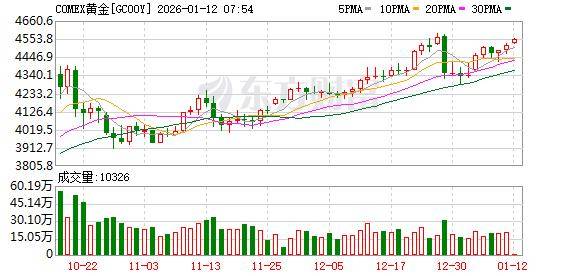
Core Viewpoint - China's official gold reserves have reached 74.15 million ounces as of December 2025, marking the 14th consecutive month of increase, although the monthly increase of 30,000 ounces is the lowest in the last ten months, aligning with market expectations [2][3]. Group 1: Central Bank's Gold Accumulation - The People's Bank of China continues to increase its gold reserves, primarily due to changes in the global political and economic landscape following the new U.S. administration, which may lead to a prolonged period of rising international gold prices [2][3]. - The current gold reserve constitutes about 9.5% of China's total official international reserves, significantly lower than the global average of around 15%, indicating a need for further accumulation of gold to optimize the reserve structure [3]. Group 2: Global Gold Market Trends - As of November 2025, global central banks have net purchased 45 tons of gold, maintaining a high level of demand despite a slight decrease compared to October 2025, with a total of 297 tons purchased from January to November 2025 [6]. - The value of global official gold reserves has surpassed that of U.S. Treasury securities for the first time in thirty years, with U.S. gold reserves exceeding 900 million troy ounces valued at approximately $3.93 trillion [7]. Group 3: Future Gold Price Outlook - Major financial institutions, including UBS, have raised their gold price forecasts, expecting prices to reach $5,000 in the first three quarters of 2026, before potentially dropping to $4,800 by the end of the year [8]. - The geopolitical uncertainties, particularly following U.S. military actions in Venezuela, are expected to increase market demand for gold as a safe-haven asset [8].
美元霸权动摇!美联储投降,人民币3.5%升势撕开全球金融新缺口
Sou Hu Cai Jing· 2026-01-11 17:43
2025年12月25日,离岸人民币对美元汇率盘中升破7.0元关口,最高触及6.9985,创下15个月新高。 这道看似简单的汇率曲线,背后是一场持续整年的全球 资本重配:人民币对美元全年升值突破3.5%,美元指数则从年初的110点高位跌至97点左右,跌幅接近10%。 美元疲软的直接推手是美联储的政策转向。 2025年9月,美联储宣布降息25个基点,这是2025年以来的首次降息。 而在此之前,特朗普政府对外加征关税、 对内实施减税的政策,已经加剧了市场对美国债务可持续性的担忧。 美国联邦政府的债务已攀升至37万亿美元,每年仅债务利息支出就超过1万亿美元,这 给美元带来了沉重压力。 美联储的降息决策并非完全出于经济考量。 特朗普自上任以来持续向美联储施压,甚至安插亲信进入理事会。 这种政治干预让美联储的独立性受到质疑, 鲍威尔在新闻发布会上强调"就看我们怎么做"来维护央行独立性,但市场明显不相信降息只是单纯的经济决策。 人民币的强势崛起背后是中国经济基本面的坚实支撑。 2025年前11个月,中国货物贸易顺差达1.0758万亿美元,充足的外汇储备为人民币汇率提供了坚实基 础。 外资配置人民币资产的兴趣明显增强,上半年 ...
央行连续增持,黄金超越美债成全球最大储备资产
Hua Xia Shi Bao· 2026-01-11 15:37
Core Viewpoint - The People's Bank of China (PBOC) has reported an increase in gold reserves, reaching 74.15 million ounces by the end of December 2025, marking the 14th consecutive month of growth, although the monthly increase of 30,000 ounces is at a low level for the past 10 months [1][3]. Group 1: Gold Reserves and Market Trends - As of December 2025, China's gold reserves stand at 74.15 million ounces, up from 74.12 million ounces the previous month, indicating a modest increase [3]. - The increase in gold reserves aligns with market expectations, driven by geopolitical changes and rising international gold prices, which have seen a significant increase of approximately 65% in 2025 [3][4]. - The World Gold Council (WGC) reported that global central banks net purchased 45 tons of gold as of November 2025, maintaining a high level of demand despite a slight decrease from October [6]. Group 2: Global Gold Reserve Dynamics - The total value of global official gold reserves has surpassed that of U.S. Treasury securities for the first time in 30 years, with U.S. gold reserves exceeding 900 million troy ounces valued at $3.93 trillion [7]. - This shift indicates a fundamental change in global reserve holdings, as countries reduce their exposure to the U.S. financial system amid concerns over dollar depreciation and geopolitical risks [8]. - Analysts predict a bullish outlook for gold prices, with UBS raising its price target to $5,000 for the first three quarters of 2026, reflecting increased market demand for safe-haven assets [8].
蔡浩:人民币国际化步伐可适度加快
Sou Hu Cai Jing· 2026-01-11 12:17
Group 1 - The core viewpoint is that while betting on a rapid decline of the US dollar may be premature, its long-term weakening provides opportunities for gold, the Chinese yuan, and the euro [1][3] - The proportion of the US dollar in global foreign exchange reserves has fallen to its lowest level in 40 years, while gold prices have reached multi-decade highs, indicating a loss of confidence in dollar assets [3] - The international monetary system may gradually shift towards a multipolar structure, potentially leading to a "tripod" balance among the US dollar, euro, and yuan [3] Group 2 - The euro faces limitations due to a lack of unified fiscal policy and internal political differences, while the yuan is seen as more stable [3] - The Chinese industrial chain has high added value and irreplaceability, suggesting that the internationalization of the yuan could accelerate under controlled conditions [3] - A key shortcoming in promoting yuan internationalization is its "investment and financing function," which needs to be deepened despite its increasing share in trade settlements [3] - It is suggested to explore the establishment of offshore yuan trading centers domestically to attract qualified foreign investors for yuan investment and financing, thereby broadening the path for yuan internationalization [3]

前海开源基金首席经济学家杨德龙:美元信用受质疑 国际货币体系迎变局
Sou Hu Cai Jing· 2026-01-11 11:24
Core Viewpoint - The post-World War II dollar-dominated international monetary system is facing multiple challenges, with the erosion of dollar credit, but its hegemonic status is unlikely to be shaken in the short term. Meanwhile, the internationalization of the renminbi is progressing steadily, with its settlement share expected to exceed 10%, positioning it among the top three global payment currencies, thereby creating favorable conditions for economic development [1][4]. Group 1: Dollar's Challenges - The recent decline in the dollar index is attributed to multiple factors, including a slowdown in U.S. economic growth, continuous interest rate cuts by the Federal Reserve, and the impact of renminbi internationalization on some dollar payment shares [4][5]. - The U.S. government's high debt levels are a key factor undermining dollar credit, with the political cycle exacerbating fiscal deficit pressures due to election candidates promising tax cuts and increased welfare [4][5]. Group 2: Future of the Dollar - Despite challenges, the dollar is expected to remain the leading international reserve and payment currency for many years, although its share in the global monetary system may gradually decline [5]. - The introduction of stablecoins is seen as a way for the dollar to maintain its dominance in international trade settlements, a trend that may continue in ten-year cycles [5]. Group 3: Renminbi's Role - China is actively promoting the internationalization of the renminbi to reduce excessive reliance on dollar settlements in international trade [5]. - The renminbi's settlement share in global trade is projected to exceed 10%, placing it among the top three payment currencies, particularly in trade with countries involved in the Belt and Road Initiative and in transactions of major commodities like oil [5].

夏乐:美元霸权松动与数字浪潮交汇下,人民币国际化“风再起”
Di Yi Cai Jing· 2026-01-11 07:25
"中国资产不可投资论"退潮。 1月10日,在"2026年中国首席经济学家论坛年会"上,西班牙对外银行(BBVA)首席经济学家夏乐指出,在美元大循环边际弱化、数字货币重塑国际支付 体系的背景下,人民币国际化正重新站上顺风口。 同时,产业链重构与中国企业"走出去"正在创造更多跨境人民币使用场景;人民币汇率中期偏强、双边本币互换和跨境支付合作经验不断积累;CIPS体系、 海外清算行及多边"货币桥"项目的实践,也持续夯实人民币国际化的基础。 "更值得关注的是,海外投资者对中国资产的认知正在发生转变,'中国资产不可投资论'明显退潮,部分机构已将中国市场视为对冲美国科技资产泡沫的重 要选择。"夏乐表示。 尽管前景向好,夏乐强调,必须清醒认识到美元霸权不会轻易让位。人民币国际化的目标不应是取代美元,而是获得足够的体系性影响力。展望未来,他认 为,人民币国际化仍面临一系列现实政策抉择,包括如何在数字货币和支付"出海"路径上进行更优组合,以及如何在复杂地缘政治环境下稳步推进制度型开 放。 在夏乐看来,人民币国际化"风再起"的关键,首先来自外部环境的变化。其一,美国"MAGA"政策及高关税取向正在侵蚀美元的主导地位。2025年春 ...

徐高:美元全球大循环的衰落是一个长期、渐进的过程
Di Yi Cai Jing Zi Xun· 2026-01-11 07:17
Core Viewpoint - The core position is that the dominance of the US dollar in the global economy is entering a decline phase due to internal economic structures and policy choices in the US, rather than external challenges [1]. Group 1: Global Economic Changes - The global economic landscape is undergoing profound changes, leading to structural pressures on the dollar's core position in international trade and finance [1]. - The long-term imbalance in modern global trade has been sustained since the dollar decoupled from gold in 1971, allowing some countries to maintain trade surpluses while the US continues to act as a global liquidity provider [3]. Group 2: Risks to the US Dollar - The main risks to the dollar's global circulation stem from changes in the US domestic economic structure, including a declining manufacturing sector and widening income distribution gaps, making it difficult for the US to maintain balanced economic growth through globalization [3]. - The US faces a policy dilemma: continuing to push dollars abroad to sustain global demand may lead to structural issues and social conflicts domestically, while reducing dollar outflow to stabilize the domestic economy could decrease global trade demand [3]. Group 3: Implications for China - For China's economic development, three key insights are highlighted: 1. The internationalization of the renminbi should focus on maintaining trade stability rather than attempting to replace the dollar, as excessive pursuit of becoming a reserve currency may increase outflow pressures and impact domestic industrial structure [4]. 2. In response to the trend of reduced global demand from the US, China should accelerate domestic demand construction through consumption upgrades and investment to buffer export pressures [4]. 3. Short-term attention should be paid to the impact of US domestic policies on external demand, including adjustments in fiscal and monetary policies, which will directly affect China's exports and external demand trends [4]. Group 4: Long-term Outlook - The decline of the dollar's global circulation is expected to be a long-term and gradual process, potentially lasting 20 to 30 years [5]. - For China, the strategic focus should be on stabilizing external demand, accelerating domestic demand development, and promoting the steady internationalization of the renminbi, rather than pursuing a short-term goal of replacing the dollar [5].

我国拒接美8500亿债务,再遭美国施压,希望中国接盘美债
Sou Hu Cai Jing· 2026-01-11 05:04
Core Viewpoint - China is adjusting its foreign exchange asset allocation strategy in response to significant changes in the global financial landscape, leading to a decline in the attractiveness of U.S. Treasury bonds, which were once considered a safe investment [1][3]. Group 1: Shift in Asset Allocation - China is gradually reallocating its assets towards gold, RMB-denominated assets, and diversified economies along the Belt and Road Initiative, focusing on asset diversification and risk mitigation [3][5]. - The shift away from U.S. Treasury bonds is influenced by the 2022 freezing of Russian central bank assets, raising concerns about the safety of dollar-denominated assets amid potential sanctions [5][7]. - The increasing U.S. fiscal deficit and downgrading of U.S. Treasury credit ratings by international agencies have made investors wary of U.S. debt, reflecting a growing lack of confidence in the U.S. financial system [7][13]. Group 2: Internationalization of the RMB - In 2024, Saudi Arabia and China signed multiple oil trade contracts partially settled in RMB, enhancing the internationalization of the currency and providing China with more confidence to reduce its U.S. Treasury holdings [9][14]. - The number of countries participating in the RMB cross-border payment system is increasing, with RMB becoming the fifth largest global payment currency, indicating its growing international influence [14]. Group 3: Global De-dollarization Trend - The trend of de-dollarization is not unique to China, as emerging economies like India and Turkey are also accelerating their efforts to reduce reliance on the dollar by increasing gold holdings and expanding local currency settlements [15]. - Major economies, including Saudi Arabia, Russia, and Japan, are reducing their U.S. Treasury holdings, indicating a global shift in capital flows and a gradual move towards a multi-currency system [13][15]. - The global financial market is witnessing a mainstream trend of de-dollarization, with countries adjusting their strategies to navigate the changing financial landscape [17].
