
消费升级

Search documents
以旧换新撬动发展新动能
Ren Min Ri Bao· 2026-01-22 21:57
Group 1 - The "new national subsidy" policy has rapidly taken effect, with significant consumer engagement, such as 16,324 transactions in Chongqing and nearly 16 million yuan in trade-ins in Fuzhou during the New Year holiday, showcasing the policy's impact on consumption upgrade and industrial transformation [1] - By 2025, the sales volume of related goods under the trade-in policy is expected to exceed 2.6 trillion yuan, benefiting over 360 million people, playing a crucial role in expanding domestic demand [1] - The recent notification on implementing large-scale equipment updates and consumer goods trade-in policies for 2026 aims to optimize support scope, subsidy standards, and implementation mechanisms [1] Group 2 - The urgent need for upgrading old residential areas and facilities in elderly care institutions is highlighted, with approximately 22,000 old communities built between 1980 and 2000, and a projected shortage of 46 million nursing beds for the elderly by 2035 [2] - The new policy includes support for installing elevators in old residential buildings and updating facilities in elderly care institutions, linking improvements in people's livelihoods with the expansion of domestic demand [2] - The policy encourages green transformation by linking subsidies to energy efficiency ratings and promoting the electrification of old vehicles, thereby fostering new consumption patterns and driving the development of green applications [2] Group 3 - The combination of optimizing supply and expanding demand is emphasized, with new consumption driving new supply and meeting new demands, facilitating industrial transformation [3] - The trade-in policy has expanded to include digital and smart products, as well as elderly-friendly home products, aligning with the trend of intelligent consumption and addressing health monitoring needs for the elderly [3] - The effective implementation of the trade-in policy is expected to create positive feedback across the economic system, enhancing domestic demand, fostering new growth drivers, and promoting industrial upgrades [3]
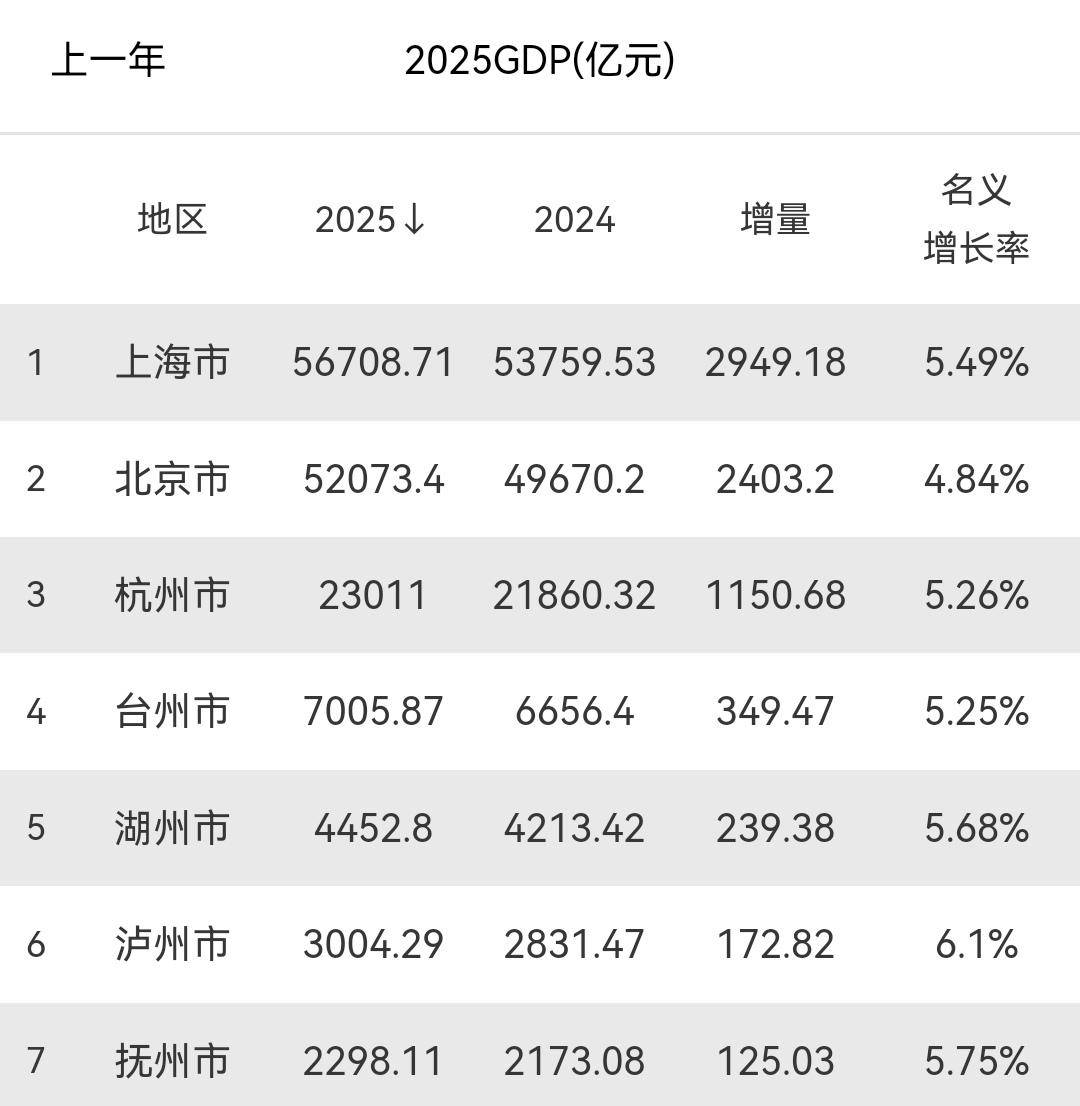
7城公开2025年GDP:杭州超2.3万亿,台州突破7000亿,泸州增速第1
Sou Hu Cai Jing· 2026-01-22 18:24
Core Insights - The GDP data for 2025 shows a steady economic recovery across seven cities, with notable performances from Hangzhou, Taizhou, and Luzhou, indicating diverse growth trends in different regions [1][7]. Group 1: Major Cities Performance - Shanghai's GDP reached 56,708.71 billion yuan in 2025, an increase of 2,949.18 billion yuan, with a growth rate of 5.49% [2]. - Beijing's GDP was 52,073.4 billion yuan, up by 2,403.2 billion yuan, reflecting a growth rate of 4.84% [2]. - Both cities maintain their status as economic engines, although their growth rates are moderate due to their large economic bases [2]. Group 2: Emerging Cities - Hangzhou's GDP surpassed 23,000 billion yuan for the first time, reaching 23,011 billion yuan, with an increase of 1,150.68 billion yuan and a growth rate of 5.26% [4]. - Taizhou's GDP hit 7,005.87 billion yuan, marking an increase of 349.47 billion yuan and a growth rate of 5.25% [4]. - Luzhou achieved a GDP of 3,004.29 billion yuan, with a remarkable growth rate of 6.1%, benefiting from local industries like liquor production [6]. Group 3: Trends and Implications - The data indicates a trend where first-tier cities are progressing steadily, while second-tier cities like Hangzhou are rapidly rising, and third- and fourth-tier cities like Taizhou and Luzhou are achieving breakthroughs through differentiated development [7]. - The economic vitality is shifting from coastal to inland areas, driven by industrial transformation, policy benefits, and consumption upgrades [7]. - The overall GDP growth reflects China's economic diversification and resilience, suggesting that if more cities can tap into their potential, overall development will become more balanced [9].

41个口岸将新设进境免税店 促进旅游与消费深度融合
Zheng Quan Ri Bao· 2026-01-22 16:12
Core Viewpoint - The establishment and adjustment of 41 new duty-free shops at various ports is a significant measure to promote consumption and optimize the national duty-free store network, reflecting a policy direction aimed at attracting inbound consumption and guiding overseas consumption back to China [1][2]. Group 1: New Duty-Free Shops - The new duty-free shops will be set up at 41 ports, including Wuhan Tianhe International Airport and Changsha Huanghua International Airport, significantly increasing the number of duty-free shops in China and expanding their coverage [1][2]. - The new shops include 20 at airports, 9 at water ports, and 12 at land ports, enhancing the shopping convenience for inbound travelers [2]. Group 2: Economic Impact - The initiative is expected to stimulate short-term consumption and provide long-term strategic value by filling regional consumption gaps and allowing more travelers to enjoy duty-free shopping [1][2]. - Duty-free shops are seen as a vital vehicle for consumption upgrade and expanding domestic demand, with the potential to attract younger consumers and optimize consumption structure [2][3]. Group 3: Industry Growth and Employment - The establishment of duty-free shops is anticipated to drive synergistic growth in related industries, boosting tourism, logistics, and retail sectors, and creating diverse employment opportunities [3]. - The shops can enhance the shopping experience through services like "online booking + offline pickup," thereby unlocking consumer potential and improving shopping convenience [3].
2025年社会消费品零售总额超50万亿元 消费对经济发展主引擎作用持续显现
Xin Lang Cai Jing· 2026-01-22 15:07
Group 1 - The total retail sales of consumer goods in 2025 are projected to reach 50.1 trillion yuan, with a growth rate of 3.7% [1] - Retail sales of goods are expected to grow by 3.8%, while catering revenue is anticipated to increase by 3.2% [1] - Final consumption expenditure is expected to contribute 52% to economic growth, continuing to play a key role as the main engine of economic development [1] Group 2 - The consumption of durable goods is showing positive growth, with the trade-in of old consumer goods driving sales in related categories to 2.61 trillion yuan, benefiting 366 million people [1] - Retail sales of passenger cars are projected to reach 23.744 million units, reflecting a growth of 3.8% [1] - The retail sales of staple food and oil products in large-scale units are expected to grow by 9.3%, indicating a shift towards health-conscious consumption with organic and green food becoming popular [1] Group 3 - The retail sales of clothing, shoes, hats, and textiles are projected to grow by 3.2%, while daily necessities are expected to see a growth of 6.3% [1] - There is a strong demand for upgraded consumer goods, with retail sales of sports and entertainment products in large-scale units expected to grow by 15.7% [1] - Sales of smart glasses, smartwatches, and smart bands on key platforms are anticipated to increase by over 40% [1] Group 4 - The consumption of specialty products is expected to be vibrant in 2025, with a surge in new product launches in smart connected vehicles and smartphones [2] - Domestic and international brands are accelerating the establishment of flagship stores, stimulating new consumption momentum [2] - The trend of "IP + consumption" is thriving, with sales of movie derivative products during the summer season expected to double year-on-year, leading the consumption wave [2]
【冠通期货研究报告】铁矿日报:市场情绪降温,刚需有所松动-20260122
Guan Tong Qi Huo· 2026-01-22 09:44
1. Report Industry Investment Rating No relevant content provided. 2. Core View of the Report The iron ore fundamentals are slightly weak, with supply shipments starting to decrease and demand weakening. Although the port is still accumulating inventory, it is gradually shifting to downstream steel mills. However, due to the back structure + positive basis and the futures discount, the futures are slightly resistant to decline in the short - term, and the overall downward space of the market is limited [5]. 3. Summary by Directory Market行情态势回顾 - The main iron ore futures contract fluctuated within a narrow range, closing at 786.5 yuan/ton, up 2.5 yuan/ton or +0.32% from the previous trading day. The trading volume was 197,000 lots, the open interest was 566,000 lots, and the settled funds were 9.802 billion yuan. The futures market will test the support around 780, and it shows some resistance to decline near this support in the short - term [1]. - The spot prices of mainstream port varieties rebounded slightly, and the swap price stopped falling. The PB powder at Qingdao Port rose by 1 to 795 yuan/ton, the Super Special powder rose by 1 to 674 yuan/ton, and the swap main contract was 103.4 (+0.1) US dollars/ton [1]. - The basis of Qingdao Port PB powder widened slightly. The iron ore futures contracts showed a back structure + positive basis, and it showed signs of stopping decline after short - term decline to the support level [1]. Fundamental Analysis - Overseas mine shipments decreased month - on - month, especially in Australia and Brazil, while shipments from non - mainstream countries increased. The arrivals this period decreased month - on - month, and there are supply disturbance expectations due to weather. On the demand side, hot metal production, sinter powder daily consumption, and sinter weekly output all decreased, and the steel mills' profitability recovered, but the restocking enthusiasm was still weak. The port inventory continued to accumulate, and the steel mill inventory was still significantly lower than the historical average [2]. Macro - level Analysis - Overseas: The US economy maintained "light to moderate" expansion, inflation continued to cool down, the CPI in December decreased to 2.7% year - on - year, and the core CPI increased by 0.2% month - on - month, lower than expected. Consumption showed a "K - shaped" characteristic, and industrial production rebounded unexpectedly. The Fed maintained a cautious wait - and - see attitude, and the interest - rate cut expectation was postponed to June [4]. - Domestic: In 2025, the domestic consumer market scale exceeded 50 trillion yuan, an increase of 3.7%. Service retail sales increased by 5.5%, 1.7 percentage points faster than commodity retail sales. The contribution rate of final consumption to economic growth was 52%, a 5 - percentage - point increase. In 2026, consumption upgrading, policy effectiveness, and a better environment will support the stable growth of consumption [4].
新技术催生“未来感”新职业 激发就业市场澎湃活力释放无限可能
Yang Shi Wang· 2026-01-22 08:17
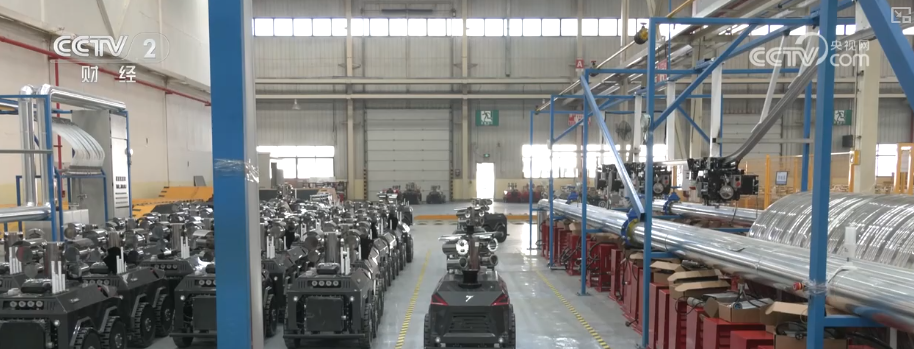
Core Viewpoint - The continuous development of technology is leading to the emergence of new jobs and professions, with 17 new occupations and 42 new job types announced for 2025, marking the highest number of new job types in history [1][27]. Group 1: New Job Creation - The introduction of new professions is revitalizing the market and expanding the occupational landscape [1]. - The demand for roles such as robot product testers and human-machine coordination dispatchers is increasing as the application of robots becomes more widespread across various industries [11][13]. - Emerging roles like low-altitude economy engineers, large model application engineers, and cross-border e-commerce operation managers are seeing a surge in demand [18]. Group 2: Industry-Specific Developments - In the robotics sector, roles such as robot product testers are crucial for quality assurance and route planning, ensuring smooth operation in production environments [5][7][9]. - The cultural and creative industry is also witnessing growth, with professionals like cultural product planning and operation specialists developing unique products that enhance local tourism [20][24]. - The training programs for new professions are expanding, with over 11 million subsidized training sessions conducted by the end of 2025, indicating a strong focus on skill development [27]. Group 3: Future Trends - The growth of emerging industries such as commercial aerospace, low-altitude economy, and deep-sea technology is expected to further diversify the types of new jobs available [31]. - The development of future industries like biomanufacturing, quantum technology, and 6G will continue to enrich the job market and stimulate employment opportunities [31].
国泰海通证券每日报告精选-20260122
GUOTAI HAITONG SECURITIES· 2026-01-22 07:40
Group 1: Strategy Observation - The report highlights the strengthening of AI hardware demand and the continuation of technology manufacturing overseas, with the semiconductor industry experiencing further improvement due to increased AI penetration and export growth in power equipment [4] - Prices of lithium carbonate have surged significantly due to supply constraints and improved downstream demand expectations, while pork prices have also seen improvements supported by consumption policies [4] - Traditional real estate and durable goods sectors continue to face pressure, with a notable decline in retail sales of passenger vehicles [5] Group 2: Industry Tracking - Consumer Electronics - Domestic companies are making breakthroughs in powder metallurgy processes, particularly in nuclear fusion materials, which are expected to benefit from a surge in downstream demand [8] - Tian Gong International, a leader in powder metallurgy, has set ambitious performance targets, indicating strong growth confidence [8] - The company is focusing on high-boron steel and advanced low-activation steel for nuclear fusion applications, leveraging its powder metallurgy technology for cost advantages [9] Group 3: Industry Research - Cement Manufacturing - Uganda is identified as a key market for cement exports, with a rapidly growing economy and increasing cement demand driven by urbanization [12] - The country has a favorable supply structure with only three clinker production lines, leading to a competitive market landscape [13] - Despite high cement prices, profitability remains challenging due to high production costs and logistical issues [14] Group 4: Industry Research - Consumer Discretionary - The smart glasses industry is entering a growth phase, with companies like Mingyue Lens expected to benefit from collaborations with leading brands [16] - The introduction of new smart glasses models, such as Ray-Ban Meta, is anticipated to enhance user experience and expand market applications [17] - The supply chain for AI glasses is broadening, with various players from different sectors entering the market, indicating a significant expansion of the industry [18] Group 5: Company Coverage - BAIC Blue Valley - The company is positioned as a pioneer in China's new energy vehicle sector, with a dual-brand strategy driving revenue growth [21] - Projected revenues for 2025, 2026, and 2027 are estimated at 290 billion, 582 billion, and 889 billion CNY respectively, with a focus on autonomous driving technology [21][22] - The company has seen a significant increase in sales volume, with expectations for continued growth through new model launches [23] Group 6: Company Tracking - Hikvision - The company is expected to achieve a net profit of 141.88 billion CNY in 2025, reflecting a year-on-year growth of 18.46% [40] - Hikvision's strategic shift towards high-quality, sustainable profit growth has led to improved operational efficiency and profitability [41] - The integration of AI into its product offerings is anticipated to drive long-term growth [42] Group 7: Company Tracking - Anfu Technology - The company is focusing on expanding its market presence in the semiconductor sector while maintaining strong performance in its core battery business [45] - Projected earnings per share for 2025 to 2027 are expected to show significant growth, driven by strategic acquisitions and market expansion [45] - The company is leveraging its established brand to enhance its competitive position in the charging market [46] Group 8: Overseas Report - Netflix - The company is projected to achieve revenues of 51.1 billion, 57.6 billion, and 64.6 billion USD from 2026 to 2028, with a focus on expanding its content offerings [48] - Netflix's advertising revenue is expected to double, contributing significantly to its overall financial performance [51] - The acquisition of Warner Bros. is anticipated to enhance content diversity and production capabilities [51]





宋河“酒饮到家”一年要开2000家门店,能跑通吗?
Xin Lang Cai Jing· 2026-01-22 07:37
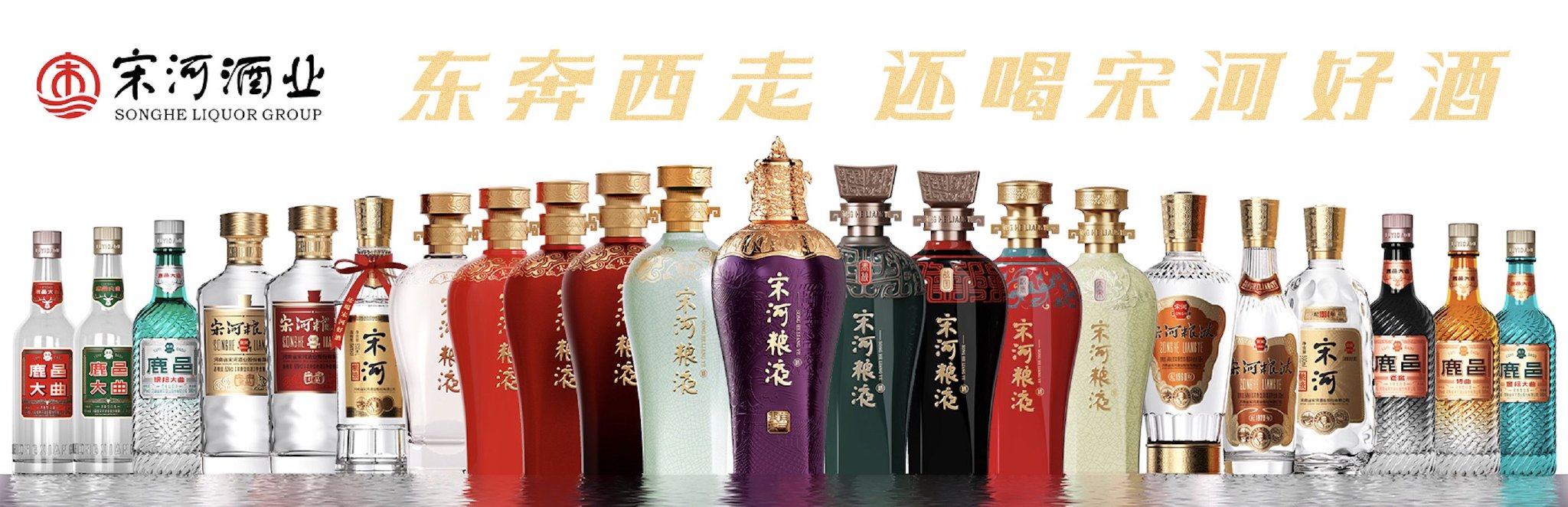
Core Viewpoint - Songhe Liquor's "Songhe Home Delivery" store opened in Zhengzhou, marking a significant step in the company's transformation post-bankruptcy restructuring, with plans to open over 2000 stores by 2026 [1][2][3] Group 1: Company Transformation - The opening of the first "Songhe Home Delivery" store is part of a series of changes driven by the new controlling entity, Guoquan Industrial, following Songhe's bankruptcy restructuring [3] - Guoquan Industrial has injected over 180 million yuan into Songhe Liquor since taking over operations in January 2024, aiming to stabilize and revitalize the company [3][4] - A significant management overhaul occurred, with the replacement of the previous leadership and a restructuring of the product line, reducing the number of products from over 438 to three main series [4][6] Group 2: Market Strategy - The "Songhe Home Delivery" model aims to create a community-focused service platform, integrating daily necessities like breakfast and baked goods to attract consumer traffic [7][8] - The company plans to leverage digitalization and instant delivery to transform traditional liquor consumption patterns, targeting younger consumers' demand for convenience [7][10] - Songhe's strategy includes launching a new 9.9 yuan pure grain liquor to capture the growing low-end market, while also developing a high-end product line to enhance brand value [9][10] Group 3: Competitive Landscape - The liquor market in Henan is highly competitive, with approximately 4000 brands and a total market size of about 66.8 billion yuan, making it challenging for Songhe to establish a foothold [10] - The company faces competition not only from local brands but also from national liquor brands that are increasingly penetrating the Henan market [10] - The success of the "Songhe Home Delivery" model will depend on its ability to replicate its business model across the planned 2000 stores and navigate the competitive dynamics of the market [10]
海南离岛免税新政实施购物金额大幅增长
Sou Hu Cai Jing· 2026-01-22 07:06
Group 1 - The core of the new Hainan duty-free policy is the dual enhancement of shopping limits and product categories, increasing the annual duty-free shopping limit from 30,000 yuan to 100,000 yuan and expanding the number of duty-free product categories from 38 to 45, including popular items like electronics and alcohol [4] - The shopping experience has become more convenient with a blend of online and offline channels, allowing consumers to experience products in physical stores or order online for easy pickup, along with a new "mail delivery" service [5] - The price advantage of duty-free goods is a key attraction, as these products are often cheaper than domestic retail prices due to the exemption from tariffs and taxes, with some items even more competitive than overseas boutiques [5] Group 2 - The implementation of the Hainan duty-free policy not only benefits consumers but also invigorates the Hainan Free Trade Port's development, promoting growth in tourism, logistics, and retail sectors, and facilitating the integration of domestic and international consumption resources [6] - Hainan is expected to become a leading global duty-free shopping destination as the policy continues to evolve, with plans to optimize the duty-free service system and introduce more international brands to enhance consumer experience [7] - The successful implementation of the Hainan duty-free policy reflects China's commitment to promoting consumption upgrades, benefiting both local residents and tourists, and contributing to high-quality economic development [7]

重构鸡蛋价值:为什么越来越多人选高品质可生食蛋
Zhong Guo Jing Ji Wang· 2026-01-22 07:04
Core Insights - The value of eggs is being redefined as consumers shift focus from price and freshness to high-quality, safe-to-eat eggs driven by health awareness and upgraded consumption demands [1][2] Group 1: Health and Nutritional Demand - The traditional perception of eggs being "good" is evolving from just "fresh" and "cheap" to a focus on nutritional content, particularly the benefits of egg yolk for specific demographics such as pregnant women, children, and the elderly [2] - High-quality, safe-to-eat eggs meet the growing demand for nutritional density, with examples like Huang Tian E eggs containing up to 35% of the daily required choline for adults, which is significant for cognitive development in children and cognitive protection in the elderly [2] Group 2: Safety and Production Standards - Safety concerns regarding eggs, particularly the risk of Salmonella infection, are being addressed through stringent production processes that minimize risks, especially for vulnerable populations [3] - Huang Tian E's production system includes multiple rounds of Salmonella testing and purification, strict health checks for chicks, and controlled environments to prevent contamination, establishing a safety "moat" for safe-to-eat eggs [3] Group 3: Market Dynamics and Consumer Choices - The market for "sterile eggs" is currently chaotic, with some sellers misleading consumers about safety standards, emphasizing the need for consumers to choose products that meet strict Salmonella testing and production standards [4] - Huang Tian E is positioned as a leading brand in the safe-to-eat egg market, contributing to the establishment of industry standards through collaboration with organizations to define testing requirements for pathogens, providing consumers with traceable quality assurance [4]