金融强国

Search documents
以推动高质量发展为主题奋力开创中国式现代化建设新局面——多部门负责人在《〈中共中央关于制定国民经济和社会发展第十五个五年规划的建议〉辅导读本》发表署名文章
Shang Hai Zheng Quan Bao· 2025-10-31 18:21
Group 1: Economic and Financial Strategy - The 20th Central Committee's Fourth Plenary Session approved the "Suggestions on Formulating the 15th Five-Year Plan for National Economic and Social Development," outlining systematic planning and strategic deployment for economic and social development during the 15th Five-Year period [1] - The article emphasizes the integration of technological and industrial innovation, enhancing the inclusiveness and adaptability of capital market systems, and expanding high-level opening-up [1][2] Group 2: Financial System Improvement - The article by Wang Jiang highlights seven key tasks for building a strong financial nation, including improving the central bank system and promoting healthy capital market development [2][3] - It stresses the need for financial institutions to focus on their main businesses and enhance governance, while also supporting state-owned financial institutions in serving the real economy [3][4] Group 3: Monetary Policy and Macro-Prudential Management - The People's Bank of China aims to construct a scientific and robust monetary policy system and a comprehensive macro-prudential management framework to support high-quality financial development [6][7] - The article outlines the importance of adjusting monetary policy to match economic growth and price stability, emphasizing the need for a balanced approach to short-term and long-term economic goals [7][8] Group 4: International Financial Center Development - The article discusses the continuous development of various financial markets in Shanghai to enhance its global competitiveness and influence [4][5] - It calls for strengthening the cross-border payment and clearing system for the Renminbi and expanding institutional openness in the financial sector [4] Group 5: Trade and Investment Expansion - The article by Wang Wentao emphasizes the significance of expanding high-level opening-up, including promoting trade innovation and enhancing the quality of foreign trade [10][11] - It outlines tasks such as increasing market access in service sectors and optimizing the free trade zone strategy to boost innovation and development [11][12] Group 6: Real Estate Market Development - The article by Ni Hong focuses on promoting sustainable and healthy development in the real estate market through reforms in development, financing, and sales systems [14][15] - It highlights the need for a multi-level housing security system and emphasizes the importance of local governments in adjusting real estate policies based on specific city conditions [15][16]
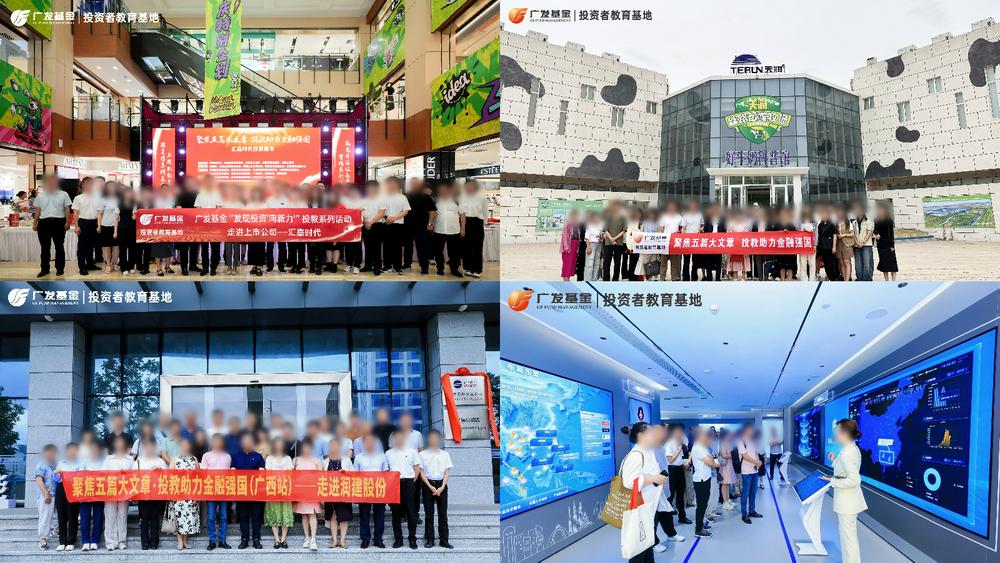
“聚焦五篇大文章 投教助力金融强国”系列活动圆满落幕 广发基金多元深化投教实践
Xin Lang Cai Jing· 2025-10-31 12:24
Core Insights - The event "Focusing on Five Major Articles, Investor Education to Support Financial Power" was successfully concluded, aiming to implement the central government's strategy for building a financial power by combining financial knowledge dissemination with practical education [1] - The event included various activities targeting different investor groups, enhancing financial literacy and promoting rational, value-based, and long-term investment concepts [1][8] Group 1: Investor Education Activities - The event featured "Three In" activities, where financial education was brought into enterprises, business circles, and campuses, providing differentiated financial education services [1] - In collaboration with listed companies, the "Discover Investment 'New Power'" series was launched to help investors explore the intrinsic value of excellent enterprises and experience the achievements of high-quality economic development [1][2] Group 2: Community Engagement - Financial knowledge was disseminated in busy commercial areas, with activities designed to reach a broader audience, including a financial education market in Guangxi and Xinjiang, where promotional materials were distributed to educate the public on capital market basics and fraud prevention [4] - The interactive nature of these events attracted significant public participation, making financial knowledge more accessible and relatable [4] Group 3: University Outreach - The initiative also focused on educating university students, who are seen as the future of the capital market, by integrating financial education into the national education system [6] - Lectures on integrity in finance and strategies to prevent financial fraud were conducted at universities, aiming to instill a culture of honesty and compliance among future financial professionals [6] Group 4: Future Commitment - The series of activities received positive feedback from investors, highlighting the importance of ongoing investor education as a long-term and systematic effort [8] - The company plans to continue its commitment to investor education, emphasizing a customer-centric approach and deepening cooperation to serve a wider range of investors [8]

券商三季报业绩爆发,或迎补涨良机?
市值风云· 2025-10-31 10:27
Core Viewpoint - The brokerage sector has shown strong performance in Q3 2025, with a significant year-on-year increase in net profit, yet the sector's stock performance has lagged behind broader market indices, indicating a potential for a rebound in stock prices [1][2][3]. Summary by Sections Q3 Performance - As of October 28, 2025, 14 brokerages reported a combined net profit of approximately 46.726 billion yuan for the first three quarters, reflecting a year-on-year increase of 46.42% [1]. - Three brokerages saw their net profits double, while eight others experienced growth rates between 50% and 100% [1]. Business Drivers - **Brokerage Business**: The average daily trading volume reached 1.6 trillion yuan, a 103.1% increase year-on-year, driving net income growth in brokerage services [2]. - **Investment Business**: Rising stock prices and bond market volatility contributed to increased income from investment activities [2]. - **Credit Business**: The average daily margin balance was 1.9 trillion yuan, up 29.9% year-on-year, supporting growth in credit business income [2]. Market Performance Discrepancy - Despite strong earnings, the brokerage sector index (399975.SZ) had a year-to-date increase of only 6.99%, significantly lower than the 19.24% and 26.92% increases of the CSI 300 and Wind All A indices, respectively [2][3]. - The current price-to-earnings ratio for the brokerage sector is 19.94, which is at a low point compared to the past two years [2]. Historical Context and Future Expectations - Historical trends indicate that the brokerage sector has previously experienced periods of lagging performance followed by rebounds, suggesting a potential for similar patterns to emerge [3]. - Positive signals for the sector's future include a sustained active market, with the Shanghai Composite Index recently surpassing 4000 points and the total A-share market capitalization exceeding 100 trillion yuan [3]. Policy and Innovation Support - The "14th Five-Year Plan" emphasizes the development of direct financing and related services, which could benefit brokerages with strong capabilities in investment banking and asset securitization [3]. - Chinese brokerages are diversifying their international business and shifting towards proactive asset management, moving away from reliance on market conditions for growth [3]. Investment Opportunities - The brokerage sector is positioned as a significant investment opportunity due to its high growth potential and supportive policy environment, with the brokerage ETF (159842) offering a low management fee of 0.2% [3].

“十五五”金融强国建设蓝图:呼应六大内涵,锚定高质量发展
2 1 Shi Ji Jing Ji Bao Dao· 2025-10-31 10:05
Core Viewpoint - The "15th Five-Year Plan" emphasizes the strategic goal of accelerating the construction of a financial power, marking a significant shift from establishing a modern financial system to focusing on high-quality development and global competitiveness [1][2]. Financial Development Strategy - The "15th Five-Year Plan" outlines six core components of a financial power: strong currency, strong central bank, strong financial institutions, strong international financial center, strong financial regulation, and strong financial talent [1]. - The plan indicates a transition from foundational institutional building to a focus on quality enhancement and global competitiveness in financial development [2]. Central Bank and Monetary Policy - The plan calls for a comprehensive upgrade of the central bank system, emphasizing the establishment of a robust monetary policy framework and a macro-prudential management system [6][8]. - The focus is on improving the transmission mechanism of monetary policy and developing digital currency, which is crucial for enhancing the financial system's efficiency and risk resistance [6][8]. Capital Market Reform - The "15th Five-Year Plan" aims to enhance the capital market's functionality and efficiency, addressing the challenges of investment and financing coordination [10]. - It emphasizes the need for a more inclusive and adaptable capital market system to support new industries and innovative enterprises [11]. Risk Management and Financial Stability - The plan highlights the importance of systemic risk prevention and management, particularly in key areas such as real estate, local government debt, and small financial institutions [12][13]. - It advocates for a coordinated approach between central and local regulatory bodies to effectively manage financial risks [14]. Financial Institutions and Governance - The plan encourages financial institutions to focus on their core responsibilities and improve governance, aiming to reduce homogenization and associated risks [15]. - It supports the differentiation of financial institutions to enhance their roles in serving the real economy and stabilizing the financial system [15].
经济减震器和社会稳定器 功能充分发挥
Jin Rong Shi Bao· 2025-10-31 02:03
Core Insights - The central financial work conference has set the goal of accelerating the construction of a financial powerhouse, guiding the high-quality development of the financial sector [1] - The insurance industry has actively responded to the conference's directives over the past two years, demonstrating its critical role as an economic stabilizer and social stabilizer [1] Risk Management and Protection - The insurance industry has enhanced its risk response capabilities, establishing a comprehensive risk protection system that includes pre-warning, response, and post-compensation mechanisms [2] - Major disaster insurance trials have been implemented in over 20 provinces, strengthening the disaster prevention and mitigation safety net [2] - Health insurance has served 1.22 billion urban and rural residents, while long-term care insurance covers 190 million people, addressing diverse elderly care needs [2] Economic and Social Development Support - The insurance sector has insured over 1.6 billion motor vehicles and launched a platform for insuring new energy vehicles, providing risk coverage exceeding 1.1 trillion yuan [3] - Export credit insurance has provided risk coverage of 4.4 trillion USD, supporting foreign trade stability [3] Financial Contributions - As of mid-2023, the insurance industry's investment balance reached 36.23 trillion yuan, continuously injecting financial resources into capital markets and the real economy [4] - The sector has provided over 10 trillion yuan in risk coverage for technology insurance, supporting 3,600 innovative projects [4] - Green insurance is projected to provide risk coverage exceeding 330 trillion yuan in 2024, with increased support for green and low-carbon industries [4] Industry Reform and Development - The insurance industry has surpassed 40 trillion yuan in total assets, solidifying its position as the second-largest insurance market globally [5] - Comprehensive reforms in auto insurance and the implementation of a unified reporting and operation system are guiding the market towards rational management [5] - The industry is transitioning from scale expansion to value creation, with a notable decrease in comprehensive cost ratios and expense ratios [5] International Engagement - Half of the world's 40 largest insurance companies have entered the Chinese market, enhancing the industry's professional level through international collaboration [6] - The Shanghai International Reinsurance Registration and Trading Center serves as a key platform for attracting global reinsurance institutions [6]
21社论丨提升宏观经济治理效能,激活内生发展动力
21世纪经济报道· 2025-10-31 00:09
Group 1 - The article emphasizes the importance of enhancing the macroeconomic governance system and improving its effectiveness, which is crucial for building a high-level socialist market economy [1] - It highlights the need for strategic guidance and policy coordination to ensure consistency in macroeconomic policies, addressing the complexity and interconnectivity of current economic challenges [1][2] - The article discusses the implementation of proactive fiscal policies that focus not only on expanding fiscal spending but also on improving spending efficiency and sustainability [2] Group 2 - The article outlines the establishment of a long-term government debt management mechanism that aims to manage existing debt while preventing the expansion of hidden debts [3] - It stresses the importance of building a financial powerhouse, with a focus on developing various types of finance such as technology finance, green finance, and digital finance to support national strategic needs [3][4] - The article mentions the transformation of the capital market from being primarily financing-oriented to a platform that coordinates investment and financing, enhancing its attractiveness for long-term capital [4]
构建与中国式现代化相匹配的现代金融体系
Sou Hu Cai Jing· 2025-10-30 23:19
本报特约评论员 2025金融街论坛年会,让我们看到以金融强国战略为统领,把制度优势转化为治理效能的集思广益,看 到加快形成与中国式现代化相匹配的现代金融体系的共识与共进,看到为维护公平公正的国际经济金融 秩序、促进全球金融稳定发展贡献的中国智慧和中国力量。坚定不移走中国特色金融发展之路,必将为 中国式现代化提供坚强的金融保障。 金融是国民经济的血脉,是国家核心竞争力的重要组成部分,事关中国式现代化建设全局。我国金融体 系已经实现了由"小"到"大"的转变,正处于由"大"向"强"跨越的关键时期,既需要有效解决金融领域相 互交织、相互影响的各种矛盾问题,也需要积极应对日趋加剧的国际金融竞争以及国际金融风险,把创 新作为破解难题与化解风险的关键变量。 "十四五"以来,我国金融业以加快建设金融强国为目标,在服务实体经济、防控金融风险、深化改革开 放中实现了规模和质量的历史性跨越。迈向"十五五",百年变局加速演进,科技自立、绿色转型、人口 老龄化与外部博弈交织,金融体系亟待从规模扩张转向质量效益跃升。《中共中央关于制定国民经济和 社会发展第十五个五年规划的建议》提出"加快建设金融强国",并明确了一系列部署。本届金融街论坛 ...
提升宏观经济治理效能,激活内生发展动力
2 1 Shi Ji Jing Ji Bao Dao· 2025-10-30 23:14
Core Viewpoint - The article discusses the recent release of the "Suggestions" by the Central Committee of the Communist Party of China regarding the 15th Five-Year Plan, emphasizing the need for a more systematic and effective macroeconomic governance framework to support high-quality economic development. Group 1: Macroeconomic Governance - The "Suggestions" highlight the importance of enhancing macroeconomic governance efficiency and establishing a high-level socialist market economy system [1] - The focus is on optimizing the policy framework and execution mechanisms to support an economy driven by domestic demand, consumption, and endogenous growth [1] Group 2: Policy Coordination - There is a call for stronger strategic guidance and policy coordination to ensure consistency in macroeconomic policy orientation [2] - The need to break down departmental barriers and promote a unified policy approach is emphasized to achieve synergistic effects [2] Group 3: Fiscal Policy - The implementation of proactive fiscal policies will not only involve expanding fiscal spending but also improving spending efficiency and sustainability [2] - The establishment of a budget allocation mechanism centered on policy performance and project necessity is crucial for optimizing fiscal resource allocation [2] Group 4: Debt Management - The "Suggestions" propose accelerating the establishment of a long-term government debt management mechanism to address existing debt and prevent hidden debt expansion [3] - A comprehensive lifecycle management system for debt financing, budget constraints, risk warnings, and emergency responses is recommended [3] Group 5: Financial Sector Development - There is an emphasis on building a strong financial nation, with a focus on developing technology finance, green finance, inclusive finance, pension finance, and digital finance [3] - The financial system is expected to lead and shape future industries through innovative financial products and risk pricing mechanisms [3] Group 6: Capital Market Transformation - The capital market is transitioning from a financing-led model to a platform that coordinates investment and financing [4] - Systematic reforms are aimed at enhancing the quality of listed companies and improving shareholder return mechanisms to attract long-term capital [4] Group 7: Economic Development Model - The overall strategy aims to strengthen the coordination of fiscal and monetary policies while leveraging various policy tools to promote an economy driven by domestic demand and consumption [4]
“十五五”规划建议的18个新提法 释放哪些重要信号?
Mei Ri Jing Ji Xin Wen· 2025-10-30 15:27
Group 1: Economic and Social Development - The "15th Five-Year Plan" emphasizes the importance of technology and innovation, mentioning "technology" 46 times and "innovation" 61 times, highlighting the need for original and disruptive innovations [1] - The plan includes measures to improve people's livelihoods, such as expanding free education and exploring the extension of compulsory education [1][16] - It proposes to enhance public service spending to boost consumer capacity, indicating a shift towards improving the consumption environment [7][10] Group 2: Future Industries and Technological Innovation - The plan aims to promote emerging industries like quantum technology, biotechnology, hydrogen energy, and artificial intelligence as new economic growth points [2][3] - It suggests establishing a risk-sharing mechanism for future industry investments to address uncertainties in technology and market [4][5] - The plan calls for a comprehensive implementation of "Artificial Intelligence+" to drive research and development across various sectors [6][7] Group 3: Consumption and Housing - The plan proposes to eliminate unreasonable restrictions on consumption in sectors like automobiles and housing, signaling a new phase in consumer development [8][19] - It aims to optimize the supply of affordable housing to meet the basic needs of urban wage earners and disadvantaged families, marking a shift from a "safety net" to a "universal" approach [19] Group 4: Energy and Environmental Goals - The plan sets a target for peak coal and oil consumption, aligning with the broader goal of achieving carbon neutrality by 2030 [9] - It emphasizes the need for a new energy system and the development of clean energy sources to support this transition [9] Group 5: Fiscal and Monetary Policy - The plan advocates for a more proactive fiscal policy to enhance sustainability and stimulate effective investment [10] - It suggests a stable and continuous approach to fiscal and monetary policies during the "15th Five-Year Plan" period [10] Group 6: Trade and International Cooperation - The plan focuses on expanding market access and opening up service sectors, indicating a shift towards enhancing service trade competitiveness [11][12] - It highlights the importance of developing green trade and intermediate goods trade to stabilize foreign trade [12][13]
券商三季报业绩爆发,估值低位或迎补涨良机?
Xin Lang Ji Jin· 2025-10-30 07:29
Core Viewpoint - The brokerage sector has shown strong performance in Q3 2025, with a significant year-on-year increase in net profit, yet the market performance remains lagging, indicating a potential for future recovery and upward movement in stock prices [1][3][5]. Financial Performance - As of October 28, 2025, 14 brokerages reported a combined net profit of approximately 46.726 billion yuan for the first three quarters, reflecting a year-on-year increase of 46.42% [3]. - Three brokerages saw their net profit double, while eight others experienced growth rates between 50% and 100% [3]. - The average daily trading volume in the market increased to 1.6 trillion yuan, a year-on-year growth of 103.1%, driving revenue growth in brokerage services [6]. Market Performance - Despite strong earnings, the brokerage sector index has only risen by 6.99% year-to-date, significantly underperforming compared to the CSI 300 index (19.24%) and the Wind All A index (26.92%) [5]. - The current price-to-earnings ratio for the brokerage sector is 19.94, which is at a low point historically, suggesting substantial room for valuation recovery [5]. Investment Opportunities - The brokerage sector is characterized by high industry prosperity, low valuations, and clear policy support, making it a significant investment opportunity [9]. - The brokerage ETF (159842) offers a low comprehensive fee rate of 0.2%, providing an efficient tool for investors to capitalize on opportunities within the brokerage sector [9]. Positive Signals - The market is witnessing multiple positive signals that support the long-term development of the brokerage sector, including active market conditions and favorable policy expectations [8][9]. - The "14th Five-Year Plan" emphasizes the development of direct financing and related business areas, which could benefit brokerages with strong capabilities in investment banking and asset management [9].