供给侧结构性改革

Search documents
能耗限额强制性国标实施,相关市场影响几何?
Qi Huo Ri Bao· 2025-05-21 23:09
Group 1: Implementation of Energy Consumption Standards - The mandatory national standards for energy consumption limits, including "Energy Consumption Limits for Refining and Chemical Industry Products" (GB 30251—2024), officially took effect on May 1, 2024, covering key industries such as chemicals, coal, mining, and paper [1][2] - The effective implementation of these standards is expected to yield an annual energy-saving benefit of 24.52 million tons of standard coal [2][12] - The standards aim to eliminate outdated production capacity and guide enterprises to enhance energy efficiency through energy-saving renovations and process optimization [2][6] Group 2: Impact on Steel Industry - The implementation of energy consumption limits is seen as beneficial for the steel industry, which is currently facing oversupply and weak demand [2][3] - The standards will force the elimination of inefficient production capacities, such as blast furnaces with a capacity of 400 cubic meters or less, and steelmaking converters of 30 tons or less [2][3] - New and expanded steel projects must meet energy efficiency standards, raising industry entry barriers and promoting a shift towards high-end and green development [2][3] Group 3: Effects on Construction Materials - Recent government policies for the flat glass industry focus on capacity regulation, green transformation, and technological upgrades [4] - The implementation of energy consumption limits is expected to positively impact the glass and cement industries, leading to high-quality supply that drives demand [4][5] Group 4: Energy and Chemical Industry Integration - The energy consumption limits are a necessary response to past capacity expansions and the "dual carbon" goals, addressing structural contradictions in the refining industry [6][8] - The new standards will compel companies to accelerate technological upgrades and increase investments in energy-saving technologies, with expected investments exceeding 100 billion yuan [8] - The standards will also lead to the elimination of outdated capacities, significantly increasing industry concentration [8][9] Group 5: Nonferrous Metals Industry Transformation - The implementation of energy consumption limits is a significant change for the nonferrous metals industry, promoting green transformation and energy efficiency improvements [10] - The standards will accelerate the elimination of outdated capacities, particularly in high-energy-consuming small smelting plants [10][11] - The copper market is expected to face downward pressure due to tightening supply and increased environmental regulations [10][11] Group 6: Coal Industry Energy Efficiency - The energy consumption limits are projected to save 24.52 million tons of standard coal annually, enhancing energy efficiency across various industries [12] - The implementation of these standards will not immediately reduce coal demand but will impose constraints on energy usage, promoting better energy management [12]
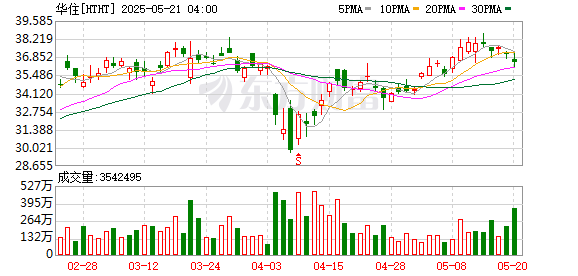
华住CEO金辉:中高端酒店同质化供给突出 存大量改革机遇
Nan Fang Du Shi Bao· 2025-05-21 08:27
Core Viewpoint - Huazhu Group reported a revenue of 5.4 billion yuan in Q1 2025, reflecting a year-on-year increase of 2.2%, while hotel operating revenue reached 22.5 billion yuan, up 14.3% year-on-year. The net profit attributable to shareholders was 894 million yuan, a 35.7% increase year-on-year [2] Financial Performance - In Q1 2025, Huazhu Group's average daily rate (ADR) was 272 yuan, down 2.9% year-on-year, and the average revenue per available room (RevPAR) was 208 yuan, down 3.7% year-on-year. The occupancy rate (OCC) for all operating hotels was 76.2%, a decrease from 77.2% in the same period last year [3][4] - The company opened 694 new hotels and closed 155, with 2,865 hotels in the pipeline, slightly down from the previous quarter. The focus is on high-quality growth, emphasizing profitability over scale [4] Market Dynamics - The business travel market has shown slow recovery over the past two years, with external factors like US-China tariffs impacting small and export-oriented enterprises, creating uncertainty for the company's RevPAR forecasts [4] - Despite challenges, the company maintains a positive outlook on the consumption and tourism market, expecting a narrowing decline in RevPAR in Q2 2025 and aiming for sustained growth throughout the year [4] Strategic Focus - Huazhu Group is upgrading its "Golden Triangle" brands, with a significant increase in the proportion of higher-rated products. The number of mid-to-high-end hotels increased by 36% year-on-year to 933, with 523 more in the pipeline [5] - The company aims to capture market share in the mid-to-high-end segment, particularly in first- and second-tier cities, viewing this as a critical area for growth and brand development [5] - Revenue for Q2 2025 is projected to grow between 1% to 5%, with management and franchise income expected to rise by 18% to 22% [5]


毕马威中国经济研究院院长蔡伟:货币政策宽松空间明显打开 后续将发力稳就业稳增长
Zheng Quan Ri Bao Wang· 2025-05-20 13:26
本报记者 闫立良 "随着外部环境急剧变化,同时国内房地产市场尚未企稳、物价运行持续低迷,二季度货币政策优先目标将逐步过渡到稳 就业稳增长,宽松空间明显打开。"5月20日,毕马威中国经济研究院院长蔡伟在接受《证券日报》记者采访时表示,预计年内 降准降息仍有空间,但力度及节奏将根据中美关税进展、二季度出口和经济表现等关键变量相机抉择。 促进价格水平合理回归 5月7日,央行出台包括降准降息、创设并加力实施系列结构性货币政策工具在内的一揽子金融政策支持稳市场稳预期。 蔡伟认为,一季度出于前期增量政策效果仍在逐渐显现、外部环境尚不明朗以及优先稳定汇率波动风险和银行息差压力等 综合考量,央行对于货币政策的总量操作较为克制,保持"适度宽松"的政策取向不变。 在后续可能的降准降息空间释放上,蔡伟分析称,降准方面,央行将配合财政协同发力,并可能通过加大买断式逆回购等 进一步补充流动性。降息方面,央行将综合考量国内外经济形势、利率风险与金融市场波动等因素。 最近三期货币政策执行报告均强调"把促进物价合理回升作为把握货币政策的重要考量,推动物价保持在合理水平"。蔡伟 表示,这说明当前物价是央行的重要关注指标。 在央行5月9日发布的 ...
四月经济数据刷屏!高技术制造业暴增10%,多项消费指标井喷式增长
Sou Hu Cai Jing· 2025-05-19 23:45
Economic Performance - In April, China's economy demonstrated significant resilience amid complex conditions, with major economic indicators showing stable and rapid growth [1] - The industrial added value for large-scale enterprises increased by 6.1% year-on-year and 0.22% month-on-month, marking a notable performance in monthly data since last year [1] - The service production index grew by 6.0% year-on-year, reaching the second-highest monthly growth rate this year [1] Domestic Demand - Positive changes were observed in domestic demand, with substantial sales growth in products related to the "old for new" consumption initiative, significantly supporting retail sales [1] - Retail sales of household appliances and audio-visual equipment surged by 38.8% year-on-year, continuing to accelerate this year [1] - Retail sales for cultural office supplies, furniture, and communication equipment increased by 33.5%, 26.9%, and 19.9% year-on-year, respectively, all exceeding the overall retail growth rate [1] Investment Trends - The effects of "two heavy" and "two new" policies are becoming increasingly evident, with investment in equipment and tools rising by 18.2% year-on-year from January to April, contributing 64.5% to total investment growth [1] - Investment in consumer goods manufacturing and equipment manufacturing grew by 13.4% and 8.2% year-on-year, reflecting the impact of industrial upgrading [1] Foreign Trade - China's foreign trade showed strong resilience, with total goods import and export value increasing by 2.4% year-on-year from January to April, accelerating by 1.1 percentage points compared to the first quarter [2] - Private enterprises' imports and exports rose by 6.8% year-on-year, outperforming the overall foreign trade situation [2] - Exports of electromechanical products grew by 9.5% year-on-year, indicating a positive trend [2] High-Tech Manufacturing - The added value of high-tech manufacturing above designated size increased by 10% year-on-year in April, with aerospace equipment manufacturing and integrated circuit manufacturing growing by 21.4% and 21.3%, respectively [2] - The added value of digital product manufacturing also achieved a 10% year-on-year increase [2] - Production of new energy products, such as electric vehicles and charging piles, rose by 38.9% and 43.1%, respectively, reflecting the deepening of green and low-carbon transformation [2] Real Estate Market - In April, housing prices in 70 large and medium-sized cities remained generally stable, with the year-on-year decline in first, second, and third-tier cities continuing to narrow [2] - The real estate market's transactions and prices are stabilizing, moving towards a recovery phase [2] Economic Resilience Factors - China's economic resilience is attributed to a stable economic foundation, numerous advantages, strong resilience, and significant potential [3] - The large-scale market, accelerated restructuring of the entire industrial chain, and continuous empowerment of new production factors provide systematic support for economic development [3] - Recent policy measures, including interest rate cuts and the establishment of new policy financial tools, aim to support technological innovation and expand consumption [3]
聚焦人民需要 深化供给侧结构性改革
Zhong Guo Jing Ji Wang· 2025-05-19 23:10
Group 1 - The core viewpoint emphasizes the importance of supply-side structural reform to better meet the growing and diversified material and cultural needs of the people, aligning with the socialist production goals [1] - The article highlights the need to enhance the adaptability between supply and demand, particularly in response to the evolving consumption demands of the elderly population, which requires a shift towards personalized products and services [2] - It discusses the role of new supply in creating new demand, driven by technological innovations such as 5G and artificial intelligence, which are reshaping the supply system and generating new market opportunities, particularly in the electric vehicle sector [3] Group 2 - The article stresses the necessity of achieving a higher level of dynamic balance between supply and demand, which involves integrating the strategy of expanding domestic demand with deepening supply-side structural reforms [4] - It points out that China's large market size, with over 1.4 billion people, provides a significant advantage for high-quality development, enabling the supply system to proactively lead and meet market demands [4] - The need for strong institutional guarantees is emphasized, particularly in market-oriented reforms and enhancing the vitality of business entities to support sustainable economic growth [4]
两会“爆款”主题面面观,兼论深海科技与具身智能(人形机器人)的投资前景
Huafu Securities· 2025-05-19 14:06
Group 1 - The report emphasizes that the investment themes from the Two Sessions are not just one-time opportunities but have long-term implications for industry development and sustained excess returns [2][20]. - Short-term characteristics highlight that low valuation themes are more likely to experience valuation increases shortly after the Two Sessions [3][26]. - The correlation between market capitalization distribution and cumulative excess returns weakens over time, indicating that smaller market cap stocks (<100 billion) tend to outperform in the short term [3][30]. Group 2 - Cumulative excess returns and performance growth are significant in the long term, with themes often generating excess returns over a 360-day period post-Two Sessions [4][36]. - Historical analysis shows that only a few years (2017, 2019, 2023) underperformed, suggesting the importance of new proposals in the government work report [4][36]. - The average cumulative excess returns may not be realized in the same year as the Two Sessions, indicating a longer-term guidance effect [4][38]. Group 3 - Seasonal timing indicates that the best periods for investing in Two Sessions themes are February-March and October [5][55]. - The report suggests that themes failing to pass the first-quarter report test may see their momentum stall in spring [5][56]. Group 4 - The evolution of "blockbuster" themes shows a clear pattern: national policy setting, local follow-up, highlighting key enterprises/events, expanding networks, and standardized industry development [6][10]. - Common characteristics of successful themes include alignment with current trends, broad market potential, high recognizability, and performance support [6][10]. - Themes first introduced in the Two Sessions tend to have better long-term excess returns [6][12]. Group 5 - The report identifies investment opportunities in 2025, particularly in deep-sea technology and embodied intelligence (humanoid robots) [7][18]. - Deep-sea technology is positioned as a strategic area with strong performance support, while humanoid robots are seen as potential blockbuster themes due to their alignment with market trends [7][18]. - The report suggests that deep-sea technology has already shown significant gains since the Two Sessions, with a maximum increase of 16.91% and an excess return of 18.16% relative to the Wind All A index [12][16].
最新发布:22城新房+5城二手房涨价,二季度楼市怎么走?
Nan Fang Du Shi Bao· 2025-05-19 07:30
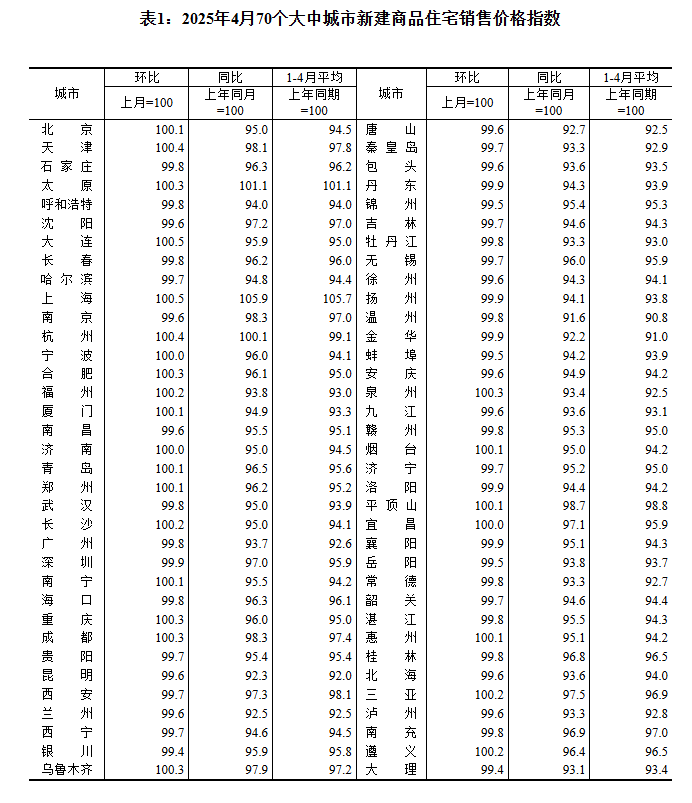
Core Viewpoint - The number of cities with rising housing prices has significantly decreased after a brief period of recovery, indicating a potential cooling in the real estate market [1][2][6]. New Housing Market - In April 2025, 22 out of 70 major cities saw new housing prices increase, down from 24 in March [2][10]. - First-tier cities experienced mixed results, with Beijing and Shanghai seeing slight increases of 0.1% and 0.5%, while Guangzhou and Shenzhen saw declines of 0.2% and 0.1% respectively [2][10]. - The average price of new homes in first-tier cities fell by 2.1% year-on-year, with Shanghai showing a notable increase of 5.9% [5][10]. Second-Hand Housing Market - Only 5 cities reported increases in second-hand housing prices in April, a drop from 10 cities in March, with 64 cities experiencing price declines [2][10]. - The overall second-hand housing price index decreased by 0.4% month-on-month and 6.8% year-on-year [10][11]. - Major cities like Beijing, Shanghai, Guangzhou, and Shenzhen saw year-on-year declines of 1.0%, 0.6%, 7.4%, and 3.7% respectively [5][10]. Market Trends and Dynamics - The market is currently in a phase of adjustment, with core cities showing resilience in demand, while second-tier and third-tier cities face ongoing downward pressure due to high inventory and insufficient demand [6][7][8]. - The "price for volume" strategy is prevalent, particularly in the second-hand market, where prices are being pressured down due to an oversupply of listings [8][9]. - The overall sentiment in the market remains cautious, with expectations for further policy support to stabilize buyer confidence and market activity [9][12]. Future Outlook - Analysts suggest that while there are signs of stabilization, the recovery of the housing market will require a multi-faceted approach, including improved buyer confidence and economic conditions [9][12]. - The second quarter is expected to see a typical seasonal decline in prices, particularly in the second-hand market, as new supply impacts demand dynamics [11][12].
为科技创新注入更强金融动力(专家谈)
Ren Min Ri Bao· 2025-05-18 22:02
科技金融是实现科技与金融双向促进,推动新质生产力发展的重要支撑。金融"五篇大文章"中,科技金 融位居首位。 近年来,从中央到地方,一系列支持科技创新的金融举措加速落地,我国金融支持科技创新的深度和广 度不断提升。目前,我国已经初步形成银行信贷、资本市场、债券市场和创业投资等多层次、多元化的 科技金融服务体系。 如何为科技创新注入更强的金融动力,记者采访了国家金融与发展实验室副主任杨涛。 记者:如何满足科技企业和科技创新的金融服务需求? 杨涛:为科技创新提供更好金融服务,至少应该考虑以下两方面问题。第一,兼顾科技企业与科技创新 活动。一方面,各类科技企业是科技创新的核心力量,只有满足好科技企业的各种金融需求,才能在微 观层面上保障中国特色自主创新的顺利推进。另一方面,传统产业与企业相对缺乏科技创新能力,获得 科技金融支持的可能性相对低,如果能通过加强金融服务激发传统产业与企业的创新活力,就可能使科 技强国建设获得更广泛的基础。 杨涛:首先,要以系统化思维推动科技金融体制改革。一则,构建同科技创新相适应的科技金融体制, 更需推动供给侧结构性改革,不应该静态、片面地追求特定金融产品的规模与数量,要更加动态平衡、 结 ...

21社论丨做强国内大循环,推动我国经济行稳致远
21世纪经济报道· 2025-05-17 07:34
做强国内大循环,关键是建立自主完备的产业链供应链,补上中国产业链供应链短板弱项, 这样才能避免受各种"卡脖子"风险,继续保持国内生产与消费的循环畅通。与此同时,通过 科技创新与产业创新,加强核心技术和前沿技术攻关,不断提升传统产业优势与新兴产业的 全球竞争力,满足市场对于供给侧高质量的升级需求。 畅通国民经济循环关键是扩大内需,培育完整内需体系,增强国内大循环需求牵引力。多年 以 来 , 我 国 将 实 施 扩 大 内 需 战 略 同 深 化 供 给 侧 结 构 性 改 革 有 机 结 合 起 来 , 供 需 两 端 同 时 发 力、协调配合,形成需求牵引供给、供给创造需求的更高水平动态平衡,进而实现国民经济 良性循环。 当前,与供给侧相比,我国主要面对社会总需求不足的问题,供需存在一定的失衡。而总需 求不足主要体现在消费存在短板,要使内需成为拉动经济增长的主动力和稳定锚,做强国内 大循环,就必须着重以消费提振畅通经济循环,以消费升级引领产业升级。 大力提振消费,促进国内大循环,首先要扩大就业,促进居民增收减负;其次,要将更多资 金资源"投资于人",服务于民生,提高社会保障水平。根据近日央行发布的第一季度货币 ...

打通供给与消费的双向堵点
Jing Ji Wang· 2025-05-16 08:20
Core Viewpoint - The strategic value of China's super-large market advantage is increasingly prominent as global tariff disputes intensify and foreign trade exports face pressure. A combination strategy of "enhancing consumption capacity, upgrading the supply system, guiding demand precisely, and optimizing the market's two-way communication mechanism" is proposed to create a virtuous cycle of "demand driving supply and supply creating demand," thereby transforming this market advantage into economic resilience and laying a solid foundation for autonomous development in an open economy [1]. Group 1: Supply and Demand Dynamics - The interaction between supply and demand is crucial for smooth economic circulation, with effective supply stimulating consumer willingness. Supply optimization must align with demand upgrades and market changes to drive economic transformation and upgrade [2]. - Expanding domestic demand is essential for supporting the domestic circulation, enhancing economic growth through releasing consumer potential and expanding investment space [2]. Group 2: Addressing Blockages - Four key blockages exist in expanding domestic demand and supply: insufficient consumer confidence and limited purchasing power, severe "involution" on the supply side leading to uncontrolled product quality, lack of information flow between supply and demand, and structural imbalances due to mismatches [3]. - Solutions include releasing consumer potential, creating demand, smoothing internal circulation, and addressing "involution" competition to promote economic development and industrial upgrading [3]. Group 3: Activating Consumer Demand - To activate consumer demand, China should focus on consumption upgrades by improving the social security system and reforming the labor market to cultivate internal growth drivers for the consumer market [5]. - Key breakthroughs involve addressing livelihood pain points, particularly in core areas like pension and healthcare, and ensuring that labor income growth keeps pace with overall productivity increases [6]. Group 4: Enhancing Supply Quality - Focusing on high-quality supply and guiding the creation of new demand is essential. This includes innovating consumption scenarios and developing new consumption models such as nighttime and holiday economies to release more consumer potential [6]. - The traditional supply constraints must be overcome by implementing "industrial reconstruction projects" and utilizing industrial internet technologies to transform traditional industries into "product + service" solutions [6]. Group 5: Improving Information Flow - Strengthening the quality supervision system and establishing a unified quality standard and certification system are necessary to enhance market transparency and protect consumer rights [7]. - A real-time data feedback system connecting e-commerce, logistics, and manufacturing should be established to support small and medium enterprises in adjusting production structures based on market demand [7]. Group 6: Restructuring Competitive Environment - A value competition system guided by technological premiums should be established to prevent "involution" and promote a healthy competitive ecosystem [8]. - The government and industry associations should lead efforts to replace price competition with value competition, fostering a symbiotic environment among enterprises [8].