出口管制

Search documents
中方回应:美方此时实施制裁,意欲何为?
Nan Fang Du Shi Bao· 2025-09-13 11:52
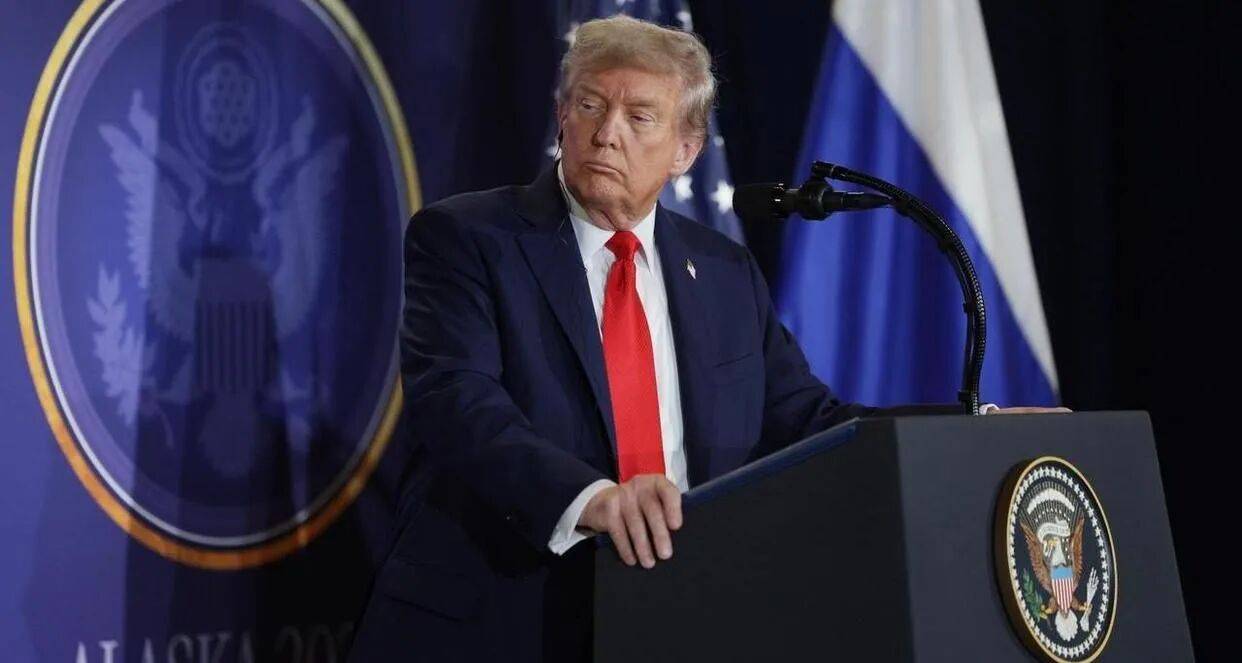
南方都市报(nddaily)报道 答:中方注意到,美国商务部泛化国家安全、滥用出口管制,对半导体、生物科技、航空航天、商贸物流 等领域多家中国实体实施制裁。美方假借维护国际秩序和国家安全之名,行单边、霸凌主义之实,将一己 私利凌驾于他国发展权利之上,打压遏制包括中国在内的各国企业,破坏其他国家之间正常的商业往来, 严重扭曲全球市场,损害企业合法权益,破坏全球供应链产业链安全稳定,中方对此坚决反对。 9月14日起,中美双方将在西班牙举行经贸会谈。美方此时对中国企业实施制裁,意欲何为?中方敦促美 方立即纠正错误做法,停止对中国企业的无理打压。中方将采取必要措施,坚决维护中国企业的合法权 益。 今日(9月13日)18时许,商务部网站发布"商务部新闻发言人就美将我多家实体列入出口管制'实体清单'事答 记者问"。 有记者问:我们注意到美东时间2025年9月12日,美商务部宣布将多家中国实体列入出口管制"实体清 单"。请问中方对此有何评论? ...


美将我多家实体列入出口管制“实体清单”,商务部回应
第一财经· 2025-09-13 11:34
Group 1 - The U.S. Department of Commerce has added multiple Chinese entities to its export control "entity list," which is seen as an abuse of export controls under the guise of national security [1] - The Chinese government criticizes the U.S. for its unilateral and bullying practices that prioritize its own interests over the development rights of other countries, particularly affecting sectors like semiconductors, biotechnology, and aerospace [1] - The Chinese government emphasizes that these actions distort the global market, harm legitimate business rights, and disrupt the stability of global supply chains [1] Group 2 - A bilateral economic and trade meeting between China and the U.S. is scheduled to take place in Spain starting September 14, raising questions about the timing of U.S. sanctions against Chinese companies [1] - The Chinese government urges the U.S. to correct its actions and cease the unreasonable suppression of Chinese enterprises, indicating potential retaliatory measures to protect the rights of Chinese companies [1]
美将多家中国实体列入出口管制“实体清单”,商务部回应
财联社· 2025-09-13 11:30
Core Viewpoint - The article discusses China's strong opposition to the U.S. Department of Commerce's decision to place multiple Chinese entities on the export control "Entity List," highlighting concerns over unilateralism and the impact on global trade and supply chains [2]. Group 1: U.S. Export Controls - The U.S. has generalized national security concerns and abused export controls against several Chinese entities in sectors such as semiconductors, biotechnology, aerospace, and logistics [2]. - The U.S. actions are seen as a means to prioritize its own interests over the development rights of other countries, particularly China [2]. Group 2: Impact on Global Trade - The sanctions are viewed as damaging to normal business exchanges between countries, distorting the global market and harming the legitimate rights of enterprises [2]. - The measures threaten the safety and stability of global supply chains and industrial chains [2]. Group 3: Response and Future Actions - China urges the U.S. to correct its actions and cease the unreasonable suppression of Chinese enterprises [2]. - China plans to take necessary measures to firmly protect the legitimate rights of its companies [2].
商务部就美将我多家实体列入出口管制“实体清单”事答记者问
Di Yi Cai Jing· 2025-09-13 11:26
Core Viewpoint - The Chinese government strongly opposes the U.S. Department of Commerce's decision to place multiple Chinese entities on the export control "entity list," viewing it as an abuse of power that undermines global market stability and harms legitimate business rights [1] Group 1: U.S. Actions - The U.S. has generalized national security concerns and misused export controls against Chinese entities in sectors such as semiconductors, biotechnology, aerospace, and logistics [1] - The U.S. actions are perceived as unilateral and bullying, prioritizing its own interests over the development rights of other countries [1] Group 2: Chinese Response - China urges the U.S. to correct its erroneous actions and cease the unreasonable suppression of Chinese enterprises [1] - The Chinese government will take necessary measures to firmly protect the legitimate rights and interests of Chinese companies [1] Group 3: Upcoming Talks - Economic and trade talks between China and the U.S. are scheduled to take place in Spain starting September 14 [1]
美国将23家中企列入实体清单!
国芯网· 2025-09-13 07:04
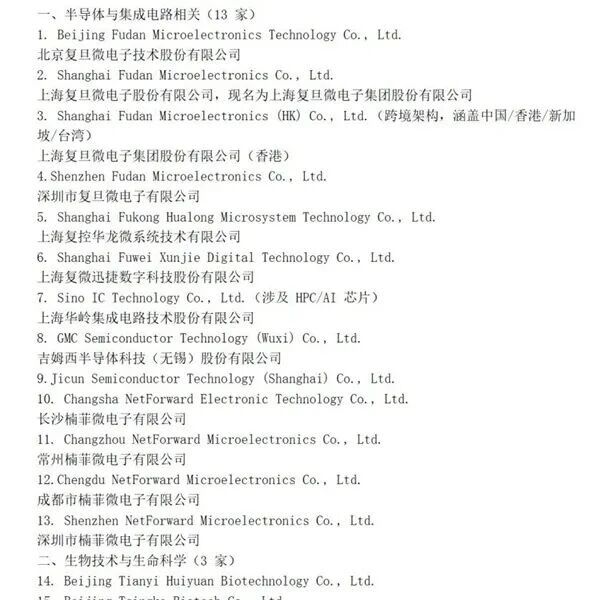
Group 1 - The U.S. Department of Commerce's Bureau of Industry and Security (BIS) has added 23 Chinese entities to its entity list, citing actions that allegedly undermine U.S. national security or foreign policy interests [2] - China has expressed strong opposition to the U.S. actions, stating that the U.S. is misusing export control measures and harming the legitimate rights of Chinese entities [2][3] - The Chinese government urges the U.S. to cease its actions and emphasizes the need to maintain the stability of global supply chains [2][3] Group 2 - The 2025 Bay Area Semiconductor Industry Ecosystem Expo will take place in Shenzhen from October 15 to October 17, featuring over 600 participating companies and an exhibition area of 60,000 square meters [4]
中美即将在西班牙谈关税
Huan Qiu Shi Bao· 2025-09-13 03:26
Core Viewpoint - The upcoming talks in Spain between Chinese and U.S. officials are crucial for addressing trade issues, including tariffs and the TikTok situation, amidst ongoing tensions in U.S.-China relations [1][2]. Group 1: Meeting Details - Chinese Vice Premier He Lifeng will lead a delegation to Spain from September 14 to 17 to discuss U.S. unilateral tariff measures, export controls, and TikTok [1]. - U.S. Treasury Secretary Yellen plans to meet with Chinese officials in Madrid as part of her trip to Spain and the UK, focusing on trade, economic, and national security issues [1]. Group 2: TikTok and Data Privacy - The Chinese government emphasizes its commitment to protecting the legitimate rights of its companies, stating it will handle TikTok issues in accordance with local laws [1]. - China urges the U.S. to engage in dialogue based on mutual respect and equality to create a fair business environment for Chinese companies like TikTok in the U.S. [1]. Group 3: Context of the Talks - This meeting will be the fourth significant face-to-face discussion between high-level U.S. and Chinese economic officials this year [2]. - Previous meetings in Geneva, London, and Stockholm have led to temporary suspensions of tariff implementations, indicating a potential thaw in negotiations [2]. - Analysts suggest that the upcoming talks could be decisive for reaching a more comprehensive trade agreement before November 10 [2].
中美双方将在西班牙举行会谈
券商中国· 2025-09-12 13:52
9月12日,商务部新闻发言人就中美在西班牙举行会谈事答记者问。 有记者问:美方消息称,美国财长贝森特近日将在西班牙马德里与国务院副总理何立峰举行会谈,请问商务部可否 确认该消息? 闹大了!特朗普,最新回应! 突发!巴菲特,重大警告!发生了什么? 违法和不良信息举报电话:0755-83514034 邮箱:bwb@stcn.com 来源:央视新闻客户端 责编:刘珺宇 校 对: 祝甜婷 百万用户都在看 打卡!600万! 创新药,突发! A股,风云突变!发生了什么? 刚刚!宁德时代,突爆大消息! 答:经中美双方商定,中共中央政治局委员、国务院副总理何立峰将于9月14日至17日率团赴西班牙与美方举行会 谈。双方将讨论美单边关税措施、滥用出口管制及TikTok等经贸问题。 ...
中美双方将在西班牙举行会谈 讨论美单边关税措施、滥用出口管制等问题
Yang Shi Xin Wen Ke Hu Duan· 2025-09-12 12:50
Core Points - The U.S. Treasury Secretary, Janet Yellen, is set to meet with Chinese Vice Premier He Lifeng in Madrid from September 14 to 17 to discuss various economic and trade issues [1] - Key topics for discussion include U.S. unilateral tariff measures, the abuse of export controls, and issues related to TikTok [1] Group 1 - The meeting is part of ongoing efforts to address bilateral economic relations between the U.S. and China [1] - The discussions are expected to focus on trade policies that have significant implications for both countries' economies [1] - The engagement highlights the importance of dialogue in managing trade tensions and fostering cooperation [1]
稀土出口金额环比增长超50%,资金热捧下稀土ETF(516780)成交活跃
Xin Lang Ji Jin· 2025-09-11 07:47
Group 1 - The core viewpoint of the articles highlights the increasing dominance of China's rare earth industry in the global market, as evidenced by the rise in export value despite a decrease in export volume [1] - In August 2025, China's rare earth export volume decreased by 3.4% month-on-month, while export value surged from $3.64 million in July to $5.5 million, marking a 51% increase [1] - The shift in China's rare earth industry from a volume-driven model to a quality-driven pricing model is underscored by recent government policies aimed at controlling export volumes and establishing a traceability system [1][2] Group 2 - As of September 10, 2025, the average daily trading volume of the rare earth ETF (516780) reached 416 million yuan, a significant increase from 63 million yuan in the second quarter [2] - The rare earth ETF (516780) closely tracks the CSI Rare Earth Industry Index, which includes companies involved in rare earth mining, processing, trading, and applications, with top holdings in competitive firms like Northern Rare Earth and China Rare Earth [2] - The management company of the rare earth ETF, Huatai-PB Fund, has over 18 years of experience in ETF operations, with a leading position in index investment management capabilities [2]
他还觉得冤枉?美联储111年历史上首次!特朗普质疑上诉法院判决
Sou Hu Cai Jing· 2025-09-04 23:20
Group 1 - The conflict between President Trump and Federal Reserve Governor Lisa Cook marks a significant political event, as it is unprecedented for a sitting president to attempt to dismiss a Federal Reserve official [1][3] - The legal basis for Trump's action hinges on allegations of "mortgage fraud," which raises questions about the independence of the Federal Reserve and the legitimacy of political interference in its operations [3][6] - The market is reacting to these political tensions, with a notable inversion in the yield curve indicating concerns over short-term interest rate cuts versus long-term inflation risks [4][9] Group 2 - The independence of central banks is crucial for macroeconomic stability, and any perceived erosion of this independence could have severe implications for both the U.S. and global economies [6] - The legal proceedings initiated by Cook could set a precedent regarding what constitutes "just cause" for dismissing Federal Reserve officials, potentially impacting future political interactions with the central bank [6][7] - Trump's dual strategy of applying pressure both domestically on the Federal Reserve and internationally on the EU reflects a broader approach to economic management, aiming for favorable outcomes in trade and monetary policy [9]