
就业市场

Search documents
澳洲联储会议纪要:就业市场并未如预期那样放缓,全球经济出现严重衰退的风险降低。
news flash· 2025-07-22 01:36
Core Insights - The Reserve Bank of Australia (RBA) meeting minutes indicate that the labor market has not slowed down as expected, suggesting resilience in employment conditions [1] - The risk of a severe global economic downturn has decreased, reflecting a more stable international economic environment [1] Group 1 - The employment market remains robust, contrary to previous expectations of a slowdown [1] - Global economic risks have lessened, indicating improved economic stability [1]
7月经济价升量落,低位平衡点逐步形成
China Post Securities· 2025-07-21 09:08
Economic Overview - In July, economic prices increased while volumes decreased, indicating a search for rebalancing in supply and demand, with marginal economic growth expected to slow down[1] - The Producer Price Index (PPI) showed a month-on-month increase, with the year-on-year decline in growth narrowing, primarily driven by the "anti-involution" policy expectations[1][45] Real Estate Market - The sales sentiment in the real estate market weakened, with both month-on-month and year-on-year growth turning negative; the average daily transaction area in 30 major cities decreased by 15.85% compared to June[2][11] - It is anticipated that first-tier city housing prices may stabilize by the end of the year, while second-tier cities may see stabilization by June next year[2][48] Industrial Demand - Industrial demand showed a mild recovery, with the rebar production rate increasing to 43.06%, up 0.87 percentage points from June, while prices slightly decreased by 0.16%[15] - The average operating rate for asphalt plants rose to 32.4%, indicating a recovery in demand, with asphalt inventory decreasing by 7.31%[18] Consumer Behavior - July consumer spending is expected to remain resilient, supported by a surge in tourism during the summer, with domestic tourism projected to exceed 2.5 billion trips, recovering to over 115% of 2019 levels[26] - The average daily subway ridership in major cities increased, reflecting a rebound in travel demand during the summer[23] Risks and Challenges - Potential risks include unexpected intensification of global trade frictions, geopolitical conflicts, and policy effects falling short of expectations[3]
凯德北京投资基金管理有限公司:沃勒力主美联储本月降息25个基点
Sou Hu Cai Jing· 2025-07-19 15:01
Core Viewpoint - Federal Reserve Governor Christopher Waller advocates for a 25 basis point interest rate cut in the upcoming policy meeting, highlighting a critical divergence in monetary policy as inflation approaches targets while the job market shows signs of weakness [1][5]. Economic Data Insights - Waller's perspective stands out within the Federal Reserve, as he identifies a significant slowdown in private sector job growth and a continuous decline in wage growth, indicating pressure on the labor market [3]. - The June employment report supports Waller's concerns, showing a slight decrease in the unemployment rate but complicating job data interpretation due to a sharp reduction in foreign labor [3]. Inflation Analysis - U.S. inflation data bolsters Waller's argument, with the core inflation rate falling below expectations for the fifth consecutive month. He emphasizes the stability of inflation expectations and moderate wage growth, suggesting that policy should focus on core inflation levels near the 2% target, rather than temporary tariff-induced fluctuations [5]. Diverging Opinions within the Fed - Despite Waller's stance, many Federal Reserve officials believe it is premature to cut rates while inflation remains uncontained and there are no clear signs of economic recession. This divergence creates uncertainty for the upcoming Federal Open Market Committee meeting [7]. - Waller and Vice Chair Michelle Bowman share a consensus that the primary risk has shifted from inflation to the job market, warning that the mission of ensuring full employment is increasingly at risk [5][7]. Market Reactions - Wall Street traders have begun to bet on the probability of a rate cut, leading to subtle changes in the bond market yield curve. However, Waller cautions that any policy adjustments should be gradual, reflecting a nuanced understanding of the economic turning point [7].


美联储降息救市!今日深夜的五大消息已全面发酵
Sou Hu Cai Jing· 2025-07-18 23:57
全球博弈:48小时的美元风暴 凌晨1:37,第一道红色警报弹出:达拉斯联储主席洛根在纽约经济俱乐部的演讲中,抛出重磅炸弹——"当前4.25?%的利率区间必须保持足够长的限缩性"。 "超长利率平台期"的字样瞬间淹没华尔街的交易终端。汤普森迅速心算:按"6-12个月"的主流解读,高利率至少将持续到2026年第一季度。 洛根的演讲暗藏 三重博弈:通胀仍在2.3%徘徊,特朗普的关税政策如同达摩克利斯之剑;就业市场表面坚挺,实则暗藏疲态;而股市繁荣和财政政策,却为美联储维持高 利率提供了某种"经济尾风"。 黄金价格应声下跌至3330美元下方,降息预期迅速蒸发。 汤普森注视着窗外,日本财务省官员带着新提案飞往华盛顿的航班正在爬升,韩国贸易代表团的车辆驶入杜勒斯机场……全球资本正屏息等待着美联储的最 终判决。黄金价格在避险浪潮中重拾升势,2025年以来累计涨幅已达27.8%。 他回想起洛根演讲结束时引用的鲍威尔名言——"处于良好位置"。 今晚,这五 个字听起来,更像风暴来临前的诡异宁静。 利率的权杖在政治与数据间摇摆,黄金的光芒照亮资本逃亡的暗路,交易大厅的每一次心跳,都在丈量独立与 妥协的距离。 美联储的百年金库正被政治 ...
迄今最强“7月降息”呼吁,沃勒公开发声,美联储内部分歧加剧
Hua Er Jie Jian Wen· 2025-07-18 01:52
本周多位有影响力的美联储官员发表讲话,就是否应该降息以及何时降息产生了日益扩大的分歧,给期待今年进一步放宽政策的投资者带来了新 的不确定性。 7月17日,美联储理事沃勒在纽约发表讲话时直言不讳地表示,7月利率决议上就应该降息,不应等到劳动力市场恶化后才下调利率。旧金山联储 主席戴利接受采访时则重申,年内降息两次是合理的,并警告称如果等到通胀完全达到2%的目标再行动,"很可能已经对经济造成了完全不必要 的伤害"。 不过当日稍早,亚特兰大联储主席博斯蒂克和美联储理事库格勒均公开表示,关税对价格的传导效应正在显现,现在放松政策为时过早。博斯蒂 克直言,最新的CPI数据"传递了一个不同的信息",暗示通胀可能正处于一个"拐点"。 这些新言论表明特朗普的关税和财政政策,正让美联储的政策制定者们在降息问题上的分歧越来越大:对于一些鹰派人士来说,现在降低利率是 否合适;温和派主张在不确定的情况下采取观望态度。 鸽派担忧经济受损,对降息持开放态度 一些决策者认为,就业市场呈现疲软迹象,而过分关注当前的通胀波动可能会错失支持经济的最佳时机,从而带来不必要的风险。 据华尔街见闻,美联储理事沃勒是这一观点的代表人物。在纽约一场活动中 ...
中信期货晨报:国内商品期市收盘多数下跌,黑色系普遍下跌-20250717
Zhong Xin Qi Huo· 2025-07-17 01:12
1. Report Industry Investment Rating No relevant content provided. 2. Core Viewpoints of the Report - For domestic assets, there are mainly structural opportunities, with the policy - driven logic being strengthened. The probability of incremental domestic policies being implemented in the fourth quarter is higher. Attention should be paid to the impact of the "anti - involution" policy on the supply - side on assets. Overseas, attention should be paid to tariff frictions and geopolitical risks. In the long term, the weak - dollar pattern continues, and volatility jumps should be guarded against. Strategic allocation of resources such as gold should be maintained [6]. 3. Summary by Related Catalogs 3.1 Macro Essentials Overseas Macro - The "reciprocal tariff" rates of the United States for most economies have been announced. Except for Japan and Malaysia, most rates have been lowered, and short - term tariff uncertainty has declined. In May, the US wholesale sales monthly rate was - 0.3%, and the wholesale inventory monthly rate final value was - 0.3%. In June, the 1 - year inflation expectation of the New York Fed was 3.0%. The number of new non - farm jobs in the US in June was better than expected, but there were concerns in the employment market. The "Big and Beautiful" Act in the US on July 4 will increase the US deficit by $3.3 trillion in the next 10 years [6]. Domestic Macro - In June, China's export volume increased slightly year - on - year to 5.8%, CPI increased by 0.1% year - on - year, and PPI decreased by 3.6% year - on - year. The improvement in exports to the US was the main boost. The Central Financial and Economic Commission's sixth meeting on July 1 proposed to regulate the low - price and disorderly competition of enterprises and promote the orderly withdrawal of backward production capacity. Commodities oriented to domestic demand and those that have been falling since the beginning of the year were greatly affected by the "anti - involution" policy [6]. 3.2 Viewpoint Highlights Macro - Domestically, there will be moderate reserve requirement ratio cuts and interest rate cuts, and the fiscal end will implement established policies in the short term. Overseas, the inflation expectation structure has flattened, the economic growth expectation has improved, and stagflation trading has cooled down [7]. Financial - The sentiment in the stock market has risen, and the bond market maintains a volatile trend. Stock index futures continue a moderately upward trend, stock index options remain cautious, and the sentiment in the bond market for treasury bond futures has weakened [7]. Precious Metals - Risk appetite has recovered, and precious metals are in short - term adjustment. Gold and silver continue to adjust [7]. Shipping - The sentiment has declined. Attention should be paid to the sustainability of the increase in the loading rate in June. For the container shipping route to Europe, attention should be paid to the game between peak - season expectations and the implementation of price increases [7]. Black Building Materials - The macro sentiment has temporarily cooled down, and black commodities have declined slightly. Steel products, iron ore, coke, coking coal, silicon iron, manganese silicon, glass, and soda ash all show a volatile trend [7]. Non - ferrous Metals and New Materials - There is a game between reciprocal tariff and domestic policy stimulus expectations. Non - ferrous metals stop falling and rebound. Copper, aluminum, zinc, lead, nickel, stainless steel, tin, and other metals show different volatile trends [7]. Energy and Chemicals - OPEC+ has increased production more than expected, and crude oil will drag down the energy and chemical sector to fluctuate weakly. Crude oil, LPG, asphalt, high - sulfur fuel oil, low - sulfur fuel oil, and other products show different trends such as volatile decline, decline, and volatility [9]. Agriculture - Agricultural varieties mostly show a volatile trend. Rubber, synthetic rubber, pulp, cotton, sugar, and other products all show a volatile trend [9].
美联储“换帅”风波,为何值得世界关注
Sou Hu Cai Jing· 2025-07-17 01:05
Core Viewpoint - The selection process for the next Federal Reserve Chairman has officially begun, reflecting uncertainties in U.S. governance and its potential impact on global capital flows and economic policies [1][2]. Group 1: Federal Reserve's Role and Independence - The Federal Reserve's benchmark status in the global central banking system is attributed to its relative independence, which is now being challenged by political pressures [2][4]. - Recent years have seen the Fed adopt unconventional monetary policies, including significant money supply increases and low interest rates, which have been perceived as aligned with White House economic policies [2][4]. Group 2: Political Influence on Monetary Policy - The current political landscape has led to a conflict between the Fed's aggressive interest rate hikes to combat inflation and the White House's desire for a more compliant Fed Chair to stimulate economic growth ahead of midterm elections [2][3]. - Historical precedents exist where political pressures have directly influenced monetary policy, with the current situation being more overt and direct than in the past [3]. Group 3: Implications for Global Markets - The uncertainty surrounding the Fed Chair selection has implications beyond the U.S., affecting global markets through the dollar's dominance and U.S. Treasury yields [4]. - A potential departure of Chair Powell could lead to significant market reactions, including a sell-off of the dollar and U.S. bonds, particularly if policy adjustments are driven by political needs rather than economic fundamentals [4]. Group 4: Economic and Political Challenges - The U.S. economy faces challenges such as high debt, slow growth, and persistent inflation, complicating the effectiveness of traditional economic stimulus measures [4]. - Political polarization and short-term electoral considerations hinder the ability to formulate long-term economic policies, increasing the challenges to the Fed's independence [4].
美联储威廉姆斯:当前的联邦储备政策可能会降低通胀,但对就业市场的影响较为温和。
news flash· 2025-07-16 23:45
Core Viewpoint - The current Federal Reserve policy may help reduce inflation, but its impact on the labor market is expected to be moderate [1] Group 1 - The Federal Reserve's approach is aimed at controlling inflation rates [1] - The anticipated effects on employment are not as significant as the measures taken to address inflation [1]
失业率意外下降,低薪兼职成常态,加拿大就业市场的背后真相
Sou Hu Cai Jing· 2025-07-12 02:59
Core Insights - Canada's unemployment rate unexpectedly decreased to 6.9% in June, despite various economic challenges, driven primarily by job growth in wholesale and retail trade, healthcare, and social assistance sectors [1][3] - The addition of 83,100 jobs, mostly part-time, has injected some vitality into the labor market, but raises concerns about job quality and income stability [1][3] Employment Quality Concerns - The average wage growth for long-term employees has slowed to 3.2%, indicating potential underlying issues in the Canadian job market [3][5] - The prevalence of part-time positions suggests a decline in job quality, leading to income instability and limited career advancement opportunities, particularly affecting groups that require stable, high-income jobs [3][5] Manufacturing Sector Challenges - The manufacturing sector continues to face significant pressure from tariffs and international trade issues, which hampers overall employment growth [3][7] - Trade tensions between the U.S. and Canada remain unresolved, contributing to a challenging environment for Canadian manufacturing [3][7] Healthcare and Retail Sector Dynamics - Job growth in healthcare and social assistance is a positive sign, but the low wage levels and prevalence of low-skilled positions raise questions about long-term economic benefits [5][7] - The increase in employment within the wholesale and retail trade sectors may reflect consumer responses to economic conditions, but the sustainability of this growth is uncertain due to the rise of e-commerce and AI [5][7] Macroeconomic Context - The decline in unemployment does not mask the underlying issues within the Canadian job market, which is influenced by external factors rather than internal economic growth [7] - Future employment trends will be shaped by global economic uncertainties, changes in international trade relations, and domestic policy adjustments [7]

最新纪要27次提及经济“不确定性” 美联储官员对降息仍持审慎立场
Zheng Quan Ri Bao Wang· 2025-07-11 03:01
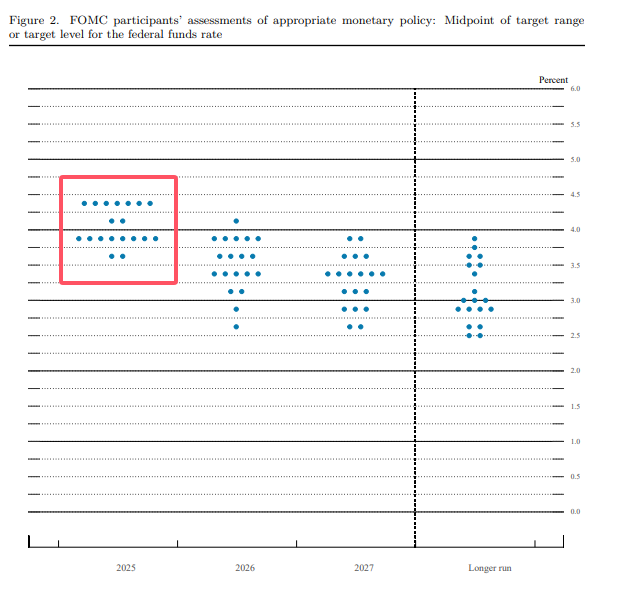
Group 1 - The Federal Reserve's June meeting minutes reveal significant divisions among officials regarding the impact of U.S. tariff policies on inflation, contributing to uncertainty in economic policy [1] - The term "uncertainty" was mentioned 27 times in the minutes, highlighting the complexities faced by the Federal Reserve due to rapid changes in U.S. economic policies [1] - The Federal Reserve maintained the federal funds rate target range at 4.25% to 4.5% for the fourth consecutive time, with market expectations shifting regarding potential rate cuts following mixed signals from officials [1] Group 2 - Current monetary policy positions among the 12 Federal Reserve voting members show considerable divergence, with 6 holding a neutral stance and 2 adopting a hawkish position [2] - The minutes indicate that while some policymakers are open to rate cuts if data aligns with their expectations, the overall support for short-term rate cuts remains limited [2] - The cautious approach to adjusting monetary policy reflects a consensus among officials that there may not be a need for rate cuts this year [2] Group 3 - The Federal Reserve faces a dilemma regarding interest rate cuts, needing to balance the prevention of economic recession with the risks of inflation due to tariffs and trade protection measures [3] - Key factors influencing the Fed's potential shift to a dovish stance include significant changes in U.S. economic data, particularly if economic contraction becomes evident while inflation remains manageable [3] - Despite some signs of weakness in the job market, overall employment data suggests resilience, leading to a lower probability of rate cuts in July [3]