红利资产

Search documents
“两新”加码撬动下沉市场与银发经济降息预期下红利资产与科技成长共舞
Zhong Guo Zheng Quan Bao· 2025-08-01 21:02
Group 1: Fiscal Policy and Economic Outlook - China's fiscal policy has maintained a proactive stance in the first half of the year, with increased spending intensity and optimized expenditure structure, indicating significant operational space for the second half [2][3] - Key areas of focus for fiscal support include urban renewal, investment in human capital, and industrial upgrades, reflecting a systematic and forward-looking approach [2][3] - The broad fiscal revenue and expenditure gap has increased by at least 1.6 trillion yuan year-on-year, highlighting the critical role of fiscal policy in stabilizing consumption, investment, and the financial system [3] Group 2: Consumer Market and Policy Incentives - The introduction of policies promoting the replacement of old consumer goods is expected to benefit the lower-tier markets and the silver economy, which are seen as undervalued opportunities [4][5] - The "old for new" policy is anticipated to enhance consumer upgrading in lower-tier markets, with significant potential for the home appliance market due to the aging of previous policies [5] - The aging population is expected to drive demand in healthcare, elderly services, and related industries, creating investment opportunities in medical devices, innovative drugs, and elder care services [6] Group 3: Industry Dynamics and Competitive Landscape - The "anti-involution" policy is reshaping the industrial landscape by promoting the exit of inefficient capacity, with leading companies expected to benefit from improved profitability due to their competitive advantages [7] - The focus on "anti-involution" is not merely about capacity reduction but aims at optimizing market mechanisms for high-quality industrial development [7] - The investment logic for core assets in the A50 index is shifting from "reassessing resilience" to "reassessing growth," indicating a potential revaluation of these assets as the real estate cycle stabilizes [9] Group 4: Market Opportunities and Investment Strategies - The current market strategy involves a dual approach of "dividend assets as a shield" and "new tracks as a spear," with dividend assets providing stability amid uncertainty and new sectors driving structural opportunities [8] - The expectation of synchronized interest rate cuts in China and the U.S. is likely to lower financing costs for the real economy and attract foreign investment into the A-share technology growth sector [10] - The anticipated decline in financing costs may stimulate demand in the real estate sector and consumer goods, enhancing the competitiveness of Chinese exports [10]
金鹰基金:均衡配置应对潜在波动和快速轮动 关注红利、低位科技、反内卷等方向
Xin Lang Ji Jin· 2025-08-01 08:06
金鹰基金权益研究部策略研究员金达莱 首席经济学家、基金经理杨刚 7月A股大幅放量冲关9.24以来高点,多行业轮动扩大赚钱效应。月内国防军工受益于9.3阅兵预期,行 业表现活跃,而市场风偏提振下,AI驱动的产业链展现出更大弹性。与此同时,创新药再迎政策利好 和恒瑞医药海外BD大单,也点燃了市场投资热情。此外,超预期一面在于,中央财经委推动供给侧反 内卷带动周期行业大幅反弹,以及"雅下水电站"开工进一步推动市场短期风偏。 展望8月市场,关税对全球经济实际影响将显现,等待国内外局势更趋明朗。海外方面,中美新一轮谈 判目前并未有明确进一步进展,此前市场偏乐观的预期或有一定修正。此外,232调查等针对个别行业 的超高关税有待落地。美联储在通胀抬升和就业不差的美国经济背景下,难以引导宽松预期。国内方 面,进入8月,PMI转弱已显示此前"抢出口"效应对经济抬升的支撑正在减弱,我国关税落地后对基本 面的实际影响将进入真实考察期,短期政治局会议基调延续稳中求进,增量政策或难以期待。总体而 言,海内外均有不同层面的不确定性因素有待资本市场消化,市场高位下后续需检验基本面韧性。 后续,还需重点关注以下海内外因素,预计这些方面都可能 ...
电解铝行业将迎关键大会,行业供需依旧偏紧,有望成为真正“红利资产”
Xuan Gu Bao· 2025-08-01 07:16
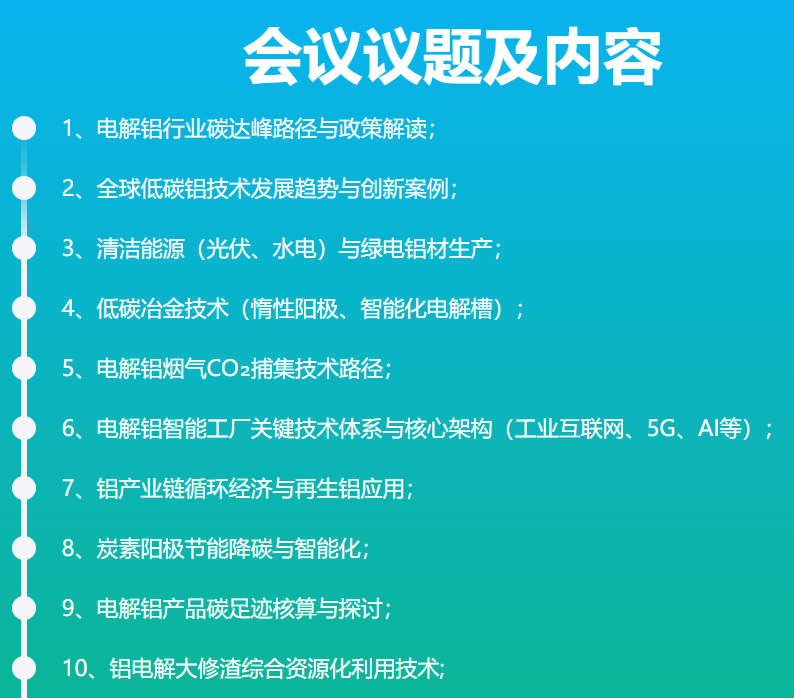
一、事件:2025中国电解铝大会 据中冶有色官网显示,"2025中国电解铝大会"将于2025年8月21-23日在云南省昆明市召开。 据悉,本次会议主题内容包括"电解铝产品碳足迹核算与探讨"、"电解铝烟气CO?捕集技术路径"、"电解铝智能工厂关键技术体系与核心架构 (工业互联网、5G、AI等)"等。 供需趋紧,或成真正红利资产 天风证券表示,我国电解铝行业产能的天花板被划定为 4400-4500 万吨,截至 25 年 5 月底,国内电解铝建成产能及运行产能分别为 4550/4413 万吨,建成产能达4500 万吨天花板,同时产能利用率已达到 97%,为历史相对高点。 传统领域中,地产对铝需求形成一定拖累,但电力、家电等需求韧性较强。新能源领域,电解铝需求主要由光伏及新能源车拉动。光伏装机的 稳定增长叠加新能源车产销的高景气度为铝需求提供较多增量。供需趋紧格局下,预计铝价中枢有望稳步抬升,电解铝行业高利润有望延续。 另外东方证券指出,随着电解铝行业内部资本开支的持续下降,上市公司稳定的盈利有望带来资产负债表的持续改善,最终或体现为分红回购 的持续增长。根据当前电解铝及氧化铝价格测算,主要上市公司股息率有望接近6% ...

2025年8月东北固收行业轮动策略:短期延续主线脉络,适时布局低位行业
NORTHEAST SECURITIES· 2025-08-01 07:13
Group 1 - The report suggests that the current market adjustment is not expected to be sustained, presenting a potential short-term accumulation window, driven by high-growth sectors such as PCB, optical modules, and innovative pharmaceuticals [2][3] - It is recommended to moderately increase positions in leading sectors in August, while also paying attention to potential rotation directions [3] - The report emphasizes the importance of semiconductor and medical device industries, which are currently at relatively low levels and closely related to the main logic of the current market trend, offering dual advantages of valuation recovery and sustained growth [6][8] Group 2 - The report highlights the automotive industry as worthy of attention due to its low valuation and potential for marginal improvement under the influence of policies aimed at reducing internal competition [6][8] - The report identifies several low-position industries with marginal improvements, including electric motors, automotive, and environmental protection, indicating positive trends in key indicators such as export amounts and production levels [7][8] - The report notes that the political bureau meeting's content did not meet expectations, leading to market corrections in sectors like anti-involution, real estate, and cyclical industries [6][8]
低利率环境下红利板块仍具配置价值,国企红利ETF(159515)整固蓄势
Sou Hu Cai Jing· 2025-08-01 06:46
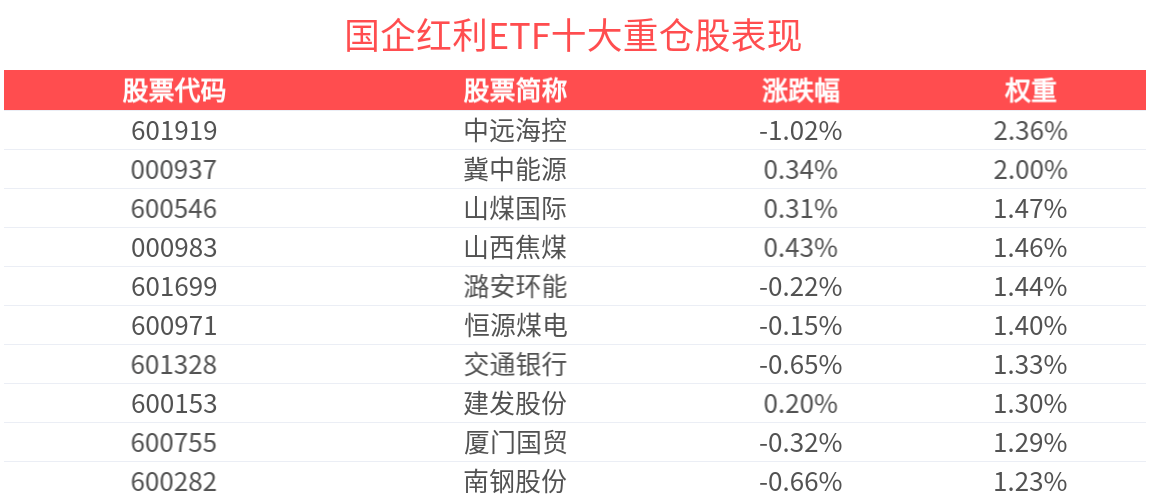
Group 1 - The China Securities State-Owned Enterprises Dividend Index (000824) decreased by 0.20% as of August 1, 2025, with component stocks showing mixed performance [1] - Western Mining (601168) led the gainers with an increase of 2.04%, followed by Pingmei Shenma Energy (601666) at 2.02%, and Jinkong Coal Industry (601001) at 1.76% [1] - China Petroleum (601857) and China Petrochemical (600028) were among the top decliners, indicating a divergence in stock performance within the index [1] Group 2 - The China Securities State-Owned Enterprises Dividend ETF (159515) has been adjusted to a latest price of 1.13 yuan, reflecting changes in the underlying index [1] - The index tracks 100 listed companies with high cash dividend yields, stable dividends, and certain scale and liquidity, representing the overall performance of high dividend yield securities among state-owned enterprises [2] - As of July 31, 2025, the top ten weighted stocks in the index accounted for 16.77% of the total index weight, with China Merchants Industry Holdings (601919) being the largest component [2] Group 3 - In the current market environment, characterized by rising risk appetite and a shift of funds from bonds to equities, dividend assets are seen as valuable for investors seeking stable returns [1] - Open Source Securities emphasizes the importance of high dividend strategies amidst rising uncertainty, suggesting a focus on stable dividend stocks like banks and public utilities over cyclical dividend stocks [1] - Despite the market's current focus on technology and emerging industries, the dividend sector retains certain allocation value, particularly in a low-interest-rate environment [1]
市场或重回震荡走势,资金回流红利类资产!恒生红利低波ETF(159545)七月吸金超15亿元
Mei Ri Jing Ji Xin Wen· 2025-08-01 03:12
Group 1 - The A-share market has shown signs of short-term pressure after breaking through resistance levels at the end of July, leading to adjustments in major stock indices [1] - There has been a significant inflow into dividend-focused ETFs, with over 9 billion yuan net inflow in July, indicating a shift in market focus towards dividend assets [1] - The Hang Seng Dividend Low Volatility ETF (159545) has attracted over 1.5 billion yuan in net inflows in July, ranking among the top in dividend ETFs [1] Group 2 - Analysts suggest that as domestic interest rates enter a downward cycle, the focus of asset allocation is shifting from growth to returns, increasing attention on dividend assets [1] - The overall valuation of the Hong Kong stock market is at historical lows, with a growing willingness among companies to distribute dividends, supported by policies encouraging long-term capital market investments [1] - The Hang Seng High Dividend Low Volatility Index consists of 50 stocks with good liquidity, consistent dividends, moderate payout ratios, and low volatility, currently offering a dividend yield of approximately 5.8% [1] Group 3 - The Hang Seng Dividend Low Volatility ETF (159545) has the lowest management fee rate of 0.15% per year among ETFs, facilitating low-cost investment in the Hong Kong high dividend sector [1]
厚报投资者 A股“红包”来袭——24家上市公司拟中期分红超145亿元
Zheng Quan Ri Bao· 2025-08-01 01:18
自去年以来,一年多次分红蔚然成风,A股分红金额不断提升。南开大学金融学教授田利辉在接受《证 券日报》记者采访时表示,红利资产因高股息叠加抗跌性成为资金"避风港"。在政策红利、企业治理升 级与资金需求共振下,预计今年红利资产或持续跑赢大盘,为投资者提供稳收益、抗风险的核心配置选 项。 一年多次分红队伍壮大 首次中期分红公司获青睐 自去年新"国九条"出台以来,监管部门持续强化上市公司现金分红监管,推动一年多次分红,增强分红 稳定性、持续性和可预期性。 今年以来,中期分红逐渐常态化。例如,宁德时代今年是第二次计划中期分红,公司于去年12月份发布 2024年特别分红方案,于今年1月份实施,分红金额为53.97亿元。 此外,一年多次分红队伍逐渐壮大。今年以来,药明康德、海大集团等公司首次披露中期分红预案,计 划分红金额分别为10.03亿元、3.33亿元。 记者注意到,药明康德、海大集团在首次中期分红方案披露后,股价明显受到提振。同时,2家公司业 绩稳步增长。据公司2025年半年报数据,药明康德、海大集团上半年营业收入分别同比增长20.64%、 12.50%;归母净利润分别同比增长101.92%、24.16%。 对此,田 ...



资源股迎贝塔时代、权益市场或迎来慢牛格局、A股三大主线浮现!三大基金经理最新研判
券商中国· 2025-07-31 23:30
Core Viewpoints - The current capital market is undergoing unprecedented changes and challenges, with a focus on optimizing asset allocation through professional research and investment strategies [1] - The Chinese public fund industry is transitioning from scale expansion to high-quality development, injecting new vitality into the market [1] - The article emphasizes the importance of understanding supply constraints over demand in resource stocks, highlighting a shift from "cyclical commodities" to "strategic assets" [4][15] Group 1: Insights from Fund Managers - Manager Guan Haoyang from Western Benefit Fund believes that investing in resource stocks is crucial at this time, where supply is more important than demand, and beta is more significant than individual stocks [4][15] - Manager Jiang Yong from Haifutong Fund emphasizes a long-term investment approach, aiming to provide a good holding experience for investors without chasing short-term market trends [22][27] - Manager Zhu Liang from Lianbo Fund highlights the importance of focusing on structural opportunities such as dividends, new productive forces, and new consumption during the critical transformation period of the Chinese capital market [37][40] Group 2: Guan Haoyang's Investment Strategy - Guan Haoyang categorizes resource stocks into four types: cyclical assets, thematic assets, value assets, and dividend assets, each requiring a different investment approach [8][9][10][11] - The strategy leans towards cyclical assets, with a focus on industrial and precious metals, aiming to enhance product elasticity [12] - Guan believes that the current commodity cycle, which started in 2020, still holds opportunities due to supply-side constraints [15][19] Group 3: Jiang Yong's Investment Philosophy - Jiang Yong adopts a strategy of "extreme diversification + safety margin" to manage potential market volatility, focusing on low-valuation and high-profit certainty targets [23][26] - He emphasizes the importance of absolute returns and aims to provide a stable long-term investment experience for fund holders [27][31] - Jiang's approach includes a balanced distribution across industries and a focus on individual stock diversification, ensuring no single stock exceeds 1% of total holdings [28][29] Group 4: Zhu Liang's Market Outlook - Zhu Liang notes that the A-share market is showing signs of bottoming out, with improvements in policy, structure, and fundamentals [36][39] - He identifies three main investment lines: dividend stocks, new productive forces, and new consumption, which are expected to provide significant investment potential [40][42] - Zhu emphasizes the recovery of the private economy as a key observation dimension, indicating a positive shift in market sentiment and investment confidence [43][44]

厚报投资者 A股“红包”来袭 24家上市公司拟中期分红超145亿元
Zheng Quan Ri Bao· 2025-07-31 16:08
7月30日晚间,宁德时代新能源科技股份有限公司(以下简称"宁德时代")披露2025年中期分红方案, 拟向全体股东每10股派发现金分红10.07元(含税),合计分红金额45.73亿元。 自去年新"国九条"出台以来,监管部门持续强化上市公司现金分红监管,推动一年多次分红,增强分红 稳定性、持续性和可预期性。 今年以来,中期分红逐渐常态化。例如,宁德时代今年是第二次计划中期分红,公司于去年12月份发布 2024年特别分红方案,于今年1月份实施,分红金额为53.97亿元。 此外,一年多次分红队伍逐渐壮大。今年以来,药明康德、海大集团等公司首次披露中期分红预案,计 划分红金额分别为10.03亿元、3.33亿元。 记者注意到,药明康德、海大集团在首次中期分红方案披露后,股价明显受到提振。同时,2家公司业 绩稳步增长。据公司2025年半年报数据,药明康德、海大集团上半年营业收入分别同比增长20.64%、 12.50%;归母净利润分别同比增长101.92%、24.16%。 对此,田利辉表示,这反映了市场对公司治理质量提升和盈利确定性增强的认可。其逻辑是分红信号释 放经营信心,首次中期分红通常被视为公司现金流充沛、盈利能力稳健 ...
长江电力(600900):业绩稳定增长,拟投资葛洲坝航运扩能
Shenwan Hongyuan Securities· 2025-07-31 15:35
Investment Rating - The report maintains a "Buy" rating for the company [1] Core Views - The company reported stable revenue growth, with a 5.02% increase in revenue to 36.587 billion yuan in the first half of 2025, and a 14.22% increase in net profit to 12.984 billion yuan, aligning with expectations [6] - The company plans to invest 26.6 billion yuan in the Gezhouba shipping expansion project, which aims to enhance the efficiency of hydropower generation and reduce vessel waiting times [6] - The company continues to offer attractive dividends, with a dividend yield of 3.39%, providing a strong cash flow capability and stability in dividend payments [6] Financial Data and Profit Forecast - Total revenue is projected to reach 89.766 billion yuan in 2025, with a year-on-year growth rate of 6.2% [5] - The net profit attributable to shareholders is expected to be 35.561 billion yuan in 2025, reflecting a 9.4% year-on-year growth [5] - Earnings per share are forecasted to be 1.45 yuan in 2025, with a projected PE ratio of 19 [5] - The company’s operating profit is expected to grow steadily, with a forecast of 44.053 billion yuan in 2025 [8]