
贸易保护主义

Search documents
中外对话丨“中国是动荡世界中一支确定的力量”
Zhong Guo Xin Wen Wang· 2025-11-04 13:51
Core Insights - The "15th Five-Year Plan" emphasizes China's commitment to "self-reliance in technology," "high-quality development," and "high-level opening up," which are seen as crucial for both domestic and global economic stability [1][2] Group 1: Economic Context - The "15th Five-Year Plan" is introduced in a more complex global environment compared to the "14th Five-Year Plan," highlighting China's proactive approach to challenges and its determination to continue opening up [2] - Experts note that China's focus on expanding consumption is a positive move in response to insufficient domestic demand and global economic imbalances [2][3] Group 2: Policy Signals - The plan sends clear and stable policy signals, aiming to avoid economic damage from policy fluctuations and providing a long-term strategic framework for national governance [3] - It is characterized as a declaration of how China intends to navigate challenges while addressing its own development issues [3] Group 3: Global Engagement - The plan proposes to expand high-level opening up, transitioning from merely removing barriers to establishing rules, indicating a shift towards proactive engagement with international trade standards [4] - China's approach to globalization is evolving from "bringing in" to supporting Chinese enterprises in "going out," creating a new open framework that offers significant market opportunities globally [4] Group 4: Multilateral Cooperation - Experts emphasize the importance of maintaining a favorable environment for free trade and the role of multilateral institutions like the WTO and UN in stabilizing geopolitical dynamics [5] - The need for enhanced economic cooperation between Europe and China is highlighted as essential for maintaining an open trade and investment environment [5]
华安基金:中美缓和落地,美联储如期降息并停止缩表
Xin Lang Ji Jin· 2025-11-04 09:30
Core Viewpoint - Gold prices experienced a decline last week, with London spot gold closing at $4,003 per ounce, down 2.6% week-on-week, and domestic AU9999 gold at 922 yuan per gram, down 2.0% week-on-week [1] Group 1: Economic and Political Factors - The successful meeting between the US and China leaders in Busan led to a temporary easing of negative factors for gold, with the US reducing the 20% "fentanyl tariff" to 10% and suspending the 24% reciprocal tariff for one year [1] - Despite positive developments, uncertainties in global trade order may persist due to Trump's protectionist policies and the "America First" ideology [1] Group 2: Monetary Policy and Market Expectations - The Federal Reserve lowered interest rates by 25 basis points to a range of 3.75%-4.0% and announced plans to stop balance sheet reduction by December 1 to address liquidity concerns [1] - There are mixed signals regarding future rate cuts, with market expectations for one cut this year and two next year, while the probability of a December rate cut is around 70% [1] Group 3: Investment Strategy and Outlook - Investors are advised to focus on asset allocation to diversify risks and adopt a steady investment approach in gold, particularly during low price levels [2] - The continuation of the Fed's rate cut cycle, declining US debt credit, and global central banks maintaining gold purchases are seen as long-term support for gold investments [2] Group 4: Key Signals to Monitor - Key signals for the upcoming week regarding gold ETFs include the US October employment data and the purchasing behavior of the Chinese central bank regarding gold [3]


靠港费用暴涨3562万,美国船东:我每艘船去中国,我的心都在滴血
Sou Hu Cai Jing· 2025-11-03 12:45
Core Viewpoint - The recent escalation of Sino-U.S. trade tensions has led to the implementation of new port fees by China on U.S. vessels, significantly impacting the shipping industry and increasing operational costs for American shipowners [1][4][7]. Group 1: New Regulations and Their Impacts - On October 14, 2025, China's Ministry of Transport implemented new port fees for U.S.-related vessels, which were a direct response to the U.S. imposing additional port service fees on Chinese vessels [1][4]. - The new fees start at 400 RMB per net ton and will increase to 1120 RMB by 2028, leading to substantial costs for large vessels, such as a 16,000-ton oil tanker incurring fees of 64 million RMB in 2025 and potentially 179 million RMB by 2028 [4][7]. - The U.S. has been conducting investigations into China's maritime and logistics sectors since April 2025, aiming to curb China's dominance in shipbuilding, which accounts for over 60% of global new ship orders [4][7]. Group 2: Reactions from the Shipping Industry - American shipowners are facing severe financial strain due to the new fees, with some reporting losses that could consume nearly half of their annual profits [11][13]. - The shipping industry is experiencing a shift, with companies considering various strategies to mitigate costs, including changing vessel flags and ownership structures to avoid the new fees [13][15]. - Major shipping companies, including Matson and Hapag-Lloyd, have begun rerouting vessels to avoid Chinese ports, leading to increased operational costs and delays [15][17]. Group 3: Broader Economic Implications - The new port fees are expected to increase consumer prices in the U.S., with estimates suggesting a 3% to 5% rise in retail prices due to higher shipping costs being passed on to consumers [15][20]. - The shipping fee conflict has led to a shift in global shipping patterns, with Southeast Asian ports experiencing increased activity as cargo is rerouted away from China [17][20]. - The situation highlights the vulnerabilities in U.S. maritime interests and the potential for increased competition from South Korean and Japanese shipbuilders, who are benefiting from the sanctions against China [18][22].

关税又变了!51比47决议通过,美参议院拆台,叫停特朗普关税政策
Sou Hu Cai Jing· 2025-11-03 11:07
Core Points - The U.S. Senate has passed a resolution to terminate the global tariff policy implemented during Trump's presidency, marking a significant challenge to presidential power in trade matters [3][5][7] - The vote was strictly along party lines, with all 51 votes in favor coming from Democrats and all 47 votes against from Republicans, highlighting deep divisions within U.S. trade policy [7][9] - The resolution faces significant hurdles, including the need for approval from the Republican-controlled House of Representatives and potential presidential veto [9][19] Economic Implications - The inflation data released by the Federal Reserve indicates that the cost of living for ordinary Americans has increased significantly, with imported goods prices rising by 18.7% since the implementation of tariffs in 2021 [13][17] - The steel tariffs, which imposed a 25% tax on imported steel, have led to job losses in downstream manufacturing sectors, with an estimated 500,000 jobs affected [17][18] - The Federal Reserve's interest rate hikes, currently at historical highs of 5.25% to 5.5%, are exacerbating the government's debt burden, with interest payments projected to exceed $1.2 trillion in the 2025 fiscal year [19][21] Global Trade Dynamics - The global trade landscape is shifting, with the Regional Comprehensive Economic Partnership (RCEP) increasing its trade share to 38.7% in the Asia-Pacific region [21][22] - The U.S. share in the Trans-Pacific Partnership has decreased from 35% in 2016 to 28% currently, as global trade increasingly bypasses the U.S. due to its tariff barriers [26][28] - The dollar's dominance in international payments is declining, with its share falling to 46.8% and the yuan's share rising to 6.2% by September 2025 [28][29] Political and Social Factors - Political donations from manufacturing groups have reached a historic high of $180 million during the 2024 election cycle, influencing trade policy decisions [19][21] - The potential repeal of tariffs could save middle-class families approximately $1,347 annually, but concerns about job losses in traditional manufacturing sectors complicate the political landscape [21][33] - The ongoing political struggle over tariffs reflects a broader global trend towards cooperation rather than confrontation, as countries seek to adapt to changing economic realities [33][34]
西班牙制造业连续六个月扩张 但出口疲软凸显外部风险
Xin Hua Cai Jing· 2025-11-03 09:15
Core Viewpoint - Spain's manufacturing sector continued its expansion in October, with the Purchasing Managers' Index (PMI) rising to 52.1 from 51.5 in September, marking the sixth consecutive month above the 50 threshold, indicating ongoing growth in manufacturing activity [1] Manufacturing Sector Summary - The main drivers of manufacturing expansion were output and new orders growth [1] - New export orders declined for the second consecutive month, with the fastest drop in five months, attributed to weak demand from political turmoil in France and U.S. trade protectionism [1] - Employment in the manufacturing sector saw a slight decrease, with cautious signals in the labor market affecting companies' willingness to expand hiring [1] Business Confidence and Investment - Despite export pressures, manufacturing firms showed improved confidence, with most expecting a rebound in future demand [1] - Some companies plan to increase investments and enhance capacity in the coming year [1] Macroeconomic Overview - Spain's overall economic performance remains robust, supported by a thriving tourism sector, an active labor market driven by immigration, and stable domestic demand [1] - The government raised its annual economic growth forecast from 2.6% to 2.7% [1] - Official data indicated a 0.6% quarter-on-quarter growth in Q3 2024, slightly down from 0.8% in Q2, with a year-on-year growth rate of 2.8% [1]
高关税“反噬”来了:印度出口暴跌37.5%,纺织宝石全线受挫!
Sou Hu Cai Jing· 2025-11-03 03:46
Core Insights - The trade relationship between India and the United States is undergoing significant turbulence, with high tariffs imposed by the U.S. leading to a sharp decline in India's exports to the U.S. [1][6] - The Global Trade Research Initiative (GTRI) reported a 37.5% drop in Indian exports to the U.S. from May to September 2025, with export value plummeting from $8.8 billion to $5.5 billion [1][6] Tariff Impact - Starting in April, the U.S. imposed a 10% tariff on Indian goods, which escalated to 50% in August, partly as a punitive measure for India's continued purchase of Russian oil [3] - The cumulative effect of these tariffs has led to a drastic decline in exports, particularly in labor-intensive sectors such as textiles, gems and jewelry, chemicals, agricultural products, and machinery, which saw a total export drop of 33% from $4.8 billion to $3.2 billion [3] Sector-Specific Declines - Exports of duty-free products experienced the most severe contraction, falling from $3.4 billion to $1.8 billion, a decline of 47% [4] - Smartphone exports, which had previously surged by 197% year-on-year, fell by 58%, dropping from $2 billion in June to $880 million in September [4] - Other notable declines include pharmaceuticals down 15.7%, industrial metals and auto parts down 16.7%, with aluminum down 37%, copper down 25%, and steel down 8% [4] - The gems and jewelry sector saw a staggering decline of nearly 60% [4] - Solar panel exports also faced a significant drop of 60.8%, impacting India's competitiveness in the renewable energy sector [4] Structural Weaknesses - GTRI highlighted that the tariff situation not only compresses profit margins but also exposes the structural weaknesses in India's key export industries [5][6] - The organization called for urgent credit support for small and medium enterprises and accelerated trade negotiations to prevent further market share loss to competitors like Vietnam, Mexico, and China [6] - Ongoing trade negotiations between India and the U.S. are in the "final stages," with the U.S. claiming India has agreed to reduce its Russian oil purchases, although this has not been confirmed by Indian officials [6]
特朗普:道歉没用 不谈!
Di Yi Cai Jing· 2025-11-03 00:01
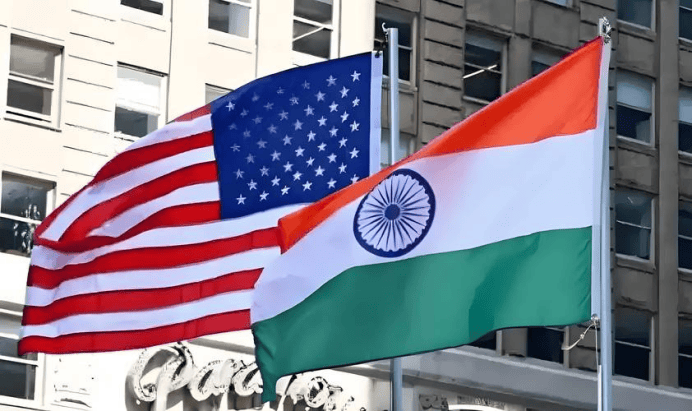
Core Points - The U.S. President Donald Trump has firmly rejected the idea of restarting trade negotiations with Canada, following a dispute triggered by an advertisement [1] - Trump has imposed an additional 10% tariff on Canadian goods after abruptly halting bilateral trade talks [1][3] - Despite the tensions, Trump maintains a good relationship with Canadian Prime Minister Mark Carney, indicating that they had a positive conversation during the APEC summit [1] Group 1 - Canada is the second-largest trading partner of the U.S. and a major supplier of steel and aluminum to American companies [3] - The breakdown of trade negotiations marks a significant shift in relations between the two historical allies since Trump's return to the White House in January [2] - Although most cross-border trade benefits from tariff exemptions under the USMCA, the global tariffs imposed by Trump have severely impacted Canada [3]
特朗普:道歉没用,不谈!
第一财经· 2025-11-02 23:57
2025.11. 03 本文字数:654,阅读时长大约1分钟 此前报道 据法新社华盛顿10月31日报道,美国总统唐纳德·特朗普10月31日断然拒绝重启与加拿大的任何贸 易谈判。一周前,因一则广告引发的争执,他已中止了双边磋商。 "我非常喜欢(加拿大总理马克·卡尼),"美国总统在"空军一号"专机上对记者表示,"但他们做的事 是错的。" 因此,当被问及尽管马克·卡尼"已道歉"是否会重启谈判时,他直截了当地回答:"不。" 特朗普对加拿大的一则反保护主义广告活动作出强烈反应:在突然中止双边贸易谈判后,随后又对加 拿大输美商品加征了10%的额外关税。 不过,这位共和党人仍表示自己与卡尼"关系不错",并在韩国举行的亚太经合组织领导人非正式会 议期间与他进行了"很好的交谈"。 几天前,在马来西亚举行的另一场峰会上,卡尼曾表示加拿大"已准备好"与华盛顿重启贸易谈判。 贸易谈判的破裂,标志着这两个历史盟友之间的关系因特朗普今年1月重返白宫而骤然生变。 加拿大是美国的第二大贸易伙伴,也是美国企业钢铁和铝的主要供应方。 尽管依据《美国—墨西哥—加拿大协定》,绝大多数跨境贸易仍享受免税待遇,但特朗普针对部分行 业加征的全球性附加税已 ...

商务部部长王文涛,最新发声!
证券时报· 2025-11-02 15:17
Group 1: Core Views - The Chinese Ministry of Commerce emphasizes the importance of maintaining stable industrial and supply chains with key trading partners, including South Korea, Japan, New Zealand, and Canada, to foster economic cooperation and development [2][3][4][6]. Group 2: Meetings with South Korea - Wang Wentao, the Minister of Commerce, met with South Korean Minister of Trade, Industry and Energy, Kim Jong-hwan, discussing the need for enhanced communication and cooperation to stabilize supply chains and promote bilateral trade [2]. - Both parties agreed to strengthen dialogue mechanisms, including export control discussions and trade remedy cooperation, to ensure smooth trade relations [2]. Group 3: Meetings with Japan - During a meeting with Japan's Minister of Economy, Trade and Industry, Akazawa Ryozo, Wang highlighted the impact of unilateralism and protectionism on international trade and called for collaborative efforts to maintain supply chain stability [3]. - The Chinese side urged Japan to remove certain entities from its export control list to facilitate trade [3]. Group 4: Meetings with New Zealand - In discussions with New Zealand's Trade Minister, Damien O'Connor, Wang noted the high degree of economic complementarity between China and New Zealand and emphasized the need to deepen practical cooperation in various fields [4]. - Both sides expressed commitment to advancing the negotiations on the negative list for services trade under their free trade agreement [4]. Group 5: Meetings with Canada - Wang met with Canadian Minister of International Trade, Mary Ng, where they discussed the strong trade momentum between China and Canada and the importance of implementing the consensus reached by their leaders [6]. - The two countries agreed to enhance cooperation in trade, energy, and cultural exchanges while addressing mutual economic concerns [6].

中美关税迎来缓和挪威基本达成全面电动化目标
Dong Zheng Qi Huo· 2025-11-02 13:18
1. Report Industry Investment Rating No information provided in the given text. 2. Core Views of the Report - The penetration rate of the Chinese new energy vehicle market exceeded 30% in 2023 and 50% in 2024. In 2025, high - competitiveness new car products are continuously launched, and the price war is gradually ending [3][117]. - Overseas markets are affected by severe trade protectionism in Europe and the United States, which brings volatility risks to exports. New growth points such as the Belt and Road countries and the Middle East should be focused on [3][117]. - In the competitive landscape, the market share of domestic brands continues to expand. Companies with strong product strength, smooth overseas expansion, and stable supply should be focused on [3][117]. 3. Summary by Relevant Catalogs 3.1 Financial Market Tracking - The one - week price changes of related sectors and listed companies are presented. For example, among listed companies, BYD's closing price on October 31st was 103.61 yuan with a one - week decline of 0.14%, while SAIC Motor's closing price was 16.75 yuan with a one - week increase of 0.42% [14]. 3.2产业链 Data Tracking 3.2.1 China New Energy Vehicle Market Tracking - **Sales and Exports**: From January to August globally, new energy vehicle sales reached 13.257 million, a year - on - year increase of 30.6%. In China, from October 1 - 26, the retail sales of the new energy passenger vehicle market were 901,000, with a year - on - year growth of 0% and a month - on - month decline of 8%. The cumulative retail sales this year were 9.771 million, a year - on - year increase of 22% [1][106][115]. - **Inventory Changes**: Information on the monthly new inventory of new energy passenger vehicle channels and manufacturers is presented through relevant charts [25]. - **Delivery Volume of Chinese New Energy Vehicle Enterprises**: The monthly delivery volumes of companies such as Leapmotor, Li Auto, XPeng, and NIO are presented through charts [28][33]. 3.2.2 Global and Overseas New Energy Vehicle Market Tracking - **Global Market**: From January to August, new energy vehicle sales reached 13.257 million, a year - on - year increase of 30.6% [1][115]. - **European Market**: The cumulative sales in Europe were 2.442 million, with a year - on - year growth rate of 30.8% [1][115]. - **North American Market**: The cumulative sales from January to August were 1.205 million, with a year - on - year growth rate of 4.8% (cumulative sales from January to September were 1.399 million, a year - on - year increase of 8.3%). The sales and penetration rate in the United States reached record highs in August and September, mainly due to the expiration of the federal electric vehicle tax credit ($7,500) on September 30th [1][115]. - **Other Regions**: The cumulative sales in other regions were 665,000, with a year - on - year growth rate of 50.6% [1][115]. 3.2.3 Power Battery Industry Chain - Information on power battery loading volume (by material), export volume (by material), weekly average price of battery cells, and material costs is presented through relevant charts [76][80]. 3.2.4 Other Upstream Raw Materials - The daily prices of rubber, glass, steel, and aluminum are presented through relevant charts [99][100]. 3.3 Hot News Summaries 3.3.1 China: Policy Dynamics - On October 30th, China and the United States reached a consensus. The US will cancel the 10% so - called "fentanyl tariff" on Chinese goods, and the 24% reciprocal tariff will be suspended for another year. China will suspend relevant export control measures announced on October 9th for one year [103][104]. - On October 31st, the Ministry of Industry and Information Technology stated that it will promote green products and vigorously develop green industries such as new energy vehicles [105]. 3.3.2 China: Industry Dynamics - From October 1 - 26, the retail sales of the new energy passenger vehicle market were 901,000, with a year - on - year growth of 0% and a month - on - month decline of 8%. The cumulative retail sales this year were 9.771 million, a year - on - year increase of 22% [1][106][115]. - In the first three quarters of 2025, Anhui's automobile production was 2.4044 million, ranking first in China, mainly due to the significant increase in new energy vehicle production [107]. - As of the end of September 2025, the cumulative export of domestic cars from Shanghai Waigang Haitong Wharf exceeded 5.32 million, with an average annual growth rate of 10.6%, and the proportion of new energy vehicles increased from 34% to 59% [108]. 3.3.3 China: Enterprise Dynamics - BYD sold 441,706 vehicles in October, a record high this year. In Q3, its total revenue was 194.985 billion yuan, a year - on - year decrease of 3.05% [109]. - Leapmotor delivered 70,289 vehicles in October, a year - on - year increase of over 84% [111]. - XPeng delivered 42,013 vehicles in October, a year - on - year increase of 76% [111]. - NIO delivered 40,397 vehicles in October, a year - on - year increase of 92.6% [111]. - Li Auto delivered 31,767 vehicles in October, and the orders for the Li i6 exceeded 70,000 after its launch [111]. 3.3.4 Overseas: Policy Dynamics - The US Senate voted to reject Trump's global tariff policy, but the vote may only be symbolic before the House of Representatives conducts a similar vote [111][112]. - Norway has basically achieved the 100% electrification goal and plans to gradually cancel electric vehicle subsidies within two years [2][113][116].
