
产能整合

Search documents
ICIS:PET/PVC市场贸易流向将重构
Zhong Guo Hua Gong Bao· 2025-09-19 02:27
Group 1 - The petrochemical market, particularly for PET and PVC, is expected to see significant changes in trade flows due to geopolitical tensions and overcapacity leading to narrowed profits and price declines [1] - The U.S. has reinstated tariffs on imported PET, putting pressure on major Asian exporters such as South Korea, Thailand, Vietnam, Pakistan, and Malaysia, which may need to shift focus to alternative markets like the EU and Brazil [1] - India's anti-dumping duties on PVC imports, coupled with domestic demand growth, are likely to alter global PVC trade flows, with the highest impact on China and the U.S. [1] Group 2 - Northeast Asian petrochemical producers are actively pursuing industry consolidation to address overcapacity issues, with companies like Mitsui Chemicals and Asahi Kasei considering business unit mergers [2] - Mitsubishi Chemical and Asahi Kasei may decide by 2027 whether to consolidate ethylene capacity into a single facility, potentially increasing VAM import demand in Japan [2] - The current downturn in the petrochemical industry is expected to last until at least 2028-2029, necessitating measures such as capacity consolidation, plant shutdowns, and cost reductions [2]
黑色建材日报:2025-09-19-20250919
Wu Kuang Qi Huo· 2025-09-19 01:13
Report Industry Investment Rating No relevant content provided. Core Viewpoints of the Report - The overall atmosphere in the commodity market is weak, and the prices of finished steel products continue to fluctuate weakly. Although the global liquidity easing is expected to drive the recovery of the manufacturing industry and indirectly boost steel demand in the long - term, currently, the demand for both rebar and hot - rolled coils is weak, and steel prices may still decline if demand cannot be effectively restored [2]. - The supply of iron ore has increased, with overseas shipments reaching a high level in the same period. Although the demand for iron ore remains strong in the short - term, the price is expected to fluctuate as the profitability of steel mills has been decreasing [5]. - The prices of ferrosilicon and silicomanganese are in a range - bound pattern, and the operation difficulty is high. From a fundamental perspective, they are likely to follow the trend of the black sector, and the operation cost - effectiveness is relatively low [9][11]. - The price of industrial silicon is expected to fluctuate. Although there is some support from the demand side, the problems of over - capacity, high inventory, and insufficient demand still exist. The price of polysilicon is more influenced by policies, and the inventory reduction space of the whole industry is limited [14][17]. - The glass market shows a differentiated trend, with supply slightly increasing and inventory decreasing marginally. However, terminal demand is weak, and it is expected to maintain a volatile trend. The demand for soda ash is average, and it is expected to fluctuate narrowly [20][22]. Summary by Related Catalogs Steel Products Rebar - **Market Quotes**: The closing price of the rebar main contract was 3147 yuan/ton, down 21 yuan/ton (- 0.66%) from the previous trading day. The registered warehouse receipts decreased by 14137 tons, and the position increased by 36313 lots. In the spot market, the prices in Tianjin and Shanghai decreased [1]. - **Strategy Viewpoints**: The demand for rebar is weak even in the traditional peak season. If demand cannot be effectively restored, steel prices may decline. Attention should be paid to the policy trends of the Fourth Plenary Session [2]. Hot - Rolled Coils - **Market Quotes**: The closing price of the hot - rolled coil main contract was 3354 yuan/ton, down 36 yuan/ton (- 1.06%) from the previous trading day. The registered warehouse receipts decreased by 13892 tons, and the position increased by 20862 lots. The spot prices in Lecong and Shanghai remained unchanged [1]. - **Strategy Viewpoints**: Although hot - rolled coils have some resilience, the overall demand is still weak. The inventory has slightly increased, and steel prices may decline if demand cannot be effectively restored [2]. Iron Ore - **Market Quotes**: The main contract (I2601) of iron ore closed at 800.00 yuan/ton, with a change of - 0.56% (- 4.50), and the position decreased by 936 lots to 53.35 million lots. The weighted position was 84.20 million lots. The spot price of PB powder at Qingdao Port was 792 yuan/wet ton, with a basis of 42.25 yuan/ton and a basis rate of 5.02% [4]. - **Strategy Viewpoints**: The supply of iron ore has increased, with the shipments from Australia, Brazil, and non - mainstream countries all rising. The demand is strong in the short - term, but the profitability of steel mills has been decreasing. The port inventory has slightly decreased, and the price is expected to fluctuate [5]. Ferrosilicon and Silicomanganese Silicomanganese - **Market Quotes**: The main contract (SM601) of silicomanganese closed down 0.33% at 5970 yuan/ton. The spot price in Tianjin was 5820 yuan/ton, unchanged from the previous day, with a premium of 40 yuan/ton to the futures price [8]. - **Strategy Viewpoints**: The price of silicomanganese is in a range - bound pattern. It is recommended to wait and see, focusing on the resistance near 6000 yuan/ton and the support between 5600 - 5650 yuan/ton [9]. Ferrosilicon - **Market Quotes**: The main contract (SF511) of ferrosilicon closed down 0.17% at 5756 yuan/ton. The spot price in Tianjin was 5750 yuan/ton, unchanged from the previous day, with a discount of 6 yuan/ton to the futures price [8]. - **Strategy Viewpoints**: The price of ferrosilicon is also in a range - bound pattern. It is recommended to wait and see, focusing on the resistance near 5800 yuan/ton and the support between 5400 - 5450 yuan/ton [9]. Industrial Silicon and Polysilicon Industrial Silicon - **Market Quotes**: The main contract (SI2511) of industrial silicon closed at 8905 yuan/ton, down 0.67% (- 60). The weighted position increased by 5945 lots to 516168 lots. The spot prices of 553 and 421 in East China remained unchanged, with a basis of 195 yuan/ton and - 105 yuan/ton respectively [13]. - **Strategy Viewpoints**: The price of industrial silicon is expected to fluctuate. Although the demand from downstream polysilicon and silicone DMC has increased, the problems of over - capacity, high inventory, and insufficient demand still exist. Attention should be paid to the progress of capacity reduction and the resumption of production on the supply side [14][15]. Polysilicon - **Market Quotes**: The main contract (PS2511) of polysilicon closed at 53205 yuan/ton, down 0.53% (- 285). The weighted position decreased by 5951 lots to 283593 lots. The average spot prices of N - type granular silicon, N - type dense material, and N - type re - feeding material were 49.5 yuan/kg, 51.1 yuan/kg, and 52.6 yuan/kg respectively, with a basis of - 605 yuan/ton [16]. - **Strategy Viewpoints**: The price of polysilicon is more influenced by policies. The supply is close to the high level in the same period, and the inventory reduction space of the whole industry is limited. Attention should be paid to the progress of capacity integration and downstream price transfer [17]. Glass and Soda Ash Glass - **Market Quotes**: The main contract of glass closed at 1208 yuan/ton on Thursday afternoon, down 2.11% (- 26). The prices in North China and Central China were 1150 yuan and 1140 yuan respectively, with the former remaining unchanged and the latter increasing by 10 yuan. The weekly inventory of float glass sample enterprises decreased by 67.5 million cases (- 1.10%). The atmosphere in the market was bearish [19]. - **Strategy Viewpoints**: The spot market shows a differentiated trend. The supply has slightly increased, and the inventory has decreased marginally due to pre - holiday stocking. However, terminal demand is weak, and it is expected to maintain a volatile trend [20]. Soda Ash - **Market Quotes**: The main contract of soda ash closed at 1306 yuan/ton on Thursday afternoon, down 2.10% (- 28). The price in Shahe decreased by 23 yuan to 1216 yuan. The weekly inventory of soda ash sample enterprises decreased by 4.19 million tons (- 1.10%), including a decrease of 2.84 million tons in heavy - soda ash inventory and 1.35 million tons in light - soda ash inventory. The atmosphere in the market was bullish [21]. - **Strategy Viewpoints**: The demand for soda ash is average, and the orders before the National Day have increased, but the transaction is still based on rigid demand. The market lacks substantial positive support and is expected to fluctuate narrowly [22].
黑色建材日报-20250917
Wu Kuang Qi Huo· 2025-09-17 02:39
Group 1: Report Industry Investment Rating - Not provided in the given content Group 2: Core Viewpoints of the Report - The overall atmosphere in the commodity market has warmed up, but the price trend of finished products shows a volatile and slightly stronger pattern. The economic data in August slowed down overall and was lower than expected, increasing the possibility of more stimulus policies. The real - estate sales are still weak, and it will take time for the real - estate market to stabilize. The export volume declined slightly last week and remains in a weak and volatile pattern. The demand for rebar is weak, while the demand for hot - rolled coils is relatively strong, and their trends have diverged. Although it has entered the traditional peak season, the demand for rebar is still weak, and the demand for hot - rolled coils still has some resilience. If the subsequent demand cannot be effectively repaired, steel prices still have the risk of decline. The raw material side is relatively strong, and attention should be paid to the possible disturbances caused by safety inspections and environmental protection restrictions. In the long - term, although the black sector prices may have a short - term correction risk due to real - demand factors, in the face of the subsequent certainty of overseas fiscal and monetary double - easing and the opening of China's policy space, the black sector may gradually have the cost - effectiveness of long - allocation, and the key node may focus on the "Fourth Plenary Session" around mid - October [3][10]. Group 3: Summary by Relevant Catalogs Steel - **Rebar**: The closing price of the rebar main contract in the afternoon was 3166 yuan/ton, up 30 yuan/ton (0.956%) from the previous trading day. The registered warehouse receipts on that day were 269,959 tons, a month - on - month increase of 14,941 tons. The position of the main contract was 1.956248 million lots, a month - on - month decrease of 21,822 lots. In the spot market, the aggregated price of rebar in Tianjin was 3230 yuan/ton, a month - on - month increase of 20 yuan/ton; the aggregated price in Shanghai was 3270 yuan/ton, a month - on - month increase of 30 yuan/ton. The rebar apparent demand continued to be sluggish, with weak demand in the traditional peak season and increasing inventory pressure [2]. - **Hot - rolled Coils**: The closing price of the hot - rolled coil main contract was 3402 yuan/ton, up 32 yuan/ton (0.949%) from the previous trading day. The registered warehouse receipts on that day were 58,841 tons, with no month - on - month change. The position of the main contract was 1.390939 million lots, a month - on - month increase of 42,984 lots. In the spot market, the aggregated price of hot - rolled coils in Lecong was 3420 yuan/ton, a month - on - month increase of 40 yuan/ton; the aggregated price in Shanghai was 3430 yuan/ton, a month - on - month increase of 20 yuan/ton. The output of hot - rolled coils increased, the apparent demand was relatively good, the overall demand was neutral, and the inventory decreased slightly [2]. Iron Ore - The closing price of the iron ore main contract (I2601) was 803.50 yuan/ton, with a change of +0.94% (+7.50), and the position changed by - 3458 lots to 532,400 lots. The weighted position of iron ore was 845,800 lots. The price of PB fines at Qingdao Port was 797 yuan/wet ton, with a basis of 44.25 yuan/ton and a basis ratio of 5.22%. The overseas iron ore shipments in the latest period rebounded to a high level in the same period. The shipments from Australia increased month - on - month, and the shipments from Brazil rebounded significantly. The shipments from non - mainstream countries also increased. The recent arrival volume decreased slightly. The daily average pig iron output in the latest period was 240,550 tons, a month - on - month increase of 11,710 tons. The inventory in ports and steel mills' imported ore increased slightly. In general, the iron ore price will fluctuate in the short term [5][6]. Manganese Silicon and Ferrosilicon - **Manganese Silicon**: On September 16, the price of coking coal rose significantly during the day, driving the alloy price stronger. The main contract of manganese silicon (SM601) rose in the morning and then gradually declined, closing up 0.647% at 5944 yuan/ton. The spot price of 6517 manganese silicon in Tianjin was 5820 yuan/ton, a month - on - month increase of 20 yuan/ton, with a premium of 66 yuan/ton over the futures price. The daily - line level of the manganese silicon futures price maintains a range - bound pattern, and it is recommended that speculative positions mainly wait and see [8][9]. - **Ferrosilicon**: The main contract of ferrosilicon (SF511) opened higher and then gradually declined, closing flat at 5700 yuan/ton. The spot price of 72 ferrosilicon in Tianjin was 5750 yuan/ton, a month - on - month increase of 50 yuan/ton, with a premium of 50 yuan/ton over the futures price. The daily - line level of the ferrosilicon futures price also maintains a range - bound pattern, and it is recommended to wait and see. The fundamentals of manganese silicon and ferrosilicon are not ideal, and they are likely to follow the black - sector market, with relatively low operational cost - effectiveness [9][11]. Industrial Silicon and Polysilicon - **Industrial Silicon**: The closing price of the industrial silicon futures main contract (SI2511) was 8915 yuan/ton, with a change of +1.31% (+115). The weighted contract position increased by 4487 lots to 512,319 lots. The spot price of non - oxygen - containing 553 industrial silicon in East China was 9100 yuan/ton, a month - on - month increase of 100 yuan/ton, with a basis of 185 yuan/ton. The price of 421 was 9600 yuan/ton, a month - on - month increase of 100 yuan/ton, with a basis of - 115 yuan/ton. The price of industrial silicon is expected to fluctuate in the short term. The fundamentals are weak, but if the market continues to discuss relevant topics such as "anti - involution", the price may rise further [13][14]. - **Polysilicon**: The closing price of the polysilicon futures main contract (PS2511) was 53,670 yuan/ton, with a change of +0.23% (+125). The weighted contract position decreased by 6229 lots to 293,968 lots. The average price of N - type granular silicon in the SMM caliber was 49.5 yuan/kg, a month - on - month increase of 1 yuan/kg; the average price of N - type dense material was 51 yuan/kg, a month - on - month increase of 0.95 yuan/kg; the average price of N - type re - feeding material was 52.5 yuan/kg, a month - on - month increase of 0.95 yuan/kg, with a basis of - 1170 yuan/ton. The polysilicon price is more policy - driven, and the market focus is on capacity - integration policies and downstream price - passing progress. The price is volatile, and attention should be paid to position and risk control [15][16]. Glass and Soda Ash - **Glass**: The main contract of glass closed at 1237 yuan/ton on Tuesday afternoon, up 2.49% (+30). The quoted price of large - size glass in North China was 1150 yuan, unchanged from the previous day; the quoted price in Central China was 1110 yuan, also unchanged. The weekly inventory of float - glass sample enterprises was 61.583 million cases, a month - on - month decrease of 1.467 million cases (-2.33%). The industry supply increased slightly, and the enterprise inventory decreased month - on - month. It is recommended to be cautiously bullish [18]. - **Soda Ash**: The main contract of soda ash closed at 1339 yuan/ton on Tuesday afternoon, up 2.37% (+31). The quoted price of heavy soda ash in Shahe was 1244 yuan, a month - on - month increase of 26 yuan. The weekly inventory of soda - ash sample enterprises was 1.7975 million tons, a month - on - month decrease of 24,600 tons (-2.33%), of which the inventory of heavy soda ash was 1.0345 million tons, a month - on - month decrease of 37,400 tons, and the inventory of light soda ash was 763,000 tons, a month - on - month increase of 12,800 tons. The industry supply decreased slightly due to the maintenance of production lines in Hubei Xindu and Haijing Yuehe. The market trading atmosphere was tepid, and it is expected to fluctuate narrowly [19].
东吴证券:25H1风电板块表现亮眼 光伏主链分化、辅链持续承压
智通财经网· 2025-09-10 07:21
Core Viewpoint - The report from Dongwu Securities indicates a significant divergence in the performance of the renewable energy sector, with wind power showing strong results while solar power faces challenges [1] Group 1: Financial Performance - In H1 2025, the renewable energy sector achieved revenues of 729.7 billion yuan, a decrease of 3% year-on-year, and a net profit attributable to shareholders of 11 billion yuan, down 46% [1] - The wind power segment generated revenues of 155.8 billion yuan in H1 2025, a decline of 32%, but net profit increased by 20% to 9.1 billion yuan [1] - In Q2 2025, the renewable energy sector's revenue was 411.5 billion yuan, flat year-on-year but up 29% quarter-on-quarter, with a net profit of 6 billion yuan, down 8% year-on-year but up 23% quarter-on-quarter [1] Group 2: Segment Analysis - The inverter segment showed positive growth with a year-on-year revenue increase of 30%, while the solar main and auxiliary chains continued to face pressure [2] - The battery segment's revenue increased by 8%, while other materials like silver paste and glass saw declines of 2% and 28%, respectively [2] - The profitability of auxiliary materials is under short-term pressure, but price increases in Q3 are expected to improve margins [4] Group 3: Supply Side Dynamics - The price of silicon materials hit a bottom in Q2 2025, with expectations for profitability to turn positive in H2 2025 as industry consolidation progresses [3] - The oversupply of silicon wafers is leading to increased competition, with price recovery anticipated in H2 2025 and 2026 [3] - The overall component prices have entered a bottom range, with potential for gradual recovery driven by demand and pricing adjustments [3] Group 4: Demand Trends - Demand for household storage is gradually recovering, with significant growth in commercial and large-scale storage [4] - The U.S. large-scale storage market is expected to see a surge in 2025, although growth may slow in 2026 [4] - European and Southeast Asian markets are experiencing robust demand, supported by subsidy policies and dynamic pricing models [4] Group 5: Wind Power Insights - Wind power production is experiencing high growth, with significant increases in installation and profitability [5] - The domestic market benefits from improved capacity utilization, leading to a positive shift in profitability for offshore products [5] - The overall wind power segment is in a favorable state, with strong order books and improved margins for leading manufacturers [5]

涨疯了!多晶硅期货创上市新高,产能整合曙光初现还是昙花一现?|大宗风云
Sou Hu Cai Jing· 2025-09-06 03:49
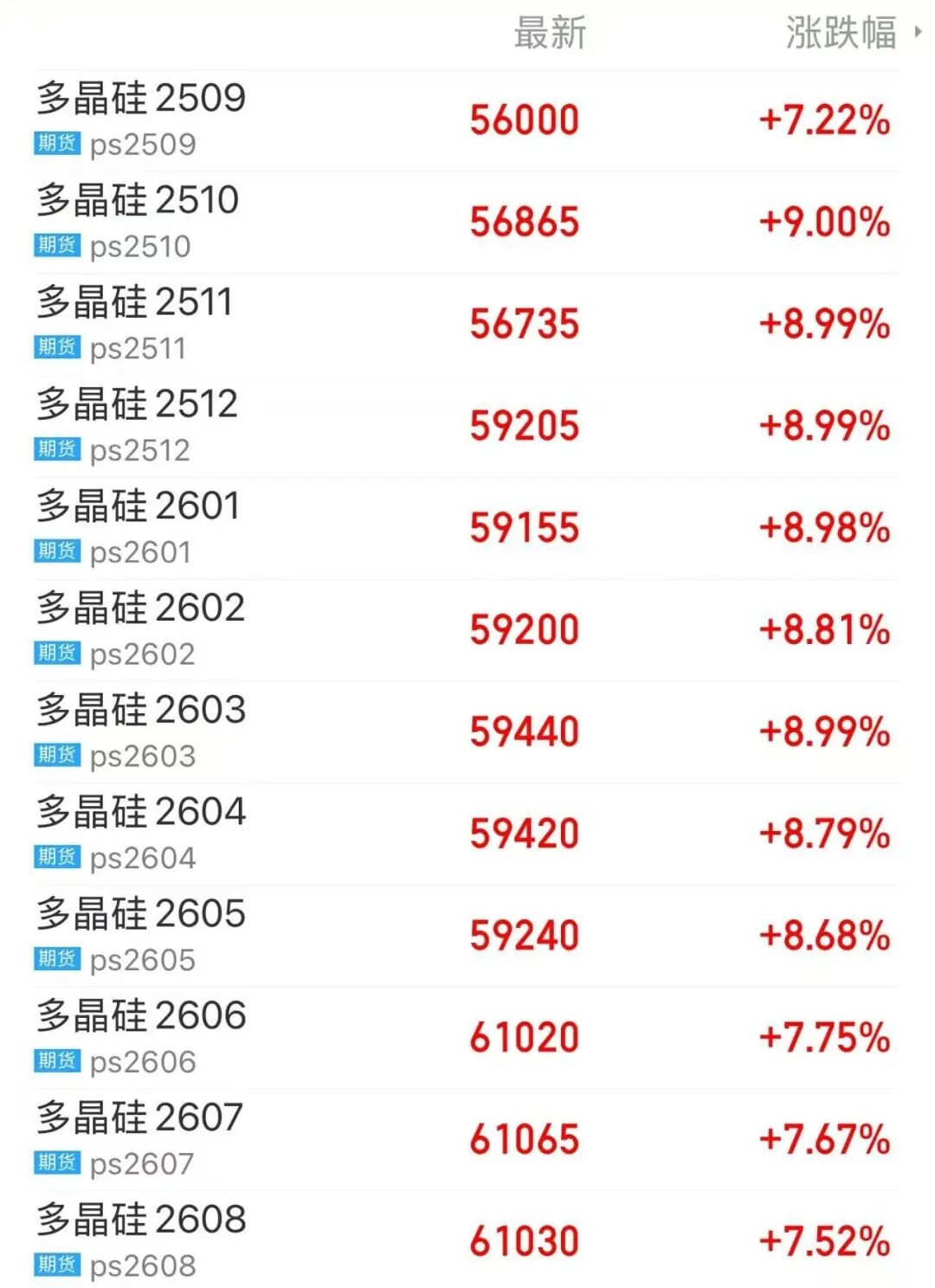
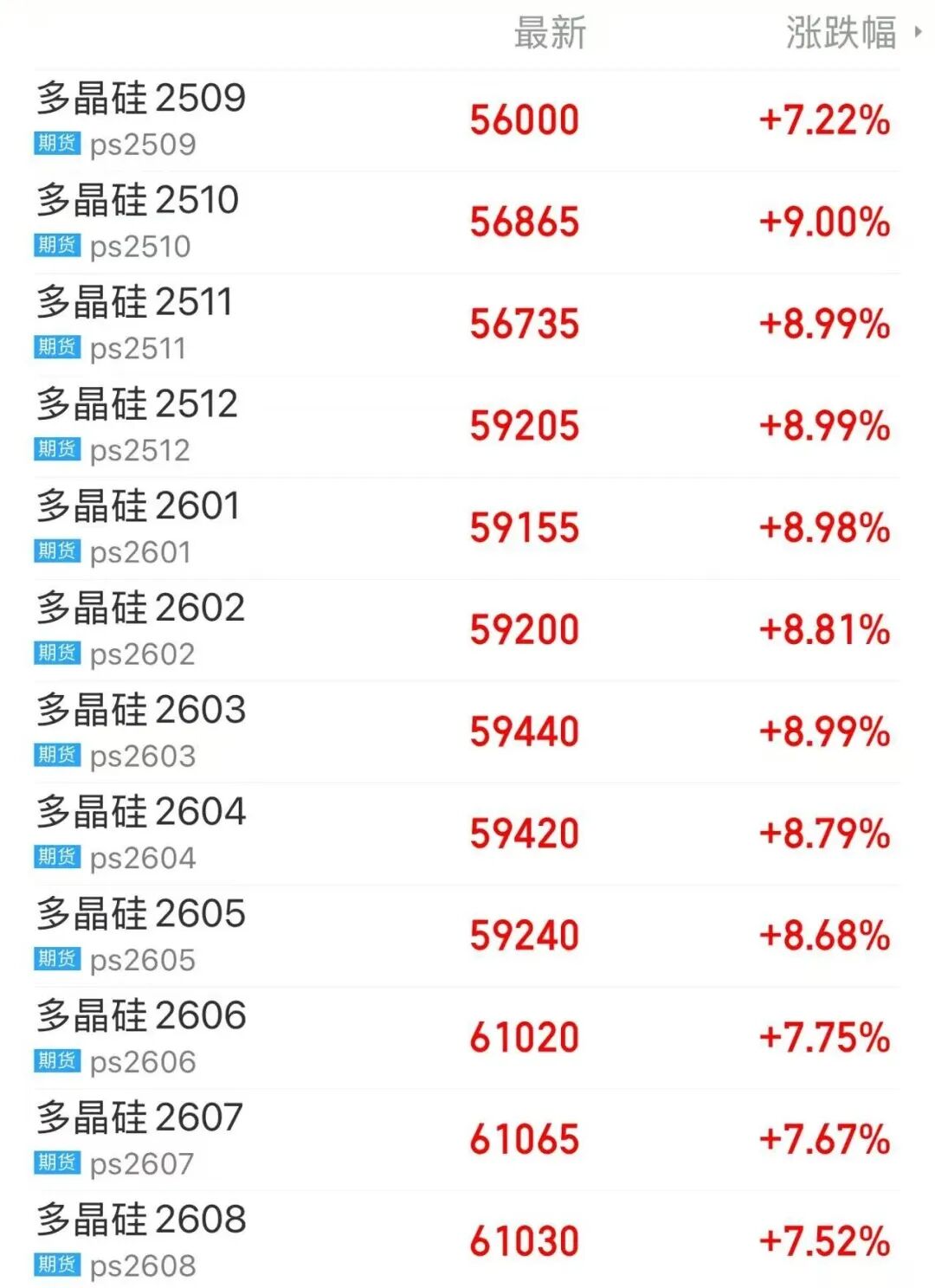
Core Viewpoint - The recent surge in polysilicon futures prices is driven by favorable policy expectations and rising downstream product prices, with the main contract reaching a record high of 56,735 yuan/ton, marking a weekly increase of 14.49% [2][3] Group 1: Market Dynamics - Polysilicon futures prices have shown strong upward momentum, breaking out of the fluctuation range seen in August, influenced by market rumors and rising prices of downstream products [2][3] - The Ministry of Industry and Information Technology and the State Administration for Market Regulation released a plan aimed at promoting high-quality development in the photovoltaic sector, which is expected to positively impact polysilicon prices [3] - In August, polysilicon production was close to 130,000 tons, with September's production expected to remain around this level despite slight adjustments in some companies' operating plans [4] Group 2: Supply and Demand - The demand for polysilicon is projected to increase due to higher production rates of photovoltaic components and batteries, with an estimated 58 GW of silicon wafer production in September, translating to a demand of approximately 120,000 tons of polysilicon [4] - The current operating rate of polysilicon companies has risen to 40%, a 6 percentage point increase from the previous month, indicating a recovery in production capacity [6] - Social inventory of polysilicon reached 440,000 tons in August, remaining at historically high levels, with a need for ongoing monitoring of inventory reduction processes [7] Group 3: Price Trends and Future Outlook - The recent price increase in polysilicon is expected to continue, with market analysts suggesting that the actual transaction prices for polysilicon have risen, indicating a potential for further price hikes [5][9] - Factors influencing future polysilicon futures prices include the concentration of warehouse receipts in November, the extent of price increases in the spot market, and the actual progress of capacity integration [8] - The market sentiment remains neutral, with traders showing limited purchasing activity despite some replenishment actions, indicating that upstream companies still hold pricing power [7]


利多来袭!多晶硅涨停 期价创上市新高
Qi Huo Ri Bao· 2025-09-06 02:38
Core Viewpoint - The recent increase in polysilicon prices is driven by positive policy signals and a shift in market sentiment towards reducing "involution" competition in the photovoltaic industry [2][3][5] Group 1: Market Dynamics - Polysilicon prices have seen significant increases, with prices for various contracts rising between 7.22% to 9.00% recently [1] - The market is experiencing a shift in sentiment as the focus on eliminating outdated production capacity increases, supported by favorable policies [2][3] - The current spot price for N-type dense polysilicon is reported at 50,100 yuan per ton, reflecting a strong willingness from major manufacturers to maintain prices [3] Group 2: Supply and Demand - In August, polysilicon production rose to 132,000 tons, a 23.9% increase month-on-month, indicating a recovery in supply [4] - Despite the increase in supply, the market remains imbalanced, with ongoing concerns about demand weakening in the second half of the year [4] - The market is closely monitoring the implementation of production reduction and sales control policies, which could stabilize the market and support prices [4][5] Group 3: Policy Implications - The Ministry of Industry and Information Technology and the State Administration for Market Regulation have released a plan to address "involution" competition and regulate the photovoltaic industry [2] - The effectiveness of the restructuring and reform within the polysilicon industry remains uncertain, with expectations for more information to be released soon [2][5] - The market is awaiting concrete policy actions that could clarify the path for capacity reduction and support price stability [5]
利多来袭!多晶硅涨停,期价创上市新高
Qi Huo Ri Bao· 2025-09-05 23:54
Core Viewpoint - The recent increase in polysilicon prices is driven by favorable policies and a shift in market sentiment towards reducing "involution" competition in the photovoltaic industry [2][4]. Group 1: Market Dynamics - Polysilicon prices have seen significant increases, with various contracts showing rises between 7.22% to 9.00% [1]. - The current average price for N-type dense polysilicon is reported at 50,100 yuan per ton, reflecting a strong market support from major manufacturers [3]. - Analysts indicate that the recent rise in polysilicon prices is also supported by price increases in downstream products such as silicon wafers and battery cells, which are responding to the rising costs of polysilicon [3]. Group 2: Policy Impact - The Ministry of Industry and Information Technology and the State Administration for Market Regulation have released a plan aimed at stabilizing growth in the electronic information manufacturing industry, emphasizing the need to eliminate low-price competition and regulate capacity layout [2]. - There is an expectation for the restructuring of the polysilicon industry to proceed as planned, although the timeline for implementation remains uncertain [2]. - The market is currently in a "policy fulfillment" phase, where price movements are highly dependent on the strength and timing of policy signals [4]. Group 3: Supply and Demand Outlook - Despite a recent increase in polysilicon production to 132,000 tons in August, a 23.9% month-on-month increase, the market remains concerned about the balance between supply and demand [3]. - Analysts suggest that while demand may weaken in the second half of the year, production in July and August has shown resilience, with a slight increase in silicon wafer production expected in September [3]. - The market is closely monitoring the potential implementation of production reduction and sales control policies, which could provide stronger support for polysilicon prices if successfully executed [4].
多晶硅期货迎来明显上涨 主力合约开盘直线拉升
Jin Tou Wang· 2025-09-05 06:15
Core Viewpoint - The domestic futures market for non-ferrous metals has shown significant gains, particularly in polysilicon futures, which have risen over 5% [1] Supply Side - Weekly polysilicon production has reached a high level, with expectations that if the "production limit and sales limit" policy is implemented in September, monthly output may remain stable compared to the previous month [1] - Current production trends indicate that southwestern production bases are operating at full capacity, while northwest enterprises show a mixed pattern of operations, but overall production is on an upward trend [1] Demand Side - Downstream silicon wafer prices are stable to slightly strong, with good sales of mainstream size products and companies planning price increases [1] - Prices for battery cells remain stable, but market demand appears relatively weak, with some specifications experiencing inventory accumulation, leading to uncertainty regarding the acceptance of price increases for silicon wafers [1] Market Outlook - There are expectations of industry consolidation as leading polysilicon company GCL-Poly Energy has indicated that details of an "industry restructuring plan" will be announced soon, which has sparked market speculation about capacity integration [1] - The market is facing a scenario of strong expectations versus weak realities, with short-term forecasts suggesting high-level fluctuations in polysilicon, silicon wafer, and battery cell spot prices [1]


五矿期货文字早评-20250905
Wu Kuang Qi Huo· 2025-09-05 01:38
Report Industry Investment Ratings No relevant content provided. Core Views - The short - term index faces adjustment pressure, but the long - term trend is to go long on dips. The bond market is expected to be volatile in the short term, and interest rates may decline in the long term. For most commodities, the market is affected by factors such as supply and demand, policies, and macro - economic conditions, and different trading strategies are recommended for different commodities [3][5]. Summaries by Categories Macro - Financial Stock Index - **News**: The State Council aims to boost the sports industry, the central bank conducts a 10000 - billion - yuan reverse repurchase, US Treasury yields decline, and Goldman Sachs predicts a potential rise in gold prices [2]. - **Basis Ratio**: The basis ratios of IF, IC, IM, and IH in different periods are provided, showing negative values [3]. - **Trading Logic**: After the previous rise, high - level sectors like AI are adjusting, and trading volume is shrinking. However, policy support for the capital market remains, so the long - term strategy is to go long on dips [3]. Treasury Bonds - **Market**: On Thursday, the main contracts of TL, T, and TF rose, while TS declined. The central bank conducts a 10000 - billion - yuan reverse repurchase, and the State Council promotes sports consumption. The central bank conducts a 2126 - billion - yuan 7 - day reverse repurchase with a net withdrawal of 2035 billion yuan [4]. - **Strategy**: The manufacturing PMI improved in August but is still below the boom - bust line. The central bank maintains a loose monetary policy. Interest rates may decline in the long term, but the bond market may be volatile in the short term [5]. Precious Metals - **Market**: Shanghai gold and silver, and COMEX gold and silver all declined. The US 10 - year Treasury yield is 4.17%, and the US dollar index is 98.29 [6]. - **Outlook**: US employment data is weak, and Fed officials are dovish. The labor market has weakened. Gold and silver prices are supported at high levels. It is recommended to go long on dips, with reference price ranges provided [6][7]. Non - Ferrous Metals Copper - **Market**: Copper prices declined. LME copper inventory decreased, while domestic social inventory increased. The price is supported by tight supply and approaching peak season. Reference price ranges for Shanghai and LME copper are provided [9]. Aluminum - **Market**: Aluminum prices declined. Domestic electrolytic aluminum inventory is relatively low, and demand is improving. The price is expected to be volatile, with reference price ranges provided [10]. Zinc - **Market**: Zinc prices declined. Zinc ore is in the seasonal inventory - building stage, and the market is in an oversupply situation. The price is expected to be in a low - level volatile pattern [11][12]. Lead - **Market**: Lead prices declined slightly. The supply of lead is expected to decrease marginally, and the price is expected to strengthen [13]. Nickel - **Market**: Nickel prices oscillated. The short - term macro - environment is positive, and the price is supported by various factors. It is recommended to go long on dips, with reference price ranges provided [14]. Tin - **Market**: Tin prices oscillated narrowly. Supply is tight due to slow复产 and planned maintenance, while demand is in the off - season. The price is expected to be volatile [15]. Lithium Carbonate - **Market**: The price of lithium carbonate contracts adjusted weakly, but the A - share lithium battery sector strengthened. Supply and demand are improving. It is recommended to pay attention to overseas raw material supply, with a reference price range provided [16]. Alumina - **Market**: Alumina prices declined. Supply and demand are in an oversupply situation, but the price decline space is limited. It is recommended to wait and see, with a reference price range provided [17]. Stainless Steel - **Market**: Stainless steel prices declined. The market is in a consolidation pattern due to factors such as the decline in nickel prices and weak demand [18]. Cast Aluminum Alloy - **Market**: Cast aluminum alloy prices declined. The market is transitioning from the off - season to the peak season, and the price is expected to be high - level due to cost support and increased market activity [20][21]. Black Building Materials Steel - **Market**: Steel prices showed a volatile and slightly stronger trend but were under pressure. Demand is weak, and inventory is accumulating. If demand does not improve, prices may decline further [23][24]. Iron Ore - **Market**: Iron ore prices rose. Overseas shipments increased, and demand decreased. The price is expected to be volatile in the short term, and the focus is on the recovery of demand in the peak season [25][26]. Glass and Soda Ash - **Glass**: Prices are stable, and the market is generally stable. Supply is high, and inventory pressure is increasing. The price is expected to be weakly volatile in the short term and may follow the macro - environment in the long term [27]. - **Soda Ash**: Prices are stable, and inventory pressure is slightly increasing. The price is expected to be volatile in the short term and may gradually rise in the long term, but the upward space is limited [28]. Manganese Silicon and Ferrosilicon - **Market**: Manganese silicon and ferrosilicon prices declined. The "anti - involution" sentiment has faded, and prices are moving towards fundamentals. Manganese silicon may remain weak, and ferrosilicon depends on downstream demand. It is recommended to wait and see for speculative trading [29][30][31]. Industrial Silicon - **Market**: Industrial silicon prices rose slightly. Supply is increasing, and demand is insufficient. The price is expected to be weakly volatile, with a reference price range provided [32][33]. Polysilicon - **Market**: Polysilicon prices rose slightly. The market is in a "weak reality, strong expectation" pattern. The price is expected to be highly volatile, and it may rise further if positive news emerges [34][35]. Energy and Chemicals Rubber - **Market**: Rubber prices oscillated strongly. The price is affected by weather and supply - demand expectations. It is recommended to have a long - term bullish view and a short - term bullish strategy, with specific trading suggestions provided [37][40]. Crude Oil - **Market**: Crude oil and related product prices declined. Although the geopolitical premium has disappeared and the macro - environment is bearish, the price is undervalued, and it is a good time for left - hand side layout [41]. Methanol - **Market**: Methanol prices declined. Supply is in an oversupply situation, but the downward space is limited due to potential factors. It is recommended to wait and see [42]. Urea - **Market**: Urea prices were stable. Supply pressure has eased, but demand is weak. The price is expected to be in a range, and it is recommended to consider long positions on dips [43]. Styrene - **Market**: Styrene spot prices rose, and futures prices declined. The BZN spread is expected to repair, and the price may rebound after the inventory - reduction inflection point [44]. PVC - **Market**: PVC prices rose slightly. Supply is strong, demand is weak, and the export outlook is weak. It is recommended to consider short positions [46]. Ethylene Glycol - **Market**: Ethylene glycol prices rose. Supply is still in an oversupply situation, and the port inventory is expected to increase in the medium term. The price may decline in the medium term [47]. PTA - **Market**: PTA prices declined. Supply has changed from inventory - building to inventory - reduction, and demand is improving. It is recommended to consider long positions on dips following PX [48][49]. Para - Xylene - **Market**: Para - xylene prices declined. The load is high, and the price is supported by low inventory and improving downstream data. It is recommended to consider long positions on dips following crude oil [50]. Polyethylene - **Market**: Polyethylene prices declined. Supply is limited, and demand may increase in the peak season. The price is expected to oscillate upward [51]. Polypropylene - **Market**: Polypropylene prices declined. Supply pressure is high, and demand is in a seasonal rebound. The market has no prominent contradictions in the short term [52]. Agricultural Products Live Pigs - **Market**: Pig prices generally declined. Supply is expected to be weak in September, but demand and other factors may support the price. It is recommended to wait and see and consider far - month reverse spreads [56]. Eggs - **Market**: Egg prices were stable or rose. Supply is stable, and demand is increasing due to festival stocking. The price is expected to be easy to rise and difficult to fall in the short term, but there may be pressure in the medium term [57]. Soybean and Rapeseed Meal - **Market**: US soybeans rose slightly, and domestic soybean meal prices rebounded. The supply of global protein raw materials is in an oversupply situation, and the price is expected to be in a range. It is recommended to consider long positions on dips at the low - cost range [58][59]. Oils and Fats - **Market**: Oils and fats oscillated. Palm oil exports in Malaysia increased, and production decreased. The price is supported by various factors and is expected to be strongly volatile. It is recommended to be bullish on palm oil in the fourth quarter [60][61]. Sugar - **Market**: Sugar prices declined. Domestic sugar imports increased, and there is an expectation of increased production in Guangxi. The long - term view is bearish, and the price trend depends on the international market [62][64]. Cotton - **Market**: Cotton prices oscillated. Global cotton production and inventory are expected to decline. The price is expected to be volatile at a high level in the short term due to potential improvement in fundamentals [65][66].
研究所晨会观点精萃:美国就业市场放缓强化降息预期,全球风险偏好继续升温-20250905
Dong Hai Qi Huo· 2025-09-05 01:09
1. Report Industry Investment Ratings - No information provided in the content 2. Core Views of the Report - Overseas, the US labor market is cooling, and Fed officials' remarks have strengthened the expectation of a Fed rate cut, leading to a continued rise in global risk appetite. Domestically, China's August official manufacturing PMI improved slightly but remained below the boom - bust line for the fifth consecutive month. The market is currently focused on domestic incremental stimulus policies and easing expectations, with a weakening short - term upward macro - drive. Attention should be paid to the progress of Sino - US trade negotiations and the implementation of domestic incremental policies [2]. - For assets, the stock index is expected to fluctuate in the short term, and it is advisable to wait and see cautiously. Treasury bonds will likely remain at a high level and fluctuate, also suggesting cautious waiting and seeing. In the commodity sector, black metals will be weakly fluctuating, and it is recommended to wait and see; non - ferrous metals will be fluctuating strongly, and it is advisable to go long cautiously; energy and chemicals will be fluctuating, and it is recommended to wait and see; precious metals will be strongly fluctuating at a high level, and it is advisable to go long cautiously [2]. 3. Summary by Relevant Catalogs 3.1 Macro - finance - Overseas: The US August "small non - farm" was below expectations, the number of initial jobless claims increased, and private enterprise recruitment slowed in August, indicating a cooling labor market. Fed officials said that a rate cut over time is appropriate, strengthening the rate - cut expectation [2]. - Domestic: China's August official manufacturing PMI rose to 49.4 but was below the boom - bust line for the fifth consecutive month. The Ministry of Commerce will introduce policies to expand service consumption in September. There is an enhanced expectation of US easing and domestic easing, but the domestic market sentiment has cooled [2]. - Asset performance: The stock index will fluctuate in the short term; treasury bonds will be at a high - level and fluctuate; black metals will be weakly fluctuating; non - ferrous metals will be strongly fluctuating; energy and chemicals will be fluctuating; precious metals will be strongly fluctuating at a high level. All suggest cautious operations [2]. 3.2 Stock Index - Affected by sectors such as semiconductors, artificial intelligence, and communications, the domestic stock market fell sharply. The fundamentals and policies are similar to the macro - finance situation. The short - term upward macro - drive is weakening. It is recommended to wait and see cautiously in the short term [3]. 3.3 Black Metals 3.3.1 Steel - The domestic steel spot market was stable on Thursday, and the futures price continued to be weak. In the traditional peak demand season, the actual demand was still weak, with the apparent consumption of five major steel products decreasing by nearly 300,000 tons and the inventory increasing by nearly 320,000 tons. Due to phased production restrictions, the steel output decreased by 236,800 tons this week, and the iron - water output is expected to decline slightly. The first round of coke price increase failed, and a price cut started. The steel market is likely to fluctuate within a range in the short term [4]. 3.3.2 Iron Ore - The futures and spot prices of iron ore were strong on Thursday. Phased production restrictions in the northern region reduced ore demand and affected port desilting volume. However, steel mills' profits are acceptable, and they are likely to resume production next week. The global iron ore shipping volume increased by 2.41 million tons to 35.56 million tons this week, and the arrival volume increased by 1.827 million tons. The iron ore price is expected to be strong in the short term [4][5]. 3.3.3 Silicon Manganese/Silicon Iron - The spot prices of silicon iron and silicon manganese were flat on Thursday, and the futures prices declined slightly. The production in Inner Mongolia was stable, with new high - silicon ignition this month and new capacity expected in October. In Ningxia, the operation was stable, and some southern factories were in losses. The silicon iron price has cost support, and the production reduction intention is not strong. The ferroalloy price is expected to fluctuate within a range in the short term [5]. 3.3.4 Soda Ash - The main soda ash contract fluctuated on Thursday. The supply decreased this week, but there is still supply pressure in the new capacity launch cycle, and the supply - surplus pattern remains unchanged. The demand was stable week - on - week, and the profit decreased. Soda ash has a pattern of high supply, high inventory, and weak demand, and it is expected to fluctuate within a range in the short term [6]. 3.3.5 Glass - The main glass contract fluctuated on Thursday. The supply increased slightly, the demand was stable, and the profit increased slightly. With the support of real - estate news, glass is expected to fluctuate within a range in the short term [6]. 3.4 Non - ferrous Metals and New Energy 3.4.1 Copper - US job openings in July dropped to the lowest level in 10 months, and domestic demand will weaken marginally. However, a Fed rate cut in September is almost certain, which may boost copper prices briefly [7]. 3.4.2 Aluminum - Aluminum prices were weak on Thursday, and the inventory continued to increase. Although it is the peak season, demand is poor. The mid - term upward space for aluminum prices is limited, and it is expected to fluctuate in the short term. A Fed rate cut in September may support the futures price [7][8]. 3.4.3 Aluminum Alloy - The supply of scrap aluminum is tight, and the demand is weak. Considering cost support, the price is expected to fluctuate strongly in the short term, but the upward space is limited [8]. 3.4.4 Tin - The combined operating rate in Yunnan and Jiangxi decreased by 0.21% to 59.43%. The supply of tin ore will be more abundant in the future. The terminal demand is weak, and the inventory decreased last week. The price is expected to fluctuate in the short term, with limited rebound space [8]. 3.4.5 Lithium Carbonate - The main lithium carbonate contract rose 1.05% on Thursday. The inventory is gradually being depleted. It is expected to fluctuate widely, and it is advisable to wait and see cautiously [9]. 3.4.6 Industrial Silicon - The main industrial silicon contract rose 0.12% on Thursday. Polysilicon is fluctuating at a high level, and industrial silicon is expected to fluctuate within a range [9]. 3.4.7 Polysilicon - The main polysilicon contract rose 0.55% on Thursday. There are expectations of capacity integration in the market. Polysilicon is facing a game between strong expectations and weak reality and is expected to fluctuate at a high level in the short term [10]. 3.5 Agricultural Products 3.5.1 US Soybeans - The November soybean contract on the CBOT rose 0.17% overnight. The USDA weekly export sales report was postponed. The market is waiting for the September 12 USDA report to see if it will revise the US soybean yield. The Midwest is experiencing drought, which has reduced the excellent - good rate [11]. 3.5.2 Soybean Meal and Rapeseed Meal - Domestic oilseeds have preventive procurement in the third quarter, with high import volumes and increasing operating rates, resulting in a large phased inventory pressure. The basis is difficult to repair in the short term. The price of US soybeans is likely to be under pressure after September 12 if the yield remains unchanged. Brazilian export quotes are rising. The future trend of rapeseed meal depends on Sino - Canadian trade policies [12]. 3.5.3 Oils - CBOT soybean oil futures rose overnight, and BMD palm oil futures also increased slightly. September palm oil exports are expected to be strong, but the future market depends on production data. The inventory of Malaysian palm oil in August is expected to increase to 2.2 million tons. Domestic palm oil imports have a deeper profit inversion, and it is expected to fluctuate in the short term [13]. 3.5.4 Corn - New - season corn has been slightly listed in Northeast China, and farmers are reluctant to sell at low prices. In North China, corn prices are stable, with tight channel inventories. The port inventory is low, and the futures market has rebounded, which is positive for the market [13]. 3.5.5 Pigs - The spot price of pigs has rebounded and is weakly stable. In September, both supply and demand of pigs will increase. The cost of secondary fattening is at a low - profit level, and there is support from the National Day and Mid - Autumn Festival stocking cycle. The pig price should not be overly pessimistic in September [14].