供应链安全

Search documents
波兰回收商重金押注欧洲关键金属战略
Xin Lang Cai Jing· 2026-01-20 06:33
Elemental Group创始人兼首席执行官帕维尔·亚尔斯基(Pawel Jarski)宣布,公司将投资80亿美元,其 中三分之二将用于建造一座铜冶炼与精炼厂,其余资金将投向一家专门从事电动汽车电池金属回收与精 炼的工厂。 这些项目被统称为"波尔沃特"(Polvolt),现已获得欧盟和波兰政府的资金支持,与欧盟构建本土关键 原材料产业的战略目标高度契合。目前,中国主导着全球稀有金属的生产,而这些金属是电动汽车、能 源生产及国防领域的核心组件。 46岁的亚尔斯基在采访中表示:"头三四年,我们的重点是铜和电子垃圾回收——这是我们的核心专 长,市场也非常成熟。" 铜价创历史新高 亚尔斯基透露,Elemental正为其铜项目寻找一位少数股权合作伙伴,该伙伴极可能来自亚洲。他补充 说,这座规划中的工厂还将精炼银、金及其他稀土元素。当前,人工智能的迅猛发展推动了铜需求的激 增,而铜是数据中心与电子设备的关键材料。 亚尔斯基指出:"当前铜市场供不应求,买家数量是卖家的数倍之多。市场的上涨势头只会进一步增 强。" 电动汽车电池领域 随着欧洲为抢占全球关键材料市场先机并减少对华依赖,波兰最大回收企业有望成为直接受益方。 他 ...
特朗普放话全球围堵中国,180天内必须回应,盟友若不配合就加税!
Sou Hu Cai Jing· 2026-01-19 18:14
Core Viewpoint - The U.S. is initiating a strategic action to reshape the global rare earth supply chain through an executive order requiring key mineral suppliers to reach agreements with the U.S. within 180 days, or face tariffs. This move is not merely an economic adjustment but a geopolitical maneuver aimed at altering the power dynamics in the rare earth market [1]. Group 1: U.S. Strategy and Actions - The U.S. is attempting to reduce its reliance on China, which currently dominates over 70% of the global rare earth processing market, by establishing a tactical window of 180 days for negotiations [1][9]. - The U.S. Congress has proposed a $25 billion fund to support domestic rare earth companies in building processing facilities and expanding strategic reserves [3]. - The U.S. is also promoting the Pax Silica initiative, which aims to create an exclusive technology alliance among allies, covering not just rare earths but also semiconductors and military materials [5]. Group 2: International Reactions and Collaborations - Australia has allocated AUD 1.2 billion to establish a national strategic mineral reserve, focusing on key materials like antimony, gallium, and rare earths, and plans to expand domestic mining [2]. - The collaboration between the U.S. and Australia aims to create an alternative supply chain that bypasses China, although Japan and the EU are more cautious due to their deep integration with Chinese supply chains [8][9]. - The U.S. strategy faces challenges as allies weigh their own industrial interests against political pressures, with concerns about the costs and risks of shifting supply chains [8][32]. Group 3: Challenges in Supply Chain Restructuring - The U.S. strategy highlights the difficulty of replicating China's cost control and technological maturity in rare earth processing, as the U.S. lacks a complete domestic processing chain [9][20]. - The proposed dual-track approach involves geographical diversification for raw materials and price interventions to weaken China's competitive pricing, but the processing capabilities remain a significant bottleneck [6][17]. - The complexity of manufacturing and the need for a robust industrial ecosystem mean that the U.S. will struggle to achieve a complete domestic supply chain within the 180-day timeframe [41]. Group 4: Long-term Implications and Market Dynamics - The ongoing competition for rare earths reflects a broader struggle for industrial integrity, with the U.S. possessing capital and military power but lacking midstream manufacturing capabilities [20][21]. - China's dominance in the rare earth market is attributed to decades of accumulated expertise and market selection, making it difficult for the U.S. to disrupt this established order [45][46]. - The narrative of "decoupling" from China may be politically appealing, but the reality of supply chain interdependence complicates this goal, as complete separation is not in the interest of any party involved [49][50].


特朗普时隔6年亲赴达沃斯论坛,携豪华代表团搅动全球地缘经济棋局!
Jin Shi Shu Ju· 2026-01-19 06:29
Group 1 - The World Economic Forum (WEF) is experiencing heightened interest this year, largely due to the presence of U.S. President Trump and his administration, marking a significant shift in the forum's dynamics [1][4][5] - Trump's agenda, including trade policies and geopolitical maneuvers, is expected to dominate discussions at the forum, overshadowing traditional topics like climate change and diversity [2][7] - The forum will feature a record number of attendees, including over 3,000 participants, 850 CEOs, and more than 60 heads of state, indicating a strong focus on global leadership and corporate influence [6][9] Group 2 - The official agenda includes discussions on innovation, economic growth, and balancing economic development with climate protection, but the focus may shift towards U.S. policies under Trump's administration [2][5] - The forum's theme, "Spirit of Dialogue," aims to address issues like polarization and the changing global power dynamics, reflecting the current geopolitical landscape [7][8] - The impact of artificial intelligence on employment and skills is anticipated to be a significant topic of discussion, highlighting the intersection of technology and labor markets [8] Group 3 - Companies are eager to shift focus from cost-cutting to growth strategies, with many CEOs expressing a desire to explore mergers and new investment opportunities at the forum [9][10] - The transformation of the venue, "America House," into a central hub for U.S. government activities reflects the increased involvement of American officials and the strategic importance of the forum this year [3][6] - The ongoing geopolitical tensions, including conflicts in Ukraine and Gaza, are also expected to be key discussion points among global leaders [2][4]
解码全球新材料政策:从美/日/中等12国布局看产业未来机遇
材料汇· 2026-01-16 15:41
Core Viewpoint - New materials are the cornerstone of global technological revolution and industrial transformation, with significant implications for high-end manufacturing and emerging industries. Major economies are integrating new materials into their national strategies to secure competitive advantages and ensure supply chain safety [2]. Group 1: United States - The U.S. focuses on maintaining its global leadership in advanced materials, emphasizing digital-driven research and strategic breakthroughs in areas like semiconductors and quantum technology [4]. - The U.S. has invested over $40 billion in the National Nanotechnology Initiative, which has led to significant advancements in nanotechnology and the rapid development of emerging industries [4][6]. - The U.S. aims to reduce the average research and development cycle for new materials by 45% through AI-driven initiatives and has established a $1 billion project for sustainable semiconductor materials [6]. Group 2: Japan - Japan emphasizes enhancing material innovation capabilities, focusing on high-end materials and data-driven research to maintain its global market share [8][9]. - The Japanese government allocated 123 billion yen for semiconductor-related plans in 2024, aiming to boost domestic semiconductor sales significantly by 2030 [10]. - Japan's National Institute for Materials Science is integrating AI to predict material properties, enhancing the reliability of electronic materials [11]. Group 3: China - China aims for high-quality development in the new materials industry, focusing on strategic materials and leveraging vast application scenarios for industrialization [14]. - The country has established a comprehensive policy framework to support new materials, including a guide covering 299 types of new materials to facilitate their application [15][16]. - China leads in the production of rare earth functional materials and advanced energy storage materials, with a significant market share in superhard materials [16]. Group 4: European Union and Core Member States - The EU aims to become a global leader in materials science, focusing on green and digital transitions while ensuring regional supply chain security [18]. - The EU has initiated the European Green Deal and the Critical Raw Materials Act to enhance the circular economy and local sourcing of critical materials [18][19]. - The EU's Horizon Europe program allocated €3 billion for new materials research, emphasizing biobased and two-dimensional materials [19]. Group 5: Germany - Germany integrates new materials with its industrial base, particularly in automotive and high-end equipment manufacturing, focusing on lightweight and smart materials [22]. - The country invests over €1 billion annually in automotive lightweight materials research, aiming for significant weight reductions in vehicles [22]. - Germany's advanced ceramics hold a global market share of approximately 12-15%, widely used in automotive and aerospace applications [22]. Group 6: France - France focuses on aerospace and renewable energy sectors, enhancing high-performance composite materials and energy storage materials through dedicated funds [23]. - The French government established a €1.5 billion fund for aerospace materials, collaborating with Airbus on carbon fiber composites [23]. - France leads in aerospace structural materials, holding a significant market share in the European market [23]. Group 7: Sweden - Sweden emphasizes low-carbon technologies, focusing on green steel and biobased materials, leveraging local resources for production [24]. - The country achieved large-scale production of green steel, aiming to meet low-carbon demands in automotive and construction sectors [24]. - Sweden's biobased materials technology is leading in Europe, with a significant market share in wood-based materials [25]. Group 8: United Kingdom - The UK aims to enter the "Materials 4.0" era, focusing on digitalization and sustainable materials through integrated research and development [26]. - The UK government has invested £800 million in a materials digitalization platform to enhance research efficiency [28]. - The UK is a leader in quantum materials and hydrogen storage materials, with significant advancements in biocompatible materials [28]. Group 9: South Korea - South Korea targets core material localization and supply chain autonomy, closely aligning with its semiconductor and battery industries [30]. - The country has set ambitious goals for domestic production of semiconductor materials, aiming for an 85% localization rate by 2030 [32]. - South Korea's battery materials hold over 30% of the global market share, with significant advancements in silicon-based anode materials [32]. Group 10: Brazil - Brazil leverages its mineral and agricultural resources to focus on lithium processing and biobased materials, integrating its materials industry with renewable energy [38]. - The Brazilian government has established a fund to support lithium material industries, attracting international investments [39]. - Brazil aims to become a top-three global supplier of lithium materials by 2030, with significant market shares in biobased materials [40]. Group 11: India - India emphasizes localized manufacturing of materials, focusing on semiconductors and photovoltaic materials to support its electronics and renewable energy sectors [41]. - The Indian government has launched initiatives to attract investments in semiconductor materials, offering substantial incentives [42]. - India aims for a 40% localization rate in semiconductor materials by 2027, leveraging its demographic advantages for cost-effective production [42]. Group 12: New Material Technology Development Trends - AI is expected to exponentially enhance the speed of new material research and development, integrating data-driven approaches into material design [46]. - Modern material manufacturing techniques are evolving towards atomic-scale control, enhancing material properties through nanoscale innovations [47]. - The demand for materials capable of performing under extreme conditions is driving the development of multifunctional materials [48]. - The green transformation of material production and application is becoming increasingly important, with a focus on sustainability and lifecycle assessment [50]. - The diversification of cutting-edge material technology routes is evident, with multiple approaches being explored for quantum computing and storage materials [51]. Conclusion - The global competition in the new materials industry is fundamentally a contest of national strategic intent, technological innovation, and resource endowment. The focus on strategic areas, technological empowerment, green transformation, and supply chain security will shape the future landscape of the new materials industry [52][53].

从技术突破到产业重构 毕马威“智能制造科技50”报告解码行业演进路径
Zheng Quan Ri Bao Wang· 2026-01-16 12:49
Core Insights - The report highlights that industrial large models have become the core engine for intelligent transformation, with the market size for China's industrial large model application expected to expand at a compound annual growth rate (CAGR) of 23% [1] - Six major trends for the development of intelligent manufacturing towards 2030 are identified, including the drive from industrial large models for technological breakthroughs to industrial restructuring, the clarity of the "human-machine symbiosis" intelligent manufacturing ecosystem, the globalization of virtual manufacturing driven by the industrial metaverse, the hard constraints and new growth engines of green initiatives, the dual drive of supply chain security and domestic substitution for industrial upgrades, and the gradient cultivation mechanism promoting the scaling and standardization of smart factories [1] - The report indicates that human-machine collaboration has entered a new stage of "cognitive intelligence," with China maintaining the top position in global industrial robot sales and collaborative robot shipments exceeding 40,000 units, extending from traditional handling to unstructured environments [1] Industry Trends - The competition in China's intelligent manufacturing landscape by 2030 will focus on "cognitive intelligence" in human-machine collaboration, with the ability to achieve autonomous learning and situational understanding in robots defining the next decade's industry standards [2] - The "Intelligent Manufacturing Technology 50" selection process began in May 2025, targeting innovative and transformative enterprises in the industrial sector across four key areas: industrial IoT, intelligent manufacturing, intelligent robotics, and specialized "little giant" companies [2] - Data shows that over 70% of the selected companies are in the intelligent manufacturing and robotics sectors, with nearly half being growth-stage companies established 6 to 10 years ago, and over 80% of these companies having a technical staff ratio exceeding 40% [2] Future Outlook - Continuous technological breakthroughs are expected to usher in a golden era of more intelligent, personalized, and greener industrial manufacturing, with the selected companies showcasing China's innovative strength in intelligent manufacturing [3] - A high-quality development path is envisioned, led by independent innovation and supported by industrial collaboration [3]
ZFX山海证券:关税暂缓引银价回调 长期看涨
Xin Lang Cai Jing· 2026-01-16 12:10
Core Viewpoint - The silver market has entered a period of volatility after a remarkable 30% increase, influenced by the U.S. government's decision to delay import tariffs on critical minerals, which has eased supply chain pressures but left room for future restrictions [1][4]. Group 1: Market Reactions - Silver prices retreated from the $93 mark to around $90, with a daily drop exceeding 3%, but showed strong resilience near $86 [2][4]. - The recent sell-off is viewed as a physiological correction following the announcement, rather than a fundamental shift in market dynamics [4]. Group 2: Supply Chain Dynamics - The U.S. government is focusing on trade negotiations rather than direct tariffs to secure supply chains, given the high dependency on imports for critical minerals [1][4]. - Despite temporary relief from U.S. policy, global physical shortages persist, particularly in the Asian market, which limits downward pressure on silver prices [2][4]. Group 3: Long-term Outlook - The bullish trend in the silver market remains intact, with structural deficits expected to continue, despite an increase in scrap silver recovery in Western markets [3][5]. - The bottleneck in high-purity refining capacity will slow the return of physical silver to the market, making the rebuilding of surface inventories a slow process [5].

特朗普向全球发出通牒:180天内必须对中国动手,不帮忙就加税
Sou Hu Cai Jing· 2026-01-16 12:06
Group 1 - The core issue is the U.S. reliance on China for rare earth processing, with over 90% of global separation and purification capacity controlled by China, making it difficult for the U.S. to establish an alternative supply chain within the proposed 180 days [10][12][53] - The U.S. has significant mineral resources but lacks the capability to refine them into usable materials, while allies like Australia face challenges in building complete processing lines [12][19] - The announcement by Trump is seen as a political maneuver rather than a feasible industrial strategy, aimed at creating a strong anti-China narrative ahead of the 2026 midterm elections [22][25] Group 2 - The recent G7 and allied meetings did not produce concrete plans to reduce dependence on Chinese rare earths, indicating a lack of coordination among allies [7][8] - Countries like Japan and India express support for supply chain diversification but continue to rely heavily on Chinese intermediate products due to high costs of establishing their own production lines [20][31] - The European Union is moving forward with the certification of China's C919 aircraft, indicating a willingness to engage with China despite U.S. pressures, reflecting a deeper economic interdependence [29][36] Group 3 - The U.S. strategy of imposing tariffs and sanctions is viewed as a desperate attempt to reverse its own industrial decline, as it continues to import a significant portion of rare earth compounds from China [49][53] - China's technological advancements and established industrial ecosystem in rare earth processing create a significant competitive advantage that cannot be easily replicated by the U.S. or its allies [41][45] - The ongoing geopolitical tensions highlight the need for a balanced approach to supply chain security, emphasizing "controllable dependence" rather than complete decoupling from China [55][57]
平安鼎越混合基金经理林清源:看好AI能源与供应链安全两大投资方向
Quan Jing Wang· 2026-01-15 06:57
Core Viewpoint - The report emphasizes the importance of energy as a critical constraint for AI expansion, highlighting the need for stable power sources and infrastructure to support the growing energy demands of data centers [1][2]. Group 1: AI Power Investment - Energy is identified as the biggest bottleneck for AI expansion in the coming years, with data center energy consumption increasing exponentially, necessitating upgrades to the power grid and stable power source construction [2]. - The focus remains on gas turbines as a strategic value for peak shaving and stable power, alongside opportunities in grid equipment exports [2]. Group 2: Global Supply Chain Restructuring - In the context of global supply chain restructuring, the emphasis is on the importance of "internal innovation" for supply chain security and resilience over efficiency, particularly for China [2]. - Continued investment in semiconductor equipment and key components is planned, as the industry shows strong independent growth potential [2]. Group 3: Structural Inflation and Resource Opportunities - The report highlights investment opportunities in metal commodities related to computing power, driven by structural inflation and increased demand for AI infrastructure [2]. - The mismatch between long-term capital expenditure and new demand for certain metals is expected to create significant price elasticity, making these resources core assets with anti-inflation properties [2]. Group 4: Long-term Strategy - The company aims to seek certainty amid uncertainty in 2026, striving to create sustainable long-term returns for its investors [3].
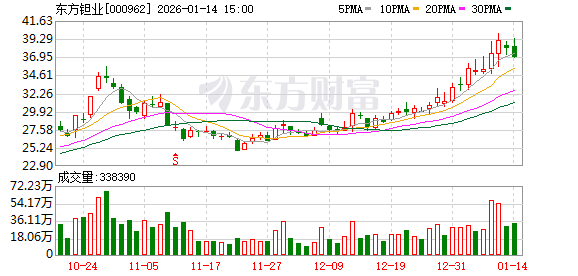
东方钽业:加快推进新一批技术改造项目,保障钽铌材料供应链安全
Xin Lang Cai Jing· 2026-01-14 13:28
Group 1 - The company will closely track industry trends and focus on its core business [2][5] - The company aims to leverage its full industry chain advantages to seize development opportunities [2][5] - The company plans to accelerate the advancement of a new batch of technological transformation projects to ensure the security of tantalum and niobium material supply chains [2][5]

车圈大佬预警!存储芯片、金属、电池价格全在涨!车企怎么办?|人民智行
Zheng Quan Shi Bao Wang· 2026-01-14 03:13
Core Insights - The automotive industry is facing unprecedented supply chain cost pressures due to rising prices of memory chips, metals, and batteries, which are significantly impacting manufacturing costs [1][4][10] - A predicted shortage of memory chips could lead to a supply satisfaction rate of less than 50% in 2026, exacerbating the cost challenges for automakers [2][8] - The competition for resources between the automotive sector and emerging industries like AI and energy storage is intensifying, leading to a resource squeeze on traditional manufacturing [4][11] Memory Chip Price Surge - The global DRAM market is experiencing its strongest price increase in history, with prices for DDR4 and DDR5 rising by 200-300% since last year [2][5] - High-end smart electric vehicles require significant storage, with demand for memory chips expected to reach TB levels, increasing costs per vehicle by hundreds to thousands of yuan [3][6] Impact of Metal Prices - Prices for key metals such as copper, silver, and lithium have been rising, contributing to increased costs in electric vehicle production [3][7] - The use of copper in electric vehicles is significantly higher than in traditional fuel vehicles, amplifying the cost impact [3][10] Supply Chain Challenges - Automakers are struggling to balance supply chain resilience with cost control, leading to potential price increases, configuration adjustments, and delivery delays [1][10] - The competition for high-end storage capacity is skewed in favor of AI companies, which are securing a majority of DRAM production capacity, leaving traditional industries with limited resources [5][6] Long-term Outlook - The supply chain crisis is expected to persist for 3-5 years, with automakers currently absorbing cost pressures without passing them on to consumers [8][10] - There is a growing recognition of the need for supply chain diversification and domestic production capabilities in the semiconductor industry [12][11] Strategic Responses - Automakers are exploring strategies such as long-term supply agreements and partnerships with local suppliers to mitigate risks associated with rising costs [11][12] - The industry may see a shift towards vertical integration, with companies considering in-house production of critical components like batteries and chips [12]